
Business Phone Systems: Top Features for 2024 Success
Business phone systems are crucial for maintaining efficient and effective communication within an organization. They offer a wide range of features that improve call handling, reduce operational costs, and improve overall productivity. Whether you’re looking to upgrade from a traditional setup or considering a transition to a modern VoIP system, choosing the right solution is key to optimizing your business communication.
For quick reference, here’s what makes a business phone system essential:
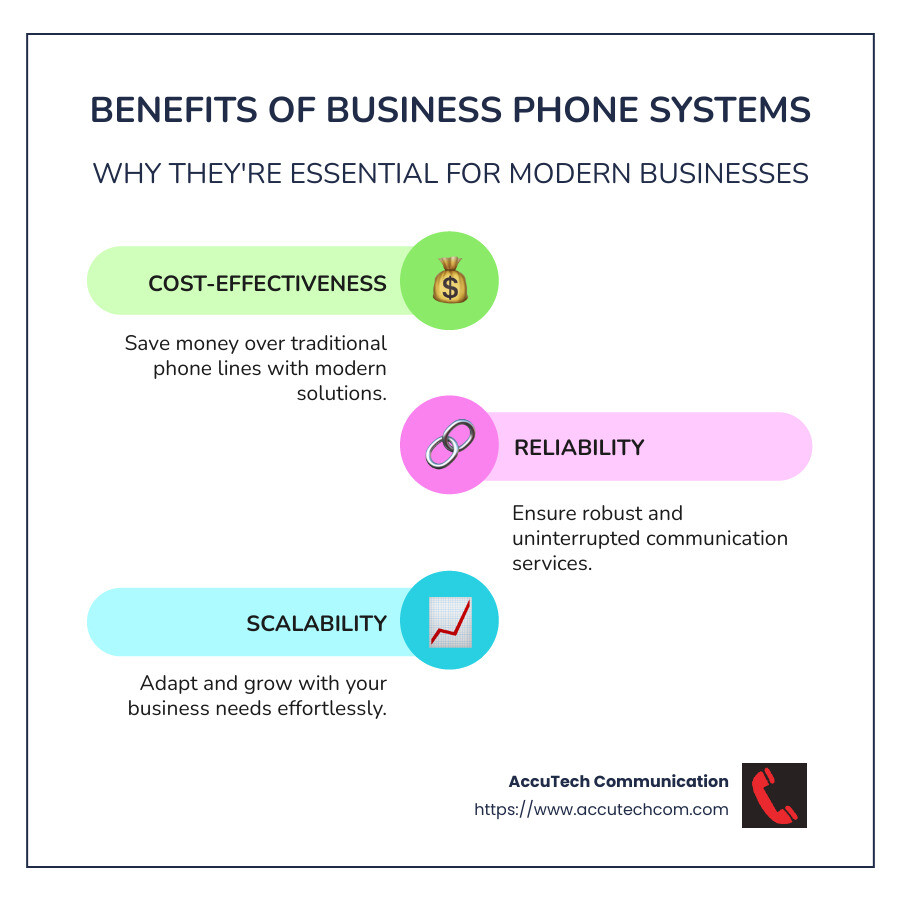
- Cost-Effectiveness: Choose systems that save money over traditional phone lines.
- Reliability: Ensure your system provides robust and uninterrupted service.
- Scalability: Select options that grow with your business.
- Flexibility: Opt for solutions that integrate with existing tools and systems.
The importance of business phone systems cannot be overstated. These systems are indispensable in sectors like healthcare, where reliable communication is critical. They facilitate seamless connectivity, whether your team is in-house or working remotely, ensuring that your operations run smoothly.
I’m Corin Dolan, with years of experience in guiding businesses towards enhancing their communication infrastructure through custom solutions in business phone systems. In my role at AccuTech Communications, I’ve witnessed the transformative impact of implementing the right system for various industries, including healthcare and retail.
Business phone systems terms to remember:
– business communications services
– business communication systems
– phone services for business
Understanding Business Phone Systems
When it comes to business phone systems, there are several types to consider, each with its own set of features and benefits. Understanding these can help you choose the right system for your business needs.
Types of Business Phone Systems
- VoIP (Voice over Internet Protocol):
- VoIP systems are a modern alternative to traditional phone lines. They use the internet to make and receive calls, offering flexibility and cost savings. With features like voicemail, call forwarding, and video conferencing, VoIP systems are perfect for businesses that need a scalable and adaptable solution. They’re especially beneficial for remote teams, as calls can be made from any device with an internet connection.
- PBX (Private Branch Exchange):
- A PBX system is a private telephone network used within a company. It allows users to communicate internally and externally, using different communication channels like VoIP and analog. PBX systems can be on-premises or hosted in the cloud. The latter eliminates the need for physical hardware, reducing maintenance costs and offering more flexibility.
- KSU (Key System Unit):
- KSU systems are designed for small businesses with fewer than 50 employees. They offer basic features like call holding, transferring, and voicemail. While not as advanced as VoIP or PBX, KSU systems are cost-effective and straightforward, making them a good choice for businesses with minimal telecommunication needs.

Why Choose VoIP?
VoIP systems are increasingly popular due to their versatility and cost-effectiveness. They eliminate the need for traditional phone lines and hardware, reducing overhead costs. Additionally, VoIP systems are easy to set up and maintain, making them ideal for businesses looking to streamline their communications.
PBX vs. VoIP: Which is Right for You?
Choosing between PBX and VoIP depends on your business requirements:
- PBX is suitable for larger organizations that require a robust internal communication system with advanced features like call routing and conferencing.
- VoIP is perfect for businesses of all sizes looking for flexibility and mobility, especially those with remote or hybrid work models.
In conclusion, understanding the types of business phone systems available is crucial for selecting the right one for your organization. Whether you opt for a VoIP, PBX, or KSU system, each offers unique benefits that can improve your business communications.
Top Features to Consider
When selecting a business phone system, it’s important to focus on features that meet your company’s specific needs. Here are some top features to consider:
Ease of Use
A user-friendly system is crucial. It should be easy for both employees and administrators to steer. Simple interfaces reduce the learning curve and save time. Look for systems that integrate seamlessly with existing tools and don’t require extensive training.
Collaboration
Modern business phone systems should improve teamwork. Features like team messaging, file sharing, and task management can boost productivity. Integrated communication tools allow staff to collaborate effectively, whether they’re in the office or working remotely.
Video Conferencing
Video conferencing is essential for virtual meetings. It enables face-to-face interactions, which can improve communication and build stronger relationships with clients and colleagues. Systems that offer HD video quality and screen sharing are ideal for presentations and discussions.
Customer Support
Reliable customer support is a must. Choose a provider that offers 24/7 support to ensure any issues are resolved quickly. Good support can minimize downtime and keep your business running smoothly.
Voice Intelligence
Voice intelligence features, like voicemail transcription and spam call blocking, can save time and improve efficiency. Some systems use AI to analyze calls and provide insights, helping businesses understand customer needs better.
Multiple Locations
If your business operates in multiple locations, choose a system that supports this seamlessly. Look for features like multi-level auto attendants and ring groups that can manage calls across different sites. This ensures consistent communication no matter where your team is based.
Scalability
Your business needs may change over time, so scalability is key. A system that can grow with your business allows you to add new lines or features as needed. Cloud-based systems are particularly flexible, making it easy to scale up or down.
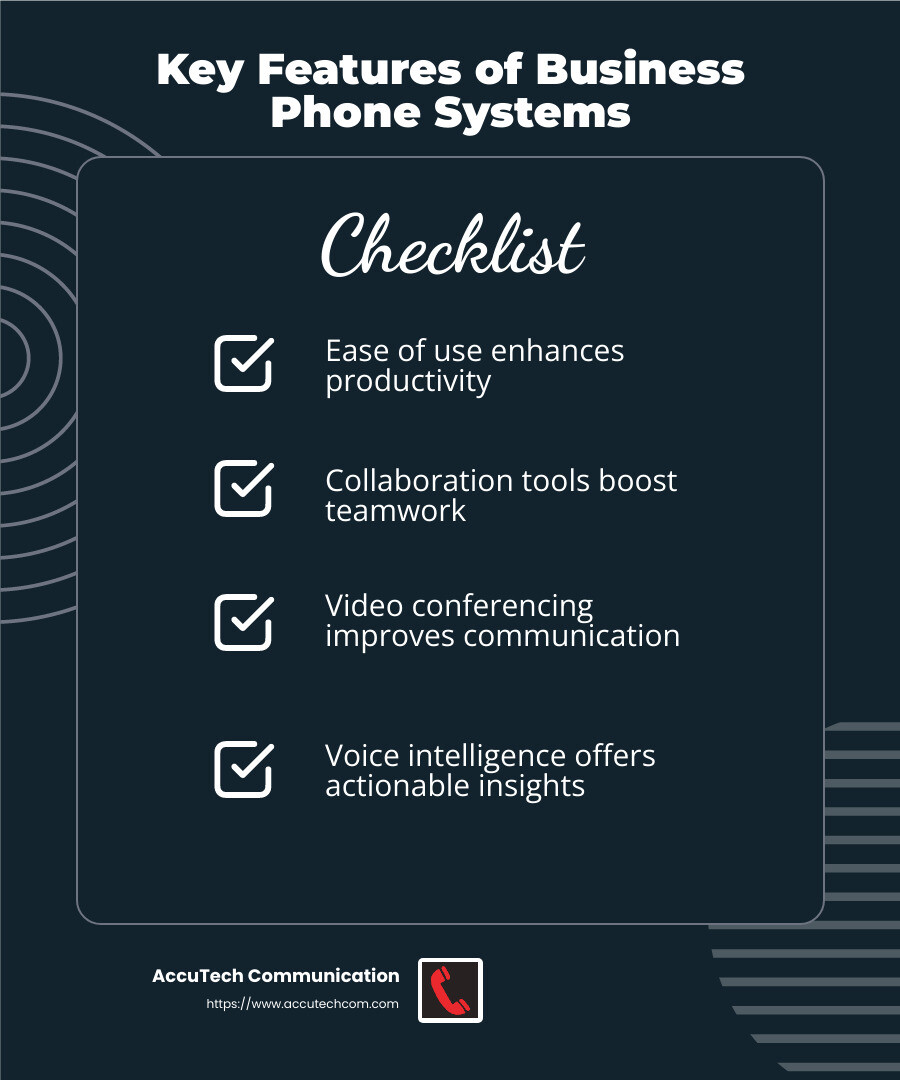
In summary, when choosing a business phone system, focus on ease of use, collaboration, video conferencing, customer support, voice intelligence, multiple locations, and scalability. These features will ensure your communication system supports your business effectively, both now and in the future.
Now, let’s explore the costs associated with implementing a business phone system in the next section.
Cost of Business Phone Systems
When considering a business phone system, understanding the costs involved is crucial. Let’s break down the key aspects of pricing, monthly fees, and the differences between traditional and VoIP systems to help you make an informed decision.
Pricing Overview
Business phone systems come in various pricing models, often influenced by the type of system you choose. Traditional systems, like PBX, typically involve higher upfront costs due to the need for physical hardware and installation. In contrast, VoIP systems are more cost-effective, as they rely on software and internet connectivity, eliminating the need for extensive hardware.
Monthly Fees
Monthly fees for business phone systems can vary widely. VoIP systems often charge per user, with costs ranging from as low as $18.95 per user per month for basic plans, up to more comprehensive packages that include features like video conferencing and integrations with other business tools. Traditional systems may also incur monthly fees for maintenance and service, which can add up over time.
Traditional vs. VoIP
Traditional phone systems, such as PBX, have been known for their reliability and clear sound quality. However, they require significant investment in on-premises equipment and can be costly to maintain. These systems are less flexible, making scaling difficult and expensive.
VoIP systems, on the other hand, offer greater flexibility and scalability. They allow businesses to make and receive calls over the internet, reducing the need for physical infrastructure. This not only lowers initial costs but also makes it easier to add new lines or features as your business grows. VoIP systems are particularly advantageous for businesses with remote teams or multiple locations, as they provide seamless connectivity across different sites.
Cost-Effectiveness
In terms of cost-effectiveness, VoIP systems generally offer more value for money. They provide a wide range of features at a lower price point compared to traditional systems. Additionally, the ability to integrate with other digital tools can improve productivity and further justify the investment.
Choosing the right business phone system is about balancing upfront costs with long-term benefits. VoIP systems, with their lower initial costs and flexible pricing plans, often present a more economical choice for modern businesses.
Next, we’ll look into how to set up a business phone system efficiently and ensure it aligns with your operational needs.
How to Set Up a Business Phone System
Setting up a business phone system might sound daunting, but with a clear plan, it can be straightforward. Here’s a simple guide to get you started:
Activation
Begin by selecting a provider that aligns with your business needs. Once chosen, activation is usually as simple as downloading an app or installing software. Providers like AccuTech Communications often handle the setup, ensuring a smooth transition.
Define Business Hours
It’s crucial to configure your system to reflect your business hours. This ensures calls are handled appropriately when your team is unavailable. Most systems allow you to set automated messages or direct calls to voicemail after hours.
Call Routing
Effective call routing is essential to ensure customers reach the right person. Use features like automated attendants to guide callers. For instance, a virtual receptionist can direct calls: “Press 1 for Sales, 2 for Support.” This streamlines communication and improves customer satisfaction.
Voicemail Setup
Setting up voicemail is vital for capturing missed calls. Ensure your voicemail is easy to access and can be forwarded to the right team members. Some systems offer voicemail-to-email features, making it convenient to manage messages.
Integrations
Integrating your phone system with other tools can boost productivity. Look for systems that connect with CRM platforms, email, and team collaboration tools. This creates a unified communication hub, simplifying workflows.
Team Collaboration
Finally, encourage team collaboration by utilizing features like video conferencing and messaging. This is especially beneficial for remote teams. Tools that offer seamless integration for video calls can improve team interaction and project management.
By following these steps, your business phone system will be set up efficiently, laying a strong foundation for improved communication and customer service.
Next, we’ll address some common questions about business phone systems to help you make informed decisions.
Frequently Asked Questions about Business Phone Systems
What is the best small business phone service?
When choosing the best small business phone service, AccuTech Communications stands out as an industry leader. They offer reliable options custom to small businesses, ensuring seamless communication. Their services are trusted by many due to their expertise and commitment to quality. With a focus on customer satisfaction, AccuTech provides solutions that are both innovative and dependable.
How much does a small business phone system cost?
The cost of a small business phone system can vary widely. On average, a traditional landline system can be more expensive due to installation and maintenance fees. However, VoIP systems are often more cost-effective. They typically involve lower monthly fees and reduced long-distance charges. With providers like AccuTech Communications, businesses can find competitive pricing that suits their budget without sacrificing quality.
What are business phone systems called?
Business phone systems come in various types, each with its own name and functionality. Common types include:
- KSU (Key System Unit): Ideal for small businesses, offering basic features with limited scalability.
- PBX (Private Branch Exchange): More advanced, suitable for medium to large businesses, providing extensive features and flexibility.
- VoIP (Voice over Internet Protocol): Uses the internet for calls, offering high flexibility and scalability, perfect for modern businesses.
These systems help streamline communication and improve efficiency, making them essential for any business aiming for growth and success.
Next, we’ll conclude by discussing how AccuTech Communications can be your trusted partner in enhancing your business communication systems.
Conclusion
In today’s business world, having a reliable business phone system is crucial. That’s where AccuTech Communications comes in. With over 30 years of experience, we have been a trusted partner for businesses in Massachusetts, New Hampshire, and Rhode Island.
We pride ourselves on offering certified and reliable service. Our commitment to quality ensures that your communication systems are always running smoothly. Whether you need network cabling or advanced data center technologies, we’ve got you covered.
One of our key strengths is providing competitive pricing. We understand that every business has a budget, and we strive to offer solutions that won’t break the bank. Our cost-effective options mean you can get top-notch services without compromising on quality.
Our local presence in Massachusetts, New Hampshire, and Rhode Island allows us to provide personalized service custom to the unique needs of businesses in these regions. We are not just a service provider; we are part of the community, and we are dedicated to helping local businesses thrive.
If you’re ready to take your business communication to the next level, consider partnering with AccuTech Communications. Visit our business phone systems page to learn more about how we can help your business succeed.
