
Fiber Technician: Top Career Guide for 2024 Success
Fiber technician roles are crucial in today’s interconnected world. If you’re seeking a path in a dynamic field where you can work with cutting-edge technology and ensure seamless communication services, becoming a fiber technician might be your ideal career. Fiber optics are at the heart of modern telecommunications, making the role of a fiber technician vital in installing and maintaining the high-speed internet and communication systems upon which businesses and homes rely. Here’s a quick overview of what a fiber technician does:
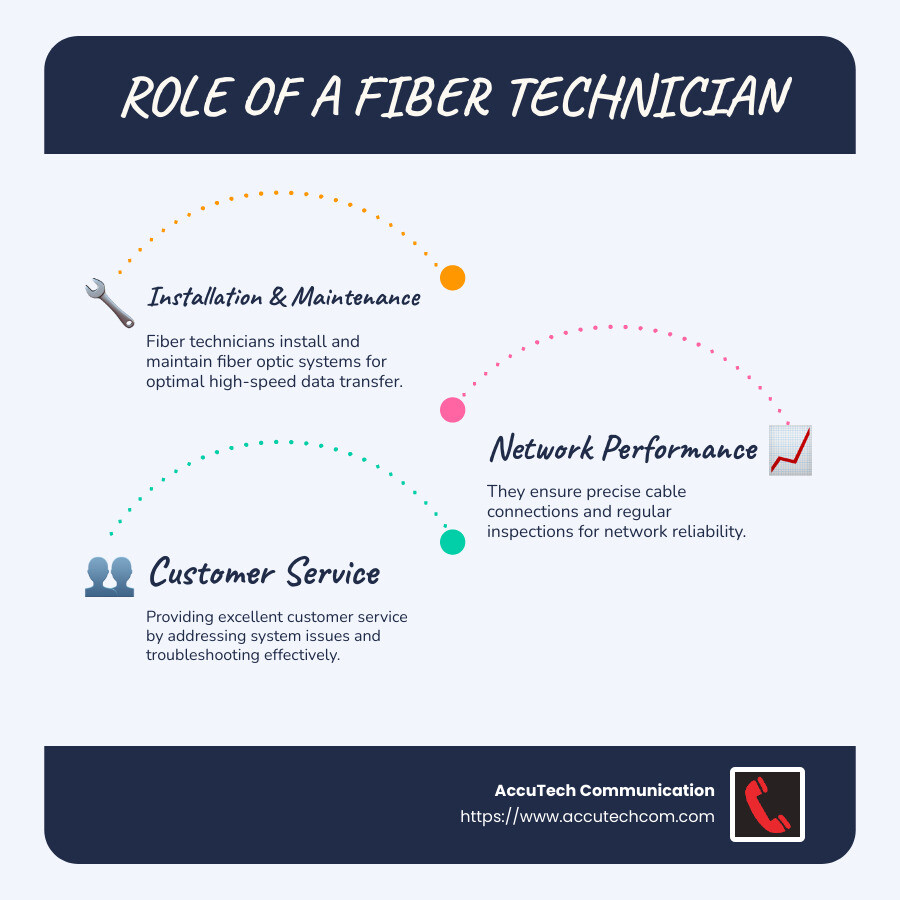
- Install and maintain fiber optic systems for businesses and homes.
- Ensure high-speed data transfer capabilities through precise cable connections.
- Perform regular inspections and testing to maintain optimal network performance.
Fiber optics technicians play a pivotal role in the telecommunications industry, driving advancements in connectivity and ensuring efficient, reliable communication systems.
As Corin Dolan, I bring insights from my leadership at AccuTech Communications—a trusted partner in deploying robust communication systems. My experience with fiber technician roles across various sectors has taught me the industry’s expanding potential. Let’s explore what makes a career as a fiber technician both rewarding and essential.
Similar topics to fiber technician:
– fiber optic installation
– fiber construction
– fiber optic splicing contractors
What is a Fiber Technician?
A fiber technician is a specialized professional in the telecommunications industry. These skilled individuals are responsible for installing, maintaining, and repairing fiber optic cables, which are essential for modern communication systems. Fiber optic cables enable high-speed internet, telephone, and television services by transmitting data as pulses of light through strands of glass.
Cable Installers and Telecommunications Technicians are other titles often used interchangeably with fiber technicians. These roles require a deep understanding of both old and new technologies to ensure seamless connectivity.
Key Roles and Responsibilities
- Installation: Fiber technicians set up new fiber optic systems in various settings, including homes, businesses, hospitals, and schools. This involves precise work, connecting cables to ensure optimal data transmission.
- Maintenance and Troubleshooting: They regularly inspect fiber optic systems for any issues that might disrupt service. This includes measuring internet speeds and checking cable connections for performance.
- Repair: When problems arise, fiber technicians repair old systems and wiring. They might splice cables to troubleshoot issues or replace malfunctioning components.
Skills Required
Fiber technicians need a blend of technical and interpersonal skills:
- Technical Proficiency: Understanding the intricacies of fiber optic technology, including how to handle delicate glass fibers safely.
- Safety Awareness: Adhering to strict safety guidelines to prevent electrical shocks or fires, especially when working near power lines.
- Communication: Effective communication skills are crucial for interacting with clients and collaborating with team members.
Work Environment
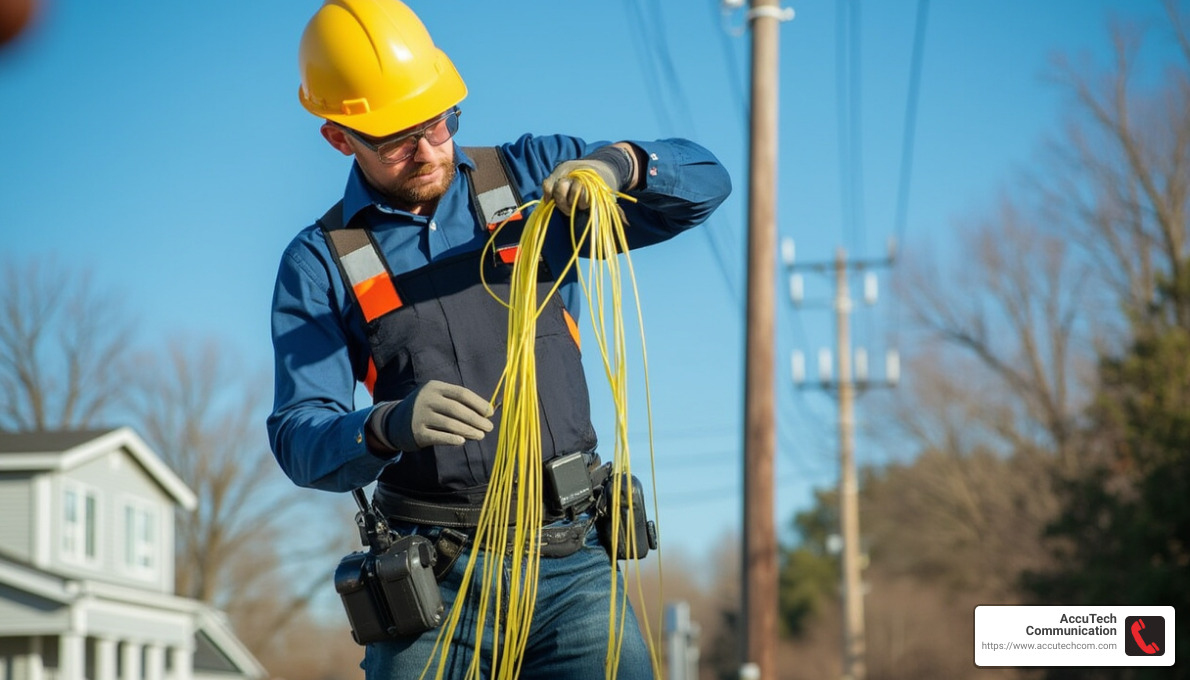
Fiber technicians work both indoors and outdoors, depending on their specific role. Premises installers typically work inside buildings, while outside plant technicians handle outdoor installations. The job can be physically demanding, involving tasks like climbing ladders or crawling into tight spaces.
Overall, a career as a fiber technician offers a dynamic work environment and the opportunity to work with cutting-edge technology. For those interested in a role that is both challenging and vital to modern communication, becoming a fiber technician is a rewarding path.
Key Responsibilities of a Fiber Technician
In telecommunications, a fiber technician plays a pivotal role. Their work ensures that the intricate network of fiber optic cables functions smoothly, keeping us all connected. Let’s break down their key responsibilities into four main areas: installation, maintenance, troubleshooting, and customer service.
Installation
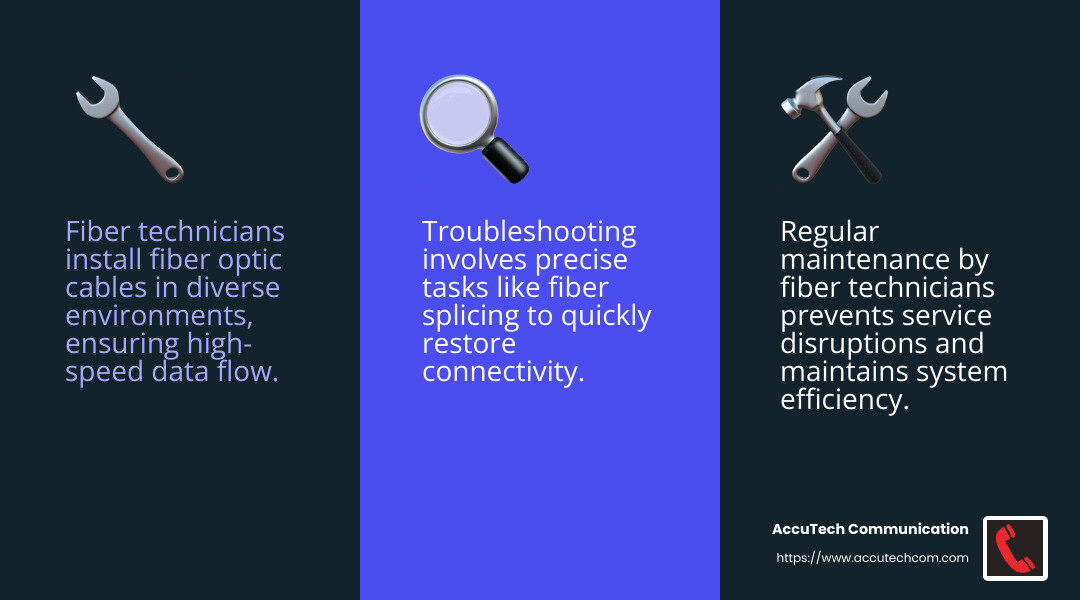
Fiber technicians are experts at setting up new fiber optic systems. This involves working in diverse environments such as homes, businesses, schools, and hospitals. The installation process requires precision and skill. Technicians connect cables and configure systems to ensure data flows seamlessly through strands of glass at high speeds. This task is not just about laying cables; it’s about creating a robust infrastructure that supports reliable communication.
Maintenance
Regular maintenance is crucial to prevent disruptions in service. Fiber technicians perform inspections and routine checks to ensure systems are operating at peak efficiency. They monitor signal strength and internet speeds, making adjustments as needed. Maintenance can involve cleaning connections, checking for wear and tear, and replacing any components that may be degrading.
Troubleshooting
When issues arise, fiber technicians are the problem solvers. They diagnose and fix problems that could affect service quality. This might involve fiber splicing, which is a precise task of joining two fiber optic cables together to restore connectivity. Technicians use various tools and instruments to pinpoint problems, such as signal loss or weak connections, and implement solutions quickly to minimize downtime.
Customer Service
Beyond their technical skills, fiber technicians are often the face of the company to customers. They provide excellent customer service by explaining complex issues in simple terms and ensuring customers understand the work being done. Their ability to communicate effectively and professionally is critical, as they need to reassure customers and provide solutions that meet their needs.
In summary, the role of a fiber technician is both technical and customer-focused. They ensure that our communication networks are installed correctly, maintained regularly, and repaired swiftly, all while keeping customers informed and satisfied. This blend of skills makes them invaluable in today’s , connected world.
Next, we’ll explore the qualifications and certifications that help fiber technicians excel in their roles.
Qualifications and Certifications for Fiber Technicians
Becoming a successful fiber technician requires a mix of education, hands-on training, and industry-recognized certifications. Let’s break down what you need to get started in this exciting field.
Post-Secondary Training
While some fiber technicians begin their careers with on-the-job training, post-secondary education can give you a significant advantage. Courses in electronics, telecommunications, or computer technology are particularly beneficial. These programs provide foundational knowledge about the systems you’ll be working with and help you understand the complexities of fiber optics.
Industry Certifications
Certifications are a powerful way to demonstrate your skills and dedication to potential employers. One of the most respected certifications in the field is the Fiber Optic Association Certified Fiber Optic Technician (FOA CFOT). This certification shows that you have the essential knowledge and skills to perform fiber optic installations and maintenance effectively.
The FOA CFOT certification covers a range of topics including:
- Fiber optic installation techniques
- Testing and troubleshooting methods
- Safety protocols in handling fiber optics
Additionally, the Electronics Technician Association (ETA) offers certification programs that can further improve your credentials and job prospects in the industry.
The Importance of Certification
Having a certification not only boosts your resume but also opens doors to better job opportunities and higher pay. According to industry data, certified fiber technicians tend to earn more than their non-certified counterparts. Employers value these credentials because they reduce the risk of errors and ensure high-quality service.
In conclusion, investing in post-secondary training and obtaining industry certifications like the FOA CFOT can significantly improve your career as a fiber technician. These qualifications equip you with the knowledge and skills needed to excel in this rapidly growing field.
Next, we’ll dig into the salary expectations and career outlook for fiber technicians.
Fiber Technician Salary and Career Outlook
If you’re considering a career as a fiber technician, you’ll be pleased to know that the field offers promising salary prospects and a positive job outlook.
Salary Range
The average salary for a fiber technician in the U.S. is approximately $53,843 per year, according to ZipRecruiter. However, salaries can vary widely based on experience, location, and certifications. Entry-level technicians might earn around $33,500 annually, while those with more experience and specialized skills can make up to $66,500 per year.
Job Growth
The demand for fiber technicians is on the rise, driven by the increasing need for high-speed internet and advanced telecommunications infrastructure. According to the U.S. Bureau of Labor Statistics, the employment of telecommunications equipment installers and repairers, which includes fiber technicians, is projected to grow by 8% from 2021 to 2031. This growth rate is faster than the average for all occupations, signaling a healthy demand for skilled technicians in the coming years.
Factors Influencing Salary and Job Opportunities
- Location: Salaries can vary significantly depending on where you work. For instance, technicians in metropolitan areas or regions with a high demand for fiber optic services might earn more than those in rural areas.
- Experience: As with most careers, experience plays a crucial role in determining salary. More experienced technicians often command higher wages due to their expertise and ability to handle complex installations and troubleshooting.
- Certifications: Holding certifications like the FOA CFOT can improve your earning potential and open doors to advanced positions. Employers often value certified technicians for their proven skills and knowledge.
- Industry Demand: As businesses and residential areas continue to upgrade to fiber optic networks, the need for qualified fiber technicians is expected to grow, providing ample job opportunities.
In summary, becoming a fiber technician offers a stable and rewarding career path. With competitive salaries and a robust job market, it’s an excellent choice for those interested in telecommunications and technology. Next, we’ll address some frequently asked questions about the role of a fiber technician.
Frequently Asked Questions about Fiber Technicians
What qualifications do you need to be a fiber optic technician?
To become a successful fiber technician, education and training are key. Most technicians start with a Level 2 Certificate or a Level 3 Diploma in fields like electronics, telecommunications, or computer technology. These programs provide foundational knowledge and hands-on experience, preparing individuals for the technical challenges of the job.
Additionally, obtaining industry certifications can greatly improve a technician’s qualifications. The Fiber Optic Association Certified Fiber Optic Technician (FOA CFOT) is one of the most respected certifications in the field. It demonstrates a technician’s expertise and commitment to maintaining high standards in their work.
How much do fiber technicians make in the US?
The salary for a fiber technician in the U.S. varies based on several factors, including experience and location. Entry-level technicians can expect to earn around $33,500 per year. As they gain experience and possibly acquire additional certifications, their salary can increase significantly. Experienced technicians can earn up to $66,500 annually. On average, the national salary is approximately $53,843 per year.
These figures are influenced by the demand for fiber optic services, which is growing as more businesses and homes upgrade to high-speed internet and advanced telecommunications systems.
What does a typical day look like for a fiber technician?
A typical day for a fiber technician is dynamic and involves a range of tasks. Here’s a snapshot of what their day might include:
- Installation: Setting up new fiber optic systems in various environments, from residential homes to large commercial buildings.
- Maintenance: Performing routine checks and scheduled maintenance to ensure systems are functioning optimally. This may involve examining and replacing faulty cables.
- Troubleshooting: Diagnosing and resolving issues with fiber optics systems. This can require quick thinking and problem-solving skills to restore service efficiently.
- Customer Service: Interacting with clients to explain technical issues in simple terms and ensure their satisfaction with the service provided.
Fiber technicians play a crucial role in keeping our communication networks up and running, making their work both challenging and rewarding.
Conclusion
At AccuTech Communications, we pride ourselves on delivering certified service with a commitment to quality that stands out in the industry. Our skilled fiber technicians are trained to handle the complexities of fiber optic installations and maintenance with precision and professionalism. We understand the vital role these technicians play in ensuring seamless connectivity for businesses and homes across Massachusetts, New Hampshire, and Rhode Island.
Our approach combines competitive pricing with a dedication to excellence, ensuring that our clients receive the best value without compromising on quality. This commitment has helped us build lasting relationships with clients who trust us to meet their communication needs reliably and efficiently.
Whether you’re looking to install new fiber optic systems or maintain existing ones, our team is ready to provide the expertise and support you need. Explore our fiber optic cabling installation services to see how we can help strengthen your network infrastructure.
By choosing AccuTech Communications, you’re partnering with a company that values quality, reliability, and customer satisfaction above all else. Let us help you stay connected with the world.
