
Fiber Optic Network Design: 10 Powerful Tips for Success 2025
Why Fiber Optic Network Design Is Critical for Modern Business
Fiber optic network design is the specialized process of planning and engineering fiber infrastructure to deliver high-speed, reliable connectivity for businesses and communities. It involves determining network topology, selecting components, calculating loss budgets, planning routes, and ensuring scalability.
Key elements of fiber optic network design include:
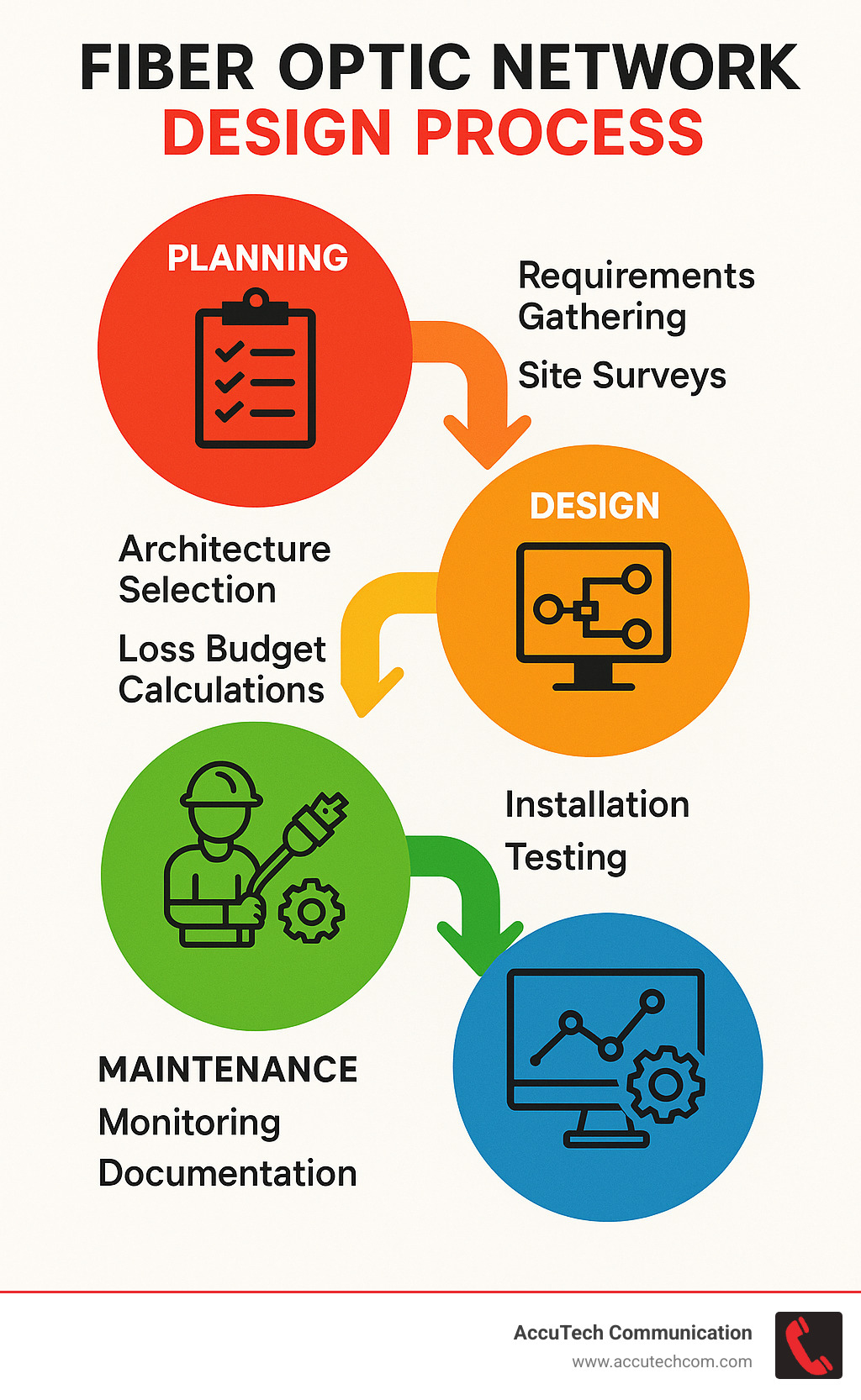
- Requirements gathering – defining coverage area, bandwidth needs, and service objectives
- Architecture selection – choosing between PON, active star, or point-to-point topologies
- Route planning – mapping cable paths and conducting site surveys
- Component selection – specifying cables, connectors, splitters, and active equipment
- Loss budget calculations – ensuring signal integrity across the network
- Documentation – creating detailed records for installation and maintenance
The global fiber optics market is expected to grow from $5.8 billion in 2022 to $11.5 billion by 2030. Proper fiber optic network design can reduce construction time by 20-30% and cut direct costs by up to 30% through smart planning.
I’m Corin Dolan, owner of AccuTech Communications, and I’ve been helping businesses across Massachusetts, New Hampshire, and Rhode Island design and deploy reliable communication networks since 1993.
Fiber optic network design definitions:
– fiber optic cable in computer network
– fiber optic monitoring system
– fiber optic sensing technology
Fiber Optic Network Design Fundamentals
Fiber optic network design uses light particles (photons) traveling through glass strands instead of electrons through copper wires. This fundamental shift enables fiber’s capabilities.
When we design fiber networks, we’re creating superhighways for light traveling at nearly 186,000 miles per second, carrying massive amounts of data with remarkable precision.
Loss budgets are the most critical concept to master – the total amount of light you can afford to lose between transmitter and receiver while maintaining reliable connection. For GPON networks, we typically work with loss budgets ranging from 13dB to 28dB for maximum reach with a 32-way split.
Every component “costs” signal strength: fiber attenuation, connector losses, splice losses, and splitter losses all add up. Get this calculation wrong, and your network won’t work reliably.
Singlemode vs multimode fiber choice is straightforward. Singlemode fiber uses a 9-micron core and carries signals incredibly far. Multimode fiber has a larger core (50 or 62.5 microns) but works best for shorter distances.
Redundancy planning separates experienced designers from beginners. The best networks include backup paths and spare capacity.
Why Fiber Beats Copper and Wireless
Speed and bandwidth advantages are dramatic. While copper maxes out at 100 meters for high-speed applications, fiber supports speeds up to 100 Gbit/s and beyond over much longer distances.
Distance capabilities make fiber the clear winner. Outside plant singlemode fiber can span hundreds or thousands of miles between repeaters, compared to copper’s severe limitations.
EMI immunity is crucial in real-world environments. Unlike copper cables that act like antennas picking up electrical interference, fiber is completely immune to electromagnetic noise.
Scalability provides the best long-term value. You can often upgrade a fiber network’s speed by simply changing the electronics at each end, without touching the cable plant.
Key Components in Fiber Optic Network Design
Cables form the foundation. We typically specify G.652 or G.657 singlemode fiber for outside plant applications. For cables with fewer than 24 fibers, protective materials represent most of the cost, not the fiber strands.
Connectors significantly impact performance. SC-APC connectors are preferred for their low reflectance. Factory-made connectors achieve 0.1-0.2 dB loss, while field-terminated may have up to 1.0 dB loss.
Splitters divide optical signals. A 1:2 splitter costs about 4dB of signal strength, while a 1:32 splitter costs about 19dB. Understanding these trade-offs helps balance coverage with signal quality.
ONTs and OLTs represent active electronics. Optical Network Terminals serve individual customers, while Optical Line Terminals manage multiple customers from central locations.
Closures and hardware protect splice points and provide maintenance access. We recommend dry water-blocked cables over gel-filled alternatives for easier, more reliable splicing.
Step-by-Step Fiber Optic Network Design Process
Fiber optic network design requires a methodical approach balancing technical requirements with real-world constraints. Every hour spent in design saves days during installation and years of maintenance.
More info about Fiber Infrastructure
Defining Requirements and Objectives
Coverage area drives cable quantities, equipment placement, and construction methods. Bandwidth demand requires analyzing current usage, growth trends, and planned applications to avoid over-engineering or under-capacity.
Service mix planning considers voice, data, video, security systems, and industrial controls – each with unique requirements for latency, reliability, and bandwidth.
ROI calculations model capital expenses, operational costs, revenue per customer, and payback periods. Stakeholder coordination prevents miscommunications that plague complex projects.
Choosing the Right Fiber Optic Network Design Architecture
GPON remains the workhorse for residential and small business applications, using passive splitters to serve 32-64 customers from a single fiber with 2.5 Gbps downstream and 1.25 Gbps upstream shared among users.
XGS-PON provides 10 Gbps symmetric speeds for bandwidth-hungry applications. Active Ethernet gives each customer dedicated fiber with guaranteed bandwidth. Point-to-point connections provide maximum reliability by dedicating entire fiber paths.
| Architecture | Best Use Case | Pros | Cons |
|---|---|---|---|
| GPON | Residential/SMB | Low fiber count, proven technology | Shared bandwidth |
| XGS-PON | High-bandwidth users | 10G symmetric speeds | Higher equipment costs |
| Active Ethernet | Enterprise | Dedicated bandwidth, familiar protocols | More complex, higher power |
| Point-to-Point | Critical applications | Maximum reliability and bandwidth | Highest fiber and equipment costs |
Route Planning and Site Surveys
GIS mapping provides foundation with satellite imagery and existing infrastructure databases. Physical site surveys reveal obstacles that don’t show up on maps.
Aerial versus underground decisions balance speed, cost, aesthetics, and durability. Dig Once planning takes advantage of municipal policies encouraging extra conduit during initial construction.
Utility locates through “Call Before You Dig” services are mandatory to prevent catastrophic service outages.
More info about Fiber Optic Cable Installation
Calculating Loss Budgets and Selecting Components
Fiber attenuation forms the baseline: singlemode fiber typically shows 0.4 dB per kilometer at 1310nm. Connector losses add 0.3-0.5 dB per pair for field-terminated, 0.1-0.2 dB for factory-made.
Splice losses depend on method and skill – fusion splices achieve less than 0.05 dB. Splitter losses include theoretical splitting plus excess loss. Safety margins of at least 3 dB account for aging and repairs.
Scientific research on link loss budgets
Geography, Regulations & Cost Optimization
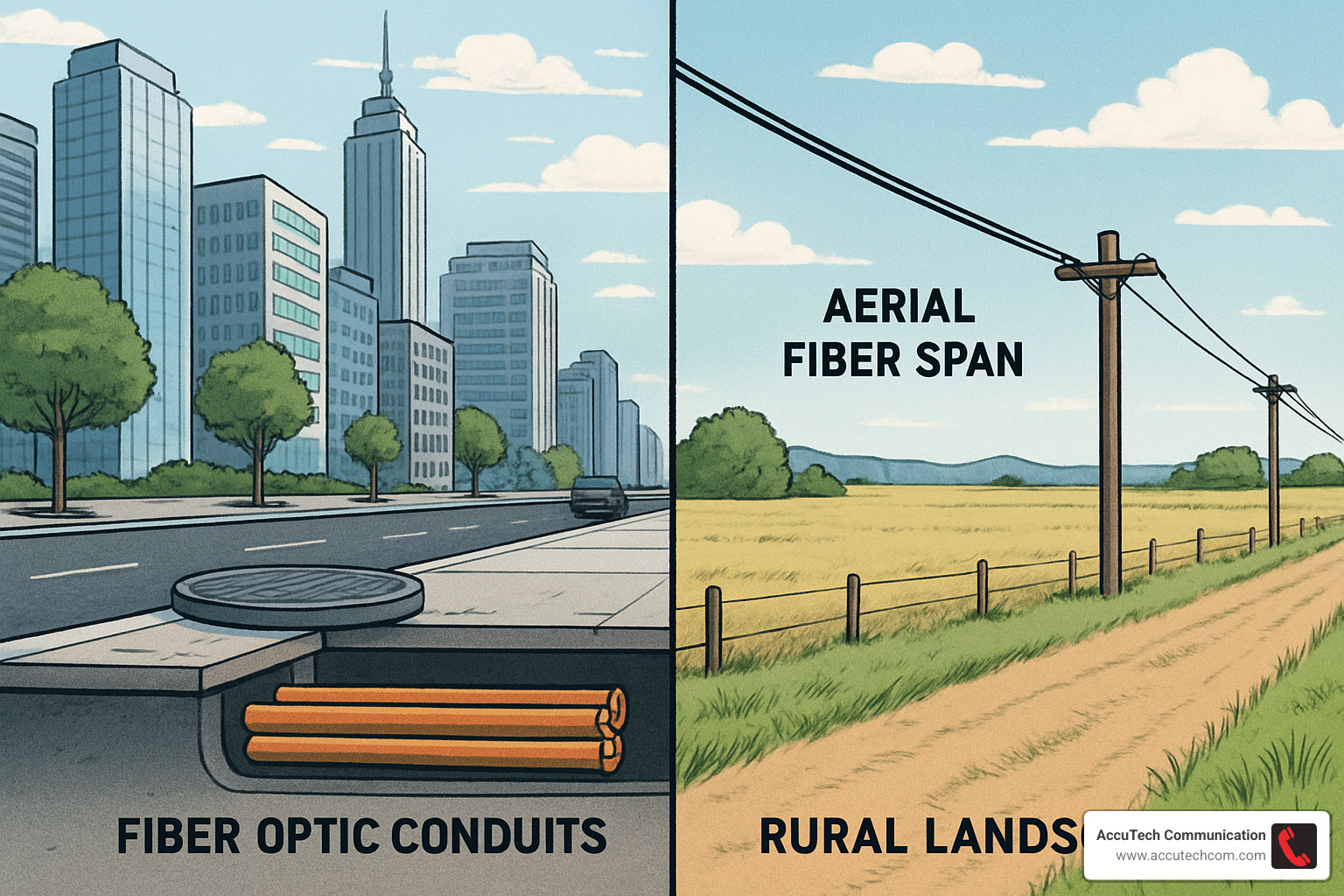
Every fiber optic network design project is shaped by location. What works in downtown Boston might be completely wrong for rural New Hampshire. Geography, regulations, and budget realities shape every design decision.
Designing for Different Terrains and Densities
Microtrenching has become the go-to solution for urban fiber deployment – cutting narrow slots instead of tearing up entire streets. Aerial options work well in suburban areas with existing utility poles.
Rural installations flip the economics with miles of cable reaching few customers. MDU projects require navigating building codes and property management policies.
Armored cable becomes essential where fiber faces mechanical stress – near construction zones or industrial areas.
Navigating Permits, Standards and Safety
NECA-301 standards and TIA-568 guidelines ensure installations pass inspection. Call Before You Dig requirements prevent hitting gas lines or cutting major fiber trunks.
OSHA compliance covers confined space entry to chemical handling. Restoration planning includes spare fibers, service loops, and restoration kits strategically located.
Dig Once policies save money by installing extra conduit during initial construction.
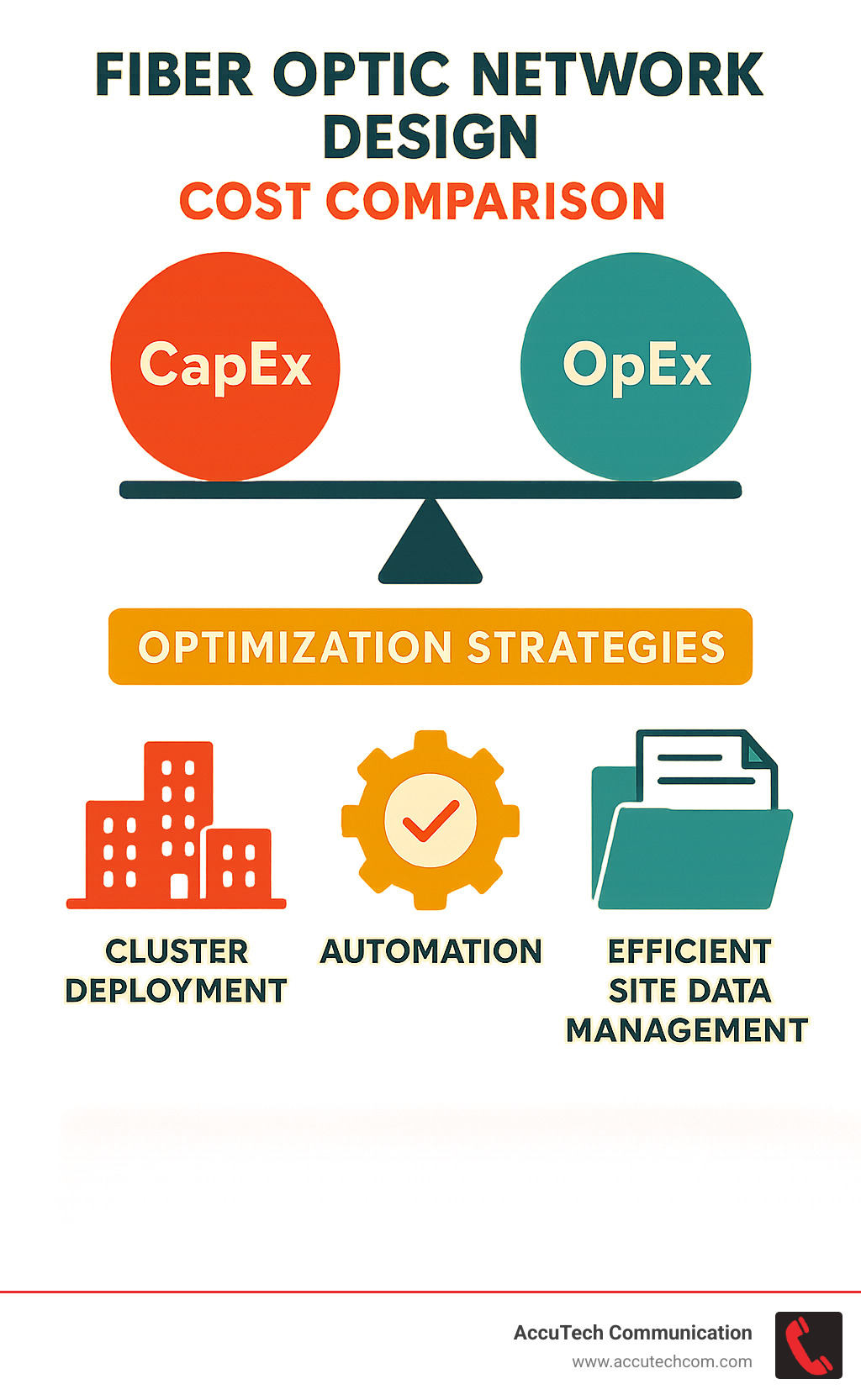
Controlling Costs Without Compromising Quality
Installation labor typically costs 100 times more than cable itself. Smart design decisions reducing labor have huge impacts on total project costs.
Prefabricated cable assemblies cost more than field-splicing but save labor and reduce errors. Phased deployment helps manage cash flow while generating revenue.
Construction efficiency improvements reduce timelines by 20-30% through better coordination. Cluster rollout focuses resources on specific areas rather than spreading thin.
More info about Choosing the Right Fiber Optic Cabling Services
Tools, Technologies & Best Practices for Reliable, Scalable Networks
Modern fiber optic network design has transformed dramatically. What once required weeks of manual calculations can now be accomplished in days using sophisticated digital tools.
the Fiber Optic Network Design self-study course
Leveraging GIS, Digital Twins and Automation
GIS Integration has revolutionized network design. Modern systems integrate with CAD platforms, enabling seamless collaboration and real-time updates from field crews.
Digital twins capture everything from soil conditions to demographics, helping optimize decisions before breaking ground. Projects save 20-30% on construction costs through digital modeling.
Route optimization algorithms consider factors like seasonal restrictions, utility conflicts, and traffic patterns. API integration connects tools into unified workflows, eliminating manual data entry.
Testing, Documentation and Ongoing Maintenance
OLTS testing verifies design performance during installation. OTDR analysis provides detailed forensics for troubleshooting, creating complete fiber “fingerprints.”
Cleaning protocols prevent contaminated connectors – the leading cause of network problems. Labeling systems save hours during maintenance using consistent, clear identification.
Restoration kits positioned strategically include spare cable, closures, connectors, tools, and documentation. Active fiber monitoring systems continuously test fibers automatically, detecting problems before customers notice.
More info about How to Test Fiber Optic Cable
Common Challenges and Pitfalls in Fiber Optic Network Design
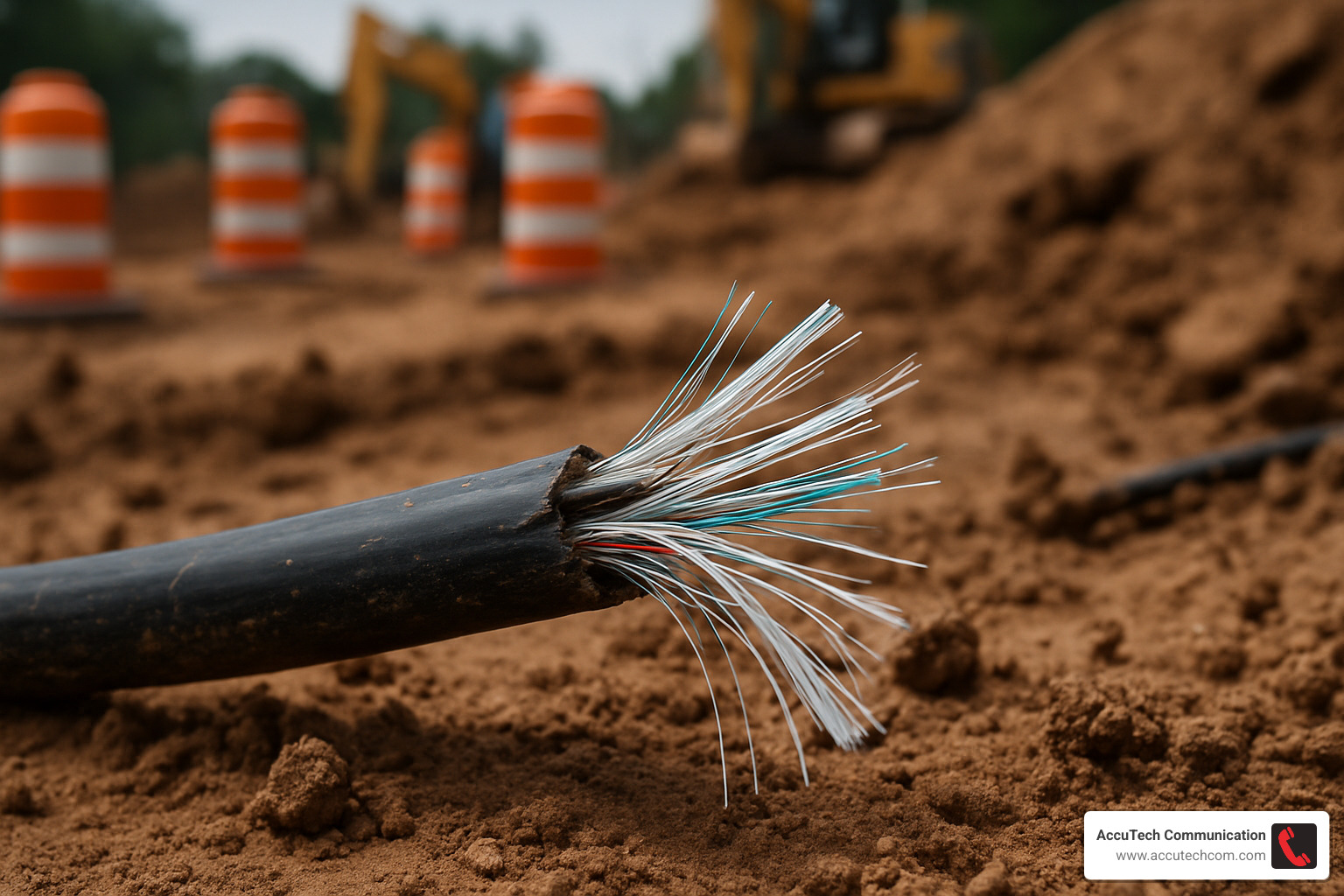
Even experienced professionals encounter challenges in fiber optic network design. Most problems are preventable with proper planning and attention to detail.
Solutions and Pro Tips
Spare Fiber Strategy: Always include extra fibers beyond immediate requirements. Fiber cost is minimal compared to installation labor.
Service Loop Planning: Include service loops at splice points for working length without cable replacement.
Certified Installer Requirements: Use only certified, experienced installers. Poor installation causes most reliability problems.
Phased Deployment Benefits: Phase large projects to manage cash flow and reduce risk.
Documentation Standards: Maintain comprehensive documentation from design through operation.
Fiber Optic Network Design Mistakes to Avoid
Ignoring Bend Radius: Exceeding minimum bend radius limits causes signal loss and fiber breakage.
Over-Splitting Networks: High split ratios reduce bandwidth per user and increase troubleshooting complexity.
Neglecting Backup Plans: Single points of failure cause network-wide outages.
Skipping Testing: Test every splice, connector, and link segment during installation.
Inadequate Loss Budget Margins: Include adequate margin for aging and repairs.
Poor Route Selection: Avoid routes with known hazards like construction zones or unstable soil.
Frequently Asked Questions about Fiber Optic Network Design
What is a fiber optic network design loss budget?
A loss budget calculates how much light you can afford to lose between transmitter and receiver while maintaining reliable connection.
Components include: fiber attenuation, connector losses, splice losses, and splitter losses.
Example GPON calculation:
– Fiber loss: 10 km × 0.4 dB/km = 4.0 dB
– Connector losses: 4 × 0.3 dB = 1.2 dB
– Splice losses: 2 × 0.1 dB = 0.2 dB
– Splitter loss: 1:32 = 19.0 dB
– Safety margin: 3.0 dB
– Total needed: 27.4 dB
This must fall within equipment’s power budget range (typically 13-28 dB for GPON).
How do I choose between GPON and active Ethernet?
GPON works best for residential and small business applications where shared bandwidth meets requirements and cost optimization is priority.
Choose active Ethernet when serving enterprise customers needing guaranteed performance and familiar network protocols justify higher investment.
Many successful networks use GPON for residential areas and active Ethernet for business districts.
Do fiber networks need regular maintenance?
Fiber networks need remarkably little routine maintenance compared to copper. For premises installations, we recommend minimal routine maintenance to avoid introducing contamination.
Outside plant benefits from annual visual inspections and monitoring active equipment performance. Most problems stem from construction damage rather than equipment failure, making proper documentation and utility locating crucial during design.
Conclusion
Fiber optic network design combines technical expertise with real-world experience. The best networks are ones you never think about – they simply work, day after day, year after year.
Good design still comes down to understanding customer needs, following proven engineering principles, and paying attention to details. Modern tools like digital twins and automated route optimization help build networks better, faster, and cheaper than ever before.
We’ve seen dramatic industry evolution since AccuTech Communications started serving Massachusetts, New Hampshire, and Rhode Island in 1993. But the core principle remains: invest in proper design upfront to avoid headaches down the road.
A well-designed fiber plant installed today will serve your business for 20-30 years or more. As bandwidth needs grow, you can often upgrade by changing electronics at each end, without touching the cable plant. This future-proofing capability makes fiber networks one of the smartest infrastructure investments you can make.
At AccuTech Communications, we’ve guided hundreds of businesses through the fiber optic network design process. There’s something deeply rewarding about building infrastructure that just works.
More info about Fiber Optic Installation
