
Building a Data Center: 10 Powerful Steps for Success 2025
The Reality of Building Your Own Data Center
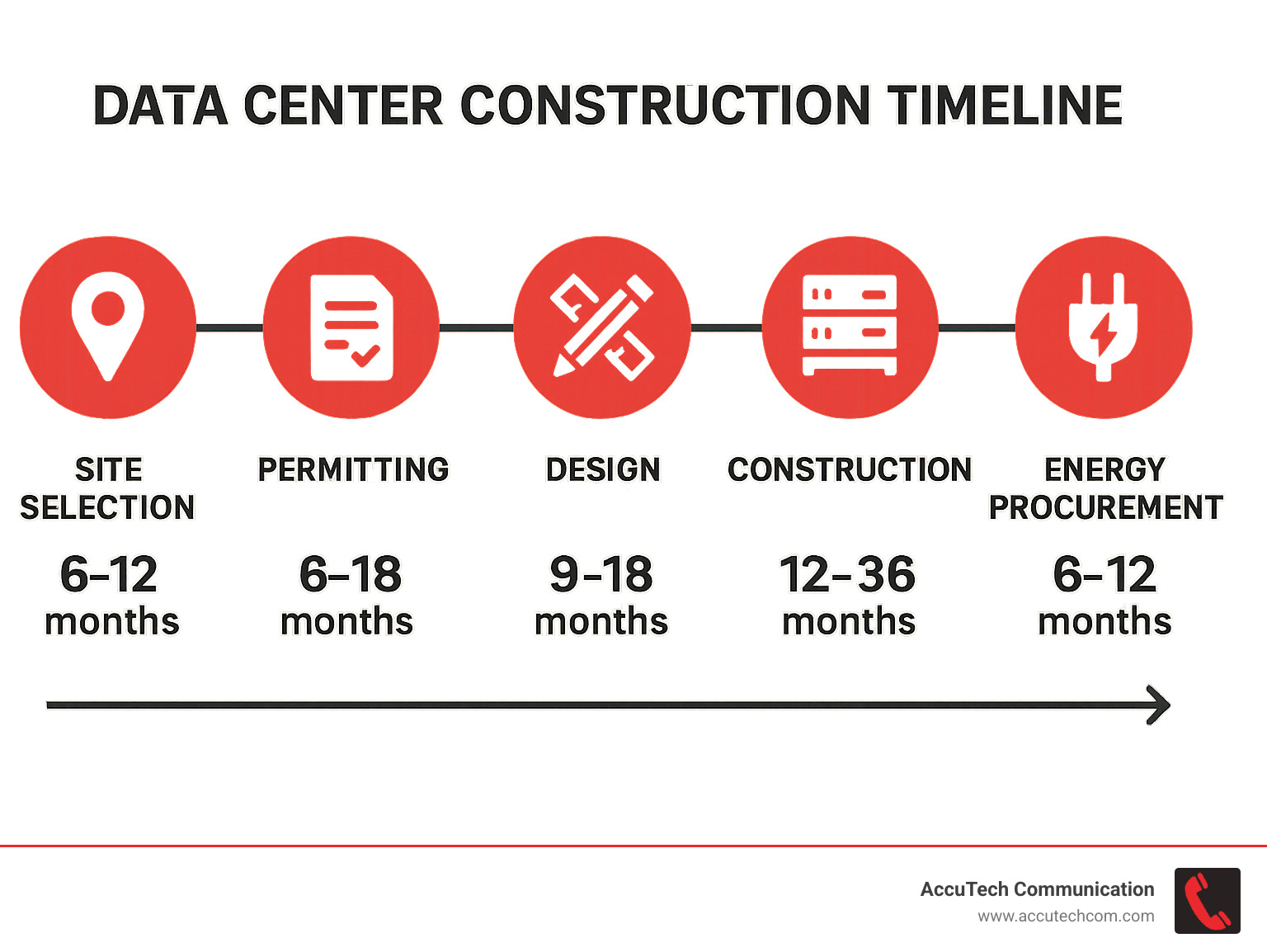
Building a data center involves a complex, multi-year process requiring careful planning and significant resources. Here’s a quick overview of what’s involved:
- Site Selection (6-12 months): Evaluate power availability, connectivity, geographic stability, and regulatory environment
- Permitting & Approvals (6-18 months): Secure environmental, zoning, building, and energy permits
- Design & Development (9-18 months): Create detailed architectural and infrastructure plans with sustainability integration
- Construction (12-36 months): Build core infrastructure including cooling, power systems, and rack deployment
- Energy Procurement (6-12 months): Negotiate power agreements and secure grid interconnection
The demand for data centers continues to soar as our world becomes increasingly digital. With humans creating 2.5 quintillion bytes of data daily and the rise of AI, cloud computing, and IoT, these technological hubs have become essential infrastructure for modern businesses. However, building a data center is not a simple endeavor—it’s a highly complex, multi-year, multi-billion-dollar business with tremendous risk and potential rewards for each decision.
The typical timeline for developing a data center from conception to completion spans 3-6 years. During this period, stakeholders must steer everything from site selection and regulatory approvals to complex engineering challenges. Most data centers cost hundreds to thousands of dollars per square foot to build, with large facilities requiring up to 100 megawatts of power—enough to power 75,000 homes.
What’s more, the landscape is changing rapidly. The rise of AI and high-performance computing is pushing power densities from traditional 5-10 kilowatts per rack to 40 kilowatts or more. Meanwhile, power constraints in popular markets and growing sustainability concerns add further complexity to the equation.
I’m Corin Dolan, owner of AccuTech Communications, and I’ve spent decades helping organizations optimize their technical infrastructure, including building a data center environments that support modern communication and computing requirements. My experience has taught me that careful planning and expert guidance are essential for navigating the intricate process of data center development.
Easy building a data center word list:
– datacenter cable management
– data center construction companies
– data center build out cost
Building a Data Center Project Timeline & Phases
If you’re considering building a data center, buckle up for quite the journey! The typical timeline stretches across 3-6 years from that first “we should build our own data center” conversation to the satisfying moment when you finally power everything up. This extended timeline isn’t just bureaucratic red tape—it reflects the genuine complexity of creating these technological marvels that must balance today’s needs while anticipating tomorrow’s innovations.
As one of my clients once told me, “Data center sizing is sometimes considered an art in itself.” This perfectly captures the challenge of right-sizing your facility—build too big and you’ve wasted precious capital; build too small and you’ll limit your growth potential before you even cut the ribbon.
Let’s walk through the five major phases you’ll steer during your data center development journey:
Phase-by-Phase Milestones
Phase 1: Site Selection (6-12 months)
Finding the perfect home for your data center is like house hunting, but with million-dollar consequences for each decision. You’ll spend your time:
Evaluating power availability (the lifeblood of your facility), assessing fiber connectivity options (your digital highways), analyzing geographic stability (nobody wants a data center in a flood zone!), understanding local regulations, and reviewing tax incentives that might save you millions.
A project manager from a recent Massachusetts build shared with me: “We examined 12 potential sites before narrowing to our final three. Power availability ultimately became the deciding factor—many utilities simply couldn’t guarantee the capacity we needed.”
Phase 2: Permitting and Approvals (6-18 months)
Once you’ve found your ideal location, prepare for the regulatory dance. This phase includes environmental impact studies, zoning approvals (often requiring special permits for data center use), building permits, utility interconnection agreements, and community engagement.
This phase often experiences the most unpredictable delays. In Northern Virginia’s famous “Data Center Alley,” what once took 6 months can now stretch to 18 months due to increasing scrutiny and community concerns.
Phase 3: Design and Development (9-18 months)
With approvals in hand, the detailed design work begins. Your team will develop architectural plans, mechanical/electrical/plumbing engineering specifications, structural designs, technology infrastructure planning, and sustainability features.
This is where your vision starts taking physical form on paper (or more likely, in sophisticated BIM software!).
Phase 4: Construction (12-36 months)
The physical build represents the longest single phase. Your site will transform through site preparation, core and shell construction, power and cooling infrastructure installation, flooring systems, rack deployment, and cable pathway installation.
During peak construction, large data center sites can host over 1,000 workers simultaneously—a carefully choreographed dance of specialized trades working in sequence to bring your facility to life.
Phase 5: Energy Procurement (6-12 months)
Securing reliable, affordable power has become increasingly challenging in today’s constrained energy markets. You’ll be negotiating power purchase agreements, securing grid interconnection, implementing renewable energy components, establishing backup power systems, and rigorously testing everything.
Critical Path & Float When Building a Data Center
Understanding the “critical path” in your data center project is like knowing which dominos can’t fall without delaying everything else. These are the sequence of dependent tasks that determine the minimum time needed to complete your project—and any delay directly impacts your completion date.
Key dependencies that frequently appear on the critical path include:
Long-lead equipment procurement is a major hurdle. Items like UPS systems, generators, and cooling equipment can have lead times of 9-12 months or more, especially in today’s constrained supply chain environment. One project director at a recent Boston-area build told me, “We ordered our UPS systems and generators before we even had final design drawings approved. It was a calculated risk, but waiting would have added six months to our timeline.”
Utility infrastructure development is another critical timeline driver. Substation construction and grid interconnection typically take 18-24 months and rarely can be accelerated regardless of your budget. When the utility says it takes 18 months, no amount of money will make it happen in 12.
Specialized labor availability can also impact your timeline. The skilled workforce needed for mission-critical facilities is limited, with electricians, HVAC technicians, and commissioning agents in particularly high demand.
Smart project managers build “float time” into non-critical path activities—this is breathing room that allows certain tasks to be delayed without impacting the overall completion date. This built-in flexibility helps absorb inevitable surprises while keeping your project on track.
Want to learn more about planning your data center project? Check out our Data Center Project Plan Template for a structured approach to managing your build.
Site Selection, Zoning & Permits
Finding the perfect spot for building a data center feels a bit like house hunting—except you’re looking for a multi-million dollar technological fortress rather than a cozy home. And trust me, location matters more than you might think.
“Where data centers are built is often the biggest predictor of success,” as seasoned experts in our industry often remind us. I’ve seen how a less-than-ideal location can create headaches that even the most brilliant engineers struggle to fix.
When my team helps clients evaluate potential sites across Massachusetts, New Hampshire, and Rhode Island, we focus on ten critical factors that truly make or break a data center project:
Power availability sits at the top of our checklist—can the local utility deliver the megawatts you need? Is the grid reliable enough for mission-critical operations? One client in central Massachusetts finded too late that their dream location couldn’t support their power requirements without a costly substation upgrade.
Fiber connectivity follows closely behind. Your data center needs robust connections to the digital world, preferably with multiple carrier options. The closer you are to major internet exchange points, the better your network performance will be.
Geographic stability might sound obvious, but I’ve seen companies overlook this crucial factor. You don’t want your shiny new facility sitting in a flood zone or along a fault line. Natural disaster risk assessment should be comprehensive—earthquakes, floods, hurricanes, and wildfires can all spell disaster.
The regulatory environment can make or break your timeline. Some municipalities welcome data centers with open arms, while others view them with suspicion. Tax incentives often sweeten the deal in business-friendly locations, potentially saving millions through property tax abatements or sales tax exemptions.
Water availability, land costs, and labor market access round out the practical considerations. And don’t forget about climate—facilities in cooler New England locations can take advantage of free-air cooling much of the year, significantly reducing operational costs compared to warmer regions.
For a deeper dive into planning your project effectively, our Data Center Project Plan Template provides a comprehensive framework.
Checklist for Building a Data Center Permitting
I won’t sugarcoat it—navigating permits for building a data center can feel like trying to solve a Rubik’s cube blindfolded. But with the right approach, you can turn this potential nightmare into a manageable process.
Environmental permits form your first hurdle. You’ll need to complete Environmental Impact Assessments, secure air quality permits for those backup generators, develop stormwater management plans, and address wetlands protection if applicable. Water usage permits are increasingly scrutinized as sustainability concerns grow.
Zoning approvals come next, and they’re often trickier than they appear. Many ideal locations aren’t zoned for data center use, requiring rezoning applications or conditional use permits. Height restrictions, setback requirements, and traffic impact studies can all throw wrenches into your carefully crafted plans.
Building permits follow with their own complexities—structural plans, fire protection systems, mechanical and electrical designs all need approval. I remember one client in southern New Hampshire who thought they had covered everything until the local fire marshal required an additional water tank for fire suppression. That unexpected requirement added three months and considerable expense to their project.
Energy permits deserve special attention as they directly impact your facility’s core function. Utility interconnection agreements, backup generator permits, and fuel storage approvals all take time—sometimes more than you’ve budgeted for.
Regulatory Fast-Track Tactics
While patience is necessary when dealing with permits, I’ve found several strategies that can help speed things along without cutting corners.
Early engagement with authorities pays dividends. Start talking to regulatory agencies during site selection rather than waiting until you need the permits. This proactive approach helps identify potential roadblocks before they become emergencies.
Leverage state incentives whenever possible. Many New England states offer expedited permitting for data centers as part of their economic development initiatives. Massachusetts has created special economic opportunity zones with streamlined approvals that can shave months off your timeline.
Modular approvals allow you to break your project into logical phases. This approach lets construction begin on approved portions while other permits are still in process—a strategy that saved one of our Rhode Island clients nearly six months on their timeline.
Experienced legal counsel specializing in data center development can steer regulatory complexities far more efficiently than generalists. They know the questions to ask and the people to talk to.
Community engagement might seem like a soft factor, but it’s incredibly powerful. I’ll never forget a project manager telling me, “We hosted three community open houses before submitting a single permit application. The goodwill we generated paid dividends when it came time for public hearings.”
For those interested in learning more about today’s power constraints affecting data center development, this Reuters report on utility companies bracing for surge in data center power demand provides valuable insights into the challenges ahead.
Power, Cooling & Design for AI-Ready Facilities
When building a data center, the power and cooling systems form the beating heart of your facility. These aren’t just technical components—they’re the lifelines that keep your digital operations running smoothly, especially as AI workloads push the boundaries of what’s possible.
Modern data centers have evolved beyond being measured by square footage. Today, we talk about them in terms of megawatts, with larger facilities requiring up to 100 MW of power—enough to light up 75,000 homes! This shift reflects a simple truth: computing equipment, especially for AI applications, is getting increasingly power-hungry.
As one industry veteran told me recently over coffee, “Digital computation might seem virtual, but it demands massive physical infrastructure.” You can see this evolution clearly in how rack power densities have changed over time:
Traditional enterprise racks once hummed along at 5-10 kW, while today’s high-performance computing needs 15-25 kW. But AI? Those specialized racks are demanding a whopping 40+ kW and beyond. This isn’t just a small increase—it’s a fundamental shift that ripples through every aspect of design.
Power Infrastructure: The Backbone
Think of your data center’s power system as a sophisticated relay race, with each component playing a crucial role:
The journey begins with utility connections, often requiring dedicated substations for larger facilities. Then come the backup generators that stand ready, typically configured for N+1 redundancy (one extra for safety) or 2N (double everything) for maximum peace of mind.
Your Uninterruptible Power Supplies (UPS) act as guardians, delivering clean power and bridging those critical seconds until generators kick in. From there, Power Distribution Units (PDUs) deliver electricity to individual racks, while busway systems provide the flexibility to adapt your power distribution as needs change.
“The difference between a good power design and a great one,” a Boston-area engineer shared with me, “isn’t just about capacity—it’s about adaptability and future-proofing.”
Cooling: From Air to Liquid
As power densities climb, cooling strategies must evolve to keep pace. Traditional approaches simply can’t handle the heat from today’s densest computing environments:
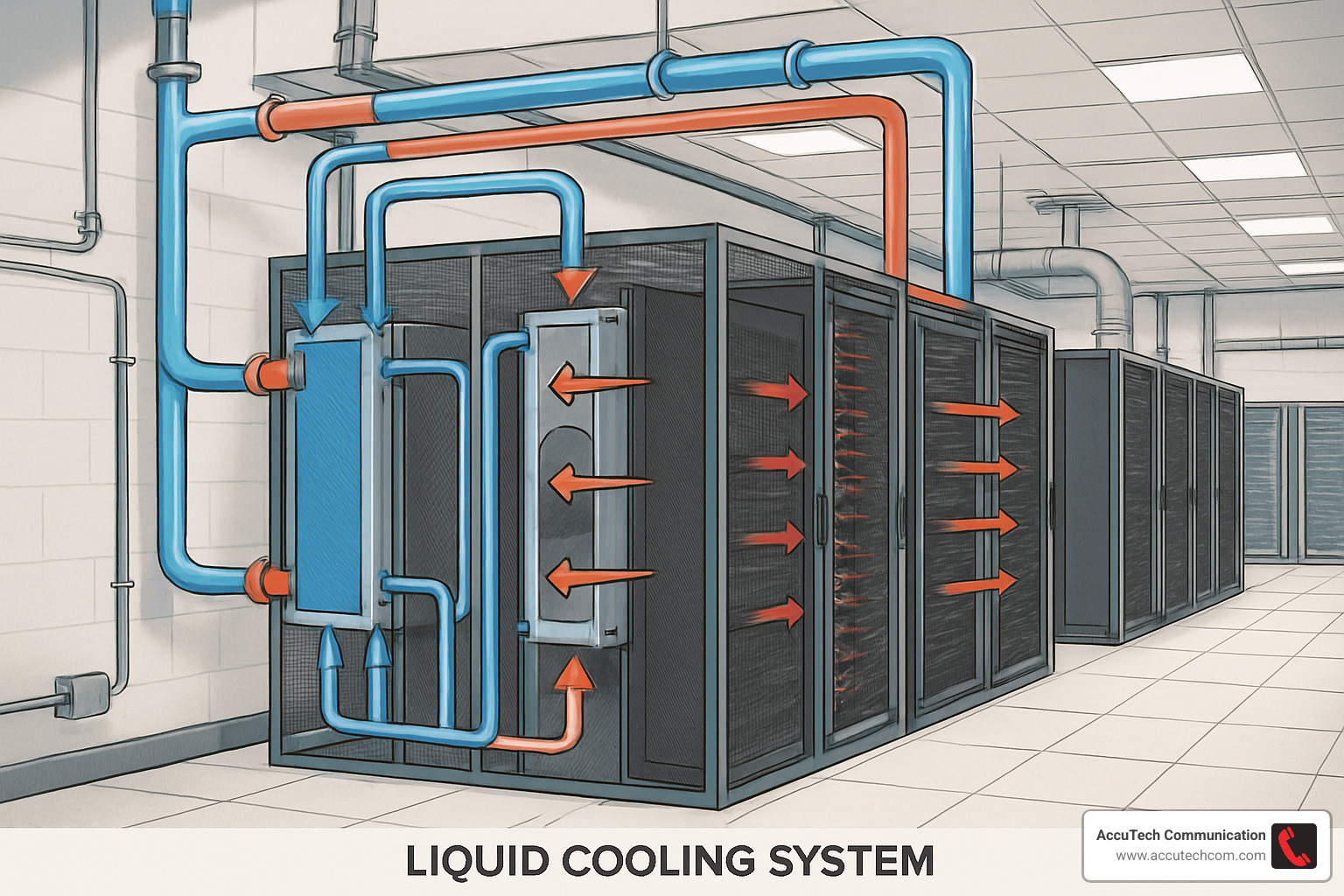
Traditional air cooling with hot-aisle/cold-aisle containment works well for standard workloads, but when things heat up, you might need in-row cooling units placed directly within server rows. For higher densities, rear-door heat exchangers (water-cooled doors that extract heat right at the rack) offer an neat solution.
The frontier of cooling technology brings coolant directly to the heat source with direct-to-chip liquid cooling, while immersion cooling—literally submerging servers in special non-conductive fluid—represents the ultimate in heat removal efficiency.
“Liquid immersion cooling isn’t just an option for the future—it’s becoming essential for serious AI workloads,” explained a thermal engineer I spoke with at a recent data center conference. “The heat transfer efficiency is simply in another league compared to air.”
Design Standards: Your Guiding Light
Several key frameworks help guide your data center design decisions:
The Uptime Institute Tier Classification provides a roadmap for reliability, from basic Tier I infrastructure (99.671% uptime) through the gold standard Tier IV fault-tolerant designs (99.995% uptime). Meanwhile, ASHRAE Thermal Guidelines define the acceptable temperature and humidity ranges for your equipment.
Other important standards include the ANSI/TIA-942 Telecommunications Infrastructure Standard and the European EN 50600 standards for facilities and infrastructures.
Building a Data Center vs. Colocation: Cost Snapshot
The build-versus-buy decision comes down to a careful economic analysis:
On the capital expenditure side, ground-up construction typically runs between $600-$1,100 per gross square foot, or $7M-$12M per megawatt of IT load. Don’t forget land costs in prime markets can reach $1M-$3M per acre.
For operational expenses, power costs vary dramatically by location (from 4¢ to 25¢ per kilowatt-hour), while staffing a 24/7 operation requires at least 10-12 full-time employees. Maintenance generally runs about 1-2% of your capital cost annually.
The industry consensus suggests that building makes economic sense at approximately 2-3 MW of IT load and above. Below this threshold, colocation typically offers better economics unless you have specific requirements that demand an owned facility.
“We initially planned to build our own 1 MW facility until we ran the numbers,” confided an IT director from a growing tech company in Waltham. “Colocation saved us millions upfront and eliminated the staffing headache.”
Future-Proof Design Elements
With data centers expected to serve for 15-20 years, building in flexibility for future technologies isn’t just nice—it’s necessary:
Scalable power infrastructure using overhead busway systems lets you extend capacity without downtime, while raised floors with adequate depth (36-48 inches) accommodate changing cooling strategies. Modular mechanical systems allow you to add capacity without disrupting operations, and oversized pathways ensure you’re ready for higher fiber counts and larger power cables down the road.
Smart implementations of Data Center Infrastructure Management (DCIM) systems optimize operations through intelligent monitoring, while AI-optimized airflow design uses computational fluid dynamics to eliminate performance-killing hotspots.
A facility manager from MetroWest Boston shared a valuable lesson: “We designed our floor with 20% more space than initially needed. Five years later, that foresight saved us from an expensive expansion when we needed to accommodate higher density racks.”
For more information on creating optimized data center environments that meet your specific needs, check out our detailed guide on Data Center Build Out.
Construction, Supply Chain & Cost Control
When it comes to building a data center, the construction phase is where your plans finally take physical shape – and it’s typically the longest and most resource-intensive part of the entire project. Managing this phase effectively means finding the sweet spot between speed, quality, and cost control. And let’s be honest – that challenge has only gotten tougher with recent supply chain hiccups and skilled labor shortages.
Modern data center builders are increasingly turning to innovative construction approaches that can help keep projects on track:
Prefabricated Modular Construction
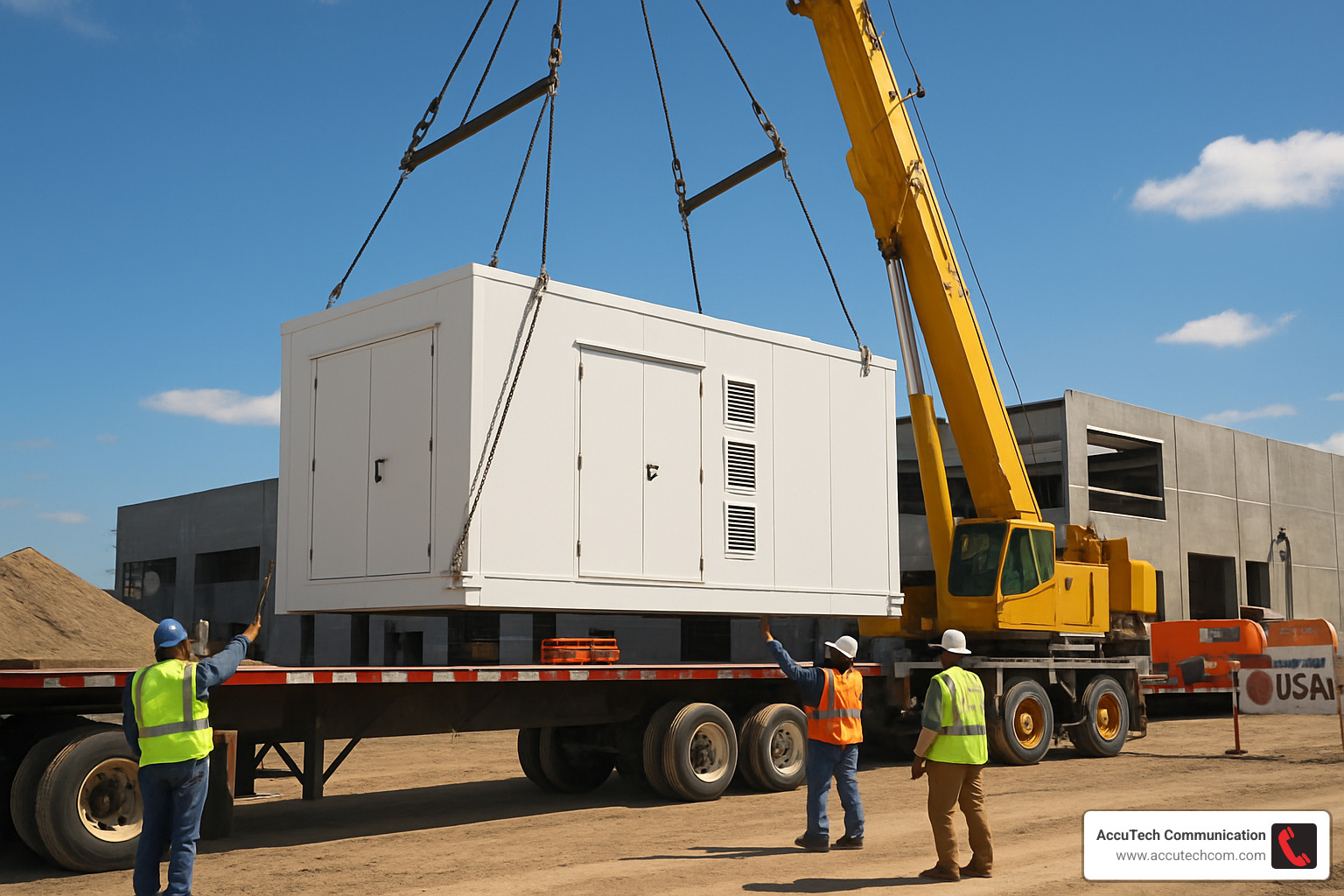
Remember those LEGO sets you loved as a kid? Modular construction works on a similar principle – but with data halls and infrastructure modules instead of plastic bricks. These factory-built components arrive pre-tested and ready to install, often cutting on-site construction time nearly in half.
“We deployed complete prefabricated data halls in about 17 weeks, when traditional methods would have taken us 6-9 months,” shared a project manager from NTT Global Data Centers. “The modules rolled in, we connected them, and we were up and running – it was almost like magic compared to the old way of doing things.”
On-Site Manufacturing
For truly massive projects, some companies are bringing the factory to the construction site. This approach sidesteps supply chain bottlenecks by establishing on-site production of critical components like electrical switchgear or cooling units.
During a recent Massachusetts build, one project director told me how they partnered with key vendors to manufacture components right on the construction site. “We turned what would have been a four-month wait into a four-week turnaround,” he explained. “That kind of time savings is game-changing when you’re racing to bring capacity online.”
Long-Lead Equipment Strategy
Some equipment simply takes time to manufacture – no way around it. UPS systems, generators, and specialized switchgear often have lead times stretching 9-12 months or more. Smart project managers develop comprehensive strategies for these items:
- Ordering critical equipment the moment designs are approved (sometimes even before)
- Building relationships with key suppliers long before the project begins
- Securing staging areas where equipment can be safely stored until installation
- Carefully choreographing deliveries to match the construction sequence
Labor Planning
The specialized workforce needed for data center construction can’t be pulled together overnight. Large projects might need over 1,000 workers on-site during peak periods, with particularly high demand for electricians and HVAC technicians.
Successful projects require thoughtful workforce coordination, including shift planning that maximizes productivity while maintaining safety. As one veteran superintendent put it, “Having the right people with the right skills at the right time is just as important as having the right materials.”
Digital Construction Tools
Technology is changing how we build these complex facilities. Building Information Modeling (BIM) creates detailed digital twins that help identify potential clashes before they become costly field problems. Lean construction methods eliminate waste and optimize workflows. Drones provide quick site surveys, while augmented reality helps teams visualize completed systems during installation.
Budget Drivers & Mitigation
Several key factors can significantly impact your data center construction budget:
Material Selection
The age-old debate between steel and concrete continues to evolve. Concrete offers superior thermal mass, excellent fire resistance, and often lower upfront costs. Meanwhile, steel provides faster erection times, greater flexibility for future modifications, and lighter structural weight.
“We chose concrete for our Massachusetts facility because the thermal properties helped our cooling efficiency,” explained one facility manager. “But for our New Hampshire expansion, where we needed a quicker timeline and future flexibility, steel made more sense.” The right choice depends on your specific needs, local availability, and long-term plans.
Contract Strategies
How you structure your contracts can significantly impact both costs and outcomes. Guaranteed Maximum Price (GMP) contracts cap your financial exposure but may include contingencies that inflate the price. Cost-plus with shared savings approaches can align your contractor’s interests with your budget goals. Design-build integration reduces change orders by having a single entity responsible for both design and construction.
Many successful projects involve contractors early in the design process, bringing practical construction expertise into key decisions before plans are finalized.
Energy Infrastructure Options
Power infrastructure typically accounts for 40-60% of construction costs for a data center. Several approaches can help optimize this substantial investment:
Bring-your-own-power strategies involve developing private substations and transmission lines – a higher upfront cost that often pays off through lower long-term rates. Modular UPS deployment lets you install capacity in phases as demand grows, improving cash flow. Renewable integration and microgrid capabilities can provide both sustainability benefits and improved resilience.
“Our private substation cost us 15% more upfront,” shared a New Hampshire project manager, “but we’ve saved 22% on power rates over five years. That math made the decision pretty simple.”
For guidance on selecting the right construction partners for your project, check out our comprehensive guide to Data Center Construction Companies.
Commissioning & Reliability Testing
The transition from construction to operations is a critical moment that requires thorough testing to verify all systems perform as designed:
Integrated Systems Testing
This comprehensive process starts with component-level testing of individual equipment, then progresses to system-level testing that ensures proper integration between different systems. Failure scenario simulations validate redundancy and failover capabilities, while load bank testing confirms capacity under full-load conditions.
“Think of commissioning as a dress rehearsal for your facility’s opening night,” explained one commissioning agent. “You want to find and fix any issues when it’s still just a test, not when you’re supporting live workloads.”
Performance Benchmarking
Establishing baseline metrics provides the foundation for ongoing optimization:
Power Usage Effectiveness (PUE) measures your total facility energy divided by IT equipment energy – the gold standard for efficiency. Water Usage Effectiveness (WUE) quantifies how efficiently you use water resources. Cooling effectiveness metrics validate temperature distribution and airflow patterns, while response time testing confirms how quickly automated systems respond during various failure scenarios.
A Worcester facility manager shared this eye-opening experience: “Our commissioning process uncovered a sequencing issue in our generator controls that would have caused a cascading failure during an actual outage. Finding it during testing rather than during an emergency was worth every penny of our commissioning budget.”
At AccuTech Communications, we’ve helped countless organizations throughout Massachusetts, New Hampshire, and Rhode Island steer the complexities of building a data center. Our team understands the unique challenges of construction in the Northeast and can help you develop strategies to overcome them.
Sustainability, Security & Futureproofing
Let’s talk about the elephant in the room – data centers are power-hungry beasts that currently gobble up about 1-1.3% of the world’s electricity. And that appetite? It could triple by 2030. This is why sustainability isn’t just a nice-to-have when building a data center – it’s becoming as essential as the servers themselves.
At the same time, your shiny new data center will house some of your organization’s most valuable assets, making it a prime target for both physical and digital threats. Finding the balance between environmental responsibility and fortress-like security is one of the most fascinating challenges in modern infrastructure development.
“Data centers are essential to keep society running at speed and scale,” a colleague of mine recently pointed out, “but we must ensure they do so with minimal environmental impact.”
Net-Zero Roadmap When Building a Data Center
Creating a path to net-zero emissions isn’t something you figure out after the data center is built – it needs to be baked into your planning from day one. Think of it as a journey with four distinct pit stops:
First, you’ll need a thorough baseline assessment. This means calculating your carbon footprint across all emissions scopes, identifying your biggest carbon culprits, setting science-based targets, and establishing how you’ll measure progress. It’s like getting a complete physical before starting a new workout regimen.
Next comes efficiency optimization – the low-hanging fruit of sustainability. Aim for a best-in-class PUE below 1.2, maximize your IT hardware utilization (idle servers are wasted energy), implement advanced cooling, and leverage AI to manage your infrastructure more intelligently.
The third stage involves transitioning to renewable energy. This might include securing long-term renewable PPAs, installing solar panels or wind turbines on-site where feasible, adding energy storage solutions to handle intermittency, and exploring emerging technologies like hydrogen fuel cells or small modular reactors.
Finally, you’ll need a carbon removal strategy for emissions you simply can’t eliminate. This could involve investing in verified carbon removal projects, supporting technological innovation in carbon capture, funding natural carbon sinks like reforestation, and joining industry partnerships to achieve scale.
I recently spoke with a Massachusetts data center operator who shared, “We’ve reduced our carbon footprint by 62% in three years through a combination of efficiency measures and renewable energy contracts. The remaining 38% is our focus for the next phase.” That’s the kind of progressive thinking that’s becoming the industry standard.
Beyond renewable energy, modern data centers are implementing creative sustainability initiatives across several fronts:
Water conservation has become a major focus, with innovations like closed-loop cooling systems, rainwater harvesting, greywater recycling, and even completely waterless cooling technologies making significant impacts.
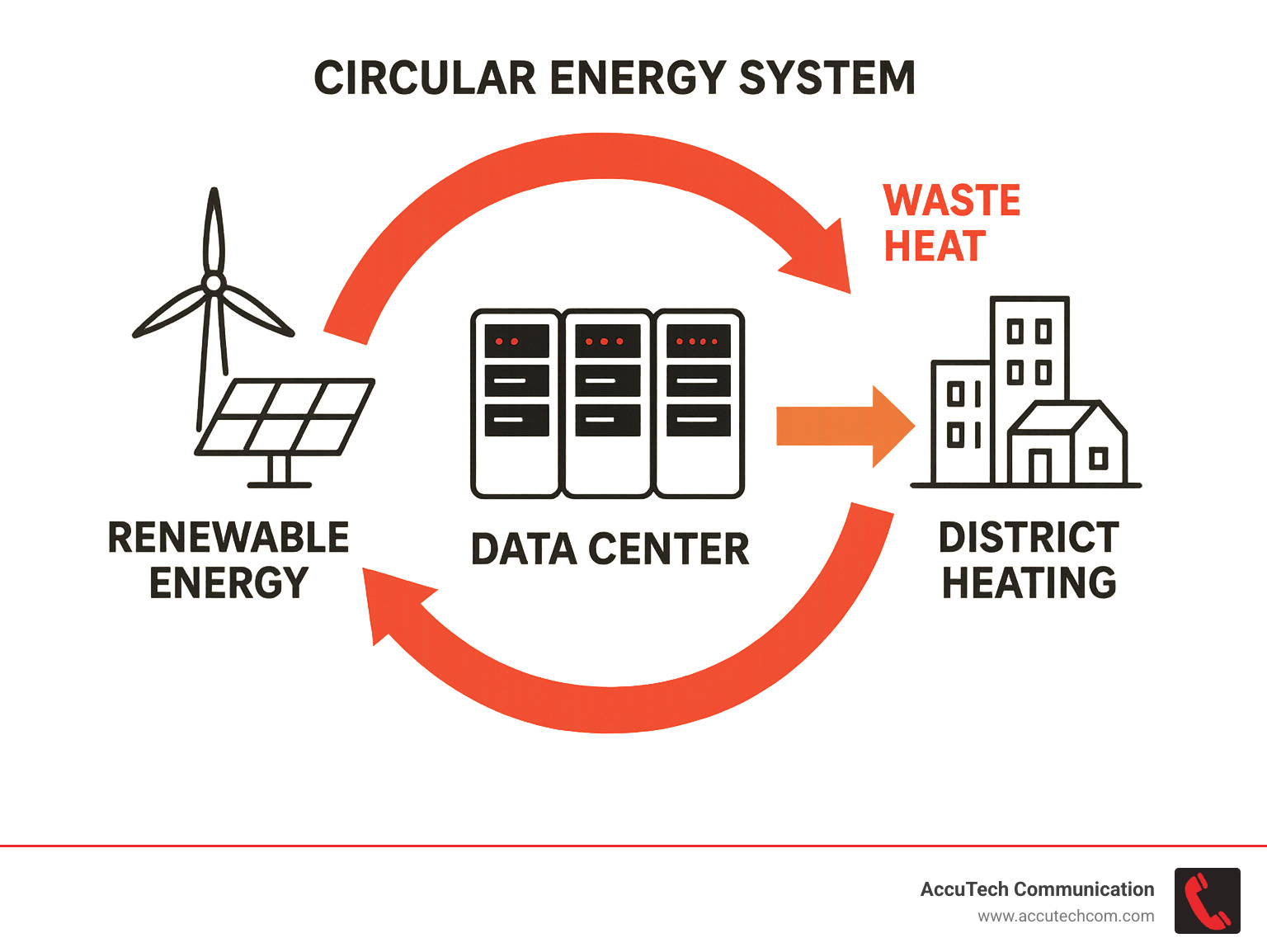
Waste heat utilization is another frontier where innovation is booming. Instead of venting heat into the atmosphere, forward-thinking facilities are capturing it for district heating of nearby buildings, warming greenhouses (a practice gaining traction in Europe), providing process heat for industrial applications, or even powering absorption chillers to generate additional cooling.
Environmental reporting has also evolved from a nice-to-have to a must-have, with ESG metrics, carbon accounting, science-based targets, and sustainability certifications like LEED and BREEAM becoming standard business practice.
Multi-Layer Defense Strategy
When it comes to securing your data center, thinking in layers is the only approach that works. Each layer needs to complement the others, creating a defense-in-depth strategy that addresses threats at every level.
Starting from the outside, perimeter security forms your first line of defense. This typically includes reinforced fencing equipped with intrusion detection, vehicle access controls and barriers, strategic landscaping designed to deter unauthorized access, and comprehensive lighting and surveillance coverage.
Moving inward, building security protects the facility itself with a hardened building envelope (potentially blast-resistant and ballistic-rated), limited entry points featuring mantrap configurations, round-the-clock security personnel, and sophisticated visitor management systems.
Inside the building, data hall security adds another protective layer with biometric access control, video surveillance improved with analytics, aisle containment with secured access points, and electronic locks controlling entry to sensitive areas.
At the innermost level, rack-level security protects individual equipment with electronic locks that maintain detailed audit trails, asset tracking and management systems, tamper-evident seals, and environmental monitoring to detect unusual conditions.
All of these security measures need to align with relevant compliance frameworks including GDPR, HIPAA, PCI DSS, SOC 2, and ISO 27001, depending on your specific industry requirements and customer needs.
For organizations considering infrastructure changes, our Data Center Migration Project resources provide valuable guidance on maintaining security during transitions.
The most effective security strategies recognize that physical and digital threats don’t exist in separate universes. The most secure facilities seamlessly integrate physical and cyber security operations, creating a unified security posture that addresses the full spectrum of risks. After all, a sophisticated attack might begin in cyberspace but culminate in physical access – or vice versa.
As you’re building a data center that will likely operate for 15-20 years, both sustainability and security requirements will continue to evolve. The facilities that thrive will be those designed with enough flexibility to adapt to changing environmental standards, emerging threats, and new technologies that we can’t even imagine today.
Frequently Asked Questions about Building a Data Center
How much does a 10 MW facility cost?
When it comes to building a data center with 10 MW of IT capacity, you’re looking at an investment of $70-120 million, not including land costs. I’ve seen countless clients experience sticker shock when they first see these numbers broken down:
- Core and shell: $20-30 million
- Electrical infrastructure: $30-50 million
- Mechanical systems: $15-25 million
- IT infrastructure: $5-15 million
But here’s the thing – these costs swing wildly depending on where you build, what level of redundancy you need, and your specific design requirements. As one of my colleagues often jokes, “A Tier IV facility in Boston costs about the same as a small island in the Caribbean.”
Several factors can dramatically impact your budget. Higher power density requirements will drive up costs significantly. Redundancy level makes a huge difference too – those 2N systems might help you sleep at night, but they’ll cost considerably more than N+1 configurations. Location plays a massive role (urban real estate isn’t cheap!), and if you’re in a rush, expect to pay premium prices for an accelerated timeline. Finally, custom designs will always cost more than standardized approaches.
What redundancy tier should I target?
Choosing the right redundancy tier reminds me of picking insurance – you want enough coverage without breaking the bank. Your choice really depends on your specific needs and how much downtime your business can tolerate:
Tier I (Basic) provides a single path for power and cooling with no redundant components. With 99.671% availability, you’re looking at about 28.8 hours of downtime annually. This works well for non-critical applications or test environments where a little downtime won’t cause panic.
Tier II (Redundant Components) still uses a single path for power and cooling but adds redundant components (N+1). At 99.741% availability, you’ll see around 22 hours of downtime per year. Small businesses or systems where transactions can pause briefly might find this sufficient.
Tier III (Concurrently Maintainable) steps things up with multiple power and cooling paths (though only one active) and redundant components. With 99.982% availability, downtime drops to just 1.6 hours annually. Most enterprise applications live comfortably here.
Tier IV (Fault Tolerant) is the gold standard with multiple active power and cooling paths and 2N or 2N+1 redundancy. At 99.995% availability, you’re down for mere minutes each year (0.4 hours). Critical applications in financial services or healthcare typically demand this level.
I love how one of our data center consultants puts it: “If your IT team can’t take vacation or turn their phones off, your design has failed them.” Many of our clients take a hybrid approach, implementing different tiers for different systems based on criticality – a smart way to balance reliability with cost-effectiveness.
Can I retrofit an existing warehouse?
Repurposing an existing warehouse is definitely possible – and sometimes brilliant! I’ve helped several clients successfully transform old industrial spaces into modern data centers, but it’s not always the right move.
Why warehouse conversion can make sense:
Converting an existing structure can get you to market faster, potentially save 15-25% on construction costs, reduce environmental impact, and leverage existing utility connections. For businesses looking to move quickly while controlling costs, it’s worth exploring.
Before you sign that lease, consider these factors:
Can the floor support 250-350 pounds per square foot? You’d be surprised how many warehouses can’t handle the weight. Is there enough vertical clearance (minimum 12 feet, ideally 18+ feet)? Will structural columns mess up your efficient layout? Can the local grid actually deliver the power you need? Is the roof strong enough for HVAC equipment and completely watertight? And finally, is there room to grow when you inevitably need more space?
I remember working with a client in MetroWest Boston who hit the jackpot with a former manufacturing facility. “The existing heavy industrial power service and reinforced floor were perfect for our needs,” they told me. “We saved about six months compared to building from scratch.”
But I’ve seen the opposite too. A Rhode Island client abandoned their warehouse dreams after finding that upgrading the power infrastructure would cost more than starting fresh. Each building tells its own story – thorough due diligence is absolutely essential before committing.
For more detailed guidance on planning your data center project, check out our Data Center Build Outs resources.
Conclusion
The journey of building a data center is truly one of the most complex projects an organization can undertake. It’s not just a construction project—it’s a multi-year commitment that weaves together expertise from dozens of specialized fields, from electrical engineering to cooling technology to security architecture.
Throughout this guide, we’ve walked through the winding path from initial concept to operational facility. What becomes clear is that today’s data centers are evolving at breakneck speed to meet our digital world’s insatiable appetite for computing power.
Several important themes have emerged from our exploration:
Power has become the new limiting factor in the data center world. With modern facilities requiring up to 100 megawatts—enough to power small cities—securing adequate, reliable, and affordable electricity has become the primary constraint in many markets. This is especially true as AI workloads push rack densities to unprecedented levels, changing how we think about capacity planning.
The cooling landscape is experiencing a revolution. As one veteran engineer told me recently, “What worked five years ago simply can’t handle today’s heat loads.” Traditional air cooling systems are increasingly giving way to direct liquid cooling and immersion technologies that can handle the intense heat generated by AI processors. These innovations aren’t just about enabling more computing power—they’re fundamental to the next generation of digital infrastructure.
The sustainability conversation has fundamentally changed. Environmental responsibility has shifted from a “nice-to-have” checkbox to a core business requirement. Organizations building new facilities today are integrating renewable energy sources, implementing circular water systems, and designing for maximum efficiency from day one. The most forward-thinking companies are already mapping their path to net-zero operations.
Security now demands a truly comprehensive approach. As data centers become even more critical to our economy and society, protection must span physical barriers, cyber defenses, and operational protocols. The best security strategies create multiple overlapping layers that together provide the resilience needed in today’s evolving threat landscape.
The “build vs. buy” decision requires careful analysis. While we’ve focused on the construction process, it’s worth noting that many organizations find colocation or cloud solutions more economical, especially below the 2-3 MW threshold. Every situation is unique, requiring thoughtful evaluation of long-term needs and economics.
If you’re considering starting on this journey, partnering with experienced specialists isn’t just helpful—it’s essential. Here at AccuTech Communications, we’ve been guiding businesses throughout Massachusetts, New Hampshire, and Rhode Island through technology infrastructure projects since 1993. Our team brings decades of hands-on experience to data center implementations of all sizes, ensuring your facility will be reliable, efficient, and ready for whatever the future brings.
Whether you’re planning a new build, expanding existing facilities, or optimizing your current infrastructure, we understand the unique challenges of creating environments where technology can thrive. For more information about our comprehensive approach to data center projects, visit our Data Center Build Outs page.
The decisions you make during planning and construction will impact your operations for decades to come. In data centers, expert guidance isn’t just valuable—it’s one of the wisest investments you can make.
