
Business Phone Systems Boston: Top 5 Must-Have Picks
Business phone systems Boston are crucial tools for companies looking to streamline communication, improve productivity, and stay competitive in today’s business world. Here’s a quick overview of why investing in modern phone systems is essential:
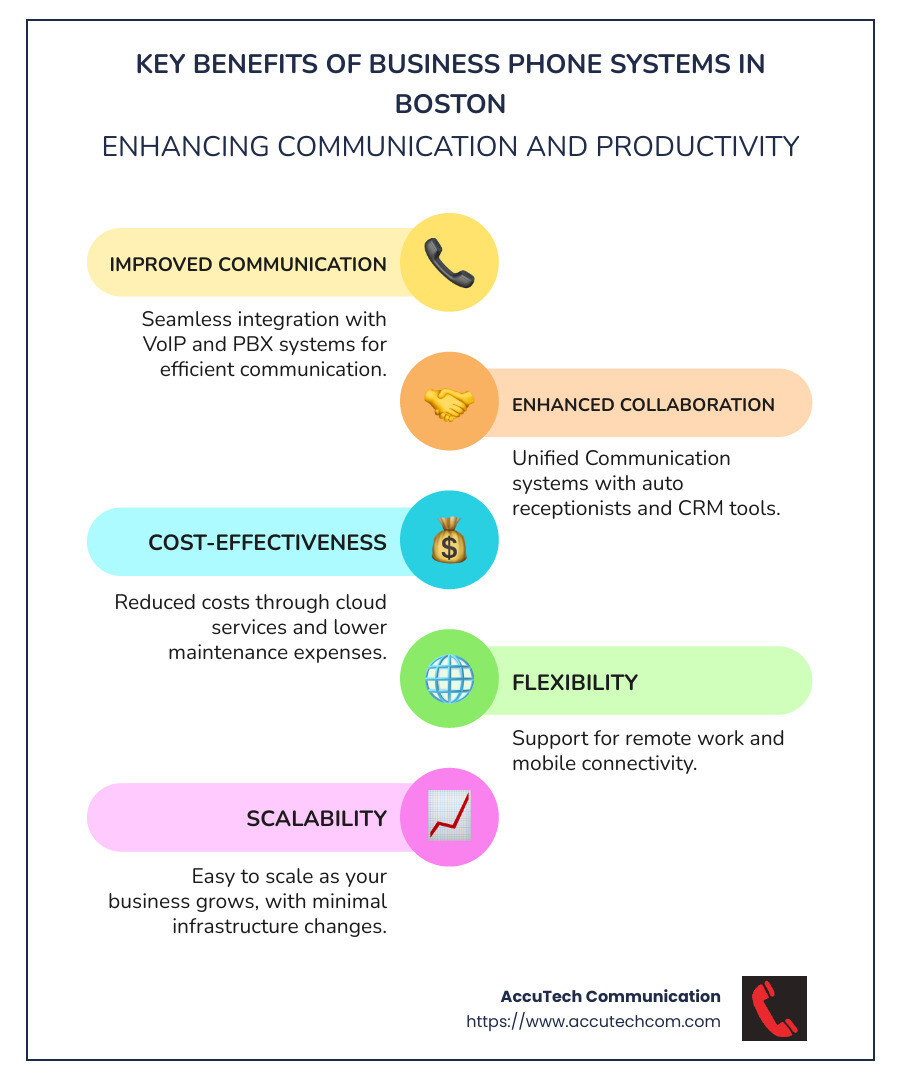
- Improved Communication Efficiency: Modern phone systems, such as VoIP and PBX, enable seamless communication across various platforms, ensuring your team stays connected whether they’re in the office or remote.
- Improved Collaboration: Unified Communication systems integrate tools like auto receptionists and CRM, facilitating better teamwork and customer interaction.
- Cost-Effectiveness: These systems often reduce costs by leveraging cloud services and minimizing maintenance expenses compared to outdated infrastructure.
Boston, with its vibrant economy and diverse industries, is a place where businesses cannot afford to lag in technological advancements. Communication is the backbone of any successful operation, whether your enterprise is in thriving sectors like healthcare or cutting-edge fields like technology. Your choice of business phone systems Boston can significantly impact your operations’ efficiency and scalability.
I’m Corin Dolan from AccuTech Communications. With years of experience in implementing and supporting communication solutions in Boston and beyond, I’ve seen how the right phone system can revolutionize a business’s operations.
Understanding Business Phone Systems
Business phone systems are more than just tools for making calls. They are comprehensive communication solutions that help businesses operate efficiently and effectively. Let’s explore some of the key components of modern business phone systems: VoIP, PBX, and Unified Communications.
VoIP: Voice Over Internet Protocol
VoIP stands for Voice Over Internet Protocol. It’s a technology that allows you to make voice calls using a broadband internet connection instead of a regular phone line.
Why Choose VoIP?
- Cost Savings: VoIP reduces costs by utilizing the internet for calls, often eliminating long-distance charges.
- Flexibility: Employees can make and receive calls from anywhere with an internet connection, perfect for remote work.
- Integration: VoIP systems can integrate with other business tools like CRM software and email platforms, enhancing productivity.
PBX: Private Branch Exchange
PBX is a private telephone network used within a company. Users of the PBX share a number of outside lines for making external phone calls.
Advantages of PBX:
- Control: Offers greater control over your phone system, with features like call routing and voicemail.
- Scalability: Easily add or remove lines as your business grows.
- Reliability: Often considered more reliable for large enterprises with high call volumes.
Unified Communications
Unified Communications (UC) is the integration of various communication tools into a single system. This includes voice, video, messaging, and collaboration applications.
Benefits of Unified Communications:
- Seamless Collaboration: Integrates various communication tools, making it easier for teams to collaborate.
- Improved Productivity: With everything in one place, employees spend less time switching between different platforms.
- Improved Customer Interaction: Features like auto receptionists and CRM integration improve customer service.
In today’s world, choosing the right business phone systems Boston can give your company a competitive edge. Whether it’s the cost-effectiveness of VoIP, the control offered by PBX, or the seamless integration of Unified Communications, each system has unique benefits that can transform your business operations.
As we dig deeper into the benefits of modern phone systems, we’ll see how these technologies not only facilitate communication but also drive business growth and innovation.
Benefits of Modern Phone Systems
In the changing world of business, modern phone systems have become indispensable. But what makes them so beneficial? Let’s explore the key advantages: cost savings, flexibility, and collaboration tools.
Cost Savings
One of the most compelling reasons to switch to modern business phone systems is the potential for significant cost savings. Traditional phone systems often come with hefty long-distance charges and high maintenance fees. In contrast, VoIP systems use the internet to make calls, which can dramatically cut costs, especially for businesses with international reach.
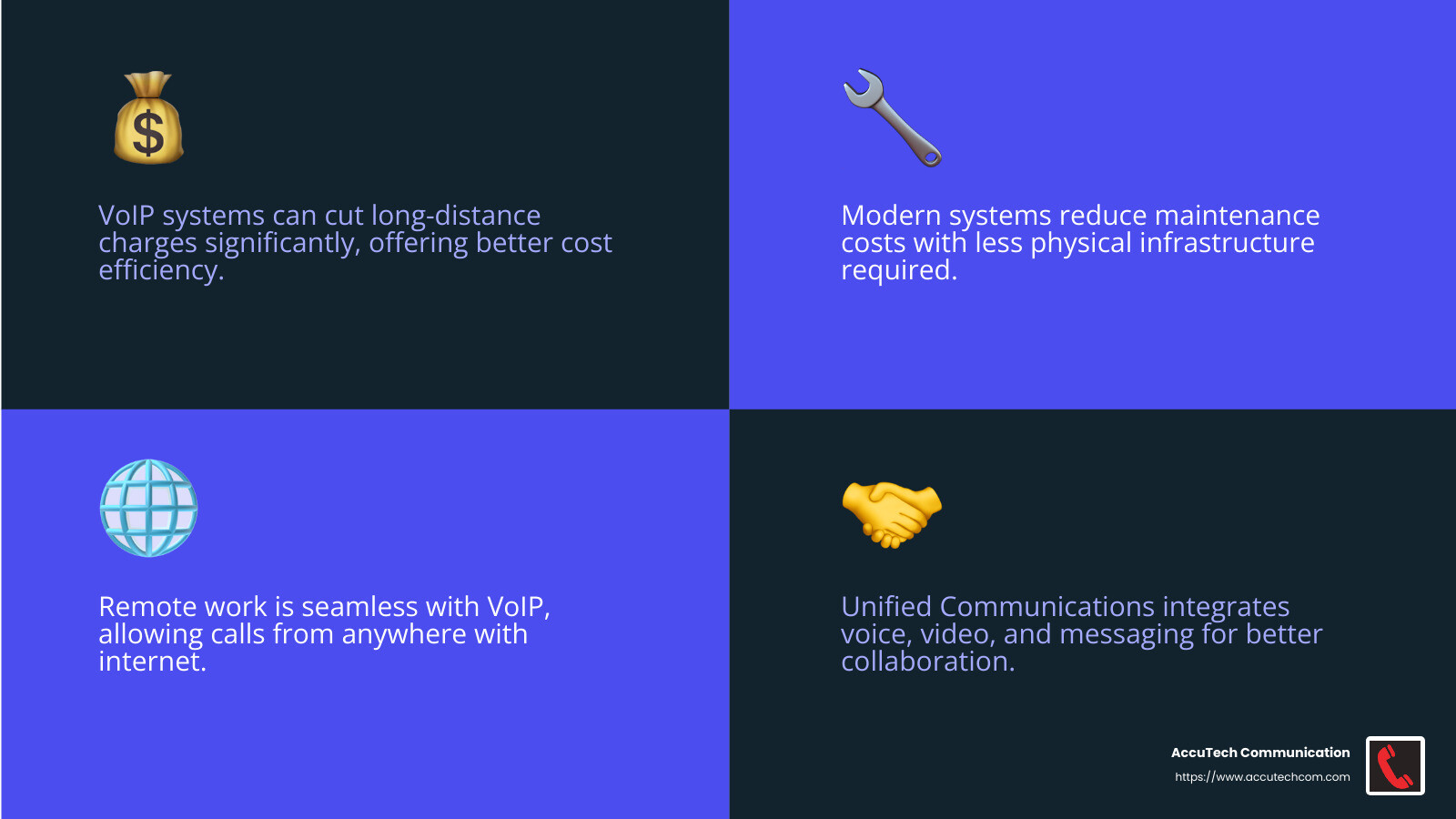
- Reduced Long-Distance Charges: With VoIP, long-distance and international calls are often included in the basic service plan, eliminating unexpected charges.
- Lower Maintenance Costs: Modern systems require less physical infrastructure, which reduces the need for costly repairs and updates.
Flexibility
Flexibility is another major advantage of modern phone systems. In today’s work environment, being tied to a desk is no longer the norm. Employees need to stay connected, whether they’re working from home, traveling, or at a satellite office.
- Remote Work Capabilities: VoIP and cloud-based systems allow employees to make and receive calls from anywhere with an internet connection. This is crucial for businesses embracing remote work.
- Scalability: As your business grows, you can easily add new lines or features without overhauling your entire system. This adaptability makes it easier to scale operations efficiently.
Collaboration Tools
Modern phone systems come with a suite of collaboration tools that improve team productivity and efficiency. These tools integrate seamlessly with other business applications, facilitating better communication and teamwork.
- Unified Communications: This integration of voice, video, and messaging into one platform allows for seamless collaboration. Teams can transition from a chat to a video call with a single click, improving workflow and interaction.
- CRM Integration: By connecting phone systems with CRM software, businesses can improve customer interactions. Employees have instant access to customer data during calls, enabling personalized service and faster issue resolution.
These benefits illustrate why modern business phone systems Boston are essential for companies looking to thrive in today’s digital landscape. By offering cost savings, flexibility, and advanced collaboration tools, these systems not only support daily operations but also empower businesses to innovate and grow.
Next, we’ll dive into the top features you should look for when choosing a business phone system.
Top Features to Look for in Business Phone Systems
When selecting a business phone system, it’s crucial to consider features that improve productivity and streamline communication. Here are some top features that can make a significant difference:
Auto Receptionist
An auto receptionist is like having a virtual front desk assistant. It answers calls automatically and directs them to the right department or person without human intervention. This feature ensures that your business is always reachable, even during high call volumes or after hours.
- Efficiency: Reduces wait times for callers and frees up staff to focus on other tasks.
- Professionalism: Provides a consistent and professional greeting, enhancing your company’s image.
Mobile App
A mobile app for your phone system ensures that employees can stay connected no matter where they are. This is essential in today’s flexible work environment, where remote work and travel are common.
- Remote Access: Employees can make and receive calls, access voicemails, and join meetings from their smartphones.
- Seamless Integration: Syncs with the desktop system, ensuring that all communication tools are at your fingertips, whether you’re in the office or on the go.
CRM Integration
Integrating your phone system with CRM (Customer Relationship Management) software can transform how your business interacts with customers. This feature allows for a more personalized and efficient customer service experience.
- Customer Insights: Provides instant access to customer information during calls, enabling personalized interactions and quicker problem-solving.
- Improved Productivity: Automates data entry and call logging, reducing manual tasks and allowing employees to focus on customer engagement.
These features are not just nice-to-haves; they are essential for any modern business phone system. They improve efficiency, improve customer service, and support a flexible work environment. As you consider options for your business, keep these features in mind to ensure you’re choosing a system that meets your needs and helps your company thrive.
Next, we’ll explore the landscape of business phone systems Boston, focusing on the role of network cabling and data center technologies in Massachusetts.
Business Phone Systems Boston
When it comes to business phone systems in Boston, there’s more than just choosing the right phone. The backbone of any reliable communication setup is its network cabling and data center technologies. Let’s explore how these elements play a crucial role in Massachusetts.
Network Cabling: The Silent Hero
Imagine trying to use high-speed internet over an old, frayed wire. Not ideal, right? That’s where network cabling comes in. It’s the infrastructure that supports your business phone system, ensuring clear and reliable communication.
- Types of Cabling: For most businesses, options like Cat 5e, Cat 6, and fiber optic cables are popular. Each type offers different levels of performance, with fiber optics being the fastest and most reliable for high-speed data transfer.
- Clean Installations: AccuTech Communications prides itself on “ninja clean” installations. This means no messy wires or visible evidence of upgrades—just seamless, professional service that keeps your office looking tidy.
- Reliability: With properly installed cabling, businesses can avoid the common pitfalls of dropped calls and slow data speeds. This is why many companies in Massachusetts choose AccuTech for their cabling needs.
Data Center Technologies: The Heart of Communication
Data centers are the heart of any robust communication system. They house the servers and networking equipment that keep your business phone systems running smoothly.
- Efficiency and Security: Modern data centers offer high efficiency and robust security features. This ensures that your communication data is protected and accessible when you need it.
- Scalability: As your business grows, your data center can scale with you. Whether you’re a small startup or a large corporation, having a scalable data center means you won’t outgrow your communication infrastructure.
- Local Expertise: In Massachusetts, having a local partner like AccuTech Communications means you get expert advice custom to your specific needs. They understand the local business landscape and can provide solutions that fit your unique requirements.
By investing in quality network cabling and data center technologies, businesses in Boston can ensure their phone systems are reliable and efficient. These components are the unsung heroes that support seamless communication, allowing companies to focus on what truly matters—serving their customers and growing their business.
Next, we’ll tackle some frequently asked questions about business phone systems to help you make informed decisions.
Frequently Asked Questions about Business Phone Systems
What is the best business phone system for small businesses?
For small businesses, VoIP (Voice over Internet Protocol) systems are often the best choice. They offer flexibility, scalability, and a range of features that traditional phone systems can’t match. With VoIP, you can make calls over the internet, reducing the need for separate phone lines. This technology is not only cost-effective but also easy to expand as your business grows.
Cloud-based setups are particularly popular among small businesses. They require minimal upfront investment and offer robust features like call forwarding, voicemail-to-email, and mobile apps. This means your team can stay connected whether they’re in the office or on the go.
How much does a business phone system cost?
The cost of a business phone system can vary widely depending on the features and setup you choose. Generally, pricing structures for VoIP systems are based on a monthly subscription, which can be more affordable than traditional systems that often require significant upfront costs for hardware and installation.
Monthly costs can range from a few dollars per user for basic plans to higher amounts for more advanced features like CRM integration and video conferencing. The beauty of these systems is their flexibility—businesses can choose a plan that fits their budget and needs, and easily adjust as those needs change.
Is VoIP worth it for small businesses?
Absolutely. VoIP systems offer numerous benefits that make them a worthwhile investment for small businesses. They provide lower costs compared to traditional phone systems, thanks to reduced hardware expenses and cheaper call rates, especially for long-distance and international calls.
Moreover, VoIP systems come with features that improve productivity and collaboration. These include auto-receptionist services, mobile apps, and seamless CRM integration. Such features allow businesses to operate more efficiently and provide better customer service.
Flexibility is another significant advantage. VoIP systems are easily scalable, so adding new users or features as your business grows is straightforward and cost-effective. This adaptability ensures that your communication system can evolve with your business needs.
In summary, VoIP offers a modern, flexible, and cost-effective solution for small businesses looking to improve their communication capabilities. Next, we’ll explore how to choose the right phone system features for your business needs.
Conclusion
Choosing the right business phone system can feel overwhelming, but it doesn’t have to be. At AccuTech Communications, we make it simple. Our focus is on delivering reliable service and competitive pricing to businesses in Massachusetts, New Hampshire, and Rhode Island.
Since 1993, we’ve been a trusted partner for businesses looking to improve their communication systems. Our team is dedicated to ensuring that your network infrastructure is optimized for peak performance. We offer a wide range of solutions, from VoIP systems to network cabling and data center technologies. This comprehensive approach means you can count on us for all your communication needs.
Our commitment to quality and customer satisfaction has helped us build long-lasting relationships with clients—many of whom have been with us for over two decades. We believe that investing in a responsive and knowledgeable maintenance and support provider is as crucial as the technology itself. That’s why our technicians and engineers have access to Avaya and Nortel manufacturer support nationwide, providing certified and reliable service you can trust.
If you’re looking for a partner to help strengthen your business communications, contact us today for a consultation. Your network is the backbone of your business, and we’re here to help make it stronger.
