
Business Phone Systems: Top 5 Powerful Options 2025
Business phone systems serve as the backbone of modern communication in today’s world. Whether you’re running a healthcare facility or a busy corporate office, having an efficient phone system is crucial for seamless operations. Here’s what you should know at a glance:
- Types: Systems range from basic Key Service Units (KSU) to advanced Private Branch Exchange (PBX) and VoIP solutions.
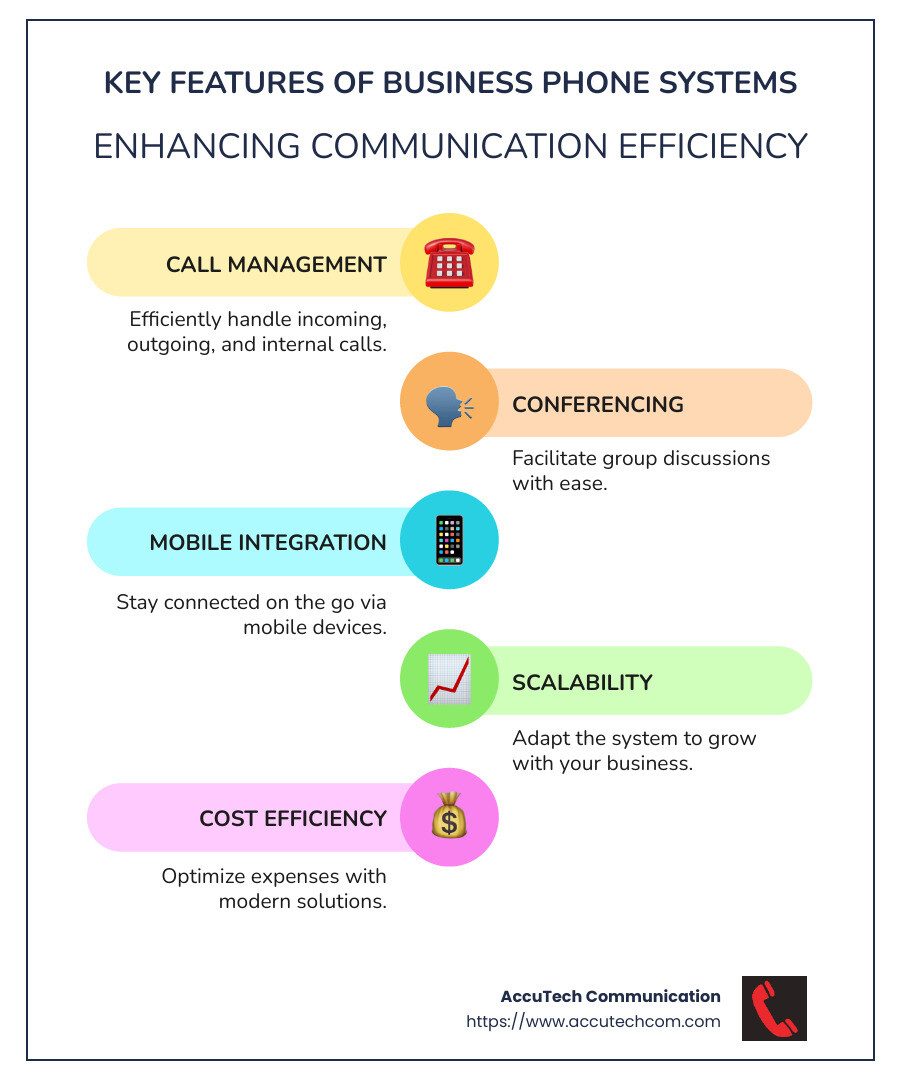
- Features: Include call management, conferencing, mobile integration, and scalability.
- Benefits: Improved communication, reduced costs, and improved workflow efficiency.
When effective communication is key, businesses are eager for solutions that ensure reliability and future-proofing. As technology continues to evolve, network cabling and data center technologies are becoming integral components of robust communication systems.
At AccuTech Communications, based in the heart of Massachusetts, we are committed to delivering business phone systems custom to your specific needs. With over twenty years of expertise in the field, I’m Corin Dolan, and I am here to guide you through choosing the right business phone system while ensuring your network infrastructure is top-notch.
Business phones systems glossary:
– business communication systems
– business phone system installation
– internet phone systems for business
Understanding Business Phone Systems
When it comes to business phone systems, choosing the right type is essential for efficient communication. Let’s explore the different types available and what they offer.
Key Service Unit (KSU)
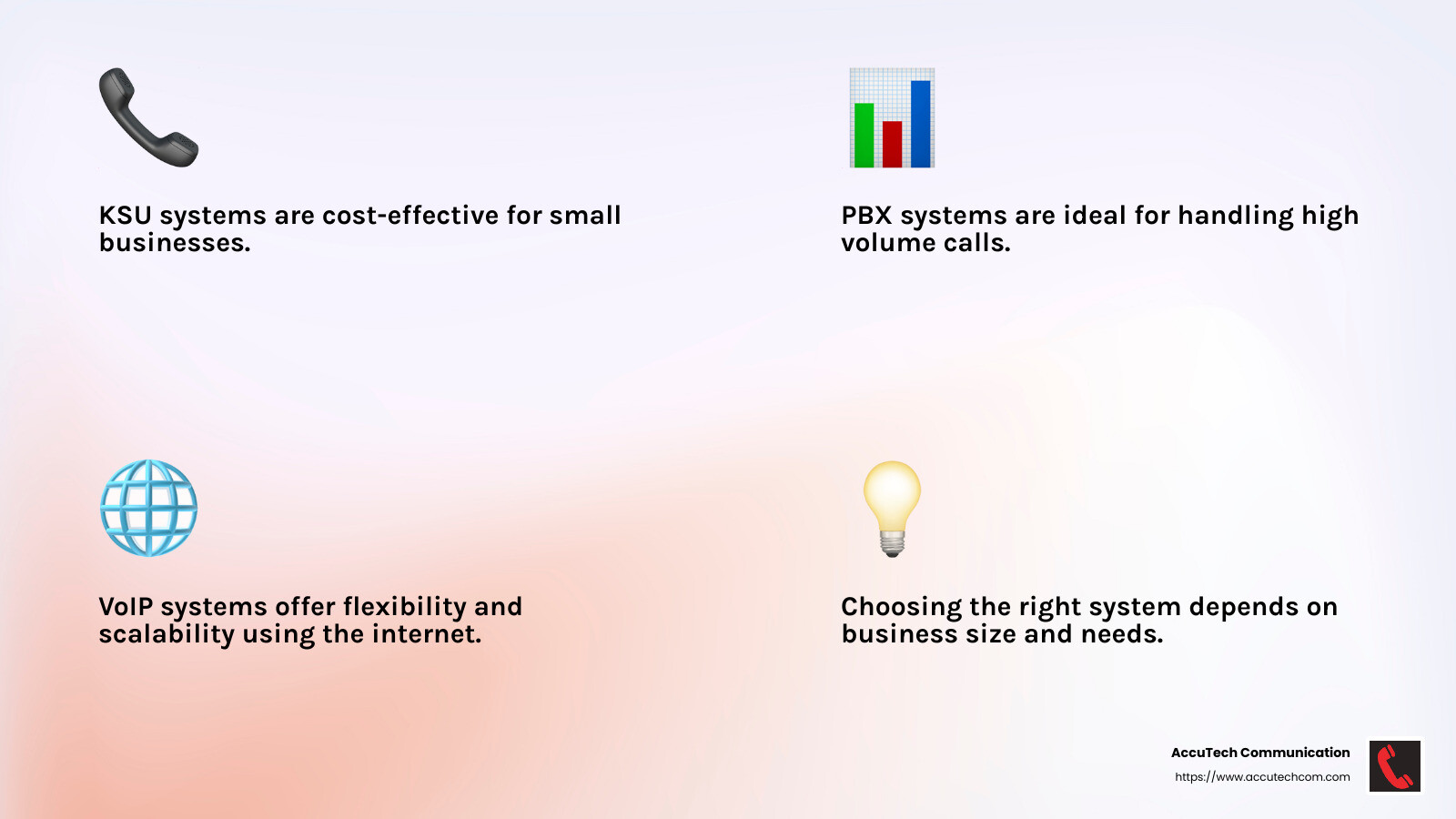
Key Service Units (KSU) are ideal for small businesses with basic communication needs. They operate through a central switching unit, allowing an operator to manage incoming calls. This type of system is straightforward and cost-effective but lacks advanced features. It’s perfect for businesses that primarily need simple call handling and voicemail.
Private Branch Exchange (PBX)
For larger businesses with multiple departments, a Private Branch Exchange (PBX) is more suitable. PBX systems can handle a high volume of calls simultaneously, making them ideal for busy environments. Modern PBX systems are digital, using computers to manage and switch calls. This setup offers features like call logging, automated extension routing, and individual voicemail. While the initial cost can be higher, PBX systems reduce ongoing expenses by improving efficiency.
Voice over Internet Protocol (VoIP)
VoIP systems represent the future of business communication. By using the internet to facilitate calls, VoIP offers flexibility and scalability that traditional systems cannot match. They support a range of features, including video conferencing, instant messaging, and file sharing. VoIP systems are easy to install, require minimal hardware, and offer lower costs and improved privacy. This makes them an attractive option for businesses looking to modernize their communications.
Choosing the Right System
Selecting the right business phone system depends on your specific needs. Consider the size of your business, the volume of calls, and the features you require. While KSUs are great for simplicity, PBX systems offer robust solutions for larger operations. VoIP, on the other hand, is ideal for businesses looking to integrate modern technology into their communication strategy.
At AccuTech Communications, we specialize in tailoring phone systems to meet the unique needs of businesses across Massachusetts, Rhode Island, and New Hampshire. Whether you’re a small startup or a large corporation, we have the expertise to help you choose the right system.
Choosing the Right Business Phone System
Selecting the perfect business phone system is crucial for seamless communication. Here’s how to make the best choice for your company.
Determine Business Needs
Start by assessing your business’s communication needs. Consider the size of your team, the number of calls you handle daily, and whether remote work is a factor. For instance, a small business with a local client base might prioritize basic call handling, while a larger organization with remote employees may need advanced mobile integration and conferencing capabilities.
Features and Channels
Next, identify the features that are essential for your operations. Common features include:
- Call forwarding: Direct calls to the right person or department.
- Voicemail: Ensure messages are never missed.
- Conferencing: Facilitate group discussions with ease.
- Mobile integration: Keep your team connected, even on the go.
Also, consider the channels you’ll use. Do you need a system that supports video calls, instant messaging, or file sharing? If so, a VoIP system might be the best fit due to its versatility and modern features.
Set a Budget
Budgeting is a critical step in choosing a phone system. Costs can vary widely depending on the type of system and features you choose. Traditional landlines may have higher ongoing costs compared to VoIP systems, which often offer lower monthly rates and reduced hardware expenses.
While the initial investment in a PBX system might be higher, it can lead to savings in the long run through improved call handling and reduced operational costs.
At AccuTech Communications, we understand that every business is unique. Our team is committed to helping you find a solution that aligns with your operational needs and budget. Whether you’re in Massachusetts, Rhode Island, or New Hampshire, we’re here to support your communication journey.
Top Features of Business Phone Systems
Understanding the key features of business phone systems can help you make informed decisions. Here’s a breakdown of the essential features to look for:
Call Management
Effective call management is the backbone of any business phone system. Features like auto-attendant, call routing, and call transfer ensure that calls reach the right person quickly. This not only improves customer satisfaction but also improves internal communication efficiency.
For example, auto-attendants can answer calls with a professional greeting and direct them to the appropriate department or individual, saving time and resources.
Conferencing
In today’s connected world, conferencing is a must-have feature. It allows multiple people to join a call from different locations, making it ideal for team meetings and client presentations. With options for audio and video conferencing, businesses can choose the format that best suits their needs.
Consider a scenario where a sales team needs to present to a client located overseas. A robust conferencing feature can facilitate this interaction smoothly, enhancing collaboration and decision-making.
Mobile Integration
Mobile integration is crucial for businesses with remote workers or employees who travel frequently. This feature allows team members to access the phone system from their mobile devices, ensuring they remain connected no matter where they are.
With mobile integration, employees can make and receive calls, check voicemails, and participate in conferences directly from their smartphones, maintaining productivity on the go.
Scalability
As your business grows, your phone system should grow with you. Scalability ensures that you can add more lines, features, and users without a complete system overhaul. This flexibility is particularly important for startups and expanding companies.
Imagine starting with a small team and then expanding rapidly. A scalable phone system allows you to accommodate new employees and increased call volumes without disruption.
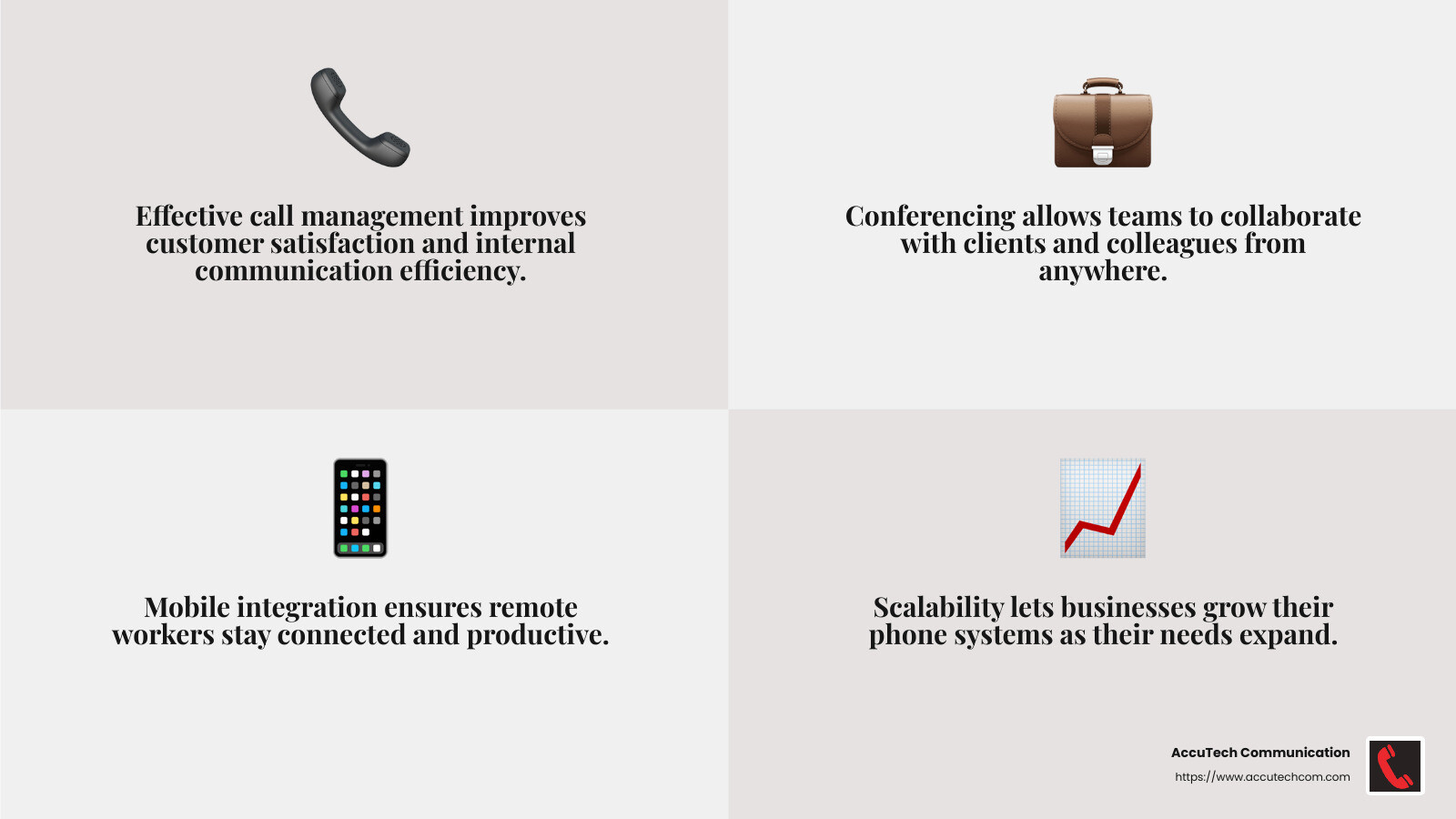
These features are fundamental to a modern business phone system, helping you maintain efficient and effective communication across your organization. With these tools, businesses can streamline operations, improve customer service, and support a dynamic workforce.
In the next section, we’ll explore the cost considerations associated with these systems, helping you budget effectively for your business communication needs.
Cost Considerations for Business Phone Systems
When planning your business communication strategy, understanding the costs involved is crucial. Here’s a breakdown of the main cost considerations for business phone systems.
Average Costs
The cost of a business phone system can vary widely depending on the type and features you choose. Traditional landlines, often considered the old guard of business communication, typically come with higher initial setup costs due to the need for physical hardware and installation.
On the other hand, modern solutions like VoIP (Voice over Internet Protocol) systems are generally more cost-effective. They require minimal hardware and can be set up quickly, often resulting in lower upfront costs.
VoIP Pricing
VoIP systems have become increasingly popular due to their flexibility and affordability. Businesses using these services often see significant cost reductions in telecommunication and hardware expenses. These savings are largely due to the elimination of on-premise hardware and the ability to scale services as needed.
VoIP pricing typically includes a monthly fee per user, which can vary based on the features and number of users. This model allows businesses to pay only for what they use, making it a scalable and budget-friendly option.
Traditional Landlines
Traditional landlines, while reliable, often come with higher ongoing costs compared to VoIP systems. These costs include maintenance, upgrades, and the need for physical infrastructure. Additionally, scaling a landline system can be cumbersome and expensive, as it may require purchasing and installing additional hardware.
Despite these drawbacks, some businesses still prefer landlines for their reliability and familiarity. However, it’s important to weigh these advantages against the potential cost savings and flexibility offered by newer technologies.
In conclusion, understanding the cost implications of different business phone systems is essential for making informed decisions. By evaluating your business needs and comparing the costs of traditional landlines versus VoIP systems, you can choose the communication solution that best fits your budget and operational requirements.
In the next section, we’ll address some frequently asked questions about business phone systems to further guide your decision-making process.
Frequently Asked Questions about Business Phone Systems
What are business phone systems called?
Business phone systems are typically categorized into three main types: KSU, PBX, and VoIP.
- KSU (Key System Unit): Ideal for small businesses, KSUs are simple systems that manage multiple phone lines. They offer basic features like call holding and intercom, but with limited scalability.
- PBX (Private Branch Exchange): Suited for larger businesses, PBX systems can handle a high volume of calls with more advanced features like automated call routing and individual voicemail. They can be either on-premises or cloud-based.
- VoIP (Voice over Internet Protocol): This modern system uses the internet to make calls, offering flexibility and cost savings. VoIP systems support advanced features like video conferencing and mobile integration, making them popular for businesses of all sizes.
What features should a business phone system have?
When selecting a business phone system, consider essential features that improve communication and efficiency:
- Call Forwarding: Ensures calls are directed to the right person, even if they’re away from their desk. This feature improves response times and customer satisfaction.
- Voicemail: Allows messages to be left when someone is unavailable. Advanced voicemail systems can transcribe messages and send them via email, streamlining communication.
- Conferencing: Supports meetings with multiple participants, whether audio or video. This is vital for remote teams and client meetings, enabling seamless collaboration across locations.
How much do business phone systems cost?
The cost of business phone systems varies based on the type and features you choose:
- VoIP Systems: These typically cost between $20-$30 per month per user. This pricing model is attractive due to its scalability and lower upfront costs compared to traditional systems.
- Traditional Landlines: Generally, landlines can range from $50-$100 per month, depending on the provider and additional features. While reliable, they often require more maintenance and have higher setup costs.
Understanding these elements will help you choose the right system for your business needs. In the next section, we’ll wrap up our exploration of business phone systems and highlight why AccuTech Communications is the partner you can rely on for all your communication needs.
Conclusion
Choosing the right business phone systems is crucial for effective communication and operational efficiency. At AccuTech Communications, we understand the unique needs of businesses in Massachusetts, New Hampshire, and Rhode Island. With our comprehensive solutions, we ensure your business stays connected and competitive.
Why Choose AccuTech Communications?
- Reliable Service: Since 1993, we’ve built a reputation for providing dependable and high-quality service. Our certified technicians are committed to maintaining the highest standards, ensuring your systems are always running smoothly.
- Competitive Pricing: We offer cost-effective solutions custom to fit your budget. Whether you’re a small startup or a large corporation, our pricing is designed to provide value without compromising on quality.
- Local Expertise: Based in Massachusetts, we have a deep understanding of the regional business landscape. Our local presence allows us to offer personalized support, ensuring quick response times and customized solutions.
For more information on how we can support your business communication needs, visit our Business Phone Systems page.
In summary, whether you’re looking for a simple KSU system, a robust PBX setup, or the flexibility of VoIP, AccuTech Communications is your trusted partner. Let us help you ring in the new and lift your business communications to the next level.
