
Business Security Systems Cost: Top 5 Smart Savings
Business security systems cost is a topic of great importance for many companies looking to safeguard their assets. Businesses often ask, “What factors determine these costs, and how can we plan accordingly?”
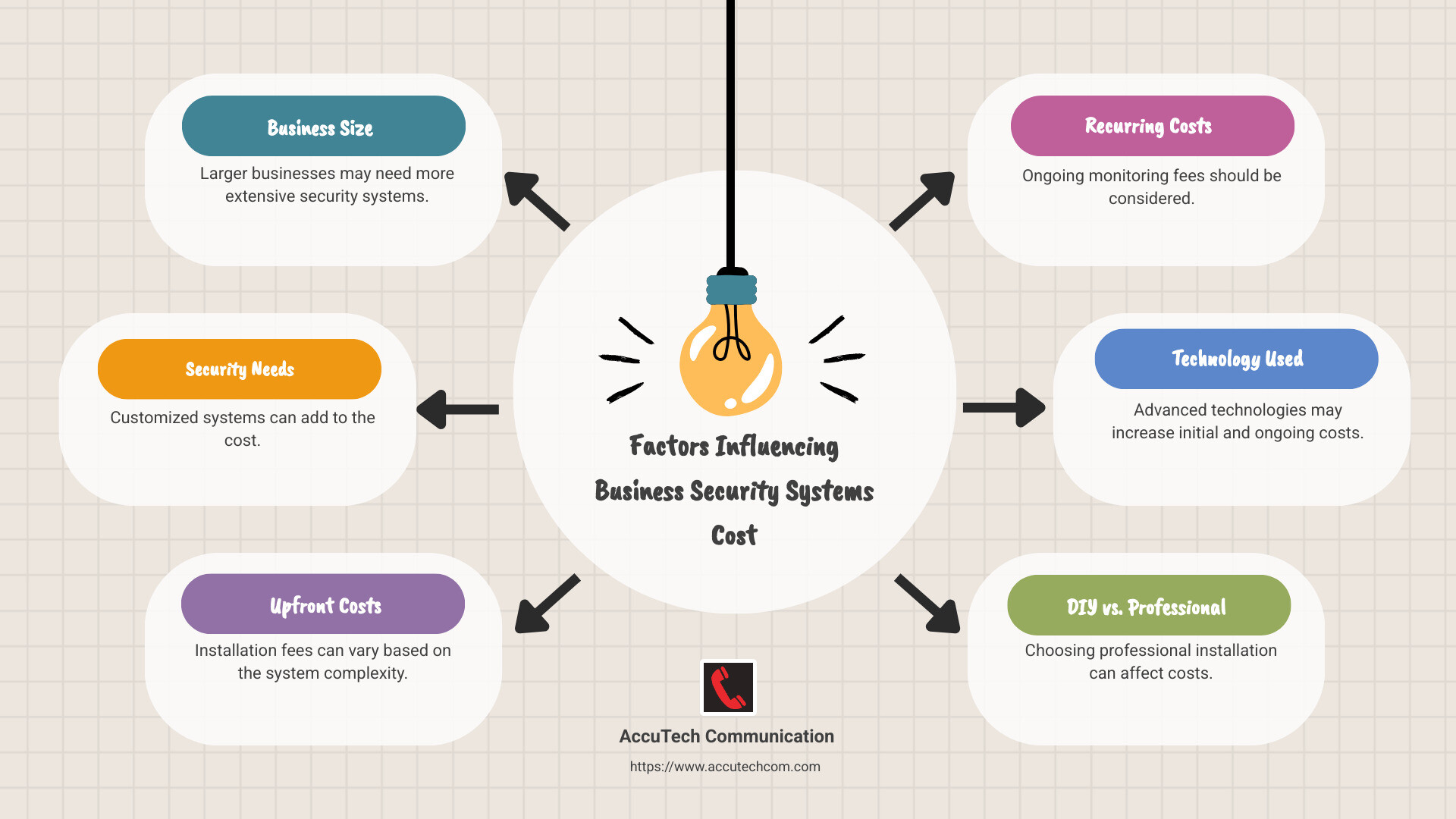
- Diverse Needs: Costs vary significantly based on the size of the business and the specific security needs.
- Upfront vs. Recurring Costs: Many systems involve an upfront installation fee and ongoing monitoring fees.
- Customization: A custom security system may involve additional features, which can influence the initial and monthly pricing.
Let’s explore the essentials of understanding these costs in our guide.
As Corin Dolan, owner of AccuTech Communications with over a decade of experience in the industry, I’ll guide you through navigating the complexities of business security systems cost, based on both industry trends and company insights.
Core Components of Business Security Systems
Understanding the core components of a business security system is crucial for determining the business security systems cost. Let’s break it down into three main areas: security hardware costs, installation and activation fees, and monitoring costs.
Security Hardware Costs
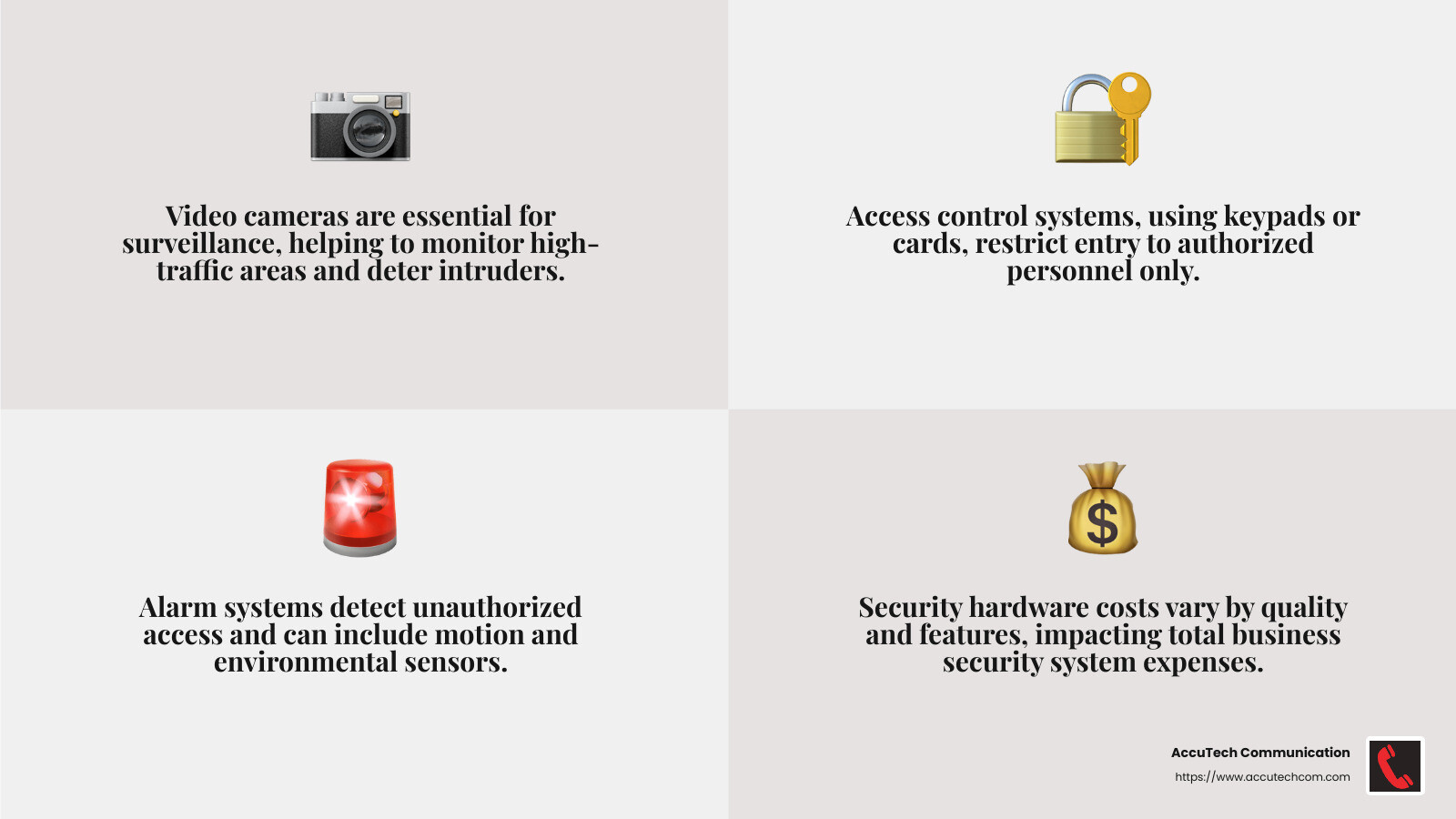
The backbone of any security system is its hardware. This includes video cameras, access control systems, and alarm systems. Each plays a vital role in keeping your business secure.
- Video Cameras: These are essential for surveillance. They help monitor high-traffic areas and can deter potential intruders. The cost can vary widely depending on the quality and features of the cameras. For example, some cameras can distinguish between people and other moving objects, which can be useful for businesses with frequent movement.
- Access Control: This system allows only authorized personnel to enter certain areas. It can include keypads, access cards, or even facial recognition. The cost depends on the complexity of the system and the number of entry points you need to secure.
- Alarm Systems: These are crucial for detecting unauthorized access and alerting authorities. They often include motion detectors and environmental sensors for fire, smoke, or water detection.
Installation and Activation Fees
Installing a security system requires professional expertise, especially for larger facilities. However, the installation process and its costs can vary.
- Labor Costs: These are primarily determined by the complexity of the system and the size of the facility. For smaller businesses, a DIY installation might be feasible, but larger operations typically require professional installation to ensure comprehensive coverage.
- Facility Size: A larger facility means more hardware and longer installation times, which can increase costs. It’s important to plan accordingly and consider the scope of your security needs.
Monitoring Costs
Monitoring is the ongoing component of a security system, ensuring that your business is protected 24/7.
- Professional Monitoring: This service keeps an eye on your business even when you can’t. It can involve either landline or cellular connections. Cellular is generally more reliable and secure, but it might come at a higher cost compared to landline options.
- Landline vs. Cellular: The choice between these options can affect both reliability and cost. Cellular monitoring is less susceptible to outages and tampering, making it a preferred choice for many businesses.
Each component of a security system plays a critical role in safeguarding your business. Understanding these elements helps in planning and managing the overall business security systems cost effectively. As we explore further, we’ll look into how these costs can vary based on business size and other factors.
Business Security Systems Cost: A Detailed Breakdown
When it comes to business security systems cost, understanding the difference between fixed and recurring pricing is essential. Let’s explore the details.
Fixed vs. Recurring Pricing
Fixed Pricing involves one-time costs that cover the initial purchase and installation of security hardware. This includes everything from video cameras to alarm systems. The upfront investment can be substantial, but it eliminates ongoing monthly expenses. It’s a suitable option for businesses that prefer to avoid recurring fees.
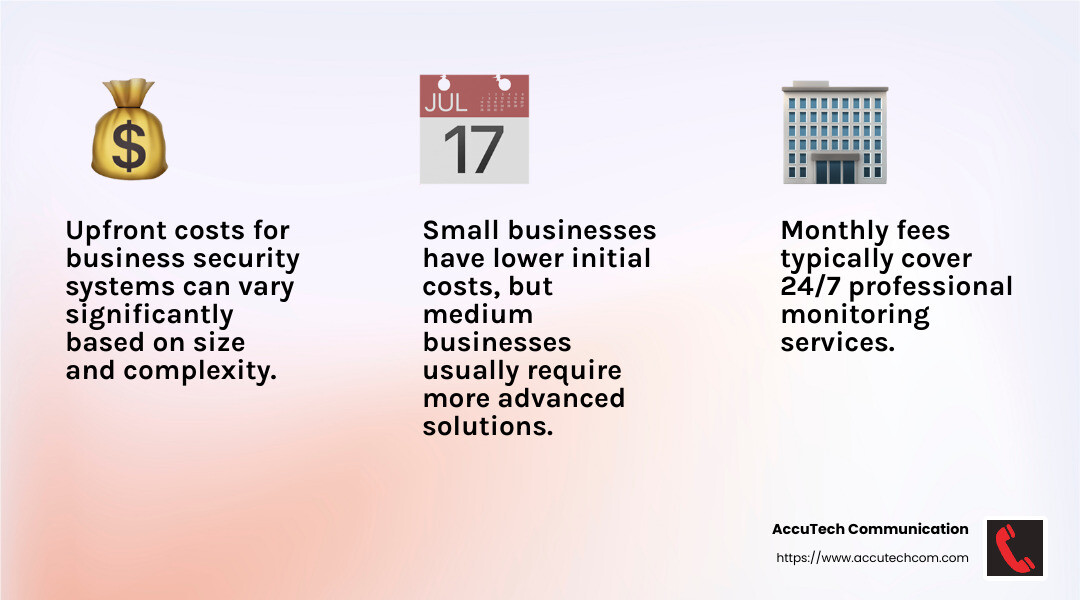
- Upfront Costs: These are the initial expenses for purchasing equipment and installation. They can range widely depending on the type and number of components needed. For a small setup, costs might be manageable, but they can increase significantly with more advanced systems.
Recurring Pricing, on the other hand, includes ongoing monthly or annual fees. These fees usually cover monitoring services, ensuring continuous surveillance and quick response to any security breaches.
- Monthly Fees: These costs cover professional monitoring services, which provide 24/7 protection. They vary based on the level of service and the features included, such as cloud storage for video footage.
Cost Variations by Business Size
The size of your business plays a significant role in determining security system costs. Here’s how it breaks down:
- Small Businesses: Typically have lower upfront costs due to fewer security needs. A basic system might include a few cameras and sensors, which can be installed as a DIY project to save on installation fees. However, monthly monitoring fees still apply if professional services are chosen.
- Medium Businesses: These businesses often require more comprehensive security solutions, leading to higher upfront costs. They might need advanced features like access control and a more extensive camera network. Professional installation is usually necessary to ensure all areas are adequately covered.
In summary, the decision between fixed and recurring pricing depends on your business’s financial strategy and security needs. While upfront costs can be hefty, they eliminate monthly fees, providing long-term savings. On the other hand, recurring pricing offers the benefit of professional monitoring and maintenance, which can be crucial for ongoing security assurance. We’ll explore additional factors that can influence the overall cost of a business security system.
Additional Cost Factors
When considering business security systems cost, there are a few more elements to keep in mind. These additional factors can significantly influence both the initial and ongoing expenses of securing your business.
Security System Contracts
Security system contracts often come with a commitment ranging from 1 to 5 years. These contracts ensure pricing stability, which can be advantageous for budgeting. However, they also mean you’re locked into a service provider for the duration of the contract. It’s crucial to read the fine print and understand what you’re agreeing to, as contracts may include clauses about price increases or penalties for early termination.
A service contract might cover the cost of replacing faulty equipment and updating software, providing peace of mind and potentially saving money in the long run. Make sure to check if the contract covers items still under warranty to avoid unnecessary expenses.
DIY vs. Professional Systems
Choosing between a DIY system and a professional setup can significantly affect both upfront and ongoing costs.
DIY Systems:
- Pros: Lower initial costs and the flexibility to install at your own pace. DIY systems are typically wireless, easy to set up, and can be a good fit for small businesses with basic security needs.
- Cons: These systems might require more time and effort from you. They often lack the integration capabilities and long-term reliability of professional systems. Additionally, they may end up costing more over time if you need to replace components or upgrade the system.
Professional Systems:
- Pros: Offer expert installation and comprehensive coverage with minimal hassle. Professionals ensure that every corner of your business is secured, and they can provide valuable insights into the best equipment for your needs. This option is ideal for medium to large businesses with complex security requirements.
- Cons: Higher upfront costs due to installation fees and potential service contracts. However, the investment can pay off with a more robust and reliable security system.
The choice between DIY and professional systems depends on your business size, budget, and security needs. While DIY might save money initially, professional systems offer expertise and peace of mind, which can be invaluable for long-term security.
We’ll address some common questions about the costs associated with business security systems, providing further clarity on what you can expect.
Frequently Asked Questions about Business Security Systems Cost
How much does a business security system cost?
The cost of a business security system can vary greatly. It depends on several factors like the size of your business, the type of equipment you need, and whether you choose professional installation or a DIY setup.
Upfront costs can include purchasing equipment like cameras, alarms, and sensors. These can range from a few hundred to several thousand dollars. Recurring costs often include monitoring services, which can range from $20 to over $100 per month depending on the level of service and type of monitoring (landline vs. cellular).
What factors influence the cost of a security system?
Several factors can influence the cost of a business security system:
- Business Size: Larger businesses may need more equipment and coverage, leading to higher costs.
- Type of Equipment: Advanced equipment like high-definition cameras and smart access controls can increase costs.
- Installation Type: Professional installation typically costs more than a DIY setup but offers more reliability.
- Monitoring Services: Opting for professional monitoring can add to monthly expenses but offers improved security.
- Service Contracts: Long-term contracts may offer pricing stability but can also lock you into specific rates.
Are there any hidden costs in business security systems?
Yes, there can be hidden costs in business security systems. Here are a few to watch out for:
- Installation Fees: While some companies might offer low equipment prices, they may charge high fees for installation.
- Maintenance and Repairs: Ongoing maintenance and potential repair costs can add up over time, especially if not covered by a service contract.
- Contractual Obligations: Early termination fees or automatic renewals in service contracts can lead to unexpected costs.
- Upgrades: As technology evolves, upgrading your system to stay current can incur additional expenses.
Being aware of these factors can help you better plan and manage your business security systems cost. As you consider these elements, investing in a quality security system is an investment in the safety and security of your business.
Conclusion
Choosing the right business security system is crucial for protecting your business, employees, and assets. At AccuTech Communications, we understand the importance of balancing quality and cost-effectiveness. Based in Massachusetts, we’ve been serving businesses in Massachusetts, New Hampshire, and Rhode Island since 1993, offering competitive pricing and reliable service.
Our commitment to quality means you get a security solution custom to your needs without breaking the bank. We offer a wide range of services, from network cabling to data center technologies, ensuring that your business communication infrastructure is robust and secure.
When it comes to business security systems cost, we focus on transparency and value. We provide detailed estimates and work with you to find the most cost-effective solutions. Whether you’re a small business looking for a basic setup or a larger enterprise needing comprehensive coverage, our team is ready to assist.
Explore our commercial security solutions to learn more about how we can help protect your business. Our expertise and dedication to customer satisfaction make us the trusted choice for businesses across the region.
