
Cable Technician: Top 7 Essential Skills for Success
A cable technician plays a pivotal role in today’s connected world by ensuring seamless communication and data transfer. These professionals are responsible for installing and maintaining the cabling systems that power our television, internet, and phone services both in homes and businesses. This role is essential for maintaining the integrity of communication networks and ensuring that end-users experience high-quality, uninterrupted service.
Here’s a quick rundown of the key aspects of the cable technician role:
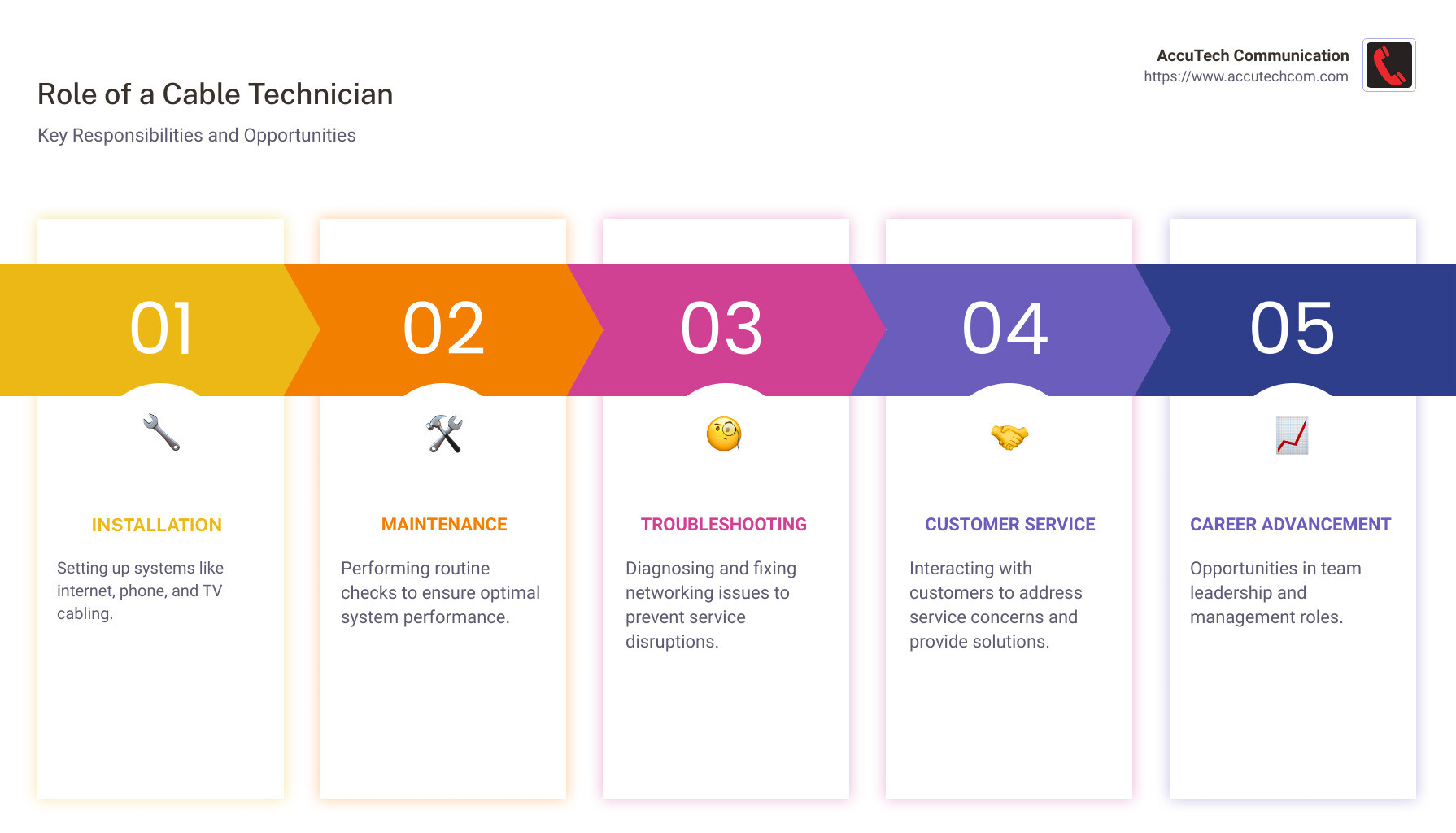
- Installation: Setting up communication systems like internet, phone, and TV cabling.
- Maintenance: Performing routine checks to ensure optimal system performance.
- Troubleshooting: Diagnosing and fixing networking issues to prevent service disruptions.
- Customer Service: Interacting with customers to address service concerns and provide solutions.
As a cable technician, you will need excellent technical and communication skills to thrive in this field. The demand for skilled technicians is growing, as our reliance on digital communication increases. With the right skills and dedication, there are numerous career advancement opportunities available in this field, including team leadership and management roles.
My name is Corin Dolan, and I have experience in the communications industry, particularly with cable technicians. At AccuTech Communications, we’ve been connecting businesses to advanced networking solutions for decades. This depth of expertise allows us to offer insights and guidance to aspiring cable technicians looking to excel in this dynamic and rewarding field.
Essential cable technician terms:
– Business Network Cabling Services in MA
– what are ethernet cables
What Does a Cable Technician Do?
A cable technician is the backbone of our modern communication systems. They ensure that both residential and commercial spaces are equipped with reliable internet, phone, and television services. Here’s a closer look at what their job entails:
Installation
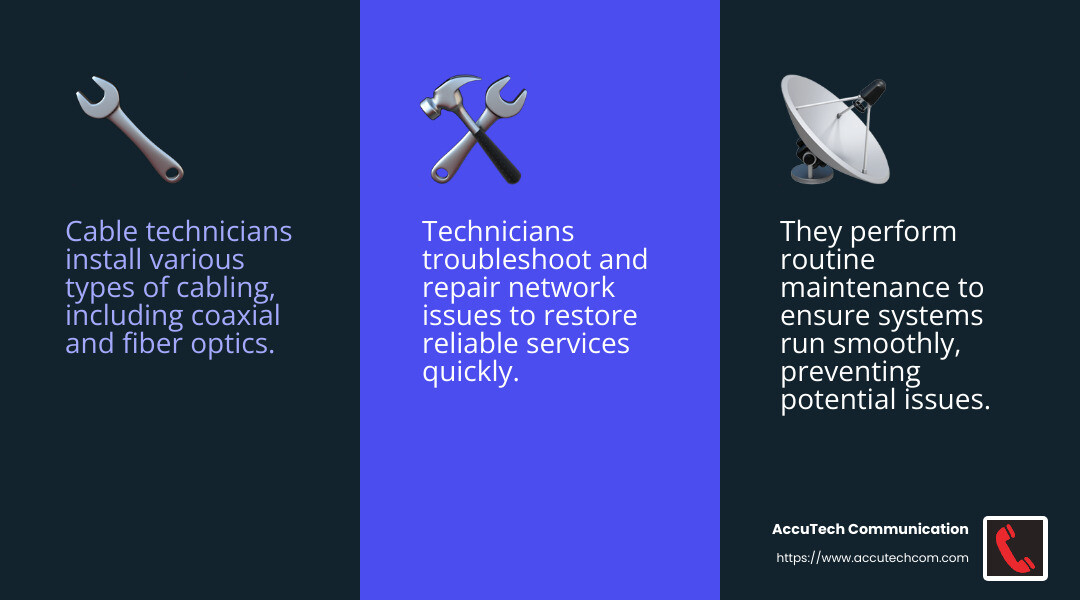
Cable technicians are responsible for setting up the infrastructure that allows us to stay connected. This includes installing cables, configuring equipment, and ensuring that everything is set up according to industry standards. They work with various types of cabling, from coaxial and fiber optics to structured cabling systems. Whether it’s a new home or a busy office, cable technicians ensure that the network is ready to meet the demands of its users.
Maintenance
Once the systems are in place, regular maintenance is crucial to keep everything running smoothly. Cable technicians perform routine checks and updates to prevent issues before they occur. This proactive approach helps maintain the high performance of telecom and internet networks, minimizing disruptions for both residential and commercial customers.
Troubleshooting
When problems arise, cable technicians are the first responders. They diagnose issues, whether it’s a slow internet connection or a complete service outage. By using their technical expertise, they identify the root cause and implement effective solutions. This might involve replacing faulty cables, reconfiguring network settings, or collaborating with other technicians for more complex issues.
Repair
In addition to troubleshooting, cable technicians handle repairs to restore services quickly. This can involve anything from fixing a damaged cable to replacing malfunctioning hardware. Their goal is to minimize downtime and ensure that customers can continue to rely on their communication services without interruptions.
Customer Service
Working as a cable technician also involves a significant amount of customer interaction. Technicians often find themselves in homes or offices, addressing concerns and explaining technical details in simple terms. Good communication skills are essential to provide excellent customer service and ensure a positive experience for clients.
In summary, a cable technician is a multifaceted role that combines technical skills with customer service. They install, maintain, troubleshoot, and repair the networks that keep us connected, playing an essential part in both residential and commercial settings. As demand for reliable communication services continues to grow, the expertise of cable technicians remains crucial in our digitally driven world.
Essential Skills and Qualifications
Becoming a successful cable technician requires a unique blend of skills and qualifications. Let’s explore the key areas that are essential for excelling in this role:
Physical Demands
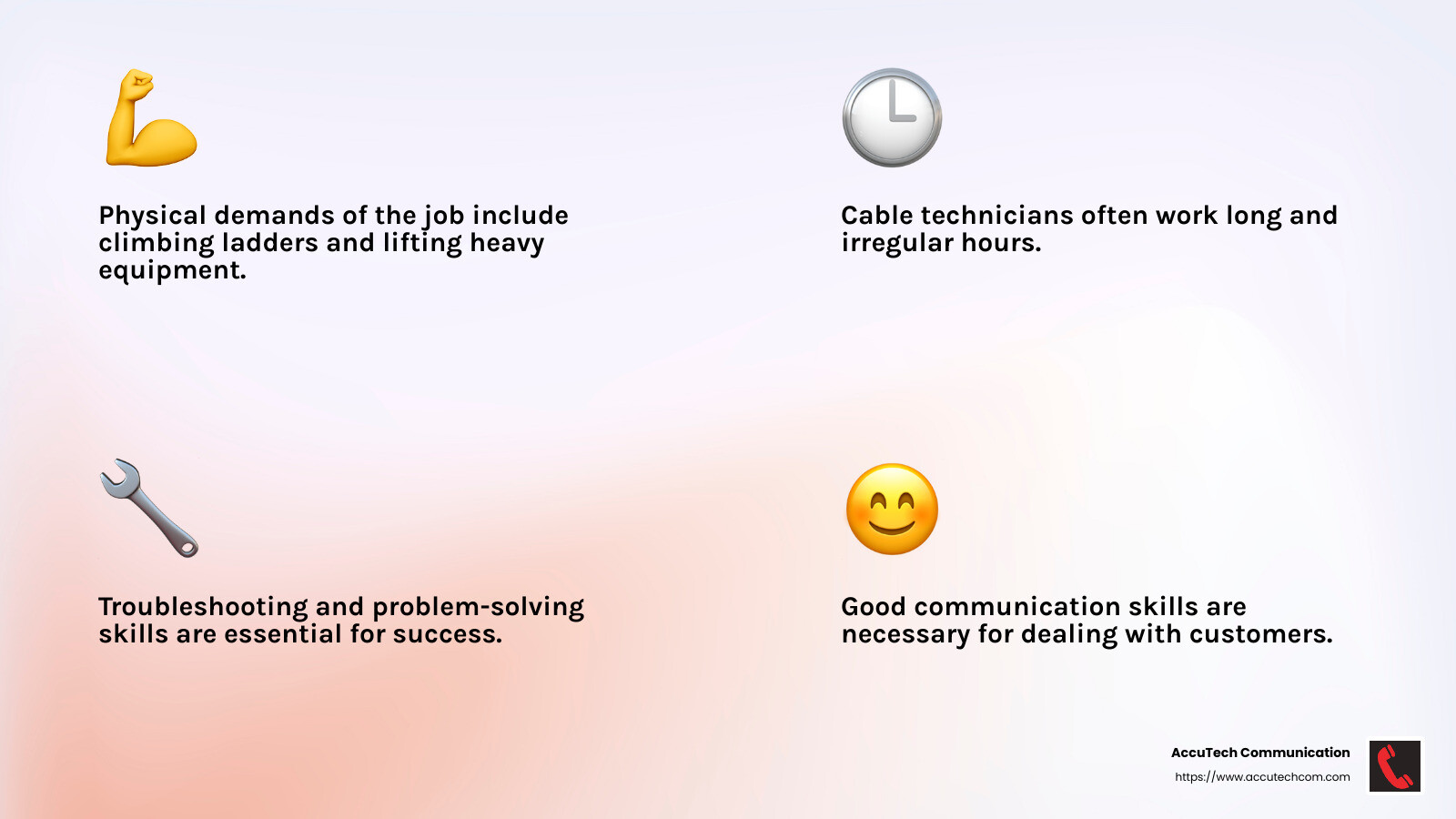
Working as a cable technician is physically demanding. It often involves lifting heavy equipment, climbing ladders, and working in confined spaces. Technicians need to be physically fit and able to endure long hours on their feet. This physical resilience is crucial for handling the day-to-day tasks that come with the job.
Technical Skills
A strong foundation in technical skills is vital. Cable technicians must understand various types of cabling, including coaxial, fiber optics, and structured cabling systems. They should be adept at using job-related tools and testing equipment to ensure installations meet industry standards.
Knowledge of network configurations and the ability to work with both residential and commercial systems is also important. BICSI certifications are highly recommended, as they validate a technician’s expertise in installation and maintenance practices. BICSI offers a comprehensive Cabling Installation Program, which is a great way to gain real-world skills and knowledge.
Problem-Solving
Troubleshooting is a significant part of a cable technician’s job. When issues arise, technicians need to quickly identify and resolve them. This requires strong problem-solving skills and the ability to think critically under pressure. Being able to diagnose issues and implement effective solutions is key to maintaining efficient network operations.
Communication
While technical skills are crucial, so is the ability to communicate effectively. Cable technicians often interact with customers, explaining technical details in a way that’s easy to understand. Good communication skills help build trust and ensure a positive customer experience. It’s not just about fixing problems; it’s also about making sure the customer feels informed and satisfied.
Certifications and Training Programs
Certifications can significantly improve a technician’s career prospects. As mentioned earlier, BICSI certifications are highly valued in the industry. These certifications demonstrate a technician’s commitment to their profession and their ability to meet high standards of quality and expertise. Training programs offered by organizations like BICSI provide structured learning paths that cover everything from installation principles to project planning.
In summary, a career as a cable technician requires a mix of physical stamina, technical expertise, problem-solving abilities, and strong communication skills. With the right training and certifications, technicians can advance their careers and meet the growing demand for skilled professionals in the field.
Steps to Become a Cable Technician
Starting on a career as a cable technician involves a series of steps that blend education, hands-on training, and strategic career planning. Here’s a straightforward path to get you started:
Education
The journey typically begins with a high school diploma or equivalent. This foundational education is crucial, as it provides the basic skills needed for further training. According to data, 43.06% of cable technicians hold a high school diploma, making it the most common educational background in this field.
Training
Hands-on training is the cornerstone of a cable technician’s skill set. Many technicians gain this experience through on-the-job training programs or apprenticeships. These programs allow aspiring technicians to work alongside experienced professionals, learning the ropes in real-world settings.
Certification
Obtaining relevant certifications can set you apart in the job market. BICSI certifications are highly recommended, as they validate your skills and knowledge in the field. BICSI offers a comprehensive Cabling Installation Program, which covers essential topics such as installation and termination principles, cable testing, and project planning. These certifications not only improve your resume but also demonstrate a commitment to maintaining high industry standards.
Experience
Gaining experience is key to advancing in this field. Starting in entry-level positions allows you to hone your skills and build a portfolio of successful projects. As you gain experience, you’ll become more adept at handling complex installations and troubleshooting challenges.
Job Search
Once you’ve acquired the necessary skills and certifications, it’s time to enter the job market. Look for opportunities with companies that value quality and offer growth potential. Networking with industry professionals and joining relevant forums or groups can also help you find job openings and make valuable connections.
Career Advancement
The career path for a cable technician doesn’t stop at entry-level positions. With experience and continued education, you can move into more advanced roles such as team leader, project manager, or even business owner. The field offers numerous opportunities for growth, with many technicians transitioning into related areas like service or maintenance.
Becoming a cable technician is a journey that combines education, practical experience, and continuous learning. By following these steps, you can build a rewarding career in a field with growing demand and ample opportunities for advancement.
Tools and Equipment Used by Cable Technicians
A cable technician’s toolkit is essential for performing tasks efficiently and safely. Here’s what you’ll typically find in their arsenal:
Job-Related Tools
Cable technicians rely on a variety of tools to install and maintain network systems. Hand tools like pliers, screwdrivers, and wire cutters are fundamental for any installation or repair job. These tools help with tasks such as cutting cables and securing connections.
Ladders are also commonly used, allowing technicians to access liftd areas safely. Given that installations often take place in hard-to-reach spots, having a sturdy ladder is crucial.
Testing Equipment
Testing equipment is vital for ensuring that cable installations function correctly. Devices like cable testers and multimeters check for connectivity and signal strength, helping technicians troubleshoot issues efficiently. These tools ensure that the network operates at optimal performance levels and meets industry standards.
Cable Labels and Cable Ties
Cable labels are an often-overlooked but important part of a technician’s toolkit. They help in identifying cables quickly, making maintenance and troubleshooting much easier. Proper labeling prevents confusion and streamlines the management of complex cabling systems.
Cable ties are another essential item. They keep cables organized, reducing clutter and preventing damage. Using cable ties ensures that cables are neatly bundled, which not only looks professional but also improves safety by minimizing tripping hazards.
Documentation
Proper documentation is key in the cabling industry. Keeping detailed records of installations, including the types of cables used and their configurations, is crucial. This documentation helps in future maintenance and troubleshooting, ensuring that technicians have all the necessary information at their fingertips.
In summary, the tools and equipment used by cable technicians are designed to make their work more efficient and effective. From basic hand tools to advanced testing equipment, each item plays a critical role in ensuring that installations meet both performance and safety standards.
Common Challenges and How to Overcome Them
Being a cable technician is a rewarding career, but it comes with its fair share of challenges. Let’s explore some common problems and how you can tackle them effectively.
Physical Demands
The job of a cable technician is physically demanding. You’ll often find yourself climbing ladders, crawling in tight spaces, or lifting heavy equipment. Staying fit and maintaining good physical health is crucial. Regular exercise can help build the strength and endurance needed for these tasks. Also, using ergonomic tools and taking breaks can prevent injuries.
Complex Installations
Cable installations can get quite complex, especially in commercial settings. Understanding the layout and planning the installation carefully is key. Documentation is your best friend here—keep detailed records and diagrams of the network setup. This not only helps during the installation but also makes future troubleshooting much easier.
Troubleshooting
Network issues can be tricky to diagnose and resolve. To become proficient in troubleshooting, continuous learning is essential. Familiarize yourself with common network problems and their solutions. Using the right testing equipment, like cable testers and multimeters, can help pinpoint issues quickly. Developing a systematic approach to troubleshooting will save time and reduce frustration.
Safety Regulations
Safety should always be a top priority. The risk of injuries and accidents is high, especially when working with electrical systems or at heights. Familiarize yourself with all relevant safety regulations and follow them diligently. Wearing personal protective equipment (PPE), such as gloves and safety glasses, is non-negotiable. Regular safety training can keep you updated on the best practices and new regulations in the industry.
By understanding and preparing for these challenges, you can excel as a cable technician. Every obstacle is an opportunity to learn and improve your skills.
Frequently Asked Questions about Cable Technicians
What is the role of a cable technician?
A cable technician is responsible for installing, maintaining, and repairing cable systems that provide television, internet, and phone services. They work in both residential and commercial settings, ensuring that customers have access to high-quality and reliable services. This role involves configuring equipment, troubleshooting network issues, upgrading systems, and providing customer support. Cable technicians are the backbone of modern communication networks.
Is it hard to be a cable technician?
Being a cable technician can be challenging, but it’s also rewarding. The job is physically demanding, requiring technicians to climb ladders, crawl in tight spaces, and lift heavy equipment. The stress level can be high due to long and irregular hours and the need to deal with frustrated customers. However, the job offers good salary and benefits, job security, and the opportunity to work outdoors. With strong technical skills and excellent communication abilities, cable technicians can find satisfaction in solving complex problems and ensuring smooth network operations.
What is the job description of a cable worker?
A cable worker, or cable technician, has a variety of duties aimed at ensuring the efficient operation of cable networks. These tasks include:
- Installation: Setting up and configuring network cables and equipment in homes and businesses.
- Maintenance: Regularly checking and maintaining systems to prevent issues.
- Troubleshooting: Diagnosing and resolving network problems to restore services quickly.
- Repair: Fixing any damaged or malfunctioning equipment or cables.
- Customer Service: Interacting with customers to explain services, answer questions, and provide support.
Cable workers must have a solid foundation in technical skills, including knowledge of electrical systems and network protocols. Certifications, such as those from BICSI, can improve a technician’s qualifications and career prospects.
Conclusion
At AccuTech Communications, we pride ourselves on being a leader in network cabling and communication solutions. With over 30 years of experience serving businesses across Massachusetts, New Hampshire, and Rhode Island, we offer certified and reliable services that meet the highest industry standards.
Our commitment to quality is unwavering. We ensure that every cable installation is optimized for performance and longevity. Our team of skilled technicians is trained to handle a wide range of tasks, from simple installations to complex troubleshooting. We believe in continuous learning and encourage our technicians to pursue certifications, such as those from BICSI, to improve their skills and career opportunities.
We understand that businesses need dependable network infrastructure to thrive. That’s why we focus on providing competitive pricing without compromising on quality. Our goal is to build long-lasting relationships with our clients by delivering exceptional service and support.
For those looking to start or advance their career as a cable technician, AccuTech Communications offers an environment where you can grow and succeed. We value dedication, problem-solving skills, and a passion for technology. If you’re ready to join a team that is committed to excellence, consider exploring career opportunities with us.
To learn more about our services and how we can support your business’s communication needs, visit our Network Cabling Installation page. Let us help you build a stronger network for your future.
