
Cat 6 Cable Cost: Ultimate 2025 Savings
Why Understanding Cat 6 Cable Cost Matters for Your Business Network
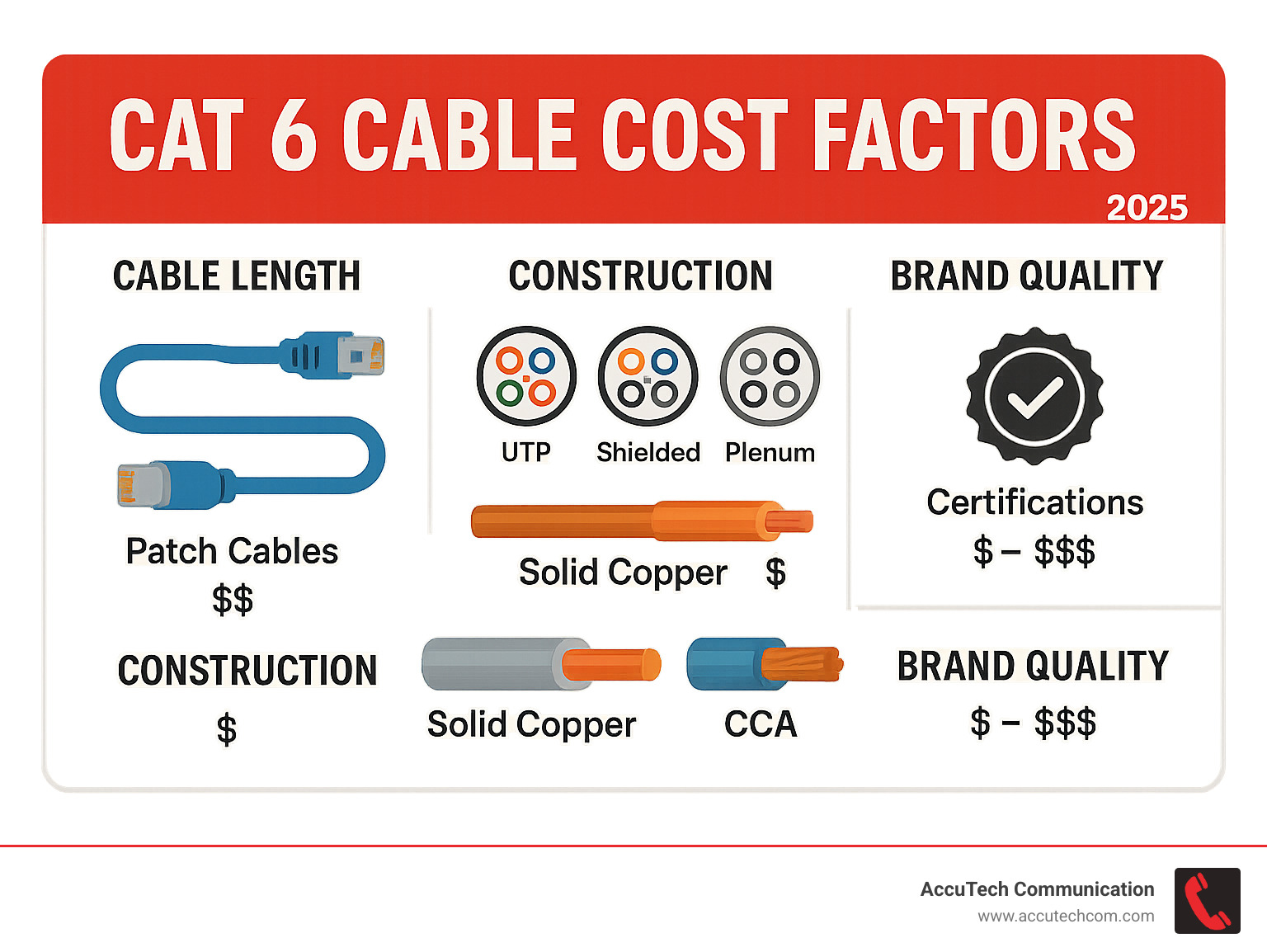
Cat 6 cable cost varies significantly based on several key factors that directly impact your networking budget. Here’s what you need to know:
Quick Cost Breakdown:
- Patch cables (short lengths): Higher per-foot cost, convenient for small jobs
- Bulk spools (1000 ft): Lower per-foot cost, ideal for large installations
- Standard UTP: Most economical option for typical office environments
- Shielded cables: Higher cost but essential for EMI-prone areas
- Plenum-rated: Premium pricing for air-handling spaces due to fire safety requirements
Key Cost Factors:
- Cable length and packaging (patch vs. bulk)
- Construction type (UTP vs. shielded)
- Fire rating (standard vs. plenum vs. riser)
- Conductor material (solid copper vs. copper-clad aluminum)
- Brand quality and certifications
Whether you’re upgrading a single office or wiring an entire healthcare facility, understanding these pricing variables helps you make informed decisions without overspending on unnecessary features or compromising on essential performance requirements.
The difference between choosing the right cable specification and the wrong one can mean thousands of dollars in material costs alone – not to mention potential performance issues or code compliance problems down the road.
I’m Corin Dolan, owner of AccuTech Communications, and I’ve been helping businesses in Massachusetts, New Hampshire, and Rhode Island steer cat 6 cable cost decisions for over 30 years. My experience has shown that the most expensive cable isn’t always the best choice, but neither is the cheapest option when your network’s reliability is on the line.
Cat 6 cable cost glossary:
Understanding the Core Factors of Cat 6 Cable Cost
When you start pricing network cabling, it quickly becomes clear that cat 6 cable cost is driven by just a handful of variables. Master these, and budgeting becomes straight-forward.
Think of an ethernet cable as four twisted pairs of copper wrapped in protective insulation. The performance—and the price—hinges on three things:
- Conductor quality
- 100 % solid bare copper = best signal integrity, longest life
- Copper-clad aluminum (CCA) = lower price, higher signal loss, not ideal for PoE
- Manufacturing & compliance
- Cables that carry UL, ETL, or TIA/EIA listings cost more because they’ve been independently tested. That extra few cents per foot often prevents failed inspections or mysterious network drops. (See the Wikipedia – Category 6 cable entry for the formal spec.)
- Jacket rating
- PVC is cheapest and fine for open office spaces.
- CMR (riser) adds modest cost for vertical shafts.
- CMP (plenum) uses low-smoke compounds and can double or triple the price—but it’s mandatory in air-handling spaces.
Patch Cords vs. Bulk Spools: A Per-Foot Reality Check
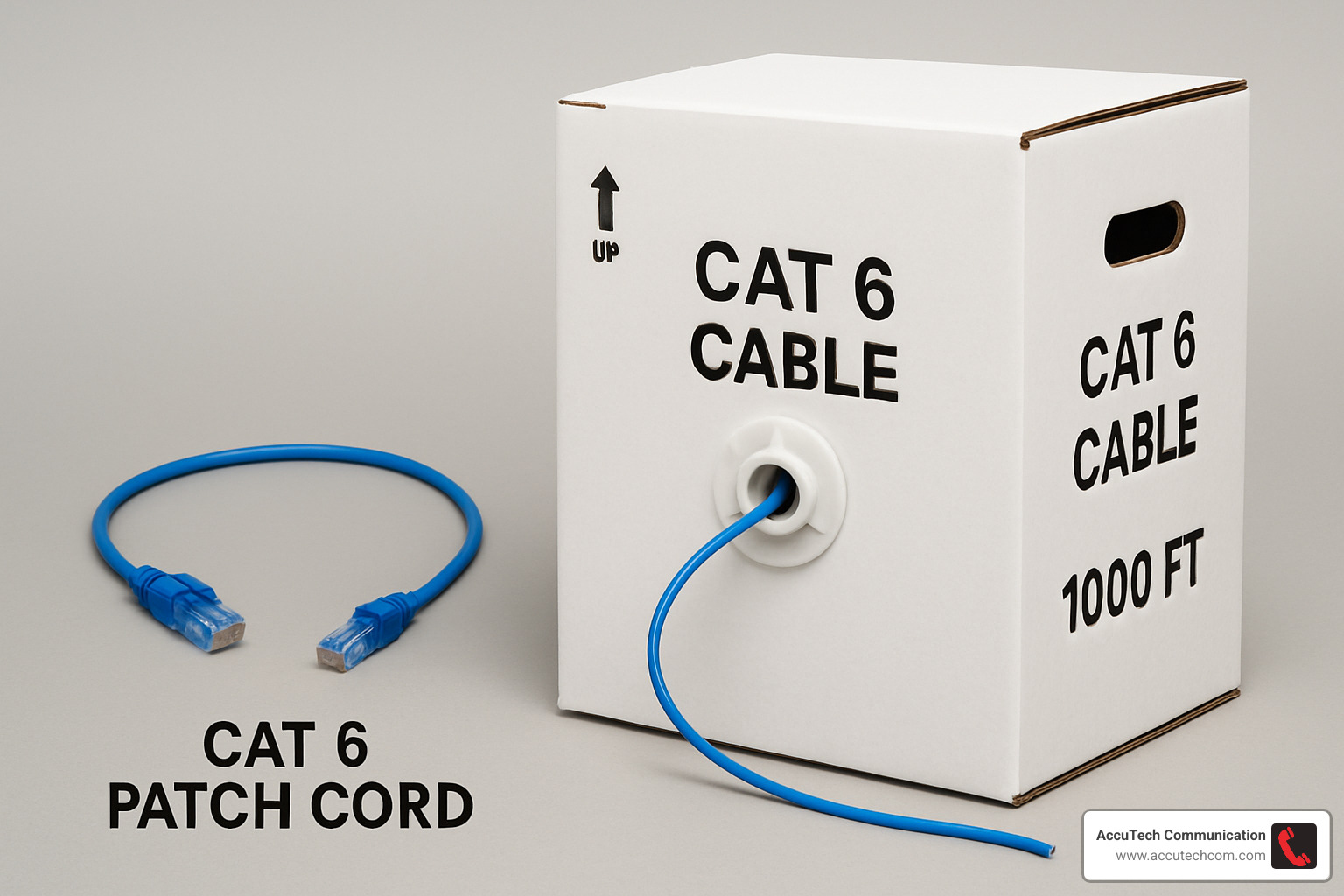
Pre-terminated patch cables are convenient, but that factory labor means a 3-ft cord can run 10–15× the per-foot price of bulk. For more than 20–30 drops, buy a 1000-ft spool and terminate on-site. The labor you add is far less than what you save on materials.
How Cable Construction Impacts Your Budget
- UTP (unshielded) – least expensive, handles most office EMI just fine.
- STP/FTP (shielded) – 50–100 % higher price, but worth it in industrial or healthcare environments with heavy EMI.
- Solid copper vs. CCA – solid copper costs more up front but supports PoE, passes certification, and lasts decades. Cutting this corner almost always backfires.
For a deeper dive into each construction type, visit our guide on Ethernet Cable Types.
Length & Brand Quality
Cat 6 is specified for 100 m (328 ft) channel runs. Plan routes to stay under that limit so you don’t have to add costly extenders or switch to fiber. Reputable brands charge more because they batch-test every reel and back products with long warranties—cheap, no-name imports often skip both steps.
Need help translating specs into real-world budgets? Our Structured Cabling team does it every day for businesses across MA, NH, and RI.
Cat 6 vs. Other Ethernet Cables: A Cost-Performance Comparison
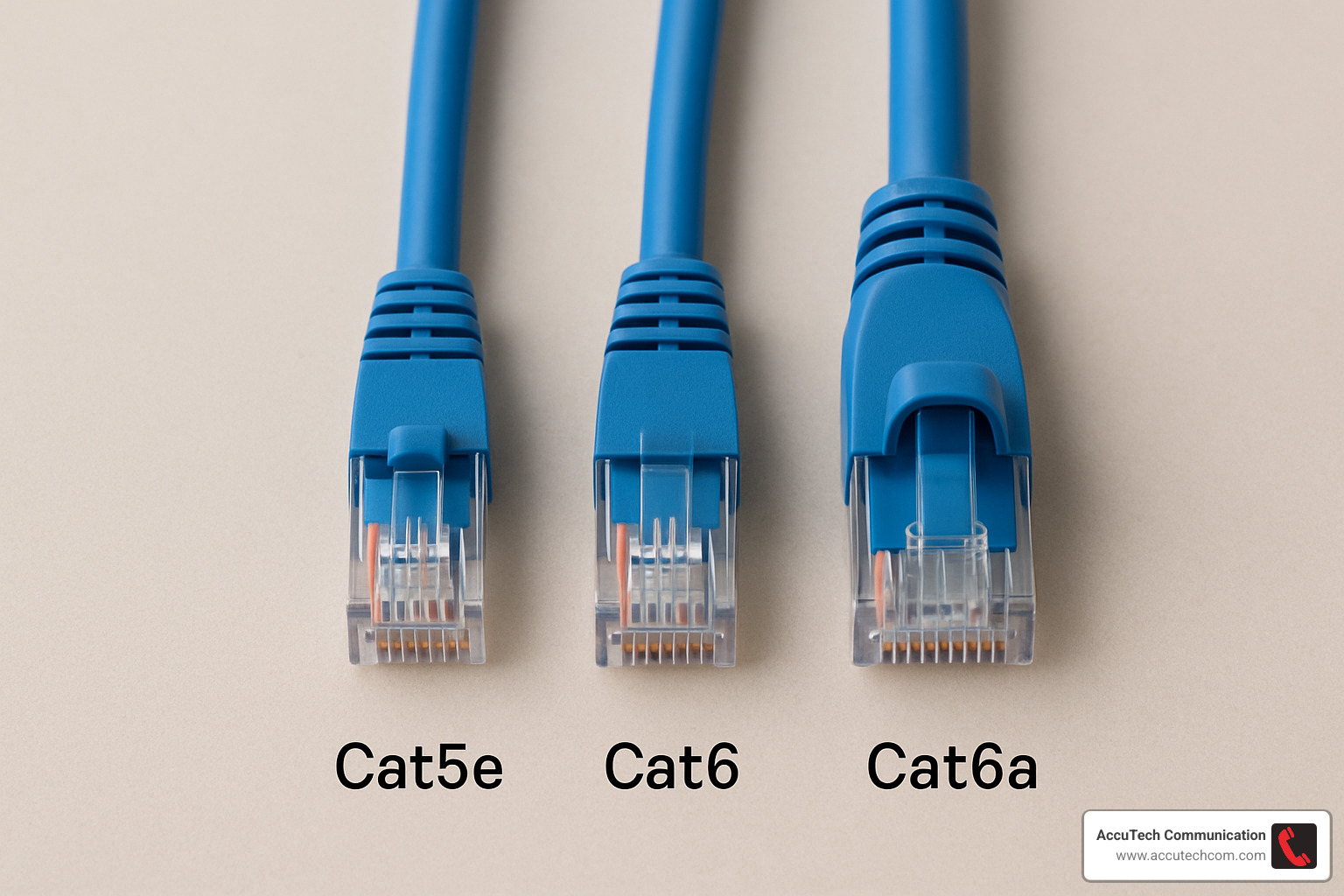
Think of cable categories as speed limits:
- Cat5e – 1 Gbps to 100 m (good for basic office traffic)
- Cat6 – 1 Gbps to 100 m, 10 Gbps to ~55 m (extra headroom)
- Cat6a – 10 Gbps to 100 m (data-center grade)
The higher you go, the thicker the copper, the tighter the twist, and the higher the price. Your goal is to choose the lowest category that still meets tomorrow’s needs.
Cat 6 vs. Cat5e: Worth the Upgrade?
Cat6 now carries only a modest premium over Cat5e—often pennies per foot in bulk. In exchange you get better crosstalk rejection and the option for 10 Gbps on shorter runs. For most offices we serve, that small price bump is cheap future-proofing. Check our Cat5e Cable page if you’re on a shoestring budget or supporting legacy gear.
Cat 6 vs. Cat6a (and Beyond)
Cat6a roughly doubles cable cost and can increase installation labor 20–30 % because of its larger diameter. Unless you truly need 10 Gbps to every desk or are wiring a server room, Cat6a is usually overkill. Our Networking Buying Guide walks through the decision tree step by step.
Where to Source Your Cables and What to Look For
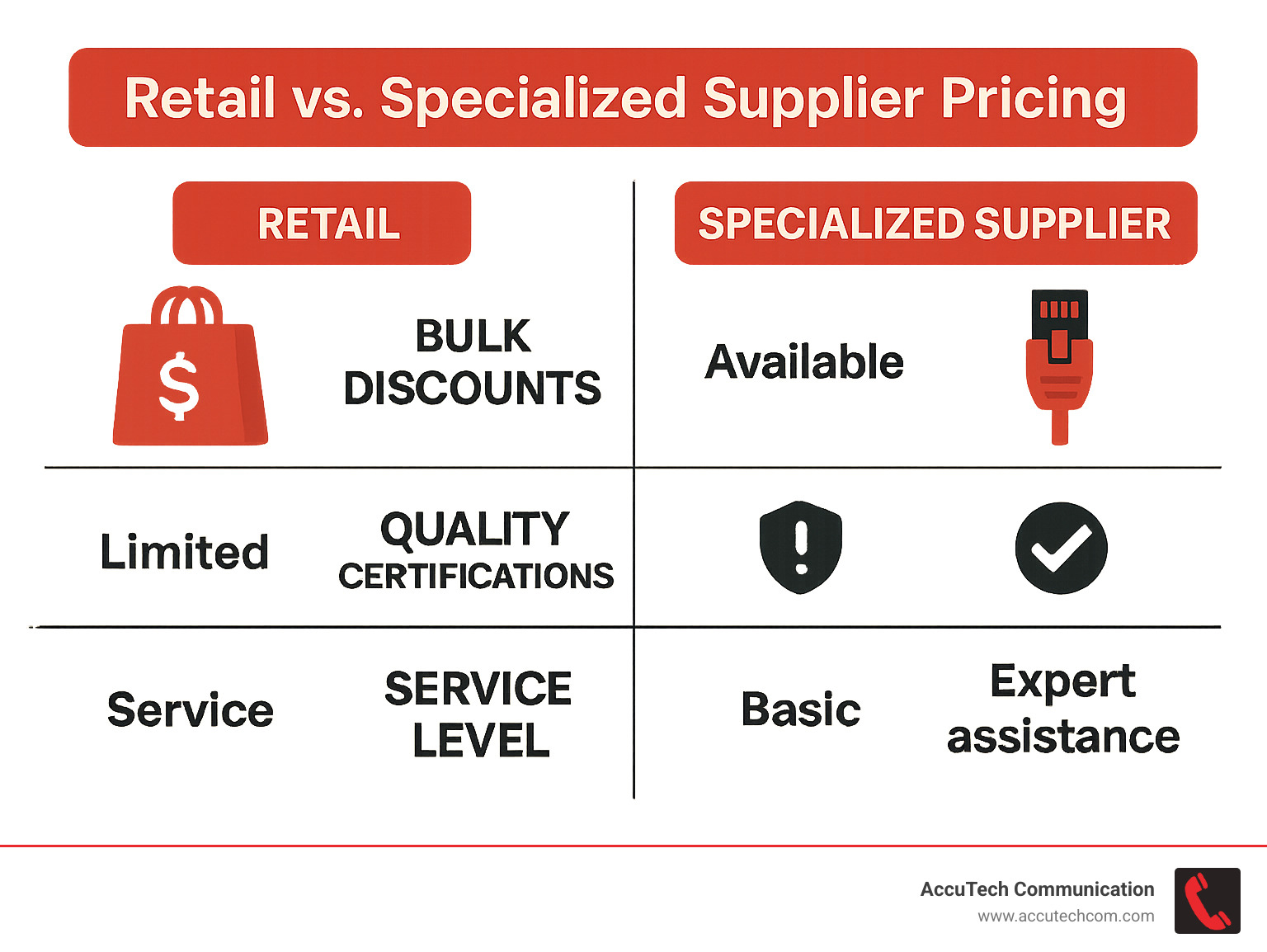
Price isn’t the only consideration—service, inventory depth, and code knowledge matter just as much.
- Local electrical suppliers – great for “need-it-now” patch cords and standard UTP. Limited plenum or shielded stock.
- Specialized cabling distributors – broader selection, bulk discounts, and real-time tech advice. Ideal for projects over a few hundred feet.
After 30 years, we’ve learned that saving a nickel per foot isn’t worth hours of troubleshooting. Our Network Cabling Services leverage vetted distributors so clients get certified product, fast.
Quick Spec Checklist Before You Buy
- UL or ETL listing (mandatory for most inspectors)
- 100 % solid bare copper conductors
- Correct jacket rating: PVC, CMR, or CMP
- Shielding that matches your environment (UTP vs. STP)
- Warranty that covers both product and performance
Frequently Asked Questions about Cat 6 Cables
What is a typical price per foot for bulk Cat 6?
- Standard UTP, PVC jacket: $0.15 – $0.25/ft in 1000-ft boxes.
- Shielded (STP/FTP): +$0.10 – $0.20/ft.
- CMP plenum: $0.45 – $0.65/ft.
Copper prices and order size can nudge these numbers up or down—get written quotes before you buy.
Why is plenum-rated cable so expensive?
Plenum compounds self-extinguish and emit very low smoke. The raw materials, stricter manufacturing, and UL fire-testing all add cost, but building codes leave no wiggle room when you’re pulling through air-handling spaces.
Can I crimp Cat5e plugs onto Cat 6 cable?
You can, but you’ll throttle performance to Cat5e. Always match connectors, jacks, and patch panels to the highest category in the channel. See our Cat6 Network Cable guide for proper termination tips.
Conclusion: Making the Right Connection for Your Business

After thirty years in the network cabling business, I’ve learned that understanding cat 6 cable cost is really about understanding value. The cheapest cable isn’t always the best deal, and the most expensive option might include features you’ll never use. It’s about finding that sweet spot where your investment makes sense for your business.
Think of it this way: your network cabling is like the foundation of a building. You want it solid and reliable, but you don’t need to overengineer it. Matching your cable specifications to your actual requirements saves money while ensuring your network performs when you need it most.
The businesses we work with often get caught up in the latest and greatest technology, but sometimes Cat5e is perfectly adequate for their needs. Other times, they try to save money with substandard cables and end up paying more in the long run through performance issues and early replacement.
Consider your total project investment, not just the cable cost. Quality cables might cost more upfront, but they often install easier, perform better, and last longer. When you factor in labor costs, downtime, and potential troubleshooting, that extra investment in quality materials usually pays for itself.
Planning for reasonable future growth makes sense too. You don’t want to install a network that’s obsolete in two years, but you also don’t need to prepare for technologies that might never materialize. Cat6 cables hit that sweet spot for most businesses – they handle current requirements beautifully and provide headroom for future needs without breaking the budget.
Here’s what I tell my clients: work with people who understand your business. A qualified installer doesn’t just pull cables – they help you make smart decisions about specifications, routing, and future planning. They understand local building codes, know which products offer the best value, and can spot potential problems before they become expensive headaches.
At AccuTech Communications, we’ve been helping businesses in Massachusetts, New Hampshire, and Rhode Island steer these decisions since 1993. We’ve seen every type of installation challenge and learned what works in real-world business environments.
Our approach focuses on understanding your specific needs rather than pushing the most expensive solution. Sometimes that means recommending Cat5e for a simple office setup. Other times, it means investing in plenum-rated Cat6a for a complex healthcare facility. The key is matching the solution to your requirements and budget.
We work with trusted suppliers who provide quality products at fair prices. Our certified installation teams understand the nuances of different cable types and can recommend the most cost-effective approach for your situation. When issues arise – and they sometimes do – we’re here to help resolve them quickly.
Your network infrastructure is too important to leave to chance. A reliable, well-designed cabling system supports everything your business does, from basic communications to complex data applications. Getting it right the first time saves money, reduces headaches, and gives you confidence in your technology foundation.
For businesses in MA, NH, and RI, ensuring a reliable network foundation is crucial for success. For expert guidance and professional installation that meets your budget and performance needs, explore our Network Cabling Installation services. We’ll help you make the right connection between your networking requirements and budget constraints, ensuring your business has the reliable, high-performance network infrastructure it needs to succeed.
