
Commercial Network Cable Installation Pricing: 7 Powerful Insights 2025
Understanding Commercial Network Cabling Costs: What You Need to Know
If you’re researching commercial network cable installation pricing, here’s what you need to know upfront:
- Labor costs: $30-$120 per hour depending on technician expertise
- Per drop pricing: $75-$250 per network connection point
- Installed cost per foot: $0.90-$6.00 depending on cable type
- Material factors: Cable category (Cat5e through Cat8), plenum vs. riser, shielded vs. unshielded
- Building factors: New construction vs. retrofit, ceiling type, floor count
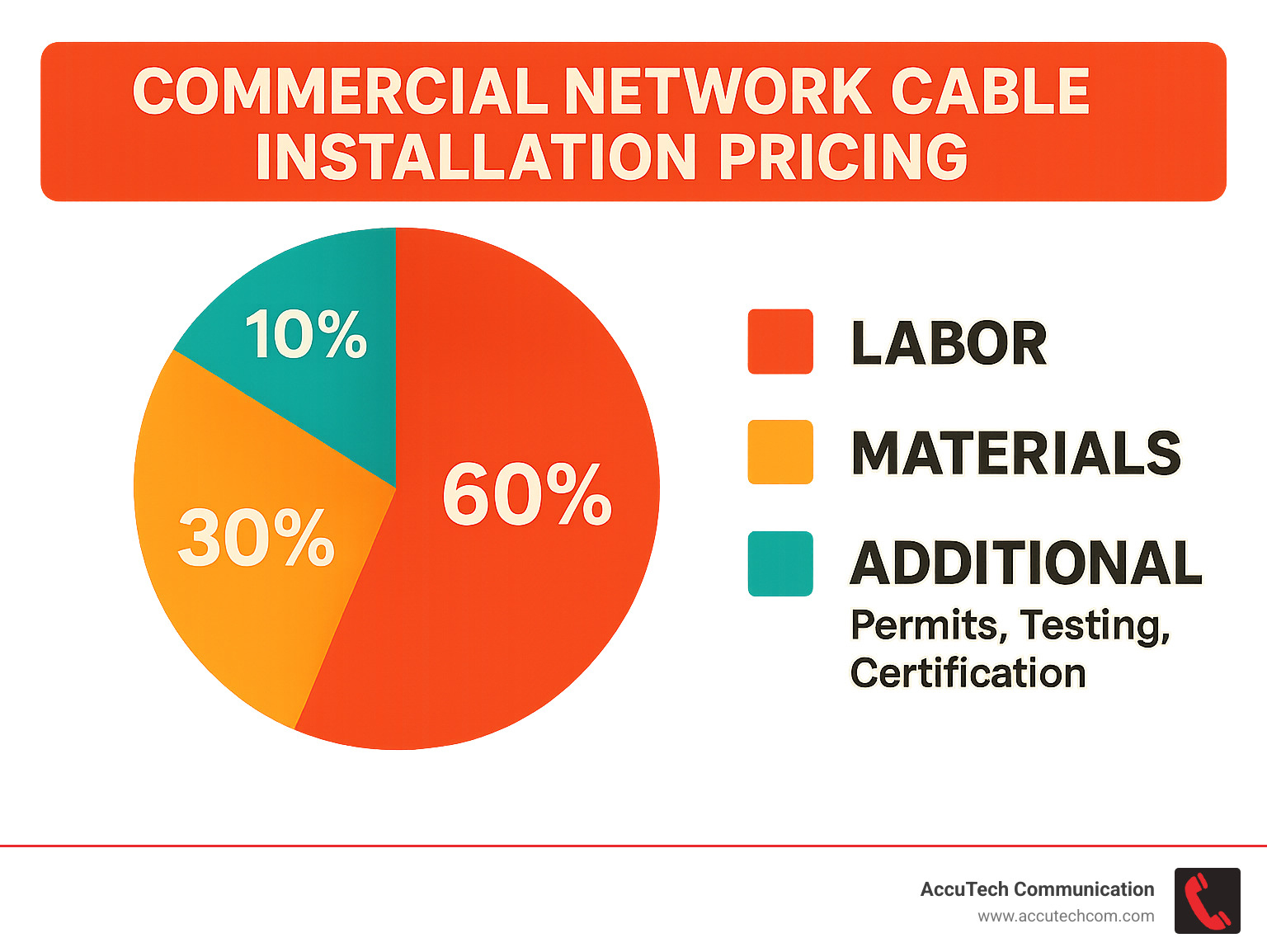
Commercial network cable installation pricing varies widely based on several key factors. While it’s tempting to focus solely on material costs, labor typically accounts for 60-70% of your total investment. Understanding these cost drivers helps you budget accurately and avoid unexpected expenses that can derail your project timeline.
When planning a commercial network installation, consider both immediate needs and future growth. A properly designed and installed network cabling infrastructure serves as the backbone of your business communications, supporting everything from basic internet connectivity to advanced unified communications systems.
The quality of your installation directly impacts network performance, reliability, and maintenance costs for years to come. Cutting corners on installation quality might save money initially but often leads to expensive troubleshooting, downtime, and premature replacement.
I’m Corin Dolan, owner of AccuTech Communications with over 30 years of experience managing commercial network cable installation pricing projects across Massachusetts, New Hampshire, and Rhode Island. My team specializes in delivering transparent pricing and exceptional quality for businesses of all sizes.
What This Guide Covers
This comprehensive guide will help you understand the true costs behind commercial network cable installation pricing and the factors that influence your bottom line. We’ll walk you through:
- The fundamentals of structured cabling costs
- Key pricing variables that affect your budget
- Typical price ranges for different installation methods
- Cable type comparisons and their cost implications
- Certification and compliance requirements
- Hidden costs that often surprise clients
- Practical budgeting strategies to maximize your investment
Whether you’re planning a new office build-out, upgrading an existing network, or expanding your current infrastructure, this guide will equip you with the knowledge to make informed decisions about your cabling investment. Our goal is to help you understand not just the costs, but also the long-term return on investment that quality network infrastructure delivers.
Cost Fundamentals & Key Drivers of Commercial Network Cable Installation Pricing
Let’s talk about what really drives the cost of your network cabling project. Understanding these factors will help you budget more accurately and avoid those “how did we get here?” moments when the final invoice arrives.
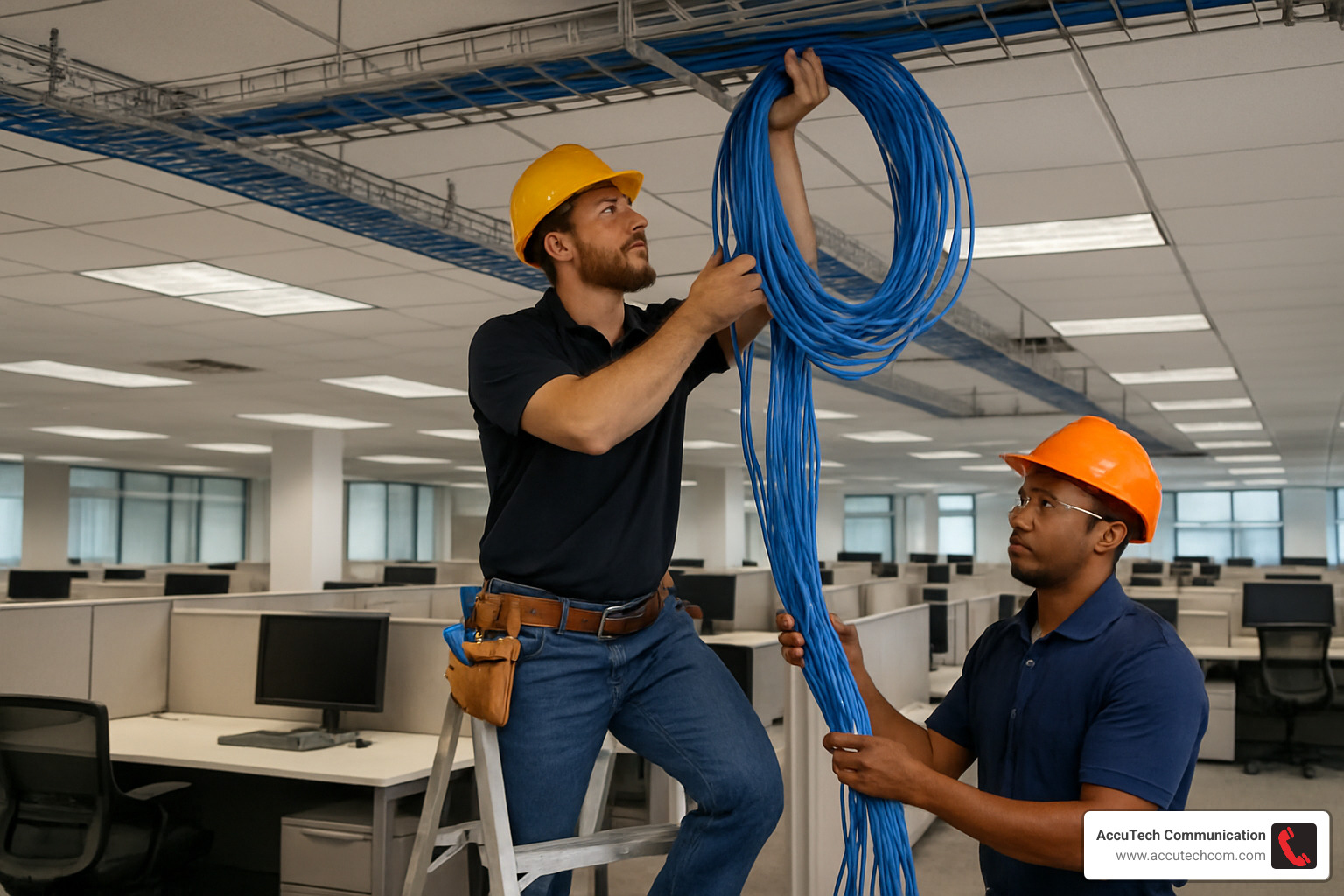
Think of commercial network cable installation pricing as a puzzle with multiple pieces that need to fit together perfectly. Some pieces are obvious (like the cable itself), while others might surprise you (like those pesky permit fees that nobody remembers to budget for).
Labor costs typically range from $30-$120 per hour, depending on technician expertise and your location. Here in New England, rates tend toward the higher end due to our higher cost of living and strong demand for skilled professionals. This might seem steep, but remember – you’re paying for knowledge and precision that will affect your network’s performance for years to come.
The cable itself matters tremendously. The difference between Cat5e, Cat6, Cat6a and beyond isn’t just technical specs – it’s also installation time and material costs. Higher category cables require more precise handling techniques and have stricter bend radius requirements. And when we talk about fiber optic installations, that’s a whole different ballgame with its own set of specialized skills and materials.
Your building’s environment plays a huge role too. Installing in a brand-new construction with open walls? That’s the cabling equivalent of a highway with no traffic. Retrofitting an existing building during business hours? That’s like navigating downtown Boston during rush hour – it takes more time, requires more planning, and yes, costs more money.
How Commercial Network Cable Installation Pricing Is Calculated
When we prepare an estimate at AccuTech, we break down commercial network cable installation pricing into four main components:
First, we map out every foot of cable needed. This isn’t just measuring point A to point B – we’re accounting for routing through walls, around obstacles, maintaining proper separation from electrical sources, and ensuring we have enough slack for proper terminations. Every extra foot adds cost, so precise planning matters.
Next, we calculate technician hours. This is typically the largest portion of your installation cost. Different tasks require different skill levels – running cable through a drop ceiling might be straightforward, but properly terminating and testing fiber optic connections requires specialized expertise.
Materials make up the third component. Beyond just the cable, there are jacks, patch panels, connectors, labels, cable management products, and more. Quality matters here – using certifiable brand materials might cost more upfront but enables manufacturer warranties and ensures reliability.
Finally, we account for overhead and reasonable profit. This covers our business insurance, certification equipment (those Fluke testers cost as much as a small car!), vehicles, and the expertise we’ve developed over decades in the field.
Environmental factors can significantly impact these calculations. Plenum-rated cable costs 20-30% more than standard riser-rated cable but is required in air-handling spaces per fire codes. Shielded cabling provides better protection against electromagnetic interference but requires specialized termination techniques. And traveling to remote sites adds time and expense, especially for smaller projects.
Don’t forget about permits and code compliance – depending on your location, these can add meaningful costs to your project. At AccuTech, we handle all the paperwork so you don’t have to worry about compliance issues down the road.
Commercial Network Cable Installation Pricing: Environmental Factors
Your physical space dramatically impacts labor costs and installation time. Drop ceilings are a cabling technician’s best friend – they provide easy access and clear pathways. Solid drywall ceilings? Not so much. When walls need to be opened and patched, labor costs increase substantially.
Timing matters too. Installing during new construction is typically 30-40% less expensive than retrofitting an existing space. In new builds, walls are open, ceilings are accessible, and we’re not working around your busy employees or existing furniture.
Multi-floor installations bring their own complexities. Cable needs to travel vertically between floors through properly rated pathways, and this vertical infrastructure often becomes a bottleneck if not properly planned. Building type also plays a role – offices, warehouses, healthcare facilities, and schools each present unique challenges and requirements.
The condition of your existing infrastructure can make or break your budget. Insufficient space in network closets, filled conduits, or inadequate electrical provisions can all lead to additional work that wasn’t in the original scope.
At AccuTech Communications, we believe in thorough site surveys before providing estimates. This approach might take a little more time upfront, but it helps us deliver more accurate pricing and avoid those uncomfortable mid-project conversations about unexpected costs. After all, the best surprises are birthday parties, not change orders.
Want to learn more about our structured cabling installation approach? Check out our detailed Structured Cabling Installation page for additional information.
Typical Price Ranges, Cable Comparisons & What Influences Them
When budgeting for your network installation project, understanding the typical price ranges helps set realistic expectations. Commercial network cable installation pricing varies quite a bit, but I can share some industry benchmarks to give you a solid starting point for planning.
Benchmark Costs: Commercial Network Cable Installation Pricing by Method
Let’s talk about how these projects are typically priced. Each method has its sweet spot depending on your specific project needs.
Most commercial installations use a per-drop pricing approach, which typically ranges from $75 to $250 per network connection point. This includes everything – the cable run, termination hardware, testing, and labor. Why such a wide range? Well, several factors come into play: cable length (longer runs naturally cost more), how accessible the pathways are, which cable category you choose, the total number of drops (volume discounts are your friend!), and any building conditions that might make installation tricky.
For projects where run lengths vary significantly, per-foot pricing gives you more precise cost control. The installed costs typically start around $0.90 per foot for Cat5e and can go up to $6.00 per foot for fiber optic. Cat6 usually falls between $1.00-$1.55 per foot installed, while Cat6a runs about $1.30-$2.00 per foot installed. These rates include both materials and labor for standard installations, though complex routing might add to the final bill.
If you’re planning a new construction project or completely renovating an office, some contractors might quote based on square footage. This works well when you need comprehensive coverage with a standardized drop density. You’re typically looking at $3-$5 per square foot for retrofits, while new construction projects generally cost about 30-40% less since there are fewer obstacles to work around.
When it comes to installation methods, you’ve got options that affect your bottom line. Traditional installations using bulk cable rolls with field termination offer flexibility but require more skilled labor. Pre-terminated solutions cost more upfront for materials but can reduce labor time, potentially saving money on larger, straightforward installations.
Higher port density – meaning more connections in a given area – typically reduces your per-port cost because technicians can share pathways and work more efficiently. It’s worth considering consolidating your network locations where it makes sense to optimize these costs.
One important note about quotes: some include network racks, patch panels, and cable management systems, while others price these separately. Always make sure you understand exactly what’s included to avoid any surprises down the road.
Cable Category Spotlight
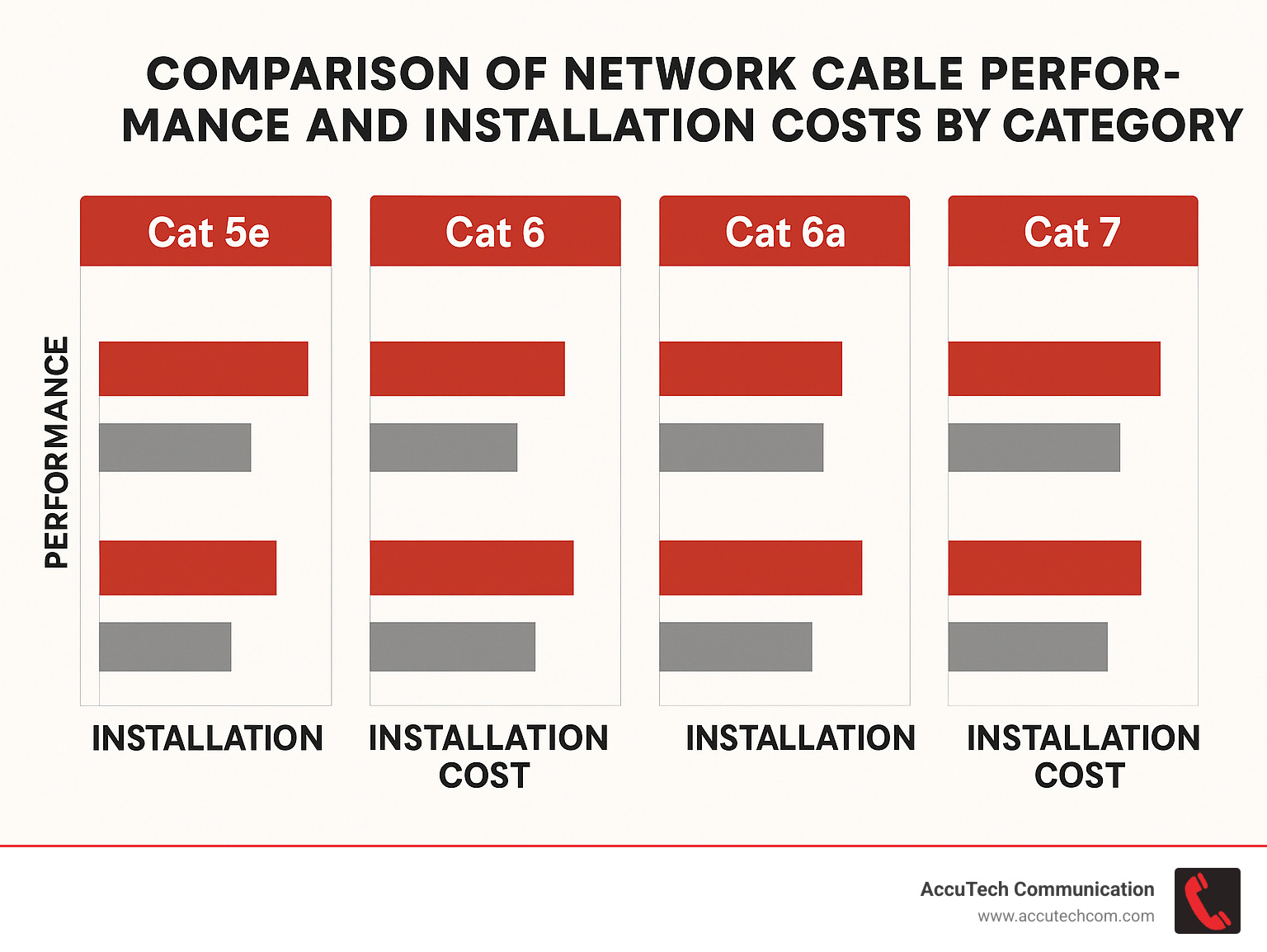
The cable category you choose significantly impacts both performance and cost – it’s a balancing act between current needs and future-proofing.
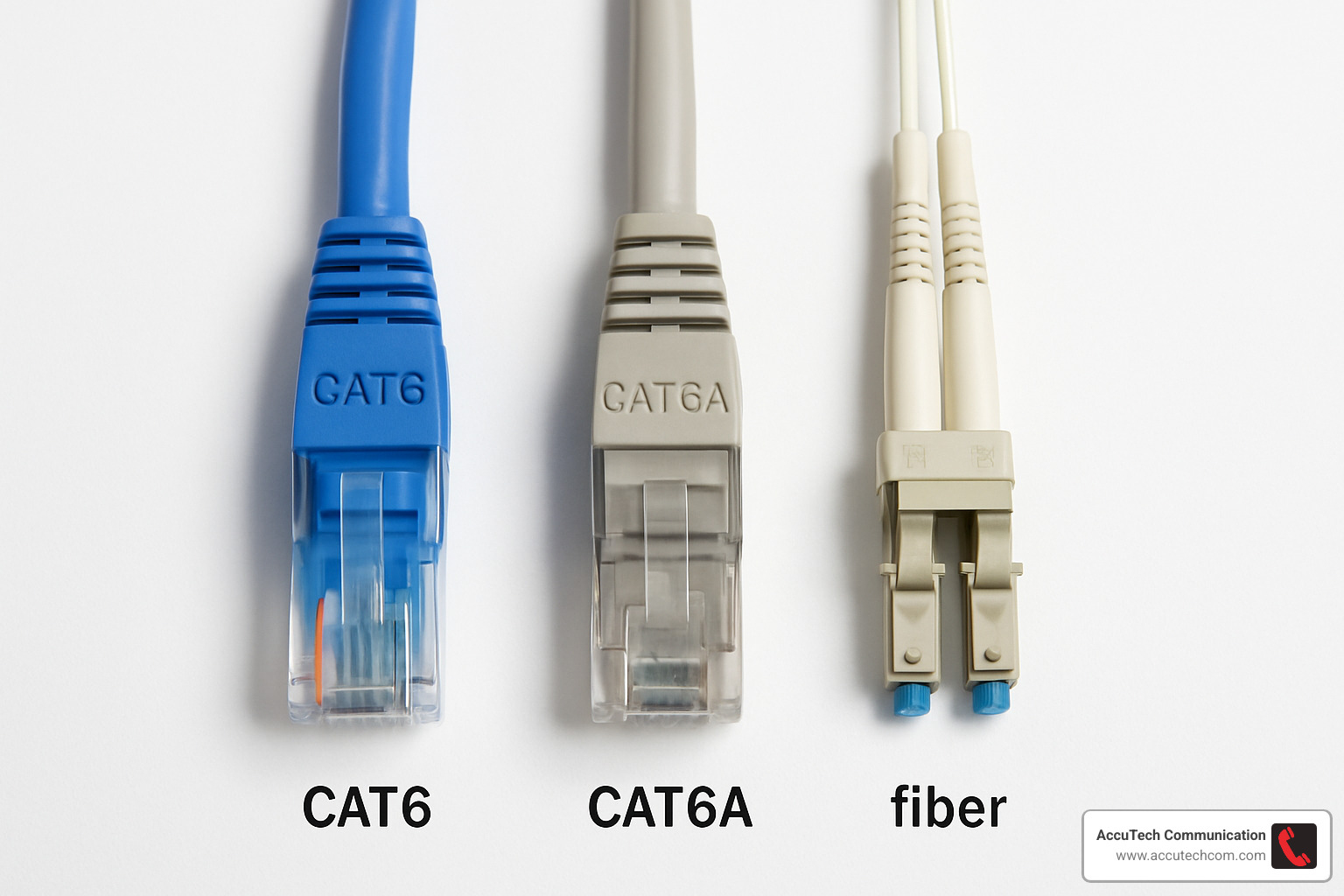
Cat6 vs. Cat6a represents one of the most common decision points for our clients. Cat6 supports 10 Gigabit Ethernet up to 55 meters and costs about 15-25% less than Cat6a. Meanwhile, Cat6a supports 10 Gigabit Ethernet up to the full 100 meters but requires more precise installation techniques to maintain its performance specs.
For most office environments, Cat6 provides an excellent balance of performance and cost. That said, if you’re running data-intensive applications or want to future-proof beyond 5-7 years, Cat6a might be worth the additional investment.
When should you consider fiber optic cabling? There are several trigger points: when distances exceed 100 meters, when you have high bandwidth requirements between network closets, when electromagnetic interference is a concern, or when you’re planning for 40/100 Gigabit Ethernet in the future. While fiber costs more initially, its performance characteristics and longevity often deliver better long-term value for backbone connections.
Speaking of future-proofing, when evaluating cable categories, think about your anticipated network growth over the next 5-10 years, potential increases in bandwidth requirements, the expected lifespan of your facility, and how to balance immediate budget constraints against long-term value.
At AccuTech Communications, we’ve helped countless clients throughout Massachusetts, New Hampshire, and Rhode Island find that sweet spot between immediate budget needs and long-term infrastructure requirements. Our experience has consistently shown that investing in higher-quality cabling infrastructure typically pays off through reduced maintenance costs and a longer useful life. After all, your network cabling is the foundation everything else runs on – it’s worth getting it right the first time.
Want to dive deeper into specific cable types? Check out our detailed guide on Network Cable for Gigabit Ethernet. For those interested in the technical differences between cable types, this scientific research on coaxial vs twisted pair speeds provides fascinating insights.
Certification, Compliance & Hidden Costs
When planning your network infrastructure, commercial network cable installation pricing involves more than just the obvious costs of cable and labor. Let’s pull back the curtain on some critical elements that ensure your installation will perform reliably for years to come.
Testing & Documentation Essentials
Have you ever tried to solve a mystery without clues? That’s what troubleshooting network issues is like without proper documentation and testing. Professional certification isn’t just paperwork—it’s your insurance policy.
Quality installers use specialized Fluke certifiers (those $10,000+ devices that look like fancy tablets) to verify every cable meets TIA/ISO performance standards. These tests check everything from basic wire mapping to more complex measurements like near-end crosstalk and propagation delay. Think of it as a health check-up for each cable in your system.
Good documentation goes beyond just test results. A thoughtfully designed labeling system saves countless hours of future frustration. When your IT team can quickly identify exactly which cable connects to which location, troubleshooting becomes dramatically faster. We’ve seen clients save thousands in IT labor costs simply because their cabling was properly labeled and documented.
The full documentation package should include as-built drawings showing exactly where cables run, comprehensive test results, warranty information, and a clear record of materials used. This becomes invaluable when you need to expand your network or diagnose issues years down the road.
Hidden Line Items
I’ve seen the look of surprise on clients’ faces when certain costs appear on estimates. Let’s explain these often-overlooked elements of commercial network cable installation pricing.
Mobilization costs are particularly significant for smaller projects. When our team spends an hour driving to your location and 30 minutes setting up equipment, that time needs to be factored into the project cost. For larger installations, this becomes a smaller percentage of the overall price.
Need the work done after hours to avoid disrupting your business? That’s often a smart business decision, but it typically comes with a 25-50% premium on labor rates. While this increases your upfront cost, it can actually save money by preventing lost productivity during business hours.
Change orders are the budget-busters that catch many clients off guard. That moment when someone says, “While you’re here, could you just add a few more drops over there?” triggers additional costs. The best way to avoid this? Thorough planning before the project begins.
Beyond these basics, several infrastructure components affect your bottom line:
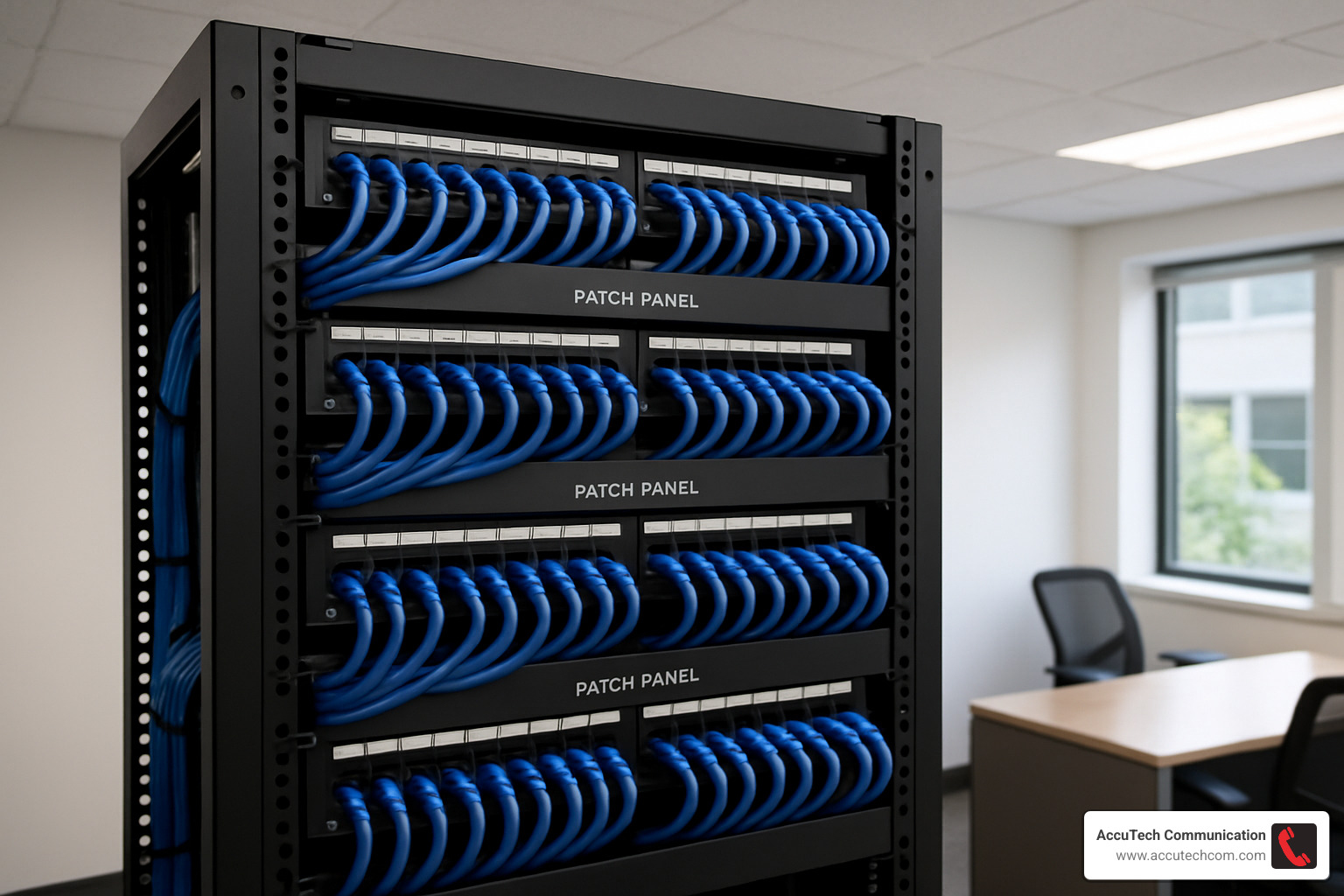
Patch panels create the organized central connection point for your network. Quality panels with proper cable management typically add $20-$35 per port but pay dividends in reduced maintenance headaches.
Racks and cabinets range from simple wall-mounted brackets to sophisticated enclosures with cooling and security features. They’re essential for protecting your network equipment and maintaining organized cable management.
Conduit and trenching become necessary when connecting separate buildings or installing outdoor runs. These weather-protected pathways involve specialized skills and materials that add to project costs but are essential for proper outdoor installations.
Firestop and plenum code compliance isn’t optional—building codes require specific materials and techniques when penetrating fire-rated walls or running cable in air-handling spaces. Compliance with NEC 300.22 and local fire codes might increase material costs, but the alternative (failing inspection or creating safety hazards) is far more expensive.
At AccuTech Communications, we believe transparency builds trust. That’s why our quotes itemize these elements rather than burying them in vague line items. Since 1993, we’ve learned that clients throughout Massachusetts, New Hampshire, and Rhode Island appreciate knowing exactly what they’re paying for—and why it matters to their network’s performance.
Estimating, Budgeting, FAQs & Money-Saving Strategies
Let’s talk honestly about how to plan for your cabling project without breaking the bank. Understanding commercial network cable installation pricing isn’t just about getting the lowest quote—it’s about making sure you’re investing wisely in infrastructure that will serve your business for years to come.
Commercial Network Cable Installation Pricing: Common Pitfalls and Mistakes
I’ve seen many businesses make the same budgeting errors over the years, and they almost always lead to headaches down the road.
One of the most frequent mistakes? Under-estimating the number of drops you’ll need. It’s easy to count computers and call it a day, but don’t forget your VoIP phones, printers, wireless access points, security cameras, conference room equipment, and those IoT devices that seem to multiply every year. My advice? Add at least 15-20% more drops than you think you need right now—your future self will thank you when you’re not paying for another installation project next year.
Another costly oversight is ignoring expansion needs. Your business isn’t static, and neither should your network be. Think about potential office reconfigurations, technology upgrades, and business growth. The small premium you pay for additional capacity today is nothing compared to the cost of a separate installation project later.
I’ve also seen clients try to save money by skimping on testing. This is penny-wise but pound-foolish. Comprehensive testing might seem like an unnecessary expense, but it prevents costly troubleshooting headaches later. When your network is running smoothly at 3 PM on a Friday instead of crashing during an important client presentation, you’ll appreciate that testing investment.
The importance of a proper site survey cannot be overstated. When we walk through your space before quoting, we typically achieve 90-95% accuracy in our final costs. Phone-based quotes simply can’t account for all the variables that affect your installation. Those “great deals” often come with expensive change orders later.

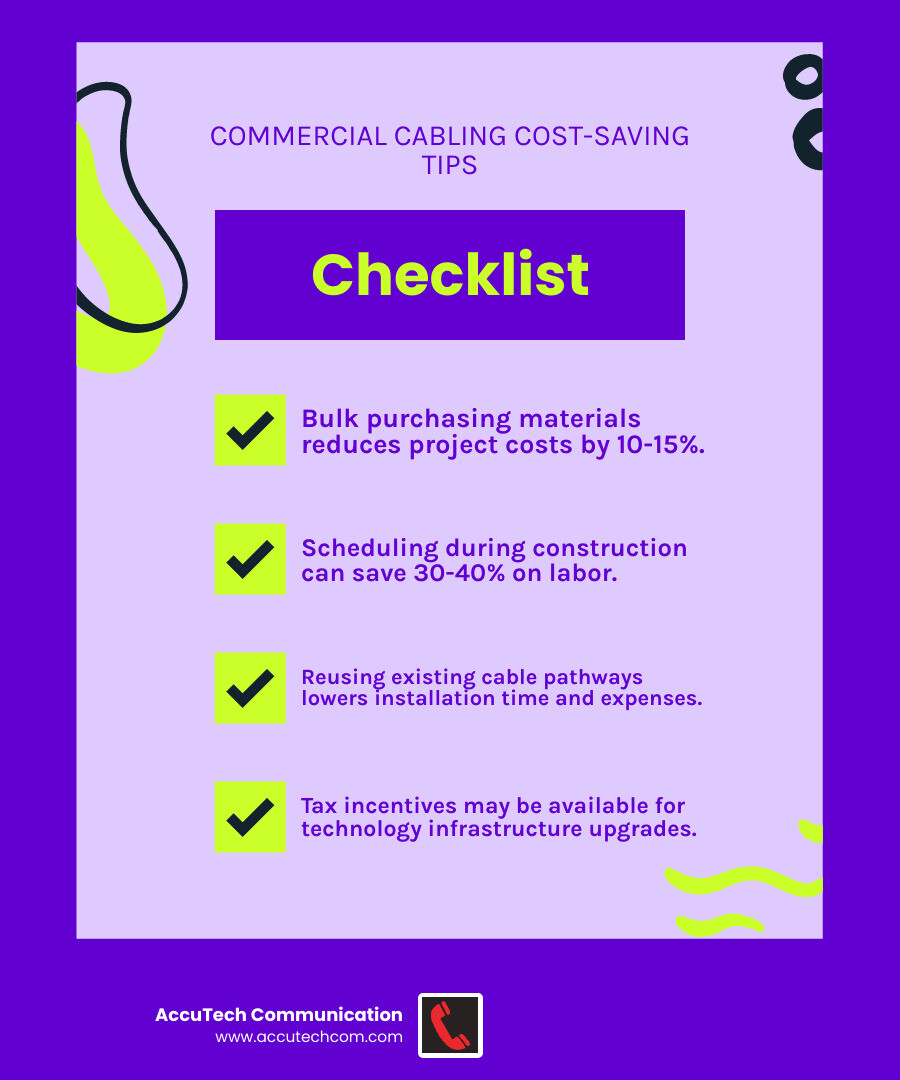
There are several smart ways to save money without compromising quality. Bulk purchasing can lead to significant discounts, so consider combining smaller projects into one larger installation. If you’re renovating or building new space, scheduling your cabling during construction when walls and ceilings are open can reduce labor costs by 30-40%—a substantial savings.
When upgrading existing networks, reusing pathways like conduits and J-hooks can cut down on installation time and costs. And don’t overlook potential tax incentives—some technology infrastructure improvements qualify for advantageous tax treatment, so it’s worth asking your accountant about this.
Keeping things simple through standardized configurations across your organization not only makes installation more efficient but reduces the chance of errors. For larger projects, consider a phased implementation that aligns with your budget cycles while maintaining a cohesive overall design.
Frequently Asked Questions about Commercial Network Cable Installation Pricing
What’s the average cost per data drop in a commercial space?
Here in the Massachusetts, New Hampshire, and Rhode Island area, you’ll typically see prices ranging from $75 to $250 per connection point, with most standard office environments falling somewhere in the middle. This range reflects real differences in installation complexity—not just different pricing strategies.
The variables that push pricing toward the higher end include premium cable categories, difficult access conditions (like hard ceilings or concrete walls), longer run lengths, and specialized environments like healthcare facilities or manufacturing floors where special considerations apply. On the flip side, large volume projects with easy access tend to come in at the lower end of the range.
How do Cat6a and fiber optic costs compare when installed?
These two options serve different purposes and have different cost structures. Cat6a copper cabling will cost about 20-30% more than standard Cat6, mainly due to higher material costs and more precise termination requirements. The additional shielding and internal structure that allows Cat6a to support 10G speeds requires more careful handling and testing.
Fiber optic installation typically costs 2-5 times more than copper on a per-run basis. The materials themselves are more expensive, and termination requires specialized skills and equipment. That said, fiber offers significant advantages for certain applications.
For most businesses, a hybrid approach makes the most sense: Cat6 or Cat6a for connections to workstations and devices, with fiber optic for backbone connections between network closets, runs exceeding 100 meters, or environments with high electromagnetic interference. This approach gives you the best balance of performance and cost-effectiveness.
Does certification really add value to my project budget?
I’m passionate about this one: absolutely yes! Cable certification isn’t just a fancy add-on—it’s essential insurance for your network investment.
Without certification, you have no verification that your cabling will perform as expected. It’s like buying a car without taking it for a test drive. Certification confirms that each cable meets industry standards and will support the data rates you’re expecting.
Beyond performance validation, certification provides the documentation needed for warranty claims (most 25-year warranties require it), creates a baseline for future troubleshooting, and gives you comprehensive documentation of your infrastructure. This documentation becomes invaluable during expansions, upgrades, or when troubleshooting issues.
The cost typically represents just 5-10% of your total project budget, but the peace of mind and potential cost savings down the road are substantial. At AccuTech Communications, we include certification with every installation because we’ve seen how valuable this documentation is throughout the life of your network.
Conclusion
Understanding commercial network cable installation pricing is essential for planning and budgeting your network infrastructure projects effectively. Throughout this guide, we’ve explored the many factors that influence your final installation costs – from cable types and building conditions to certification requirements and future expansion needs.
After working with hundreds of businesses across New England, I’ve found that most clients appreciate knowing these key takeaways:
Labor typically accounts for 60-70% of your total project cost – which explains why identical materials can result in vastly different quotes depending on building complexity and installer expertise. This isn’t an area where cutting corners pays off in the long run.
Your building’s condition dramatically impacts pricing. Installing during new construction can save you 30-40% compared to retrofitting an existing space. If you’re planning a renovation, that’s the perfect time to upgrade your network infrastructure.
Choosing the right cable category means balancing today’s needs with tomorrow’s requirements. While higher-category cables cost more initially, they often deliver better long-term value by extending the useful life of your infrastructure. Think of it as future-proofing your investment.
Proper certification and documentation might seem like optional extras, but they’re actually invaluable insurance policies. They validate warranties, establish performance baselines, and dramatically simplify troubleshooting when issues inevitably arise.
With thoughtful planning and strategic timing, you can achieve significant cost savings without compromising quality. Simple approaches like combining smaller projects, scheduling during renovations, or standardizing configurations can stretch your budget further.
At AccuTech Communications, we’ve been delivering certified, competitively-priced network cabling solutions across Massachusetts, New Hampshire, and Rhode Island since 1993. Our team brings decades of experience to every project, whether you’re building a new facility, upgrading existing infrastructure, or expanding your current network.
We understand that every project comes with unique requirements and constraints. That’s why we take the time to understand your specific needs rather than offering one-size-fits-all solutions. Our transparent pricing approach means you’ll never encounter surprise costs or hidden fees.
While initial costs matter, the true value of your network infrastructure lies in its reliability, performance, and adaptability to future needs. Investing in quality installation now prevents costly problems down the road – something our long-term clients appreciate year after year.
For custom estimates and expert guidance on your commercial network cabling project, I invite you to reach out to our team. We’re happy to provide a detailed consultation and help you steer the complexities of commercial network cable installation pricing with confidence and clarity.
Thank you for exploring this guide. I hope it provides valuable insights for your next network infrastructure project. The cabling infrastructure you install today will likely serve your business for the next decade or more – making thoughtful planning and quality installation one of the best technology investments you can make.
