
Data Center Infrastructure Management: Top Benefits 2025
Data center infrastructure management is crucial for businesses striving to optimize their IT operations and physical facilities. In simple terms, it combines IT management, facility management, and automation into a singular, cohesive system. This convergence enables businesses to gain a holistic view of their entire data center, from computing resources like servers to non-computing elements such as cooling and power systems. By providing total visibility and control, DCIM helps businesses manage their resources efficiently, anticipate future needs, and reduce costs.
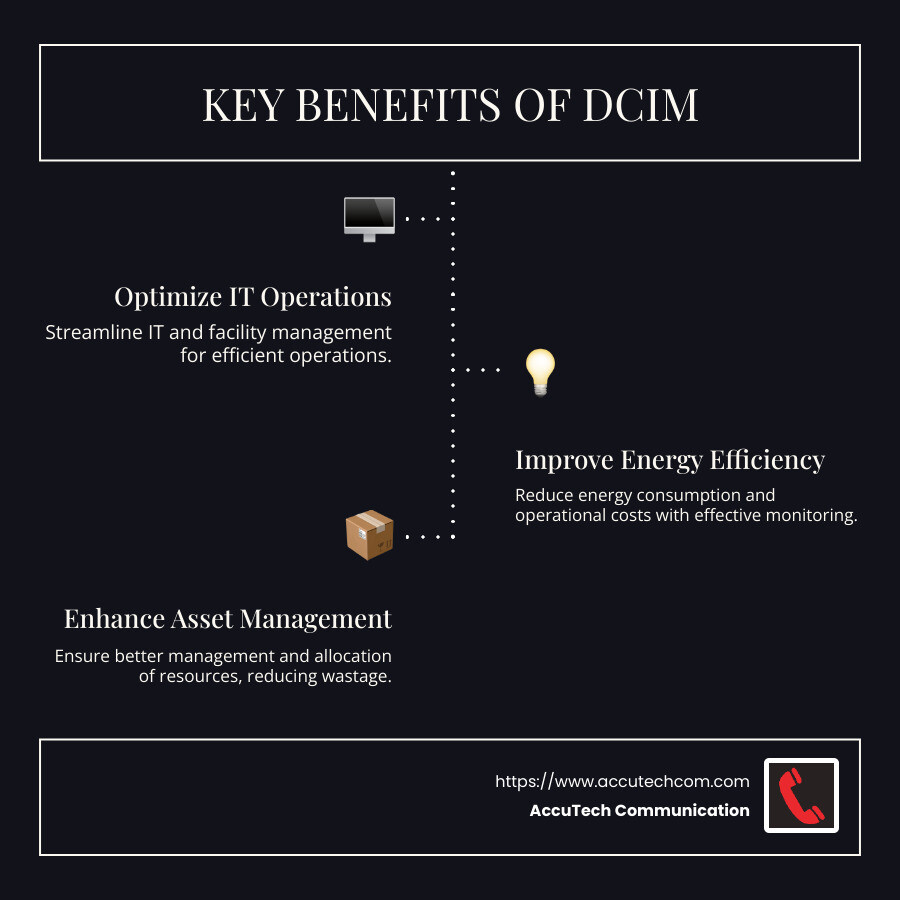
- Optimize IT operations
- Improve energy efficiency
- Improve asset management
- Ensure reliable threat detection
As data centers grow more complex, investing in a robust DCIM system is no longer optional; it’s essential for staying competitive.
I’m Corin Dolan, and as the owner of AccuTech Communications with over 30 years of experience in the business communications sector, I have consulted on data center infrastructure management for numerous clients across Massachusetts, Rhode Island, and New Hampshire. This expertise ensures us to guide you through DCIM strategies custom to your specific business needs.
Understanding Data Center Infrastructure Management
Data center infrastructure management (DCIM) is like the brain of your data center. It brings together IT infrastructure and building facilities into one smart system. Imagine having a control panel that lets you see everything going on in your data center, from the servers humming away to the cooling systems keeping everything from overheating.
What is DCIM?
At its core, DCIM is about making your data center run smoothly and efficiently. It combines IT management with facility management, giving you a complete picture of your data center’s operations. This means you can monitor, manage, and optimize all your resources from a single platform.
The Role of IT and Building Facilities
In a data center, IT and building facilities often seem like separate worlds. However, DCIM bridges this gap. It integrates the IT equipment, like servers and network switches, with the physical infrastructure, such as cooling systems and power distribution units (PDUs). This integration helps in understanding how each part affects the other, enabling better planning and management.
For instance, if a server is using too much power, it might affect the cooling system’s performance. DCIM tools can alert you to such issues, allowing you to make timely adjustments.
Energy Consumption and Efficiency
A challenge in managing a data center is energy consumption. Data centers are energy-hungry beasts. But with DCIM, you can tame this beast. The software measures and monitors energy usage across the facility. This includes tracking how much energy the IT equipment uses and how efficiently the cooling systems operate.
By analyzing this data, you can identify areas where energy is wasted and take steps to improve efficiency. This not only reduces costs but also supports sustainability goals, which is increasingly important in today’s world.
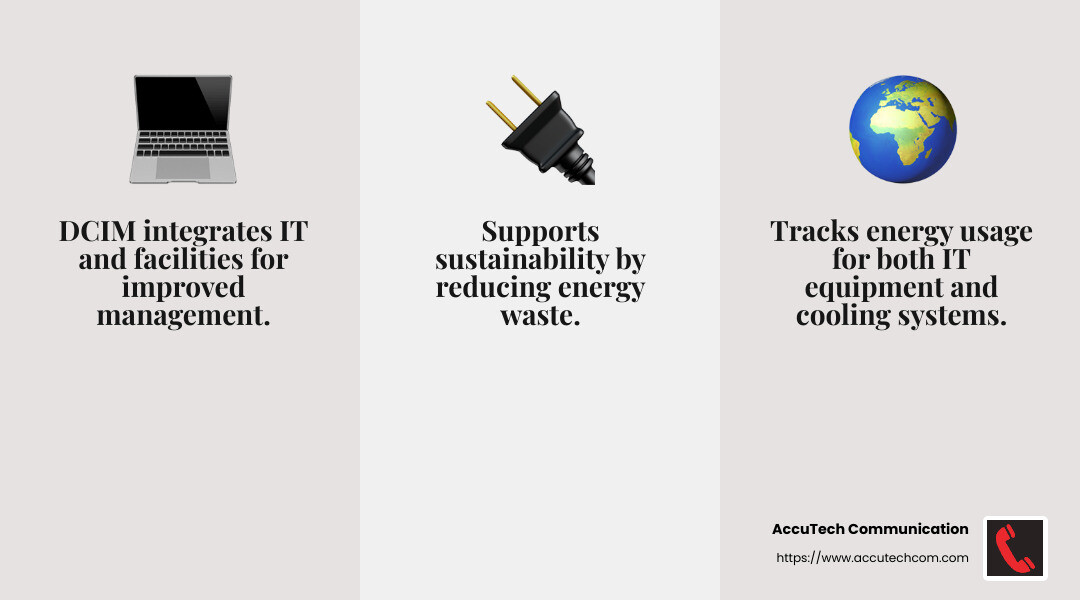
In summary, DCIM is a game-changer for data centers. It provides a unified view, integrates IT and facilities, and helps manage energy consumption effectively. For businesses in Massachusetts, Rhode Island, and New Hampshire, AccuTech Communications offers expert guidance in implementing DCIM solutions custom to specific needs. Whether you’re a small business or a large corporate campus, understanding and leveraging DCIM can significantly improve your data center’s performance.
Key Components of Data Center Infrastructure
A well-functioning data center is like a finely tuned orchestra, with each component playing its part to ensure harmony and efficiency. Let’s explore the essential elements that make up data center infrastructure.
Physical Servers
Physical servers are the backbone of any data center. These machines handle the heavy lifting of processing data and running applications. Each server is equipped with CPUs, memory, storage, and network connections to perform its tasks efficiently.
In modern data centers, servers are often housed in racks. This arrangement maximizes space and allows for better airflow, which is crucial for cooling. The placement and management of these servers are vital for both performance and energy efficiency.
Networking Equipment
Networking equipment is like the circulatory system of a data center. It connects servers to each other and to the outside world. This includes routers, switches, and firewalls that manage data traffic flow and ensure secure communication.
One of the key functions of networking equipment is to minimize latency, which is the time it takes for data to travel from one point to another. Efficient network design and management are crucial to maintaining high performance and reliability.
Security Measures
Security is a top priority in any data center. Protecting the data and infrastructure from both physical and cyber threats is essential. Security measures can include:
- Access control systems: These limit who can enter the data center and access sensitive equipment.
- Surveillance cameras: Used for monitoring and recording activities within the facility.
- Firewalls and intrusion detection systems: Protect against unauthorized access and cyberattacks.
Implementing robust security measures helps safeguard valuable data and ensures compliance with industry standards.
Storage Solutions
Storage solutions are the libraries of a data center, holding vast amounts of data that need to be accessed, processed, and stored securely. These can include:
- Hard disk drives (HDDs) and solid-state drives (SSDs): Used for primary storage.
- Network-attached storage (NAS) and storage area networks (SANs): Provide scalable and flexible storage options for large volumes of data.
Selecting the right storage solutions is crucial for optimizing performance and ensuring data availability. It’s important to balance speed, capacity, and cost when designing storage infrastructure.
Each of these components plays a critical role in the overall operation of a data center. By understanding and managing these elements effectively, businesses can ensure their data centers run smoothly, securely, and efficiently. This is where data center infrastructure management (DCIM) comes into play, offering tools and insights to optimize these components and drive performance.
Benefits of Implementing DCIM
Implementing data center infrastructure management (DCIM) can transform the way a business operates its data center. Let’s explore some of the major benefits: energy efficiency, asset management, threat detection, and cost reduction.
Energy Efficiency
Energy efficiency is a top priority for data centers. DCIM plays a crucial role in optimizing energy usage. By monitoring power consumption and cooling systems, DCIM helps identify areas where energy can be saved. For example, DCIM enables data centers to track their Power Usage Effectiveness (PUE), a key metric for understanding energy efficiency.
With real-time data, you can make informed decisions about when to turn off unused equipment or how to adjust cooling systems to save energy without compromising performance. This not only reduces energy costs but also supports sustainability goals.
Asset Management
Effective asset management is another significant benefit of DCIM. It provides a comprehensive view of all physical and virtual assets in the data center. This visibility allows for better tracking and management of equipment, from servers to networking devices.
With DCIM, data center managers can easily locate assets, understand their status, and plan for future needs. This leads to more efficient use of resources and reduces the risk of over-provisioning or under-utilization.
Threat Detection
Security is a critical concern for any data center. DCIM improves threat detection by providing real-time monitoring and alerts. It can detect anomalies in data traffic or unusual access patterns, which may indicate potential security threats.
By integrating DCIM with security systems, data centers can respond quickly to incidents, minimizing potential damage. This proactive approach helps protect sensitive data and maintains compliance with industry regulations.
Cost Reduction
One of the most compelling benefits of DCIM is cost reduction. By improving energy efficiency, optimizing asset management, and enhancing security, DCIM helps reduce operational costs.
For instance, by using DCIM to monitor and manage power consumption, businesses can significantly cut down on energy bills. Additionally, efficient asset management reduces the need for unnecessary purchases, saving money on equipment and maintenance.
In summary, implementing DCIM brings a host of benefits that can transform data center operations. From energy savings to improved security and cost efficiency, DCIM is a powerful tool for modern data centers.
Next, let’s explore the top DCIM tools and software that make these benefits a reality.
Top DCIM Tools and Software
When it comes to data center infrastructure management (DCIM), selecting the right tools and software is critical. These solutions help monitor, manage, and optimize your data center operations. Let’s explore some of the top tools and software that focus on monitoring, management, and energy tracking.
Monitoring Tools
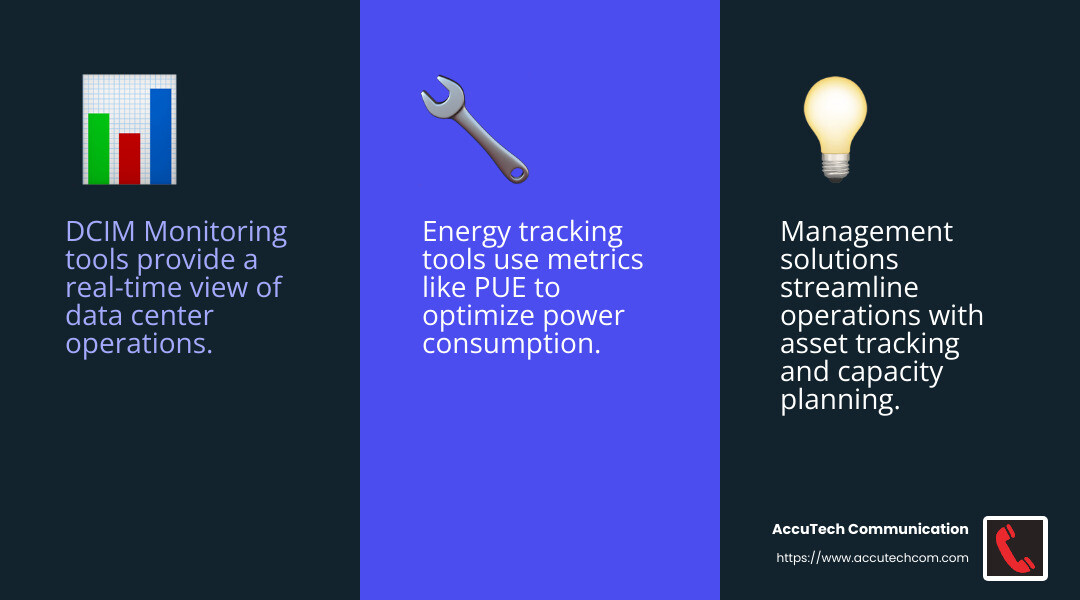
DCIM Monitoring Tools are essential for keeping an eye on every aspect of your data center. These tools provide a “single pane of glass” view, allowing you to monitor servers, storage, networking, and environmental conditions in real-time.
For instance, with DCIM software, you can remotely monitor rack power distribution units (PDUs), uninterruptible power supplies (UPSs), and temperature sensors. This remote access means you can check on your data center’s health from anywhere, reducing the need for on-site visits and saving time.
Management Solutions
Management Solutions in DCIM help streamline operations by providing detailed insights into your data center’s infrastructure. These solutions offer features like asset tracking, capacity planning, and workflow management.
With these tools, data center managers can easily locate equipment, plan for future capacity needs, and manage changes efficiently. This results in better resource utilization and reduces the risk of downtime. As Andy Lawrence noted, “It is difficult to achieve advanced levels of data center maturity without extensive use of DCIM software.”
Energy Tracking
Energy Tracking is a standout feature of DCIM tools. By monitoring energy usage in real-time, these tools help data centers optimize their power consumption and cooling systems.
DCIM software often includes metrics like Power Usage Effectiveness (PUE) and Data Center Infrastructure Efficiency (DCiE), which are crucial for understanding and improving energy efficiency. With this data, you can make informed decisions to reduce energy waste and lower operational costs.
Incorporating these tools into your data center operations can lead to significant improvements in efficiency and cost savings. They provide the insights needed to make smarter decisions about your infrastructure, ultimately changing the way your data center operates.
In the next section, we’ll answer some frequently asked questions about data center infrastructure management to further clarify its role and benefits.
Frequently Asked Questions about Data Center Infrastructure Management
What is data center infrastructure management?
Data center infrastructure management (DCIM) is the integration of IT and building facilities functions within an organization. It provides a holistic view of a data center’s performance, ensuring that energy, equipment, and physical space are used efficiently. DCIM software measures, monitors, and manages IT equipment and supporting infrastructure, allowing data center operators to run efficient operations and improve infrastructure design planning.
What are the main components of a data center infrastructure?
A data center’s infrastructure is composed of several vital components:
- Physical Servers: The backbone of any data center, these servers handle computing tasks and store data.
- Networking Equipment: This includes routers, switches, and cabling that connect servers and other devices within the data center.
- Security Measures: Physical and digital security systems protect data from unauthorized access and cyber threats.
- Storage Solutions: These systems store and manage data, ensuring it is accessible and secure.
- Environmental Controls: Systems that manage temperature, humidity, and power to keep everything running smoothly.
Each component plays a crucial role in the data center’s overall functionality and efficiency.
How does DCIM improve energy efficiency?
DCIM significantly improves energy efficiency by providing real-time insights into energy consumption. Here’s how it works:
- Energy Consumption Monitoring: DCIM tools track energy usage for IT equipment and cooling systems. This data helps identify areas where energy is being wasted.
- Cost Reduction: By optimizing power usage and cooling, data centers can reduce operational costs. For example, monitoring tools can alert managers to inefficiencies, such as underused servers, allowing them to take corrective action.
- Environmental Impact: Reducing energy consumption not only saves money but also minimizes the environmental footprint of a data center.
As a result, DCIM helps data centers achieve better energy efficiency, which is crucial for both economic and environmental reasons.
Conclusion
In data center infrastructure management (DCIM), having a reliable partner can make all the difference. That’s where AccuTech Communications comes in. Based in Massachusetts, we have been a trusted provider of network cabling, business phone systems, and data center technologies since 1993. Our focus has always been on delivering certified, reliable service at competitive prices.
Our expertise in data center technologies ensures that businesses in Massachusetts, New Hampshire, and Rhode Island can operate their data centers efficiently and effectively. We understand the importance of energy efficiency, asset management, and cost reduction, and we’re here to help you achieve those goals.
With our commitment to quality and customer satisfaction, AccuTech Communications is your go-to partner for all your data center needs. Whether you’re looking to optimize your current setup or build a new one from scratch, we’re here to provide the expertise and support you need.
Ready to take the next step? Learn more about our data center build-out services and see how we can help you manage your data center infrastructure with ease.
Your data center is the backbone of your business. Let us help you make it stronger and more efficient.
