
Why Professional Commercial CCTV Installation Matters for Your Business

Commercial CCTV Installers are specialized professionals who design, install, and maintain video surveillance systems for businesses. Here’s what you need to know:
Key Services Provided:
- Site assessment and system design
- Professional camera installation and cabling
- Network integration and configuration
- Video management system (VMS) setup
- Ongoing maintenance and support
What to Look For:
- Licensed and insured contractors
- Experience with your industry type
- Quality camera brands and equipment
- Comprehensive warranty coverage
- Local support and service
Modern businesses face complex security challenges that require proactive protection. With small businesses losing thousands every minute to shoplifters and most burglaries going unsolved, professional video surveillance is essential.
Visible business security cameras help deter 60% of burglaries, making them a highly effective crime prevention tool. However, choosing the right system and installer can be overwhelming.
This guide will help you get commercial CCTV installation quotes by explaining how to assess your needs, evaluate proposals, and make an informed decision.
I’m Corin Dolan, owner of AccuTech Communications. Since 1993, I’ve helped businesses across Massachusetts, New Hampshire, and Rhode Island implement reliable security systems. Through my experience with Commercial CCTV Installers and custom security solutions, I’ve seen how the right surveillance system can transform a business’s security and operational efficiency.
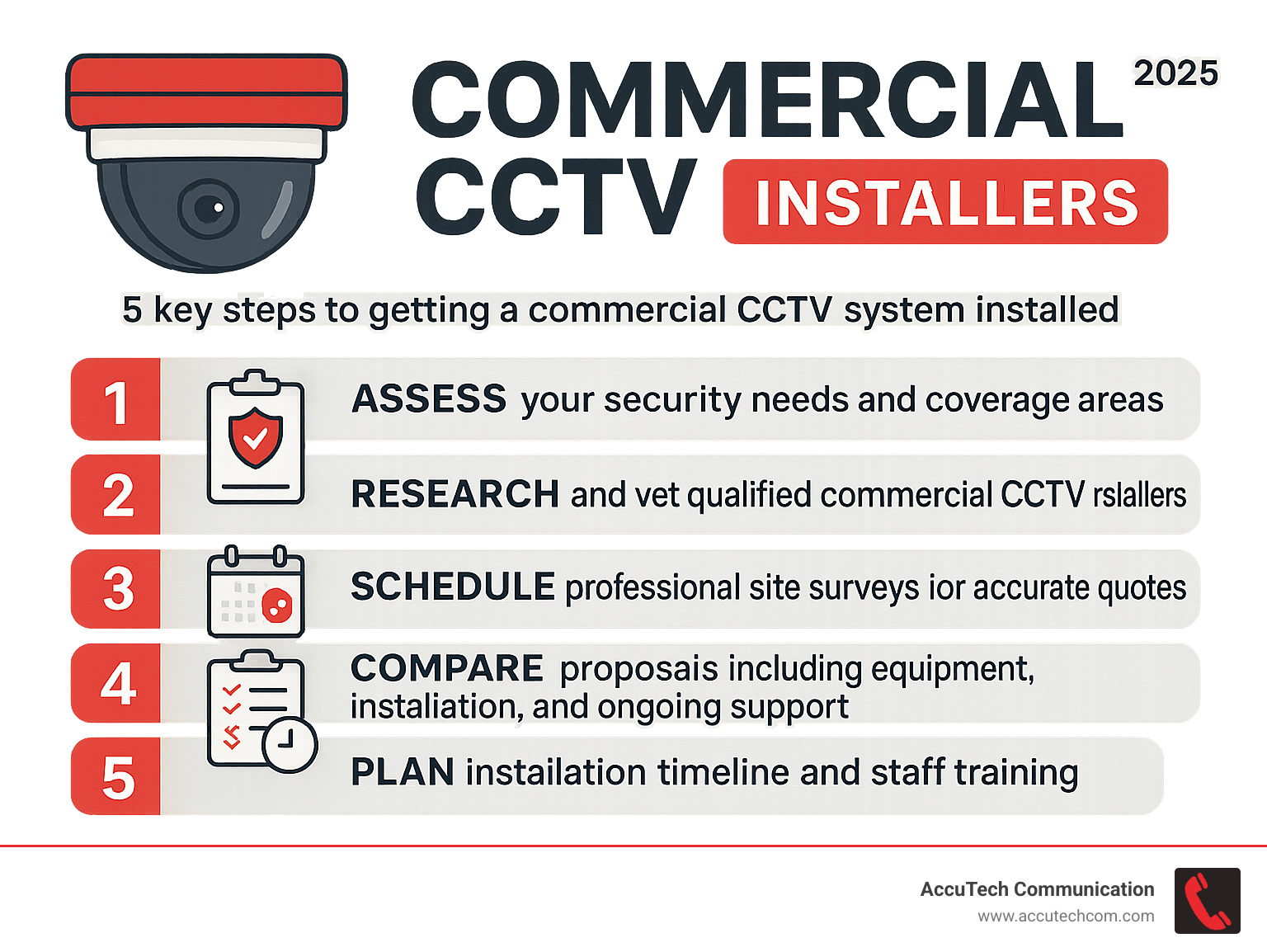
Commercial CCTV Installers terms you need:
Why Invest in a Commercial CCTV System?
Running a business involves many worries, from asset protection to employee safety. A well-designed commercial CCTV system acts as a silent partner, providing peace of mind around the clock.
Modern surveillance systems are more than just recorders; they are proactive protection tools that deter crime, boost operational efficiency, and deliver a measurable return on investment. When you partner with experienced Commercial CCTV Installers, you’re investing in comprehensive business protection.
Businesses face daily threats like shoplifting and break-ins. However, scientific research on burglary deterrence shows that visible security measures make criminals reconsider targeting your property.
For more on how these systems can transform your business, see our guide on business security systems cost.
Enhancing Security and Deterring Crime
Visible security cameras send a clear message: “This business is protected.” The statistics are compelling—properly placed commercial CCTV systems help deter 60% of burglaries. Most criminals seek easy targets, not businesses with comprehensive surveillance.
Beyond deterrence, your CCTV system is an invaluable evidence collection tool. High-quality footage can be crucial for prosecution and recovering losses.
Modern systems also offer remote monitoring capabilities, allowing you to check on your business from anywhere. This 24/7 coverage keeps you connected to your operations, whether you’re at home or managing multiple locations.
Improving Operational Efficiency and Productivity
CCTV systems also offer significant operational benefits. They help you monitor processes and identify opportunities for improvement.
In retail, cameras help you understand customer flow patterns, enabling you to optimize layouts and boost sales. In manufacturing, they ensure workplace safety protocols are followed and help identify production bottlenecks.
Staff accountability improves when professional monitoring is in place, creating a safer and more focused work environment. You can make better decisions based on visual data rather than guesswork, reviewing incidents and analyzing patterns to adjust staffing and security protocols.
Calculating the Return on Investment (ROI)
Every business owner wants to know if an investment will pay for itself. With commercial CCTV, the answer is typically yes.
Reduced theft losses, both from shoplifting and internal sources, can often cover the system’s cost within the first year. Many insurance companies also offer lower insurance premiums for businesses with professional security systems, creating ongoing savings.
Crucially, CCTV systems help prevent fraudulent claims. Clear video evidence can protect your business from costly slip-and-fall lawsuits or false liability claims.
The long-term value is significant. A properly installed system serves your business for years, providing continuous protection and operational insights as your company grows.
Essential Components and Modern Technologies
Building a commercial CCTV system requires a solid foundation of the right components. Today’s surveillance technology is more powerful and accessible than ever, offering options previously available only to large corporations.
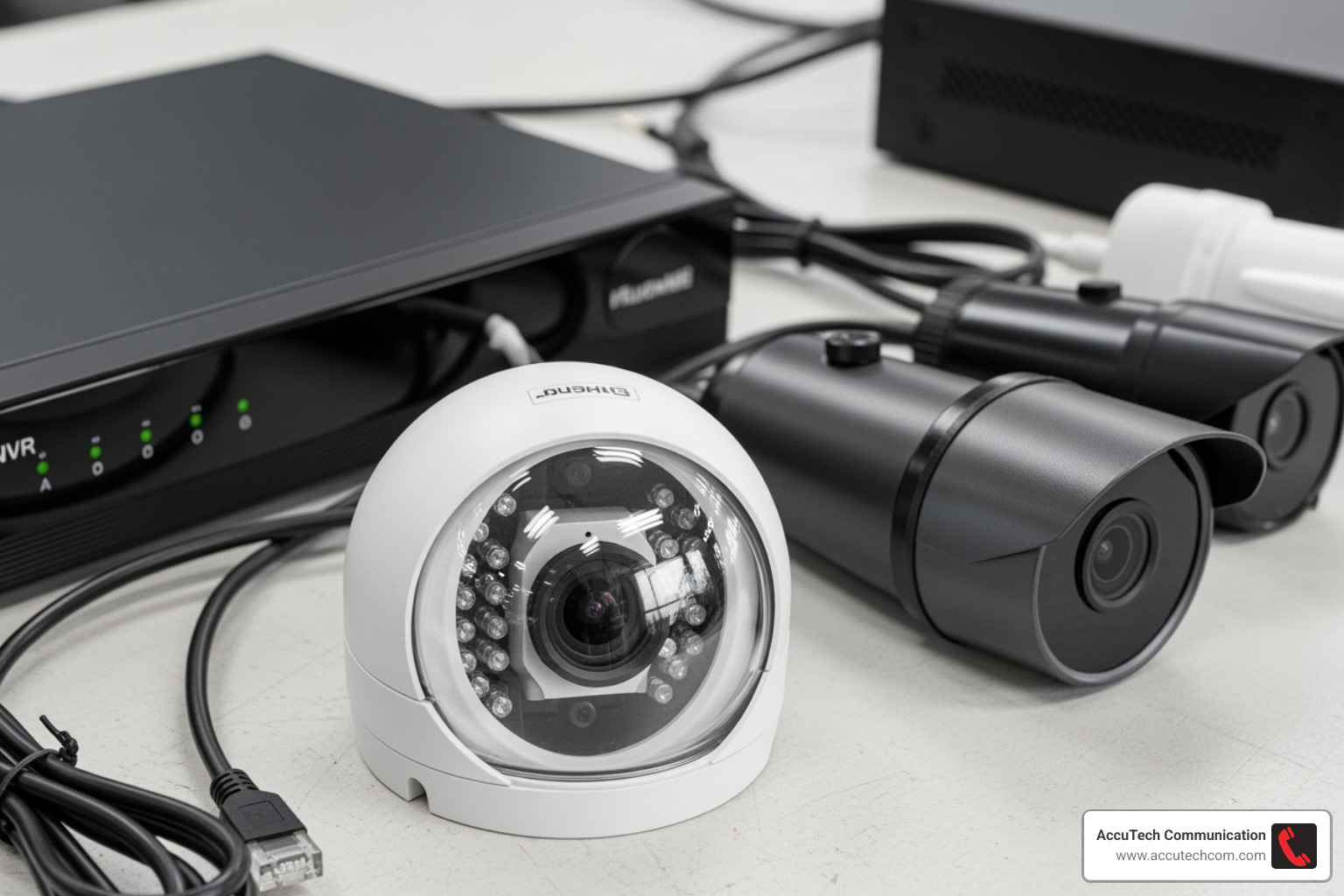
Every CCTV system has three core components: cameras to capture footage, recorders to store it, and software to manage it. While older analog systems with DVRs exist, the industry standard is now IP-based systems with Network Video Recorders (NVRs).
IP cameras offer 1080P high definition recording and beyond, meaning one modern camera can often replace multiple older ones. They are also highly scalable, making it easy to add more cameras as your business grows. Many Commercial CCTV Installers offer hybrid solutions, allowing a gradual upgrade from analog to digital. This flexibility ensures your system evolves with your business. For more details, see our Commercial CCTV Systems page.
Types of Commercial CCTV Cameras and Their Uses
Choosing the right camera for each location is critical. Here are the main types used in commercial surveillance:
- Dome cameras are discreet and versatile, making them ideal for indoor retail spaces and offices. Their vandal-resistant design and wide-angle coverage are key features.
- Bullet cameras are highly visible, serving as an excellent crime deterrent. They are best for perimeter security, parking lots, and monitoring entry points.
- PTZ (Pan-Tilt-Zoom) cameras are dynamic and flexible, perfect for active monitoring of large warehouses or expansive retail floors where security personnel can control them in real-time.
- Fisheye cameras provide a 360-degree perspective from a single lens, eliminating blind spots in open areas like small retail stores or office lobbies.
Specialty cameras, such as thermal, license plate recognition, and facial recognition cameras, are also available for unique security needs.
Storage and Recorders: On-Premise vs. Cloud
Securely storing footage is crucial. You can choose between on-premise, cloud, or a hybrid approach.
- On-premise storage using NVRs (for IP) or DVRs (for analog) gives you direct control over your data. This is ideal for businesses with strict data retention policies or limited internet. Most systems store footage for 30 to 90 days.
- Cloud-based storage transmits footage to off-site servers, providing remote access from anywhere. It’s easily scalable, allowing you to increase storage without new hardware.
Many businesses opt for a hybrid approach, combining local recording for immediate access with cloud backup for critical data, offering the best of both worlds.
The Power of a Video Management System (VMS) and AI Analytics
The Video Management System (VMS) is the brain of your surveillance operation, providing centralized control. Modern VMS platforms can integrate seamlessly with other security systems like access control and alarms, enabling instant visual verification of events and reducing false alarms.
The most significant advancements come from AI-powered analytics, which turn cameras into proactive security tools. These systems can detect unusual movement, identify objects left behind, and distinguish between people and vehicles to reduce false alerts.
Behavioral analytics can spot suspicious activities like loitering, while people counting and heat mapping offer valuable operational insights for retail. Advanced sensors can even detect vaping, smoke, or aggressive behavior. These AI capabilities provide actionable business intelligence to help protect assets and improve your bottom line.
How to Choose the Right Commercial CCTV Installers
Choosing the right Commercial CCTV Installers is as crucial as selecting the right equipment. Without skilled installation and configuration, even the best hardware won’t provide the protection you need.
Your installer is a long-term security partner who designs a system for your unique needs and provides ongoing support. Since 1993, we’ve seen how the right team makes all the difference for businesses in Massachusetts, New Hampshire, and Rhode Island. For more insights, check out our security camera installation services.
Key Factors for Vetting Commercial CCTV Installers
When evaluating installers, look beyond the price tag. The cheapest quote can lead to costly mistakes. Here’s what truly matters:
- Licensing and Insurance: Ensure the installer holds all necessary state and local licenses (like Master Security Licenses) and is fully insured. This protects both parties.
- Experience: Look for proven experience in commercial environments, which have different needs than residential systems regarding network integration, compliance, and durability.
- Certifications: Industry certifications, such as BICSI training for network cabling, demonstrate a commitment to staying current with technology.
- Reviews and References: Check Google reviews and ask for recent customer references. A quality installer will have a strong portfolio and satisfied clients.
- Technical Expertise: A knowledgeable installer should ask insightful questions about your business and explain technical options in clear terms.
Tailoring a System to Your Industry’s Needs with Professional Commercial CCTV Installers
Every industry has unique security challenges that require a custom solution. Professional Commercial CCTV Installers design systems that address specific operational needs.
- Retail businesses need theft prevention, customer flow analysis, and Point-of-Sale integration to combat fraud.
- Manufacturing facilities require durable cameras to monitor security and safety, ensuring protocols are followed and inventory is tracked.
- Office buildings benefit from systems integrated with access control to monitor entry points without disrupting daily operations.
- Healthcare facilities must balance patient privacy and compliance with the need to protect patients and staff.
Our process begins with a comprehensive site assessment to understand your operations and concerns, ensuring the final design meets your security and operational goals.
Navigating Legal and Privacy Requirements
Installing commercial CCTV involves complex legal and privacy considerations that a responsible installer must steer.
- Local Laws: Regulations on camera placement, data retention, and notification vary by state and municipality. A qualified installer will ensure your system is fully compliant.
- Employee Privacy: While CCTV improves safety, employees have a reasonable expectation of privacy in areas like restrooms and break rooms. Clear policies and signage are essential.
- Audio Recording: Laws regarding audio recording are often stricter than for video. In many jurisdictions, recording conversations requires consent from all parties. Always consult legal counsel before enabling audio.
- Customer Notification: Prominent signage indicating surveillance is in operation is a legal requirement and good business practice, maintaining transparency with customers.
Working with experienced Commercial CCTV Installers who understand these legal requirements protects your business from potential liability.
Understanding the Installation Process, Costs, and Maintenance
A commercial CCTV installation project can seem daunting, but experienced Commercial CCTV Installers ensure a smooth process from quote to operation. This is a long-term security partnership built on transparency, so you know exactly what to expect. For more insights, explore our guide on business security cameras.
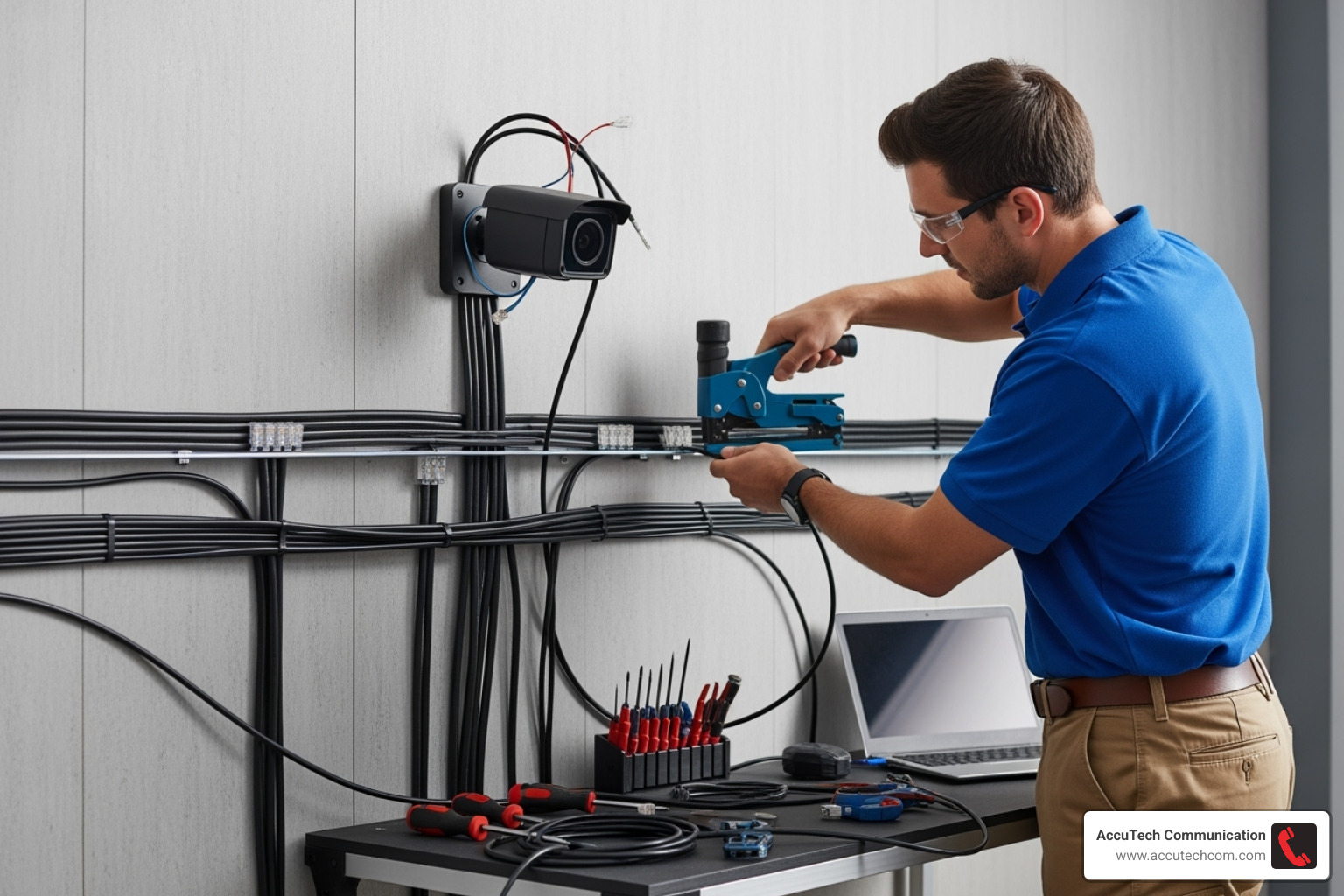
The installation process is designed to minimize business disruption while maximizing security. Each phase, from the site visit to team training, is a deliberate step toward your ideal security solution.
The Typical Installation Process
Getting your system running involves five key phases:
- Site Survey and Needs Assessment: Our team conducts a thorough evaluation of your property, identifying vulnerabilities and discussing your security concerns and budget to design a cost-effective solution.
- System Design and Proposal: We transform our findings into a customized CCTV system plan. The detailed proposal outlines camera placement, recording solutions, and how all components work together.
- Cabling and Hardware Installation: Our certified technicians run all necessary structured cabling (like Cat6 or fiber optic), securely mount cameras, and install recording and network equipment with professional wire management.
- Software Configuration and Integration: We configure the video management software, set recording schedules, establish motion detection zones, and activate AI analytics. We also integrate the system with existing security measures like access control.
- Staff Training: We provide hands-on training to ensure your team is confident using all system features, from viewing footage to managing alerts. A system is only effective if your staff knows how to use it.
Breaking Down the Costs and Long-Term Value
Understanding the costs of a commercial CCTV system helps you appreciate its long-term value.
- Hardware costs depend on camera type (dome, bullet, PTZ), resolution, special features, and recording equipment. Storage capacity also factors into the investment.
- Installation labor reflects the project’s complexity, including the number of cameras and amount of cabling. Professional installation ensures proper setup and compliance.
- Software fees may include licenses for advanced VMS platforms or subscriptions for cloud storage and AI analytics.
- Maintenance plans are a smart way to protect your investment. Regular checks, updates, and cleaning extend your system’s lifespan, which can be many years with proper care.
When evaluating costs, remember the significant ROI from reduced theft, lower insurance premiums, improved efficiency, and protection against fraudulent claims. Commercial CCTV is a strategic investment in your business’s future.
Frequently Asked Questions about Commercial CCTV
After three decades of helping companies across Massachusetts, New Hampshire, and Rhode Island secure their properties, we’ve compiled answers to the most common questions from business owners.
How many security cameras does my business need?
The right number of cameras depends on your business’s unique layout, size, and vulnerable areas. Your coverage goals—whether for general oversight or detailed identification—also determine the final count. A small café has different needs than a large warehouse.
The best approach is a professional site survey. An experienced technician will assess your property and design a system that provides comprehensive coverage without unnecessary expense. This eliminates guesswork and ensures your investment is optimized for your specific security challenges.
How long is video footage from a commercial system typically stored?
Storage duration varies, but most commercial systems retain footage for 30 to 90 days. The ideal period for your business depends on several factors:
- Industry regulations: Certain sectors like banking or healthcare may have legal mandates for minimum storage periods.
- Storage capacity: Higher resolution cameras and a greater number of cameras create larger files, which require more storage space. Systems can be configured to retain footage from critical areas longer than from general spaces.
- Business needs: Some companies require longer retention for operational analysis, while others are focused on immediate security incidents.
We work with you to find the right balance that meets your security and compliance needs.
What is the main difference between commercial and residential security cameras?
While they may seem similar, commercial and residential cameras are built for entirely different purposes. The key differences are:
- Durability: Commercial cameras are designed for continuous 24/7 operation and can withstand harsh weather and potential tampering. Residential cameras prioritize affordability over ruggedness.
- Advanced Features: Commercial systems offer sophisticated AI analytics, superior low-light performance, higher resolutions, and smart detection that go far beyond basic motion alerts.
- Scalability: Commercial systems are designed to grow with your business, easily accommodating dozens of additional cameras and integrating with other security systems like access control.
- Compliance: Commercial-grade systems are built to meet professional standards and industry-specific regulations for video quality and data security.
- Professional-Grade Components: From the cameras to the cabling, all components are designed for years of reliable service in demanding environments.
Businesses need the robust performance and advanced intelligence that only commercial-grade systems, installed by experienced Commercial CCTV Installers, can provide.
Conclusion
Investing in a commercial CCTV system is about more than security; it’s about improving how your business operates. These systems can reduce burglary attempts by 60%, help identify operational inefficiencies, and potentially lower your insurance premiums.
The process from assessment to a fully operational system is straightforward with the right Commercial CCTV Installers. The key is finding a partner who understands your business and can guide you with expertise and care.
At AccuTech Communications, we’ve learned over three decades that the best security systems are built on lasting partnerships. We are dedicated to protecting what matters most to businesses in Massachusetts, New Hampshire, and Rhode Island.
Since 1993, we have evolved with technology, from basic analog systems to today’s intelligent surveillance networks. Our commitment to certified, reliable service at competitive prices remains unchanged. Our expertise in network cabling and business communications ensures we can design security solutions that integrate seamlessly with your infrastructure.
Your business deserves a comprehensive security strategy that grows with you and provides real operational value. That is what professional installation and ongoing support deliver.
Ready to take the next step? Contact us for a network cabling and security consultation and let’s discuss how the right CCTV system can secure your business’s future.