
Fiber Optic Cable: Top Guide for 2025 Excellence
Fiber optic cable is a game-changer in today’s , data-driven world. As businesses strive for smoother, faster communication systems, fiber optics often stand at the forefront. Why? Let’s break it down:
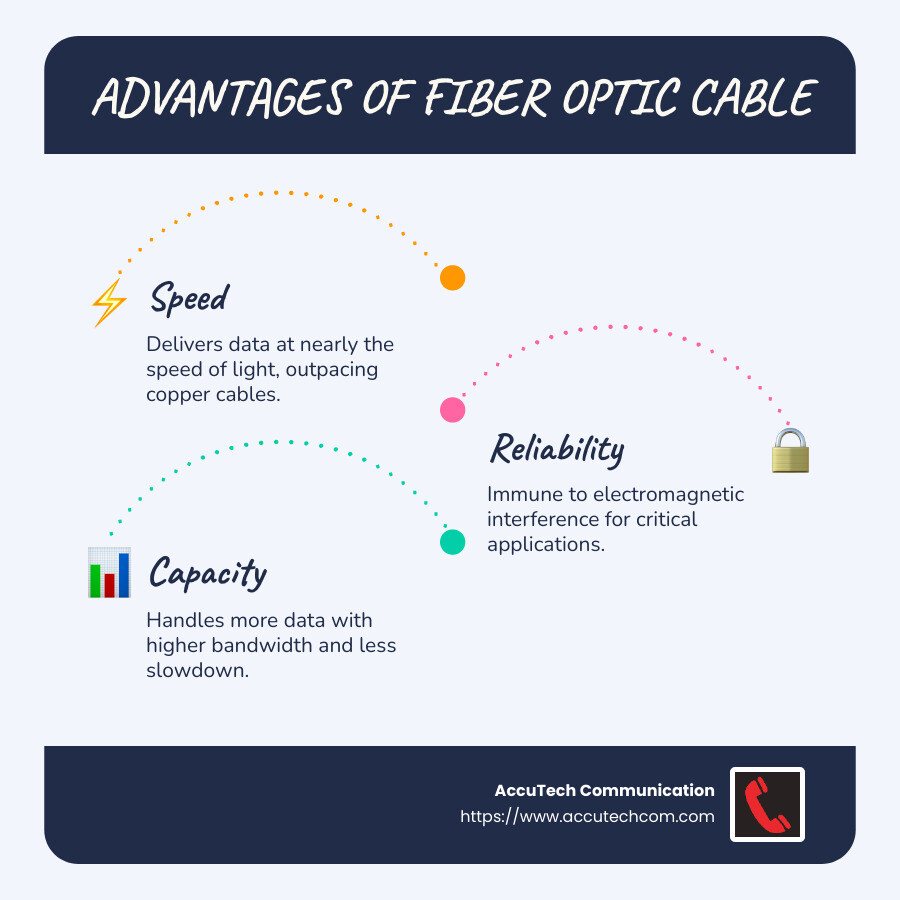
- Speed: Fiber optics deliver data at nearly the speed of light, far outpacing traditional copper cables.
- Reliability: Immune to electromagnetic interference, they’re perfect for critical applications in healthcare and beyond.
- Capacity: With a higher bandwidth, fiber cables can handle much more data without slowing down.
- Distance: Signals travel longer distances without degradation, ensuring consistent performance.
As technology evolves, the need for high-speed data transmission grows. Fiber optic cable offers a solution that’s not just competitive but also essential for modern businesses seeking dependable internet services.
I’m Corin Dolan. With over two decades in the communications industry and extensive expertise in fiber optic cable, I help businesses steer the complexities of this technology for improved data transmission. Let’s dive deeper into how fiber optics can transform your business operations.
Fiber optic cable basics:
– backbone cabling
– it structured cabling
– types of cables
What is Fiber Optic Cable?
Fiber optic cable is a marvel of modern technology, allowing data to travel at the speed of light. But what makes up these cables, and how do they work? Let’s explore the components and types of fiber optic cable that make it such a powerful tool for data transmission.
Components of Fiber Optic Cable
At the heart of every fiber optic cable are the core and cladding. These two components are essential for transmitting light signals, which carry data over long distances.
- Core: This is the central part of the fiber optic cable where light travels. It’s typically made of glass or plastic.
- Cladding: Surrounding the core is the cladding, which reflects light back into the core. This ensures that the light signal remains strong and travels efficiently.
These components are protected by various layers:
- Protective Layers: Outside the cladding, several protective layers shield the fragile fibers from damage. These include coatings that guard against moisture and physical stress, ensuring the cable’s durability in different environments.
Types of Fiber Optic Cable
Fiber optic cables come in different types, each suited for specific applications. The two main types are single-mode and multimode.
- Single-Mode Fiber (SMF): Used for long-distance communication, single-mode fiber has a smaller core that allows light to travel in a single path. This reduces signal loss over long distances, making it ideal for telecommunications and internet backbones.
- Multimode Fiber (MMF): With a larger core, multimode fiber allows multiple light paths, which is suitable for shorter distances. It’s often used in data centers and local area networks (LANs) where high-speed data transfer over short distances is crucial.
Different cable constructions are also available, custom to specific needs. For example, loose-tube cables are designed for outdoor use, protecting fibers from environmental factors like water and temperature changes. Meanwhile, tight-buffered cables are often used indoors for their flexibility and ease of handling.
In summary, the design and type of fiber optic cable you choose depend greatly on your specific requirements, such as the distance and environment in which the cable will be used. Understanding these components and types helps in selecting the right cable for your needs.
Next, we’ll dig into the advantages of fiber optic cable and why it’s becoming the preferred choice over traditional copper cables.
Advantages of Fiber Optic Cable
Fiber Optic vs. Copper Cable
When it comes to data transmission, fiber optic cable is a clear winner over traditional copper cable in several key areas. Let’s break down these advantages to see why fiber optics are the future of connectivity.
High Bandwidth and Data Speed
Fiber optic cables can handle a massive amount of data at incredibly high speeds. While copper cables max out at around 40 Gbps, fiber optic technology can achieve speeds of up to 100 Gbps or more. This makes it perfect for applications requiring rapid data transfer, such as streaming high-definition video or supporting large-scale network infrastructures.
Low Latency
Latency is the delay before a transfer of data begins. With fiber optic cables, latency is significantly reduced because data travels as light signals. This means faster response times and smoother performance, which is crucial for real-time applications like video conferencing and online gaming.
Extended Transmission Distance
Over long distances, fiber optic cables maintain signal integrity far better than copper. For instance, single-mode fiber can transmit data over distances up to 25 miles without significant signal loss. In contrast, copper cables experience major attenuation, losing up to 94% of their signal strength over just 100 meters.
Immunity to Electromagnetic Interference (EMI)
Unlike copper cables, fiber optics are immune to electromagnetic interference. This means they can be installed alongside electrical equipment without the risk of signal degradation. It’s a critical advantage in environments with high EMI, such as industrial settings or data centers.
Improved Reliability
Fiber optic cables are more durable and less prone to environmental damage compared to copper. They don’t corrode, and their non-metallic nature means they aren’t affected by lightning strikes, making them a reliable choice for both indoor and outdoor installations.
Security
Data transmitted through fiber optic cables is more secure. Tapping into a fiber optic line is extremely difficult without being detected, reducing the risk of data breaches. This makes fiber optics a preferred choice for sensitive data transmission in industries like finance and healthcare.
In summary, the superior performance of fiber optic cables in terms of speed, distance, and reliability makes them an ideal choice for modern data networks. Their resilience to interference and improved security features further solidify their dominance over copper cables.
Next, we’ll explore the diverse applications of fiber optic cables and how they are changing telecommunications and internet services.
Applications of Fiber Optic Cable
Fiber optic cables are revolutionizing how we connect and communicate, impacting everything from telecommunications to data centers. Let’s dig into the key applications where these cables shine.
Telecommunications
In telecommunications, fiber optic cable is a game changer. It allows for high-speed data transfer, which is crucial for modern communication needs. With fiber optics, phone calls, video conferences, and internet services are clearer and more reliable. This technology supports the backbone of our global communication networks, enabling seamless connectivity across continents.
Internet Service
Fiber to the Home (FTTH) is changing internet service delivery. This technology brings the power of fiber optics directly to residential doorsteps, offering unprecedented internet speeds and reliability. With FTTH, users can enjoy high-definition streaming, rapid downloads, and smooth online gaming without lag. As more households adopt FTTH, the demand for faster and more reliable internet continues to grow.
Data Centers
Data centers are the nerve centers of the digital world, and fiber optic cable plays a vital role in their operation. These cables support the high bandwidth and low latency needed for efficient data processing and storage. By using fiber optics, data centers can handle vast amounts of data with ease, ensuring quick access and reliable service for users worldwide.
High Performance and Last-Mile Telecommunications
Fiber optics are essential for high-performance networks, especially in the last-mile telecommunications segment. The “last mile” refers to the final leg of the telecommunications network that connects service providers to customers. Fiber optic cables excel in this area by delivering high-speed internet and telecommunications services directly to businesses and homes, ensuring a seamless user experience.
In summary, fiber optic cables are at the heart of modern telecommunications, internet services, and data center operations. Their ability to handle large data volumes with speed and reliability makes them indispensable in today’s interconnected world.
Next, we’ll explore the installation and maintenance of fiber optic cables, focusing on best practices and safety considerations.
Installation and Maintenance
Safety Considerations
Installing and maintaining fiber optic cable requires careful attention to detail and safety. Let’s explore the key considerations to ensure a successful and safe setup.
Cable Installation
When installing fiber optic cables, it’s crucial to handle them with care. These cables should be pulled smoothly and steadily to avoid damage. Jerking or twisting the cables can lead to signal loss and potential breakage. Always use appropriate tools and techniques to ensure the integrity of the installation.
Protective Sheathing
Fiber optic cables come with protective sheathing to guard against environmental damage and physical stress. This sheathing helps maintain the cable’s performance over time. It’s essential to check the sheathing for any signs of wear or damage during installation and maintenance, as compromised sheathing can lead to increased signal loss.
Signal Loss
Signal loss, or attenuation, is a natural occurrence in fiber optic cables. However, excessive loss can compromise performance. Understanding the typical loss values, such as 0.35 dB/km for single-mode fiber at 1310 nm, helps in planning installations and ensuring signal strength remains optimal. Regularly checking connections and splices for added loss can prevent future issues.
Infrared Light and Eye Protection
Fiber optic cables use invisible infrared light for data transmission, which poses a safety risk to technicians. Exposure to this light can damage eyes since the blink reflex isn’t triggered. Always use inspection microscopes with optical safety filters or indirect viewing aids when inspecting active fibers to protect your vision.
Handling Precautions
Handling fiber optic cables requires special precautions. The tiny glass fibers can produce fragments that can penetrate the skin, so always wear protective gloves and dispose of any waste properly. Ensuring a clean and organized workspace minimizes the risk of injuries and maintains the quality of the installation.
By adhering to these safety considerations, you can ensure that your fiber optic installation is both efficient and secure. Next, we’ll address some frequently asked questions about fiber optic cables, dispelling common myths and providing clear answers.
Frequently Asked Questions about Fiber Optic Cable
What Does Fiber Optic Cable Do?
Fiber optic cable is a marvel of modern technology. It transfers data using light signals, allowing information to travel at incredible speeds. Unlike traditional copper cables that rely on electrical signals, fiber optics use light to carry data, making it faster and more efficient.
These cables consist of fine strands of glass or plastic, known as optical fibers. Light travels through the core, bouncing off the cladding, which keeps it contained within the fiber. This method allows data to be transmitted over long distances with minimal loss.
Is Fiber Optic Better Than Wi-Fi?
When it comes to speed and reliability, fiber optic cable outshines Wi-Fi. Fiber optics provide a stable and high-speed connection, crucial for tasks that require large data transfers, like streaming high-definition video or online gaming. Wi-Fi, while convenient, can be subject to interference and signal degradation, especially over longer distances or through obstacles like walls.
Fiber optic internet offers symmetrical speeds, meaning upload and download speeds are the same. This is a significant advantage over many Wi-Fi connections, where upload speeds are often much slower. For businesses and homes that demand consistent performance, fiber optics are the clear winner.
What Are the Disadvantages of Fiber Optic Cable?
Despite its many advantages, fiber optic cable does have some downsides. One of the primary concerns is fragility. The glass fibers are delicate and can be easily damaged if not handled properly. This makes installation more challenging compared to sturdier copper cables.
Additionally, while fiber optics can transmit data over long distances, there are still distance limitations. For extremely long spans, signal boosters or repeaters may be necessary to maintain optimal performance.
Lastly, the initial cost of installing fiber optic infrastructure can be higher than traditional options. However, the long-term benefits often outweigh these initial expenses, especially in environments where high-speed and reliable data transfer is essential.
In the next section, we will explore the various applications of fiber optic cable, highlighting their transformative impact on industries and everyday life.
Conclusion
At AccuTech Communications, we understand that a reliable network is the backbone of any business. Our expertise in fiber optic cable installation and maintenance ensures that your business communications are always running smoothly. With over 30 years of experience serving Massachusetts, New Hampshire, and Rhode Island, we pride ourselves on delivering certified service that you can trust.
Our team of skilled technicians is trained to handle the complexities of fiber optic systems. We ensure that your network infrastructure is optimized for peak performance. Whether it’s a small business or a large corporate campus, our solutions are custom to meet your specific needs.
Competitive pricing is one of our core commitments. We believe that top-notch service shouldn’t break the bank. That’s why we offer cost-effective solutions without compromising on quality. Our clients appreciate the value we bring, and many have been with us for over two decades.
Choosing AccuTech means choosing a partner dedicated to your success. We don’t just install cables; we build relationships. Our responsive support ensures that any issues are resolved quickly, minimizing downtime and keeping your operations running smoothly.
Ready to strengthen your business communications? Contact us today for an estimate and see how we can help you harness the power of fiber optics. Your network deserves the best—let AccuTech make it happen.
