
Fiber Optic Cable Contractor License: Top 5 Success Tips
Fiber optic cable contractor license requirements can feel confusing. This guide will help you understand the essentials:
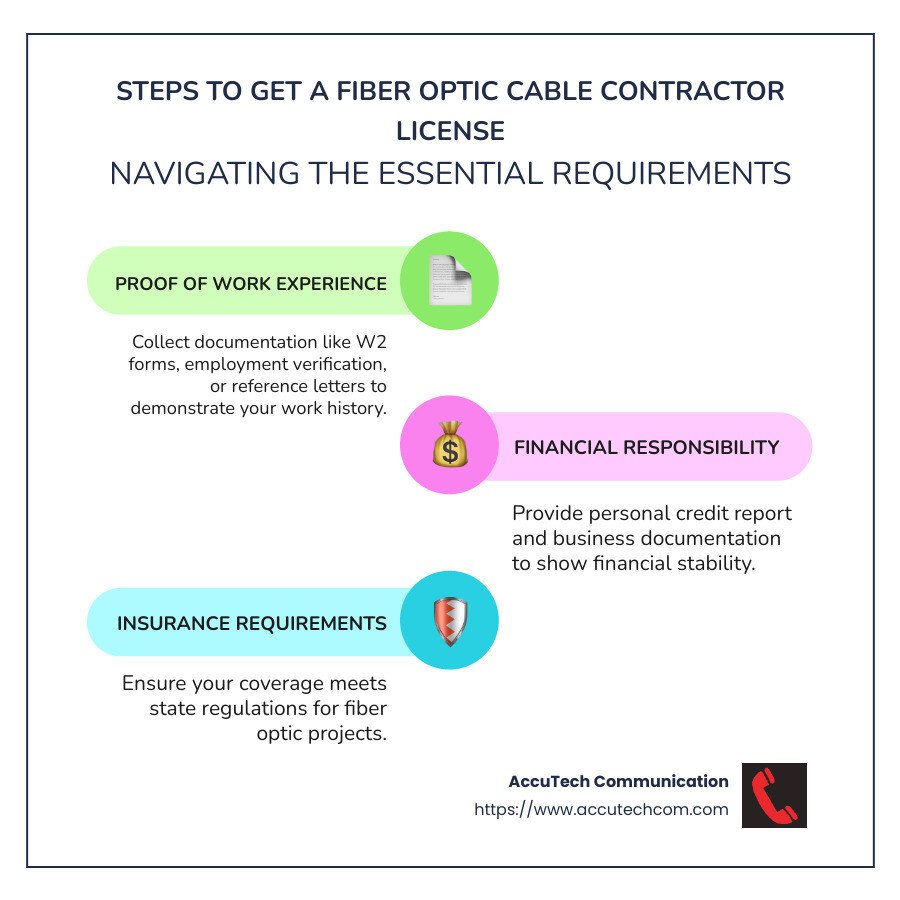
- Proof of Work Experience: Secure documentation like W2 forms, employment verification, or reference letters.
- Financial Responsibility Evidence: Personal credit report and business documentation.
- Insurance Requirements: Ensure coverage meets regulations.
- State-Specific Licensing: Each state may have unique liabilities and criteria.
Navigating these requirements ensures your business meets industry standards and allows seamless integration into projects requiring high-speed data transmission.
AccuTech Communications recognizes the vital role of a fiber optic cable contractor license in enabling businesses to deliver efficient and robust communication solutions. I’m Corin Dolan, and with years of experience in implementing fiber optic systems, I’m here to make this licensing process more understandable for your business needs.
Simple fiber optic cable contractor license glossary:
– fiber installation contractors
– fiber optic splicing contractors
– fiber technician
Understanding Fiber Optic Cable Contractor License
Getting your fiber optic cable contractor license is a crucial step if you want to work in this advanced field. Let’s break down the essentials you need to know:
License Requirements
- Proof of Work Experience: You will need to show evidence of your work history. This can include documents like W2 forms, employment verification, or reference letters. These documents prove that you have the experience needed to handle fiber optic projects.
- Financial Responsibility Evidence: States often require proof of financial stability. This might involve submitting a personal credit report and business financial documentation. These ensure you can manage the financial aspects of running a contractor business.
- Insurance Requirements: Having the right insurance is crucial. Make sure your coverage meets the specific regulations in your state. This typically includes general liability insurance, which protects against potential risks associated with fiber optic installations.
State Regulations
Each state has its own set of rules and regulations for obtaining a contractor license. For example, in Florida, you need a specific license to install telecommunication and fiber optic systems. This ensures that all contractors meet a standardized level of competency and safety.
- State-Specific Licensing: It’s important to research the specific requirements in your state. This could involve additional exams or certifications beyond the basic requirements.
Business Management Concepts
Understanding business management is also a key part of being a successful fiber optic contractor. This includes:
- Project Management: Efficiently managing projects from start to finish, ensuring they meet deadlines and budgets.
- Client Relations: Building strong relationships with clients through clear communication and reliable service.
- Compliance: Staying updated with industry standards and regulations to ensure all work is compliant with legal and safety requirements.
AccuTech Communications is committed to helping you steer these complex requirements. With our expertise, we aim to simplify the process so you can focus on delivering high-quality fiber optic solutions.
Steps to Obtain a Fiber Optic Cable Contractor License
Starting on the journey to obtain a fiber optic cable contractor license can seem daunting, but breaking it down into manageable steps can make it much easier. Here’s what you need to know:
Exam Preparation
Preparation is key when it comes to passing the necessary exams for your license. The exams typically cover both technical and business aspects of fiber optics.
- Technical Knowledge: This includes understanding fiber optic installation, maintenance, and troubleshooting. You’ll need to be familiar with the latest technologies and industry standards.
- Business Acumen: Many states require a business exam that tests your understanding of managing a contracting business, including financial and legal responsibilities.
To excel, consider using resources like the FOA Reference Guide to Fiber Optics, which provides comprehensive information and practice questions to test your knowledge.
Certification Courses
Enrolling in certification courses is a fantastic way to gain the skills and knowledge needed for the exams. These courses often cover everything from basic fiber optic principles to advanced installation techniques.
- Fiber U Basic Skills Lab: This course is highly recommended for hands-on practice. It helps you understand the practical aspects of fiber optic installations, which are crucial for both the exams and the job itself.
- ETA Certified Fiber Optics Designer Program: This 40-hour training program is another excellent option. It provides in-depth knowledge of optical networks, covering everything from network configurations to cable system testing.
FOA-Approved Schools
Choosing an FOA-approved school ensures that you’re getting quality education from a recognized institution. These schools offer programs that are aligned with industry standards and best practices.
- Hands-On Training: FOA-approved schools provide practical training, which is essential for mastering the skills needed in the field.
- Networking Opportunities: Attending these schools also allows you to connect with industry professionals and peers, which can be beneficial for future job opportunities.
By following these steps, you’ll be well on your way to obtaining your fiber optic cable contractor license. With the right preparation and training, you can confidently step into fiber optics, ready to tackle any project that comes your way.

Now that you know the steps to get licensed, let’s explore the qualifications you need to excel as a fiber optic technician.
Essential Qualifications for Fiber Optic Technicians
To thrive as a fiber optic technician, you need a blend of technical skills, safety knowledge, business understanding, and field experience. Here’s how you can build these essential qualifications:
Technical and Safety Exam
Technical Proficiency: A solid grasp of fiber optic systems is crucial. This includes installation, maintenance, and troubleshooting. You’ll need to know network protocols, optical cabling, and industry standards. This knowledge ensures you can handle any technical challenge that comes your way.
Safety Knowledge: Safety is paramount in fiber optics. You must understand how to inspect, clean, and test the fiber plant safely. Courses like the Fiber U Basic Skills Lab are invaluable, offering hands-on practice in safe installation techniques.
Business Exam
Business Acumen: Many states require you to pass a business exam. This exam tests your understanding of the financial and legal aspects of running a contracting business. You need to know how to manage contracts, finances, and customer relationships effectively.
Study Resources: Resources like the FOA Reference Guide to Fiber Optics can help you prepare. They provide insights into managing a fiber optic business, covering everything from budgeting to legal compliance.
Field Experience
Hands-On Practice: Field experience is crucial. It allows you to apply your knowledge in real-world scenarios, honing your skills in installation and troubleshooting. Look for opportunities to work with experienced technicians, which can provide practical insights and mentorship.
Certification Programs: Programs like the ETA Certified Fiber Optics Designer offer intensive case studies and practical exercises. These programs simulate real-world challenges, preparing you for the demands of the job.
By focusing on these areas, you’ll develop the qualifications needed to excel as a fiber optic technician. This foundation will not only help you pass the exams but also prepare you for a successful career in fiber optics.
Next, let’s dig into the benefits of obtaining fiber optic certification and how it can improve your career opportunities.
Benefits of Fiber Optic Certification
Earning a fiber optic certification can open up a world of opportunities. Whether you’re just starting or looking to advance your career, this certification is a game-changer. Here’s why:
Career Advancement
Getting certified sets you apart from the crowd. It shows employers that you have the skills and knowledge to handle complex fiber optic systems. This can lead to faster promotions and more responsibilities. Employers value certified technicians because they bring reliability and expertise to the team.
Better Compensation
With certification, you can expect higher pay. Certified technicians often earn more than their non-certified counterparts. This is because employers are willing to pay a premium for verified skills and expertise. The investment you make in getting certified can quickly pay off with increased earnings.
Expanded Job Opportunities
A fiber optic certification opens doors to new job opportunities. As the demand for high-speed internet and communication networks grows, so does the need for skilled professionals. Certified technicians are in high demand in various sectors, including telecommunications, data centers, and even construction.
Industry Recognition
Certification gives you industry recognition. It shows that you meet the standards set by professional organizations like the FOA. This recognition can boost your credibility and reputation in the field. It also makes it easier to network with other professionals and explore new career paths.
Real-World Skills
Certification programs often include hands-on training. This means you’ll gain practical skills that you can apply immediately in the field. You’ll learn how to install, test, and troubleshoot fiber optic systems, making you a valuable asset to any employer.
In summary, obtaining a fiber optic certification is a smart move for anyone looking to excel in this field. It improves your career prospects, increases your earning potential, and provides you with the skills needed to succeed.
Next, let’s address some frequently asked questions about obtaining a fiber optic cable contractor license.
Frequently Asked Questions about Fiber Optic Cable Contractor License
What qualifications do you need to be a fiber optic technician?
Becoming a fiber optic technician requires a mix of education and hands-on experience. Certification is a key part of this process. Many technicians start by enrolling in training programs offered by FOA-approved schools. These programs teach the fundamentals of fiber optics and often include practical labs.
A diploma in telecommunication systems or related fields can be beneficial. It provides a solid foundation in the principles of telecommunication, which is essential for understanding fiber optic systems. Some technicians also pursue college courses to deepen their knowledge and improve their skills.
How to become a fiber optic contractor?
To become a fiber optic contractor, you need both technical skills and business acumen. Start by completing relevant certification courses. These courses prepare you for the technical challenges of fiber optic work. They cover topics like installation, testing, and troubleshooting.
Next, focus on gaining field experience. Working under a licensed contractor can provide valuable insights and help you build a professional network.
Finally, consider taking business management courses. These will teach you how to run a contracting business, handle clients, and manage projects effectively.
How do I get my EF license in Florida?
Obtaining an Electrical Contractor (EF) license in Florida involves several steps. First, ensure you meet the state’s requirements for education and experience. You’ll need to pass both a technical/safety exam and a business exam. These exams test your knowledge of electrical systems and business practices.
The certification process requires you to submit an application to the Florida Department of Business and Professional Regulation. This includes providing proof of your education, experience, and passing exam scores. It’s crucial to prepare thoroughly for these exams, as they cover a wide range of topics.
Once you have your EF license, you can legally work as a fiber optic contractor in Florida. This license allows you to install, maintain, and repair fiber optic systems, which are increasingly important in today’s digital world.
In the next section, we’ll conclude with how AccuTech Communications leverages its certified services to offer competitive pricing and reliable solutions.
Conclusion
At AccuTech Communications, we understand that fiber optics is both complex and rapidly evolving. That’s why we are committed to providing certified services that meet the highest standards of quality and reliability. Our team of skilled technicians is trained to handle every aspect of fiber optic installation and maintenance, ensuring that your business stays connected and competitive.
We pride ourselves on offering competitive pricing without compromising on quality. Since 1993, AccuTech Communications has been a trusted partner for businesses across Massachusetts, New Hampshire, and Rhode Island. Our focus is on delivering solutions that not only meet your current needs but also anticipate future demands.
Our certified services are backed by years of experience and a deep understanding of network cabling and data center technologies. We aim to make the process of obtaining and maintaining a fiber optic cable contractor license as straightforward as possible for our clients. By choosing AccuTech Communications, you’re choosing a partner who is dedicated to excellence and committed to your success.
To learn more about our fiber optic cabling installation services and how we can help your business thrive, visit our Fiber Optic Cabling Installation page. Let us help you connect with the future.
