
Fiber Optic Cable Laying Contractors: Expert Guide 2025
Introduction: The Backbone of Modern Connectivity
When you need cutting-edge network speed and reliability for your business, fiber optic cable laying contractors are your essential partners. They bring the expertise and equipment to build the digital backbone your operations depend on.
These specialized contractors provide a full suite of services. They help businesses get online and stay connected with the fastest, most reliable network infrastructure.
They offer:
- Expert Network Design: Planning customized fiber optic solutions.
- Diverse Installation Methods: Laying cables underground using trenching or directional drilling, or via aerial routes.
- Precision Splicing & Termination: Connecting fiber strands for optimal performance.
- Thorough Testing & Certification: Ensuring reliability and compliance with industry standards.
- Ongoing Maintenance & Support: Keeping networks running smoothly long-term.
Fiber optic technology is rapidly replacing older copper systems. It delivers superior data transmission. This is key for businesses today. Your operations need to compete and grow.
This guide will walk you through everything you need to know. We will cover the services these contractors offer. We will explain how to choose the right partner. And we will detail the process of bringing high-speed fiber to your business.
I’m Corin Dolan, Owner at AccuTech Communications. With years of hands-on experience in the industry, my team and I have gained an in-depth understanding of the unique communication needs of businesses, specializing as fiber optic cable laying contractors for robust, modern network solutions.

Glossary for fiber optic cable laying contractors:
- fiber optic cable installation services
- fiber optic splicing contractors
- fiber optic cable contractor license
What to Expect: Services and Benefits of Fiber Optics
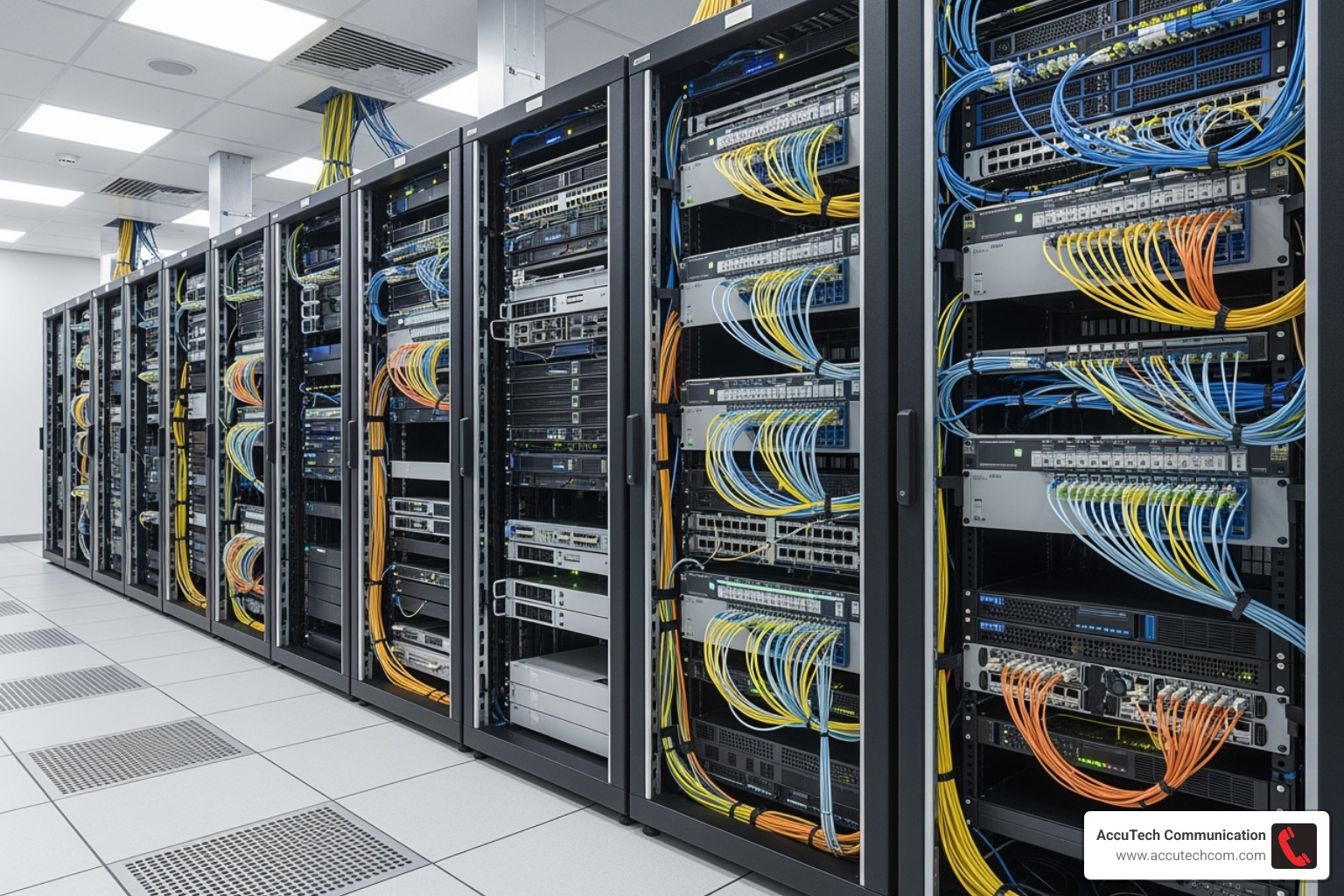
When you engage with fiber optic cable laying contractors, you’re not just getting wires laid; you’re investing in a complete, future-proof communication infrastructure. These specialists offer comprehensive, end-to-end solutions that cover every phase of your network’s lifecycle, from initial concept to ongoing support. Our goal is to provide seamless, high-performance connectivity that drives your business forward.
The Core Services Offered
The primary services offered by fiber optic cable laying contractors are extensive, designed to provide a complete solution for businesses. We start with meticulous site surveys and network planning to understand your specific needs and infrastructure requirements. This initial phase is crucial for designing a system that is both efficient and scalable.
Once the design is finalized, our contractors handle all aspects of cable installation. This includes everything from setting up ISP telecom entrance facilities to laying the physical cables, whether inside your building (ISP – Inside Plant) or externally (OSP – Outside Plant). We ensure careful placement to protect the delicate fiber strands.
A critical part of the installation process is splicing and termination. This is where individual fiber strands are precisely joined or connected to equipment. This requires specialized tools and highly skilled technicians to ensure minimal signal loss and optimal performance. After installation, comprehensive testing and certification are performed to verify that the network meets industry standards and performs as expected. Finally, we offer 24/7 support and ongoing maintenance to ensure your network runs smoothly long-term.
For more information on the comprehensive services we provide, including how we can design and implement a robust fiber optic solution custom to your needs, please visit our page on fiber optic services. You can also learn more about our broader capabilities in network cabling installation.
Common Fiber Optic Cable Types and Their Uses
Fiber optic cables aren’t a one-size-fits-all solution; different types are designed for specific applications and distances. Understanding these distinctions is key to choosing the right cable for your network.
The two main categories are:
- Single-Mode Fiber (SMF): This type of fiber has a very small core, allowing only one mode of light to propagate through it. This minimizes signal attenuation and enables data transmission over extremely long distances, often exceeding 10 kilometers. We typically use SMF for campus networks, inter-building connections, and long-haul telecommunications backbone applications.
- Multi-Mode Fiber (MMF): MMF has a larger core than SMF, allowing multiple modes of light to travel through it simultaneously. While it’s suitable for shorter distances (up to 550 meters for high-speed applications), it’s more cost-effective for applications within buildings, such as backbone connections for data centers and high-speed networking within an office environment. Common types of MMF include OM3 and OM4, which offer improved bandwidth capabilities.
Regardless of the type, a fiber optic cable is composed of several layers. At its heart is the glass fiber core, which transmits the light signals. Surrounding this core is another glass layer called cladding, which reflects light back into the core, keeping the signal contained. A buffer tube layer protects the cladding, and a final jacket layer provides the ultimate protective shield for the individual fiber strand.
Why Fiber is Superior to Copper
For businesses seeking high-speed, reliable connectivity, fiber optic technology stands head and shoulders above traditional copper networks. The advantages are compelling and contribute significantly to business productivity and future-proofing infrastructure.
- Faster Speeds: Fiber optic cables transmit data as light pulses, achieving speeds that are orders of magnitude faster than electrical signals through copper. This translates to quicker data transfers, smoother operations, and the ability to handle large volumes of traffic effortlessly.
- Greater Bandwidth: Fiber offers significantly more bandwidth, meaning it can carry more data simultaneously. This is crucial for supporting multiple users, high-definition video streaming, cloud applications, and voice over IP (VoIP) without congestion. In fact, advancements are continuously improving VoIP applications and reducing latency over fiber.
- Longer Distances: Unlike copper, which experiences significant signal degradation over distance, fiber optic cables can transmit data over much longer distances with minimal signal loss. This makes them ideal for connecting buildings across a campus or even across cities.
- Immunity to Electromagnetic Interference (EMI): Because fiber optics transmit light, they are completely immune to electromagnetic interference (EMI) that can disrupt copper cables. This makes fiber incredibly reliable, especially in environments with heavy machinery or electrical lines, ensuring consistent and clear communication.
- Lower Latency: Fiber optics provide lower latency, meaning there’s less delay in data transmission. This is vital for real-time applications like video conferencing, online gaming, and critical financial transactions.
- Improved VoIP Quality: The lower latency and higher bandwidth of fiber significantly improve Voice over Internet Protocol (VoIP) applications, leading to crystal-clear voice communications.
The global fiber optic market was valued at USD 5.4 billion in 2022 and is projected to grow at a compound annual growth rate (CAGR) of 10.5% from 2023 to 2030. This growth underscores the industry’s recognition of fiber’s superior capabilities and its increasing adoption as the preferred medium for communications and data transmission.
How to Choose the Right Fiber Optic Cable Laying Contractors
Selecting the right fiber optic cable laying contractors is a critical decision that will impact the performance, reliability, and longevity of your network. It’s about more than just finding someone to lay cable; it’s about partnering with experts who understand your business needs and can deliver a solution that supports your growth. We understand the importance of this choice.
Key Factors for Vetting Fiber Optic Cable Laying Contractors
When vetting potential contractors, we recommend a thorough approach. Here are key factors and questions to consider, ensuring you partner with a provider who meets our high standards:
- Experience: How long have they been in the business? A company with extensive experience, like those with over 19 years serving nationwide locations or founded decades ago, often brings a wealth of practical knowledge to the table. We, for instance, have been providing certified, reliable service since 1993, with a deep understanding of the unique communication needs of businesses in Massachusetts, New Hampshire, and Rhode Island.
- Technical Expertise: Do their technicians hold relevant certifications? Look for certified Registered Communications Distribution Designers (RCDDs) and Telecommunications Layout Technicians (TLTs), or those with BICSI certifications. These credentials signify a high level of technical proficiency and adherence to industry best practices.
- Industry Certifications & Compliance: Beyond individual technician certifications, does the company adhere to broader industry standards? Compliance with established standards, particularly in VoIP applications and the use of precision testing equipment, ensures safety, compatibility, and optimal performance. Ask about ISO certifications (e.g., ISO 9001, 14001, 45001) which demonstrate a commitment to quality, environmental management, and occupational health and safety.
- Insurance and Warranties: Are they fully insured? Do they offer warranties on their workmanship and the installed components? A five-year warranty on workmanship, for example, provides significant peace of mind.
- Local Code Compliance: Do they possess a deep understanding of local permitting requirements and building codes? Navigating these regulations is crucial for smooth project execution.
- Project Portfolio & References: Can they provide examples of similar projects they’ve completed? Customer reviews and testimonials can offer valuable insights into their reliability and customer satisfaction. Ask for references and don’t hesitate to contact them.
- Safety Record: What is their commitment to health and safety? A strong safety culture, evidenced by dedicated SHEQ (Safety, Health, Environment, and Quality) departments and continuous training, is paramount.
Choosing a contractor with expertise in structured cabling services ensures a comprehensive approach to your network infrastructure.
Understanding Project Costs and Timelines
The cost and duration of a fiber optic installation project can vary significantly based on several factors. While we cannot provide specific pricing, we can outline the elements that influence it.
- Installation Complexity: A simple indoor installation will differ greatly from a complex outdoor plant deployment involving multiple buildings. Factors like the terrain, existing infrastructure, and access challenges contribute to complexity.
- Cable Length Requirements: Naturally, the longer the cable run, the higher the material and labor costs. Single-mode fiber optic cables can transmit over distances exceeding 10 kilometers, while multi-mode fiber optic cables are ideal for applications up to 550 meters.
- Labor Costs: The need for specialized equipment and highly skilled technicians contributes to labor costs. Precision fiber splicing, for example, requires significant expertise.
- Equipment Required: Specialized tools like fusion splicers, Optical Time Domain Reflectometers (OTDRs), and Optical Power Meters are essential for quality installation, and their use is factored into project costs.
- Site Preparation: This can include everything from clearing pathways to preparing conduits or ducts, especially for underground installations.
- Permitting Fees: Depending on the location and scope, various permits may be required from local authorities, adding to the overall cost and timeframe.
Project timelines typically range from several days for simpler installations to several weeks for complex, large-scale network implementations. Extensive planning, especially in areas lacking existing fiber infrastructure, also contributes to the duration. The importance of project management cannot be overstated here; a well-managed project ensures efficiency and adherence to schedules.
The Importance of Outside Plant (OSP) Expertise
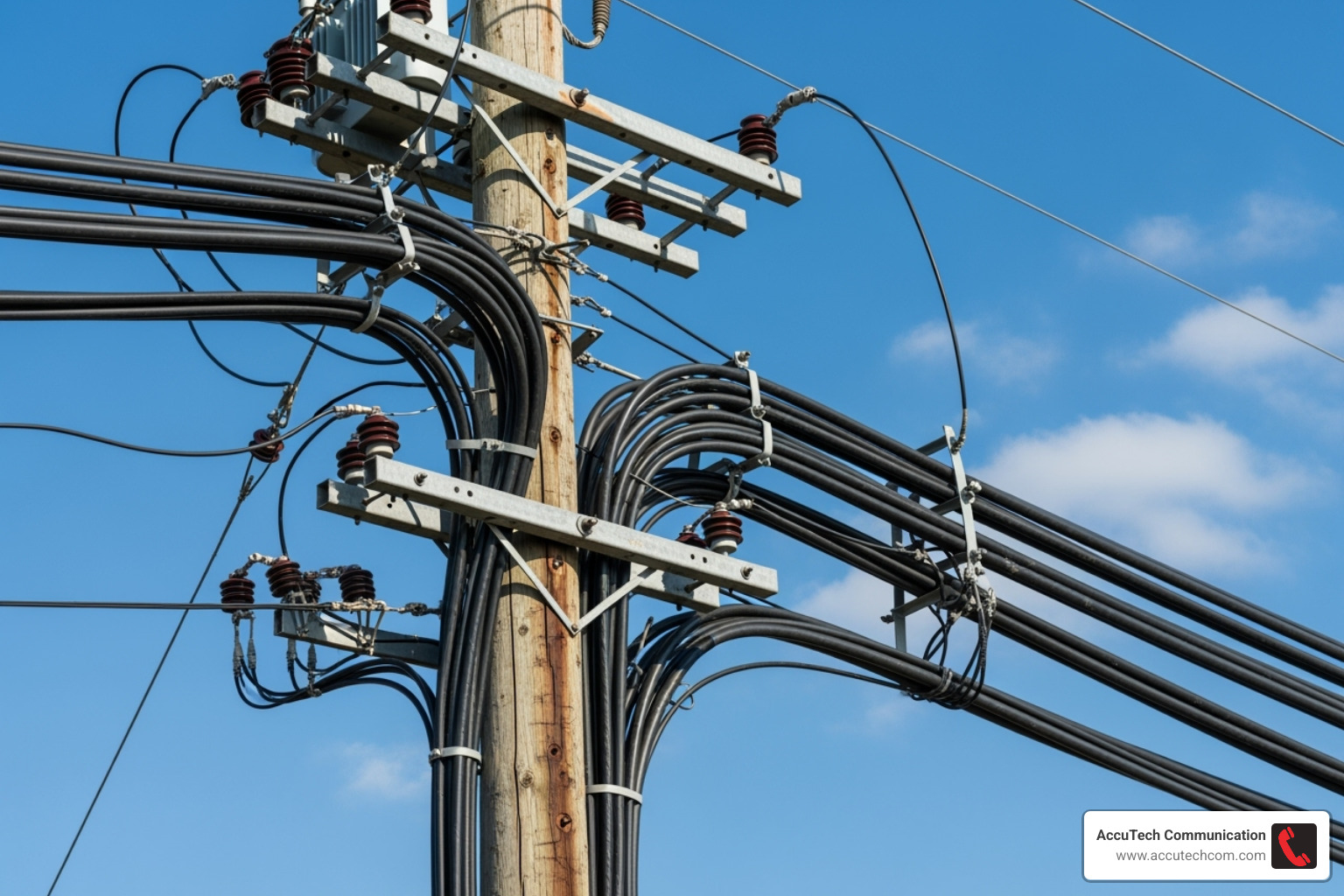
When we talk about fiber optic cable laying contractors, a significant part of their work often involves the “Outside Plant” (OSP). This refers to all the telecommunications infrastructure that is installed externally to buildings. This can include physical cabling and supporting structures like conduits, poles, and cabinets, located between a switching facility and a customer’s location. As BICSI defines, OSP is the telecommunications infrastructure that is designed and installed externally to buildings and typically routed into an entrance facility.
OSP expertise is crucial because it involves unique challenges compared to indoor installations. Contractors must contend with environmental factors, public access, regulatory problems, and existing utilities.
OSP installations primarily fall into two categories:
- Aerial Installations: Cables are strung on utility poles, often alongside power lines or other communication cables.
- Advantages: Generally quicker and less disruptive to install, lower initial cost, easier to access for maintenance and repair.
- Disadvantages: Susceptible to weather damage (wind, ice, storms), physical damage from falling trees or vehicles, aesthetic concerns, and potential interference from power lines (though less so for fiber than copper).
- Underground Installations: Cables are buried beneath the ground, either directly or within conduits.
- Advantages: Protected from weather, physical damage, and vandalism; aesthetically pleasing; generally more reliable long-term.
- Disadvantages: Higher initial cost due to excavation or boring, more time-consuming and disruptive to install, difficult to access for repairs, potential for damage during future excavation projects.
Expert fiber optic cable laying contractors will accurately determine cable routes, minimize disruptions, and adhere to all local regulations, regardless of the chosen method.
The Installation Process: From Blueprint to Live Network

The journey from a network design blueprint to a fully operational fiber optic network is a complex, multi-stage process that requires meticulous planning and execution. As experienced fiber optic cable laying contractors, we steer each step with precision, ensuring a smooth and successful deployment.
Common Cable Laying Methods
The method chosen for laying fiber optic cables largely depends on the environment, terrain, and existing infrastructure. Each approach has its own advantages and is selected to ensure the most efficient and least disruptive installation.
| Method | Description | Advantages More info about inner duct installation services
