
Fiber Optic Installation: Seamless Guide 2025
Why Fiber Optic Installation is the Future of Business Communications
Fiber optic installation is the key to open uping next-generation business connectivity. Unlike traditional copper cables that transmit electrical signals, fiber optics use light pulses to carry data through thin glass strands at nearly the speed of light. This results in unparalleled speeds, superior reliability, and immunity to the electromagnetic interference that plagues older systems.
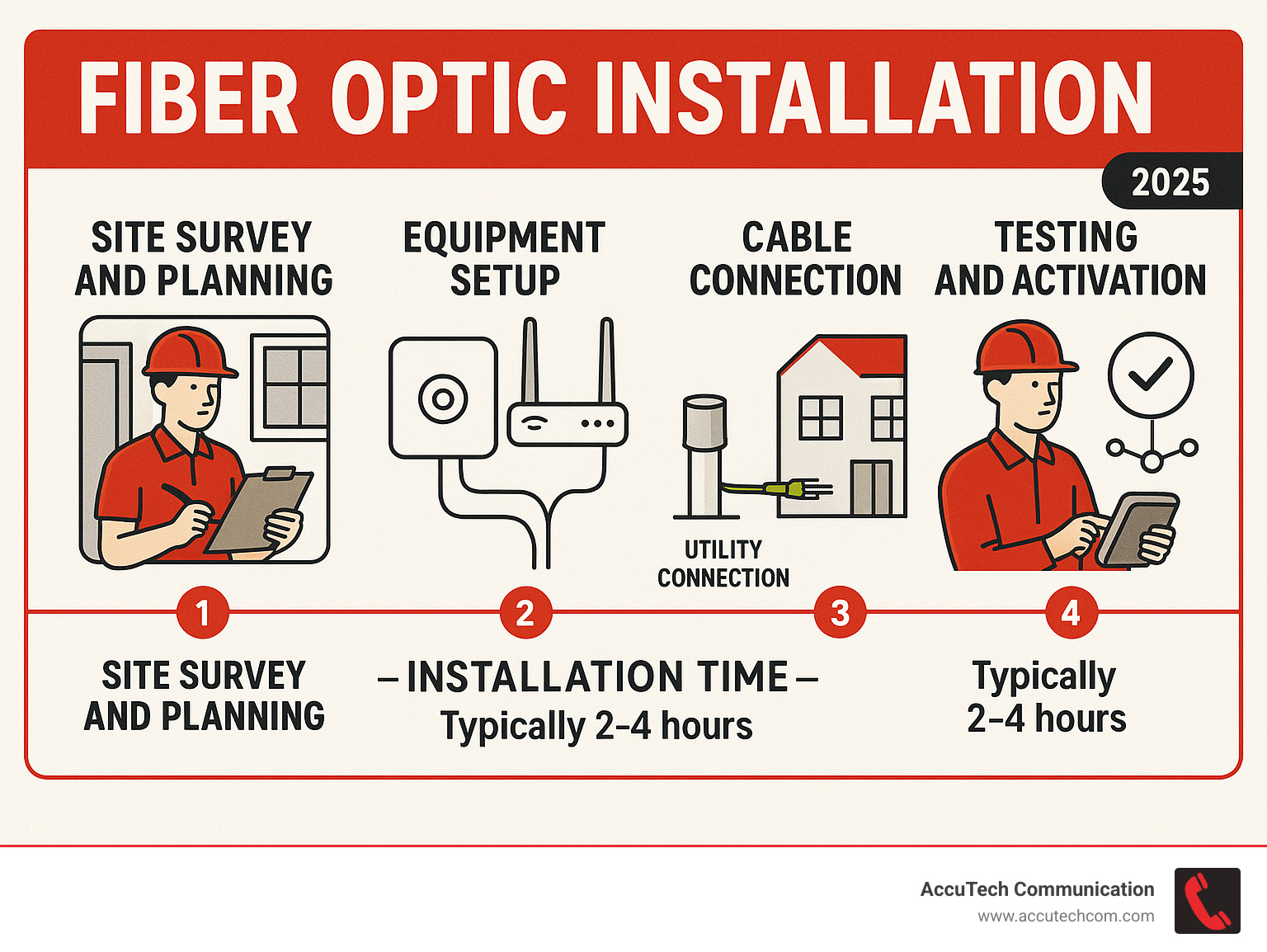
A professional installation typically takes 2-4 hours and involves a site survey, routing the fiber cable from the utility connection to your premises, setting up an Optical Network Terminal (ONT) and gateway, and then testing the system to verify performance. The process requires specialized equipment and expertise to prevent signal loss and ensure long-term stability.
I’m Corin Dolan, owner of AccuTech Communications. Since 1993, my team has provided businesses in Massachusetts, New Hampshire, and Rhode Island with reliable fiber optic installation solutions. We specialize in designing scalable network infrastructure that supports your business as it grows.
Related content about Fiber optic installation:
Understanding Fiber Optic Technology
Think of fiber optic installation as upgrading your data connection from a winding country road to a multi-lane superhighway. Instead of sending electrical signals through copper wires, fiber optic technology converts your data into light pulses. These pulses travel through incredibly thin glass strands at nearly the speed of light, delivering superior speed and signal integrity.
Because light is immune to electromagnetic interference, your connection remains stable and fast, even during electrical storms. Fiber also maintains signal strength over vast distances, making it ideal for connecting buildings across a campus or linking global networks under the ocean.
When planning your fiber optic installation, it’s helpful to know how the fiber reaches you:
| Connection Type | Description | Ideal For |
|---|---|---|
| Fiber to the Home (FTTH) | A pure fiber optic line runs directly to your premises, offering the fastest possible speeds. | Businesses and homes that require maximum performance. |
| Fiber to the Curb (FTTC) | Fiber runs to a nearby point, with copper cable covering the final stretch to your building. | Areas transitioning to full fiber infrastructure. |
| Fiber to the Neighborhood (FTTN) | Fiber extends to a neighborhood hub, using existing copper lines for the last mile. | Upgrading communities with existing copper networks. |
The cables themselves come in two main types. Single-mode fiber is best for long-distance runs between buildings, while multi-mode fiber is perfect for shorter distances within a building, like an internal network backbone. Understanding these options ensures your fiber optic installation is custom to your needs. For more details, see our fiber optic cabling installation page.
Essential Equipment for Installation
A successful fiber optic installation relies on several key components working in harmony.
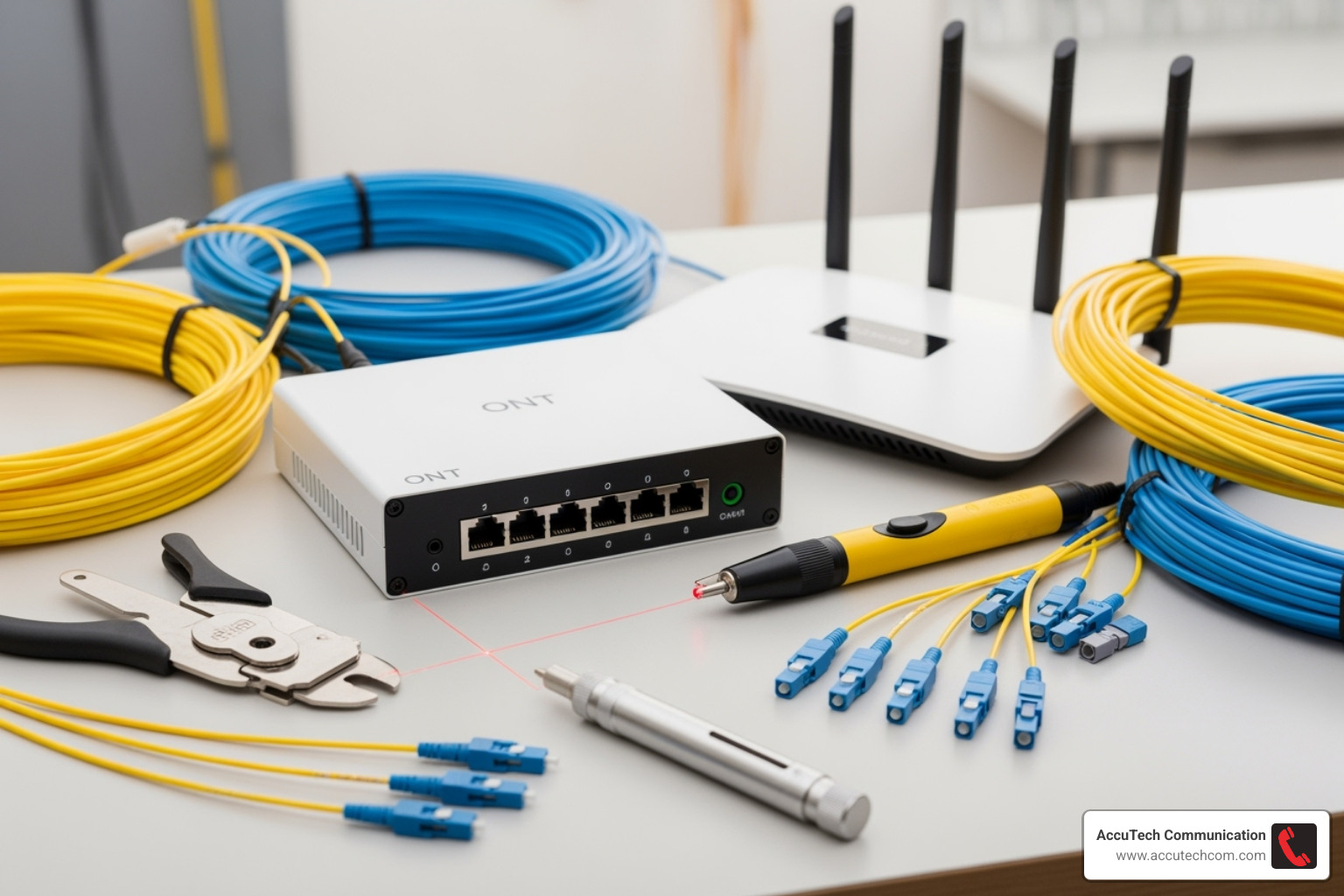
The Optical Network Terminal (ONT) acts as a translator, converting light signals from the fiber into electrical signals your devices can use. From there, a fiber-compatible router or gateway distributes the connection via Wi-Fi and wired ports. The fiber optic cables are the glass strands that carry the data, while precision connectors ensure a perfect link between cables and equipment. For larger spaces, WiFi extenders can be used to guarantee strong coverage everywhere. Professional installation is crucial because it requires specialized tools to handle these delicate components correctly.
OSP vs. In-Building Installations
Fiber optic installation methods vary based on the environment. Outside Plant (OSP) installations are designed for the outdoors, using robust, weather-resistant cables to carry signals over long distances. This may involve burying armored cables, pulling them through underground conduits, or stringing them between utility poles. These cables are built to withstand moisture, UV radiation, and physical stress.
In-building installations focus on distributing connectivity within a structure. These use more flexible tight buffer cables that are easier to handle indoors. Building codes are a critical factor here, requiring fire-rated cables and proper firestopping at wall and floor penetrations to ensure safety. Each installation type demands specific materials and expertise, from weatherproofing outdoors to fire code compliance indoors.
For projects requiring protective pathways for your fiber cables, you might find our innerduct installation services helpful: More info about innerduct installation.
Preparing for Your Fiber Optic Installation Appointment
While our technicians handle the technical work, a little preparation can ensure your fiber optic installation goes smoothly. Think of it as setting the stage for your business’s high-speed future.

Before we arrive, we conduct a site survey to plan the optimal cable route and identify any challenges. On your end, you can help by:
- Clearing Access Points: Ensure the areas where we need to run cables or drill an entry point are free of furniture and other obstructions.
- Providing Power: Identify a reliable power outlet near the planned location for your new Optical Network Terminal (ONT) and router.
- Scheduling Time: Plan for a 2-3 hour installation window. We work efficiently but prioritize quality to ensure a perfect connection.
During the installation, we’ll work with you to choose the best equipment location, balancing central Wi-Fi coverage with keeping hardware out of the way. A little preparation makes a big difference in completing your fiber optic installation efficiently.
Why Professional Installation Matters
While the DIY approach is tempting for some projects, fiber optic installation is not one of them. The risks of improper installation are significant and can lead to poor performance and costly repairs.
Professionals bring technical expertise and specialized tools, like fusion splicers and optical testers, that are essential for working with delicate fiber strands. We understand how to handle cables without causing damage and how to minimize signal loss (attenuation) at every connection. This precision is critical for network reliability and achieving the high speeds you expect.
Furthermore, professional installers ensure safety compliance, adhering to all building codes and safety protocols related to electrical hazards and firestopping. Investing in a professional installation guarantees the long-term performance of your network, providing a reliable foundation for your business for years to come. For more information, visit: More info about network cabling installation services.
The Step-by-Step Fiber Optic Installation Process
We’ve streamlined the fiber optic installation process to be as efficient as possible. Here’s what you can expect on installation day.
- Pre-Installation Survey: Our technician will walk through your space with you to confirm the cable entry point and equipment locations.
- Running the Drop Cable: We run the main fiber line from the nearest utility connection to your building, either via aerial poles or underground conduits.
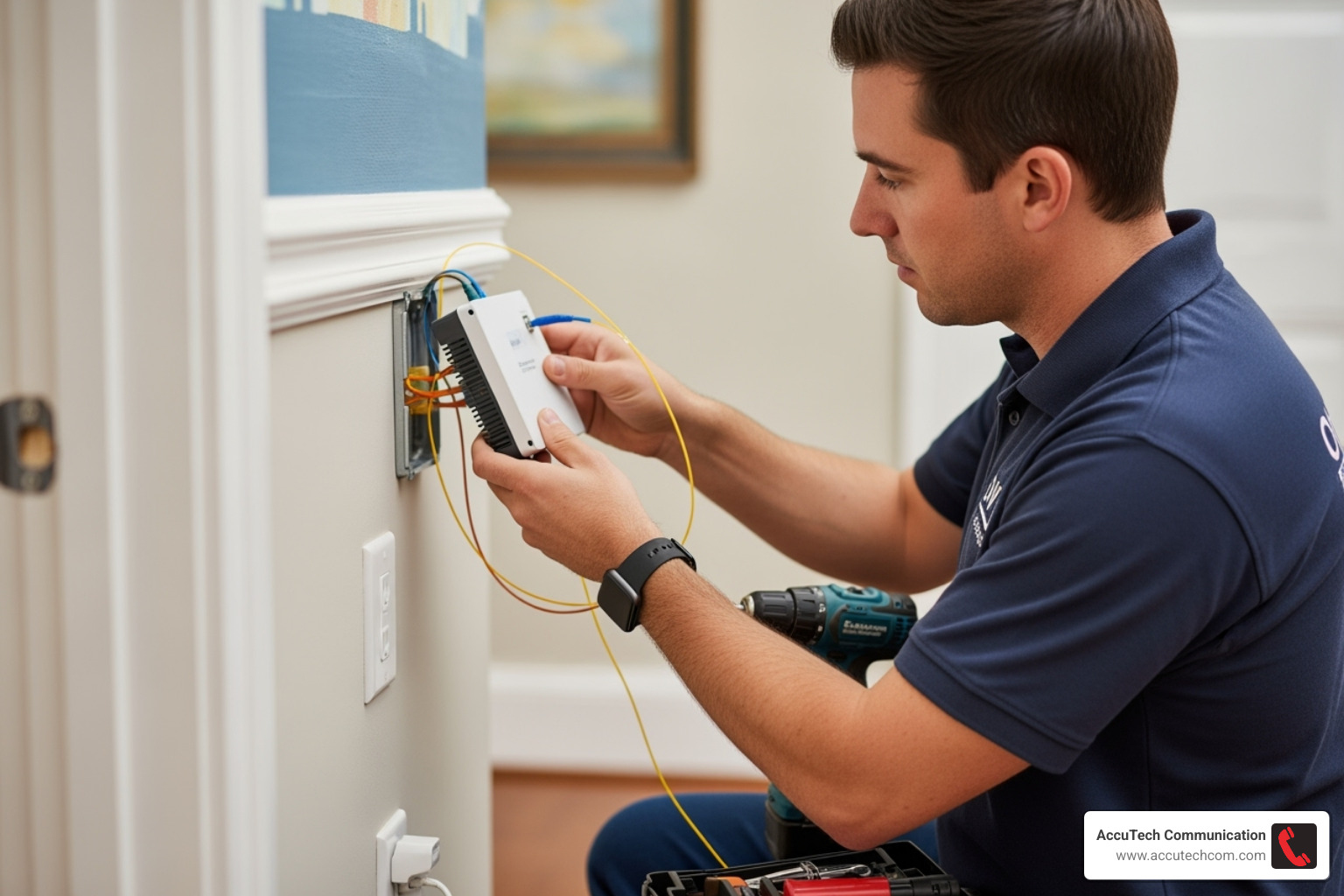
- Interior Work: We carefully route the fiber cable inside your building to the designated spot, drilling a small entry point only if necessary.
- ONT and Gateway Installation: We install the Optical Network Terminal (ONT) to convert the light signals and connect it to your new gateway or router.
- Network Setup: We configure your Wi-Fi network with a secure password and help connect your primary devices.
The entire installation process typically takes two to four hours, depending on the complexity of your location.
Cable Handling and Termination
Properly handling fiber optic cables is critical to performance. These hair-thin glass fibers can be damaged if bent too sharply or pulled with too much force. Our technicians are trained to respect the cable’s bend radius and use proper pulling tension to prevent damage.
We focus on cable protection by shielding them from impact and environmental factors. The termination process, where we attach connectors or splice fibers together, requires extreme precision and cleanliness. A single speck of dust can disrupt the signal, so we use specialized tools and techniques to ensure every connection is perfect, preventing signal degradation and guaranteeing a reliable network.
Testing and Verification
Our job isn’t done until we’ve thoroughly tested your new network.
We begin by powering on all equipment and checking for correct operation. We then use specialized meters for signal testing to ensure the light levels are optimal. After verifying connectivity for both wired and wireless devices, we run an internet speed test to confirm you are receiving the speeds you signed up for. The final and most important test is your satisfaction; we’ll ensure you’re happy with your new connection before we consider the fiber optic installation complete.
Best Practices for a High-Quality Fiber Optic Installation
At AccuTech Communications, we believe a quality fiber optic installation is built to last. We build networks that perform reliably today and adapt easily to your future needs.

Our approach is founded on several key principles:
- Adhering to Industry Standards: We strictly follow guidelines from organizations like the Fiber Optic Association (FOA) and TIA. These standards are the blueprint for safety, compatibility, and optimal performance.
- Proper Cable Management: A neat installation is a maintainable one. We use meticulous routing, securing, and labeling techniques so your network is easy to manage and troubleshoot.
- Future-Proofing: We design your network with growth in mind, using high-quality components and scalable infrastructure that can handle future bandwidth demands without a complete overhaul. Learn more about our approach to structured cabling.
Critical Safety Precautions
Safety is integral to every fiber optic installation. While fiber cables don’t carry electricity, they have unique hazards that require professional handling.
Our technicians are trained to manage risks such as eye safety from fiber shards, which are tiny, sharp glass fragments produced during cutting. We also ensure safe chemical handling of cleaning solvents and work carefully around any nearby electrical hazards. Most importantly, we strictly follow all building codes, including fire-retardant requirements and firestopping techniques, to protect your property and personnel. This commitment to safety and quality is what sets a professional installation apart.
Industry Standards and Certifications
A quality fiber optic installation is governed by rigorous industry standards that guarantee performance and safety. We follow guidelines from The Fiber Optic Association (FOA), TIA, and the National Electrical Code (NEC) to ensure every installation is compliant and reliable.
Our certified technicians bring these standards to life. Their ongoing training ensures they have the skills to deliver an installation that meets professional benchmarks every time. When you choose AccuTech, you get system reliability built on industry best practices.
Frequently Asked Questions about Fiber Installation
Here are answers to some of the most common questions we receive about fiber optic installation.
How much does fiber optic installation cost?
The cost of a fiber optic installation depends on several factors. The primary drivers are the complexity of the job and the distance the cable must travel. An in-building installation using existing pathways will cost less than a campus-wide project requiring trenching or aerial work. The type of fiber (single-mode vs. multi-mode) and the specific equipment required also influence the final investment. While the upfront cost can be higher than traditional options, the superior speed, reliability, and long-term value provide a significant return on investment.
What maintenance is required after installation?
One of the best features of a fiber optic installation is its low maintenance requirements. Fiber optic cables are highly durable and not susceptible to corrosion or interference like copper. We recommend occasional visual inspections to check for physical damage, especially in high-traffic areas. The most important task is ensuring connection points remain clean, as dust can impede the signal. If damage does occur, repairs require specialized tools and should be handled by a professional, but this is a rare event for a properly installed system.
How long does a typical fiber optic installation take?
For most small to medium-sized businesses, a standard fiber optic installation takes between two and four hours. This includes running the cable, installing the ONT and gateway, configuring the network, and performing thorough testing. The exact time depends on site complexity. A simple setup will be on the shorter end, while a project with challenging cable routes may take longer. We provide a more precise time estimate during our initial site survey.
Connect to the Future with Confidence
The business world runs on data, and fiber optic installation is the foundation for future success. As technologies like advanced VoIP, real-time cloud collaboration, and integrated wireless systems demand more bandwidth, a robust fiber network is no longer a luxury—it’s a competitive necessity. A solid fiber infrastructure ensures your business is ready for whatever comes next.
At AccuTech Communications, we understand that your network is the lifeblood of your operations. Since 1993, we have provided businesses in Massachusetts, New Hampshire, and Rhode Island with certified, reliable service at competitive prices. Our expertise ensures your fiber optic installation is done right the first time, giving you the fastest, most secure network available.
Don’t let an outdated network hold you back. Let us handle the technical complexities so you can focus on running your business. Ready to invest in your company’s future? Get a quote for your fiber optic installation project today and experience the AccuTech Communications difference.
