
Flexible Conduit for Network Cable: Ultimate 2025 Guide
Why Flexible Conduit is Essential for Professional Network Infrastructure
Flexible conduit for network cable installations provides critical protection and future-proofing that can save your business thousands in repairs and upgrades. Whether you’re planning an underground run to a security camera or routing cables through tight spaces in your facility, the right conduit choice protects your investment and ensures reliable performance.
Quick Answer for Choosing Flexible Conduit:
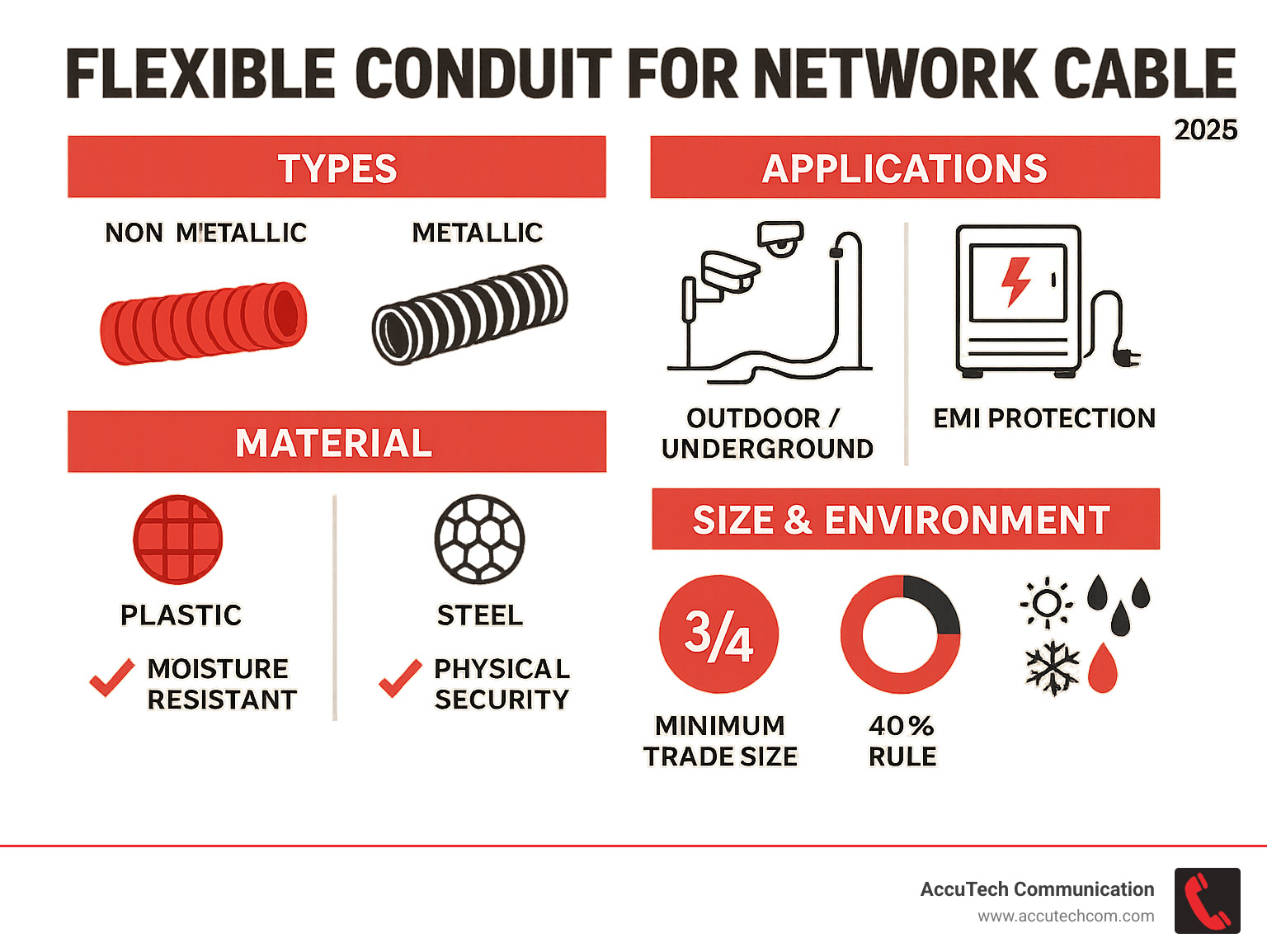
- Non-metallic (LFNC/ENT): Best for most applications, outdoor use, and underground runs
- Metallic (FMC): Use only for short runs requiring EMI protection or high physical security
- Size: Minimum 3/4″ trade size, follow 40% fill rule for initial installation
- Installation: Never exceed 100-foot pulls, use proper lubricant, maintain 25 ft/lbs max tension
The backbone of any successful business is effective communication, and that starts with properly protected network infrastructure. Modern facilities face unique challenges – from moisture in basements to electromagnetic interference from industrial equipment. The wrong conduit choice today can lead to costly cable replacements, network downtime, and frustrated users tomorrow.
As research shows, attempting to pull cabling through more than 100 feet of conduit at a time is a common cause of Ethernet cable damage, while flexible metallic conduit is not recommended for any installation, as it tends to shift and creep during pulling, resulting in cable jacket damage. Understanding these critical factors helps you avoid expensive mistakes.
I’m Corin Dolan, owner of AccuTech Communications, and I’ve been designing and installing network infrastructure across Massachusetts, New Hampshire, and Rhode Island since 1993. Through decades of hands-on experience with flexible conduit for network cable installations, I’ve seen how the right protection system can transform a business’s communication reliability and reduce long-term maintenance costs.
Why Use Flexible Conduit for Network Cabling?
Picture this: you walk into your office on Monday morning, and half your network is down. After some investigation, you find that weekend maintenance accidentally damaged an unprotected cable, or worse, mice decided your expensive network cable made a tasty midnight snack. These scenarios happen more often than you’d think, and they’re exactly why smart businesses invest in flexible conduit for network cable installations.
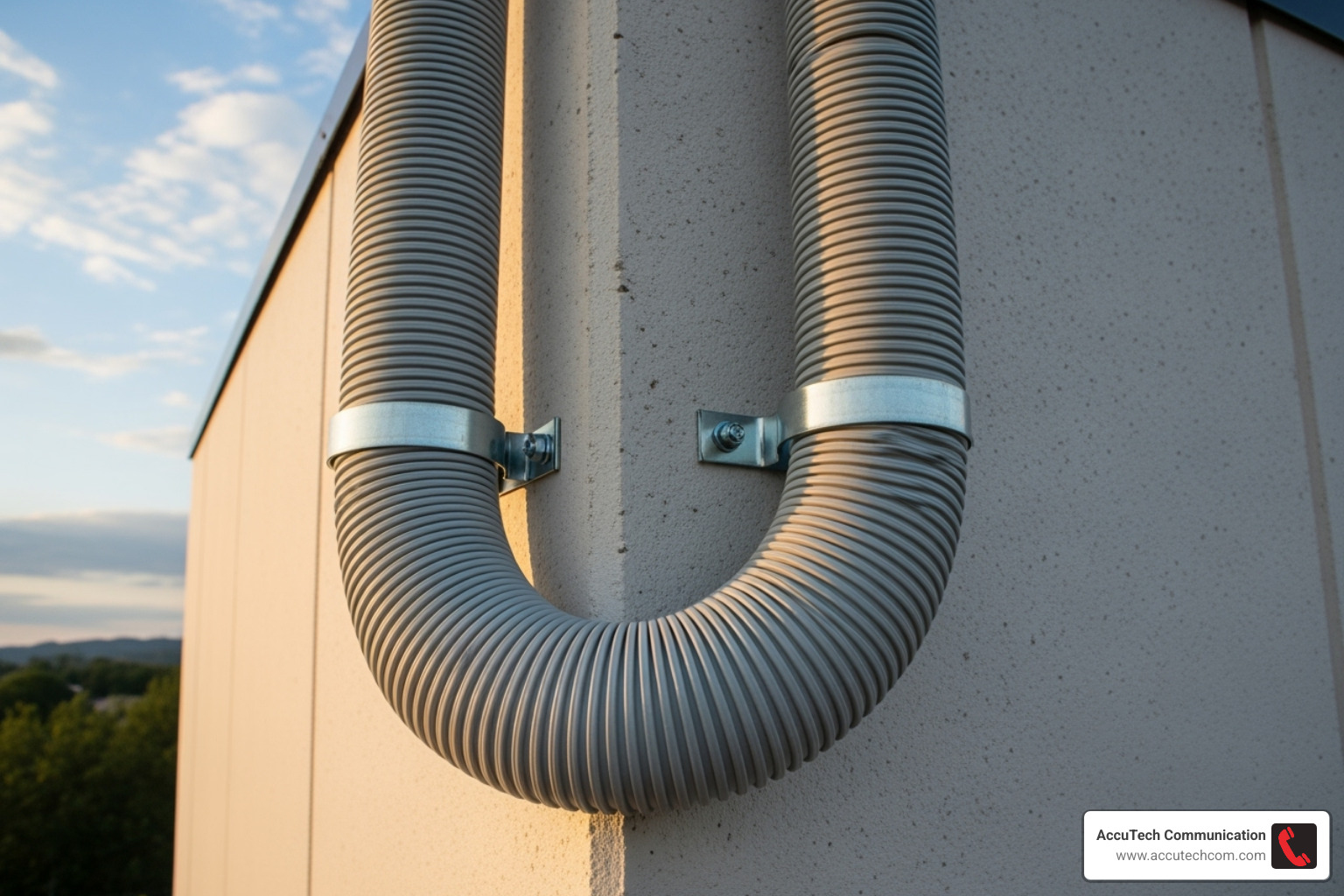
Physical protection is the most obvious benefit. Your network cables face daily threats from construction tools, falling objects, and general wear and tear. Flexible conduit acts like armor, shielding your cables from damage that could bring your entire operation to a halt. I’ve seen too many businesses learn this lesson the hard way when a simple renovation project turns into a network disaster.
Moisture resistance becomes critical in basements, outdoor runs, or anywhere water might intrude. Water and electronics don’t mix, and even small amounts of moisture can degrade your cable’s performance over time. Quality flexible conduit keeps your cables bone dry, ensuring reliable data transmission regardless of environmental conditions.
Don’t underestimate pest protection either. Rodents have an unfortunate habit of viewing unprotected cables as chew toys. One determined mouse can cause thousands of dollars in downtime and repairs. Conduit creates an impenetrable barrier that keeps these unwanted visitors away from your investment.
While modern Network Cable handles electromagnetic interference quite well thanks to differential signaling, EMI shielding from metallic conduit can still provide extra protection in electrically noisy environments near heavy machinery or high-voltage equipment.
But here’s where conduit really shines: future-proofing. Technology evolves rapidly, and what’s cutting-edge today might need upgrading in five years. With properly installed conduit, upgrades become simple cable pulls rather than major construction projects. You won’t need to tear open walls or dig new trenches when it’s time to upgrade to faster network speeds or add new connections.
The easier installation aspect surprises many people. While it might seem like an extra step, flexible conduit actually simplifies complex routing situations. Instead of wrestling with rigid materials around corners and obstacles, flexible conduit bends and curves naturally, following your building’s unique layout.
Compared to rigid conduit, flexible options require fewer fittings and joints, reducing both installation time and potential failure points. While rigid conduit works well for long, straight runs, flexible conduit excels in the real world where obstacles and tight spaces are the norm.
When weighing direct burial cable against conduit protection, “direct burial rated” doesn’t mean indestructible. Shovels, rocks, and persistent rodents can still cause problems. Conduit provides that extra layer of security that prevents expensive emergency repairs and makes future upgrades possible without major excavation work.
This comprehensive approach to Cable Infrastructure protection ensures your network investment delivers reliable performance for years to come.
Flexible vs. Rigid Conduit
Think of choosing between flexible and rigid conduit like selecting the right tool for a specific job. Both have their strengths, but understanding when to use each makes all the difference in your installation success.
Ease of installation heavily favors flexible conduit in most real-world scenarios. While rigid conduit provides excellent protection for long, straight runs, it becomes challenging when your cable path needs to steer around existing structures, mechanical systems, or architectural features.
Bending around obstacles showcases flexible conduit’s biggest advantage. Instead of measuring, cutting, and fitting multiple elbow joints with rigid materials, flexible conduit simply curves around whatever’s in its way. This adaptability saves significant time and reduces the skill level needed for installation.
The fewer fittings requirement with flexible conduit means fewer potential leak points and faster installation. Each joint in a rigid system needs careful measurement, proper sealing, and precise alignment. Flexible conduit eliminates most of these connection points, creating a more reliable pathway with less labor.
Flexible conduit proves best for complex routes where multiple direction changes are unavoidable. Whether you’re threading through a crowded basement ceiling or navigating around HVAC equipment, the ability to bend and flex makes these challenging installations manageable.
However, rigid conduit excels for straight runs, especially longer distances where its smooth interior walls reduce cable pulling friction. The structural stability of rigid materials also provides superior protection in high-traffic areas where physical damage is a concern.
For projects requiring both approaches, our EMT Piping Services can help design a system that uses each conduit type where it performs best, optimizing both protection and installation efficiency.
Conduit vs. Direct Burial Cable
“I’m using direct burial cable, so I don’t need conduit, right?” This common assumption can lead to expensive problems down the road. While direct burial cables are designed to withstand soil contact, adding conduit protection provides benefits that far outweigh the modest additional cost.
Improved protection goes beyond what even the best direct burial cable can offer alone. Conduit creates a physical barrier against sharp rocks, shifting soil, and the dreaded “shovel test” that happens during future landscaping or utility work. I’ve seen too many network outages caused by well-meaning gardeners who didn’t know about buried cables.
Shovel and rodent defense becomes critical for long-term reliability. Even professional excavation crews sometimes damage buried utilities, and determined rodents can chew through cable jackets over time. Conduit eliminates both risks, ensuring your network stays operational regardless of what happens above or around it.
The easier cable replacement benefit alone justifies conduit installation. When technology advances or cables fail, pulling new wire through existing conduit takes hours instead of days. Without conduit, you’re looking at complete re-excavation, landscape restoration, and significant disruption to your property.
Future upgrades become simple projects rather than major construction efforts. Need to add security cameras, upgrade to higher-speed networking, or run additional services to an outbuilding? With conduit in place, these expansions become straightforward cable pulls that won’t disturb your landscaping or building structure.
While direct burial installation costs appear lower initially, the labor considerations for future work often make conduit the more economical long-term choice. The peace of mind and flexibility that conduit provides make it a smart investment for any permanent installation.
Choosing the Right Type of Flexible Conduit for Network Cable
Selecting the perfect flexible conduit for network cable isn’t a one-size-fits-all decision. It’s like choosing the right jacket for the weather – you need to consider where you’re going and what conditions you’ll face. The environment, protection requirements, and long-term plans all play crucial roles in making the right choice.
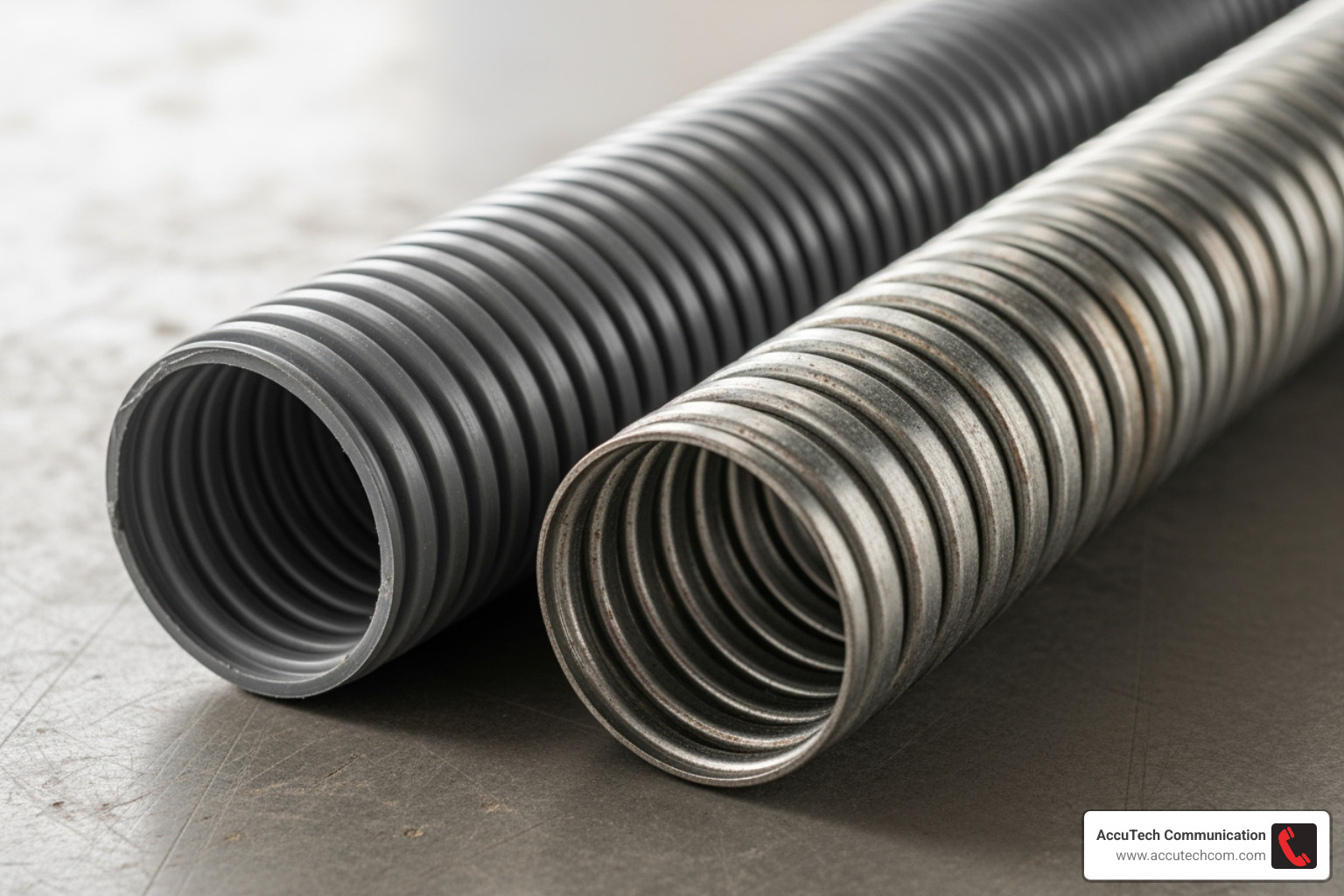
The two main families of flexible conduit are non-metallic and metallic, each with distinct advantages. Material type directly impacts durability and determines where the conduit can be safely used. Environmental factors are your primary guide: Will this be an indoor installation in a climate-controlled office, or an outdoor run exposed to rain and temperature swings? Underground installations face entirely different challenges than overhead runs.
Indoor versus outdoor applications often determine your material choice immediately. Moisture exposure, chemical environments, and temperature extremes all influence which conduit will provide reliable, long-term protection for your network infrastructure.
Non-Metallic Flexible Conduit (LFNC & ENT)
Non-metallic flexible conduits are the workhorses of network cabling installations. Made primarily from PVC or polyethylene materials, they offer excellent corrosion resistance and handle most environmental challenges with ease.
Liquid-Tight Flexible Non-Metallic Conduit (LFNC) is your go-to choice for outdoor and underground network cable installations. This PVC-based conduit lives up to its name by providing outstanding protection against moisture, water, oils, and other liquids that could damage your cables.
When properly installed with watertight fittings, LFNC can achieve impressive IP68 ratings – meaning it’s completely dust-tight and can handle submersion. Many LFNC products also resist UV rays and oil exposure, making them incredibly durable for exposed outdoor runs where the sun beats down year-round.
The beauty of LFNC lies in its versatility. Whether you’re running cables to outdoor security cameras, connecting buildings across a campus, or installing underground feeds to remote equipment, this conduit provides the protection your investment deserves.
Electrical Nonmetallic Tubing (ENT) – affectionately known as “smurf tube” thanks to its distinctive blue color – serves a different but equally important role. This flexible option is designed specifically for indoor use only, making it perfect for wall cavities, above suspended ceilings, or embedded in concrete pours.
ENT’s lightweight construction makes it easy to handle and cut, while its smooth inner surface allows cables to glide through during installation. However, its indoor-only rating means you should never use it for outdoor or wet locations – that’s where LFNC takes over.
Metallic Flexible Conduit (FMC)
Flexible Metallic Conduit (FMC), commonly called “Greenfield,” brings steel or aluminum construction to the table. This robust option excels in specific scenarios where maximum physical protection is essential.
FMC handles vibration exceptionally well, making it excellent for short runs connecting to equipment that moves or vibrates, such as HVAC units or industrial machinery. Its metallic construction also provides EMI/RFI protection, particularly in braided versions that offer high levels of electromagnetic screening to maintain signal integrity in electrically noisy environments.
When using metallic conduit, proper grounding becomes essential for both safety and effective shielding performance.
However, here’s the critical limitation you need to understand about flexible metallic conduit for network cable installations: it’s generally not recommended for installations where cables need to be pulled through long distances.
The reality is that FMC tends to shift and creep during cable pulling, which frequently results in cable jacket damage. While it’s fantastic for short connections that might experience physical stress or vibration, longer runs present significant risks during installation.
We typically reserve FMC for very specific scenarios – like short, exposed runs requiring maximum physical protection or EMI shielding near sensitive equipment. For most network cabling projects, the installation challenges and potential for cable damage make non-metallic options the smarter choice for reliable, long-term performance.
Sizing, Fill Capacity, and Installation Best Practices
Getting the size right and installing your conduit properly can make the difference between a smooth, professional job and a frustrating nightmare. I’ve seen too many projects go sideways because someone tried to squeeze cables through undersized conduit or rushed the pulling process.

The truth is, proper sizing and installation aren’t just about following rules – they’re about protecting your investment and ensuring your network performs reliably for years to come. When we handle Network Cabling Installation projects, we always stick to proven sizing guidelines and cable pulling techniques that prevent damage and comply with safety codes.
Think of it this way: you wouldn’t try to thread a rope through a drinking straw, right? The same principle applies to network cables and conduit. Give your cables room to breathe, and they’ll reward you with reliable performance and easy future upgrades.
Sizing Your Flexible Conduit for Network Cable
Here’s where many DIY projects and even some contractors go wrong: they undersize the conduit to save a few dollars upfront, then pay dearly later when cables get damaged during installation or there’s no room for future expansion.
The 40% fill rule is your best friend here. This industry standard means your cables should only take up 40% of the conduit’s internal space for initial installations. It sounds generous, but trust me – that extra space makes all the difference when you’re pulling cables around bends and corners. For future cable additions or replacements, you can go up to 60% fill capacity, which gives you flexibility as your network grows.
Now, here’s a critical point that surprises many people: never use conduit smaller than 3/4-inch trade size for network cables. I know it seems like overkill for a single Cat6 cable, but anything smaller turns your installation into a wrestling match. A 1/2-inch conduit might technically fit one Cat6 cable, but try pulling it through 50 feet of bends – you’ll likely damage the jacket or worse.
For flexible conduit for network cable installations, I recommend these minimum sizes based on cable count: one Cat6 cable needs at least 3/4-inch conduit (this gives you room for easy pulling and future additions), three Cat6 cables work well in 1-inch or 1-1/4-inch conduit, and five or more Cat6 cables require 1-1/2-inch or 2-inch conduit. Outdoor conduit often starts around 30mm (about 1.25 inches) diameter and goes up to 63mm (about 2.5 inches), which aligns perfectly with our “bigger is better” philosophy.
As we say in the trade: the most expensive cable is the one that’s an inch too short – or the one you can’t pull through because you cheaped out on conduit size!
Proper Cable Pulling Techniques
Cable pulling looks simple until you try it. Then you realize why experienced technicians make it look effortless – it’s all about technique and respecting the cable’s limitations.
The 100-foot rule is non-negotiable: never attempt to pull cables through more than 100 feet of continuous conduit without intermediate pull points. I’ve seen countless damaged cables from installers who thought they could push this limit. For longer runs, we always plan intermediate junction boxes or pull points to break up the distance.
Your cables also have a maximum pull tension of 25 foot-pounds. Exceed this, and you risk stretching or breaking the internal conductors. It might not show up immediately, but you’ll get mysterious network issues down the road that are nearly impossible to troubleshoot.
Here’s how we ensure smooth pulls every time: we always install a pull string or tape in the conduit during installation – this is a lifesaver for future cable additions. We use plenty of cable pulling lubricant (the synthetic wax-based type works best) applied generously as the cable feeds into the conduit. And here’s the key – this is always a two-person job. One person feeds the cable smoothly to prevent kinks and snags, while the other maintains steady, gentle tension on the pull string.
We also use plastic protective sleeves on conduit ends to prevent sharp edges from nicking the cable jacket. It’s a small detail that prevents big headaches later.
Key Installation Rules and Considerations
Beyond the mechanics of sizing and pulling, several other factors can make or break your installation. These aren’t just suggestions – they’re based on decades of troubleshooting network problems that could have been prevented.
Separating from power lines remains important, even though modern Ethernet uses differential signaling that makes it quite resistant to interference. We follow NEC guidelines religiously, maintaining proper separation distances from electrical circuits. If you must run parallel to power lines within 8 inches, consider shielded Ethernet cable for extra protection.
For outdoor installations, conduit is a raceway, not a sealed environment. Even with the best watertight fittings, condensation and water ingress can occur. That’s why we always specify outdoor-rated (CMX) cable for any conduit that might see moisture. The direct burial grade cables with petroleum gel filling provide excellent water resistance.
If you’re working with Fiber Optic Cable, pay special attention to bend radius requirements. Fiber can handle incredible speeds – OM4 multimode fiber easily supports 10Gbps over 1,300 feet – but it’s sensitive to tight bends that can cause permanent signal loss. Make sure your conduit path accommodates the fiber’s minimum bend radius throughout the entire run.
The bottom line? Proper installation takes a bit more time and planning upfront, but it saves countless hours of troubleshooting and replacement work later. Your future self will thank you for doing it right the first time.
Frequently Asked Questions about Flexible Conduit
Over the years, we’ve fielded countless questions from business owners and facility managers about flexible conduit for network cable installations. These are the questions that come up most often during our consultations, and I want to share the answers that might save you from costly mistakes.
Can I run indoor-rated (CMR/CMP) network cable inside an outdoor conduit?
No, this is one of the biggest mistakes we see, and it always leads to problems down the road. I get why people think this might work – after all, the conduit should protect the cable, right? Unfortunately, it’s not that simple.
Here’s the thing: conduit is a raceway, not a sealed environment. Even the best outdoor conduit will eventually see water condensation inside, especially during temperature swings. We’ve opened up conduit runs that looked like swimming pools inside! When moisture gets to indoor-rated cables like CMR or CMP, the results are predictable – signal degradation, connection failures, and eventually complete cable breakdown.
Indoor cables simply aren’t built for the harsh realities of outdoor life. They lack the robust jacket materials and moisture resistance that outdoor environments demand. Always use outdoor-rated (CMX) cable or direct-burial cable for any run that goes outside, even if it’s protected by conduit. These cables are specifically engineered with materials like LLDPE or HDPE jackets, and many feature gel-filled cores that laugh in the face of water infiltration.
Trust me, spending a bit more on the right cable upfront beats explaining to your boss why the security cameras went dark during the rainstorm.
Is flexible metallic conduit a good choice for my flexible conduit for network cable installation?
The honest answer? Probably not, but there are exceptions where it shines.
Flexible metallic conduit (FMC) has earned a reputation in our industry, and unfortunately, it’s not always a good one when it comes to network cable installations. The problem is that metallic conduit tends to shift and creep during cable pulling, creating friction that can damage cable jackets. We’ve seen too many expensive cables ruined during installation because someone tried to pull them through long runs of FMC.
However, FMC isn’t completely off the table. It’s actually excellent for short, exposed runs where you need serious physical protection or EMI shielding. Think about connecting network equipment to industrial machinery that vibrates, or running cables in environments with significant electromagnetic interference. In these specific scenarios, FMC’s robust construction and shielding properties make it worth the extra installation care.
The key is understanding that FMC is a specialized tool, not a general-purpose solution. For most network installations, non-metallic flexible conduit will serve you better and cause fewer headaches during installation.
Do I need conduit if I’m using direct burial cable?
Absolutely, and here’s why this small extra step can save you thousands later.
Direct burial cable is tough – it’s designed to handle direct contact with soil, moisture, and temperature extremes. But even the toughest cable has its limits, and that’s where conduit becomes your best friend.
Picture this scenario: three years after your installation, you decide to put in a new garden bed right over your buried cable run. One shovel strike later, you’re dealing with a severed connection and a very expensive repair job. Conduit acts like armor against these everyday hazards, protecting your investment from shovels, rocks, and other underground surprises.
But here’s the real game-changer – future cable replacements and additions become incredibly simple with conduit. Without it, upgrading your network or adding new connections means digging up your entire run, which can be a nightmare depending on what’s been built over it since the original installation. With conduit, you simply pull out the old cable and pull in the new one. We’ve saved clients days of trenching work and thousands in labor costs with this approach.
And let’s not forget about rodents. These persistent little chewers can turn your expensive direct burial cable into an expensive paperweight. Conduit provides a physical barrier that even the most determined mole can’t penetrate.
The bottom line? Conduit transforms direct burial cable from a one-time installation into a flexible, upgradeable pathway for your network’s future needs.
Conclusion: Ensuring a Reliable Network with the Right Conduit
When it comes to building a network that truly serves your business, the choice of flexible conduit for network cable installations isn’t just a technical detail – it’s the foundation of your communication system. Think of it as the difference between building a house on solid ground versus shifting sand. The right conduit choice today prevents headaches tomorrow.
Throughout our discussion, we’ve covered the essential elements that make conduit installations successful. Type selection matters tremendously – whether you choose non-metallic LFNC for its versatility and outdoor durability, ENT for clean indoor runs, or reserve metallic FMC for those specific short runs requiring extra protection. Proper sizing following the 40% fill rule ensures smooth cable pulls and leaves room for future growth. And installation quality – from respecting the 100-foot pull limit to using proper lubricants – determines whether your cables arrive intact and perform reliably for years.
What we’ve learned over decades of installations is that cutting corners on conduit is like buying cheap insurance – it seems smart until you need it most. The business owner who skips conduit to save a few dollars often spends far more when a cable fails at the worst possible moment. Meanwhile, the facility manager who invests in proper protection and future-proofing sleeps well knowing their network can handle whatever comes next.
This is fundamentally a long-term investment in your business’s communication backbone. When technology evolves – and it always does – you’ll be ready. When that security camera needs upgrading or that new building requires connectivity, your conduit system transforms a major project into a simple cable pull.
For professional Structured Cabling projects across Massachusetts, New Hampshire, and Rhode Island, AccuTech Communications brings over three decades of certified expertise to every installation. We’ve seen what works, what fails, and what stands the test of time. Your network deserves that level of experience and attention to detail.
Ready to build a network infrastructure that truly supports your business goals? Contact us for your network cabling installation needs and let’s design the perfect conduit solution for your specific requirements.
