
High speed network cabling: Ultimate 2025 Guide
Why High-Speed Network Cabling is Critical for Modern Business
High speed network cabling forms the backbone of every successful business, directly impacting productivity and customer service. In today’s data-driven world, slow connections aren’t just frustrating—they’re costly. While many focus on internet speed packages, the cables running through your walls often become the hidden bottleneck limiting performance.
Modern businesses demand more from their networks than ever before. Video conferencing, cloud applications, and large file transfers all compete for bandwidth. Without proper high-speed cabling, even the fastest internet connection will crawl.
Key High-Speed Cable Categories:
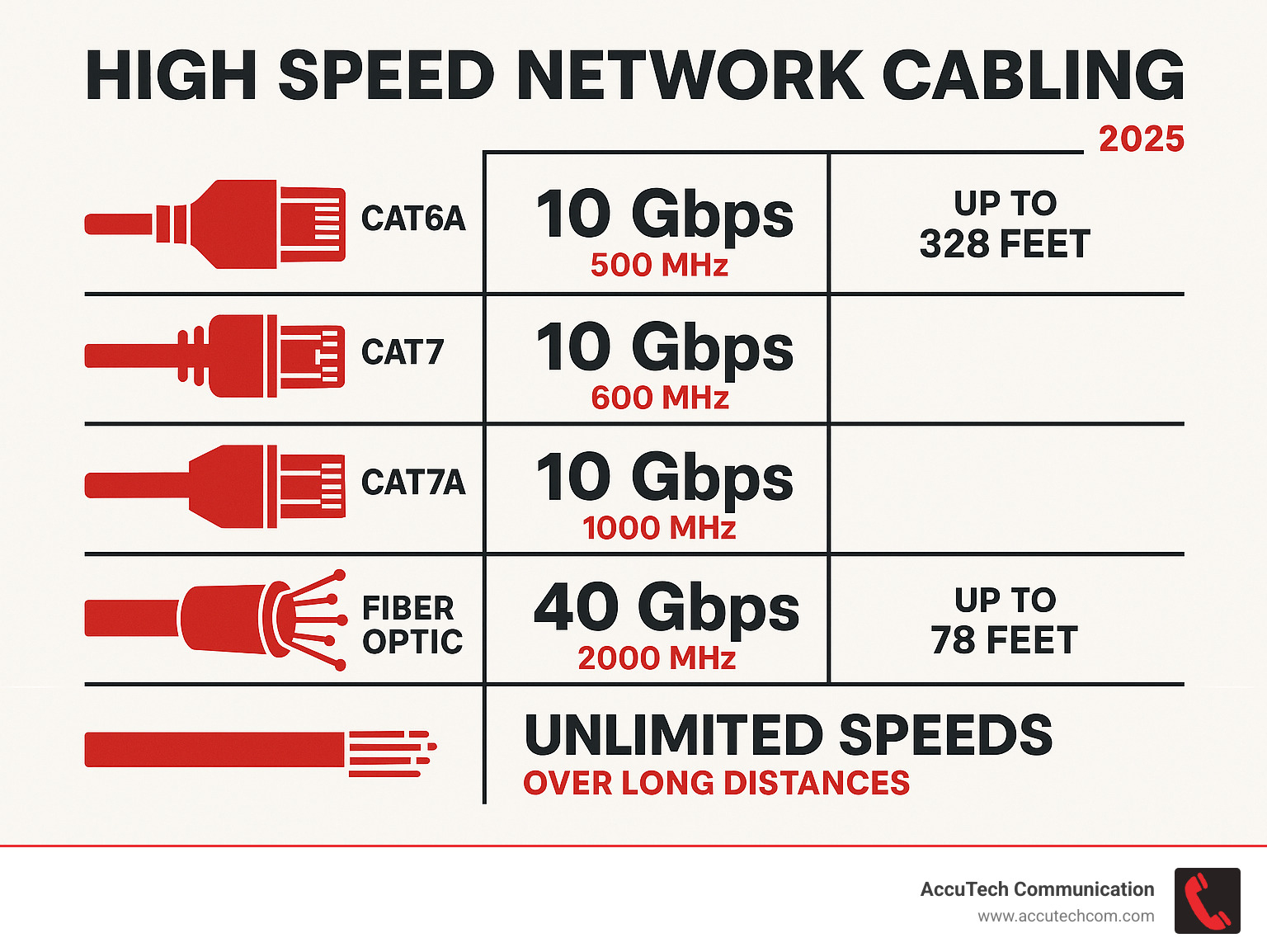
- Cat6a: 10 Gbps up to 328 feet, ideal for most business applications
- Cat7/7a: 10 Gbps with higher bandwidth but proprietary connectors
- Cat8: 40 Gbps up to 78 feet, for data center switch-to-switch connections
- Fiber Optic: Virtually unlimited speed potential with light-based transmission
The good news is that today’s cable options can handle current needs while future-proofing your investment. The right choice depends on your specific environment and growth plans.
I’m Corin Dolan, owner of AccuTech Communications, and I’ve been helping businesses across Massachusetts, New Hampshire, and Rhode Island optimize their network infrastructure since 1993. My experience with high speed network cabling installations has shown me that the right cable choice upfront saves businesses thousands in future upgrades and downtime costs.
What Makes Network Cabling “High-Speed”?
Understanding what makes network cabling “high-speed” is about ensuring your infrastructure can handle today’s demands and tomorrow’s growth. It comes down to two key measurements: speed and bandwidth.
Speed, measured in Gigabits per second (Gbps), is how fast data travels. Bandwidth, measured in Megahertz (MHz), is how much data can travel at once. Think of it like a highway: speed is how fast cars can go, while bandwidth is the number of lanes. More lanes prevent traffic jams.
Modern high-speed cables also combat crosstalk interference—electronic “noise” from adjacent wires—with better shielding and tighter wire twists, ensuring cleaner data transmission and more reliable speeds. This is a major leap from older standards like Cat5e, which maxed out at 1 Gbps and 100 MHz. A well-designed infrastructure is crucial; learn more about our approach with a Structured Cabling System.
Understanding Cable Categories
Network cables are organized into categories (“Cat”) that define their performance. Each step up offers more speed, bandwidth, and reliability.
- Cat6a (Category 6 Augmented) is where true high speed network cabling begins for most businesses. It supports 10 Gbps speeds up to 328 feet with 500 MHz bandwidth, offering an excellent balance of performance and cost. For details, see more info about Cat6a speed.
- Cat7 and Cat7a offer higher bandwidth (600-1,000 MHz) and superior shielding but require proprietary connectors (GG45 or TERA), which can complicate installations.
- Cat8 is built for data centers, supporting 40 Gbps speeds at 2,000 MHz bandwidth over short distances (up to 100 feet). It’s ideal for switch-to-switch connections. Explore more info about Cat 8.
- Fiber Optic cabling uses light pulses for incredible speeds (100 Gbps or higher) over very long distances, with complete immunity to electrical interference.
Professional Data Cable Installation is key to open uping a cable’s full potential.
The Role of Bandwidth in Performance
Bandwidth is the unsung hero of network performance. While speed gets the attention, bandwidth determines how well your network handles multiple devices and applications at once. Higher bandwidth means your network can juggle more traffic from video calls, large file transfers, and cloud-based software without slowdowns. Investing in higher-bandwidth cables now is a smart way to future-proof your network, saving you from costly upgrades as data demands inevitably grow.
A Head-to-Head Comparison: High-Speed Ethernet Categories
Choosing the right high speed network cabling is about matching your current needs with future growth. This table breaks down the main high-speed Ethernet categories to help you decide.
| Cable Category | Max Speed (Gbps) | Bandwidth (MHz) | Max Distance (for max speed) | Shielding | Ideal Use Case |
|---|---|---|---|---|---|
| Cat6a | 10 | 500 | 328 feet (100m) | F/UTP or U/FTP | General business, future-proof office, PoE+ |
| Cat7 | 10 | 600 | 328 feet (100m) | S/FTP | Niche applications, highly noisy environments, proprietary connectors |
| Cat7a | 10 | 1000 | 328 feet (100m) | S/FTP | Niche applications, future-oriented, proprietary connectors |
| Cat8 | 25/40 | 2000 | 78-100 feet (24-30m) | F/UTP or S/FTP | Data center switch-to-switch, short-distance high-bandwidth links |
Generally, higher category cables cost more, but the long-term benefits of improved performance and future-proofing often make the investment worthwhile. Most of these cables use standard RJ45 connectors and support Power over Ethernet (PoE), allowing a single cable to provide both data and power to devices like cameras and phones. Proper Data Cable Installation is crucial for getting the most out of any cable you choose.
Category 6a (Cat6a): The 10 Gbps Standard
Cat6a is the sweet spot for most businesses, delivering a reliable 10 Gbps over 328 feet. Its design reduces interference (“crosstalk”) in busy office environments, and it uses standard RJ45 connectors, making it a practical, future-proof investment for smooth video calls and fast file transfers. You can explore more details at More info about Cat6 Network Cable.
Category 7 & 7a: Increased Bandwidth
Cat7 and 7a offer higher bandwidth (600-1,000 MHz) and extensive shielding, making them great for electrically noisy environments. However, their main drawback is the use of proprietary GG45 or TERA connectors instead of the universal RJ45. This compatibility issue means Cat6a remains the preferred choice for most business installations. For those curious, check out More info about Cat7.
Category 8 (Cat8): The Data Center Powerhouse
Cat8 is the pinnacle of copper high speed network cabling, designed for the extreme demands of data centers. It delivers blazing-fast 25/40 Gbps speeds but is limited to short distances of 78-100 feet. This makes it perfect for connecting high-speed servers to network switches within a rack but overkill for general office use. If you’re planning serious infrastructure upgrades, consider a comprehensive Data Center Build Out.
Copper vs. Fiber Optic: Choosing Your High-Speed Path
When planning your high speed network cabling, the choice between copper and fiber optic is fundamental. Copper cables (like Cat6a) send data as electrical signals, while fiber optic cables transmit data as light pulses through glass strands. This makes fiber faster over longer distances and immune to electrical interference, but it’s also more costly and complex to install.
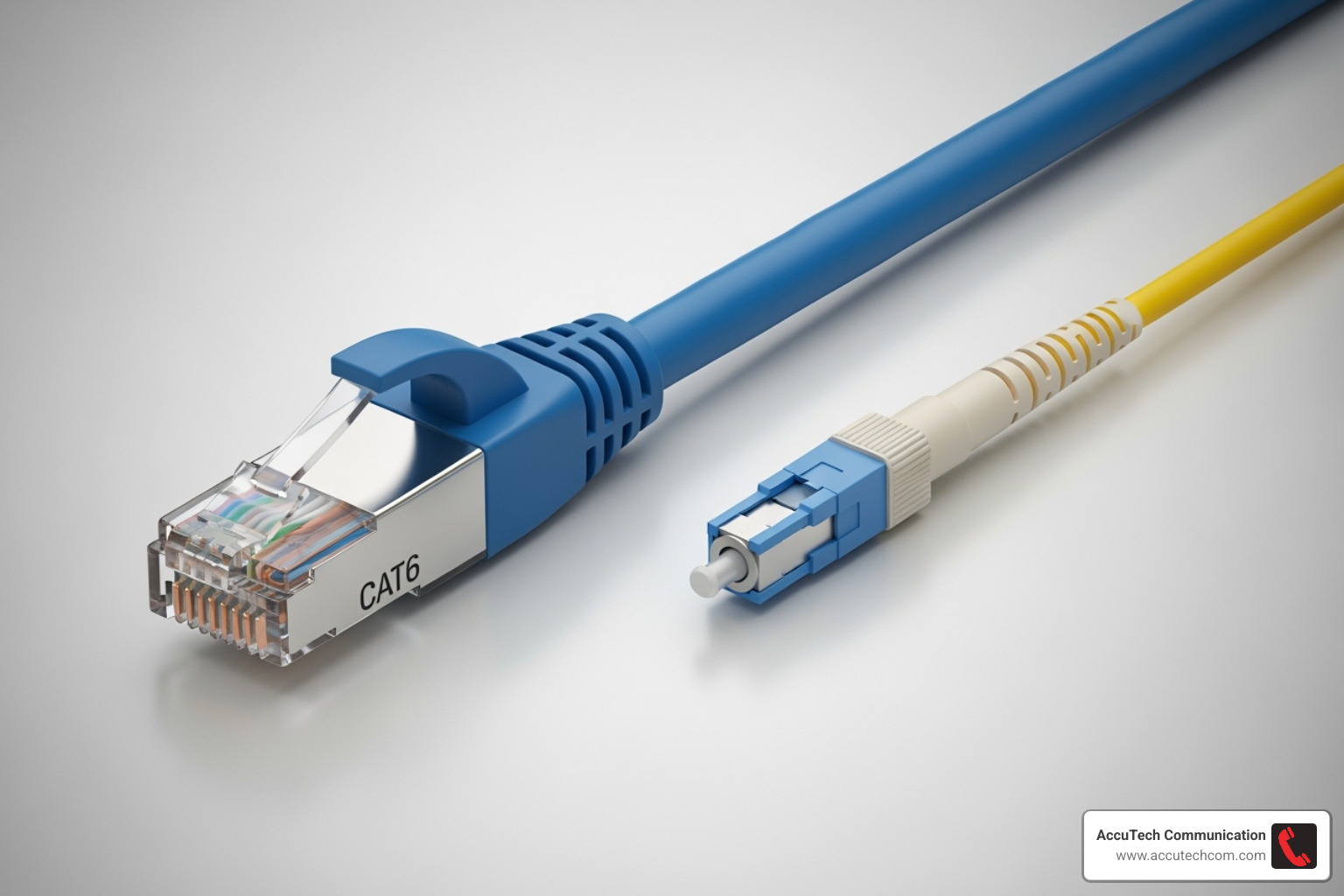
Copper remains practical for most business applications due to its cost-effectiveness and ease of use with existing equipment. Fiber is the go-to for maximum performance and future growth. For comprehensive fiber solutions, you can explore more about Fiber Optic Cable.
Advantages of Copper Cabling
Copper cabling remains the workhorse of high speed network cabling for good reason. It offers a smart balance of performance and practicality for most businesses.
- Cost-Effectiveness: Copper cables and the associated networking hardware are significantly less expensive than fiber optic alternatives.
- Ease of Installation: Copper is more flexible and forgiving to install, and most technicians are familiar with its termination techniques.
- Compatibility: Nearly all network devices use standard RJ45 Ethernet ports, making copper a plug-and-play solution.
- Power over Ethernet (PoE): Copper’s ability to deliver both data and power over a single cable simplifies installation for devices like IP cameras, VoIP phones, and wireless access points.
Our Network Cable Services leverage copper’s strengths to build robust and efficient networks.
When to Choose Fiber Optic Cabling
While copper is sufficient for most needs, certain situations demand the superior capabilities of fiber optic technology.
- Long-Distance Runs: Fiber can transmit data for miles without signal loss, essential for connecting buildings across a campus.
- Maximum Speed Requirements: When you need speeds beyond 10 Gbps (e.g., 40/100 Gbps), fiber is the only realistic option.
- High-Interference Environments: Because it uses light, fiber is immune to the electromagnetic interference found in factories or medical facilities.
- Data Center Backbones: Fiber is critical for handling the massive data traffic between servers, storage, and switches in data centers.
- Future-Proofing: Fiber offers immense scalability, allowing for future speed upgrades without replacing the cable itself.
Learn more about Maximizing Business Efficiency with Fiber Optic Cabling.
Selecting the Right High-Speed Network Cabling for Your Environment
Choosing the correct high speed network cabling requires a thoughtful assessment of your current needs, anticipated growth, and physical space. A video production company has different needs than an accounting firm. What do you do with your network?
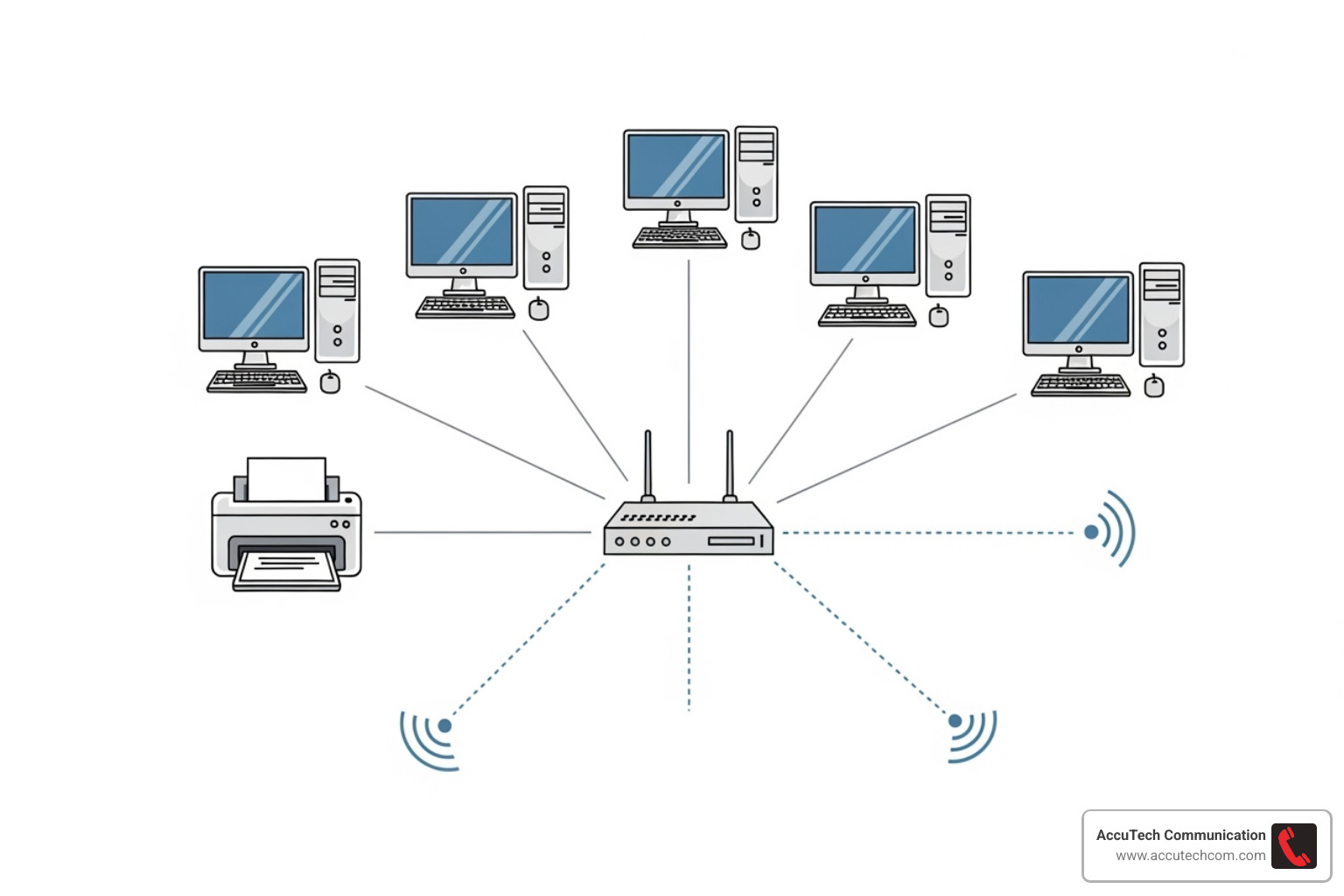
While you should match cabling to your internet plan, data needs grow rapidly. Investing in cabling that exceeds current needs is a smart return on investment, as replacing cables later is far more disruptive and expensive than upgrading hardware. For comprehensive guidance, explore More info about IT Structured Cabling.
Key Considerations for Home & Small Office Use
For home and small offices, the goal is to balance performance with cost. While Cat6 is a solid upgrade over older cables, Cat6a is the sweet spot for future-proofing. It delivers full 10 Gbps speeds, providing plenty of headroom for growth as you add more smart devices, from phones and tablets to IoT sensors and security cameras.
This robust infrastructure ensures that demanding applications like video conferencing, 4K streaming, and online gaming run smoothly without competing for resources. The modest investment difference between Cat6 and Cat6a pays off in long-term performance and reliability. For expert assistance, explore our Network Cabling Installation Services.
Optimizing High-Speed Network Cabling for Data Centers
Data centers are the ultimate proving ground for high speed network cabling, where performance and reliability are non-negotiable.
- Cat8 for Short Runs: Cat8 is the standard for high-performance links within server racks, delivering 25G or 40G Ethernet over short distances (up to 100 feet) to connect servers to top-of-rack switches.
- Fiber for Backbones: Fiber optics create the high-capacity highways connecting different areas of the data center. Multi-mode fiber is used for shorter runs between racks, while single-mode fiber connects buildings over long distances.
- High-Density and Airflow: In crowded data centers, high-density fiber connectors save space, while well-managed cabling ensures proper airflow, which is critical for cooling and energy efficiency.
- Adherence to Standards: Following ANSI/TIA-942 standards is essential for ensuring reliability, interoperability, and long-term performance.
Our expertise extends to critical infrastructure projects, including Fiber Optic Installation Boston MA.
Best Practices for Installation and Management
Having the right high speed network cabling is only half the battle; proper installation and management are critical for achieving optimal performance. A poorly installed Cat8 cable will perform worse than a well-installed Cat6a.
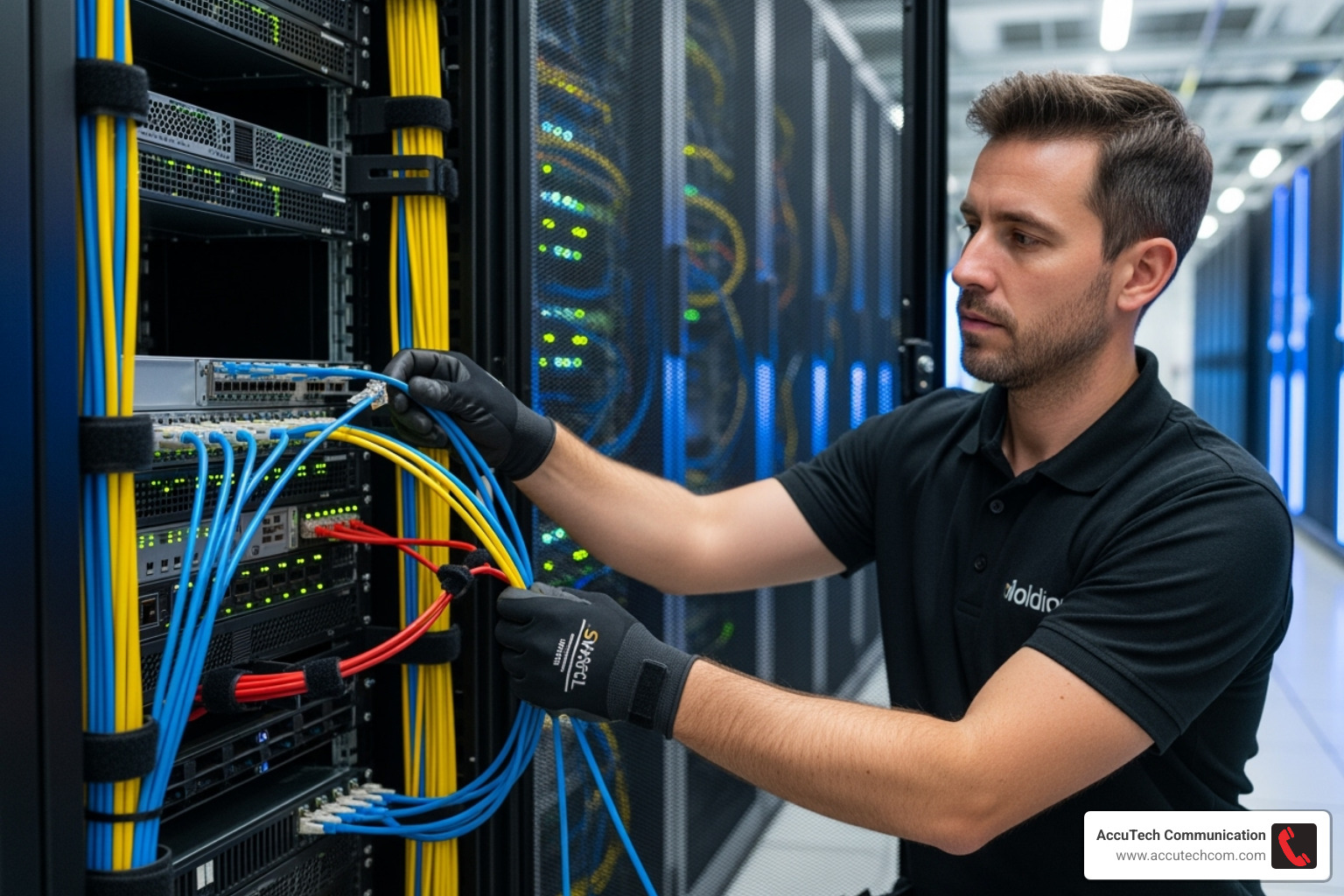
Professional installation is vital for handling, terminating, and routing cables to maintain signal integrity. After installation, rigorous testing and certification ensure every link meets industry standards, validating your investment.
Installation Tips for Peak Performance
To release the power of your high speed network cabling, follow these best practices:
- Choose Pure Copper Cables: Prioritize cables with pure copper conductors over cheaper copper-clad aluminum (CCA) for superior conductivity and durability, especially for Power over Ethernet (PoE).
- Use Plenum-Rated Jackets: In air circulation spaces (plenums), fire-resistant CMP-rated jackets are mandatory for safety and building code compliance. Learn more about plenum-rated jackets.
- Avoid Sharp Bends: Respect the cable’s minimum bend radius during routing to prevent kinking the internal wires, which degrades the signal.
- Respect Length Limits: Do not exceed the maximum distance for a given category (typically 100m/328ft for copper) to avoid signal loss.
- Ensure Proper Termination: Professional termination with the right tools is crucial to prevent signal loss and noise.
Essential Hardware for a High-Speed Network
A high-speed network is only as strong as its weakest link. Your cables must be paired with equally high-performing components:
- High-Speed Network Switches: Must have ports (e.g., 10 GbE) that match your cable’s capabilities.
- Optical Transceivers: For fiber networks, modules like SFP+ or QSFP+ are needed to connect fiber to switches.
- Routers and Access Points: Must support the high speeds you’re aiming for to avoid bottlenecks.
- Network Interface Cards (NICs): The NIC in your computer or server must also be rated for the desired speed.
This holistic approach is why we emphasize the Top 5 Benefits of Hiring a Professional Network Cabling Company.
Cable Management and Longevity
Effective cable management protects your investment and ensures long-term performance.
- Use Cable Trays and Racks: Organized pathways prevent tangles, reduce stress on cables, and make future changes easier.
- Label Everything: Clear, consistent labeling on both ends of every cable saves countless hours during troubleshooting and maintenance.
- Use Innerduct: This protective tubing shields cables from physical damage and simplifies future upgrades.
- Plan for Cable Lifespan: Most Ethernet cables are designed to perform optimally for 5-7 years. Proactive replacement of aging cables can prevent unexpected outages.
Proper management extends the life of your high speed network cabling and ensures it performs at its best for years to come.
Frequently Asked Questions about High-Speed Cabling
Is Cat7 or Cat7a a good choice for my business?
Generally, no. While Cat7/7a have impressive specs, they use non-standard connectors (GG45/TERA) and are not officially recognized as an Ethernet standard by the TIA. For reliable 10 Gbps performance, Cat6a is the recommended and more practical choice, as it uses standard RJ45 connectors and offers excellent performance without compatibility issues.
How important is future-proofing my network cabling?
Extremely important. Replacing cabling is disruptive and expensive. With data demands doubling roughly every 18 months, installing a cable that only meets today’s needs is a short-sighted strategy. Choosing a higher category cable like Cat6a or planning for fiber provides the necessary bandwidth for future applications and internet speed increases, making it a smart, long-term investment.
Do I need special equipment to use high-speed cables?
Yes, absolutely. A high-speed cable is only one piece of the puzzle. To achieve its maximum speed, every component in the network chain—including your network switches, routers, and the network interface cards (NICs) in your computers—must also support that same speed. Your network will only run as fast as its slowest component.
Conclusion
Choosing the right high speed network cabling doesn’t have to feel overwhelming. Throughout this guide, we’ve explored the key options available, from Cat6a’s reliable 10 Gbps performance that works beautifully for most office environments, to Cat8’s specialized 40 Gbps power that data centers depend on, and fiber optic’s virtually unlimited potential for backbone connections.
The secret to making the right choice lies in understanding your specific needs and honestly assessing where your business is headed. Are you a small office that needs reliable video conferencing and cloud access? Cat6a will serve you well for years to come. Running a data center with demanding server-to-switch connections? Cat8 delivers the speed you need for those critical short runs. Planning for massive growth or connecting buildings across a campus? Fiber optic cabling provides the scalability and distance you’ll require.
Balancing your budget with performance requirements is crucial, but skimping on cabling today often means expensive upgrades tomorrow. With data transmission rates doubling roughly every 18 months, investing in slightly more cable than you need right now is smart business planning. The cost difference between cable categories is often minimal compared to the disruption and expense of replacing cabling later.
Future-proofing your network isn’t just about speed – it’s about supporting the growing number of devices, applications, and demands that will inevitably come your way. A well-chosen, professionally installed cabling infrastructure transforms your network from a potential bottleneck into a powerful business asset that supports growth rather than limiting it.
Since 1993, we at AccuTech Communications have been helping businesses across Massachusetts, New Hampshire, and Rhode Island build networks that truly work. Our certified technicians understand that high speed network cabling isn’t just about the cables themselves – it’s about creating a complete system that delivers reliable performance day after day, year after year.
Ready to build a network that supports your success instead of slowing it down? Get a quote for your office cabling solutions today, and let’s create a cabling infrastructure that keeps your business moving at the speed of opportunity.
