
Horizontal Cabling Structure: Top 7 Essential Benefits
Horizontal cabling structure is a key component of structured cabling systems, responsible for connecting telecommunications rooms to individual workstations in a building. It includes cabling that extends horizontally from the telecommunications room to work areas, supporting efficient flow of information.
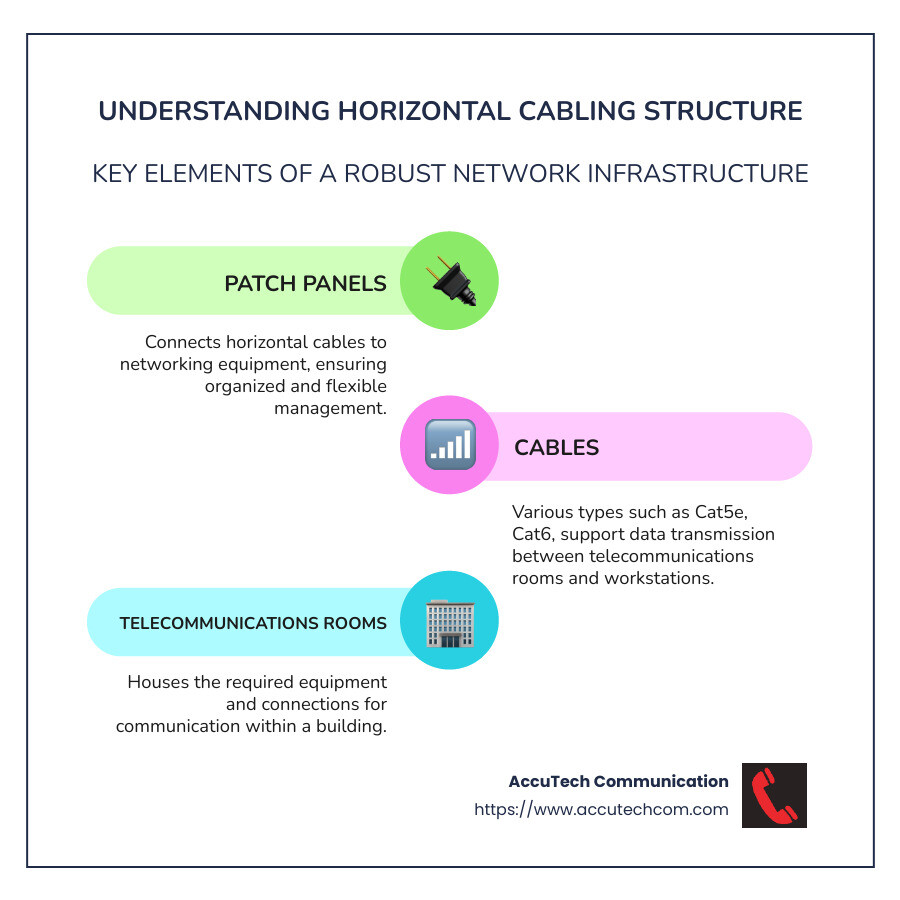
Understanding the horizontal cabling structure is vital for businesses striving for optimal communication networks. It involves components like patch panels, cables, and telecommunications rooms that make up a robust network infrastructure. This structure, defined by ANSI/TIA standards, improves network performance, facilitates upgrading, and simplifies troubleshooting.
In an ever-connected world, businesses depend on reliable communication systems. I’m Corin Dolan, owner of AccuTech Communications, with over 20 years of experience helping businesses refine their horizontal cabling structure. Our mission aligns with ensuring your business stays ahead with cutting-edge, compliant network solutions.
Horizontal cabling structure terms to know:
– structured cabling definition
– structured cabling installation
– cable infrastructure
Understanding Horizontal Cabling Structure
Horizontal cabling is the backbone of any structured cabling system. It connects telecommunications rooms to individual workstations, ensuring seamless communication within a building. This cabling runs horizontally from the telecommunications room to various work areas, supporting the efficient flow of information.
Key Components of Horizontal Cabling
- Cables: These are the lifelines of your network. In horizontal cabling, the most common types are Cat 5e, Cat 6, and Cat 6a. Each type supports different data rates and bandwidths, making it crucial to choose the right one for your needs. For high-speed data transfer over long distances, fiber optic cabling is often the go-to choice.
- Patch Panels: Think of patch panels as the organizational hub for network cables. They provide a neat and accessible way to connect cables from different parts of a building to network equipment. By using patch panels, you can easily rearrange and manage connections, which is essential for maintenance and troubleshooting.
- Connectors: These are the endpoints where cables connect to devices or other network components. RJ-45 connectors are standard for Ethernet connections in horizontal cabling. They ensure a secure and reliable connection between your network and devices.

The Role of the Telecommunications Room
The telecommunications room is the central hub for horizontal cabling. It houses equipment like switches, routers, and patch panels. This room is where the horizontal cables converge and connect to the backbone cabling, which links to other parts of the building or external networks.
In a multi-floor building, each floor typically has its own telecommunications room. This setup ensures that the horizontal cabling remains efficient and manageable, reducing cable lengths and potential signal loss.
Did you know? The telecommunications room is often referred to as the Intermediate Distribution Frame (IDF). It plays a crucial role in managing and interconnecting cables within a building.
By understanding the horizontal cabling structure, businesses can build a robust network infrastructure that supports current and future communication needs. This structure, guided by ANSI/TIA standards, ensures that networks are efficient, scalable, and easy to maintain.
Stay tuned as we dive deeper into the components of horizontal cabling, exploring the various cable types, connectors, and patch panels that make up this essential part of your network.
Components of Horizontal Cabling
When it comes to a horizontal cabling structure, understanding its components is key to setting up a reliable network. Let’s break down the main components: cable types, connectors, and patch panels.
Cable Types
Cables are the veins of your network, carrying data to and from various points. In horizontal cabling, the choice of cable can impact speed, performance, and future scalability. Here’s a quick look at the common types:
- Cat 5e: A popular choice for small to medium-sized networks. It supports speeds up to 1 Gbps and is cost-effective.
- Cat 6: Offers better performance than Cat 5e, supporting speeds up to 10 Gbps over shorter distances. Ideal for high-performance networks.
- Cat 6a: An improved version of Cat 6, suitable for data centers and environments requiring higher bandwidth.
- Fiber Optic Cabling: Perfect for long distances and high-speed data transfer. It’s immune to electromagnetic interference, making it a reliable choice for many businesses.
Choosing the right cable type depends on your specific network needs, including speed, distance, and budget.
Connectors
Connectors are crucial for linking cables to devices or other network components. In horizontal cabling, the most common connector is the RJ-45. Here’s why it’s widely used:
- Ease of Use: RJ-45 connectors are simple to install and remove, making them user-friendly.
- Reliability: They provide a secure and stable connection, essential for maintaining network integrity.
- Standardization: As a standard in Ethernet connections, RJ-45 ensures compatibility across various devices and systems.
These connectors are vital for ensuring that your cabling infrastructure remains efficient and easy to manage.
Patch Panels
Patch panels serve as the organizational backbone of your network cabling. They act as a central hub where cables from different parts of a building meet and connect to network equipment.
- Organization: Patch panels help keep cables organized and labeled, simplifying maintenance and troubleshooting.
- Flexibility: They allow for easy rearrangement of connections, which is invaluable during network upgrades or reconfigurations.
- Accessibility: With patch panels, technicians can quickly access and modify connections without disrupting the entire network.
In summary, patch panels are essential for maintaining a tidy and accessible network, reducing downtime and enhancing efficiency.
Now that we’ve covered the components of horizontal cabling, let’s move on to best practices for installation. Proper cable management, labeling, and testing are crucial for ensuring your network runs smoothly and efficiently. Stay with us as we explore these practices in the next section!
Installation Best Practices
When it comes to setting up a horizontal cabling structure, following best practices for installation is crucial. Proper cable management, labeling, and testing ensure your network operates at peak efficiency and reliability. Let’s explore these essential practices.
Cable Management
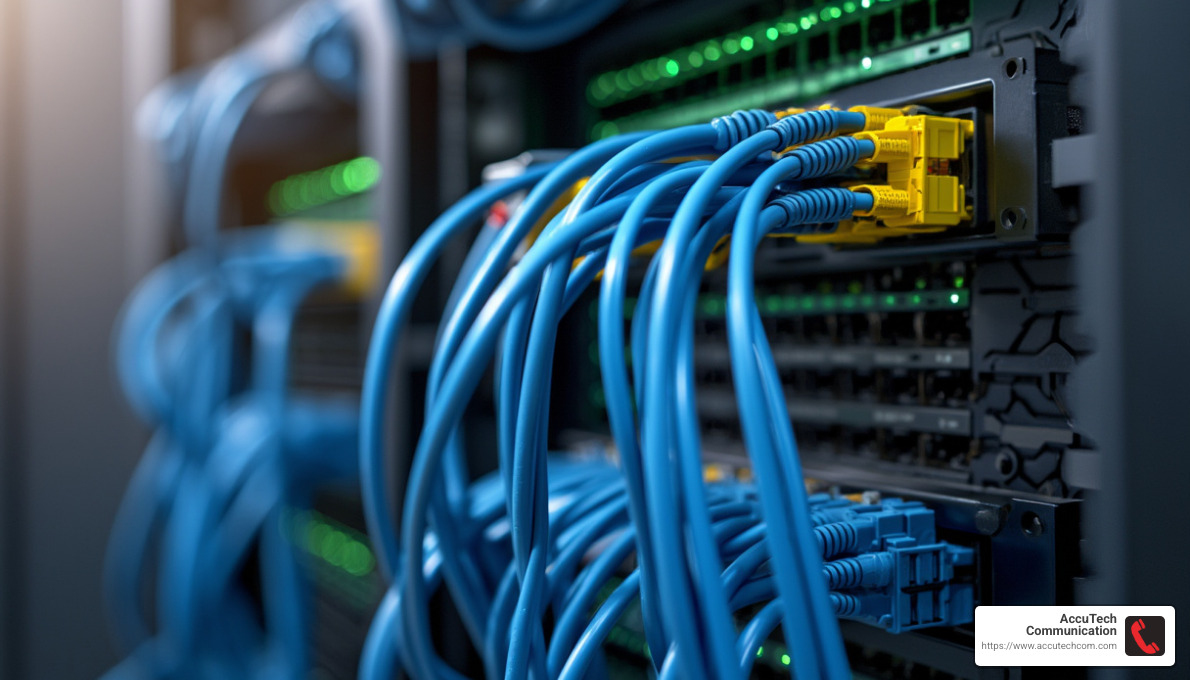
Proper cable management is the backbone of a neat and efficient network. It involves organizing and securing cables to prevent tangling and damage. Here’s how you can achieve effective cable management:
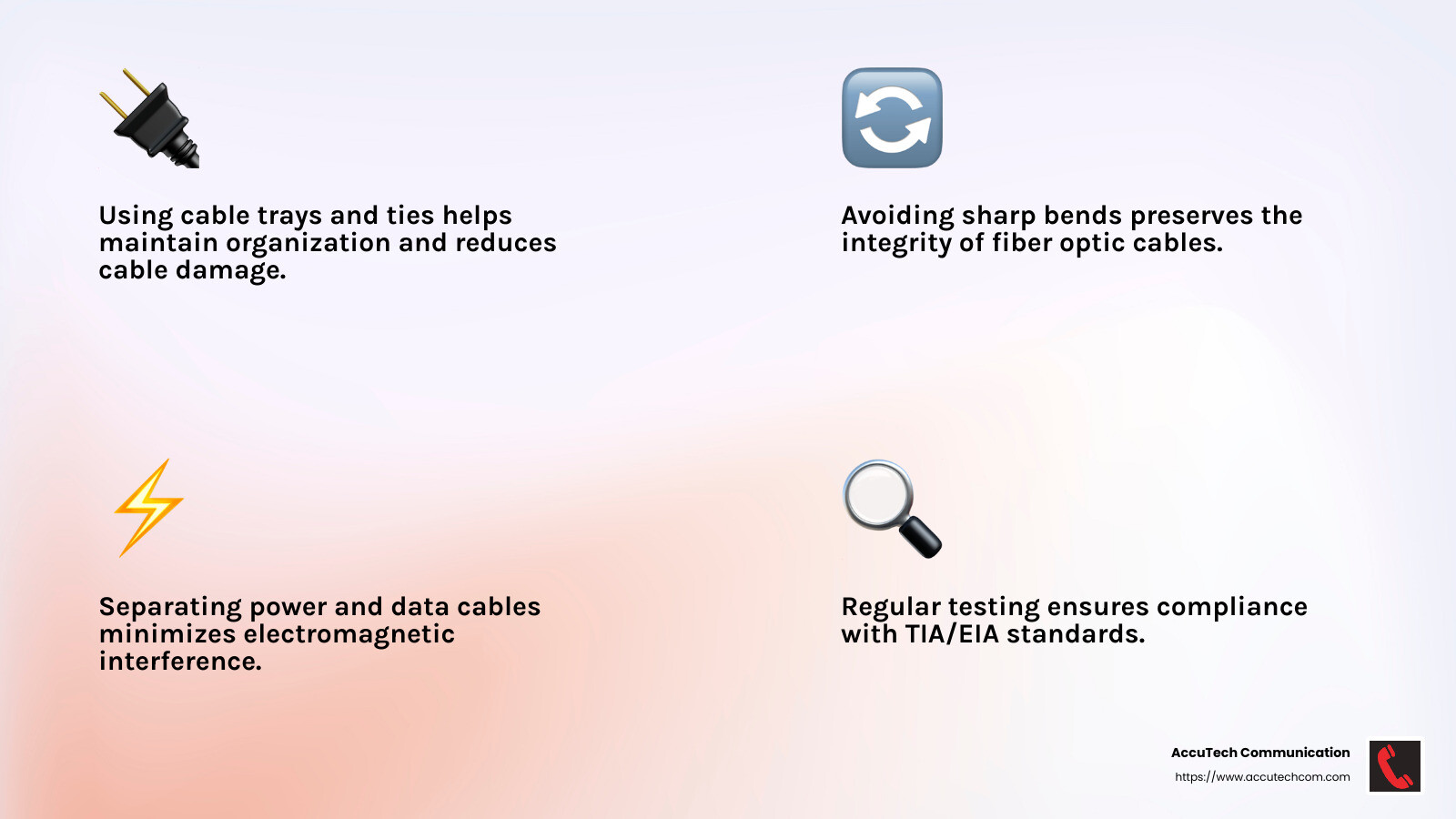
- Use Cable Trays and Ties: These tools help keep cables organized and off the floor, reducing the risk of damage and making maintenance easier.
- Avoid Sharp Bends: Sharp bends can damage cables, especially fiber optics. Maintain gentle curves to preserve cable integrity.
- Separate Power and Data Cables: Keep power and data cables apart to minimize electromagnetic interference.
Labeling
Labeling is a simple yet powerful practice that can save time and prevent errors. Here’s why it’s important:
- Quick Identification: Labels allow technicians to quickly identify cables, reducing downtime during troubleshooting or upgrades.
- Consistency: Use a consistent labeling system across your network to avoid confusion. This includes labeling both ends of each cable.
- Future-proofing: Proper labeling makes it easier to expand or modify your network in the future.
Testing
Once your horizontal cabling is installed, testing ensures everything is functioning correctly. Testing helps identify issues early, preventing costly downtime. Here’s what to focus on:
- Continuity Testing: Checks if the cable is properly connected from end to end.
- Performance Testing: Verifies that cables support the required bandwidth and speed.
- Compliance Testing: Ensures that the installation meets industry standards, such as TIA/EIA standards.
By focusing on these best practices—cable management, labeling, and testing—you can build a horizontal cabling structure that is efficient, reliable, and easy to maintain. Up next, we’ll explore the benefits of a well-designed horizontal cabling structure, including scalability, reliability, and cost-effectiveness.
Benefits of a Well-Designed Horizontal Cabling Structure
A well-planned horizontal cabling structure offers several key advantages that can improve your network’s performance and adaptability. Let’s explore these benefits in detail.
Scalability
A structured cabling system is like a sturdy foundation for your network. It allows you to grow without the headaches. When you need to add new devices or expand your network, a well-organized horizontal cabling setup makes it easy. You can quickly plug in new connections without redoing the entire system. This flexibility is crucial for businesses planning to scale up operations or integrate new technologies.
Reliability
Reliability is the backbone of any network. A thoughtfully designed horizontal cabling structure minimizes downtime and errors. By following best practices in cable management and labeling, you reduce the risk of tangled wires and connection failures. This setup ensures that your network runs smoothly, even as demands increase.
AccuTech Communications emphasizes the importance of reliability in network infrastructure, ensuring your business operations remain uninterrupted.
Cost-Effectiveness
Investing in a well-thought-out cabling structure saves money in the long run. With organized cables and proper labeling, maintenance becomes straightforward. Technicians can quickly identify and fix issues, reducing labor costs and minimizing downtime. Additionally, a scalable system means you won’t need to overhaul your network whenever you add new devices. This forward-thinking approach leads to significant cost savings over time.
In summary, a well-designed horizontal cabling structure provides the scalability, reliability, and cost-effectiveness that businesses need to thrive in today’s world. Up next, we’ll address some frequently asked questions about horizontal cabling to clear up any lingering uncertainties.
Frequently Asked Questions about Horizontal Cabling
What is horizontal cabling?
Horizontal cabling refers to the network cabling that runs from the telecommunications room to individual work areas or stations. Think of it as the vital link connecting your central networking equipment to the computers and devices used every day. This cabling typically includes cable types like Cat 5e, Cat 6, or fiber optics, depending on your network requirements. Its primary purpose is to ensure seamless data transmission across a building or floor.
How does horizontal cabling differ from backbone cabling?
While horizontal cabling connects workstations to the telecommunications room, backbone cabling links different telecommunications rooms, equipment rooms, and even buildings. In simpler terms, backbone cabling is like the main highway, while horizontal cabling is the local roads leading to individual addresses. Backbone cabling handles larger data loads and often uses more robust materials like fiber optics to maintain high-speed connections over longer distances.
What are the standards for horizontal cabling?
To ensure consistency and reliability, horizontal cabling must comply with specific standards. The TIA/EIA-568 standard is the most widely recognized guideline for structured cabling systems. It outlines specifications for cable types, connectors, and installation methods to ensure high-quality network performance. Compliance with these standards is crucial for maintaining a reliable and efficient network infrastructure.
AccuTech Communications adheres to these standards, ensuring that every installation meets or exceeds industry requirements. By following these guidelines, businesses can enjoy a network that’s not just functional but also scalable and future-proof.
Conclusion
In structured networks, a well-designed horizontal cabling structure is essential for seamless connectivity and efficient data flow. At AccuTech Communications, we understand the importance of quality service and competitive pricing in delivering top-notch network solutions.
Since 1993, we’ve been committed to providing businesses across Massachusetts, New Hampshire, and Rhode Island with reliable and certified network cabling services. Our team of skilled technicians ensures that every installation meets the highest industry standards, such as the TIA/EIA-568, ensuring your network is both reliable and ready for future growth.
Choosing AccuTech means you’re partnering with a team that values precision, efficiency, and customer satisfaction. Our competitive pricing ensures you receive exceptional service without breaking the bank. Whether you’re a small business or a large corporate campus, our expertise in network cabling, business phone systems, and data center technologies makes us a trusted partner in enhancing your business communications.
Ready to strengthen your network infrastructure? Contact us today to learn more about our structured cabling services and how we can help you achieve a robust and scalable network. Your network is the backbone of your business; let us help you make it stronger.
