
Interduct: Top 3 Benefits for Reliable Networks 2024
Interduct might sound like an ancient term, but in today’s technology world, it holds a vital place, particularly in communication infrastructure. If you’re someone navigating through complex underground cabling needs or looking to improve cable protection, understanding interduct is crucial.
- What is interduct?: It’s an inner conduit designed to house and protect cables, especially fiber-optic ones, as they travel underground or through other environments.
- Why use interduct?: It offers superior protection, supports easy cable upgrades, and helps prevent damage, ensuring reliable communications.
- Applications of interduct: Widely used in telecommunications, data centers, and broadband networks for housing fiber-optic cables.
Incorporating this versatile material into your infrastructure ensures a robust, reliable network ideal for mid-to-large businesses. Businesses often choose interduct to address challenges like outdated or inefficient network setups, where a durable solution is needed to maintain and improve operations.
I’m Corin Dolan, owner of AccuTech Communications, with over two decades of experience in optimizing business communication systems. With a focus on interduct and network cabling, my team and I have been ensuring businesses have the reliable infrastructure they need. Let’s dive deeper into the crucial role interduct plays in today’s modern networks.
Interduct definitions:
– Innerduct Installation Service Company
– conduit installation guide
– underground electrical conduit
Understanding Interduct
Interduct is a specialized type of conduit, but it’s not just any conduit. It’s specifically designed to house and protect cables, particularly fiber-optic cables, as they steer through complex environments. Think of it as a protective sleeve that keeps the cables safe from external damage while allowing for easy upgrades and maintenance.
Innerduct vs. Conduit
While both innerduct and conduit serve as pathways for cables, there are some key differences:
- Conduit: Typically larger and used for general cable protection. It’s often made from materials like PVC or metal and can house multiple cables or even innerducts.
- Innerduct: More specialized, usually smaller in diameter, and often made from High-Density Polyethylene (HDPE). It’s specifically designed for housing single cable types, like fiber optics, providing improved protection and organization.
ASTM Standards
The American Society for Testing and Materials (ASTM) sets the standards for materials and products, including interduct. These standards ensure that interducts are manufactured to provide the necessary durability and performance. Compliance with ASTM standards means the interduct will effectively protect cables, reduce service interruptions, and support future-proofing strategies.
By understanding the role and standards of interduct, businesses can make informed choices about their network infrastructure, ensuring reliability and efficiency in their communications systems.

Applications of Interduct in Modern Infrastructure
Interduct plays a crucial role in modern infrastructure, especially with the rapid growth of fiber optic networks and broadband expansion. Here’s how:
Fiber Optic Networks
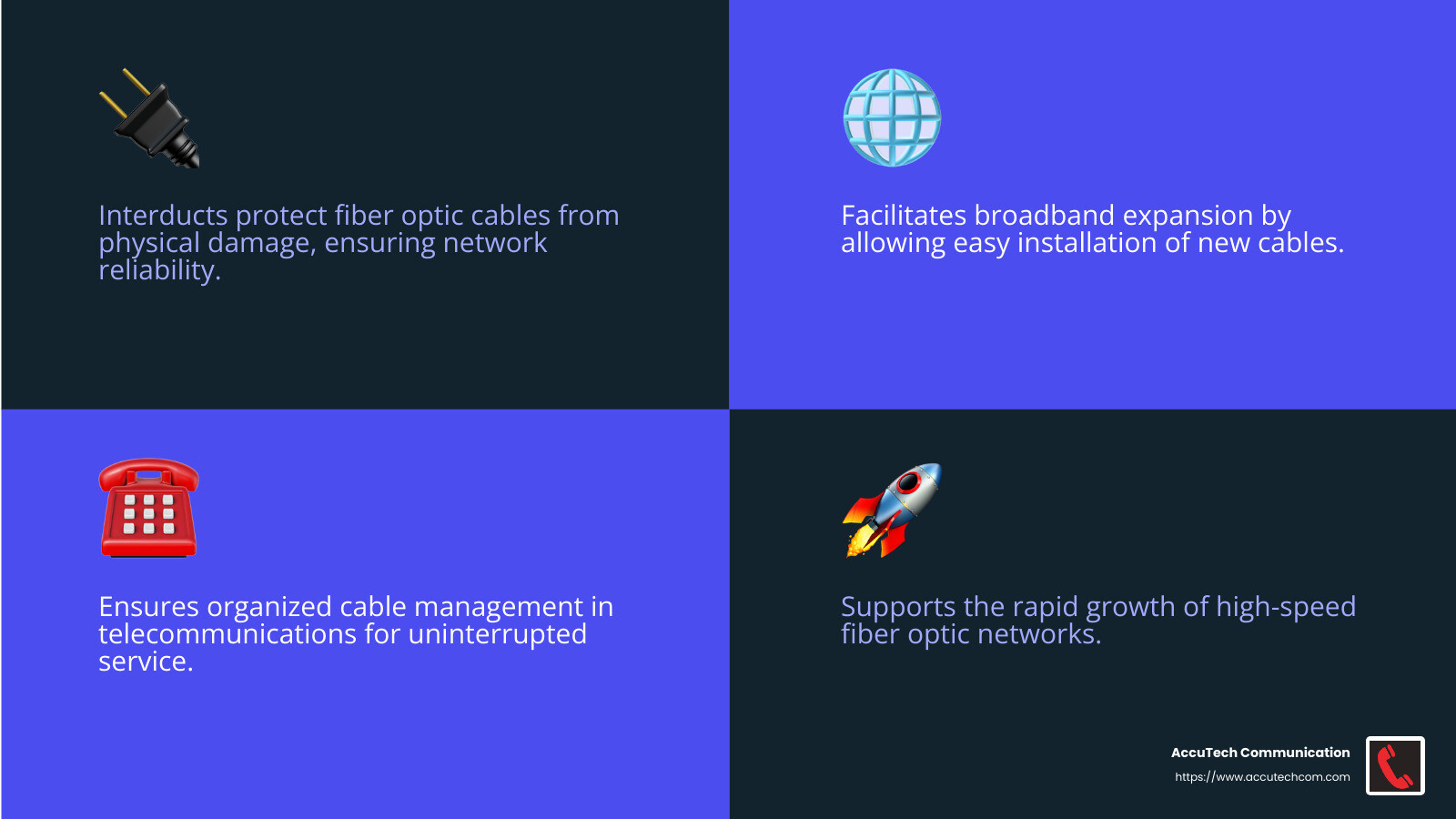
Fiber optic cables are the backbone of today’s high-speed internet. They transmit data at lightning speeds over long distances with minimal loss. Interduct is essential in these networks because it provides a protective pathway for these delicate cables. By housing fiber optics in interducts, companies can prevent physical damage, which is a common cause of network failures. This protection is vital for maintaining uninterrupted, high-quality service.
Broadband Expansion
As demand for faster internet grows, so does the need for robust infrastructure. Interduct supports broadband expansion by allowing for easy installation of new cables without disrupting existing services. This flexibility is crucial for expanding networks into underserved areas, ensuring that more people have access to high-speed internet. By using interducts, service providers can quickly and efficiently upgrade their networks, meeting the needs of a connected world.
Telecommunications
In the field of telecommunications, interduct ensures reliable and organized cable management. Telecommunication providers rely on interducts to protect their vast networks of cables, which are essential for voice, data, and video services. By using interducts, these companies can reduce the risk of service interruptions and maintain a high level of service reliability. This is especially important for businesses that depend on uninterrupted communication to operate effectively.
Interduct is more than just a protective sleeve; it is a critical component in building and maintaining the infrastructure that powers modern communication. By facilitating safe and efficient cable management, interducts help ensure that networks are ready to meet current demands and future growth.
In the next section, we’ll explore the benefits of using interduct in network installations, focusing on how it improves cable protection and service reliability.
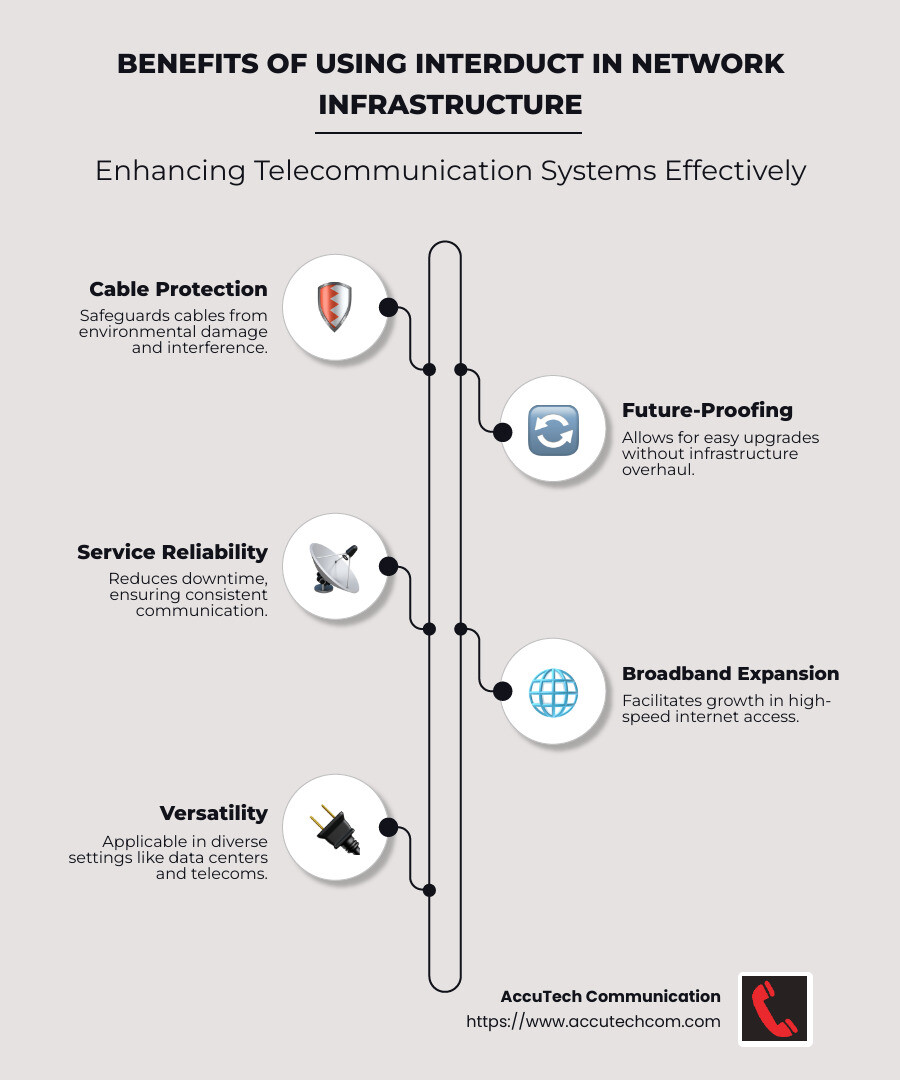
Benefits of Using Interduct
Interduct offers several key benefits that make it an essential part of modern network infrastructure. Let’s look at how it improves cable protection, future-proofing, and service reliability.
Cable Protection
One of the primary benefits of interduct is its ability to protect cables. Made from high-density polyethylene (HDPE), interduct provides a durable barrier against physical damage. This is crucial for delicate fiber optic cables, which are prone to damage from environmental factors like moisture and temperature fluctuations. By housing cables in interducts, network providers can significantly reduce the risk of costly repairs and service interruptions.
Future-Proofing
Interduct also plays a vital role in future-proofing network installations. As technology evolves, the demand for faster and more reliable internet connections continues to grow. Interduct allows for easy upgrades and expansions. It enables service providers to install new cables without disrupting existing ones, making it easier to adapt to future technological advancements. This flexibility is invaluable for keeping networks up-to-date with minimal downtime and expense.
Service Reliability
Reliability is a top priority for any communication network. Interduct improves service reliability by providing organized and secure cable pathways. This organization helps prevent tangling and damage, which are common causes of service interruptions. By using interducts, providers can maintain consistent, high-quality service, which is especially important for businesses and services that rely on uninterrupted communication.
In summary, interduct is more than just a conduit for cables. It is a strategic component that ensures networks are resilient, adaptable, and reliable. In the next section, we’ll address some frequently asked questions about interduct, including its necessity in fiber installations and how it differs from traditional conduit systems.
Frequently Asked Questions about Interduct
What is the meaning of Interduct?
Interduct is a type of conduit used to house and protect cables, especially fiber optic cables. It’s typically made from high-density polyethylene (HDPE), offering a robust shield against physical damage. This protection is crucial for maintaining the integrity of delicate fiber optic strands. By using interducts, network providers can prevent service interruptions and reduce repair costs.
Is innerduct required for fiber installations?
While not always mandatory, using innerduct in fiber installations is highly recommended. It ensures that cables are organized and protected, reducing the risk of service interruptions. Innerducts also make future cable pulls easier, as they create a clear path for new cables without disturbing existing ones. This setup is particularly beneficial when expanding networks or upgrading to newer technology, providing a smooth transition with minimal disruption.
What is the difference between innerduct and conduit?
Though often used interchangeably, innerduct and conduit serve different purposes. A conduit is a general term for any tube or pipe used to protect and route electrical wiring. Innerduct, on the other hand, is a specialized type of conduit designed specifically for housing fiber optic cables. It offers added protection and organization, which is vital in the telecommunications industry. Unlike standard conduits, innerducts can often accommodate multiple cables, making them ideal for complex network infrastructures. They provide a structured pathway, minimizing the chance of cable tangling and damage.
Understanding these differences helps in selecting the right solution for your network needs, ensuring efficient and reliable telecommunications systems.
In the next section, we’ll conclude our discussion by exploring how AccuTech Communications leverages interduct technology to deliver top-notch network cabling services.
Conclusion
At AccuTech Communications, we’ve been dedicated to delivering high-quality network cabling solutions since 1993. Our commitment to excellence and certified service ensures that businesses in Massachusetts, New Hampshire, and Rhode Island can rely on us for their telecommunications needs.
Interduct technology plays a pivotal role in our services. By integrating robust interduct systems into our network cabling projects, we improve cable protection and future-proof infrastructure. This approach not only safeguards your investment but also ensures service reliability, which is crucial for maintaining uninterrupted operations.
Our expertise in network cabling is backed by a team of skilled technicians who understand the nuances of fiber optic installations. We ensure that every project meets industry standards, providing a seamless and efficient setup. Whether you’re expanding your broadband network or upgrading your telecommunications systems, our use of interducts guarantees a smooth transition with minimal disruption.
We invite you to learn more about our innerduct installation services. Let us help you build a reliable and efficient network that supports your business’s growth and success.
For any inquiries or to schedule a consultation, reach out to us. We’re here to support your communication needs with certified, reliable service.
