
Network Cable Tester: Top 5 Essential Tools 2024
Types of Network Cable Testers
When it comes to ensuring your network’s efficiency, choosing the right network cable tester is crucial. There are three main types of testers, each serving a unique purpose: cable certification testers, cable qualification testers, and cable verification testers. Understanding their differences will help you select the right tool for your needs.
Cable Certification Testers
Cable certification testers are the gold standard for network testing. They are designed to certify that a cable installation meets industry standards, such as TIA/EIA or ISO/IEC. These testers are essential for new installations, especially in environments where compliance with strict standards is required, like data centers or healthcare facilities.
- Certifies cable performance to industry standards
- Ensures quality of installation
- Generates detailed reports for documentation

Cable Qualification Testers
Cable qualification testers are ideal for assessing whether existing cabling can support specific network speeds and technologies, such as Gigabit Ethernet. They don’t certify to standards but provide a quick assessment of network performance capabilities.
- Evaluates existing cabling for network upgrades
- Identifies potential bottlenecks in network performance
- Quick and efficient for routine checks
Cable Verification Testers
Cable verification testers are the most basic type and are used to verify that a cable is correctly connected and free of basic faults like open circuits or shorts. They are perfect for quick troubleshooting and maintenance tasks.
- Checks basic connectivity and wiring
- Detects simple faults like miswiring
- User-friendly for quick inspections
Each type of network cable tester serves a distinct purpose, making it important to choose based on your specific needs. Whether you’re certifying a new installation, qualifying an existing network for upgrades, or simply verifying connections, there’s a tester designed to make your job easier and more efficient.

How to Use a Network Cable Tester
Using a network cable tester is straightforward, but it requires attention to detail to ensure accurate results. Here’s a simple guide on how to use these testers effectively.
Testing Process
- Preparation: Before starting, gather your network cable and the tester. Ensure the tester has fresh batteries to avoid inaccurate readings.
- Connect the Cable: Insert one end of the cable into the tester’s main unit and the other end into the remote unit. This setup helps assess the cable’s integrity along its entire length.
- Run the Test: Power on the tester and follow the instructions specific to your model. The tester will send signals through the cable, checking for continuity, shorts, or other issues.
- Observe the Results: The tester will display the status of each wire within the cable. Continuous lines mean a good connection, while broken lines indicate faults.
Interpreting Results
Understanding the tester’s readouts is crucial. Continuous signals suggest a healthy cable, while interrupted or crossed signals may point to problems like shorts or miswiring. Many testers provide a graphical wiremap, helping you visualize the cable’s internal connections.
- Solid Lines: Good connection
- Broken Lines: Possible breaks or faults
- Crossed Lines: Miswiring issues
Safety Tips
- Handle with Care: Always handle cables and testers carefully to avoid electrical hazards. Disconnect power from cables before testing.
- Controlled Environment: Test in a controlled environment to prevent interference that might affect the results.
- Double-Check Connections: Ensure all connections are secure before testing to avoid false readings.
Regular use of a network cable tester can prevent network failures and improve reliability. It’s a best practice for maintaining efficient network operations and ensuring that your infrastructure supports optimal performance.
Top Features to Look for in a Network Cable Tester
When choosing a network cable tester, it’s crucial to focus on features that improve functionality and ease of use. Here are some top features to consider:
Diagnostics
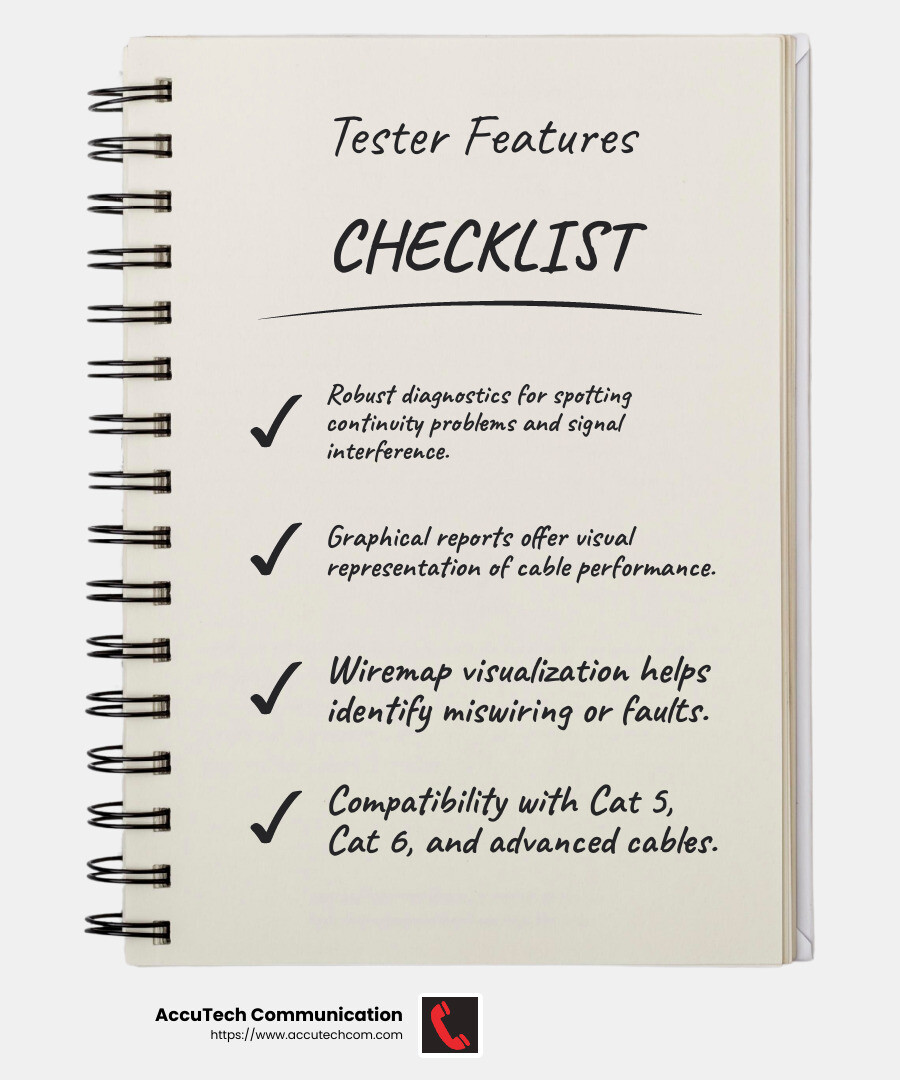
A good network cable tester should offer robust diagnostic capabilities. This means it can quickly identify issues like continuity problems, short circuits, and signal interference. Advanced diagnostics can even detect specific faults such as split pairs and crosstalk, which are common in complex network setups. Such features help in pinpointing the exact location of a problem, saving time and reducing downtime.
Graphical Reports
Many modern testers now provide graphical reports, which are incredibly useful. These reports offer a visual representation of the cable’s performance and any detected issues. For instance, a graphical wiremap can help you see exactly how each wire is connected, making it easier to spot miswiring or faults. Additionally, the ability to generate PDF reports directly from the tester, as seen in some devices, allows technicians to document their work and provide clients with clear evidence of network integrity.
Compatibility
Compatibility is another must-have feature. A versatile tester should work with various types of cables, including Cat 5, Cat 6, and even more advanced Ethernet cables. This ensures that the tester can be used across different network environments, from small home setups to large corporate networks. Moreover, compatibility with additional accessories and modules, like active remotes for advanced wiremapping, can expand the tester’s capabilities and usefulness.
By focusing on these features, you can ensure that your network cable tester is not only effective but also adaptable to your specific needs. This makes it an invaluable tool in maintaining and troubleshooting network infrastructures.
Frequently Asked Questions about Network Cable Testers
How do you test a network cable without a tester?
While using a network cable tester is the most reliable method, you can still perform a basic check without one. Start with a visual inspection of the cable. Look for obvious signs of damage like cuts, kinks, or fraying. Next, examine the connectors—ensure the RJ45 connectors are firmly attached and not loose or damaged. Check that the pins inside the connector are straight and not bent. Although this method won’t catch all issues, it can help spot visible problems.
What tool can be used to test Ethernet cabling?
For Ethernet cabling, the go-to tool is a cable tester. These devices are designed to assess the health and integrity of Ethernet cables. They test for continuity, shorts, and incorrect wiring. Some advanced models can even diagnose signal interference and measure cable length. By using a cable tester, you can quickly determine if your Ethernet cables are in good working condition or if there are faults that need addressing.
What is the function of Copper Network Cable Testers?
Copper Network Cable Testers, like those from Fluke, are essential for maintaining network performance. Their primary function is to identify problems such as signal interference and incorrect wiring in copper cables. These testers send signals through the cables and analyze the results to detect faults. By pinpointing issues like broken wires or improper connections, they help prevent network downtime and ensure smooth communication.
Conclusion
At AccuTech Communications, we understand that maintaining a reliable network is crucial for your business success. Our commitment to quality and certified, reliable service has been our hallmark since 1993. We offer a comprehensive range of network cabling services custom to meet the needs of businesses across Massachusetts, New Hampshire, and Rhode Island.
Regular network maintenance is key to preventing costly downtimes and ensuring smooth operations. With our expertise, we help you keep your network infrastructure in top shape. From initial installation to ongoing support, our team of skilled technicians is dedicated to delivering the highest standards of service.
By choosing AccuTech Communications, you’re not just getting a service provider; you’re gaining a trusted partner. We offer competitive pricing and a commitment to excellence, ensuring your network is both robust and efficient. Let us help you strengthen your network—the backbone of your business—and experience the peace of mind that comes with knowing your communications infrastructure is in expert hands.
