
Phone Services for Business: Top 5 Powerful Solutions
Phone services for business are essential tools for any company looking to improve communication and collaboration. In today’s and mobile world, businesses need flexible and reliable phone services to stay connected with customers and employees. Here’s what you should know right off the bat:
- Improved Communication: Unified communications solutions offer seamless, personalized interaction with customers.
- VoIP Technology: Lower costs and feature-rich options make VoIP an attractive choice for businesses.
- Collaboration Tools: Integration with existing business tools facilitates better team collaboration.
When communication is key, VoIP technology, using the internet for calls instead of traditional landlines, offers businesses powerful communication solutions. This approach not only reduces costs significantly—by up to 60% as noted in the research—but also provides a suite of features previously unavailable with conventional landline systems.
My name is Corin Dolan, and I’m your go-to expert for understanding phone services for business. With my extensive experience leading AccuTech Communications, I’ve helped countless companies across Massachusetts, New Hampshire, and Rhode Island set up scalable, reliable, and efficient communication systems. Up next, we’ll dive deeper into how these services are changing modern businesses.
Essential phone services for business terms:
– business communication systems
– business phone massachusetts
– business phone system repair near me
Understanding Business Phone Services
In today’s digital landscape, phone services for business are more than just dial tones and voice calls. They’re about integrating communication into the very fabric of your company’s operations. Let’s break down the essentials: VoIP technology, internet connection, and traditional landlines.
VoIP Technology
Voice over Internet Protocol (VoIP) is revolutionizing how businesses communicate. Instead of relying on traditional phone lines, VoIP uses the internet to transmit voice data. This shift brings a wealth of benefits:
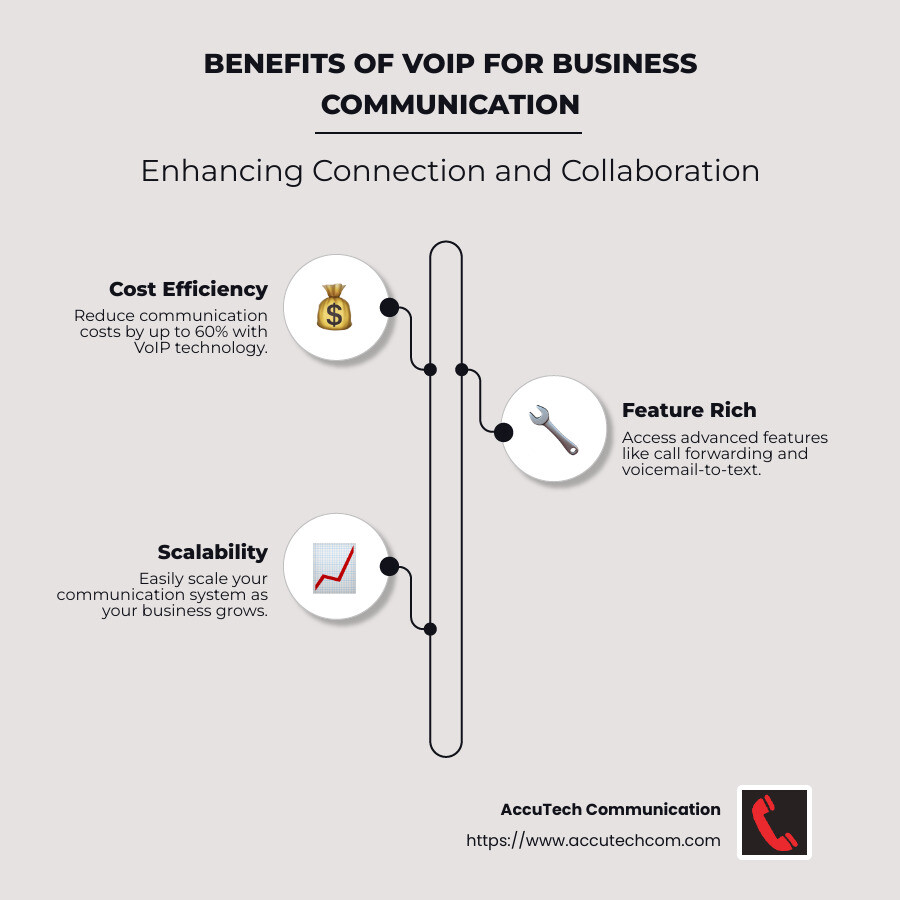
- Cost Efficiency: VoIP can slash your communication costs by up to 60%. That’s a significant saving for any business, especially smaller ones with tight budgets.
- Feature-Rich: With VoIP, you get access to advanced features like call forwarding, voicemail-to-email, and even video conferencing—all bundled into one service.
- Scalability: As your business grows, so can your phone service. VoIP systems are designed to expand effortlessly, accommodating new users and features without a hitch.
Internet Connection
The backbone of VoIP technology is a stable and robust internet connection. Here’s why your internet matters:
- Quality Calls: A strong internet connection ensures high-definition voice quality. No more crackling lines or dropped calls.
- Reliability: Unlike traditional systems that can falter in adverse weather, internet-based services boast higher uptimes.
- Flexibility: Employees can connect from anywhere—be it the office, home, or on the go—ensuring seamless communication.
Traditional Landlines
While VoIP is gaining popularity, traditional landlines still hold their ground in some scenarios:
- Reliability: Landlines are less dependent on power and internet, making them reliable during outages.
- Simplicity: For businesses with basic communication needs, landlines offer straightforward, no-frills service.
- Familiarity: Many businesses are accustomed to the tried-and-true nature of landlines, making them a comfortable choice for some.
The Bottom Line
Choosing between VoIP and traditional landlines boils down to your business needs. If cost savings, advanced features, and flexibility are priorities, VoIP is the way forward. However, if simplicity and reliability during internet outages are crucial, traditional landlines might still have a place in your setup.
Stay tuned as we explore the key features of business phone services and how they can improve your company’s communication strategy.
Key Features of Business Phone Services
When choosing phone services for business, understanding the key features can make all the difference. Let’s explore the aspects that can improve your business communication.
Ease of Use
A top-notch business phone service should be intuitive. User-friendly interfaces mean less time spent on training and more time on productive work. Whether it’s setting up a call, forwarding to a colleague, or accessing voicemail, simplicity is key.
Customer Support
Reliable customer support is crucial. With 24/7 assistance, you can resolve issues swiftly without disrupting your operations. AccuTech Communication is known for its responsive service, ensuring your business stays connected.
Collaboration Features
Modern business phone services offer robust collaboration tools. Think unlimited online meetings, team messaging, and file sharing. These features help your team stay aligned, no matter where they are.
Multiple Locations
If your business operates across multiple locations, a unified phone service is essential. It allows seamless communication between offices, ensuring everyone stays on the same page. Features like virtual receptionists and call routing can manage calls efficiently across various sites.
In the next section, we’ll discuss how to choose the right phone service for your business, focusing on provider selection and feature setup.
Choosing the Right Phone Service for Your Business
When it comes to selecting the perfect phone service for your business, a few key factors can guide your decision. Let’s break them down.
Provider Selection
Choosing a provider is like picking a partner. You need someone reliable and trustworthy. Look for a provider with a proven track record in offering quality service and robust support. AccuTech Communication, for example, has been a trusted partner for businesses in Massachusetts for over two decades, offering a range of solutions custom to different needs.
Make sure the provider offers scalability. As your business grows, your phone service should grow with it. This means having the flexibility to add new lines or features without a hassle.
Feature Setup
Setting up features is crucial for maximizing the utility of your phone service. Start by identifying the features that are important for your business. Do you need call forwarding, voicemail-to-email, or perhaps a multi-level auto-attendant? Once you’ve identified these, ensure your provider can support them.
Some providers, like AccuTech, offer integrated systems that make setup a breeze. This means you can have everything from business SMS to video conferencing available in one unified platform. It simplifies management and improves productivity.
Phone Number Purchase
Having a dedicated business phone number is essential for professionalism and privacy. When purchasing a phone number, consider whether you need a toll-free number or a local one. Toll-free numbers can be great for customer service, offering a free way for customers to reach you.
AccuTech makes it easy to add numbers through their platform, allowing you to select from available options quickly. You can even choose specific prefixes that match your branding or geographic focus.
By focusing on these elements—provider selection, feature setup, and phone number purchase—you’ll be better equipped to choose a phone service that meets your business needs.
In the next section, we’ll dive into the cost considerations, comparing the expenses of VoIP and traditional landlines.
Cost Considerations for Business Phone Services
When evaluating phone services for business, understanding the costs involved is crucial. Let’s explore the financial aspects of VoIP and traditional landlines, and any equipment fees you might encounter.
Monthly Costs
Monthly costs can vary widely depending on the type of service you choose. VoIP services often offer more predictable and lower monthly costs compared to traditional landlines. With VoIP, you pay a subscription fee that typically covers unlimited calling, advanced features, and sometimes even international calls.
In contrast, traditional landlines might have lower upfront costs but can lead to unpredictable monthly bills. These can fluctuate based on usage, long-distance calls, and additional feature charges.
VoIP vs. Landlines
VoIP (Voice over Internet Protocol) uses the internet to make calls, offering flexibility and cost savings. It’s generally more affordable because it eliminates the need for expensive on-site hardware. Plus, it offers features like video conferencing and integration with other business tools.
Traditional landlines rely on the Public Switched Telephone Network (PSTN) and often require significant hardware investments. They are less flexible and can incur higher costs for additional features and long-distance calls.
Equipment Fees
While VoIP systems usually have minimal equipment fees, you might need to invest in VoIP-compatible phones or headsets. These costs are often offset by the savings on monthly fees and the elimination of costly hardware maintenance.
Traditional landlines, on the other hand, may require purchasing or leasing physical phone systems and paying for maintenance. This can add up quickly, especially for businesses with multiple locations or a large number of employees.
In summary, when considering the costs of business phone services, VoIP often emerges as the more cost-effective choice. It offers lower monthly fees, minimal equipment costs, and a wealth of features that traditional landlines simply can’t match.
Next, we’ll guide you through setting up a business phone line, ensuring a smooth transition to your new communication solution.
How to Set Up a Business Phone Line
Setting up a business phone line might seem daunting, but with the right approach, it can be straightforward and efficient. Here’s a step-by-step guide to help you get started, along with tips on feature setup and integrating with your existing systems.
Step-by-Step Guide
- Choose Your Service Provider: Start by selecting a reliable VoIP provider. Consider factors like cost, features, and customer support. AccuTech Communication offers custom solutions to suit various business needs.
- Select Your Plan: Choose a plan that fits your business size and communication needs. Look for features such as unlimited calling, voicemail-to-email, and call forwarding.
- Set Up Your Account: Once you’ve chosen a provider and plan, create an account. This often involves filling out a simple form and setting up billing information.
- Acquire Phone Numbers: Decide if you need local, toll-free, or international numbers. AccuTech Communication makes it easy to add and manage numbers through an online portal.
- Configure Your System: Access the admin portal to set up extensions, voicemail, and call routing. This is where you can customize features to suit your business operations.
- Install Equipment: If needed, set up any VoIP-compatible phones or headsets. Many systems work seamlessly with existing devices, minimizing the need for new hardware.
- Test Your System: Conduct a few test calls to ensure everything is working smoothly. Check features like call quality, forwarding, and voicemail.
Feature Setup
- Voicemail and Call Forwarding: Configure voicemail settings and set up call forwarding to ensure you never miss important calls.
- Auto Attendant: Use this feature to direct calls efficiently, providing a professional experience for callers.
- Integration with Other Tools: Many VoIP services integrate with CRM systems, email platforms, and collaboration tools. This helps streamline workflows and improves productivity.
Integration with Existing Systems
Integrating your new phone service with current systems can improve efficiency. Here’s how:
- CRM Integration: Connect your phone system with your CRM to automatically log calls and access customer information during calls.
- Email and Calendar Sync: Ensure that voicemail messages and call notifications sync with your email and calendar for seamless communication management.
- Collaboration Tools: Use integrations with tools like Microsoft Teams or Slack to facilitate team communication and collaboration.
By following these steps and leveraging key features, you can set up a business phone line that meets your needs and integrates smoothly with your existing systems.
Next, we’ll address some frequently asked questions about phone services for business, helping you make informed decisions.
Frequently Asked Questions about Phone Services for Business
What is the best small business phone service?
The best small business phone service should combine collaboration, customer support, and voice intelligence. Look for services that allow seamless communication across teams and with customers. Features like unlimited team messaging, file sharing, and task management are crucial.
Voice intelligence can improve customer interactions by providing smart voicemail transcripts and call analytics. Providers like AccuTech Communication offer integrated solutions that support these features, ensuring smooth operations and improved productivity.
How much does a business phone line cost?
The cost of a business phone line can vary based on several factors. Monthly costs typically depend on the features included and the number of users. VoIP services are generally more affordable than traditional landlines, often saving businesses up to 60% on their phone bills.
VoIP plans usually offer flexible pricing, with options to scale as your business grows. On the other hand, traditional landlines might involve higher equipment fees and maintenance costs. It’s essential to compare different plans and choose one that aligns with your budget and needs.
What features are included with business phone services?
Business phone services offer a wide range of features to improve communication and efficiency. Some of the key features include:
- Call Forwarding: Redirect incoming calls to other numbers or devices, ensuring you never miss an important call.
- Call Blocking: Prevent unwanted calls from reaching your business line, maintaining productivity and focus.
- Voicemail-to-Text: Receive voicemail messages as text or email, allowing you to read and respond quickly.
These features, along with others like auto attendants and integration with collaboration tools, make business phone services a vital part of modern business operations.
By understanding these aspects of phone services for business, you can make informed decisions that best suit your organization’s needs.
Conclusion
AccuTech Communications has been a trusted partner for businesses across Massachusetts, New Hampshire, and Rhode Island since 1993. Our commitment to providing reliable service and competitive pricing sets us apart in business communication solutions.
Our expertise in network cabling and business phone systems ensures that your company’s communication infrastructure is not only robust but also future-proof. We understand that every business has unique needs, which is why we offer custom solutions that cater to small enterprises and large corporate campuses alike.
Choosing us means you benefit from certified, reliable service that guarantees your business stays connected and operational. Our team of skilled technicians is dedicated to ensuring your communication systems run smoothly, allowing you to focus on what you do best—growing your business.
For businesses looking to improve their communication capabilities, AccuTech Communications is your go-to provider for phone services for business. Our solutions are designed to integrate seamlessly with your existing systems, providing you with the tools you need to succeed.
Ready to upgrade your business communication systems? Contact AccuTech Communications today to learn more about how we can help you stay connected and competitive.
