
Security Systems Business: 10 Powerful Ways to Avoid Losses 2025
Protect What Matters: Today’s Business Security Solutions
Security systems business solutions offer different levels of protection based on your company’s specific needs:
| Security Level | Features | Best For |
|---|---|---|
| Basic | Intrusion detection, limited cameras | Small retail, offices |
| Standard | Video surveillance, access control, mobile app | Mid-size businesses |
| Advanced | AI analytics, integrated monitoring, multi-site management | Healthcare, warehouses, enterprise |
| Enterprise | Custom solutions, cybersecurity integration, compliance features | Financial, large corporate campuses |
In today’s business landscape, protecting your assets goes far beyond a simple alarm system. Modern security systems business solutions combine physical protection with sophisticated technology to safeguard not just your property, but your employees, customers, and operational continuity.
With over 42,000 commercial burglaries reported in 2022 and the average cost of business vandalism exceeding $3,300 per incident, security is no longer optional—it’s essential.
A comprehensive security strategy doesn’t just deter crime; it creates operational efficiencies. As one business owner noted in our research: “It saves me hours a week. I can see everything remotely. I think it’s very affordable for what you get.”
Consider the Ford dealership that saved $3,000-$4,000 monthly by using high-definition security cameras to disprove false damage claims. That’s not just security—that’s protecting your bottom line.
Today’s systems offer unprecedented integration capabilities, allowing you to manage everything from video surveillance to access control, intrusion detection, and even building systems like HVAC and lighting from a single dashboard.
I’m Corin Dolan, owner of AccuTech Communications, with over 30 years of experience helping businesses implement custom security systems business solutions that protect assets while enhancing operational efficiency.
Easy security systems business word list:
– business security monitoring
– commercial security solutions
– security systems for office buildings
Understanding Modern Business Security Basics
When it comes to protecting your business, today’s security systems business solutions do much more than just sound an alarm. They form the foundation of a complete protection strategy that works around the clock to keep your assets safe.
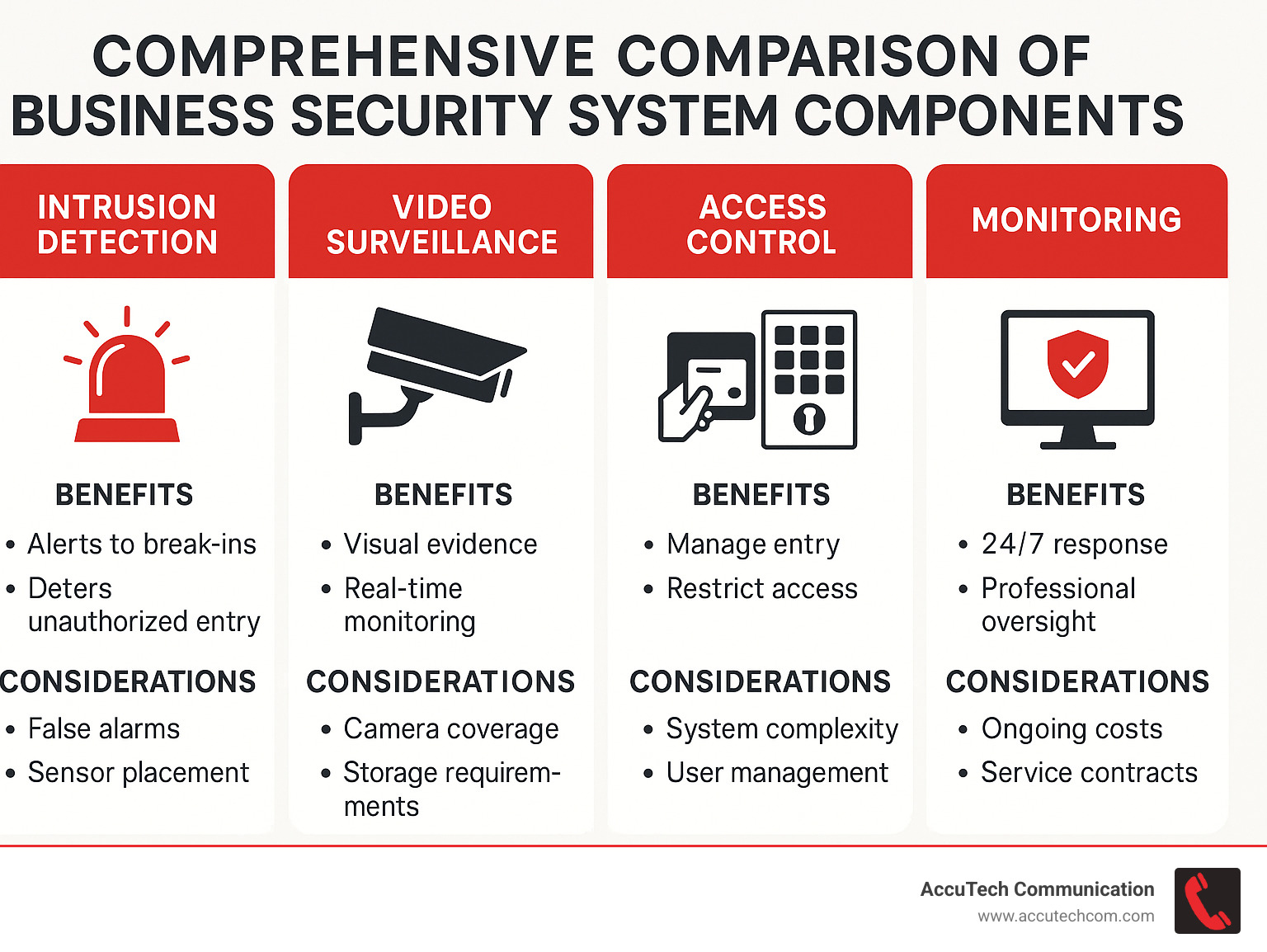
Modern security systems typically include four essential components that work together seamlessly:
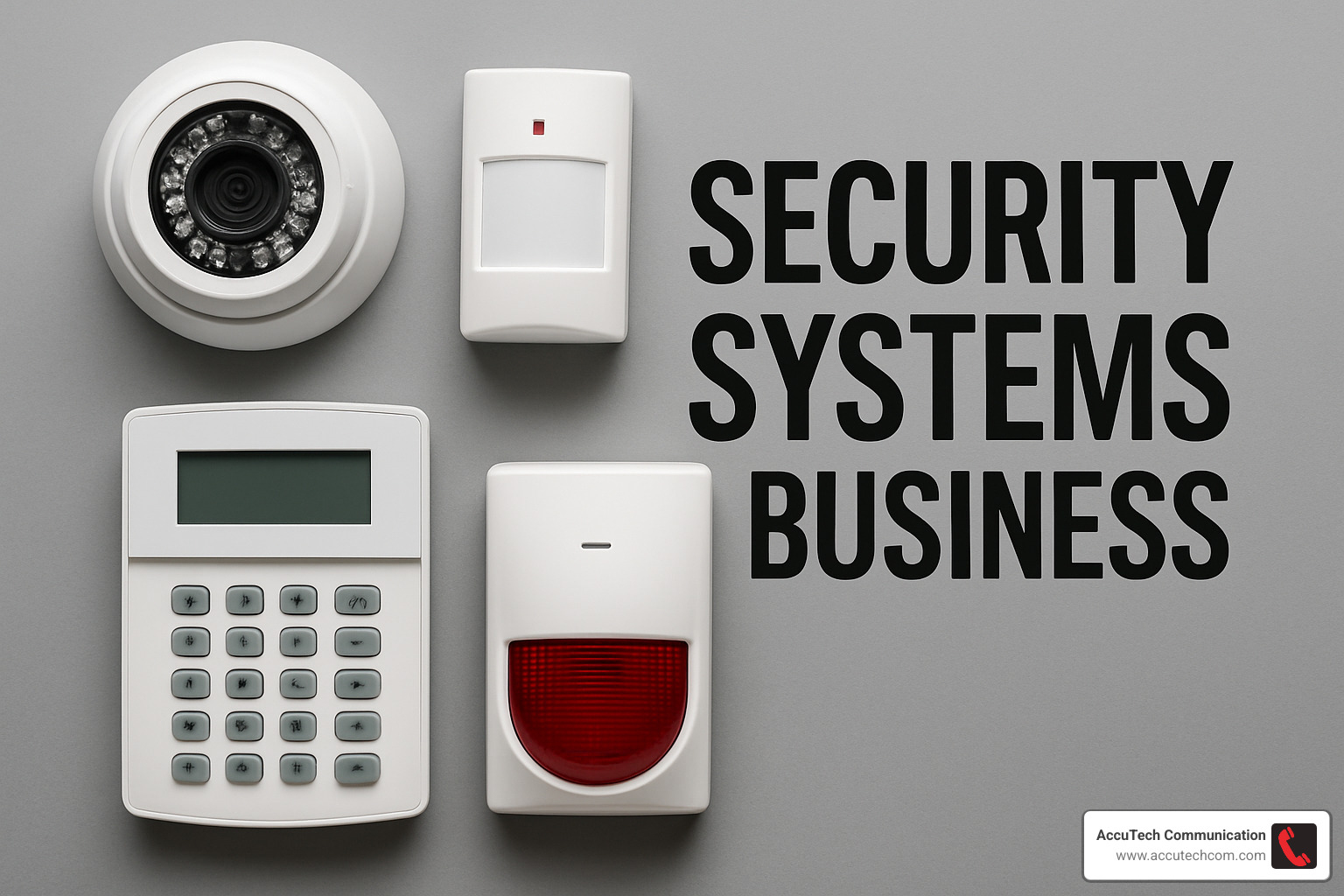
First, intrusion detection creates your first line of defense. This includes door and window sensors that immediately alert you when someone tries to enter unauthorized. Motion detectors catch movement inside your building after hours, while glass-break sensors respond to the distinct sound of shattering windows.
Next, video surveillance gives you eyes on your property at all times. Today’s cameras range from simple fixed models to sophisticated systems with AI that can tell the difference between a stray cat and a potential intruder. Many of our clients tell us how much peace of mind comes from being able to check in on their business anytime, anywhere.
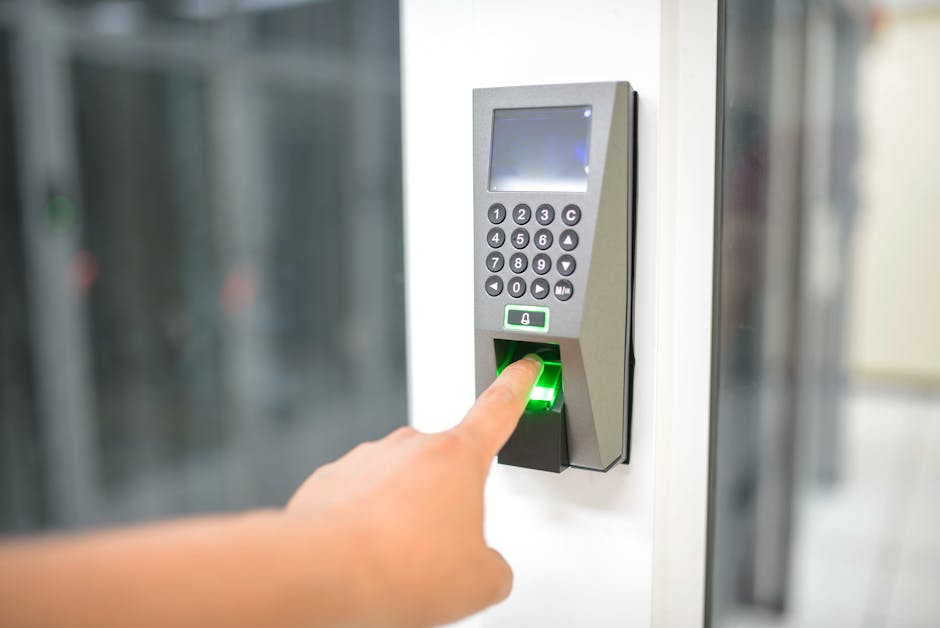
Access control lets you manage exactly who can enter different areas of your business. Gone are the days of lost keys and rekeying locks – now you can issue keycards or PIN codes that can be activated or deactivated instantly. Some businesses even use fingerprint or facial recognition for areas that need extra protection.
Finally, fire & life safety components protect against environmental dangers. Smoke detectors, carbon monoxide sensors, and emergency communication systems ensure that your property and people stay safe from more than just intruders.
What makes today’s systems truly powerful is how they work together. Rather than having separate systems that don’t talk to each other, modern security systems business solutions communicate through a unified platform. This means when something triggers one system, the others respond accordingly – for example, when an alarm sounds, cameras can automatically focus on that area.
When considering monitoring options, you have two main choices:
Professional monitoring means security experts watch your system 24/7, responding to alerts within seconds and contacting emergency services when needed. One restaurant owner told me, “It’s like having a security guard on duty all night, but at a fraction of the cost.”
Self-monitoring puts you in control, sending alerts directly to your phone or computer. This works well for smaller businesses where owners want to personally verify alerts before taking action.
Beyond just keeping out burglars, these systems help with regulatory compliance and risk management. If your business must follow specific security requirements—like HIPAA for healthcare or PCI DSS for handling credit cards—the right system helps ensure you meet these standards while providing documentation of your compliance efforts.
More info about Camera Surveillance
Why Every Company Needs a Custom Plan
No two businesses face exactly the same security challenges. The threats to a jewelry store differ dramatically from those facing a warehouse or medical office. That’s why cookie-cutter solutions often leave dangerous gaps in protection.
At AccuTech Communications, we’ve helped hundreds of businesses create security plans custom to their specific needs. Retail businesses often need cameras that integrate with their point-of-sale systems to catch both shoplifters and employee theft. Professional offices typically need sophisticated access control to protect sensitive information and equipment. Warehouses require robust perimeter protection with sensors that can cover large areas and specialized detectors for loading dock doors.
Employee safety benefits tremendously from proper security. Workers who feel protected are not only happier—they’re more productive. One office manager told us, “Since installing our new system, employee complaints about working late have practically disappeared.” The numbers back this up: businesses with comprehensive security systems report fewer workplace incidents and better employee retention.
Your insurance company will thank you too. Many providers offer premium discounts up to 20% for businesses with professionally installed and monitored security systems. One client was surprised to find their new system partially paid for itself through reduced insurance costs within the first year.
Home vs. Business Systems: The Critical Differences
While it might be tempting to save money by using consumer-grade security products, security systems business solutions offer crucial advantages that make them worth the investment.
Device durability makes a huge difference in commercial settings. Business-grade equipment stands up to constant operation and potential tampering. Commercial cameras typically come in metal housings rather than plastic, with weather resistance ratings that mean they’ll keep working through storms and temperature extremes. They also come with longer warranties—typically 3-5 years compared to just 1-2 years for consumer products.
System scale is another important factor. Business properties usually have more entry points, larger areas to cover, and more complex security needs. Commercial systems support dozens of cameras and sensors, with storage capacity to match. One property manager who initially tried a home-grade system told me, “We kept maxing out our recording capacity and missing important events. Upgrading to a business system solved that problem immediately.”
Analytics depth sets business systems apart in powerful ways. Beyond basic security, commercial platforms offer insights that can improve your operations. People-counting features help retail stores track customer traffic patterns. Heat mapping shows where customers spend the most time in your space. License plate recognition helps manage parking areas, while facial recognition can streamline employee access. Some systems can even detect unusual behavior patterns that might indicate a security concern.
I remember one retail client who started with a consumer system, thinking it would save money. Within months, they were frustrated by its limitations—it couldn’t handle their camera needs or connect to their point-of-sale system. After upgrading to a proper security systems business solution, they not only improved security but gained valuable insights about customer traffic that helped them optimize store layout and staffing. “I wish we’d done it right the first time,” the owner told me. “The business system pays for itself in ways I never expected.”
Choosing a Security Systems Business Solution That Fits
Finding the right security systems business solution feels a bit like shopping for a new car—you need something that fits your specific needs, budget, and future plans. Let’s break down how to make this choice a little easier.
When we sit down with clients at AccuTech Communications, we often start by discussing whether a pre-packaged bundle or a custom solution makes more sense. Equipment bundles offer simplicity—you get a control panel, a set number of cameras and sensors, and basic monitoring options all in one neat package. It’s the “grab and go” option that works well for many businesses.
Custom solutions, on the other hand, let us tailor every aspect to your specific needs. Many of our clients find the sweet spot is actually somewhere in the middle—starting with a core bundle that handles their immediate concerns, then adding custom elements that address their unique challenges. This hybrid approach balances simplicity with personalization.
The DIY versus professional installation question comes up frequently too. While the DIY route might seem budget-friendly upfront, we’ve seen how professional installation pays dividends in the long run. Our certified technicians know exactly how to position cameras for maximum coverage, place sensors to minimize false alarms, and integrate everything securely with your network. For businesses across Massachusetts, New Hampshire, and Rhode Island, this expertise translates to systems that simply work better.
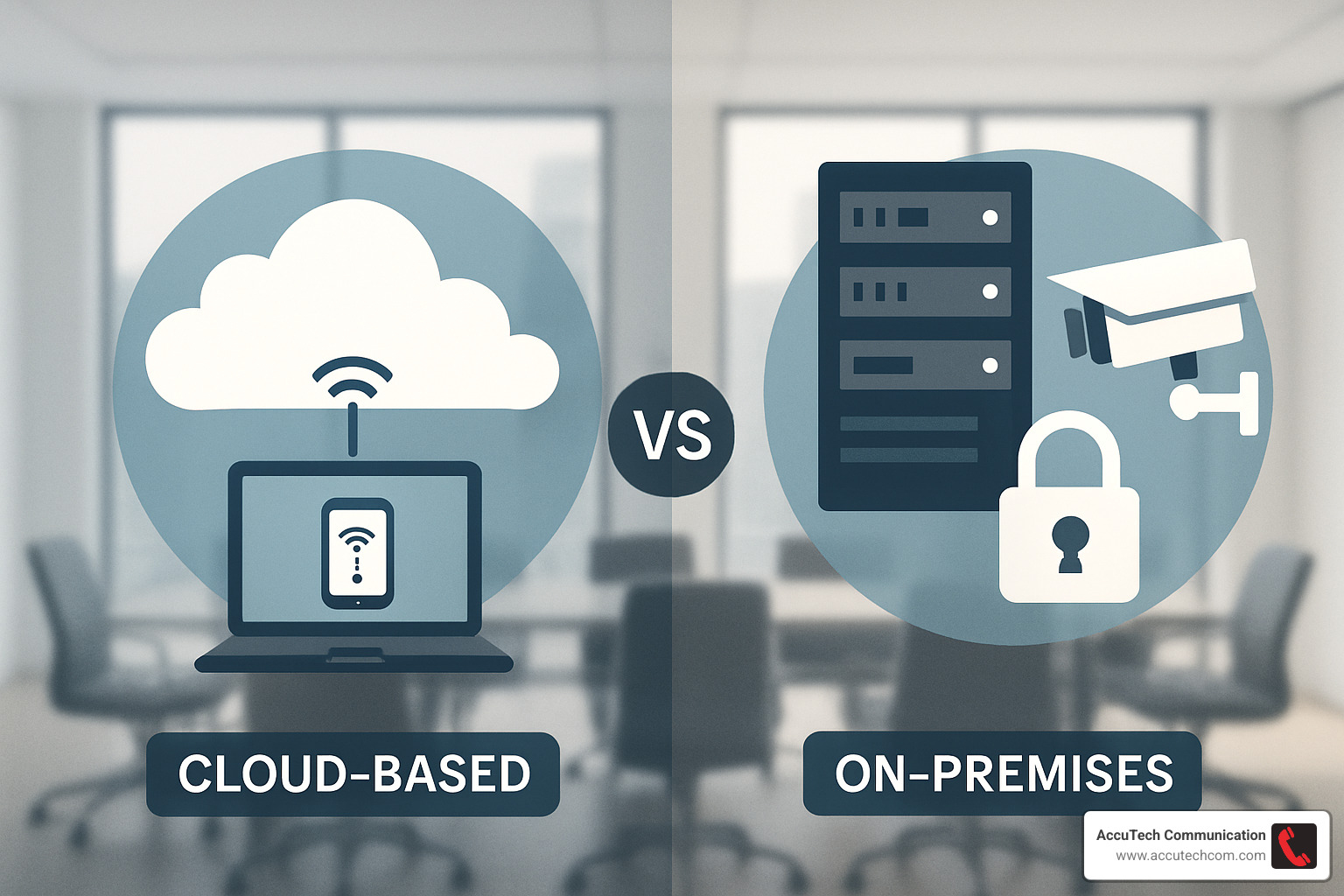
Another key decision is whether to go with cloud or on-premises storage. Cloud-based systems typically require less hardware investment upfront and offer the convenience of automatic updates and remote access from anywhere. They’re also wonderfully scalable—adding more storage is usually just a matter of adjusting your subscription.
On-premises systems give you greater control over your data and often make more financial sense in the long run since there’s no monthly storage subscription. They’re also not dependent on internet connectivity, which can be crucial for certain high-security environments. We’ve found that businesses with strict data governance requirements often prefer this approach.
When it comes to monitoring, you have two main paths: handling it yourself or entrusting it to professionals. Here’s how they stack up:
| Aspect | Self-Monitoring | Professional Monitoring |
|---|---|---|
| Cost | Lower monthly expense | Higher monthly fees ($10-$60) |
| Response | Depends on your availability | 24/7 monitoring by trained professionals |
| Emergency Response | You must contact authorities | Monitoring center contacts authorities |
| False Alarm Management | Your responsibility | Professional verification reduces false alarms |
| Peace of Mind | Limited to when you can check alerts | Continuous coverage even when you’re unavailable |
| Best For | Low-risk environments with tech-savvy staff | High-value assets, after-hours protection |
Essential Features of a Winning Security Systems Business
After helping hundreds of businesses secure their premises, we’ve identified several features that truly make a difference in a security systems business solution.
First and foremost are high-definition cameras with proper night vision capabilities. The days of grainy, unusable security footage are thankfully behind us. Today’s business security demands crystal-clear images in all conditions. Look for cameras with at least 1080p resolution (though we recommend 4K for areas where detail really matters), true Wide Dynamic Range for handling tricky lighting situations, and IR illumination that can reach at least 30 feet in complete darkness. For outdoor cameras, weather resistance rated IP66 or better ensures they’ll keep working through New England’s challenging weather.
Smart motion sensors have evolved tremendously too. Modern sensors can distinguish between a person and general movement, reducing those middle-of-the-night false alarms that used to drive everyone crazy. The best systems allow you to set specific zones with different sensitivity levels and can ignore small animals or swaying plants while still catching actual intruders.
Mobile access has become non-negotiable for today’s business owners. The ability to check in on your business from anywhere provides incredible peace of mind. A good mobile app should offer real-time alerts, live camera views, remote arming/disarming capabilities, and user management—all protected by strong security measures like two-factor authentication.
AI-powered analytics transform your security system from a passive recorder into an active business tool. These smart features can detect unusual activity, recognize specific objects, monitor for line-crossing or intrusions, count people, and even recognize faces for access control. One restaurant client was surprised to find their system could help optimize staffing by analyzing customer traffic patterns throughout the day.
With security systems now connected to networks, cyber hardening has become just as important as physical security. Look for systems with encrypted video streams, regular firmware updates, strong password policies, and network segmentation capabilities. We’ve unfortunately seen cases where unsecured cameras became entry points for network breaches—a situation no business wants to face.
Budgeting: From Hardware to Monthly Monitoring
Understanding the complete cost picture helps prevent surprises and ensures your security systems business investment makes financial sense. Let’s talk about what goes into the budget.
Your initial hardware investment typically includes cameras, sensors, control panels, and access control devices. Small business camera packages generally range from $200 for basic setups to $2,000 or more for comprehensive systems with multiple high-definition cameras. Access control adds approximately $300 per door for basic solutions, while intrusion detection packages with a control panel and sensors usually start around $300-$500.
Installation costs vary based on your facility’s complexity and existing infrastructure. Older buildings sometimes need additional wiring or infrastructure updates, and your network might need improvements to handle IP-based systems properly. At AccuTech, we provide detailed installation quotes after a thorough site assessment so there are no surprises.
Monthly expenses typically revolve around monitoring and storage. Self-monitoring may have minimal monthly costs, while professional monitoring ranges from about $10 for basic service to $60 for comprehensive monitoring with video verification. Cloud storage for footage is usually priced according to how many cameras you have and how long you need to keep the recordings.
Don’t forget to factor in maintenance and updates—annual service checks, firmware updates, and occasional battery replacements for wireless components all help ensure your system stays effective for years.
When weighing these costs, consider the potential return on investment. According to a Chron study on vandalism costs, businesses face an average expense of $3,370 per incident—not including lost business during recovery time. When you look at it that way, preventing even a single break-in can often justify a year or more of security system expenses.
Case Study: Cameras That Saved a Dealership Thousands
Let me share a real-world example that perfectly illustrates the ROI of a quality security systems business solution. A Ford dealership was hemorrhaging money—$3,000 to $4,000 every month—settling customer claims that their vehicles had been damaged while in for service. Without clear evidence to refute these claims, the dealership often had to give customers the benefit of the doubt to maintain goodwill.
The solution? They installed a comprehensive surveillance system with high-definition cameras covering all service bays, 30-day continuous recording capability, time-stamped footage, and mobile access for managers. This allowed them to review footage whenever a damage claim was made.
The results were dramatic. In many cases, they could show that the alleged damage existed before the vehicle arrived or prove that no damage occurred during service. Almost overnight, these costly claims virtually disappeared, saving up to $48,000 annually—far exceeding their investment in the system.
But the benefits went beyond just stopping false claims. The dealership noticed improved technician accountability, increased customer confidence, better documentation for legitimate insurance situations, and even reduced workplace incidents as employees became more safety-conscious under the cameras.
This case shows how modern security systems business solutions deliver value well beyond traditional security, functioning as both protection and operational tools that directly impact the bottom line.
Cutting-Edge Trends Driving Small-Business Security
The security systems business world is changing faster than ever, with exciting innovations that are making powerful protection more accessible to small businesses. Gone are the days when advanced security was only for big corporations with deep pockets!
AI is completely changing how we think about security cameras. Rather than just passively recording footage that someone might review days later, today’s smart systems actively watch for trouble. They can tell the difference between a delivery person dropping off a package and someone suspiciously lingering by your door after hours. The best part? These systems learn your business’s normal patterns over time, dramatically cutting down on those annoying false alarms that used to plague business owners.
“The difference is night and day,” one of our retail clients told us recently. “Before, I’d get alerts for every stray cat that walked by. Now my system only notifies me when something actually needs my attention.”
Cloud storage has been another game-changer for our Massachusetts and New Hampshire clients. Your critical security footage is safely stored off-site, so even if something happens to your physical location, your evidence remains intact. Plus, you can pull up any camera feed from your phone while sitting on a beach vacation if needed! The system automatically updates itself, ensuring you always have the latest security features without any IT headaches.

Mobile credentials are quickly replacing those easily-lost keycards. Your employees simply use their smartphones to gain entry – something they’re far less likely to forget at home! As a business owner, you’ll love how you can instantly grant or revoke access with a few taps. Need to let a contractor in for a one-time job on Saturday? You can create a temporary pass that only works during specific hours and automatically expires when the job should be done.
One trend we’re particularly excited about at AccuTech Communications is the integration of security with building systems like lighting and HVAC. Imagine your system automatically adjusting the temperature when the last person leaves at night, or turning lights on just before your early morning crew arrives. These smart connections don’t just improve security – they can significantly reduce your energy bills too.
The merging of physical and cybersecurity is perhaps the most important development we’re seeing. With cameras and access control systems now connecting to your network, they need the same level of protection as your computers and data. Modern systems incorporate robust encryption, regular security updates, and verification protocols to ensure your physical security devices don’t become a digital vulnerability.
Future-Proofing Your Security Systems Business Investment
When our clients invest in new security technology, they naturally want it to last. Here’s how we help them make choices today that will still make sense tomorrow.
Edge analytics is a technical-sounding term with a simple benefit: processing power right in the cameras themselves. This means your system can make smart decisions without sending everything to a central server first. It’s faster, works even during network hiccups, and reduces bandwidth needs – especially helpful for businesses with multiple locations or limited internet capacity.
We’re also big believers in what security experts call “zero-trust architecture.” Rather than assuming anyone inside your system belongs there, zero-trust continuously verifies every user and device. It’s like having a vigilant security guard who politely but firmly checks everyone’s ID, even familiar faces. This approach is particularly valuable as more businesses adopt hybrid work models with employees connecting from various locations.
For growing businesses, multi-location dashboards are a must-have feature. They let you manage security across all your facilities from one intuitive interface. Whether you have two locations or twenty, you can maintain consistent security policies, monitor everything centrally, and simplify administration. One of our restaurant clients with three locations saved nearly 10 hours weekly by switching to a unified dashboard.
Sustainability features are increasingly important to our environmentally-conscious New England clients. Modern systems can be remarkably energy-efficient, with options like motion-activated recording that only captures video when something’s happening. Power over Ethernet (PoE) technology simplifies installation while reducing power needs, and we’ve even installed solar-powered cameras for remote locations where running electrical lines would be prohibitively expensive.
At AccuTech Communications, we always look beyond your immediate needs when designing a system. We might recommend cameras with higher resolution than you currently require, knowing that display technology keeps improving. Or we might suggest an access control system with expansion capacity, anticipating your business growth. It’s about building a foundation that can evolve with your business without requiring a complete overhaul every few years.
Installation, Maintenance & Scaling Best Practices
Getting your security systems business solution properly installed and maintained isn’t just about having equipment—it’s about making sure it actually works when you need it most. After nearly 30 years of helping New England businesses secure their properties, we’ve learned a thing or two about doing it right.
Professional installation brings peace of mind that DIY approaches often can’t match. Our technicians are experts at finding those perfect camera angles that eliminate blind spots, running wires that meet code requirements (and stay hidden from tampering), and configuring your network so it’s both functional and secure. We’ll thoroughly test your system under various conditions and make sure your team knows exactly how to use it.
If you’re determined to go the DIY route, start with a detailed security plan before buying a single piece of equipment. Use templates to keep your camera installations consistent, and always test camera views at different times of day—what looks perfect at noon might be useless at sunset. Label everything carefully and document your setup with photos. Trust me, you’ll thank yourself later when troubleshooting!
Maintenance isn’t optional—it’s essential for system longevity. Regular firmware updates protect against vulnerabilities, while quarterly cleaning of camera lenses ensures you’re capturing clear images. Monthly sensor tests and seasonal adjustments to motion detection zones prevent both missed events and false alarms. And don’t forget to audit those user credentials twice yearly—former employees shouldn’t still have access to your system.

Not sure where to start? AccuTech Communications offers complimentary security assessments that identify vulnerability points in your current setup and provide clear recommendations for improvements. We can develop phased implementation plans that respect your budget while addressing critical needs first.
For businesses with multiple locations, consistency is key. Standardizing equipment across sites simplifies maintenance and training, while centralized user management ensures security policies are uniformly enforced. Enterprise-grade monitoring with geographic redundancy means you’re protected even if one monitoring center experiences issues.
Security Camera Installation Near Me
Avoiding Common Implementation Mistakes
Even the best security plans can go sideways during implementation. After seeing hundreds of installations, I’ve noticed some recurring problems that are entirely preventable.
False alarms are probably the biggest headache for new system owners. They usually stem from motion sensors positioned where normal activity triggers them, sensitivity settings that haven’t been properly calibrated, or staff who haven’t been trained on system operation. A professional setup with customized sensitivity settings and thorough training makes all the difference here.
Poor camera placement is another common issue. I’ve seen too many cameras aimed at windows (creating blinding backlight), positioned with significant blind spots, or mounted at angles that capture lots of ceiling but little useful footage. A professional site survey with heat-mapping of critical areas eliminates these problems before they start.
Weak password practices remain surprisingly common, even among security-conscious businesses. Using default credentials, sharing logins among multiple users, and infrequent password changes all create unnecessary vulnerability. Implement strong password policies, create unique user accounts, and enable multi-factor authentication wherever possible.
Storage planning trips up many businesses too. HD video consumes substantial storage space, and many underestimate their footage retention needs. Calculate your storage requirements based on camera count, resolution, frame rate, and retention period—then add a buffer for unexpected events.
Network bandwidth limitations can cripple otherwise well-designed systems. High-resolution video streams demand significant bandwidth, and failing to segregate security traffic from business networks can impact both systems. We always perform a network assessment prior to installation and recommend infrastructure upgrades when necessary.
Growing with Your Business: Modular Expansion
The security system that perfectly fits your business today might be constraining tomorrow. That’s why modular expansion capabilities should be a priority from day one.
When selecting your initial system, look for expandable control panels that support additional zones and wireless options that simplify future expansion. Choose platforms compatible with third-party integrations for specialized sensors, and plan cable pathways with future additions in mind. These small planning steps can save significant costs later.
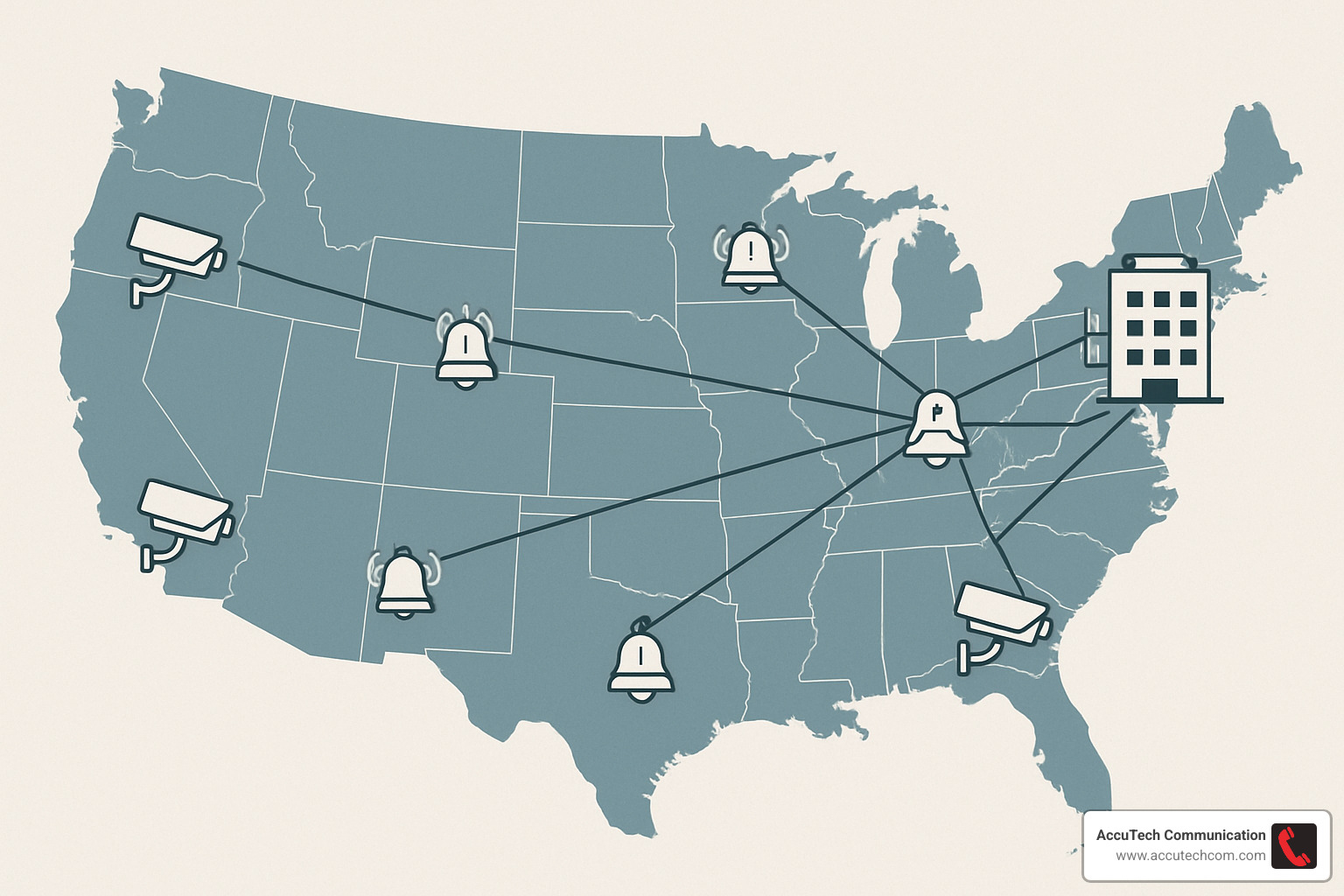
Cloud license scalability offers tremendous flexibility for growing businesses. The best platforms provide flexible camera licensing models and temporary capacity increases during peak periods. Look for subscription plans that scale based on actual usage rather than forcing you into fixed tiers, and consider hybrid storage options that combine local and cloud recording for both resilience and cost control.
As your business grows more sophisticated, your security dashboard should evolve too. Start with platforms offering basic monitoring that can upgrade to advanced analytics as needed. Choose systems with role-based access that accommodate organizational growth, and select solutions supporting both on-premises and remote management with robust API capabilities for future integrations.
I remember working with a growing retail chain here in Massachusetts that started with just four cameras in their first location. As they expanded to five stores, we implemented a centralized management platform allowing headquarters staff to monitor all locations. Their modular approach meant they could maintain consistent security standards while adapting to each store’s unique layout and risk profile. Now they’re opening their sixth location, and scaling up is as simple as adding components to their existing framework.
Frequently Asked Questions about Security Systems for SMBs
What’s the difference between professional and self-monitoring?
When business owners ask me about monitoring options for their security systems business solution, I explain it comes down to who’s keeping an eye on things.
With professional monitoring, you’re essentially hiring a team of security experts who watch your system around the clock. These professionals can verify whether an alarm is legitimate by checking your camera feeds or audio before calling the police. They’ll follow your specific instructions about who to contact in different situations, and they maintain detailed records of any incidents. Most importantly, they’re always on duty—even when you’re not available.
Self-monitoring puts you in the driver’s seat. You’ll receive alerts directly on your phone when something triggers your system, and it’s up to you to decide what to do next. While this approach gives you direct control and typically costs less (sometimes with no monthly fee beyond cloud storage), it does mean you’re responsible for responding to every alert, day or night.
For many of the businesses we work with at AccuTech, professional monitoring provides valuable peace of mind. Restaurant owners don’t want to be woken at 2 AM for a false alarm, and retail managers can’t always step away from customers to check an alert. The monthly investment (typically $10-$60 depending on services) often feels well worth it when you consider the alternative—missing a critical security event because you were unavailable.
How much should I budget for a first-time install?
Planning your first security systems business investment doesn’t have to be overwhelming. I find it helpful to break it down into the essential components:
Your basic system will include a central control panel (the “brain” of your system), cameras for key areas, sensors for doors and windows, and possibly access control devices like card readers or electronic locks. You’ll also need to consider how you’ll store footage—either on-site with recording equipment or in the cloud.
The final price tag varies considerably based on your specific situation. A small café might need just 4 cameras and basic door sensors, while a warehouse might require extensive coverage with 16+ cameras and specialized sensors for loading docks.
Installation costs depend on your building’s layout and existing infrastructure. Is there already network cabling in place? How high are your ceilings? Are there outdoor areas that need weatherproof equipment?
At AccuTech Communications, we’ve found that a phased approach often works best for businesses with budget constraints. We start by securing the most vulnerable areas—main entrances, cash registers, server rooms, or inventory storage—and then develop a plan to add additional coverage over time. This strategy ensures you get immediate protection for your most critical assets while planning for comprehensive security as your budget allows.
Can my system expand to multiple locations?
Good news—today’s security systems business solutions are specifically designed with growth in mind.
Modern security platforms offer centralized dashboards where you can monitor all your locations from a single screen. Imagine sitting at your main office but being able to check in on your warehouse across town or your retail location in another state. These enterprise systems let you set permissions so regional managers can access only their locations, while corporate security can see everything.
There are real advantages to standardizing your equipment across sites. Your staff only needs to learn one system, troubleshooting becomes more straightforward, and you can often negotiate better pricing when purchasing multiple systems. Plus, when every location uses the same equipment, you can keep fewer spare parts on hand.
I recently worked with a bakery chain that started with one location and expanded to five stores across Massachusetts. By choosing a scalable system from the beginning, they were able to add each new location to their existing dashboard. Now, the owner can check in on any store from her phone, whether she’s at home or traveling. More importantly, when they opened their fifth location, the installation team already knew exactly how to configure everything to match their established security standards.
If growth is in your future plans, make sure to mention this during your initial consultation. At AccuTech, we can help design a system that will grow alongside your business without requiring a complete overhaul down the road.
Conclusion
A comprehensive security systems business solution is no longer a luxury—it’s an essential component of business operations in today’s environment. The right system provides holistic protection that extends far beyond simple burglar alarms, creating a security ecosystem that protects your physical assets, digital information, employees, and customers.
When you invest in modern security technology, you’re also investing in operational efficiency. Think about the time savings when you can check on multiple locations from your smartphone, or the reduced administrative burden when access control systems eliminate physical key management headaches. These aren’t just security features—they’re business tools that streamline your day-to-day operations.
For many of our clients, the regulatory benefits have been just as valuable as the security aspects. If your business faces industry-specific compliance requirements—whether in healthcare, financial services, or retail—a well-designed security system creates the documentation and audit trails that make compliance dramatically simpler. One healthcare client told us their annual audit time was cut in half after implementing our integrated security solution.
Since 1993, we at AccuTech Communications have been rolling up our sleeves to help businesses across Massachusetts, New Hampshire, and Rhode Island create security solutions that actually make sense for their specific needs. We don’t believe in one-size-fits-all approaches—your jewelry store has different security concerns than a medical office or manufacturing facility.
There’s a real advantage to working with a single-vendor integration partner like us. When your security cameras, access control, intrusion detection, and even business phone systems all come from one trusted provider, you eliminate the frustrating finger-pointing that happens when problems arise in multi-vendor setups. When something needs attention, you know exactly who to call.
Security threats keep evolving, and so do we. By partnering with AccuTech, you’re not just getting today’s technology—you’re gaining a partner committed to keeping your business protected against both current and emerging threats. We’re constantly evaluating new security innovations and bringing the best ones to our clients.
Let’s have a conversation about how we can help protect what matters most to your business.
More info about commercial security solutions
