
Structured Cable Contractors: Top Tips & Benefits 2024
Looking to improve your business infrastructure? Structured cable contractors play a vital role in ensuring your network systems run smoothly and efficiently. They design and install the cabling infrastructure that connects your various communication devices, keeping everything from telephones to security systems in sync. This creates a reliable backbone for robust business operations.
Top Considerations for Hiring Structured Cable Contractors:
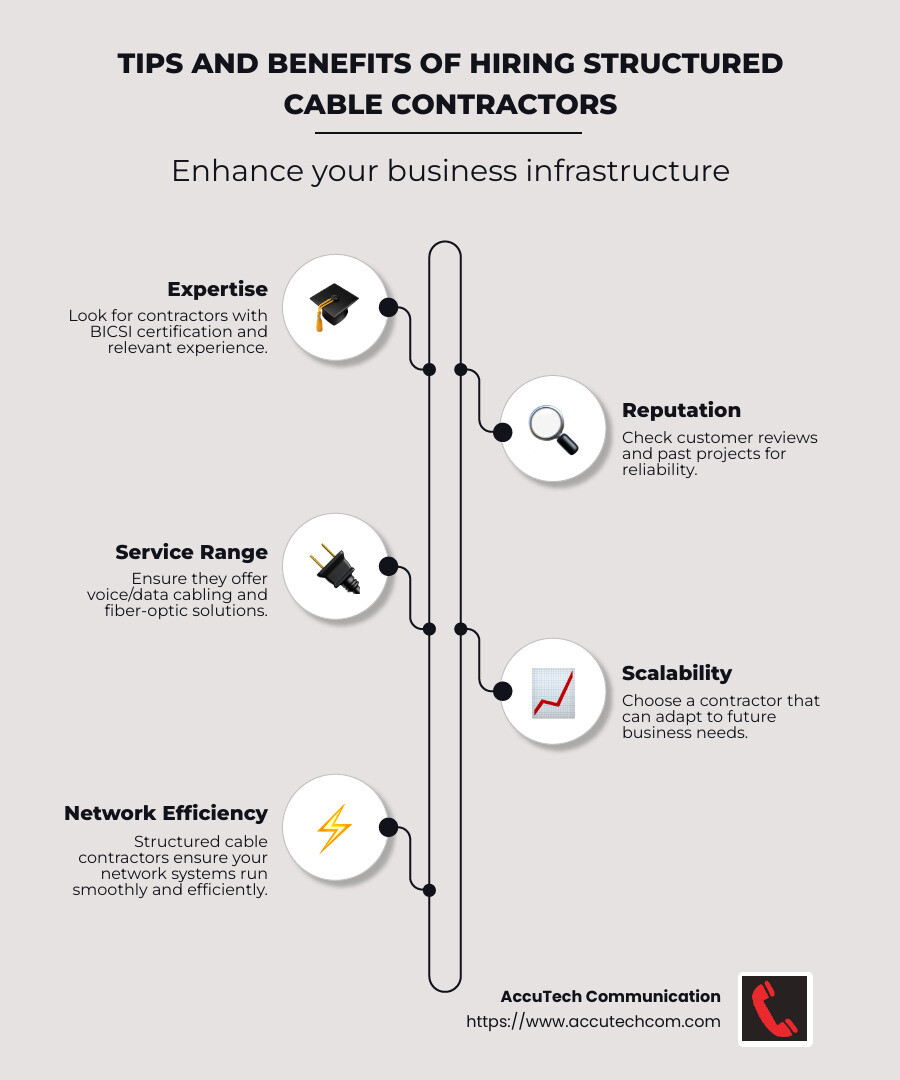
1. Expertise: Look for contractors with BICSI certification and relevant experience.
2. Reputation: Check customer reviews and past projects for reliability.
3. Service Range: Ensure they offer voice/data cabling and fiber-optic solutions.
4. Scalability: Choose a contractor that can adapt to future business needs.
My name is Corin Dolan, and as the owner of AccuTech Communications, my experience with structured cable contractors spans decades. From handling large-scale projects in healthcare to designing communication systems for small enterprises, I’ve been at the forefront of crafting efficient network infrastructures.
Structured cable contractors terms simplified:
– structured cabling contractor in my area
– structured cabling installation
– structured cabling installation contractors
Understanding Structured Cabling
Structured cabling is like the roadmap for your business’s communication network. It connects your phones, computers, and other devices to ensure smooth communication and data transfer. Think of it as the hidden hero behind your business operations, providing a strong foundation for everything from internet access to video conferencing.
What is Structured Cabling?
Structured cabling isn’t just about laying cables. It’s about creating a well-organized system that supports various hardware and future needs. This system includes the design and installation of cables that can handle multiple uses, from voice calls to data transfers and even video streaming. By planning ahead, structured cabling ensures your network can adapt to technological advancements without needing a complete overhaul.
Components of Structured Cabling
Understanding the components of structured cabling helps in grasping how this system works:
- Entrance Facilities: This is where your building’s cabling connects to the outside world. It links your network with external telecom providers, ensuring you stay connected.
- Equipment Room: Think of this as the heart of your network. It houses essential hardware like servers and routers, centralizing your network’s operations.
- Backbone Cabling: Also known as “vertical cabling,” this connects different equipment rooms or buildings. It acts as the main highway for data, ensuring seamless communication across various parts of your business.
- Telecommunications Room: This room is where horizontal and backbone cabling meet. It contains the equipment that connects your network’s different sections, like patch panels and switches.
- Horizontal Cabling: These are the cables that run from the telecommunications room to individual workstations. They connect employees to the central network, allowing them to access shared resources and communicate effectively.
- Work Area: This is where the end-users, like your employees, interact with the network. It includes outlets, patch cables, and adapters that connect devices like computers and phones to the network.
Each component plays a crucial role in creating a reliable and efficient network. By understanding these elements, businesses can better plan for current needs and future growth.
Structured cabling is more than just cables; it’s the backbone of your business’s communication and data systems. With a well-thought-out design, it provides the flexibility and support needed to keep your network running smoothly, both now and in the future.
Benefits of Hiring Structured Cable Contractors
When it comes to setting up a reliable network, hiring structured cable contractors can make a world of difference. They bring expertise and precision to the table, ensuring your network is efficient, safe, and future-ready.
Increased Network Efficiency
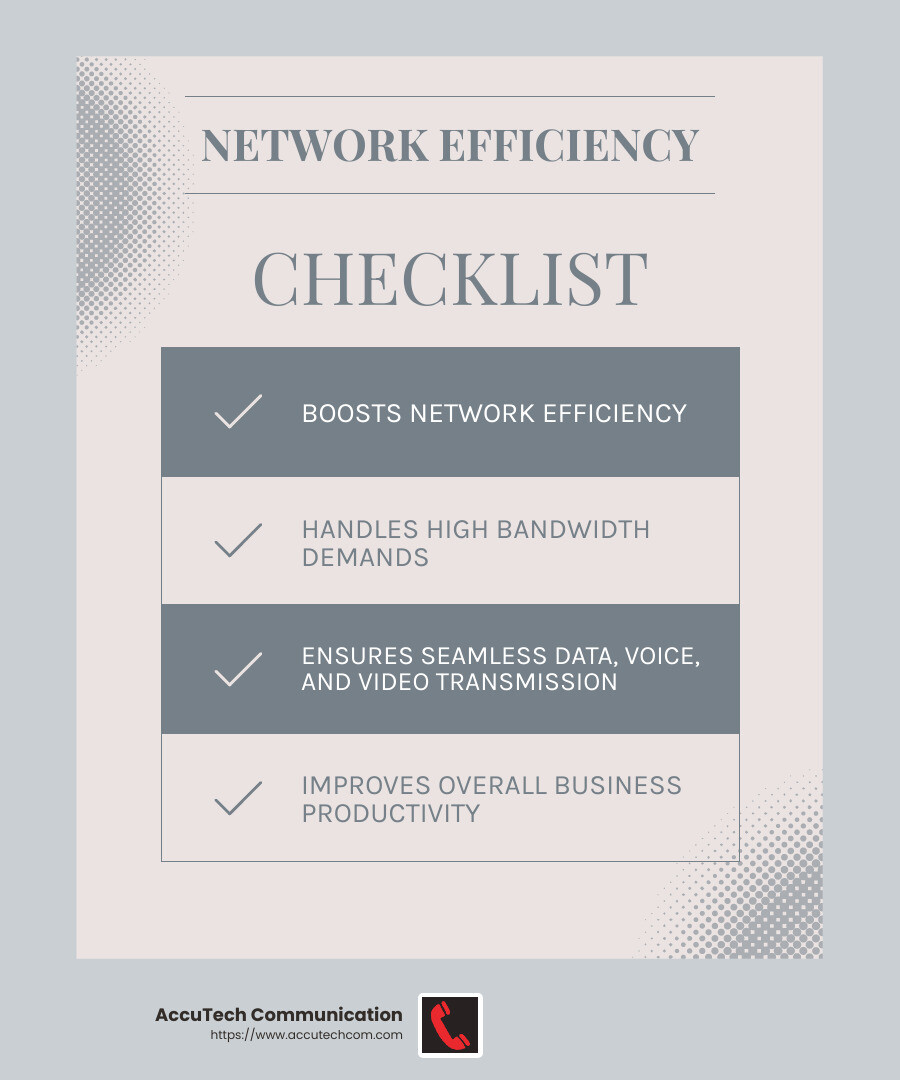
A well-installed structured cabling system boosts your network’s efficiency. Imagine your network as a highway. If the lanes are clear and well-marked, traffic flows smoothly. Similarly, a structured cabling system ensures seamless data applications, voice, and video transmission. This means your business can handle high bandwidth demands without breaking a sweat.
Reduced Downtime
Nothing is more frustrating than network downtime. It halts productivity and can cost your business money. Structured cable contractors design organized systems that make fault identification a breeze. When problems arise, they can quickly pinpoint and repair issues, minimizing downtime. This organized approach means your business stays up and running, delivering consistent performance.
Safety and Scalability
Safety is a top priority in any workplace. Tangled cables can pose tripping hazards and even fire risks. Structured cabling, however, organizes your cables neatly, reducing these risks. Plus, it’s scalable. As your business grows, your cabling system can easily adapt to new demands. This future-proofing ensures your network remains efficient and safe as you expand.
Hiring structured cable contractors is a smart investment for any business. They provide the expertise needed to create a network that’s not only efficient and reliable but also safe and scalable for future growth.
Top Tips for Hiring Structured Cable Contractors
Choosing the right structured cable contractors is crucial for the success of your business network. Here are some top tips to guide you through the process:
Check Certifications and Experience
When evaluating contractors, certifications are a key indicator of their expertise and reliability. Look for BICSI-certified professionals. This certification ensures they have the necessary skills to design and install advanced cabling systems. Experienced contractors, especially those with a team of certified design engineers and installers, are more likely to deliver high-quality results.
Experience matters too. Contractors with a proven track record in the industry bring valuable insights to your project. They know how to troubleshoot common issues and can anticipate potential challenges. This experience translates to smoother installations and fewer headaches down the road.
Read Customer Reviews
A contractor’s reputation is often reflected in customer reviews and testimonials. These can provide a glimpse into their past projects and the satisfaction level of previous clients. Positive reviews can reassure you of their reliability and quality of service.
Don’t just focus on the number of stars. Read the comments to understand how the contractor handled challenges and communicated with clients. A contractor with consistently positive feedback is likely to deliver a satisfactory experience.
Evaluate Service Offerings
Not all contractors offer the same services. It’s essential to evaluate their service offerings to ensure they align with your needs. Some contractors specialize in voice/data cabling, while others may focus on fiber-optic or wireless networks.
Consider what your business requires. If you need a robust wireless network, ensure the contractor has experience in that area. For businesses with specific needs, like low-voltage systems, verify that the contractor can handle those requirements. A contractor with a diverse range of services is often better equipped to handle complex projects.
In summary, hiring the right structured cable contractors involves checking certifications, assessing experience, reading customer reviews, and evaluating service offerings. By following these tips, you can find a contractor who meets your needs and helps build a reliable and efficient network for your business.
Frequently Asked Questions about Structured Cable Contractors
What are the Disadvantages of Structured Cabling?
While structured cabling offers many benefits, there are a few disadvantages to consider. The upfront cost can be significant. Installing a comprehensive cabling system involves purchasing high-quality materials and hiring skilled professionals. This initial investment might seem steep for small businesses or startups.
Another potential downside is the complexity of the installation. Structured cabling requires careful planning and precise execution. Without a well-thought-out design, you might face compatibility issues or inefficient layouts. However, these drawbacks can be mitigated by hiring experienced structured cable contractors who know how to steer these challenges effectively.
What Does a Structured Cabling Technician Do?
A structured cabling technician plays a crucial role in setting up and maintaining your network infrastructure. These professionals handle low voltage cabling tasks, ensuring that all communication tools and data systems are connected seamlessly. Their day-to-day responsibilities include installing cables, testing connections, and troubleshooting any issues that arise.
Technicians are also responsible for organizing and labeling cables, which makes future maintenance and upgrades more straightforward. By keeping systems organized, they help minimize downtime and improve the overall efficiency of your network.
What are the Categories of Structured Cabling Standards?
Structured cabling systems are guided by specific standards to ensure quality and compatibility. Two widely recognized standards are ANSI/TIA-568 and ISO/IEC 11801. These standards provide guidelines for the design and installation of cabling systems, covering everything from cable types to installation practices.
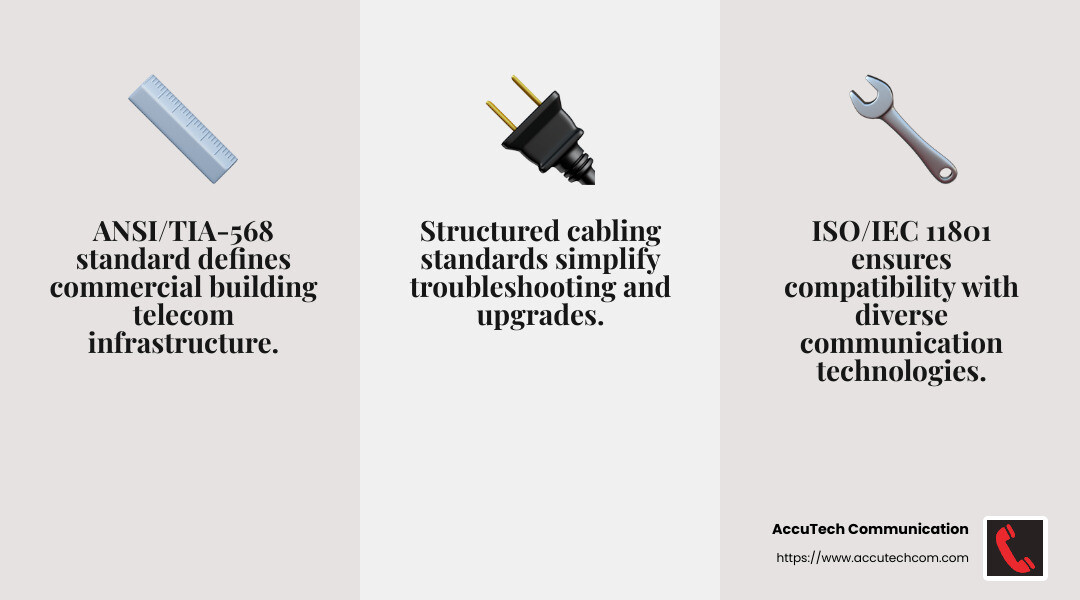
The ANSI/TIA-568 standard, first introduced in 1991, has been updated several times to accommodate technological advancements. It covers commercial building telecommunications infrastructure and sets the benchmark for cabling performance.
ISO/IEC 11801 is an international standard that outlines generic cabling for customer premises. It ensures that structured cabling systems are compatible with a wide range of communication technologies and applications.
These standards help maintain a consistent level of quality across different installations, making it easier to troubleshoot and upgrade systems as needed.
Conclusion
At AccuTech Communications, we pride ourselves on being a trusted partner for businesses in Massachusetts, New Hampshire, and Rhode Island. Since 1993, we’ve been dedicated to providing certified service that ensures your network infrastructure is built to last. Our team of skilled technicians and engineers is committed to delivering solutions that improve the efficiency and reliability of your business communications.
One of our key strengths is our competitive pricing. We understand that every business has unique needs and budget constraints. That’s why we offer a range of services that are both high-quality and cost-effective, ensuring you get the best value for your investment.
Moreover, our unwavering commitment to quality means that we use only the best materials and adhere to industry standards. This commitment is reflected in our long-standing relationships with clients who trust us to keep their networks running smoothly.
Whether you’re looking to install a new structured cabling system or upgrade an existing one, AccuTech Communications is here to help. Our expertise in network cabling, business phone systems, and data center technologies makes us the go-to choice for businesses seeking reliable and efficient communication solutions.
For more information about our structured cabling services, please visit our service page. Let us help you strengthen the backbone of your business with a robust and future-proof network infrastructure.
