
Video Monitoring: 10 Powerful Benefits in 2024

Understanding Video Monitoring: The Ultimate Security Tool
Video monitoring is a cornerstone of modern security systems, revolutionizing the way businesses and homes protect their assets. At its core, video monitoring involves using cameras to capture, transmit, and record footage which can then be viewed in real-time or later for review.
Quick Answer: Why Video Monitoring?
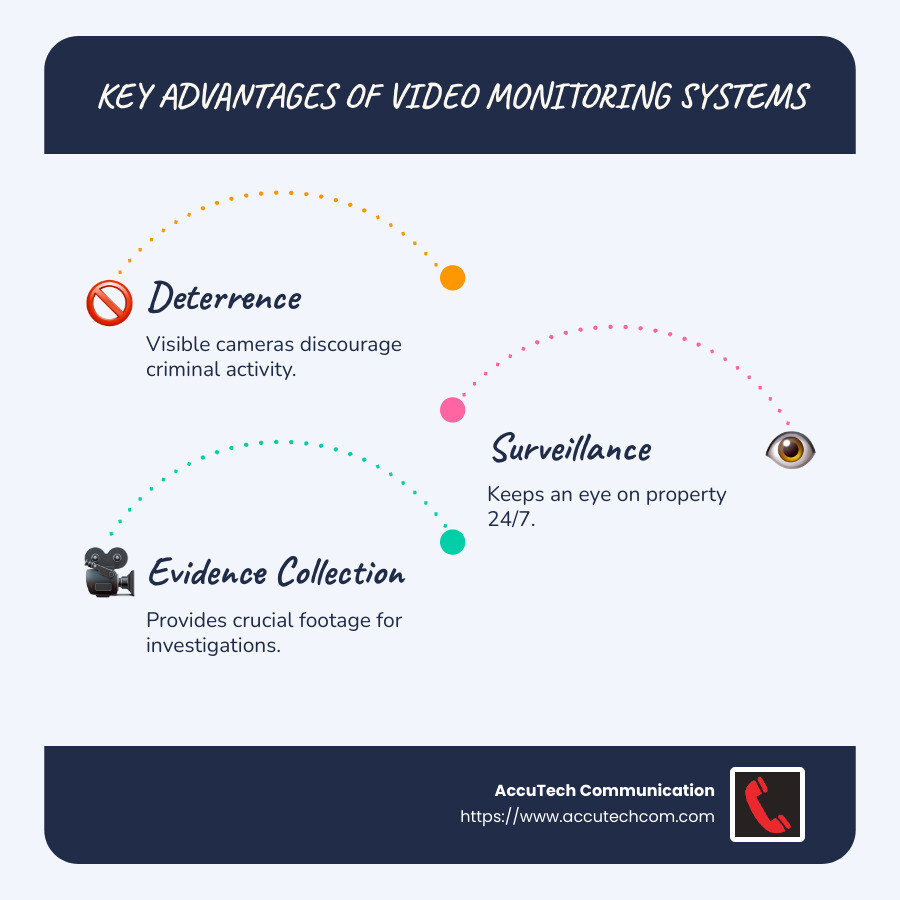
1. Deterrent: Visible cameras discourage criminal activity.
2. Surveillance: Keeps an eye on property 24/7.
3. Evidence: Provides crucial footage for investigations.
4. Remote Access: Monitor from anywhere on your smartphone.
Video monitoring systems have transformed over the years from simple analog setups to sophisticated digital and cloud-based systems. The evolution includes integration with artificial intelligence and smart technology, making these systems proactive rather than just reactive. This means they can not only record unwanted or unusual activities but also alert you in real-time, helping prevent crimes before they happen.
My name is Corin Dolan, and with over two decades of experience in the communications industry, I have seen how video monitoring can improve security and peace of mind for businesses and homeowners alike.
Video monitoring word roundup:
– live video monitoring
– security camera monitoring
– security video
What is Video Monitoring?
Video monitoring is a security system that uses cameras to capture, transmit, and record footage. This footage can be viewed in real-time or saved for later review. It’s a powerful tool for keeping an eye on properties and ensuring safety.
Components of Video Monitoring Systems
A typical video monitoring system includes several key components:
- Cameras: These are the eyes of the system. They capture video footage and can be placed both indoors and outdoors.
- Recording Devices: These store the captured footage. Options include DVRs (Digital Video Recorders) and NVRs (Network Video Recorders).
- Monitors: Screens where the footage is viewed, either live or recorded.
- Software: Manages the system, allowing for features like remote access, motion detection, and alerts.
How Video Monitoring Systems Work
Video monitoring systems work by capturing video through cameras and transmitting it to recording devices. Here’s a simple breakdown:
- Capture: Cameras record video footage.
- Transmit: The footage is sent to a recording device.
- Store: The footage is stored on a DVR, NVR, or in the cloud.
- View: Live or recorded footage can be viewed on monitors or remotely via smartphones or computers.
Real-World Example: Protecting a Cannabis Operation
In the booming cannabis industry, security is crucial from seed to sale. With sales expected to reach $32 billion, protecting this valuable product is essential. Video monitoring systems help ensure compliance with regulations and deter theft and unauthorized access.
Benefits of Video Monitoring Systems
- Improved Security: Real-time monitoring helps catch and deter criminals.
- Proactive Crime Prevention: Alerts and notifications can prevent incidents before they escalate.
- Cost-Effectiveness: Reduces the need for physical security personnel, saving money.
- Remote Access: Monitor your property from anywhere, anytime.

Case Study: Multifamily Residences
Many multifamily communities are now home to Generation Z residents, digital natives who expect modern tech solutions. Video monitoring systems meet these expectations by providing round-the-clock security and remote access, making residents feel safer and more connected.
In conclusion, video monitoring systems are indispensable for modern security needs. They offer improved protection, peace of mind, and operational efficiency.
Next, we’ll dive into the different types of video monitoring systems and how they cater to various needs.
Types of Video Monitoring Systems
Video monitoring systems come in various forms, each designed to meet specific needs. Whether for home security, commercial properties, or industrial sites, choosing the right system is crucial for effective surveillance. Let’s explore the main types of video monitoring systems: Home Security, Commercial CCTV, and Industrial Surveillance.
Home Security
Home security systems are designed to protect residential properties. These systems are typically user-friendly and can be installed by homeowners themselves or with minimal professional help. Here are some key features:
- Video Doorbell Cameras: These replace traditional doorbells and start recording when motion is detected or the doorbell is pressed. They often include two-way audio, allowing you to communicate with visitors remotely.
- Indoor Cameras: Ideal for monitoring the inside of your home. These cameras can be placed in key areas like entry points and hallways. They provide peace of mind by allowing you to check on your home anytime, anywhere.
- Outdoor Cameras: These are designed to withstand the elements and provide surveillance of the exterior of your home. They can be wired or wireless, with some models offering solar power options for easy installation.
- Floodlight Cameras: These combine floodlights with cameras, providing clear video even at night. The floodlights activate when motion is detected, improving visibility and deterring intruders.
Commercial CCTV
Commercial CCTV (Closed-Circuit Television) systems are widely used in businesses to monitor activities and ensure the safety of employees and customers. These systems are more robust and often require professional installation. Key aspects include:
- High-Definition Cameras: These provide clear, detailed footage that can be crucial for identifying suspects or incidents.
- Network Video Recorders (NVRs): These devices store footage captured by the cameras. They often come with large storage capacities and can be accessed remotely.
- Remote Access: Business owners can monitor their premises from anywhere using smartphones or computers. This feature is especially useful for managing multiple locations.
- Integration with Other Security Systems: Commercial CCTV systems can be integrated with alarms, access controls, and other security measures for comprehensive protection.
Industrial Surveillance
Industrial surveillance systems are custom for large-scale operations like factories, warehouses, and construction sites. These environments require specialized equipment to handle unique challenges:
- Durable Cameras: Industrial sites often have harsh conditions, so cameras must be rugged and weather-resistant. They may also need to be explosion-proof or have other specialized features.
- Thermal Imaging Cameras: These cameras detect heat signatures, making them ideal for monitoring areas where visibility is low or where traditional cameras might fail.
- AI and Machine Learning: Advanced industrial surveillance systems use AI to detect unusual patterns or behaviors, providing proactive alerts to potential issues.
- Integration with Operational Systems: These systems can be linked with other operational technologies to improve overall site management. For example, integrating with machinery sensors can help monitor equipment performance and safety.
Real-World Example: Protecting a Cannabis Operation
In the booming cannabis industry, security is crucial from seed to sale. With sales expected to reach $32 billion, protecting this valuable product is essential. Video monitoring systems help ensure compliance with regulations and deter theft and unauthorized access.
Case Study: Multifamily Residences
Many multifamily communities are now home to Generation Z residents, digital natives who expect modern tech solutions. Video monitoring systems meet these expectations by providing round-the-clock security and remote access, making residents feel safer and more connected.
In conclusion, selecting the right type of video monitoring system depends on your specific needs. Whether for home security, commercial properties, or industrial sites, each system offers unique benefits to improve safety and peace of mind.
Next, we’ll dive into the key benefits of installing video monitoring systems and how they can transform your security strategy.
Key Benefits of Installing Video Monitoring Systems
Improved Security and Surveillance
Video monitoring systems significantly boost security by providing real-time, recorded, and remote access to footage. This means you can keep an eye on your property 24/7, no matter where you are. For example, you can receive alerts on your smartphone about unexpected movement around your home or business and immediately view the footage to assess the situation.
Real-time monitoring allows for immediate action. If a suspicious activity is detected, you can quickly notify authorities or take other necessary actions. Recorded footage serves as valuable evidence in case of incidents, helping law enforcement and insurance companies to resolve issues more effectively.
Proactive Crime Prevention
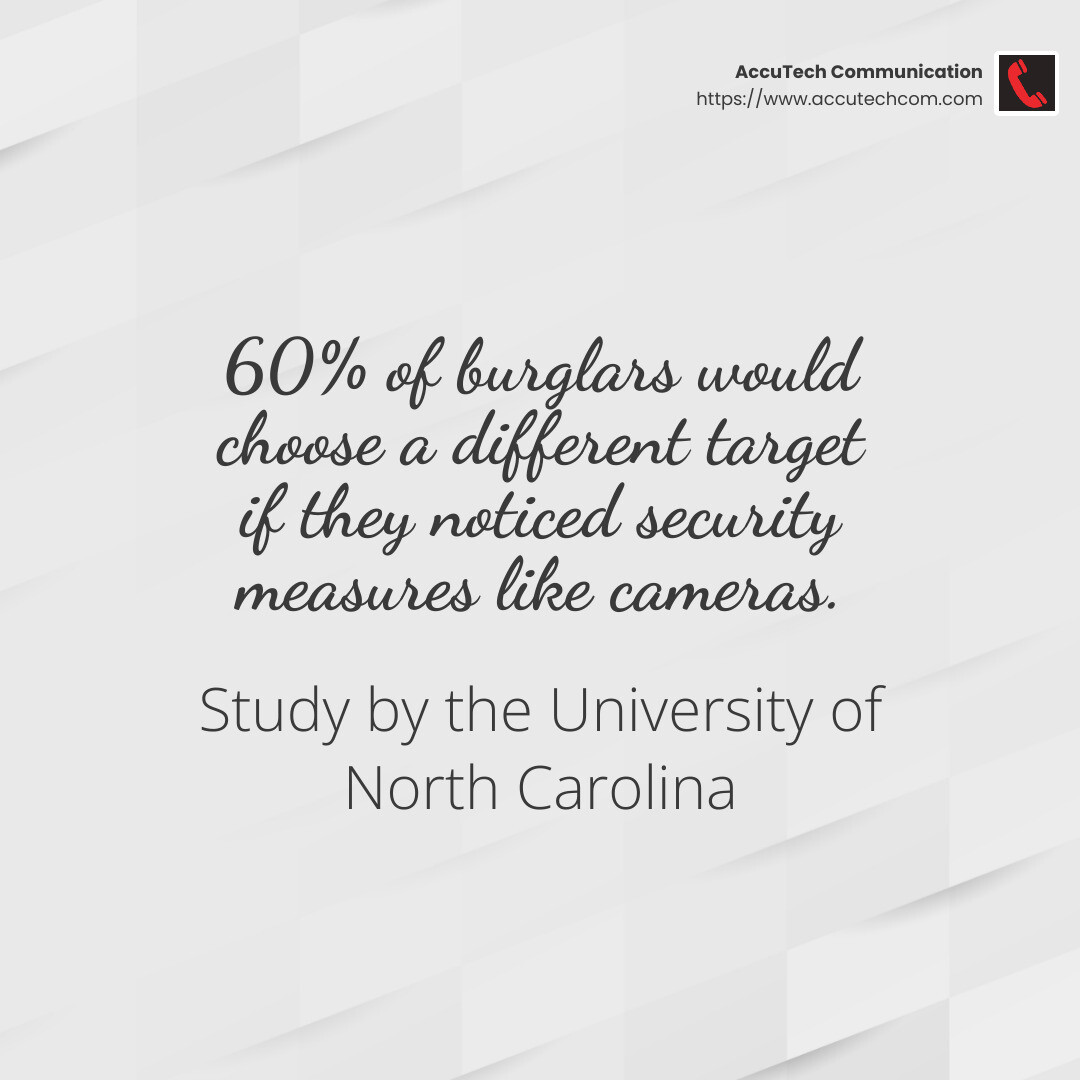
One of the most powerful aspects of video monitoring is its ability to deter crime before it happens. Visible cameras can make potential trespassers think twice about entering your property. According to a study by the University of North Carolina, approximately 60% of burglars would choose another target if they noticed security measures like cameras.
When suspicious activity is detected, video monitoring systems can trigger audiovisual deterrents to warn intruders away. If this doesn’t work, trained security experts can intervene by contacting local law enforcement, ensuring a rapid response to potential threats.
Cost-Effectiveness and Efficiency
Investing in video monitoring can lead to significant cost savings and improved efficiency. By reducing the need for physical security personnel, businesses can save on labor costs while maintaining high security standards. Additionally, modern surveillance systems are designed to be energy-efficient, especially those utilizing solar power.
Maintenance of video monitoring systems is also more straightforward and cost-effective compared to traditional security measures. Regular inspections and updates ensure the system remains functional and up-to-date, minimizing downtime and repair costs.
For businesses, this means fewer resources spent on dealing with theft or vandalism and more focus on growth and profitability. Video monitoring systems not only protect assets but also contribute to a safer, more efficient operation overall.
Next, we’ll dive into how video monitoring systems work and the advanced technologies that make them so effective.
How Video Monitoring Systems Work
Integration with Other Security Systems
Video monitoring systems don’t work in isolation. They integrate seamlessly with other security components to provide a comprehensive safety net. Here’s how:
- Cameras: These are the eyes of the system. They capture footage in real-time and can be placed both indoors and outdoors. Modern cameras come in various types, including fixed, mobile, and solar-powered options.
- Sensors: Sensors detect movements, changes in temperature, or sound anomalies. They improve the accuracy of video monitoring by providing additional data points.
- Alarms: When integrated with cameras and sensors, alarms can be triggered automatically if suspicious activity is detected. This immediate alert can help prevent potential threats.
- Access Controls: These systems manage who can enter or exit a facility. When combined with video monitoring, access controls add an extra layer of security by verifying identities visually.
- Intrusion Sensors: These sensors detect unauthorized entry attempts. When an intrusion is detected, the video monitoring system can capture the event, providing crucial evidence.
The Role of AI and Machine Learning
AI and machine learning are game-changers in video monitoring. They make systems smarter and more efficient. Here’s how they contribute:
- Threat Detection: AI algorithms analyze footage in real-time to identify potential threats. They can distinguish between a cat, a car, or a human, reducing false alarms.
- Behavioral Analysis: Machine learning models can recognize unusual behavior patterns. For instance, if someone is loitering around a restricted area, the system can flag this as suspicious.
- Predictive Analytics: AI can predict potential security breaches by analyzing historical data. This proactive approach helps in preventing incidents before they occur.
These advanced technologies ensure that video monitoring systems are not just reactive but also proactive. They deliver personalized and precise alerts, keeping your property secure 24/7.
Next, we’ll explore the various applications of video monitoring across different industries and how it helps in protecting assets and enhancing safety.
Applications of Video Monitoring Across Industries
Protecting Assets and Reducing Theft
Retail
In retail, video monitoring is a powerful tool for protecting inventory and reducing theft. Cameras placed strategically around the store can monitor customer behavior and spot potential shoplifters. According to industry data, visible security cameras can deter 97% of would-be thieves. Additionally, AI can identify suspicious activities, such as loitering near high-value items, and alert security personnel in real-time.
Healthcare
Healthcare facilities use video monitoring to safeguard sensitive equipment and patient records. These systems ensure that only authorized personnel have access to restricted areas. For example, hospitals can integrate cameras with access control systems to verify the identity of everyone entering an operating room. This prevents unauthorized access and ensures compliance with health regulations.
Education
Schools and universities rely on video monitoring to protect intellectual property and expensive equipment like computers and lab instruments. Surveillance cameras can monitor hallways, classrooms, and entrances to prevent theft and vandalism. In addition, AI-driven analytics can help identify unusual behavior, such as someone attempting to enter a restricted area, providing a safer environment for students and staff.
Enhancing Employee Safety and Compliance
Workplace Monitoring
Video monitoring helps ensure that employees follow safety protocols and comply with company policies. For instance, in an industrial setting, cameras can monitor workers to ensure they are wearing proper safety gear and following operational guidelines. This not only improves safety but also helps in maintaining regulatory compliance.
Safety Protocols
In healthcare, video monitoring can be used to oversee adherence to hygiene protocols, such as handwashing and the use of personal protective equipment (PPE). This is crucial for preventing the spread of infections and ensuring patient safety. Cameras can also capture footage that can be reviewed to improve safety measures and training programs.
Regulatory Compliance
Many industries, including healthcare and education, are subject to strict regulations. Video monitoring systems help organizations comply with these regulations by providing a reliable way to document activities and ensure adherence to standards. For example, in a healthcare setting, video footage can serve as evidence that staff are complying with HIPAA regulations by securing patient information.
Next, we’ll dive into frequently asked questions about video monitoring, covering essential topics like cost, functionality, and overall security benefits.
Frequently Asked Questions about Video Monitoring
What is the difference between video monitoring and video verification?
Video Monitoring involves continuous or scheduled observation of live or recorded footage from security cameras. This can be done by in-house staff, professional monitoring services, or even AI systems. The goal is to keep an eye on activities and ensure everything is safe and secure.
Video Verification, on the other hand, is a more specific process. It involves confirming that an alarm or alert triggered by a security system is valid. For example, if a motion sensor detects movement, video verification means checking the camera footage to see if the movement is from an intruder or something harmless like a pet. This helps reduce false alarms and ensures quicker, more accurate responses.
How does video monitoring improve overall security?
Video monitoring boosts security in several ways:
- Real-time Surveillance: It allows for immediate observation of activities, enabling quick responses to any suspicious behavior.
- Deterrence: The presence of cameras can deter potential criminals. According to industry data, visible cameras can deter 97% of would-be thieves.
- Evidence Collection: Recorded footage can be used as evidence in legal proceedings or to clarify events after an incident.
- Remote Access: Modern systems allow property owners to monitor their premises from anywhere using smartphones or computers. This is particularly useful for business owners who need to keep an eye on multiple locations.
- Integration with Other Systems: By integrating with alarms and access controls, video monitoring provides a comprehensive security solution. For example, cameras paired with intrusion sensors can alert monitoring agents to verify and respond to threats, reducing false alarms and ensuring priority police response.
What are the initial and ongoing costs associated with video monitoring?
The costs of setting up and maintaining a video monitoring system can vary widely depending on several factors:
Initial Costs:
– Equipment: Cameras can range from $40 to over $200 each, depending on features like resolution, night vision, and smart home integration.
– Installation: Professional installation costs can vary. DIY installation can save on these costs, but it requires some technical know-how.
– Licenses: For advanced systems, licenses are required. These can range from basic to premium, which includes video verification and other features.
Ongoing Costs:
– Monitoring Plans: Monthly fees for monitoring services can add up. Professional monitoring plans can vary, while self-monitoring plans are generally more affordable.
– Maintenance: Regular inspections, troubleshooting, and repairs are necessary to keep the system functioning optimally. Some providers offer maintenance as part of their service package.
– Upgrades: As technology evolves, upgrading cameras and software might be necessary to maintain high security standards.
Next, we’ll explore the future trends in video monitoring and how AccuTech Communications is adapting to industry changes.
Conclusion
Future Trends in Video Monitoring
The world of video monitoring is rapidly evolving, driven by advancements in technology and increasing security needs. One of the most significant trends is the integration of AI and machine learning. These technologies enable cameras to not only capture images but also analyze them in real-time. This means recognizing faces, detecting unusual behaviors, and even predicting potential threats before they occur.
Another trend is the shift towards cloud-based solutions. Cloud storage allows for easier access and management of video footage, making it possible to view live feeds and recorded videos from anywhere in the world. This is particularly beneficial for businesses with multiple locations.
The use of smart cameras is also on the rise. These cameras can communicate with other smart devices, creating a fully integrated security ecosystem. For instance, they can trigger alarms, lock doors, or send alerts directly to your smartphone when they detect suspicious activity.
AccuTech Communications: Leading the Way
At AccuTech Communications, we are committed to staying at the forefront of these trends. Our team is continually updating our services to incorporate the latest technologies, ensuring our clients receive the most effective and efficient security solutions available.
We offer customized video monitoring systems custom to the unique needs of your business. Whether you operate a small office, a large industrial site, or a multifamily residential complex, we have the expertise to design, install, and maintain a system that provides comprehensive security coverage.
Our solutions are not just about cameras. We integrate AI-driven analytics, cloud storage, and smart device compatibility to create a robust security network. This approach not only improves security but also improves operational efficiency and reduces costs.
Industry Adaptation
The security landscape is constantly changing, and businesses must adapt to stay protected. Implementing a modern video monitoring system is a crucial step in this adaptation. By leveraging advanced technologies, businesses can not only protect their assets but also gain valuable insights into their operations.
For instance, retail businesses can use video analytics to understand customer behavior, optimize store layouts, and improve sales. Industrial sites can monitor compliance with safety protocols and reduce the risk of accidents. Educational institutions can ensure the safety of students and staff, creating a secure learning environment.
At AccuTech Communications, we understand these diverse needs and are dedicated to providing solutions that not only improve security but also deliver tangible business benefits.
Ready to upgrade your security system? Contact AccuTech Communications today for a customized security assessment and find how our video monitoring solutions can protect and improve your business.
By staying ahead of industry trends and continuously adapting our offerings, AccuTech Communications remains a trusted partner for businesses across Massachusetts, New Hampshire, and Rhode Island. Let us help you secure your future with cutting-edge video monitoring technology.
