
Cable Contractors: Top 5 Best Choices in 2024
Cable contractors are the backbone of reliable and efficient network infrastructures. If you’re seeking streamlined connectivity and robust performance, choosing the right cable contractors can make all the difference. Here’s a quick guide to get you started:
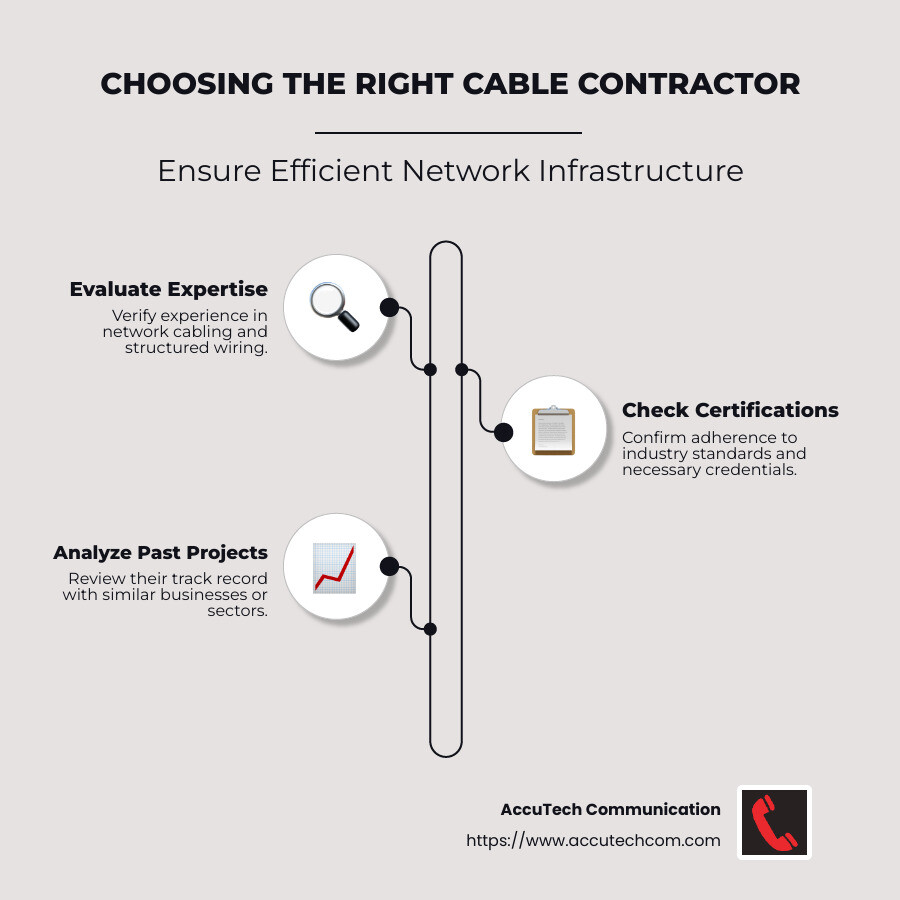
- Evaluate their expertise: Verify their experience with network cabling and structured wiring systems.
- Check certifications: Ensure they adhere to industry standards and hold necessary credentials.
- Analyze past projects: Consider their track record with similar businesses or sectors.
In today’s world, businesses rely heavily on seamless communication systems. Whether you’re upgrading outdated setups or installing new infrastructure, the opportunities with professional cable contractors are immense. They offer expertise in network cabling and structured wiring, ensuring your operations run smoothly and efficiently. High-quality network cabling not only improves performance but also boosts business opportunities by keeping you well connected.
I’m Corin Dolan, a seasoned professional with over 20 years in the telecommunications field, focusing on cable contractors. At AccuTech Communications, I’ve dedicated my career to helping businesses achieve their communication goals through reliable and customizable network solutions. Join me as we dive deeper into cable contractors in the next section.
Key cable contractors vocabulary:
– cable installation contractors
– telecommunications construction
– low voltage cabling
Understanding Cable Contractors
Cable contractors are vital players in creating and maintaining the communication networks we depend on every day. They handle everything from designing to installing and certifying structured wiring networks. Let’s break down these roles:
Designing
Designing a network is like crafting a blueprint for success. A cable contractor begins by evaluating your specific needs and the layout of your space. They map out where cables will run and how they will connect. This planning phase is crucial because a well-designed network maximizes efficiency and minimizes the risk of future issues. The right design supports seamless network performance, ensuring your business stays connected without a hitch.
Installing
Once the design is in place, the next step is installation. This involves running cables through walls, ceilings, or floors and connecting them to your devices. Installation must be neat and secure to prevent future problems. Proper installation not only ensures efficient operation but also keeps everything visually tidy. A tidy setup makes future maintenance much easier and helps maintain the network’s reliability.
Certifying
After installation, certification ensures everything is up to industry standards. Cable contractors test the installed cables to check signal strength and data transfer speeds. They confirm there are no issues, ensuring the network functions as expected. This phase helps identify and rectify potential problems before they affect your network’s performance. Certification gives you peace of mind, knowing your network is robust and reliable.
Structured Wiring Networks
Structured wiring is the backbone of modern communication. It involves organizing and standardizing your network cabling to improve performance and facilitate easy maintenance. A well-structured network reduces downtime and makes troubleshooting a breeze. By investing in structured wiring, businesses can enjoy efficient operations and a future-proof network that adapts to technological advancements.

Choosing the right cable contractor is key to achieving a reliable and efficient network. They bring expertise in designing, installing, and certifying structured wiring networks, ensuring your business stays connected and efficient. As we dig further, understanding their role in telecommunications will highlight why they are indispensable in today’s digital age.
Key Considerations When Choosing a Cable Contractor
Selecting the right cable contractor is crucial for a smooth and efficient network setup. Here are some key factors to consider:
Electrical Skills
A skilled cable contractor possesses strong electrical skills. They understand the complexities of network cabling and can handle the technical aspects with precision. Proper electrical knowledge ensures that the network is safe and meets all necessary standards. This expertise is vital for preventing potential hazards and ensuring optimal performance.
Mechanical Skills
Mechanical skills are just as important. A contractor needs to know how to physically install cables through walls, ceilings, and floors. This involves using various tools and techniques to secure the cables properly. Good mechanical skills ensure that the installation is not only functional but also neat and organized. A tidy setup not only looks better but also makes future maintenance easier.
Necessary Equipment
Having the right equipment is essential for any cable contractor. This includes tools for cutting, crimping, and testing cables. The use of advanced tools and technology can significantly improve the quality of the installation. Contractors with access to the latest equipment are more likely to deliver a high-quality, efficient network setup.
Experience
Experience is perhaps the most critical factor. An experienced contractor has likely encountered a variety of challenges and knows how to overcome them. They bring knowledge from past projects that can be invaluable in designing and installing your network. Look for contractors with a proven track record of successful installations and satisfied clients.
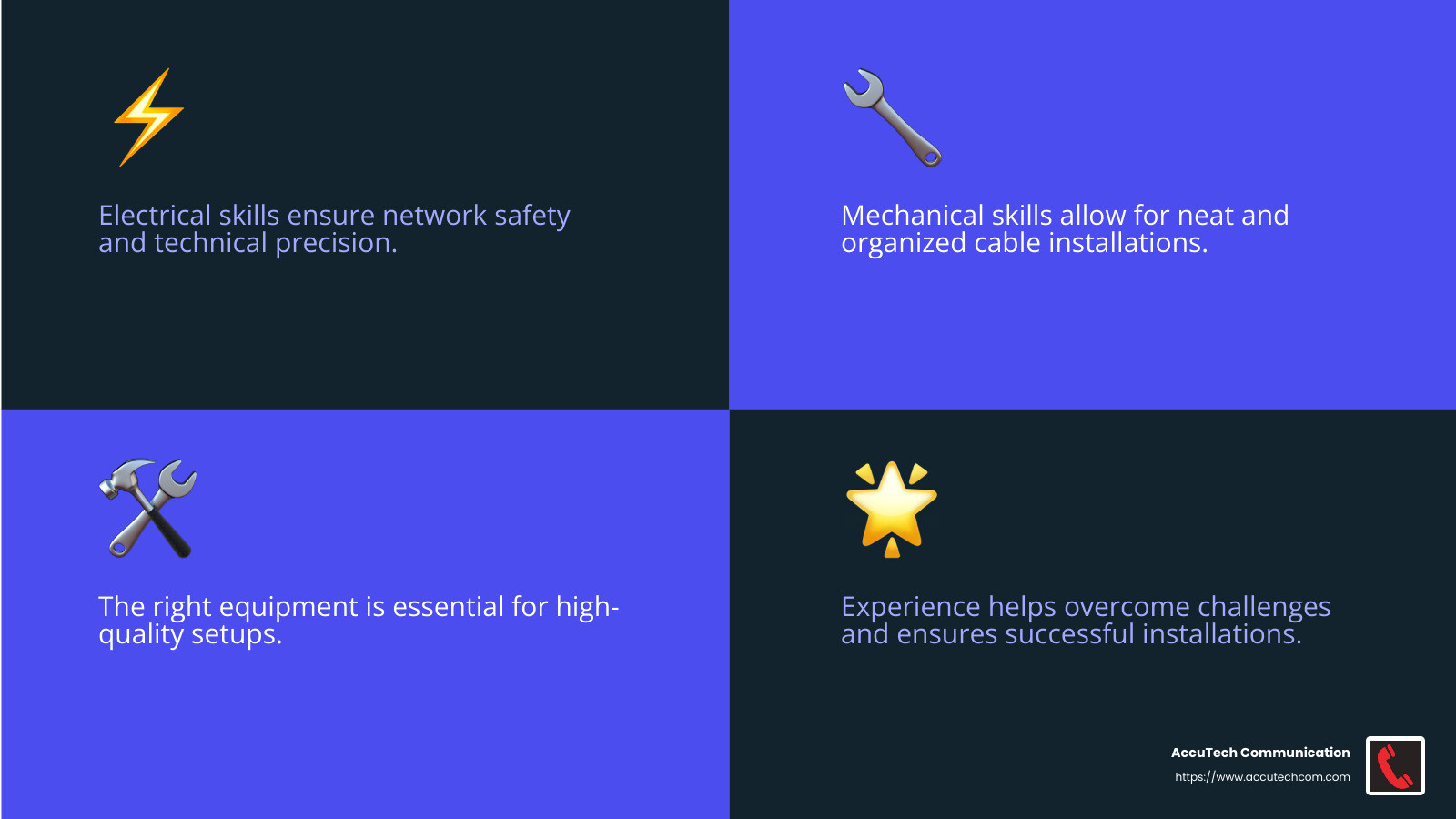
In summary, the right cable contractor will have a balance of electrical and mechanical skills, the necessary equipment, and ample experience. These factors ensure that your network is set up correctly and efficiently, minimizing the risk of future issues and maximizing performance.
Next, we’ll explore the role of cable contractors in telecommunications, highlighting their significance in our interconnected world.
The Role of Cable Contractors in Telecommunications
In telecommunications, cable contractors play a vital role in keeping us all connected. They are the unsung heroes behind the infrastructure that powers our internet, phone, and data services. Let’s explore how they make it all happen, especially when dealing with subsea cables and fiber-optic cables.
Subsea Cables
Imagine cables stretching across the ocean floor, connecting continents and allowing data to flow seamlessly around the globe. These are subsea cables, and they carry over 95% of all international internet traffic. The installation and maintenance of these cables require specialized skills and equipment. Cable contractors are responsible for ensuring these underwater highways are laid correctly and maintained to prevent disruptions.
A recent incident highlighted the importance of subsea cables when cables connecting Taiwan to its Matsu islands were cut, disrupting internet services for thousands of residents. This event underscored the vulnerability and critical nature of subsea cables in global communications.
Fiber-Optic Cables
On land, fiber-optic cables are the backbone of high-speed internet. They use light to transmit data at incredible speeds, making them essential for modern telecommunications. Cable contractors are experts in installing and maintaining these cables, ensuring they deliver fast and reliable service.
Fiber-optic technology is crucial for everything from streaming videos to supporting business operations. As demand for faster internet grows, the role of cable contractors in expanding and upgrading fiber-optic networks becomes even more important.
Telecommunications Companies
Telecommunications companies rely heavily on cable contractors to build and maintain the networks that deliver their services. These companies provide everything from mobile services to internet and cable TV, and they need robust infrastructure to support their offerings.
Cable contractors work closely with these companies to design, install, and certify network systems that meet industry standards. Their expertise ensures that telecommunications services are reliable and efficient, supporting both personal and business communications.
Cable contractors are the backbone of the telecommunications industry. They ensure that the complex web of cabling, whether under the sea or across cities, functions smoothly and efficiently. Their work allows us to enjoy seamless connectivity, keeping us linked to the world around us.
Next, we’ll address some frequently asked questions about cable contractors, shedding light on common queries and misconceptions.
Frequently Asked Questions about Cable Contractors
What is a cable contractor?
A cable contractor is a professional who specializes in designing, installing, and maintaining network cabling and structured wiring systems. These systems are essential for connecting devices and ensuring seamless communication across various platforms, including internet, phone, and television services.
Cable contractors play a crucial role in creating efficient and reliable networks, whether it’s for a small office or a large corporate campus. They handle everything from planning the layout of cables to testing and certifying the installation to ensure optimal performance.
Do cable workers get free cable?
It’s a common question, but the answer isn’t straightforward. Cable workers, who may work for cable companies or as independent contractors, often receive compensation and benefits similar to other skilled trades. This can include health insurance, retirement plans, and paid time off.
While some employees of cable companies might receive discounted services as part of their benefits package, this isn’t a universal perk. Benefits vary by employer and location, so it’s best to check with the specific company for details.
How to become a cable contractor?
Becoming a cable contractor requires a mix of qualifications, skills, and education. Here’s a simple guide to get started:
- Education: A high school diploma or GED is typically the minimum requirement. Some positions may require additional technical training or an associate degree in telecommunications or a related field.
- Skills: Essential skills include electrical and mechanical abilities, problem-solving, and attention to detail. Familiarity with tools and equipment used in cabling, as well as knowledge of industry standards, is crucial.
- Certifications: Earning certifications can improve your credentials. Certifications like BICSI’s Installer 1 or Installer 2 can demonstrate your expertise and commitment to the field.
- Experience: Gaining hands-on experience is key. Many start as apprentices or entry-level technicians, learning the ropes under the supervision of experienced contractors.
- Licensing: Some areas require cable contractors to be licensed. Check local regulations to ensure compliance.
Starting on a career as a cable contractor can be rewarding, offering opportunities to work in various environments and contribute to the essential infrastructure that keeps us connected.
Conclusion
Choosing the right cable contractor is crucial for ensuring a reliable and efficient network. At AccuTech Communications, we pride ourselves on providing certified service that stands out in the industry. Our team of experts is dedicated to delivering top-notch network cabling, business phone systems, and data center technologies across Massachusetts, New Hampshire, and Rhode Island.
What sets us apart? It’s our unwavering commitment to quality and our competitive pricing. Since 1993, we’ve built a reputation for excellence by offering reliable and certified services custom to meet the unique needs of each client. Our skilled technicians and engineers work diligently to ensure that your network infrastructure is optimized for peak performance.
When you partner with AccuTech, you’re choosing a team that values your satisfaction and the seamless operation of your communications systems. We understand that your network is the backbone of your business, and we are here to make it stronger.
Reach out to us today and find how our expertise can help you stay connected and efficient. We are ready to assist you with all your cabling needs, ensuring a smooth, hassle-free experience from start to finish.
For more information on our services and how we can assist you, visit our cabling contractors page. Let us help you build a network wired for success!
