
Structured Cabling Definition: Top Benefits in 2025
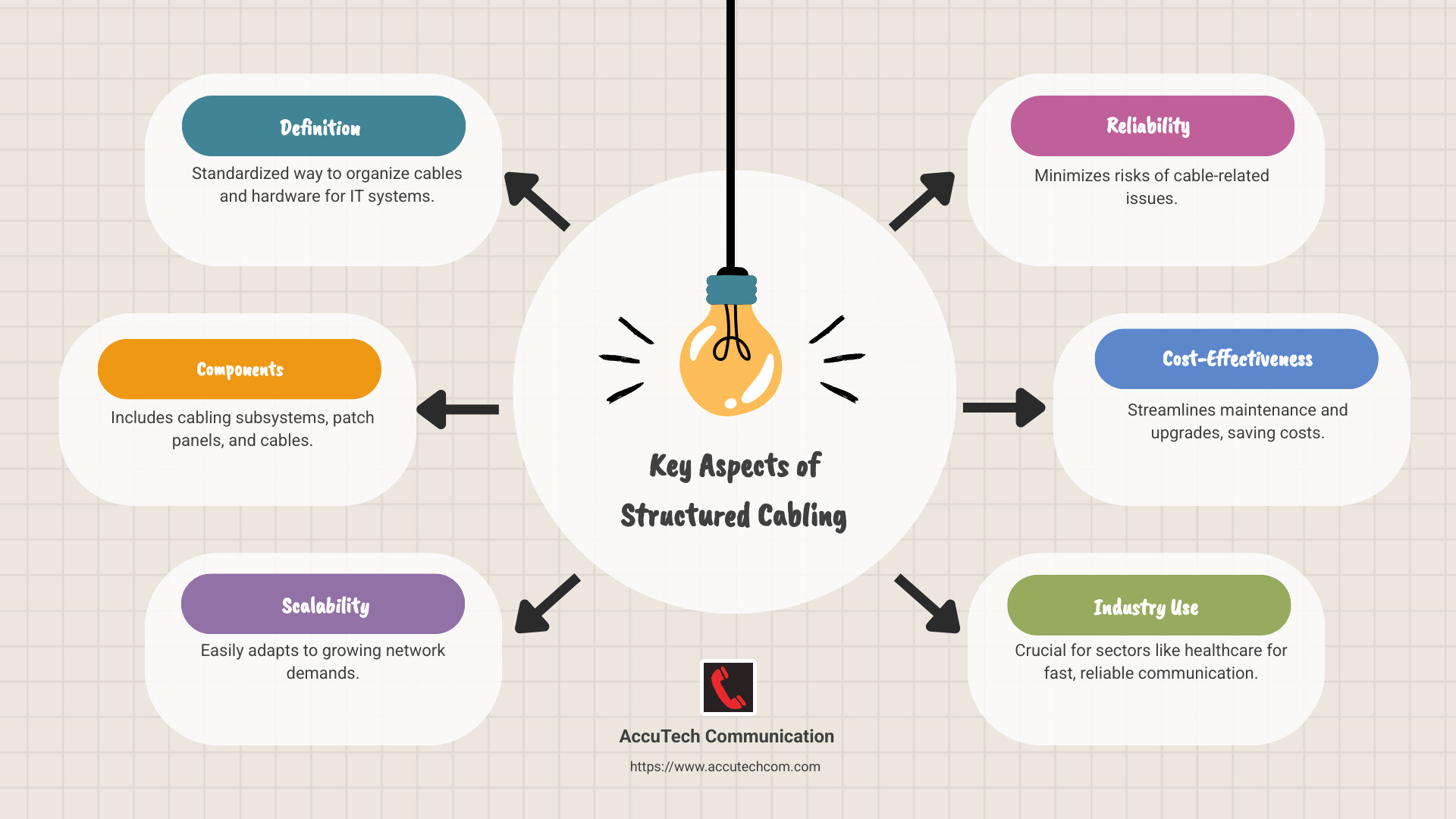
Structured cabling definition is a standardized way to organize the cables and hardware that support your business’s IT systems and communications. It brings order to chaos, creating a flexible network infrastructure that supports operations today and as your business grows in the future.
- Key Benefits of Structured Cabling:
- Scalability: Easily accommodate increases in network demand.
- Reduced Downtime: Minimized risk of cable-related problems.
- Cost-Effectiveness: Streamlined maintenance and upgrades.
Structured cabling systems are essential for businesses in sectors like healthcare, where reliable, fast communication is critical. They don’t just support the complex networks you’ll need today, but they’re designed to evolve with your business. This capability is crucial for ensuring smooth operations, especially in high-demand environments.
As Corin Dolan, Owner at AccuTech Communications with years of hands-on experience in designing and implementing robust network infrastructures, I understand the critical nature of structured cabling. Over the years, I’ve seen how the proper implementation of structured cabling definition can improve reliability, support growth, and ensure business continuity.
Glossary for structured cabling definition:
What is Structured Cabling?
Structured cabling is more than just a collection of wires—it’s a well-organized system that connects your business’s IT equipment and communication devices. It’s like the nervous system of your office, ensuring that data flows smoothly and efficiently.
Key Components
Structured cabling consists of several vital components:
- Horizontal Cabling: Connects workstations to the network cabling system. It includes cables from the outlets to the telecommunications room.
- Backbone Cabling: Links different areas of the building or campus, supporting high-volume data transfer.
- Patch Panels: Centralized hubs where cables are connected. They simplify network changes and troubleshooting.
- Racks and Cabinets: Secure and organize your network equipment, making maintenance easier.
Industry Standards
Adhering to standards is crucial for a reliable and efficient cabling system. The main standards include:
- TIA/EIA: These standards ensure that your cabling infrastructure supports current and future technologies. They specify how cables should be installed and tested.
- ISO/IEC: Global standards that ensure compatibility and performance across different networks and devices.
Why Standards Matter
Following these standards guarantees that your network infrastructure is robust and future-proof. It reduces the risk of errors and ensures that your system can handle new technologies as they emerge.
For businesses in Massachusetts, New Hampshire, and Rhode Island, AccuTech Communications has been a trusted partner in implementing structured cabling systems that meet these standards. Their expertise ensures that your network is not only efficient but also adaptable to your growing needs.

Structured cabling is the backbone of your communication network, providing a reliable and organized way to manage your data flow. Understanding its components and standards is the first step in building a network that can support your business today and into the future.
Next, let’s explore the specific components of structured cabling systems and how they work together to create a seamless network.
Components of Structured Cabling Systems
Structured cabling systems are like a well-oiled machine, with each component playing a crucial role in ensuring smooth and efficient data communication. Let’s break down the main components:
Cabling Subsystems
Cabling subsystems are the building blocks of a structured cabling system. They include:
- Horizontal Cabling: This connects individual workstations to the main network. Think of it as the streets that lead to the main highways of your data network. It typically involves cables that run from wall outlets to a telecommunications room.
- Backbone Cabling: This is the heavy-duty highway of your network. It links different sections of a building or even multiple buildings, allowing for high-speed data transfer. Backbone cabling is essential for keeping your network robust and capable of handling large volumes of data.
Patch Panels
Patch panels are the unsung heroes of structured cabling. They serve as the central point where all your network cables converge. Here’s why they’re important:
- Simplified Management: Patch panels make it easy to organize and manage your network connections. If you need to reconfigure or troubleshoot, you can do so without disturbing the entire system.
- Flexibility: With patch panels, you can easily add, remove, or change connections. This flexibility is vital for businesses that are growing or evolving.
Cables
The type of cables you use can significantly impact your network’s performance. Here are the common types:
- Copper Cables (Cat 5e, Cat 6, Cat 6a): These are widely used in many networks. They are suitable for most office environments and offer a balance of performance and cost.
- Fiber Optic Cables: These are the speed demons of the cabling world, perfect for high-speed data transfer over long distances. They are ideal for connecting different buildings or for use in data centers.
Each of these components works together to form a cohesive and efficient network. By understanding the role of each part, you can ensure your structured cabling system is set up for success.
Next, we’ll look at the benefits of structured cabling, including how it can save you time and money while supporting your business’s growth.
Benefits of Structured Cabling
When it comes to building a reliable network, structured cabling offers several key benefits that can make a big difference for your business. Let’s explore these advantages:
Scalability
One of the standout features of structured cabling is its scalability. As your business grows, your network needs to grow too. With structured cabling, adding new devices or expanding your network is straightforward. You won’t need to overhaul your entire system, saving time and resources. This flexibility is crucial for businesses that plan to expand or adapt to new technologies.
Reduced Downtime
Downtime can be costly. With structured cabling, you can minimize disruptions. The organized and efficient design of structured cabling systems makes it easier to identify and fix issues quickly. This means less time spent troubleshooting and more time keeping your operations running smoothly. When problems do arise, the clear layout allows for faster identification and resolution, keeping your business on track.
Cost-Effectiveness
While the initial investment in structured cabling might seem significant, it pays off in the long run. Here’s how:
- Lower Maintenance Costs: Well-organized cabling reduces the need for expensive repairs and maintenance. The system is easier to manage, which means fewer surprises and lower costs.
- Energy Efficiency: A structured cabling system can also contribute to energy savings. With efficient data flow and reduced network congestion, your equipment can operate more effectively, potentially lowering energy consumption.
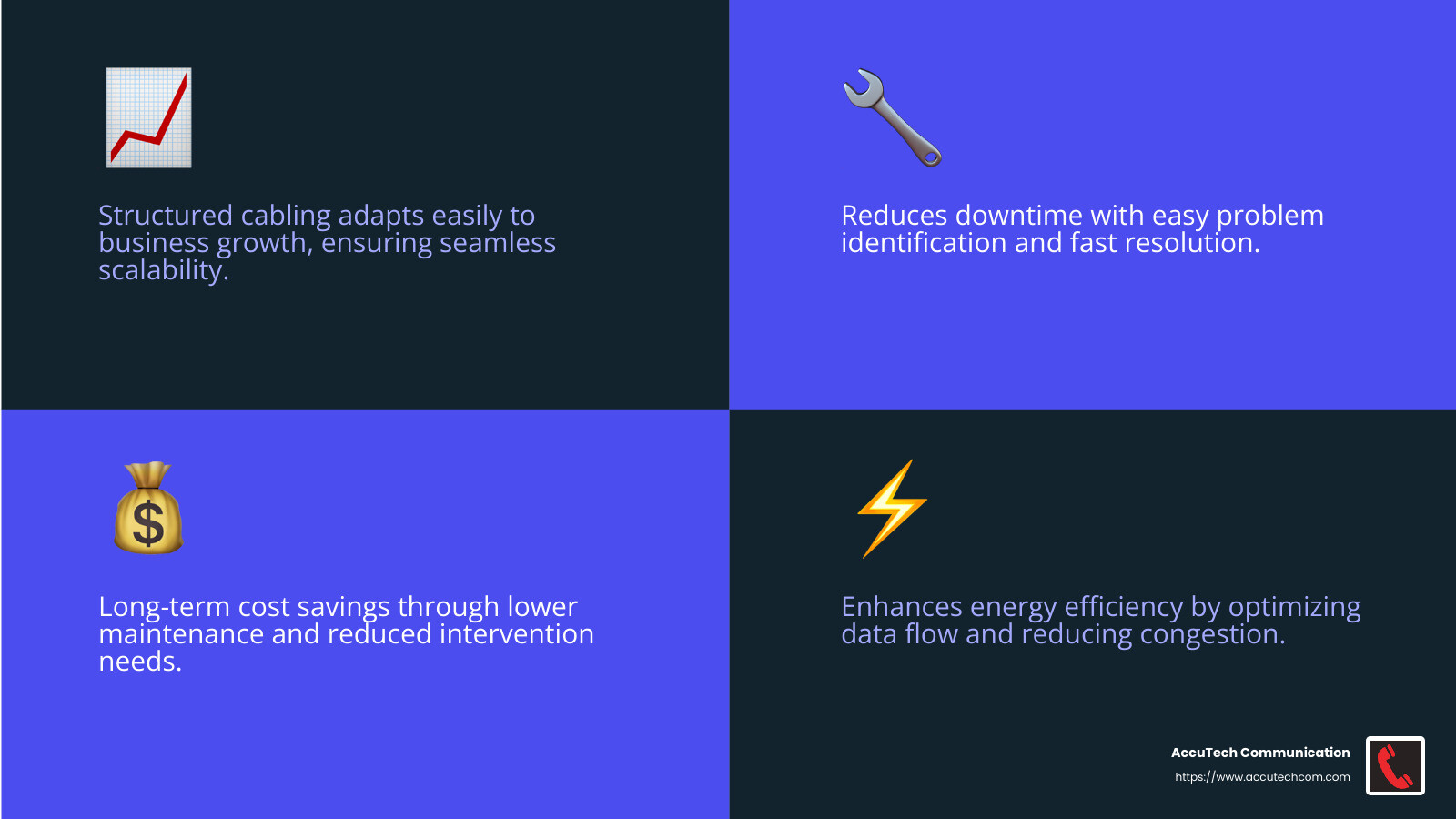
By investing in structured cabling, businesses can enjoy a network that supports their growth, minimizes disruptions, and keeps costs under control. These benefits make structured cabling a smart choice for any organization looking to improve its communication infrastructure.
Next, we’ll explore how to implement structured cabling, including planning, installation, and maintenance strategies to ensure your network is set up for success.
How to Implement Structured Cabling
Implementing structured cabling involves careful planning, precise installation, and ongoing maintenance. Each step is crucial for building a robust network that supports your business needs. Let’s break down the process:
Planning
Planning is the foundation of any successful structured cabling system. Here’s how to get started:
- Assess Your Needs: Begin by identifying your current and future network requirements. Consider the number of devices, data flow, and potential for expansion.
- Design the Layout: Work with experts to design a cabling layout that maximizes efficiency and minimizes clutter. AccuTech Communications offers consultation and design services to help plan your network infrastructure.
- Select the Right Components: Choose the appropriate cables and equipment. Options include Cat 5e, Cat 6, and fiber optic cabling, each suited for different needs.
Installation
Once planning is complete, it’s time for installation. This step requires precision and expertise:
- Structured Cabling Setup: Install cables, patch panels, and racks to create an organized system. AccuTech’s skilled technicians ensure that everything is set up for peak performance.
- Testing and Certification: After installation, conduct thorough testing to ensure all components are functioning correctly. AccuTech provides certification services to verify compliance with industry standards.
Maintenance
A well-maintained network is essential for ongoing reliability. Here’s how to keep your structured cabling system in top shape:
- Regular Inspections: Schedule periodic checks to identify and address potential issues early. This proactive approach helps prevent major disruptions.
- Troubleshooting and Repairs: AccuTech offers 24/7 support for urgent repairs and troubleshooting, ensuring your network stays operational.
- Upgrades: As technology evolves, consider upgrading your system to incorporate the latest advancements. Regular updates keep your network efficient and effective.
By following these steps, businesses can implement a structured cabling system that supports growth, improves efficiency, and reduces downtime. In the next section, we’ll answer some common questions about structured cabling, including the types of cables used and how it supports business growth.
Frequently Asked Questions about Structured Cabling
What are the types of cables used?
In structured cabling, choosing the right type of cable is crucial. The main types include:
- Copper Cables: These are the most common and include Cat 5e and Cat 6. Cat 5e is suitable for small-to-medium networks, while Cat 6 is ideal for high-performance needs. Copper cables are cost-effective and reliable for most standard networking environments.
- Fiber Optic Cables: Perfect for high-speed data transfer over long distances. Fiber optic cables offer greater bandwidth and are less susceptible to interference, making them an excellent choice for data centers and large networks.
How does structured cabling support business growth?
Structured cabling is a smart investment for businesses looking to grow. Here’s how it helps:
- Scalability: As your business grows, your network needs to expand too. Structured cabling systems are designed to be easily scalable. You can add new devices or expand your network without a complete overhaul.
- Flexibility: A well-organized cabling system allows for easy reconfiguration. This flexibility means you can quickly adapt to new technologies or business changes without major disruptions.
What are the industry standards for structured cabling?
Adhering to industry standards is vital for ensuring your cabling system is reliable and efficient. Key standards include:
- TIA/EIA: The Telecommunications Industry Association (TIA) and the Electronic Industries Alliance (EIA) set standards for structured cabling systems. These standards ensure that your cabling is compatible with different devices and technologies.
- ISO/IEC: The International Organization for Standardization (ISO) and the International Electrotechnical Commission (IEC) provide global standards. Compliance with these standards ensures your cabling system meets international benchmarks for quality and performance.
Understanding these aspects of structured cabling can help you make informed decisions for your business network. In the next section, we’ll wrap up with a look at how AccuTech Communications can be your trusted partner in implementing these solutions.
Conclusion
At AccuTech Communications, we bring decades of expertise in structured cabling to businesses across Massachusetts, New Hampshire, and Rhode Island. Since 1993, we’ve been dedicated to providing reliable and certified service, ensuring your network infrastructure is both robust and future-ready.
Our team of skilled technicians and engineers is committed to excellence, offering a broad spectrum of services custom to meet your specific needs. From consultation and design to installation and maintenance, we handle every aspect of your network cabling with precision and care.
Service Areas: We proudly serve a wide range of locations, including Metro-west Boston, Marlborough, Sudbury, Boston, Woburn, Waltham, and Worcester. Whether you’re a small business or a large corporate campus, our comprehensive solutions are designed to support your growth and technological advancements.
We understand that your network is the backbone of your business. That’s why we focus on delivering scalable, flexible, and cost-effective cabling solutions that can adapt as your business evolves. Our commitment to quality and customer satisfaction has earned us the trust of numerous clients who have relied on us for over two decades.
Ready to strengthen your business communication infrastructure? Let us help you implement a structured cabling system that meets your current needs and future goals. Contact AccuTech Communications today for a consultation and find how our expertise can benefit your business.
