
Flexible cable conduit: The Ultimate 2025 Guide
Why Flexible Cable Conduit is Essential for Modern Electrical Systems
Flexible cable conduit is a protective tubing that safeguards electrical wires and cables while allowing for easy routing around obstacles and through tight spaces. Unlike rigid conduit, flexible conduit bends and moves with your installation needs.
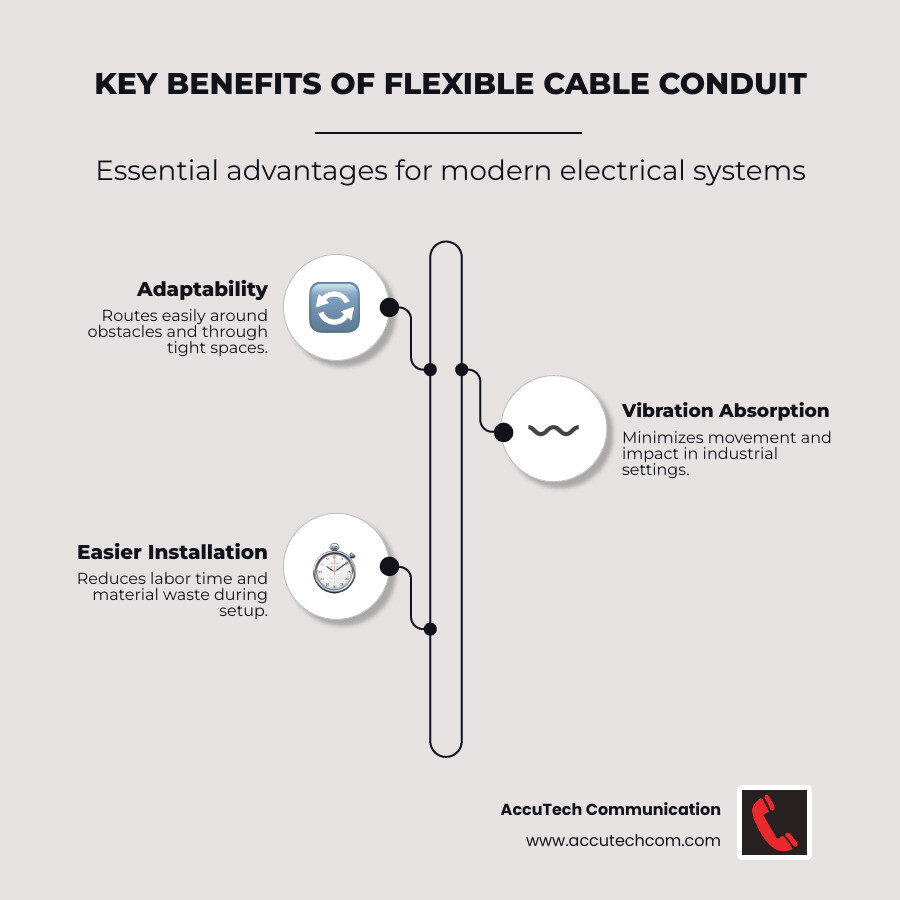
Key Benefits of Flexible Cable Conduit:
- Cable Protection – Shields wires from physical damage, moisture, and environmental hazards
- Installation Flexibility – Routes easily around corners, through walls, and in confined spaces
- Vibration Resistance – Absorbs movement and vibration in industrial settings
- Cost-Effective – Reduces labor time and material waste during installation
- Versatile Applications – Works in residential, commercial, and industrial environments
The research shows there are 238 flexible conduit products available from major suppliers, with 98 liquid-tight conduit options, 80 non-metallic varieties, and 65 non-jacketed flex types. Common trade sizes include 1/2 inch and 3/4 inch diameters, with standard lengths of 25 feet, 100 feet, and custom cuts.
As electrical systems grow more complex, flexible conduit has become the go-to solution for protecting critical wiring in healthcare, manufacturing, and data centers. Whether you’re dealing with EMI/RFI shielding, liquid-tight applications, or simply need to steer around existing infrastructure, flexible conduit offers adaptability that rigid systems cannot match.
I’m Corin Dolan, owner of AccuTech Communications, and I’ve been working with flexible cable conduit installations across Massachusetts, New Hampshire, and Rhode Island for over 30 years. My team has seen how the right flexible conduit selection makes the difference between a smooth installation and one requiring costly rework.
Why Choose Flexible Conduit Over Rigid? The Bendable Advantage
Picture this: you’re routing electrical wiring through a maze of existing pipes and into a tight space. With rigid conduit, you’d need multiple elbow fittings and precise measurements. With flexible cable conduit, you simply bend it where it needs to go. That’s the bendable advantage in action.
After three decades of installations across New England, I can tell you that flexible cable conduit consistently outperforms rigid options in real-world scenarios. Here’s why we reach for flexible solutions.
Installation speed is where flexible conduit really shines. Instead of measuring, cutting, and connecting multiple pieces of rigid conduit, you can often run flexible conduit in one continuous piece. This means fewer connections and significantly less time on the job. What might take hours with rigid conduit can often be completed in minutes with flexible options.
When it comes to navigating obstacles, flexible conduit squeezes through tight spots with ease. We’ve installed systems in century-old buildings where walls weren’t plumb and in modern facilities packed with utilities. Flexible cable conduit flows around these challenges, while rigid conduit would require careful planning and multiple fittings.
Tight spaces are where flexible conduit becomes essential. Think about the cramped areas behind server racks, inside equipment panels, or through wall cavities. The ability to bend and conform to small radii means you can get wiring where it needs to go without major modifications to the space.
Here’s something many people don’t consider: vibration absorption. In industrial settings or near mechanical equipment, vibration is a constant concern. Rigid conduit transmits these vibrations directly to the wiring, which can loosen connections or damage the cables. Flexible cable conduit acts like a shock absorber, protecting your electrical system from these harmful effects.
The cost-effectiveness might surprise you. While flexible conduit can cost slightly more per foot than basic rigid options, the total project cost often favors flexible solutions. You’ll use fewer fittings, spend less time on installation, and avoid the headaches that come with complex routing challenges.
| Feature | Flexible Conduit | Rigid Conduit |
|---|---|---|
| Installation Time | Faster, due to ease of routing and fewer fittings | Slower, requires precise cutting, bending, and more fittings |
| Suitability for Tight/Curved Spaces | Excellent, bends easily around obstacles and tight corners | Limited, requires many elbows and couplings for changes in direction |
| Vibration Resistance | High, absorbs and dampens vibrations | Low, transmits vibrations which can lead to fatigue |
| Material Cost | Can be slightly higher depending on type | Generally lower for basic types |
The bottom line is that flexible cable conduit adapts to your project’s needs, instead of forcing your project to adapt to the conduit’s limitations. The bendable advantage makes the job easier, faster, and more reliable in the long run.
More info about how to install electrical conduit
A Guide to the Types of Flexible Cable Conduit
Choosing the right flexible cable conduit is like picking the right tool; they may look similar, but each is engineered for specific challenges. Whether you’re protecting sensitive data cabling, routing electrical wiring through a commercial building, or connecting industrial equipment, there’s a flexible cable conduit designed for your situation.
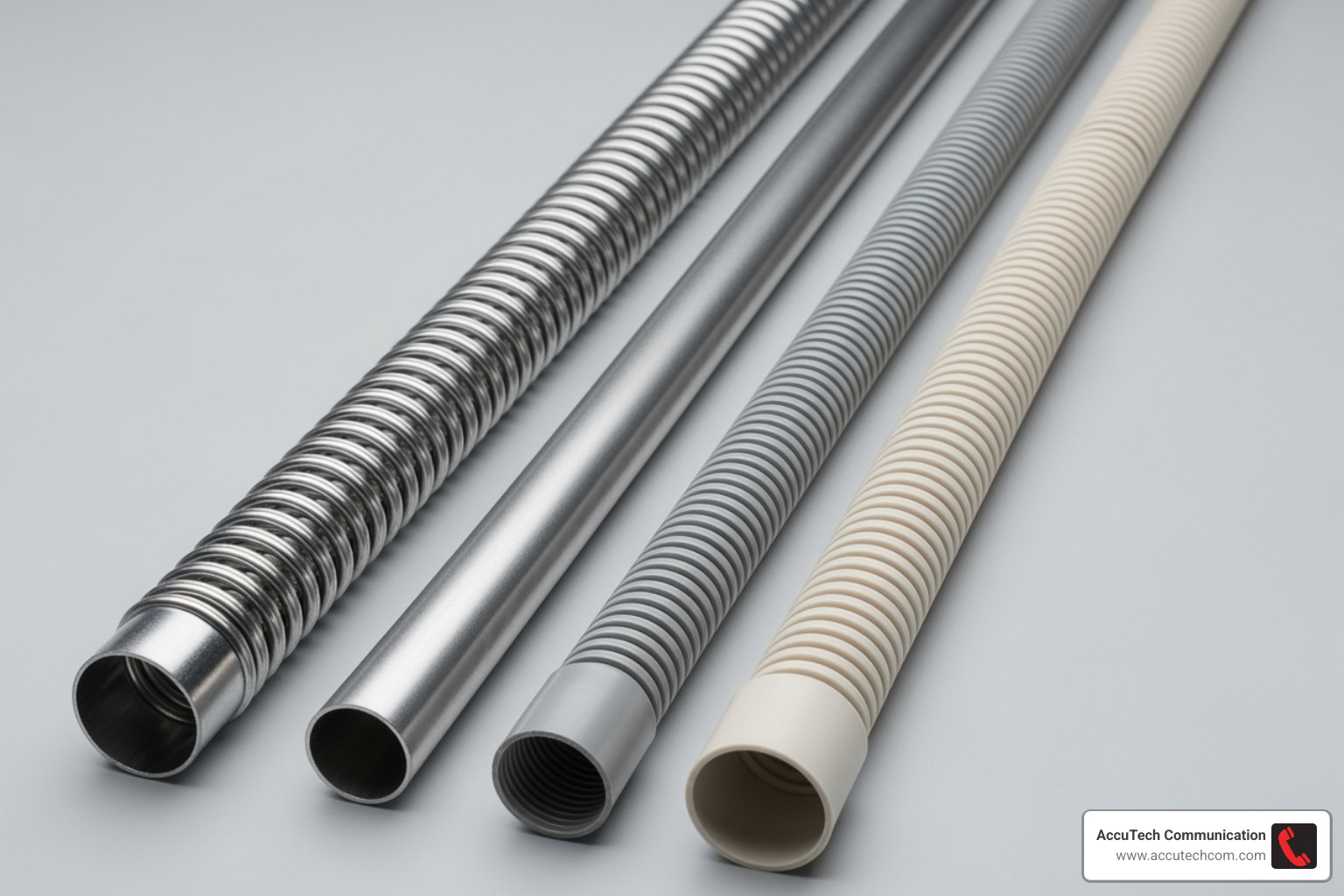
The world of flexible cable conduit breaks down into three main families: metallic for heavy-duty protection, non-metallic for corrosive environments, and specialized conduits for unique challenges. Let’s explore each category.
Metallic Flexible Conduit (FMC & LFMC)
When cables need serious protection from construction sites and industrial facilities, metallic flexible cable conduit is the answer.
Flexible Metal Conduit (FMC) is the workhorse of the flexible conduit family, often called “Greenfield” or “flex.” This helically wound metal conduit, made from galvanized steel or aluminum, offers excellent impact resistance against drops and general construction chaos.
We use FMC for connecting motors and vibrating equipment because it absorbs movement without stressing electrical connections. It’s also perfect for tricky spots where you can’t use rigid conduit, like connecting to a slightly off-center junction box.
Liquid-Tight Flexible Metal Conduit (LFMC) adds a waterproof PVC jacket to FMC. This extra layer provides water resistance and oil resistance, making it ideal for outdoor equipment, basement installations, and anywhere moisture is a concern.
We frequently install LFMC for outdoor equipment like pool pumps, AC units, and exterior lighting controls. The liquid-tight seal keeps moisture out while the metal core provides mechanical protection.
Non-Metallic Flexible Cable Conduit (ENT & LFNC)
When you need protection from corrosion rather than impact, or you’re working where weight matters, non-metallic flexible cable conduit is your best friend.
Electrical Nonmetallic Tubing (ENT) is nicknamed “Smurf Tube” for its distinctive blue color. Made from PVC, ENT is lightweight and corrosion-proof, making it perfect for concrete pours and areas where moisture or chemicals might attack metal conduit.
ENT’s corrugated exterior gives it flexibility with a smooth interior for easy wire pulling. We use it extensively in residential and commercial buildings where it can be embedded in concrete or routed through walls and ceilings.
Liquid-Tight Flexible Non-Metallic Conduit (LFNC) combines the corrosion resistance of non-metallic materials with a smooth, waterproof jacket. This makes it versatile for HVAC systems, outdoor lighting, and any application where cables need protection from both moisture and chemicals.
Defining Versatile Cable Protection
LFNC is also UV-resistant, so it won’t degrade under constant sun exposure. This makes it our go-to choice for outdoor security cameras, irrigation controls, and exterior equipment connections.
More info about innerduct service
Specialized and Over-Braided Conduits
Demanding environments require specialized conduits that protect against challenges like electromagnetic interference or extreme abrasion.
Over-braided conduits feature an additional protective layer—usually stainless steel or heavy-duty nylon—for superior abrasion resistance. They are ideal for robotics and manufacturing where cables might rub against moving parts.
For high-interference environments, EMI/RFI shielding conduits incorporate metallic braiding or foil to create a protective barrier around sensitive data and control cables. We see this most often in data centers, manufacturing facilities, and anywhere clean signal transmission is critical.
These specialized conduits often require specific certifications. While they might cost more upfront, they prevent costly downtime and signal integrity issues.
More info about data center cable management
How to Select the Right Flexible Conduit for Your Project
Selecting the right flexible cable conduit is like choosing the right tool for a job; the wrong choice leads to headaches down the road. After three decades of installations across New England, I’ve learned that the best approach starts with understanding your project requirements, environmental challenges, and ensuring everything meets safety standards and NEC compliance with proper UL certification.
Not all flexible cable conduit is created equal. What works in a dry office might fail in a wet industrial environment. That’s why we take a methodical approach to conduit selection, considering every factor that could impact performance.
For a broader understanding of how different cable types interact with their protective conduits, explore our guide on various types of cables.
More info about different types of cables
Environmental Factors to Consider
The environment where your flexible cable conduit will live is the most important factor. I’ve seen too many installations fail because the conditions were not properly assessed.
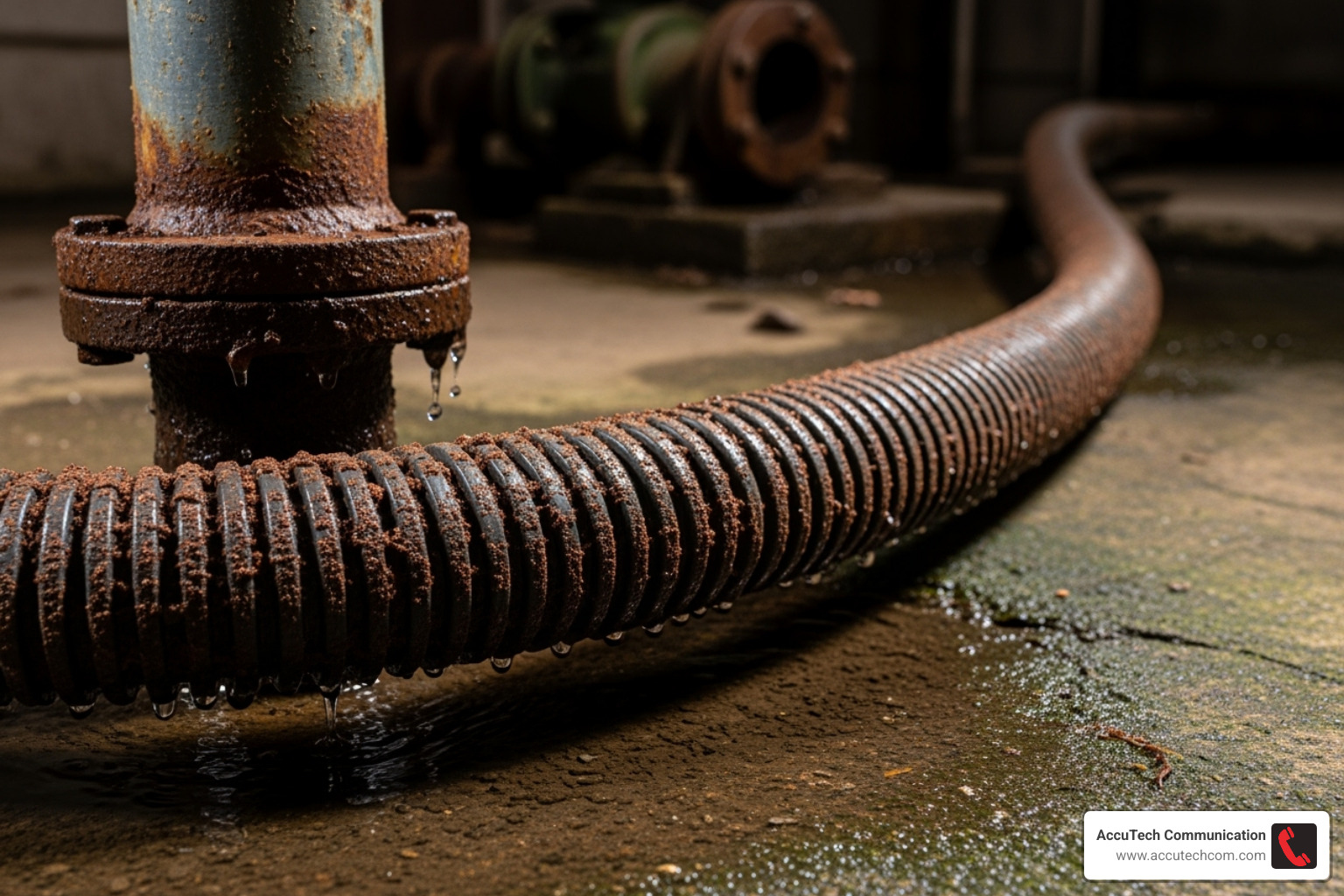
Moisture levels are a primary consideration. For a dry indoor location, standard flexible conduit might be fine. But in a damp basement, an outdoor installation, or anywhere with condensation, you’ll need liquid-tight flexible cable conduit (LFMC or LFNC). These have a crucial waterproof outer jacket that prevents moisture intrusion.
UV exposure is critical for any outdoor installation. I’ve seen conduits become brittle and crack after just a few seasons of sun exposure. Many non-metallic conduits, particularly LFNC types, are UV-resistant and designed to handle years of sunlight without degrading.
Temperature extremes can make or break an installation. Some conduits excel in high-temperature applications, while others stay flexible in freezing conditions. Always check the manufacturer’s temperature ratings.
Corrosive chemicals present another challenge, especially in industrial settings. For acids, alkalis, oils, or solvents, you’ll need either stainless steel metallic conduits or specially formulated non-metallic options.
For hazardous conditions with flammable gases or explosive dust, you’re looking at specialized explosion-proof systems with specific certifications. These are essential in the right applications.
Physical and Electrical Protection Needs
Beyond environmental concerns, you need to think about the physical punishment your flexible cable conduit might take and any electrical protection requirements.
Crush resistance and impact damage matter. Will someone step on the conduit? Could a vehicle run over it? Metallic conduits like FMC and LFMC generally handle these challenges better, though some heavy-duty non-metallic conduits are also very tough.
Vibration absorption is where flexible cable conduit shines compared to rigid alternatives. When connecting to motors or any vibrating equipment, its flexibility acts as a shock absorber, protecting wires and connections from fatigue.
EMI shielding and RFI protection are increasingly important. If you’re working near variable-speed drives, in data centers, or with sensitive electronics, shielded conduits prevent electromagnetic interference from disrupting signals. This is crucial in modern network cabling.
More info about network cabling
Sizing and Compliance for your Flexible Cable Conduit
Getting the sizing right and ensuring compliance is about safety and functionality. I’ve seen installations fail inspection and require expensive rework because these fundamentals were overlooked.
Conduit fill capacity is governed by NEC requirements. Overfilling can cause dangerous heat buildup and makes future maintenance nearly impossible. Always consult the fill tables and leave room for future additions.
Trade sizes for flexible cable conduit follow standard dimensions like 1/2 inch, 3/4 inch, and larger, referring to the nominal inside diameter. They are typically sold in lengths of 25 feet, 100 feet, or custom cuts. Match your conduit size to current and future needs.
Local electrical codes and UL standards are requirements, not suggestions. Every flexible cable conduit should carry proper UL listing, and installation must comply with local codes. Standards like UL1653 and CSA C22.2 No. 227.1 ensure the product has been tested for safety and performance.
For projects involving underground pathways, understanding the specific requirements becomes even more critical.
More info about underground electrical conduit
Essential Fittings and Accessories for a Secure Installation
Think of flexible cable conduit fittings like the joints in your body – they’re what connect everything together and keep the whole system working smoothly. After three decades of installations, I can tell you that a beautiful conduit run can be completely ruined by cheap or poorly installed fittings. The system is only as reliable as its connections.
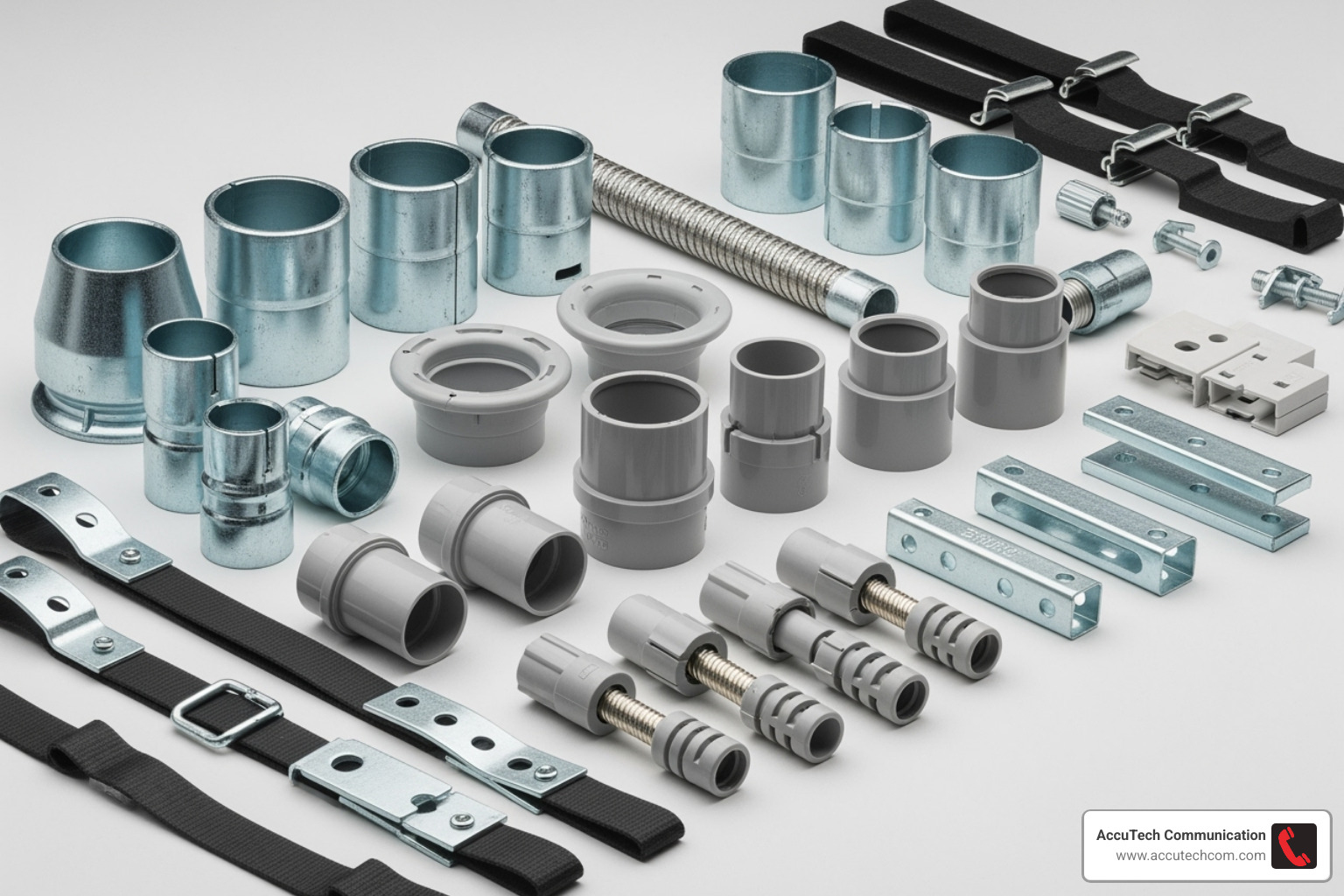
Connectors are the foundation of any secure installation. These critical components attach your flexible cable conduit directly to electrical boxes, panels, or equipment enclosures. For metallic conduits like FMC and LFMC, we use threaded metallic connectors that grip the conduit’s spiral construction and create a solid mechanical connection. Non-metallic conduits require their own specialized connectors – often featuring snap-in designs or solvent-weld connections that bond permanently to the conduit material.
When it comes to liquid-tight applications, the connector becomes even more crucial. These specialized fittings feature compression rings and rubber gaskets that create a watertight seal against both the conduit jacket and the enclosure. Getting this seal right is what separates a professional installation from a future headache.
Couplings come into play when you need to join two sections of conduit together. We always keep various sizes on hand because conduit runs rarely work out to exact lengths. Like connectors, couplings must match your conduit type – you can’t mix metallic and non-metallic components and expect a reliable connection.
Support straps and clamps might seem like minor details, but they’re absolutely essential for maintaining system integrity. Flexible cable conduit needs proper support at regular intervals to prevent sagging and kinking. We typically use one-hole or two-hole straps depending on the installation surface, spacing them according to electrical code requirements. Proper support also prevents stress on the connections at each end.
Terminators and bushings protect your wires at transition points where they exit the conduit. The cut end of conduit can be surprisingly sharp, and without proper termination, wire insulation can get damaged over time. These simple accessories create a smooth, protective pathway that extends wire life significantly.
For liquid-tight installations, gaskets and sealing washers work alongside connectors to ensure complete moisture protection. We’ve seen too many installations fail because someone skipped these inexpensive but critical components. In outdoor or industrial environments, that extra gasket is often what keeps the system running during harsh weather.
Grounding components deserve special attention when working with metallic conduits. Proper grounding isn’t just about code compliance – it’s about safety. Grounding bushings and specialized fittings ensure continuous electrical grounding from the conduit system back to your main panel.
The quality of these accessories directly impacts your installation’s long-term reliability. We’ve learned that investing in proper fittings upfront saves countless hours of troubleshooting and repair work later. This attention to detail is exactly what helps avoid the common installation mistakes that can compromise an entire project.
More info about avoiding common installation mistakes
Frequently Asked Questions about Flexible Conduit
After three decades of installing flexible cable conduit systems across New England, I’ve heard just about every question imaginable. Here are the answers to the most common ones.
Can flexible conduit be buried underground?
This is a very common question. The short answer is yes, but with important caveats to avoid a costly mistake.
Direct burial is possible with certain types of flexible cable conduit, but you must verify that your specific product is listed for this application. Not all flexible conduits are suitable for underground use.
Electrical Nonmetallic Tubing (ENT) can’t typically go directly into the ground, but it works beautifully when encased in concrete. We use this method frequently for under-slab installations where the conduit gets embedded in the concrete pour.
Liquid-Tight Flexible Non-Metallic Conduit (LFNC) is your go-to choice for direct burial applications. Many LFNC products are specifically listed and marked for underground use. We’ve installed thousands of feet of this for outdoor lighting, irrigation controls, and security cameras with excellent results.
Always check the product listings and verify compliance with local codes. Some jurisdictions have specific requirements about burial depth or warning tape. The manufacturer’s markings on the conduit will tell you if it’s approved for direct burial.
Which is better, plastic or metal flexible conduit?
Both metal conduit and plastic conduit have their place. The best choice depends on the application.
Metal flexible conduit shines when you need serious physical strength. If impact resistance is a factor—think areas where equipment might bump into the conduit or where there’s foot traffic—metal is usually the way to go. Its impact resistance is superior to most plastic options.
Metal also provides natural EMI/RFI shielding, which can be crucial in industrial or data applications. Plus, it has a robust feel that gives installers and inspectors confidence.
On the other hand, plastic conduit offers excellent corrosion resistance and is significantly lighter, making installation easier and faster. From a cost-effectiveness standpoint, plastic often wins for general-purpose applications where extreme physical protection isn’t required.
My advice? Consider the environment first. For outdoor applications, corrosive environments, or where weight is a concern, lean toward plastic. For high-impact areas or where maximum physical protection is needed, metal is typically the better choice.
How do you run flexible conduit around corners?
This question highlights the inherent flexibility that makes this conduit so valuable. With flexible cable conduit, corners aren’t the nightmare they can be with rigid systems.
For most situations, you can simply make gentle bends following your installation path. The key is to avoid kinking the conduit, which can damage it and make wire pulling difficult or impossible later.
Every flexible cable conduit has a minimum bend radius specified by the manufacturer. Stay within those limits to maintain wire integrity and create a smooth pathway for future wire changes.
For sharp turns or 90-degree corners, we often use 90-degree elbow fittings. While the conduit could probably make the turn, using a proper fitting ensures a consistent bend radius and a professional look. It’s also easier on the wires during pulling.
The goal is always to create the smoothest possible path for your conductors. Think of it as building a highway for your wires—you want gentle curves, not hairpin turns that will cause problems later.
One of the biggest advantages of flexible cable conduit is that it eliminates the need for the multiple fittings and complex calculations that rigid conduit requires. Accept that flexibility, but respect the conduit’s physical limitations for a reliable installation.
Conclusion
After more than three decades in the field, I can tell you that flexible cable conduit isn’t just another component in your electrical toolkit—it’s often the difference between a system that works beautifully for years and one that causes headaches down the road. The reliability and safety that comes from choosing the right conduit and installing it properly simply can’t be overstated.
We’ve covered a lot of ground here, from the versatility of flexible systems that bend around obstacles to the specialized solutions that protect sensitive data lines from electromagnetic interference. Whether you’re dealing with a vibrating piece of industrial equipment that would shake a rigid system apart, or you’re threading cables through the tight confines of a modern data center, flexible cable conduit adapts to challenges that would stop other solutions in their tracks.
The longevity aspect is something I’ve seen countless times. When you match the right conduit type to your environment—liquid-tight for wet locations, metallic for high-impact areas, or specialized shielding for sensitive electronics—you’re not just protecting wires today. You’re ensuring that system will keep performing reliably for decades.
Here in New England, where we deal with everything from harsh coastal conditions to the unique challenges of retrofitting century-old buildings with modern technology, having the right flexible cable conduit solution becomes even more critical. For professional network cabling projects in Massachusetts, New Hampshire, and Rhode Island, ensuring the correct conduit and a certified installation is key. AccuTech Communications provides expert services to guarantee your infrastructure is robust and compliant. We’ve been doing this since 1993, and we’ve learned that cutting corners on conduit selection is never worth the risk.
The investment you make in proper flexible cable conduit today pays dividends in reduced maintenance, fewer system failures, and the peace of mind that comes from knowing your electrical infrastructure is built to last. That’s the kind of foundation every reliable system deserves.
Learn more about our Structured Cabling Services
