
Fiber Optics Technician Salary: Maximize Your 2025 Pay
Why Fiber Optics Technician Salary is in High Demand
Fiber optics technician salary is a hot topic as industries upgrade their network infrastructure to meet growing bandwidth demands. With the rapid expansion of high-speed internet and data centers, skilled technicians are commanding competitive wages nationwide.
Quick Salary Overview:
- Average US Salary: $67,641 per year ($24.95/hour)
- Entry Level: $44,832 – $48,750 annually
- Experienced: $68,846 – $75,000+ annually
- Top Paying State: New Jersey ($87,550 average)
- Canada Average: $33.65/hour (Fiber Optic Cable Splicer)
The fiber optics industry offers solid earning potential with room for growth. Entry-level technicians typically start around $18.76 per hour, while experienced professionals can earn up to $37.74 per hour. Certified technicians with CFOT credentials average $69,000 annually—significantly higher than non-certified workers.
Geographic location also plays a major role in compensation. States like New Jersey lead the nation in pay, while Canadian provinces such as Alberta and British Columbia also provide attractive hourly rates.
I’m Corin Dolan, owner of AccuTech Communications. With over 30 years of experience working with fiber optics technicians across Massachusetts, New Hampshire, and Rhode Island, I have unique insight into salary trends. This guide will help you understand what you can expect to earn in this growing field.
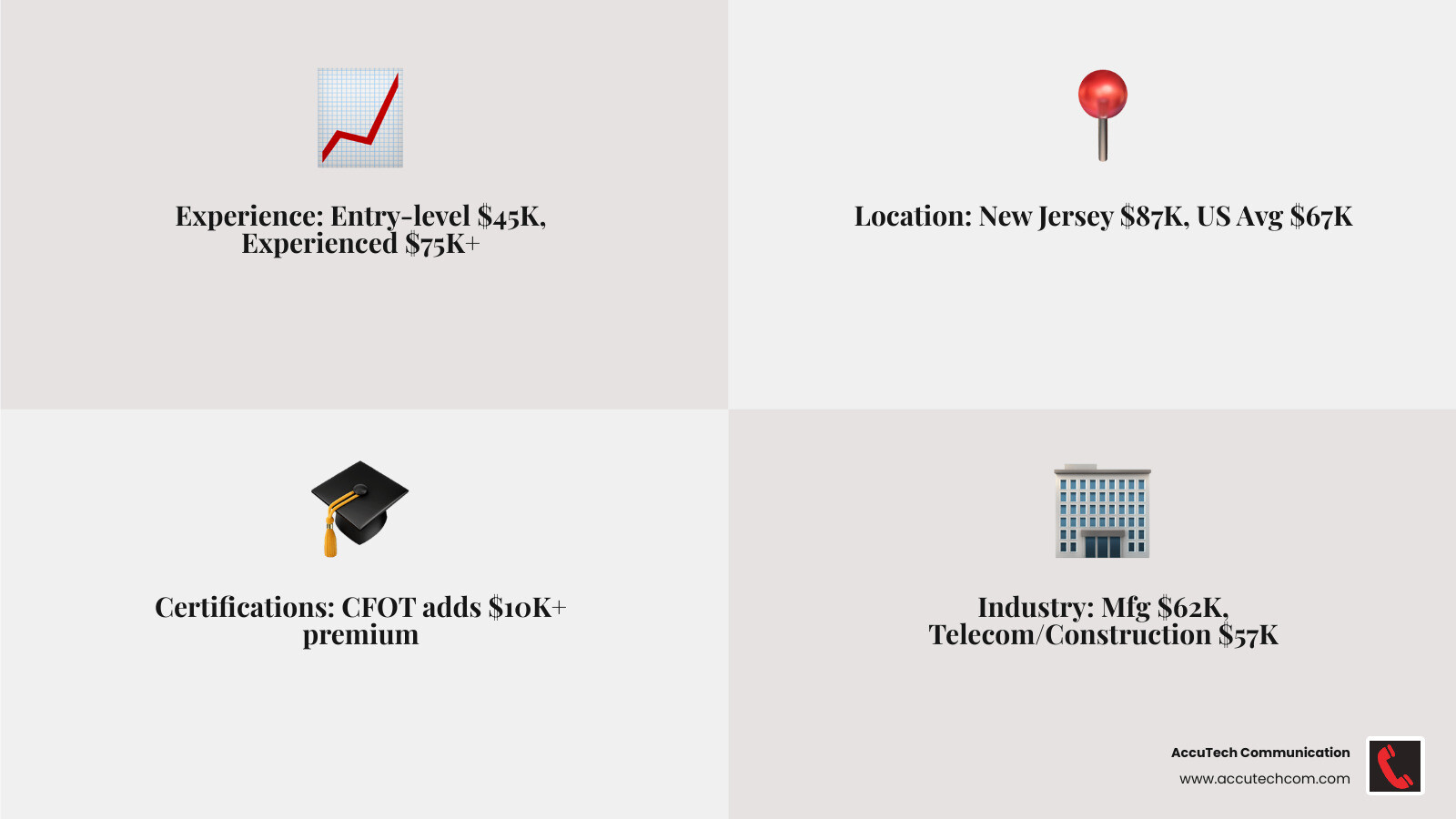
Simple fiber optics technician salary word guide:
What is the Average Fiber Optics Technician Salary?
When considering this career path, one of your biggest questions is likely about earning potential. The numbers are encouraging, with real potential for growth.
The average fiber optics technician salary in the United States is around $67,641 per year, or about $24.95 per hour. Entry-level positions typically earn between $44,832 and $48,750 annually. As you gain experience, your earning potential grows significantly, with experienced technicians often earning $75,000 or more per year, and top hourly rates reaching $37.74.
North of the border, Canadian fiber optic cable splicers earn a median hourly wage of $33.65, showing these skills are valued there as well.
The salary range is wide, from $17 to $38 per hour ($36,000 to $84,000 annually). This variation depends on experience, location, and specific responsibilities.
Here’s a breakdown of average annual salaries in some top-paying areas:
| Region | Average Annual Salary (USD/CAD) |
|---|---|
| New Jersey (US) | $87,550 |
| California (US) | $58,240 |
| Massachusetts (US) | $69,680 |
| New Hampshire (US) | $56,550 |
| Alberta (Canada) | $76,960 |
| British Columbia (Canada) | $76,960 |
| Ontario (Canada) | $70,720 |
These numbers reflect a real demand for skilled technicians who can handle the technical challenges of fiber optic installation and maintenance.
How Experience Shapes Your Paycheck
In the fiber optics field, your salary genuinely grows as you become more skilled and can solve complex problems.
With less than a year of experience, you’ll typically start around $18.76 per hour. This is your learning phase to master the basics.
At the 1-4 year mark (early career), compensation bumps up to about $21.53 per hour as you handle routine installations independently.
In the mid-career phase, your salary typically sees an 8% increase over early career earnings. You’ll take on more complex projects and may lead small teams.
Late-career technicians see a 21% pay increase, while the most experienced professionals can command 39% more than their early-career counterparts. These experts can quickly diagnose and solve any problem, often becoming mentors.
This progression shows that continuous improvement pays off; the more complex challenges you handle, the more valuable you become. If you’re curious about this career path, you can find more info about fiber optic technician careers.
Geographic Salary Breakdown
Your location significantly impacts your fiber optics technician salary. Moving to a different state can lead to a pay bump based on local market demand.
New Jersey is the current leader in pay, with an average salary of $87,550 annually, driven by high demand from data centers and infrastructure projects.
In California, the average Fiber Optic Technician Salary in California – Average Salary is $58,240 per year, with steady demand from the tech industry.
Here in New England, Massachusetts technicians average around $69,680, while New Hampshire is about $56,550, reflecting strong regional demand.
However, salary isn’t the only factor; cost of living is crucial. For example, Boston offers high wages ($82,100 annually), but its cost of living is 62.4% above the national average, which can offset the higher pay. Conversely, states with lower average wages like Arkansas ($31,200) may have a much lower cost of living, allowing your money to stretch further.
Canadian provinces also show regional differences, with British Columbia and Alberta offering median hourly wages of $37.00, and Ontario at $34.00.
The key takeaway is to research your local market. A lower salary in a low-cost area might offer better purchasing power than a higher salary in an expensive city.
Key Factors That Boost Your Earning Potential
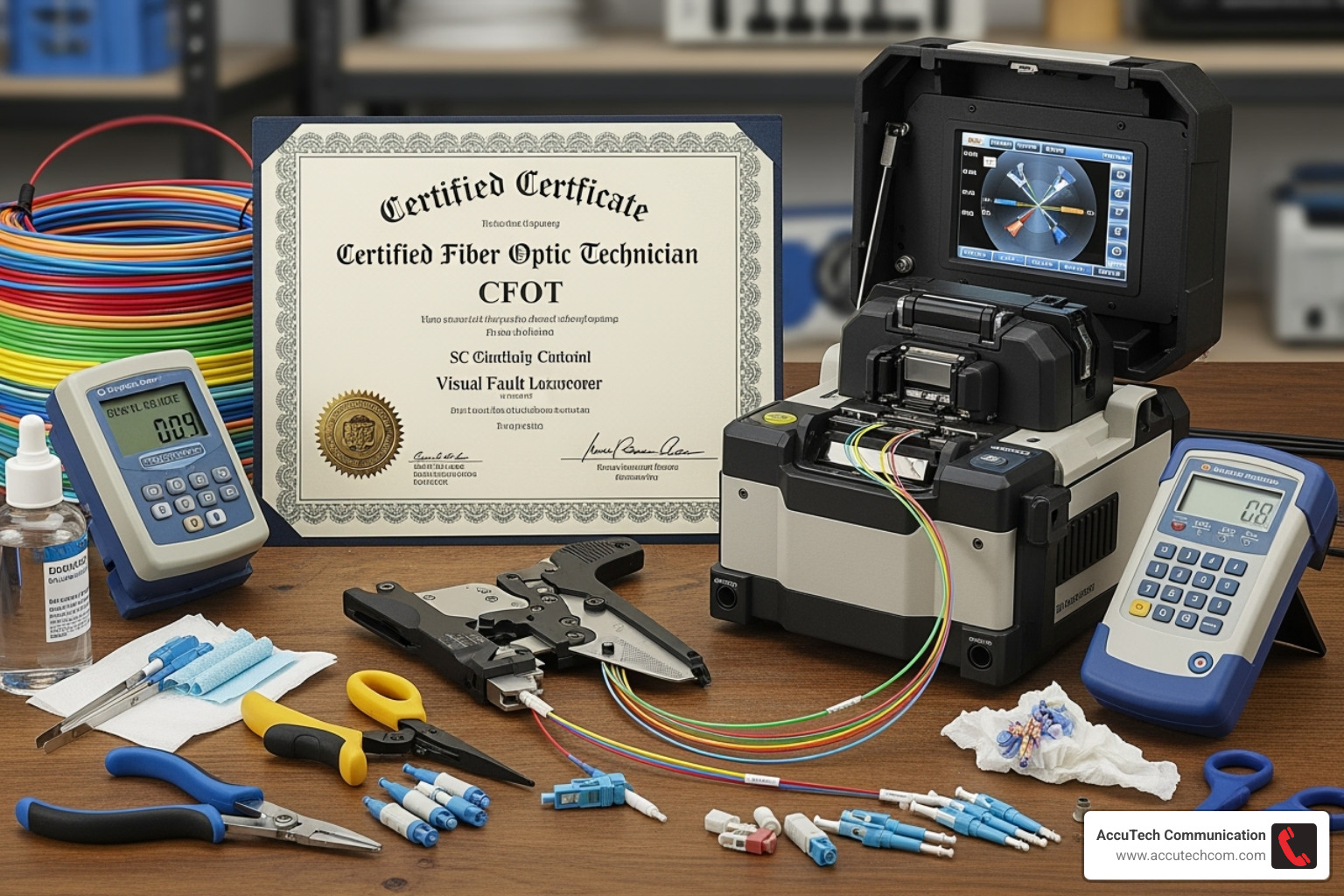
The most powerful salary boosters are your skills. Specialized abilities like fusion splicing, advanced testing, and working with cutting-edge equipment make you highly valuable. Problem-solving abilities are also critical. When a network goes down, companies need technicians who can quickly diagnose and resolve issues, making fast problem-solvers more valuable.
Developing expertise in emerging areas multiplies career advancement opportunities. Staying current with new installation techniques and testing methods keeps you ahead of the pack.
The Value of Certifications on a Fiber Optics Technician Salary
Getting certified is one of the most direct paths to a higher fiber optics technician salary.
The Certified Fiber Optic Technician (CFOT) certification from the Fiber Optic Association (FOA) is the industry’s gold standard. It proves you understand fiber optic theory, installation, and troubleshooting.
While the average salary is around $67,641, certified professionals earn more. According to Payscale’s Certified Fiber Optic Technician (CFOT) salary data/Salary), CFOT holders average about $69,000 per year—a meaningful premium.
Employers pay more for certified technicians because they are a safer bet. They make fewer mistakes, work more efficiently, and save companies time and money. Many employers now prefer or require CFOT certification, making it an entry ticket to better jobs and an investment in your future earning power.
Top-Paying Industries for Fiber Technicians
The industry you choose can substantially impact your salary.
Manufacturing leads the pack, offering a median total compensation of $62,660. These roles often involve producing fiber optic components and require precision and technical expertise.
Construction and maintenance services follow at $57,150 median pay. This sector covers the hands-on work of building and maintaining fiber networks.
Telecommunications is a solid choice at $56,935 median pay, including positions with internet service providers and cable operators.
Data centers are another lucrative opportunity. These facilities constantly upgrade their fiber infrastructure, and the high-density cabling required demands specialized skills. At AccuTech Communications, we’ve seen how critical skilled technicians are in these environments through our network cabling installation projects.
Government contracts, from defense to municipal projects, also offer competitive salaries and job security.
The key takeaway is that diversifying your experience across sectors can boost your earning potential and open new doors.
A Day in the Life: Responsibilities That Justify the Salary
What does a fiber optics technician do to earn a competitive fiber optics technician salary? This dynamic career is a blend of several roles.

A fiber optics technician is part detective, craftsman, and engineer. You keep our connected world running, whether installing cable in a new building or troubleshooting a major network issue. The work demands technical precision, problem-solving, and physical stamina. Every connection matters, and the critical nature of this work justifies the salary.
Core Duties and Tasks
A fiber technician’s core job is ensuring perfect data flow, which requires technical skill and steady hands.
- Installation: This involves pulling and routing cables through conduits or ceilings with precision. It requires understanding layouts, following safety codes, and working efficiently.
- Fusion splicing: This is the precise art of melting two fiber strands together for a seamless connection. Mastering this high-demand skill is crucial.
- Termination: This involves attaching connectors to link cables with network equipment. Proper termination is critical for performance.
- Testing and troubleshooting: Using tools like an Optical Time-Domain Reflectometer (OTDR), you’ll measure signals, locate breaks, and diagnose issues. You are essential for getting businesses back online after an outage.
- Maintenance and repair: This work keeps networks running smoothly through routine inspections, cleaning, and responding to emergency outages.
- Reading blueprints: This is essential for understanding cable paths and connections, ensuring every installation meets design specifications.
At AccuTech Communications, these skills are fundamental to our fiber optic cabling installation services, helping businesses across New England stay connected.
Common Work Environments
A fiber technician’s work environment changes constantly, demanding adaptability. You could be in a climate-controlled data center one day and a cramped server room in a commercial building the next.
Outdoor sites present unique challenges, from laying cable in trenches to climbing utility poles. You must be prepared to work in all weather conditions.
Underground vaults require special safety training for working in confined spaces. This physically demanding work is often necessary to connect major network segments and requires strict safety adherence.
This variety requires comfort in different conditions, and safety is always the top priority. This adaptability makes skilled technicians highly valuable. Our experience providing structured cabling services across Massachusetts, New Hampshire, and Rhode Island has shown us that versatile technicians who can handle any environment build the most successful careers.
Job Outlook and Common Benefits
The future is bright for fiber optics technicians. While official statistics show modest growth, real-world demand tells a more exciting story.
The U.S. Bureau of Labor Statistics projects 1% job growth for telecommunications line installers and repairers, but this doesn’t capture the full picture. The demand for faster internet, driven by streaming, remote work, and the Internet of Things, is powered by fiber optics. You can see the official outlook from the U.S. Bureau of Labor Statistics: Occupational Employment Statistics – Telecommunications Line Installers and Repairers, but our experience shows stronger demand.
The broadband expansion in rural America, the growth of data centers, and the need for robust networks in manufacturing are creating thousands of opportunities. In the field, we see a constant stream of upgrade projects as businesses adopt fiber to handle modern demands, ensuring steady work for skilled technicians.
At AccuTech Communications, we’ve been in this business since 1993, and we’ve never seen demand this high. The shift to remote work and cloud computing means companies need reliable, high-speed connections more than ever.
Non-Wage Compensation and Perks
The benefits package accompanying a fiber optics technician salary adds significant value to your total compensation.
Benefit coverage is impressive. In Canada, 91.7% of fiber optic cable splicers receive benefits. In the US, coverage is also strong, with most technicians receiving comprehensive packages.
- Medical insurance covers about 78% of US technicians, often with comprehensive family plans. Dental (72%) and vision (60%) coverage are also common, adding thousands of dollars in value to your annual compensation.
- Retirement planning, often through 401k plans with employer matching, is a major perk. Paid time off is also standard.
- Practical benefits for field technicians include a company vehicle or allowance and tool allowances, saving you significant out-of-pocket expenses.
- Perhaps most valuable is training and certification reimbursement. Many companies pay for continuing education like the CFOT, which directly boosts your earning potential.
While about 21% of technicians might not receive formal benefits, the vast majority enjoy packages that improve their total compensation by providing security and a better work-life balance.
Frequently Asked Questions about the Fiber Optics Technician Salary
Here are answers to the most common questions we receive about the fiber optics technician salary.
What is the highest paying state for a fiber optic technician?
New Jersey is the highest-paying state, with an average salary of $87,550 annually. As a hub for data centers and telecom infrastructure, New Jersey has high demand for skilled technicians, which drives up wages.
However, location within a state matters. Metropolitan areas typically offer higher wages but also have higher living costs. When weighing job opportunities, consider the whole picture, including the cost of living.
Does getting a CFOT certification guarantee a higher salary?
While no certification guarantees a specific salary, earning your Certified Fiber Optic Technician (CFOT) certification is one of the smartest investments for your career. Our research shows that certified technicians average around $69,000 annually, a meaningful difference.
CFOT certification acts as a professional calling card, telling employers you’ve mastered industry standards. At AccuTech Communications, certified candidates stand out because they bring proven expertise. The certification also opens doors to higher-level positions and specialized roles, contributing to long-term career growth.
What are the first steps to becoming a fiber optic technician?
Getting started is more straightforward than many people think and doesn’t require a college degree.
- Start with a high school diploma or GED.
- Pursue technical training programs at vocational schools or community colleges for hands-on experience and theoretical knowledge.
- Earn your CFOT certification. This is a crucial step that will set you apart in the job market.
- Gain on-the-job experience through entry-level positions or apprenticeships. This practical experience is invaluable for solidifying your skills and preparing you for advancement.
Conclusion: Building Your Career in Fiber Optics
The fiber optics technician salary landscape offers genuine opportunity, with pay climbing from around $45,000 to $75,000+ with experience. This field provides financial growth that matches your expertise.
This career is appealing because your earning potential grows with your skills. Pursuing CFOT certification or moving to a high-paying state like New Jersey (average $87,550) are clear pathways to increase your income.
The work is challenging and essential. Technical skills like fusion splicing, troubleshooting with an OTDR, and reading blueprints justify the competitive compensation. Geographic and industry flexibility adds to your career strategy, with sectors like manufacturing ($62,660 median pay) and construction ($57,150) offering distinct advantages.
At AccuTech Communications, we’ve witnessed this industry’s evolution since 1993. Our work across Massachusetts, New Hampshire, and Rhode Island has shown us how skilled fiber optic technicians become the backbone of reliable network infrastructure. The demand for expertise in areas like data center installations and structured cabling continues to grow.
The job outlook remains strong, driven by our society’s insatiable appetite for faster, more reliable internet connections. If you’re ready to start a career that combines technical expertise with solid earning potential, fiber optics offers a clear path forward. Ready to explore your opportunities? Start your career with a leading network infrastructure provider.
