
CFOT: 7 Powerful Reasons to Get Certified in 2025
Introduction
CFOT stands for Certified Fiber Optic Technician – a globally recognized credential that validates expertise in fiber optic installation, testing, and maintenance. This certification is issued by The Fiber Optic Association (FOA) and serves as the industry standard for fiber optic professionals.
Quick CFOT Overview:
- Certification Body: The Fiber Optic Association (FOA)
- Exam Format: 100 questions (multiple choice, matching, true/false)
- Passing Score: 70% minimum
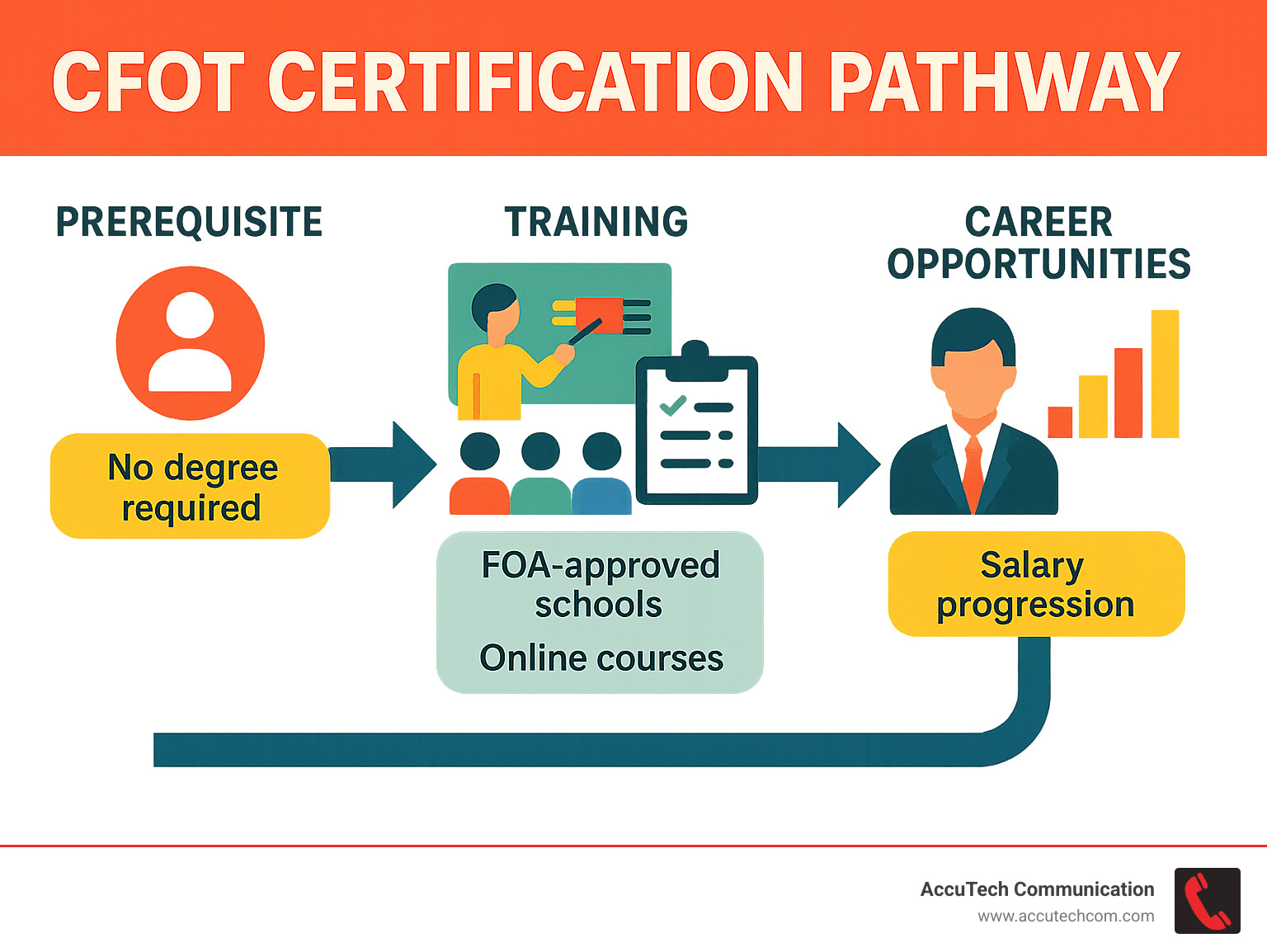
- Prerequisites: No college degree required
- Validity: 3 years with renewal required
- Average Salary: $69,000 annually (up to $96,000+ with experience)
- Training Options: FOA-approved schools or online courses
With fiber optic networks becoming the backbone of modern business communications, the demand for qualified technicians continues to grow. Healthcare facilities, manufacturing plants, and data centers all rely on certified professionals to maintain their critical network infrastructure.
The CFOT certification covers essential knowledge areas including fiber optic theory, cable installation, splicing techniques, testing procedures, and safety protocols. More than 200 FOA-approved training organizations worldwide have certified thousands of technicians with this credential.
I’m Corin Dolan, owner of AccuTech Communications, and I’ve been working with fiber optic systems and CFOT-certified technicians for over 30 years in the Massachusetts, New Hampshire, and Rhode Island markets. Throughout my career, I’ve seen how proper certification directly impacts installation quality and long-term network reliability for our business clients.
What is CFOT Certification?
CFOT (Certified Fiber Optic Technician) is your foundational certification that opens doors across the entire fiber optic industry – from installing cables in office buildings to maintaining critical data center connections.
The Fiber Optic Association (FOA) created this certification to validate expertise in fiber optics. Unlike specialized certifications that focus on one narrow skill, CFOT provides comprehensive knowledge. Whether you’re working on outside plant installations, premises cabling, or manufacturing quality control, this credential demonstrates your understanding of fundamentals.
The exam consists of 100 questions covering everything from basic fiber theory to hands-on installation techniques. You’ll see multiple choice questions, matching exercises, and true/false statements. You need to score 70% to pass, which is achievable with proper preparation.
CFOT is particularly valuable due to its recognition by the U.S. Department of Labor. It’s officially classified as a core certification under government O*NET guidelines. This means government contractors, major corporations, and bid specifications often require or prefer CFOT certified technicians.
The certification covers knowledge and skills you’ll use on the job: fiber optic theory, proper installation techniques, testing procedures, and safety protocols. It’s practical knowledge that translates directly to better work quality and fewer callbacks.
Industry Recognition & Governing Body (CFOT)
The CFOT trademark carries weight because it’s backed by the world’s largest professional society dedicated to fiber optics. The FOA maintains strict standards to ensure every certified technician meets consistent competency levels.
More than 200 FOA-approved schools operate worldwide, all teaching to the same rigorous standards. Whether you’re training in Boston or Bangkok, the curriculum and quality requirements remain consistent. These schools must employ qualified instructors and meet ongoing requirements to keep their approval status.
This global network creates real value for certified technicians. Your CFOT credential is recognized internationally, meaning you can work on fiber optic projects anywhere in the world. The FOA’s reputation matters when employers are making hiring decisions – they know CFOT certified technicians have been trained to industry standards.
Prerequisites to Sit for the CFOT Exam
CFOT certification is designed to be accessible. You don’t need a college degree or years of formal education to get started. The FOA recognizes that some of the best technicians learn through hands-on experience.
The basic requirements are practical. You need basic computer skills – nothing fancy, just enough to understand technical documentation and use testing equipment. Good eyesight and steady hands are essential since you’ll be working with hair-thin glass fibers. And you need enough English proficiency to understand safety instructions and technical procedures.
For experienced professionals, there’s an even better option. If you have two years of documented field experience in fiber optic work, you can pursue Direct Certification. This path recognizes that real-world experience often trumps classroom learning. You’ll need to document your specific work experience, including the types of projects and equipment you’ve worked with.
This flexibility makes sense when you consider how diverse the fiber optic field is. The accessibility of CFOT certification helps address the growing shortage of qualified fiber optic technicians.
How to Become a CFOT: Training, Experience & Exam Steps
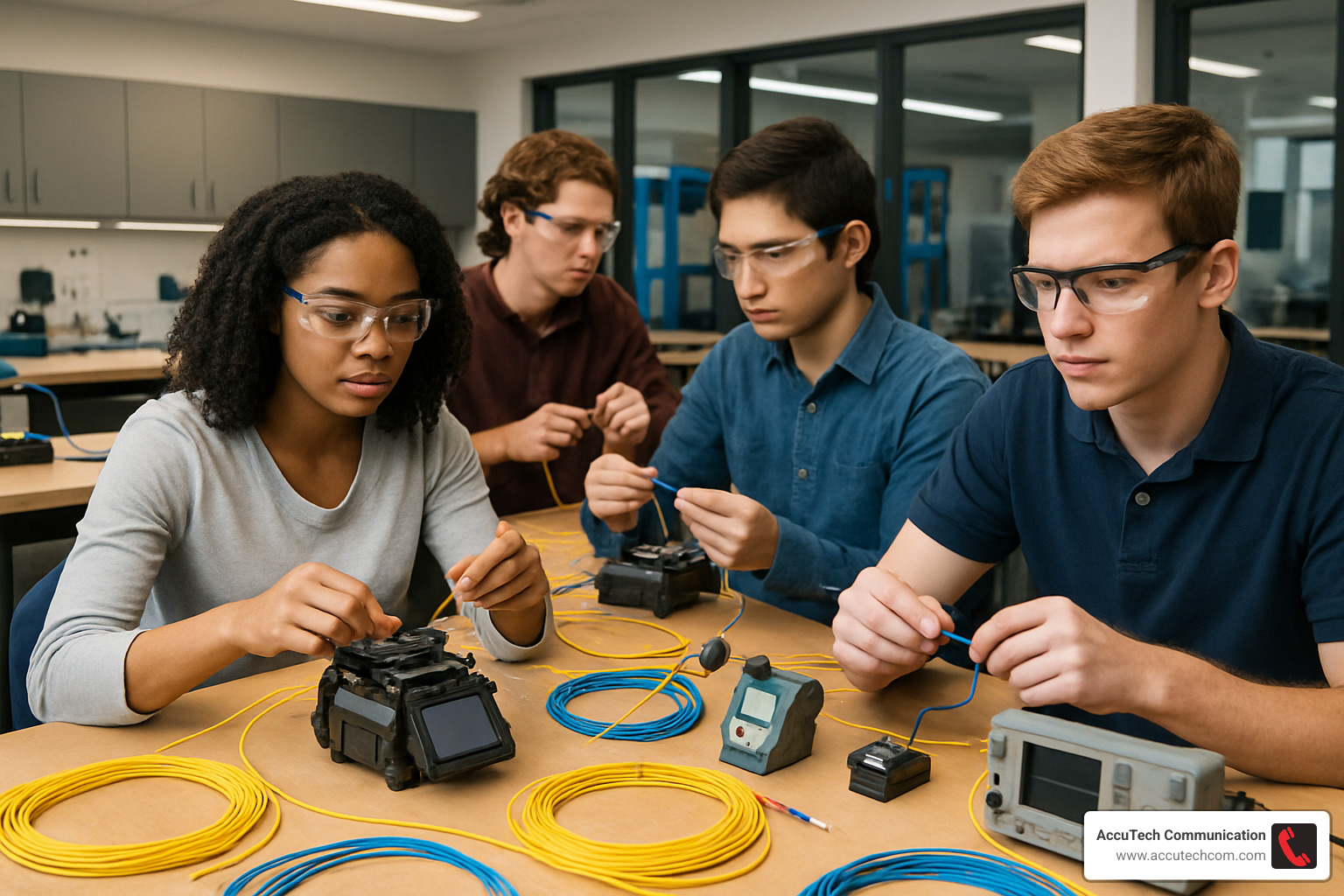
Getting your CFOT certification involves three key steps: quality training, hands-on practice, and passing both written and practical exams. Most people start with FOA-approved training programs that provide the solid foundation needed to succeed.
CFOT training is built around real-world experience. Most programs follow a 3-day, 24-hour format that’s packed with hands-on learning. You’ll spend about 85% of your time working directly with fiber optic equipment, not just reading about it.
The training covers everything you need for your CFOT certification. You’ll learn fiber optic theory – how light travels through glass strands and why fiber works so well. Then you’ll dive into installation standards like NECA/FOA-301 and EIA/TIA 568-B.3.
The practical component includes cable preparation and termination. You’ll learn how to properly attach SC, ST, and other connector types. Splicing methods cover both mechanical and fusion splicing techniques that let you join fiber cables together permanently.
Testing and troubleshooting rounds out your training. You’ll learn to operate an OTDR (the machine that finds problems in fiber cables), use power meters, and locate faults when things go wrong. Most importantly, you’ll master safety protocols – because working with lasers and tiny glass fibers requires respect and proper procedures.
If classroom learning isn’t your style, Fiber U offers a comprehensive Basic Fiber Optics course online. This self-paced option covers the same material as in-person training.
There’s also a Direct Certification path for experienced technicians who already have two years of hands-on fiber optic work under their belt.
Certified Fiber Optic Technician
Fiber U Basic Fiber Optics
In-Person vs Online CFOT Training
Choosing between classroom and online CFOT training comes down to how you learn best and what your schedule allows. Both approaches will prepare you for certification, but they each have advantages.
Classroom training gives you immediate access to professional equipment – the same tools you’ll use on the job. When you’re struggling with a tricky connector termination, your instructor is right there to guide you. The structured schedule keeps you on track, and most programs let you take your CFOT exam right after completing the course.
Online training shines when you need flexibility. Maybe you’re working full-time, or you have family commitments that make a three-day classroom session impossible. Online courses let you study when convenient, and cost savings can be significant – no travel expenses, no hotel rooms, and no time off work.
Many training providers now offer hybrid programs that give you the best of both worlds. You’ll do theoretical learning online at your own pace, then attend hands-on lab sessions where you get crucial equipment experience.
If you choose online training, make sure you’ll have access to practice equipment. The hands-on component is essential for CFOT success.
Exam Day: What to Expect as a CFOT Candidate
CFOT exam day usually happens right after your training program ends, though you can also schedule it separately at FOA-approved testing centers. Bring proper photo identification – they’re strict about verifying who you are.
The exam has two parts. The written portion includes 100 questions covering everything you learned in training. You’ll see multiple choice questions, matching exercises, and true/false statements. It’s a closed-book test, so you’ll need to have memorized key concepts. You need to score at least 70% to pass, and most people finish within two to three hours.
The practical examination is where you demonstrate actual fiber termination techniques while your instructor evaluates your work. You’ll operate an OTDR and interpret traces, use visual fault locators and power meters, and show that you understand proper testing procedures.
During practical exercises, you must announce when you’re activating lasers and listen for safety warnings from others in the room. This isn’t just exam protocol – it’s exactly what you’ll do on real job sites to keep everyone safe.
Most people who take their CFOT exam immediately after completing training do better than those who wait. The material is fresh, your hands remember the techniques, and you’re in the right mindset.
CFOT Costs, Benefits & Career Outlook

When technicians consider CFOT certification, the first question is always about cost. Here’s the honest truth: yes, there’s an upfront investment, but the return happens faster than most people expect.
Training programs typically range from several hundred to over a thousand dollars, depending on whether you choose online or in-person instruction. Most programs include the exam fee in their tuition. If you take the exam separately, expect to pay around $70 for the testing fee alone.
Many employers will sponsor your CFOT training because they know certified technicians deliver better results. Companies invest in certification because it directly impacts project quality and client satisfaction.
CFOT certified technicians typically earn $3 to $5 more per hour compared to their non-certified colleagues. The average annual salary sits around $69,000, but there’s significant room for growth. Entry-level certified techs start in the $40,000 to $50,000 range, while experienced professionals with 10-20 years can earn $70,000 to $96,000 annually.
Beyond the immediate pay bump, CFOT certification opens doors that stay closed for non-certified technicians. Many contracts specifically require certified personnel, which means you’re automatically qualified for projects that others can’t touch. This certification also travels well – it’s recognized worldwide.
Real-World Roles & Industries for CFOTs
The beauty of CFOT certification lies in its versatility. Unlike specialized credentials that lock you into one type of work, CFOT prepares you for opportunities across multiple industries.
Telecommunications and outside plant work remains the largest sector for certified technicians. This includes everything from installing fiber-to-the-home networks to maintaining long-haul connections between cities.
Data centers represent another growing opportunity. These facilities require precise installations and ongoing maintenance of high-speed connections between servers and storage systems.
Healthcare networks have become increasingly important, especially as telemedicine capabilities expand. Hospitals and medical facilities need certified technicians who understand both technical requirements and the critical nature of healthcare communications.
Manufacturing and quality assurance roles appeal to technicians who enjoy precision work and problem-solving. These positions often involve testing fiber optic components or ensuring production quality meets specifications.
Smart cities and municipal projects are expanding rapidly as communities invest in traffic management systems, public safety networks, and municipal broadband infrastructure.
Return on Investment: Why CFOT Pays Off
Most technicians see their CFOT investment pay for itself within the first few months of certification. The immediate benefits include premium hourly rates, eligibility for specialized projects, and faster promotion opportunities.
The long-term advantages compound over time. Government and military contracts often require certified personnel, opening up work that non-certified technicians can’t access. Independent contracting opportunities become available, allowing experienced techs to command higher rates.
Perhaps most importantly, CFOT certification provides a foundation for advanced specialties. Once you have your basic certification, you can pursue CFOS specializations in splicing, testing, or design. Each additional credential increases your value and earning potential.
The portable nature of certification adds real value too. Unlike company-specific training that becomes worthless when you change jobs, your CFOT credential follows you throughout your entire career.
Maintaining and Advancing Your Fiber Optic Credentials

Your CFOT certification doesn’t last forever – and that’s actually a good thing. The three-year renewal requirement ensures you stay current with rapidly evolving fiber optic technology and industry standards.
The FOA has made renewal much easier with their online credentialing system. Once you earn your CFOT certification, you’ll receive an email with a unique URL to your personal credential page. This digital approach eliminates the worry of losing paper certificates and makes verification instant for employers.
Your online credential includes a QR code that employers can scan for immediate verification. This makes it simple to share your certification on LinkedIn and other professional platforms.
To maintain your CFOT status, you have two options: complete 30 hours of approved continuing education or retake the full examination. Most technicians choose the continuing education route since it allows them to learn new skills while maintaining their certification.
FOA Certifications info
How to Test Fiber Optic Cable
Continuing Education Paths Beyond CFOT
Your CFOT certification opens the door to specialized credentials that can significantly boost your career prospects and earning potential. The FOA offers several Certified Fiber Optic Specialist (CFOS) certifications that build on your foundational knowledge.
The CFOS/S (Splicing Specialist) certification dives deep into advanced fusion splicing techniques. This specialty is particularly valuable because precise splicing directly impacts network performance.
CFOS/T (Testing and Maintenance Specialist) focuses on advanced testing protocols and troubleshooting techniques. This certification covers comprehensive OTDR operation, trace analysis, and fault location methods.
The CFOS/D (Design Specialist) certification teaches network design principles and link budget calculations. Design specialists plan fiber architectures and ensure systems meet performance requirements before installation begins.
Many equipment manufacturers also offer training programs that count toward your continuing education requirements. These courses keep you current with the latest products and technologies while building expertise with specific equipment lines.
Quick Renewal Checklist for Active CFOTs
Staying organized with your CFOT renewal prevents last-minute stress and ensures uninterrupted certification status. Create a simple tracking system to monitor your progress throughout the three-year cycle.
Start by documenting your continuing education activities as they happen. Save certificates from training programs, conferences, and manufacturer courses. Keep a running total of your hours.
About six months before your renewal date, review your continuing education progress. If you’re short on hours, you have time to attend additional training or complete online courses.
When you’re ready to renew, the online process is straightforward. Submit your renewal application through the FOA website, upload documentation of your continuing education activities, and pay the renewal fee.
Once your renewal is approved, download your updated credentials and print new wallet cards for field use. Update your LinkedIn profile and notify your employer of your renewed status.
Frequently Asked Questions about CFOT
How hard is the CFOT exam?
The CFOT exam strikes a fair balance – it’s challenging enough to mean something, but not so difficult that well-prepared candidates should worry. Think of it like getting your driver’s license: if you’ve studied the material and practiced the skills, you should do fine.
The exam requires a 70% passing score on 100 questions covering everything from basic fiber theory to hands-on termination techniques. Most candidates find the written portion straightforward if they’ve attended quality training. The questions use multiple choice, matching, and true/false formats that test your understanding rather than trying to trick you.
Here’s what typically trips people up: the hands-on portion can be more nerve-wracking than the written test. You’ll need to demonstrate actual CFOT skills like proper termination techniques and equipment operation. It’s one thing to know the theory – it’s another to make your hands steady enough to handle those tiny fiber strands under examination pressure.
The good news? Candidates who complete FOA-approved training programs generally report high success rates. The training is designed to prepare you for exactly what you’ll face on exam day. Pay attention during those hands-on lab sessions, ask questions when something isn’t clear, and practice until the techniques feel natural.
What does CFOT certification cost?
CFOT certification investment varies quite a bit depending on which path you choose and where you’re located. The total cost typically includes training, examination fees, and sometimes additional materials or travel expenses.
FOA-approved training programs represent the most common route to CFOT certification. These comprehensive courses usually bundle everything together – instruction, materials, and the exam fee. The investment ranges from several hundred to over a thousand dollars, depending on whether you choose in-person, online, or hybrid training formats.
In-person training tends to cost more due to facility expenses and equipment access, but many students find the immediate instructor guidance and hands-on equipment access worth the extra investment. Online courses offer more budget-friendly options while still covering all required material, though you’ll need to ensure you get adequate hands-on practice.
The Direct Certification path for experienced technicians involves lower upfront costs since it skips formal training. However, you’ll still pay application processing fees and the examination fee if taken separately.
Many employers sponsor CFOT certification for their technicians, recognizing that certified staff provide better service and qualify for more projects. Some companies pay upfront, while others reimburse upon successful completion. It’s definitely worth asking your employer about certification support – they benefit from having certified CFOT technicians on staff.
The investment typically pays for itself within the first year through higher wages and increased job opportunities. Most certified technicians tell us the certification opens doors that would otherwise stay closed.
Can experienced techs skip the class and test directly?
Absolutely! The FOA recognizes that real-world experience can be just as valuable as classroom learning. The Direct Certification Program allows seasoned technicians to earn their CFOT credential without sitting through training they may not need.
You’ll need to document at least two years of hands-on fiber optic experience in areas like installation, testing, or maintenance. This isn’t just any network experience – it needs to be specifically fiber-related work. Think cable preparation, connector termination, splice operations, or testing with OTDRs and power meters.
The documentation process requires some effort. You’ll need to provide detailed work history showing specific tasks you’ve performed, equipment you’ve used, and projects you’ve completed. Employer verification helps strengthen your application. The FOA reviews everything to ensure your experience meets CFOT standards.
Here’s a practical tip from our experience: Even seasoned technicians often benefit from reviewing study materials before taking the exam. Industry terminology and standard practices can vary between companies. The FOA Reference Guide to Fiber Optics helps ensure you’re familiar with the specific concepts and language used in the certification exam.
The Direct Certification path offers excellent value for experienced professionals who want to formalize their expertise without spending time on basics they already know. You’ll face the same rigorous examination standards as classroom-trained candidates, but you can skip the training investment if you’re confident in your knowledge base.
This route works particularly well for technicians who’ve been doing fiber work for years but never got around to formal certification. It’s a straightforward way to document your expertise and gain the professional recognition that CFOT certification provides.
Conclusion
Your journey toward CFOT certification represents more than just earning another credential – it’s about positioning yourself for long-term success in one of today’s fastest-growing technical fields. Throughout this guide, we’ve explored how this foundational certification opens doors across telecommunications, data centers, healthcare networks, and emerging smart city projects.
After more than 30 years in the fiber optic industry, I’ve seen countless technicians transform their careers through CFOT certification. At AccuTech Communications, our certified technicians consistently outperform their peers in both installation quality and problem-solving abilities.
The demand for certified technicians in our Massachusetts, New Hampshire, and Rhode Island service area continues growing stronger each year. Healthcare facilities are expanding their telemedicine capabilities, manufacturers are implementing smart factory technologies, and businesses everywhere are upgrading their networks to support remote work and cloud computing.
What makes CFOT certification particularly appealing is its accessibility. You don’t need a college degree or years of prior experience to get started. The combination of classroom theory and hands-on practice prepares you for real-world challenges from day one.
The financial benefits speak for themselves. Most certified technicians see their investment pay off within the first year through higher wages and expanded job opportunities. But the real value goes beyond immediate compensation – CFOT certification provides portable skills that are recognized worldwide and a foundation for continued professional growth.
The three-year renewal cycle keeps you current with evolving technology, while advanced CFOS specializations offer clear pathways for career advancement. Whether you’re interested in becoming a splicing specialist, testing expert, or network designer, CFOT certification provides the foundation for specialized expertise.
Starting your fiber optic career or formalizing existing skills through CFOT certification positions you for success in an industry that shows no signs of slowing down. The networks we install today will serve businesses for decades, and qualified technicians will be needed to maintain and expand these critical infrastructure systems.
Ready to explore how CFOT certification can advance your career? We’re here to help you understand the opportunities available in our regional market and connect you with the training resources you need to succeed.
More info about fiber-optic technician opportunities
