
Business Communications Services: Top Benefits in 2024
Business communications services are the backbone of modern enterprises, seamlessly connecting teams and clients with efficient, reliable systems. In today’s world, success depends on clear and effective communication across all channels—whether voice, video, or data. Businesses seeking robust communication solutions can choose from a range of services that include voice systems, video conferencing, collaboration tools, and unified platforms.
Here’s a quick overview of what business communications services typically offer:
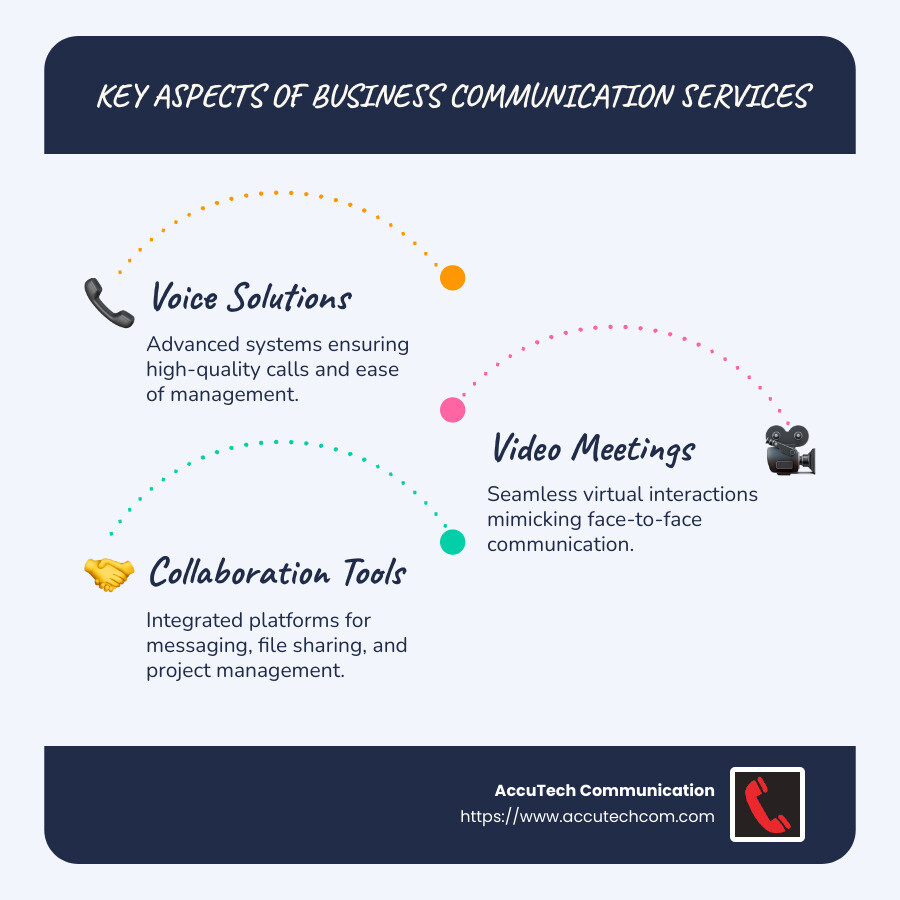
- Voice Solutions: Advanced systems that ensure high-quality calls and ease of management.
- Video Meetings: Seamless virtual interactions that mimic face-to-face communication.
- Collaboration Tools: Integrated platforms for messages, file sharing, and project management.
- Unified Communications: All-encompassing solutions that unify voice, video, and messaging services.
Hello! I’m Corin Dolan, and for years, I’ve been at the forefront of helping businesses improve their communication networks. With experience in business communications services, I’ve guided countless organizations to optimize their systems and thrive in a competitive landscape.
Business communications services basics:
– business communication systems
– phone services for business
– business phone solutions ma
Understanding Business Communication Services
In business, communication is key. It’s how teams collaborate, ideas are shared, and deals get done. Let’s explore the essential components that make up business communications services.
Voice Solutions
Voice solutions have come a long way from the days of basic office phones. Modern systems offer much more than just making and receiving calls. They feature touchscreens, video conferencing capabilities, instant messaging, and even mobile phone integration. These advanced systems ensure high-quality calls and are easy to manage, making them a vital part of any business’s communication strategy.
For example, AccuTech Communication offers both cloud-based and on-premise PBX systems. These systems are designed to ensure that your business stays connected, no matter where your teams are located.
Video Meetings
Video meetings have become a staple in business communication, especially with the rise of remote work. They allow teams to meet face-to-face, even when they’re miles apart. This form of communication increases productivity, reduces travel costs, and helps people get more done.
As noted in the research, high-quality audio and video are crucial for effective video meetings. Platforms like Microsoft Teams provide secure tools that businesses need to collaborate and perform, regardless of where participants are.
Collaboration Tools
Collaboration tools are the glue that holds team communication together. They provide integrated platforms for messaging, file sharing, and project management. These tools ensure that everyone is on the same page and can work together seamlessly.
Using tools like these, businesses can improve their communication and productivity. They allow for real-time interactions and make it easier to share ideas and documents. When remote and hybrid work are becoming the norm, having robust collaboration tools is more important than ever.
Understanding these key components—voice solutions, video meetings, and collaboration tools—can help businesses choose the right communication services to meet their needs. But how do these services integrate into a single, unified system? Let’s explore the benefits of Unified Communications as a Service (UCaaS) next.
Types of Business Communication
In any organization, communication flows in various directions, each serving a unique purpose. Understanding these types of communication is crucial to fostering a productive environment.
Upward Communication
Upward communication is the flow of information from lower levels of a hierarchy to the upper levels. This type of communication is essential for feedback, reporting, and expressing concerns. It empowers employees to share their insights and contribute to decision-making processes.
For example, a customer service representative might report recurring issues to management, helping the company improve its service. This type of communication ensures that management is aware of what happens on the ground.
Downward Communication
Downward communication is the transfer of information from higher levels to lower levels within an organization. This includes directives, instructions, and announcements from management to employees. It is crucial for maintaining order and ensuring that everyone is aligned with the company’s goals.
An example of downward communication is when a CEO sends an email outlining a new company policy. This keeps all employees informed and aware of any changes or updates.
Lateral Communication
Lateral communication occurs between individuals or departments at the same hierarchical level. This type of communication promotes collaboration and coordination across different parts of an organization. It is often informal and focuses on sharing information and solving problems.
Imagine a marketing team working closely with the sales department to launch a new product. They need to communicate laterally to ensure that their strategies are aligned and effective.
External Communication
External communication involves interactions between the organization and external entities, such as customers, suppliers, and partners. This type of communication is vital for building relationships, managing public perception, and conducting business transactions.
For instance, a company might use external communication to negotiate a contract with a supplier or to respond to customer inquiries. This type of communication helps maintain a positive image and fosters trust with external stakeholders.

Understanding these types of communication—upward, downward, lateral, and external—can help organizations streamline their processes and improve efficiency. But how do these communication types integrate into a unified platform? Let’s dig into the benefits of Unified Communications as a Service (UCaaS) next.
Benefits of Unified Communications as a Service (UCaaS)
Unified Communications as a Service (UCaaS) offers a modern twist on traditional communication setups. It integrates voice, video, messaging, and collaboration tools into a single platform, all delivered via the cloud. Let’s break down the key benefits of UCaaS:
Cloud Delivery
With UCaaS, businesses enjoy the perks of cloud delivery. This means no more hefty hardware installations or maintenance headaches. Everything runs smoothly in the cloud, ensuring easy access from anywhere, anytime. It’s like having your entire communication system in your pocket, ready to go wherever you are.
Cloud-based systems also offer scalability. As your business grows, so can your communication tools—no need for costly upgrades or new equipment.
Multichannel Sessions
UCaaS supports multichannel sessions, allowing seamless interaction across different communication modes. Whether it’s a phone call, a video meeting, or instant messaging, you can switch between them effortlessly. This flexibility ensures that teams stay connected, no matter their location or preferred communication style.
Imagine starting a conversation in a chat and seamlessly transitioning to a video call with a single click. That’s the power of multichannel sessions. It keeps communication fluid and responsive, making collaboration easier than ever.
Improved Collaboration
Speaking of collaboration, UCaaS shines in this area. It brings together all the tools teams need to work together effectively. From real-time document sharing to video conferencing, everything is integrated into one platform.
This setup reduces the need for multiple apps, simplifying the user experience. Teams can focus on what matters—working together to achieve their goals. Plus, with features like presence technology, employees can see who’s available and reach out instantly, fostering a more connected and agile work environment.
UCaaS transforms how businesses communicate. By leveraging cloud delivery, multichannel sessions, and improved collaboration, companies can streamline their operations and boost productivity. It’s a game-changer in business communications services, enabling organizations to adapt and thrive in an ever-changing landscape.

As we explore the features of business communication systems, we’ll see how these benefits translate into practical tools like caller ID, voicemail, and video conferencing.
Key Features of Business Communication Systems
In today’s world, effective communication is crucial for any business. Let’s explore some key features that make modern business communication services indispensable.
Caller ID
Caller ID is like having a personal assistant who tells you who’s calling before you pick up the phone. This feature displays the caller’s name and number, helping you decide whether to answer the call or let it go to voicemail. It’s especially useful for businesses to prioritize important calls and manage time efficiently.
Imagine you’re in the middle of a meeting and see a call from a key client. With caller ID, you can decide to step out and take the call, ensuring you don’t miss out on crucial opportunities.
Voicemail
Voicemail ensures you never miss a message, even when you’re away from your desk. Business voicemail systems are available 24/7, allowing callers to leave messages anytime. This way, you can listen and respond to messages at your convenience.
Some systems even offer voicemail-to-email features, where messages are transcribed and sent directly to your inbox. This makes it easy to keep track of important communications without having to check multiple platforms.
Call Forwarding
Call forwarding is a lifesaver for those always on the move. This feature allows you to redirect incoming calls to another number or extension. Whether you’re in the office, traveling, or working from home, call forwarding ensures you never miss an important call.
Picture this: You’re out meeting a client, but expecting an important call from another. With call forwarding, that call can be directed to your mobile phone, keeping you connected wherever you are.
Video Conferencing
Video conferencing has become a staple in business communication, especially with the rise of remote work. It allows face-to-face meetings without the need for travel, saving time and costs. High-quality video and audio ensure clear communication, making it feel like everyone is in the same room.
Platforms like Microsoft Teams and Zoom make it easy to host video meetings, share screens, and collaborate in real-time. This feature not only improves communication but also boosts productivity by bringing people together, no matter where they are.
These features are just the tip of the iceberg when it comes to business communication systems. They streamline operations, keep teams connected, and ensure businesses run smoothly. We’ll explore the different types of business communication and how they fit into the bigger picture.
Frequently Asked Questions about Business Communications Services
What are business communication services?
Business communication services are tools and systems that help companies connect and collaborate effectively. These can include software solutions like phone systems, video conferencing, and messaging platforms. They facilitate communication by providing seamless ways to share information, whether it’s a quick chat or a detailed video meeting.
For instance, using platforms such as Microsoft Teams, businesses can engage in virtual collaboration, bringing team members together to work on projects in real-time, no matter where they are located.
What are the four types of business communication?
Business communication can be categorized into four main types:
- Upward Communication: This is when information flows from the lower levels of an organization to the higher levels. For example, employees might report their progress to managers.
- Downward Communication: This involves information moving from the top of the organizational hierarchy to the bottom. An example would be a CEO sending an email to all employees about a new company policy.
- Lateral Communication: Also known as horizontal communication, this occurs between employees or departments at the same level. It helps in coordinating tasks and sharing information.
- External Communication: This involves interactions with individuals or organizations outside the company, such as customers, vendors, or other stakeholders. Effective external communication can improve customer relationships and business growth.
What does business communication include?
Business communication encompasses a variety of activities, such as creating, sharing, listening, and understanding information. It’s about crafting messages that convey ideas clearly and listening to feedback to ensure mutual understanding.
For example, in a team meeting, creating a presentation involves crafting clear messages. Sharing it with colleagues ensures everyone is on the same page. Listening to their feedback helps improve the project, and understanding each other’s perspectives fosters collaboration.
Business communication is the glue that holds an organization together, ensuring everyone is informed and aligned with the company’s goals. As we dig deeper, we’ll see how these elements integrate into effective communication strategies.
Conclusion
At AccuTech Communications, we understand that effective communication is the backbone of any successful business. Based in Massachusetts, we’ve been serving the New England region since 1993, providing top-notch network cabling and business phone systems. Our commitment to quality and competitive pricing has made us a trusted partner for businesses in Massachusetts, New Hampshire, and Rhode Island.
Our business communications services are designed to meet the unique needs of each client. Whether you’re a small business looking to improve your communication capabilities or a large enterprise seeking to upgrade your infrastructure, we offer solutions that are both reliable and scalable. Our team of certified technicians ensures that your network infrastructure is optimized for peak performance, keeping your business connected and efficient.
From structured cabling services to the installation of advanced business phone systems, we provide comprehensive support to ensure seamless communication. Our services include everything from consultation and design to installation and maintenance, ensuring your systems are always up-to-date and running smoothly.
Explore how our business phone systems can transform your company’s communication strategy. Let us help you make stronger connections and drive your business forward.
When communication is key, AccuTech Communications stands out as a leader in delivering dependable, high-quality communication solutions. We look forward to helping your business thrive.
