
Business IT Network: 5 Vital Elements for Success
In today’s digital world, a business it network is the backbone of any successful company. It plays a crucial role in ensuring efficient communication, data sharing, and smooth operations. For those needing a quick answer:
- Network infrastructure is vital for business success because it supports data management and communication across devices.
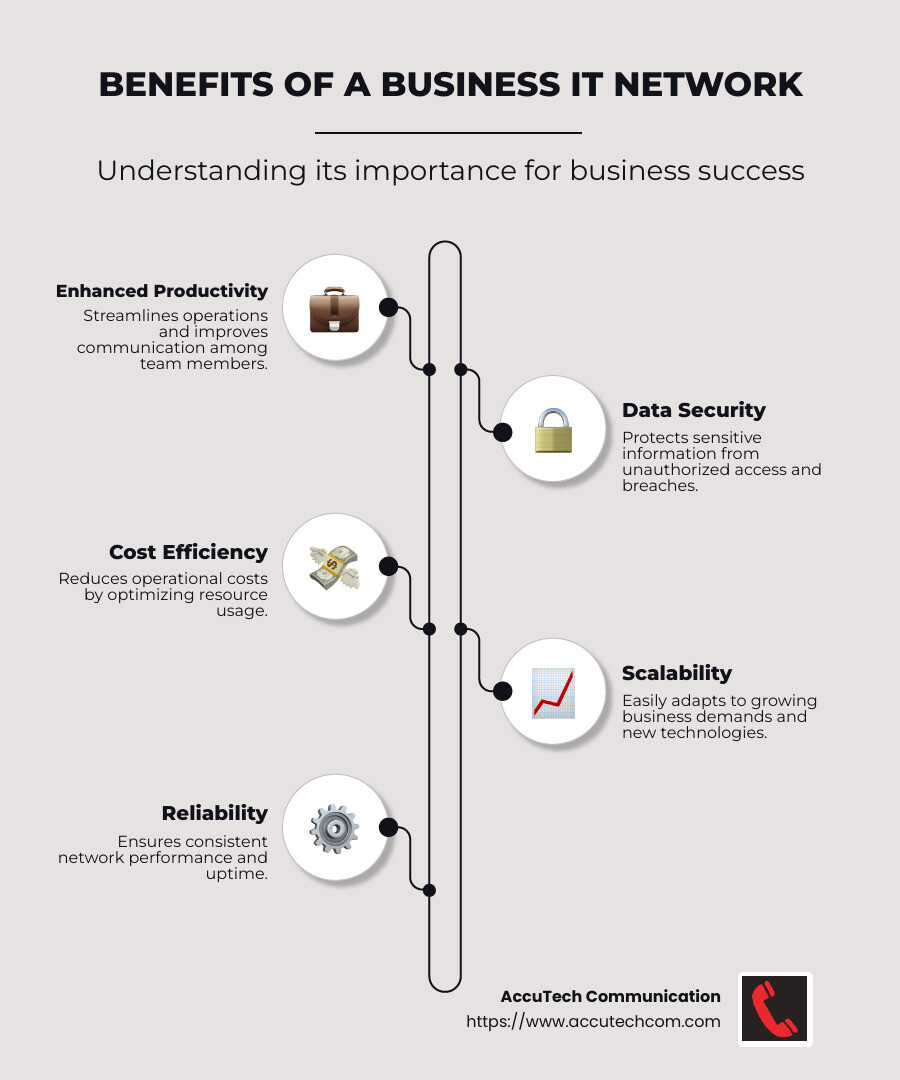
- A robust business it network can improve productivity, secure data, and facilitate growth.
Without a reliable network infrastructure, businesses can face disruptions that cost time and money, illustrating the importance of prioritizing a well-structured network.
As someone grounded in this field, I’m Corin Dolan. Since founding AccuTech Communications, I’ve helped businesses build and maintain high-performance networks custom to their unique needs, particularly in sectors where robust communication is key. Let’s dig into the intricacies of building a successful business network and explore the components that are essential for seamless operation.
Business it network further reading:
– B2B Network
– data communication and networking
– telecommunication network
Understanding Business IT Network
A business IT network is like the nervous system of a company. It connects all the parts, ensuring they communicate and work together efficiently. At its core, an enterprise network is a collection of interconnected devices such as computers, servers, and printers. These devices use communication protocols to share data and resources seamlessly.
Enterprise Network
An enterprise network is designed to support the complex needs of a business. It connects multiple sites, departments, and users, allowing them to share information and access resources. Think of it as the superhighway for data within your company. This network is essential for businesses that rely on real-time communication and data processing.
Interconnected Devices
In a business IT network, devices are interconnected to streamline operations. This setup allows for easy sharing of files, access to shared printers, and centralized data storage. For instance, in a small business, a network might connect a few computers, a printer, and a server. In larger enterprises, the network could include hundreds of devices spread across various locations.
Communication Protocols
Communication protocols are the rules that devices follow to communicate over a network. They ensure that data is sent and received accurately and securely. Common protocols include TCP/IP, which is the backbone of the internet, and Ethernet, which is commonly used for local area networks (LANs). These protocols help maintain a smooth flow of information, reducing the chances of data loss or miscommunication.

In summary, a well-structured business IT network is essential for efficient operations. By understanding the role of enterprise networks, interconnected devices, and communication protocols, businesses can build networks that support their growth and success.
Essential Components of a Business IT Network
Creating a business IT network involves setting up several key components that ensure efficient and secure communication across your organization. Each component plays a vital role in maintaining the network’s overall performance and reliability.
Switches
Switches are like the traffic cops of your network. They direct data to the correct destination, ensuring smooth communication between devices. In a business setting, switches connect computers, printers, and servers within a local area network (LAN).
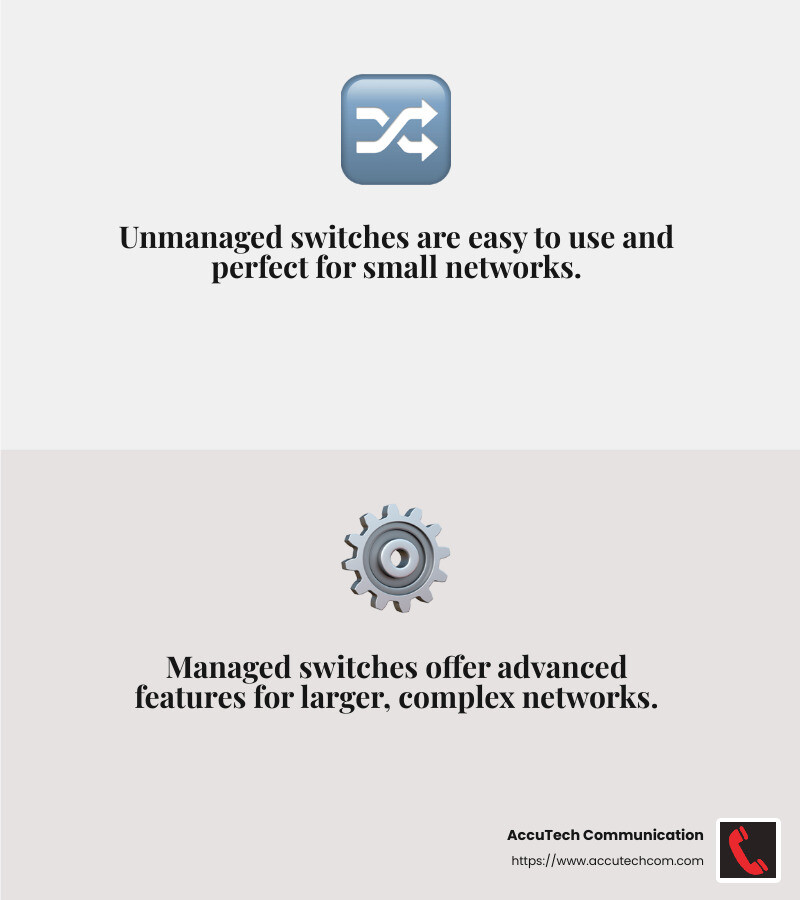
Unmanaged vs. Managed Switches:
- Unmanaged Switches are simple and ready to use out of the box. They’re ideal for smaller networks with minimal devices.
- Managed Switches offer advanced features like VLAN creation and remote management, suitable for larger, more complex networks.
Routers
Routers are the brains of your network. They connect your business to the internet and direct traffic between the internet and your internal network. Routers ensure that data packets find the most efficient path to their destination, whether they’re staying within the network or going out to the internet.
Firewalls
Firewalls are the security guards of your network. They monitor and control incoming and outgoing traffic based on predetermined security rules. A firewall protects your network from unauthorized access and cyber threats, ensuring that your business data remains safe.
LAN Cables
LAN cables are the physical connections that link devices within your network. High-quality cables, like CAT6, provide fast and reliable data transmission. They are critical for connecting bandwidth-intensive devices, ensuring smooth performance.
Benefits of CAT6 Cables:
- High-Speed Data Transmission: Supports Gigabit Ethernet, essential for fast data transfer.
- Reduced Interference: Better shielding minimizes signal interference.
Access Points
Access points extend the reach of your network by providing wireless connectivity. They allow mobile devices to connect to the network without the need for cables. In a small business, access points can maximize the reach of your wireless network, providing flexibility and mobility for employees.
By integrating these essential components, you can build a robust and efficient business IT network. A well-designed network not only supports current operations but also scales with your business as it grows.
Building a Small Business Network
Designing a business IT network for a small business is like laying the foundation for a house. You need the right tools, a good plan, and a focus on safety. Let’s break down the essentials.
Network Design
When creating a network, think about how your business operates. Do you need fast data transfer for video calls? Or maybe strong security for sensitive information? Start by mapping out your needs. Consider the number of devices and how they’ll connect.
A hybrid network, combining wired and wireless connections, often works best. It gives you the speed and security of cables, plus the flexibility of Wi-Fi. According to Microsoft, this setup can save on costs while maximizing reach.
Hardware Components
Now, let’s talk hardware. You’ll need a few key pieces:
- Router: Connects your network to the internet and manages data traffic.
- Switch: Distributes data to different devices within your network.
- Firewall: Protects your network from unauthorized access and threats.
- LAN Cables: Connect devices for fast, reliable communication.
- Access Points: Provide wireless connectivity for mobile devices.
Each piece plays a crucial role. For instance, switches ensure data flows smoothly between devices, while firewalls act as security guards, keeping threats at bay.
Security Challenges
Security is a top priority. Small businesses are often targets for cyber attacks because they might have weaker defenses. A solid firewall is essential, but it’s just the start. Regular updates and network monitoring are key to staying secure.
In a hybrid network, ensure your Wi-Fi is as secure as your wired connections. This means using strong encryption and managing passwords carefully. As noted in Microsoft’s guide, proper planning can make your wireless network as secure as wired.
Building a small business network might seem complex, but with the right design, hardware, and security measures, you can create a system that supports your business today and scales for tomorrow.
Business IT Network: Key Considerations
When setting up a business IT network, there are several key considerations to ensure it supports your business needs effectively. Let’s explore the essentials.
Network Architecture
Think of network architecture as the blueprint for your business IT network. It’s about how all the pieces fit together. A well-designed architecture can make your network more efficient and easier to manage.
Wired vs. Wireless: Decide whether a wired, wireless, or hybrid setup works best. Wired networks offer speed and security, while wireless networks provide flexibility. A hybrid network often combines the best of both, as suggested by Microsoft.
Scalability: Consider future growth. Choose a setup that can easily expand as your business grows. This means having enough ports and capacity to add more devices without major overhauls.
Device Compatibility
Device compatibility ensures all parts of your network work together smoothly.
Hardware: Make sure all devices, like routers and switches, are compatible with each other. Check if they support the same standards, such as Ethernet speeds or Wi-Fi protocols.
Software: Look at the software side too. Ensure that your network management tools can handle all devices and provide features like remote monitoring and updates.
Network Security
Security is crucial in any business IT network. Here are some steps to bolster your defenses:
Firewalls: These are your first line of defense against cyber threats. They monitor and control incoming and outgoing network traffic based on predetermined security rules.
Encryption and Authentication: Use strong encryption methods for data transfer, especially over wireless connections. Implement robust authentication processes to ensure only authorized users access your network.
Regular Updates: Keep all software and hardware updated to protect against vulnerabilities. Regularly update passwords and security protocols.
Monitoring: Continuous network monitoring can help detect and address issues before they become major problems. This proactive approach is vital for maintaining network security and performance.
By focusing on these key considerations—network architecture, device compatibility, and security—you can build a robust business IT network that supports your current operations and future growth.
Frequently Asked Questions about Business IT Network
What does an IT network do?
An IT network is like the circulatory system of your business. It connects computers, printers, and other devices, allowing them to communicate and share resources. The network ensures that data flows smoothly across devices, whether it’s a document being printed or an email being sent.
Hardware Infrastructure: This includes the physical components like routers, switches, and cables that connect devices. Think of these as the roads and highways for your data.
Software Infrastructure: This is the brain behind the network. It includes the operating systems and applications that manage data flow and security. It ensures that the right data goes to the right place without hiccups.
What is a business computer network?
A business computer network is a setup that links all your company’s devices. It’s more than just connecting computers; it’s about creating a web of communication that supports business operations.
Positive Relationships: A well-managed network fosters positive relationships between departments by making collaboration easy. For example, sales can instantly share customer data with marketing, enhancing teamwork.
Industry Insights: With a network, businesses can access real-time industry data and insights, helping them stay competitive and informed about market trends.
How to set up a new business network?
Setting up a new business IT network involves careful planning and understanding your company’s needs.
Network Architecture: Start by designing a network architecture that suits your business. Decide on the type of network—wired, wireless, or hybrid—that best meets your needs. Consider the layout of your office and the number of devices to be connected.
Company Needs: Identify what your business requires from the network. Are you focusing on speed, security, or scalability? Use this information to choose the right hardware and software.
Hardware Infrastructure: Gather the necessary hardware like modems, routers, and switches. Ensure compatibility among devices to avoid connectivity issues.
Software Infrastructure: Install and configure software that will manage your network. This includes security software to protect against threats and network management tools for monitoring performance.
By addressing these points, you can build a robust and efficient network that aligns with your business goals and supports growth.
Conclusion
At AccuTech Communications, we believe that a strong business IT network is the backbone of any successful company. Since 1993, we’ve been committed to providing certified, reliable service across Massachusetts, New Hampshire, and Rhode Island. Our expertise in network cabling, business phone systems, and data center technologies ensures that your network infrastructure is built to last.
Certified Service: Our team of skilled technicians and engineers is dedicated to delivering top-notch service. We adhere to industry standards and best practices to ensure your network operates smoothly and efficiently. This commitment to quality has earned us the trust of businesses for over two decades.
Competitive Pricing: We understand the importance of cost-effective solutions. Our competitive pricing ensures you get the best value without compromising on quality. Whether you’re a small business or a large enterprise, we tailor our services to meet your budget and needs.
Choosing AccuTech Communications means partnering with a company that prioritizes your business’s success. Our certified service and competitive pricing make us the ideal choice for your network infrastructure needs.
Ready to strengthen your business’s network? Contact us today to learn more about our comprehensive network solutions. Let’s build a robust network that supports your growth and success.
