
Cat 5 Cable Tester: Top 3 Powerful Picks for 2025
Why Every Business Needs a Reliable Cat 5 Cable Tester
A cat 5 cable tester is an essential tool that verifies the integrity of network cables by checking for continuity, miswires, shorts, and other faults that can cause network downtime. Here are the key types available:
Basic Cat 5 Cable Testers:
- Test continuity and wire mapping
- Detect opens, shorts, and crossed pairs
- LED indicators for pass/fail results
- Typically cost under $50
Advanced Cat 5 Cable Testers:
- Include tone generators for cable tracing
- Measure cable length up to 1000 feet
- Test PoE (Power over Ethernet) capability
- LCD displays with detailed fault information
Professional Cat 5 Cable Testers:
- Full certification testing to industry standards
- Archive test results for compliance documentation
- Support multiple cable types (Cat 5e, Cat 6, Cat 6A)
- Advanced diagnostics like crosstalk measurement
Network downtime can cost businesses thousands of dollars per hour. A faulty cable that goes undetected during installation often becomes the source of intermittent connectivity issues that are expensive and time-consuming to troubleshoot later.
Testing your cables before and after installation prevents these costly problems.
Whether you’re running a small office network or managing a large healthcare facility, having the right cat 5 cable tester ensures your network infrastructure operates reliably. The key is matching the tester’s capabilities to your specific needs and budget.
I’m Corin Dolan, owner of AccuTech Communications, and I’ve been installing and maintaining network cabling systems across Massachusetts, New Hampshire, and Rhode Island since 1993. Over the years, I’ve seen how the right cat 5 cable tester can save businesses from expensive network failures and compliance issues.
How Cat 5 Cable Testers Protect Your Network
After three decades of installing network cabling across New England, I’ve seen how a reliable cat 5 cable tester acts as your network’s first line of defense. Think of it as a health checkup for your cables – catching problems before they turn into expensive headaches.
Continuity checks form the backbone of cable testing. Your tester sends a gentle electrical signal down each wire and waits to see if it arrives safely at the other end. This basic test catches the vast majority of cable faults that would otherwise bring your network to a grinding halt.
Miswires are surprisingly common in both custom installations and factory-made patch cables. When cable pairs connect to the wrong pins, your network devices simply can’t communicate. Short circuits happen when two or more wires touch inside the cable jacket, often causing intermittent problems. Open circuits present breaks in individual wires that might seem to work initially but fail when you need them most.
For high-speed networks, crosstalk measurement becomes critical. When signals from one wire pair interfere with adjacent pairs, your data transmission suffers. Professional testers measure parameters like Near-End Crosstalk (NEXT) to ensure your cables can handle required speeds.
The certification value of proper testing extends far beyond installation day. When we complete projects, we provide detailed test reports documenting each cable’s performance. This paperwork proves your installation meets industry standards and becomes invaluable for future troubleshooting. Scientific research on twisted-pair cabling confirms that thorough testing during installation reduces network problems by up to 80%.
Choosing the Right Cat 5 Cable Tester: Basic, Advanced, Professional
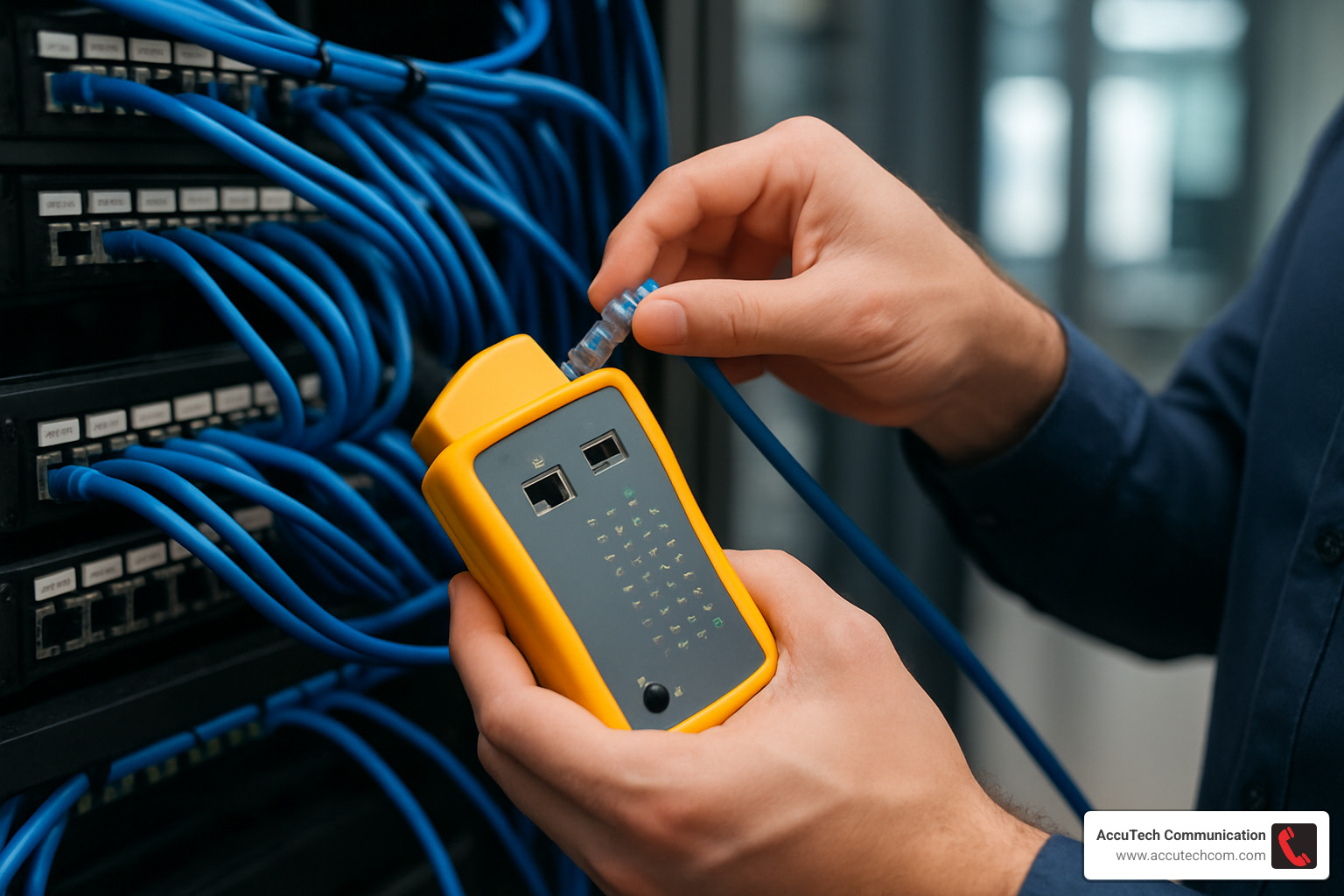
Selecting the appropriate cat 5 cable tester depends on your specific needs, budget, and installation complexity. We’ve used dozens of different testers over the years, and here’s what we’ve learned about each category.
Basic Cat 5 Cable Testers are perfect for small businesses and occasional users. These units feature LED indicators showing wire pair status and excel at continuity testing, detecting opens, shorts, and miswires. Most include auto power-off with up to 80 hours of battery life.
Advanced Cat 5 Cable Testers add significant functionality for professional installers. Length measurement capability helps verify runs and locate faults up to 1000 feet. PoE support is increasingly important as more devices rely on powered connections. LCD displays provide detailed fault information instead of simple pass/fail indicators.
Professional Cat 5 Cable Testers offer full certification testing meeting industry standards. These units archive test results for multiple projects, supporting certification and recertification over several years. Data archiving manages results from hundreds or thousands of cable runs.
Here’s how the three categories compare:
| Feature | Basic | Advanced | Professional |
|---|---|---|---|
| Continuity Testing | Yes | Yes | Yes |
| Wire Mapping | LED | LCD | LCD + Reports |
| Length Measurement | No | Up to 1000ft | Up to 1000ft+ |
| PoE Detection | No | Yes | Yes |
| Certification | No | No | Full TIA/EIA |
| Data Storage | No | Limited | Extensive |
| Typical Use | Home/Small Office | Commercial Install | Enterprise/Compliance |
When choosing a tester, consider your long-term needs. We often recommend investing in advanced or professional testers even if current needs seem basic. Network requirements change quickly, and having the right testing capabilities prevents future headaches. More info about Ethernet cable types can help you understand which tester features match your cable infrastructure.
Top Cat 5 Cable Tester Categories Reviewed
After decades of installing networks throughout Massachusetts, New Hampshire, and Rhode Island, I’ve learned that not all cat 5 cable testers are created equal. The difference between good and great testers often comes down to five key features.
Wiremap speed matters when testing hundreds of cables. Professional units complete comprehensive tests in under ten seconds, while basic testers can take up to a minute per cable. Fault location capabilities save countless hours by pinpointing exactly where problems occur within a few feet, instead of searching entire cable runs.
The test memory feature becomes invaluable when managing multiple projects. Professional testers store results from hundreds of cables, organizing them by project or location. Some sync with smartphone apps for easy report sharing.
Futureproofing means choosing units that handle more than just Cat 5 cables. Network upgrades happen faster than expected, so testers supporting Cat 5e, Cat 6, and Cat 6A ensure longevity. Firmware updates keep professional testers current with changing industry standards.
Best Budget Cat 5 Cable Tester
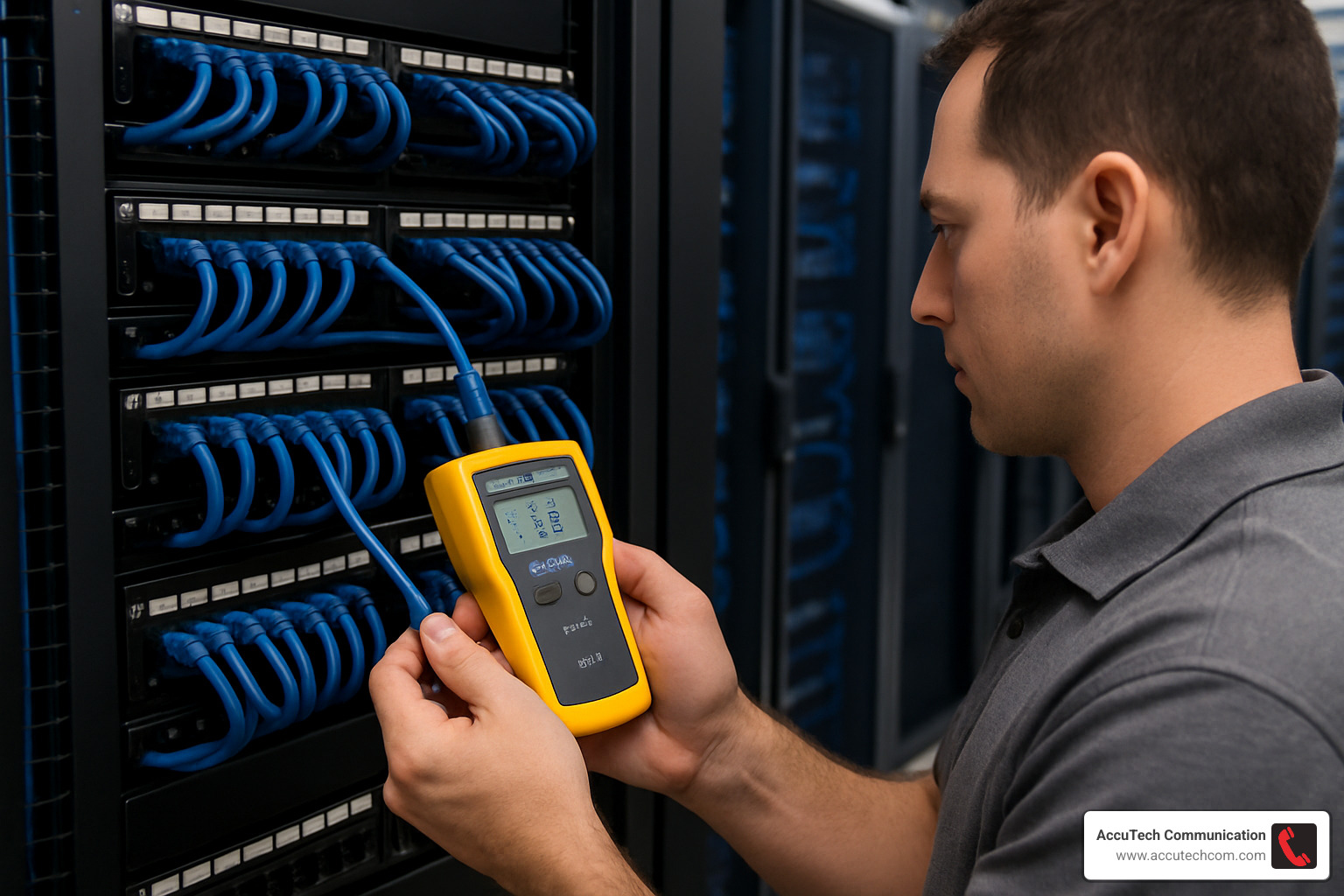
Budget cat 5 cable testers prove you don’t need to spend a fortune to catch common cable problems. The LED wiremap display is beautifully simple – green lights mean good connections, red lights mean trouble. Each LED corresponds to a specific wire pair for instant problem identification.
Continuity-only testing covers about 80% of cable faults we encounter. While these testers won’t measure advanced parameters, they catch the big problems that completely kill network connections. The DIY-friendly operation makes these testers perfect for small business owners handling basic network maintenance themselves.
Best Mid-Range Cat 5 Cable Tester
Mid-range cat 5 cable testers hit the sweet spot for professional installers and IT departments. Tone generator integration is a game-changer for tracing cables through walls and ceiling spaces. The tester sends an audible signal you can track with an inductive probe.
Length meter capability takes guesswork out of cable runs, measuring cables up to 1000 feet with good accuracy. PoE readout functionality has become essential as more devices rely on Power over Ethernet, verifying power presence and correct voltage levels.
Best Professional Cat 5 Cable Tester
Professional cat 5 cable testers represent the top tier, designed for certification work and comprehensive network documentation. Full certification testing ensures cables meet strict industry standards like TIA/EIA specifications, measuring critical parameters including insertion loss, return loss, and near-end crosstalk.
High-Definition Time Domain Reflectometry (HDTDR) diagnostics provide incredibly precise cable analysis, identifying subtle problems that other testers miss. Cloud reporting capabilities streamline documentation, with test results uploading to cloud-based systems for organization and professional report formatting.
Professional testers include traceable calibration certificates proving accuracy for compliance purposes. They support multiple cable types and can certify Cat 6 cables in under ten seconds, making them practical for massive installations.
How to Use a Cat 5 Cable Tester & Decode the Results
Getting accurate results from your cat 5 cable tester requires proper technique. After three decades of network installations, I’ve learned that correct procedures make the difference between catching problems early and spending hours troubleshooting later.
The main-remote hookup sets the foundation. Most testers come in two pieces – the main unit and smaller remote identifier. Connect one cable end to the main unit and the other to the remote, ensuring RJ-45 connectors click fully into place.
Test cycles require patience. Basic continuity checks finish in five seconds, but comprehensive certification testing takes several minutes. Don’t rush or move cables during testing. Pass/fail LEDs give instant feedback – green indicates good connections, red shows problems, yellow means marginal performance.
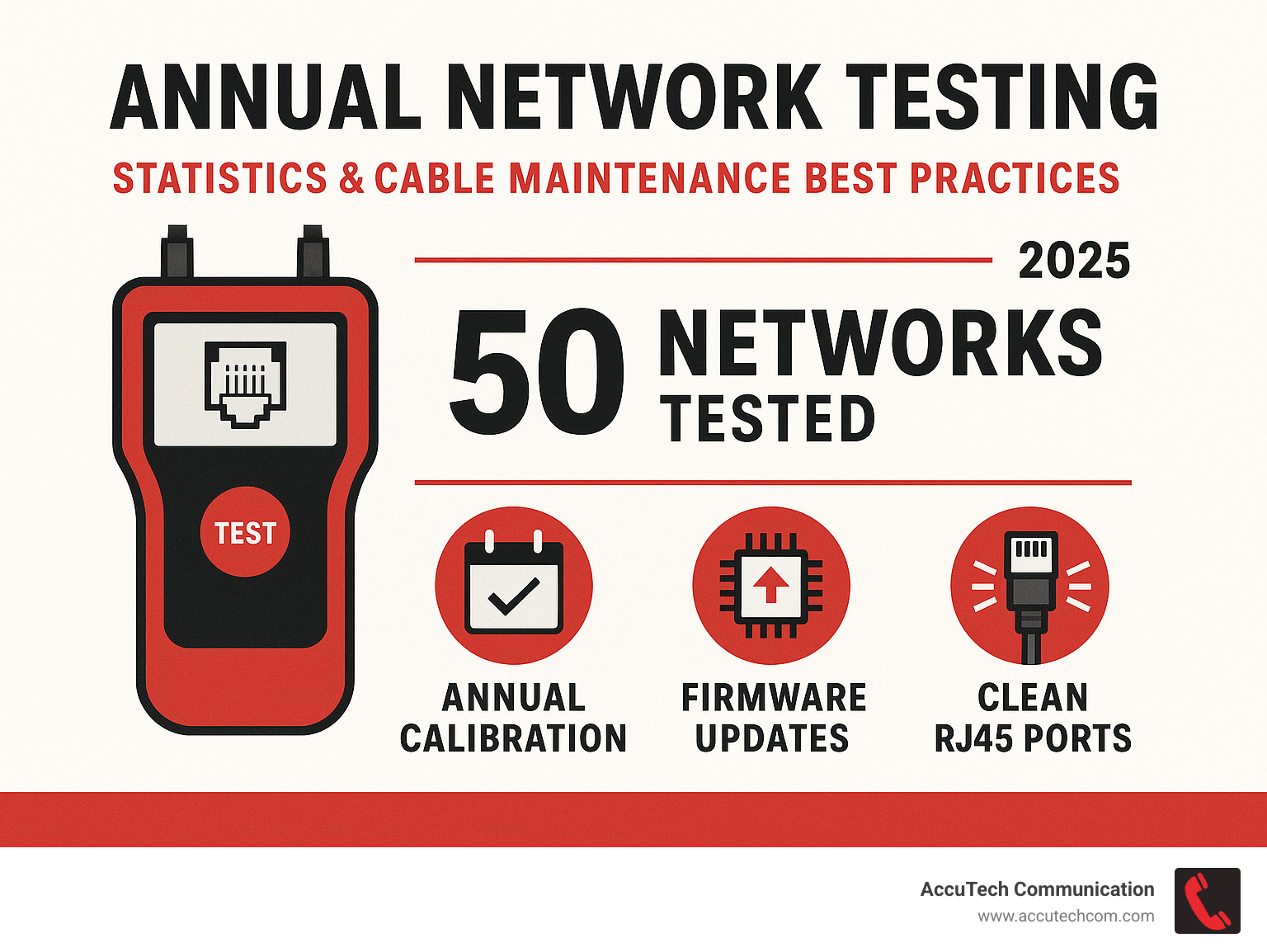
Calibration tips keep your tester accurate. Professional units need annual calibration to maintain precision. Store your tester in its protective case and avoid extreme temperatures. Battery safety is crucial – weak batteries cause false failures or inconsistent results.
Never test live cables – always work with unpowered connections. More info about Network Cable Wiring covers additional safety guidelines.
Step-by-Step Cat 5 Cable Tester Procedure
Power-up your tester and check battery level and display clarity. Connect your cable carefully to both units, ensuring connectors click into place. Select mode based on cable type and required testing level. Run test by pressing the button and watching progress indicators. Log results immediately with cable identification and fault information.
Interpreting Cat 5 Cable Tester Readouts
Pin-by-pin mapping shows exactly what’s happening with each wire. Standard Cat 5 cables use eight wires in four twisted pairs. Distance-to-fault measurements act like GPS for cable problems, showing exact fault locations.
NEXT and return loss readings indicate high-speed data transmission capability. Common fault indicators include opens (broken wires), shorts (touching wires), miswires (wrong pin connections), and split pairs (incorrectly matched wires).
Maintenance & Calibration Best Practices
Annual calibration keeps professional testers accurate and legally compliant. Firmware updates add features and improve accuracy. Clean RJ45 ports regularly with compressed air to prevent connection problems. Store in protective cases and avoid extreme conditions.
Frequently Asked Questions About Cat 5 Cable Testers
After three decades of installing networks throughout New England, these are the most common questions about cable testing.
How often should installed Cat 5 runs be re-tested?
Test critical cables annually and general office runs every two to three years. Environmental conditions make a huge difference – manufacturing plants may need testing within months due to heat and vibration, while office installations can run perfectly for decades.
When network performance issues appear – slow connections, intermittent failures, user complaints – grab your cat 5 cable tester immediately. Compliance requirements might force testing schedules for healthcare, banking, and government facilities.
Always test after any physical changes – construction, furniture moves, new equipment installations.
Can one tester handle Cat 5e, Cat 6 and phone cables too?
Yes, most modern cat 5 cable testers work with multiple cable types. Basic testers work with anything having RJ-45 or RJ-11 connectors but only check basic connectivity. Advanced testers include specific modes for different cable types with more accurate fault information. Professional testers provide full certification for multiple cable categories, verifying actual performance specifications.
Phone cable compatibility is usually excellent across all tester types, though some older phone systems use different wiring standards.
What mistakes should I avoid when testing live networks?
Never connect a cable tester to powered equipment or live network connections. This can damage expensive equipment or create safety hazards. Always disconnect both ends before testing. Don’t test PoE cables unless your tester specifically supports powered cable testing.
Avoid testing in electrically noisy environments when possible. Don’t ignore intermittent test results – they indicate real problems that will worsen over time. Label your cables clearly before testing to avoid confusion and wasted time.
Conclusion
After three decades of installing network infrastructure across New England, I can tell you that choosing the right cat 5 cable tester is one of the smartest investments you’ll make for your business. It’s not just about having a tool in your toolkit – it’s about protecting your entire network investment and keeping your team productive.
Think about it this way: when your network goes down, everything stops. Email stops flowing, file sharing grinds to a halt, and your team can’t access the systems they need to serve customers. The cost of that downtime almost always exceeds the price of proper testing equipment by a huge margin.
The right tester prevents these expensive outages by catching problems before they impact your business. Whether you choose a basic unit for simple troubleshooting or invest in professional certification equipment, you’re buying peace of mind along with the device.
We’ve seen countless situations where a simple cable test would have saved hours of frustration and hundreds of dollars in service calls. A miswired patch cable that takes two minutes to identify with a tester can otherwise consume an entire afternoon of troubleshooting.
Your network infrastructure deserves the same attention you give to other critical business systems. You wouldn’t skip maintenance on your HVAC system or ignore warning signs from your computer servers. Cable testing should be part of your regular IT maintenance routine.
At AccuTech Communications, we’ve built lasting relationships with clients throughout Massachusetts, New Hampshire, and Rhode Island by using professional-grade equipment and proven procedures. Our success comes from understanding that reliable networks start with properly tested cables.
Don’t let preventable cable faults compromise your business operations. Choose testing equipment that matches your needs, learn the proper procedures, and make cable testing part of your regular maintenance schedule. Your network will perform better, your users will be happier, and you’ll sleep better knowing your infrastructure is solid.
Ready to take the next step? Visit our comprehensive guide to Network Cable Testers for detailed information about choosing and using the right equipment for your specific situation. Our team is always here to help you build and maintain a network infrastructure that supports your business goals for years to come.
