The Great 20m Cable Debate: Cat6 or Fiber for Your Network?
The Great 20m Cable Debate: Cat6 or Fiber?
Choosing the right cat6 ethernet cable 20m for your network can feel like a big decision. For a quick answer, here’s what you need to know:
- A 20m Cat6 cable is an excellent choice for most home and small business networks.
- It easily supports Gigabit Ethernet (1 Gbps) and can even handle 10 Gigabit Ethernet (10 Gbps) over this distance.
- It’s reliable, cost-effective, and widely compatible with your devices.
- Consider fiber optics only if you need extreme speeds over much longer distances, or if your environment has severe electrical interference.
In today’s business world, a strong network is a necessity. Your network cabling is the backbone of your digital operations, directly affecting data flow, team productivity, and your ability to adapt to new technologies. This guide will walk you through the specifics of the 20m Cat6 Ethernet cable, comparing it to alternatives like fiber optics to help you make an informed decision for your business.
I’m Corin Dolan, owner of AccuTech Communications. For years, I’ve helped businesses across Massachusetts, New Hampshire, and Rhode Island optimize their networks, including selecting the ideal cat6 ethernet cable 20m solutions. My team and I understand the unique communication needs of businesses in our region.
Basic cat6 ethernet cable 20m glossary:
Decoding the Cat6 Ethernet Cable 20m: Performance and Potential
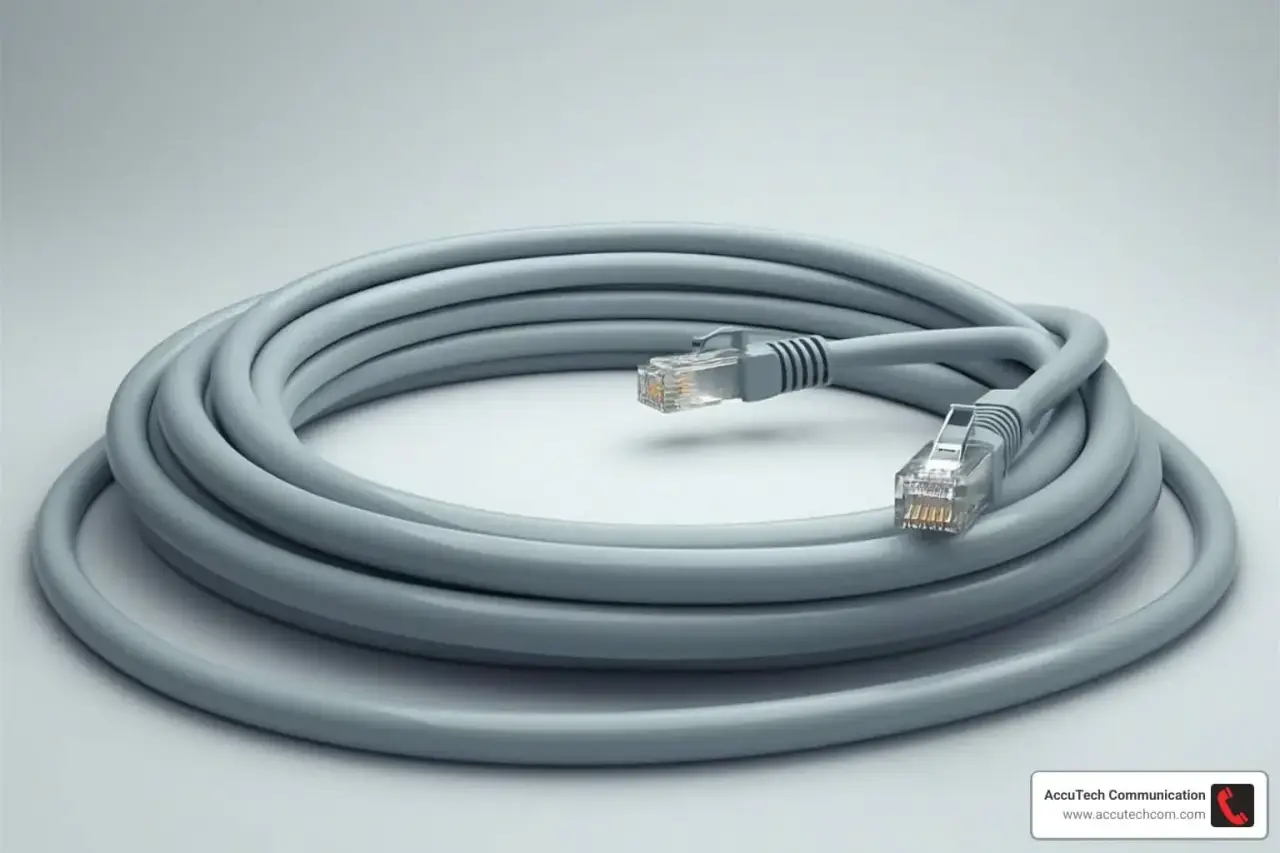
When it comes to your local network, a cat6 ethernet cable 20m is a true workhorse, designed to handle significant data loads with impressive efficiency. Its performance capabilities make it a staple in both home and business environments, offering a robust and reliable connection. But what exactly makes it such a popular choice? Let’s dive in.
Key Features and Benefits
The cat6 ethernet cable 20m boasts several key features that contribute to its widespread adoption and excellent performance.
- Bandwidth and Speed: Cat6 cables support a bandwidth of up to 250MHz, enabling data transfer rates of up to 10 Gbps over shorter distances. A 20-meter length is well within this range, translating to fast internet, quick file transfers, and a seamless online experience.
- Reliable Construction: These cables use standard RJ45 connectors for universal compatibility, high-quality 24 AWG copper conductors for minimal signal loss, and Unshielded Twisted Pair (UTP) technology to guard against interference and ensure excellent signal integrity. A durable PVC outer jacket protects the cable from everyday wear and tear.
- Backward Compatibility: A cat6 ethernet cable 20m works with older network categories like Cat5e and Cat5. This allows for easy integration into existing setups without a complete overhaul, though performance will match the lowest-rated component in the chain.
- Cost-Effectiveness: Compared to fiber or even Cat6a, Cat6 offers a fantastic balance of performance and affordability. It delivers high-speed capabilities without breaking the bank, making it an accessible upgrade for many.
For additional technical details on Cat6 standards, see the Category 6 cable entry on Wikipedia.
This combination of robust construction, effective interference reduction, and high data capacity makes a cat6 ethernet cable 20m incredibly Reliable and Versatile for a wide range of applications.
Performance of a cat6 ethernet cable 20m for Demanding Tasks
How does a cat6 ethernet cable 20m perform when you push it? For demanding tasks like 4K video streaming, online gaming, and maximizing high-speed internet, this cable excels. Its 10 Gbps capability ensures your gigabit internet connection isn’t bottlenecked, allowing for faster downloads and a snappier online experience. It provides the stable, high-bandwidth connection needed to stream 4K video without buffering or loss of quality.
For gamers, a wired Cat6 connection offers much lower latency and a more stable connection than Wi-Fi, minimizing lag and providing a competitive edge. This low latency is also crucial for video conferencing and remote work. In a home office or small business, connecting workstations, servers, or printers with a cat6 ethernet cable 20m provides the robust backbone needed for uninterrupted productivity and large file transfers.
Common Applications: Is a 20m Cat6 Cable Your Best Bet?
The beauty of a cat6 ethernet cable 20m is its sweet spot, long enough to connect devices across rooms, yet short enough to maintain peak performance affordably. Let’s explore where this cable is the ideal networking solution.
More info about ethernet cable wiring.
Ideal Scenarios for Cat6
A cat6 ethernet cable 20m is perfect for situations where Wi-Fi isn’t reliable enough and you need extra reach. Common use cases include:
- Connecting a router to a desktop PC or gaming console in another room, ensuring a stable, high-speed wired connection for your most demanding devices.
- Linking a primary router to a secondary wireless access point to extend Wi-Fi coverage in larger homes or offices, creating a more reliable network backbone.
- Hardwiring smart TVs, printers, or NAS devices to prevent buffering during 4K streams, connection drops during print jobs, and slow network storage access.
- Connecting workstations to wall plates or linking equipment across adjacent rooms in a business setting, covering most single-floor scenarios.
When Cat6 Might Be Overkill (or Underpowered)
While versatile, a cat6 ethernet cable 20m isn’t always the perfect fit. It’s important to know when to save money or when to invest more.
For basic internet use under 1 Gbps, Cat5e might be all you need, delivering similar performance at a lower cost. Your network is only as fast as its slowest component.
Conversely, Cat6 might be underpowered for future-proofing. While it handles 10 Gigabit Ethernet at 20 meters, its 10 Gbps capability is limited to 55 meters. For consistent 10 Gbps performance over longer distances (up to 100 meters), you should consider Cat6a. Cat6a offers double the bandwidth (500MHz) and is better suited for data centers or server rooms where maximum speed over longer runs is critical.
For extreme applications requiring 40 Gbps or more, even Cat6a is insufficient. This is where fiber optic cabling becomes essential.
The Fiber Alternative: When to Upgrade at the 20m Mark
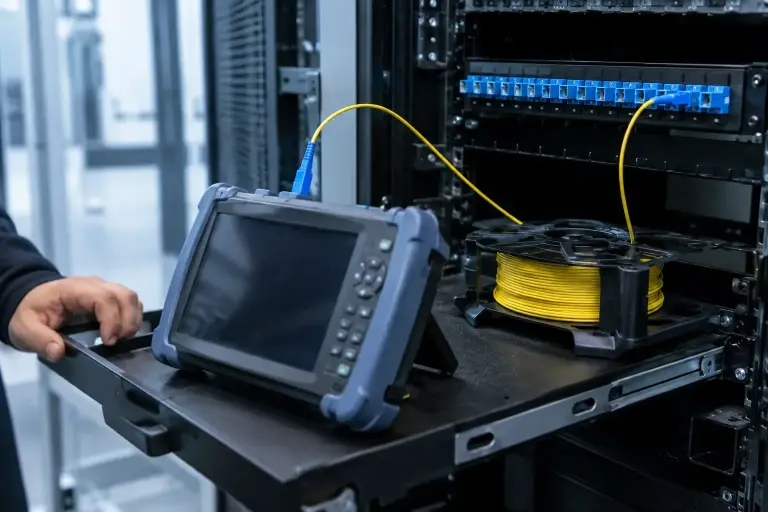
While the cat6 ethernet cable 20m is a champion for many setups, fiber optic cable offers distinct advantages. Instead of electrical signals, fiber uses light pulses, a fundamental difference that opens up a new level of performance. Even for a 20-meter run, understanding fiber’s strengths helps clarify when it’s the right choice.
More info about fiber optic installation.
Advantages of Fiber Optics
Fiber optics bring compelling benefits that copper cables can’t match:
- Superior Speed and Bandwidth: Fiber can transmit data at speeds of 40 Gbps, 100 Gbps, and beyond, making it essential for environments moving massive amounts of data.
- Immunity to Electromagnetic Interference (EMI): Since light is unaffected by electromagnetic fields, fiber provides a clean, uninterrupted signal in electrically noisy environments like factory floors or medical facilities.
- Longer Distances: Fiber can transmit data over many kilometers with minimal signal loss, far surpassing copper’s 100-meter limit.
- Improved Security: Fiber optic cables don’t emit electromagnetic signals, making them extremely difficult to tap without detection, which is ideal for handling sensitive information.
- Future-Proofing: Investing in fiber, even for shorter runs, prepares your network for the growing bandwidth demands of tomorrow.
Scenarios Demanding a Fiber Connection
While a cat6 ethernet cable 20m is perfect for most needs, we at AccuTech Communications strongly recommend fiber in specific situations:
- Data Centers: The industry standard for linking servers, switches, and storage arrays where massive bandwidth and ultra-low latency are non-negotiable.
- High-EMI Environments (Industrial, Medical): In settings with heavy machinery or diagnostic equipment, fiber’s immunity to EMI is the only way to ensure a reliable connection.
- Connecting Separate Buildings: Fiber reliably links buildings without concerns about ground potential differences or lightning strikes affecting data lines.
- Future-Proof Networks: For businesses anticipating massive data growth or adopting technologies that will exceed 10 Gbps, fiber provides a robust foundation.
- Mission-Critical Applications: For financial trading, utility control systems, or secure government networks, the unwavering reliability and security of fiber outweigh its higher initial cost.
Technical Deep Dive: Choosing Your 20m Cable
Understanding the technical specifications of a cat6 ethernet cable 20m helps you make an informed decision. Beyond length, factors like shielding, conductor type, and jacket material are crucial.
This table provides a quick overview of how different cable types stack up at the 20-meter mark:
| Cable Type | Speed (Max) | Bandwidth @ 20m (MHz) | Typical Cost (Relative) | EMI Resistance |
|---|---|---|---|---|
| Cat5e | 1 Gbps (10 Gbps up to 45m) | 100 | Low | Low |
| Cat6 | 10 Gbps (up to 55m) | 250 | Medium | Medium |
| Cat6a | 10 Gbps (up to 100m) | 500 | High | High |
| Multi-Mode Fiber (MMF) | 10 Gbps to 100 Gbps+ | Thousands | Very High | Immune |
This comparison highlights that while a cat6 ethernet cable 20m is a great all-rounder, the ideal choice depends on your environment and future needs.
Understanding Shielding: UTP vs. FTP
Shielding protects data signals from outside electrical noise.
- Unshielded Twisted Pair (UTP): The most common type for a cat6 ethernet cable 20m. The twisting of the wire pairs cancels out most interference. UTP is flexible, affordable, and ideal for typical home and office settings.
- Foiled Twisted Pair (FTP) or Shielded Twisted Pair (STP): These cables have a metallic shield for extra protection. Shielding is necessary in “electrically noisy” environments with heavy machinery or numerous power cables to prevent signal degradation.
Conductor and Jacket Specifications for a cat6 ethernet cable 20m
The materials used in your cat6 ethernet cable 20m affect its performance and durability.
- American Wire Gauge (AWG): Cat6 cables are typically 24 AWG. This refers to the wire thickness (a lower number means a thicker wire), which affects signal strength, especially for Power over Ethernet (PoE) applications.
- Solid vs. Stranded Conductors: Solid conductors are single, solid copper wires best for permanent installations inside walls. Stranded conductors consist of many tiny strands, making them more flexible and durable for patch cables that are frequently moved.
- PVC Jackets: The standard jacket material for indoor cables, Polyvinyl Chloride (PVC) is durable and protects the inner wires from everyday wear.
- Low Smoke Zero Halogen (LSZH): Required in many commercial buildings and data centers for fire safety. LSZH jackets produce very little smoke and no toxic fumes when burned.
- Outdoor-Rated Cables: For outdoor runs, these cables have tougher, UV- and water-resistant jackets to withstand the elements.
Understanding these specs ensures your cat6 ethernet cable 20m is the right type for your specific installation environment.
Installation and Troubleshooting
Choosing your cat6 ethernet cable 20m is the first step; proper installation is next. Here’s what you need to know about installing your cable and handling common issues.
Pre-Terminated vs. Bulk Cable: Pros and Cons
You can buy a cable with connectors already attached (pre-terminated) or make your own from a roll of bulk cable.
Pre-Terminated Cables
- Pros: Convenient, time-saving, and professionally tested for quality. No special tools or skills are needed.
- Cons: The attached connectors can be difficult to pull through tight conduits or small holes. You may be left with excess slack if the length isn’t exact.
Bulk Cable and Connectors
- Pros: Allows for custom lengths for a tidy setup. The bare cable is easier to pull through tight spaces before adding connectors. Can be more cost-effective for large projects.
- Cons: Requires special tools (crimper, stripper) and the skill to terminate connectors correctly. It’s more time-consuming and has a higher potential for errors.
For a single cat6 ethernet cable 20m, a pre-terminated cable is usually the best choice. For complex jobs, bulk cable offers more flexibility.
Common Issues and Troubleshooting Tips
Even the best cables can have issues. Here’s how to tackle them:
- No Connection/Intermittent Connection: Check that the cable is securely clicked into the ports on both ends. Try a different port on your router/switch. Test with a different, known-working cable to isolate the problem. Inspect your cat6 ethernet cable 20m for visible damage like kinks or cuts.
- Slow Speeds: Verify that your devices (computer, router, switch) all support gigabit speeds. Check your computer’s network adapter settings to ensure they are set to auto-negotiate or the correct speed. Rule out other bottlenecks like a slow internet plan or too many devices using bandwidth.
- Signal Degradation: This can be caused by sharp bends, proximity to electrical interference (for UTP cables), or poorly terminated connectors. For persistent issues, professional testing can identify hidden problems like excessive crosstalk or signal loss.
While these tips can solve many problems, complex challenges may require expert help. More info about professional network installation.
Frequently Asked Questions about 20m Network Cables
Here are answers to the most common questions we receive when people are considering a cat6 ethernet cable 20m.
Can I run 10 Gigabit Ethernet over a 20m Cat6 cable?
Yes. A quality cat6 ethernet cable 20m can handle 10 Gigabit Ethernet speeds. The Cat6 standard is officially rated to support 10 Gbps up to 55 meters, so a 20-meter run is well within specification. However, your network cards, switches, and router must also support 10 Gbps to achieve these speeds.
Is a 20m ethernet cable too long and will it cause lag for gaming?
No, a 20-meter Cat6 cable will not introduce any noticeable lag for gaming. In fact, switching from Wi-Fi to a wired connection will likely improve your gaming experience by providing a more stable, lower-latency connection. Signal degradation over this distance is negligible and will not impact performance.
What is the most significant difference between Cat6 and Cat6a?
The main differences are bandwidth and performance over distance. Cat6a has double the bandwidth of Cat6 (500MHz vs. 250MHz). While a cat6 ethernet cable 20m handles 10 Gbps speeds perfectly, the Cat6 standard is limited to 55 meters for 10 Gbps. Cat6a can maintain 10 Gbps speeds over the full 100-meter channel length, making it a better choice for future-proofing or for networks requiring high speeds over longer distances.
Conclusion: Making the Right Connection for Your Needs
Choosing between a cat6 ethernet cable 20m and fiber optics comes down to picking the right tool for your specific job. For most homes and small businesses, the verdict is clear: a cat6 ethernet cable 20m is an excellent choice. It delivers outstanding performance for high-speed internet, 4K streaming, and gaming, all while being cost-effective, reliable, and versatile.
Fiber optics become essential in more demanding scenarios. Choose fiber for ultra-high speeds beyond 10 Gbps, environments with severe electrical interference, connections over very long distances, or mission-critical data centers where data integrity and speed are paramount. In these cases, fiber’s benefits justify its higher cost.
To make your decision, consider your current and future performance needs, your installation environment, and the overall cost-benefit. This is where AccuTech Communications can help. Since 1993, we’ve helped businesses across Massachusetts, New Hampshire, and Rhode Island make these choices, providing quality, certified installations you can rely on. Whether you need a cat6 ethernet cable 20m for your office or a fiber backbone for a data center, we ensure your network is strong, smart, and ready for the future.
If you’re weighing your options or need expert help with your network cabling, we’re here to make it simple and effective.