
Cat6 Network Cable: Top 5 Best Picks of 2025
When it comes to building a robust and reliable network infrastructure, cat6 network cable stands out as a top choice for many businesses. These cables are engineered to support high-speed data transfer, making them ideal for enterprises that require efficient and seamless communication. Here’s a quick overview of why cat6 network cable is favored for professional networking:
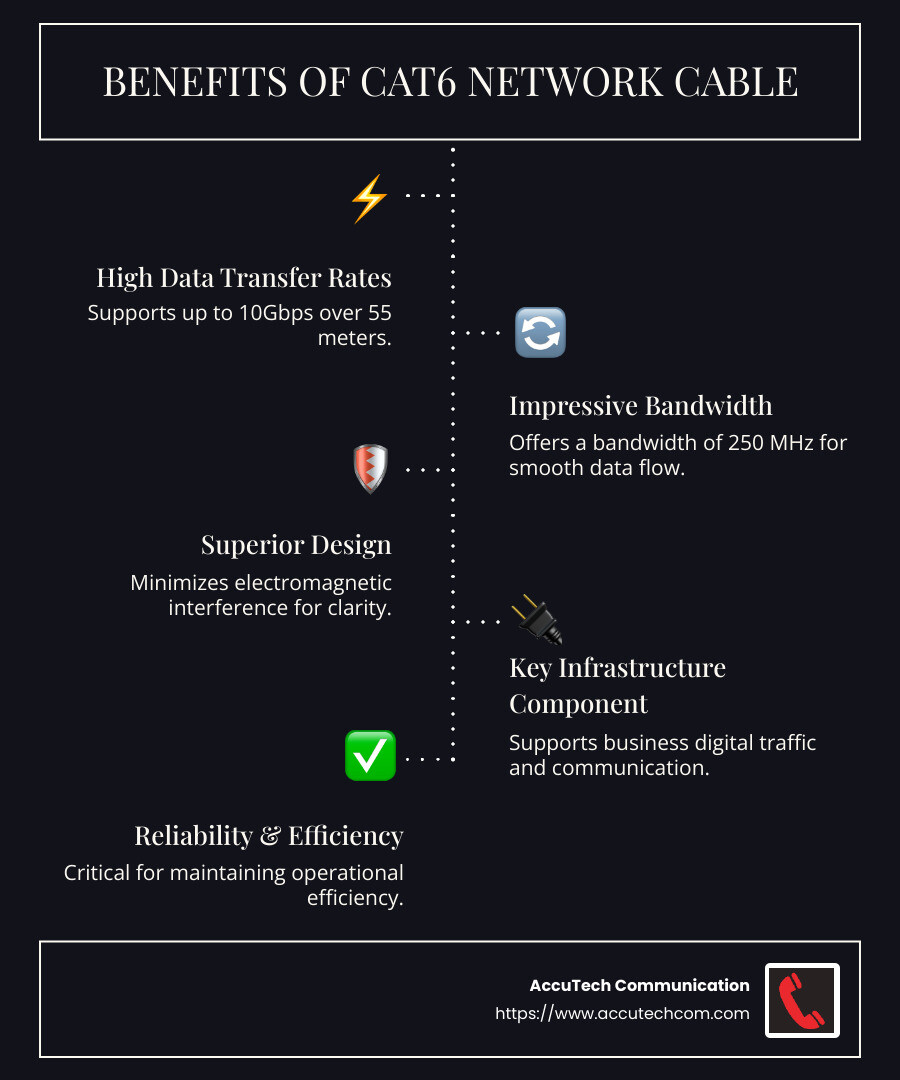
- High Data Transfer Rates: Supports up to 10Gbps over 55 meters.
- Impressive Bandwidth: Offers a bandwidth of 250 MHz for smooth data flow.
- Superior Design: The cable’s structure minimizes electromagnetic interference, ensuring clarity and precision in data transmission.
Cat6 network cables aren’t just another component of networking hardware, they are the backbone that supports your business’s digital traffic. As the technology that connects servers, routers, and individual workstations, they play a critical role in maintaining the efficiency and reliability of your operations.
I am Corin Dolan from AccuTech Communications. With years of experience in network infrastructure, particularly in cat6 network cable installations, I understand the vital role these cables play in ensuring seamless business operations.
Cat6 network cable terms to learn:
– network cable installations
– network cabling installations
– network cable services
Understanding Cat6 Network Cables
Cat6 network cables are a critical component of modern networking, designed to handle the demands of high-speed data environments. At the heart of their performance is a simple yet effective technology: the twisted pair.
Twisted Pair Design
The twisted pair design is a key feature of Cat6 cables. This involves twisting two insulated copper wires together. Why twist? The twisting reduces electromagnetic interference (EMI) and crosstalk from nearby cables. This means your data travels more reliably and with fewer errors.
- Electromagnetic Interference (EMI): This is like static on a radio. It can disrupt data signals, leading to errors. The twisted pair design in Cat6 cables helps minimize this interference.
- Crosstalk: This is when signals from one cable interfere with another. Again, the twisting of wires helps to prevent this, ensuring data integrity.
Copper Wire Quality
Another vital aspect of Cat6 cables is the use of pure copper wire. Copper is an excellent conductor, which means it efficiently carries the electrical signals that represent your data. However, beware of copper-clad aluminum (CCA) cables. These are cheaper but don’t perform as well and can lead to legal issues due to non-compliance with standards.
The Battle Against Interference
Cat6 network cables are designed to combat interference. The combination of twisted pairs and high-quality copper ensures that data can travel long distances without degradation. This is crucial in environments with lots of electronic equipment, where interference is a constant threat.
In summary, the design and materials used in Cat6 cables—twisted pairs and pure copper—are what make them so effective at reducing EMI and crosstalk. This translates to faster, more reliable data transmission, which is exactly what businesses need in today’s digital age.

Top 5 Cat6 Network Cables
When it comes to choosing the best Cat6 network cable, there are a few things you want to keep in mind: performance, reliability, length options, color options, and the use of pure copper. Let’s explore the top picks that excel in these areas.
1. Performance
Performance is the backbone of any good Cat6 cable. Look for cables that offer high bandwidth, like 550 MHz, which is ideal for demanding applications such as video streaming or data center operations. The Cable Matters 10Gbps Snagless Cat 6 Ethernet Cable is a prime example, offering high-speed data transfer and ensuring your network runs smoothly.
2. Reliability
Reliability is non-negotiable. The best cables have features like gold-plated contacts and strain-relief boots, which improve durability. These features help ensure a stable connection over time, which is crucial for both personal and professional use.
3. Length Options
Length matters, especially when setting up a network in a space with unique dimensions. Top Cat6 cables come in a variety of lengths, from short 1-foot options to long 100-foot cables. This flexibility allows you to get the perfect fit for your setup, avoiding unnecessary clutter or stretching.
Important Tip: Always measure your space before choosing a cable length. Consider the full path the cable will take, including routing around furniture or equipment.
4. Color Options
While performance and reliability are key, having color options can be a big plus. Different colors help in organizing and identifying cables quickly, especially in complex network setups. Many Cat6 cables are available in multiple colors, such as black, blue, and red, making it easier to manage your network visually.
5. Pure Copper
Finally, make sure your Cat6 cable uses pure copper. Copper is a top-notch conductor for electrical signals, which means you’ll get better performance and less signal loss over distances. Avoid cables with copper-clad aluminum (CCA), as they offer lesser performance and may not comply with industry standards.
In summary, the best Cat6 network cables offer a blend of high performance, reliability, a variety of lengths and colors, and are made of pure copper. These features ensure that your network is fast, dependable, and easy to manage.
Installation and Maintenance Tips
Proper installation and maintenance of Cat6 network cables are key to ensuring optimal performance and longevity. Here are some essential tips to keep your network running smoothly.
Proper Installation
When installing Cat6 cables, it’s crucial to follow the guidelines to prevent performance issues. Avoid kinking or bending the cables too tightly. The bend radius should be at least four times the outer diameter of the cable. This ensures the integrity of the twisted pairs inside, which are vital for maintaining data speeds and reducing crosstalk.
Shielding
In environments with high electromagnetic interference (EMI), shielding is important to protect data integrity. Shielded Cat6 cables help prevent interference from affecting the signal. The shield runs alongside the twisted pairs and connects to the chassis through jacks at both ends. This setup ensures a secure and interference-free connection.
Ground Loops
While shielding is beneficial, it can also lead to ground loops if not handled correctly. Ground loops occur when there is a difference in electrical potential between the two ends of the cable, causing unwanted currents. These currents can introduce noise into the network signal. To prevent this, ensure that both ends of the cable are properly grounded.
Maintenance
Regular maintenance checks are vital for a healthy network. Inspect cables periodically for signs of wear or damage. Ensure that connections remain tight and that there is no excessive strain on the cables, which can lead to breaks or reduced performance.
By following these installation and maintenance tips, you can ensure that your Cat6 network cables deliver reliable and efficient performance, keeping your network robust and ready for any challenge.
Frequently Asked Questions about Cat6 Network Cables
What is Cat6 network cable?
Cat6 network cables are a type of Ethernet cable used for high-speed data transfer. They are made up of twisted pairs of copper wire, which help reduce electromagnetic interference and crosstalk. This design allows Cat6 cables to support data transfer rates of up to 250 MHz, making them a popular choice for both home and professional networks.
Is Cat6 better than Ethernet?
“Ethernet” is a broad term that refers to a network technology, while “Cat6” is a specific type of Ethernet cable. In terms of performance, Cat6 cables offer several advantages over older Ethernet cable types like Cat5 and Cat5e. They support higher data transfer rates and are better suited for Power over Ethernet (PoE) applications due to their thicker conductors, which help with heat dissipation. This makes Cat6 a more efficient choice for modern networks that require reliable and fast data transmission.
Is Cat7 faster than Cat6?
When comparing Cat6 and Cat7 cables, speed and shielding are the main differences. Cat7 cables support higher frequencies—up to 600 MHz—allowing for potentially faster data transfer rates. Additionally, Cat7 cables have more robust shielding, which provides better protection against external interference. This makes them ideal for high-performance networks where speed and signal integrity are critical. However, for most standard applications, Cat6 cables provide ample speed and reliability at a more affordable price point.
By understanding these aspects of Cat6 network cables, you can make informed decisions about your networking needs, ensuring you choose the right cable for your setup.
Conclusion
At AccuTech Communications, we understand the importance of reliable network connectivity for your business. That’s why we offer certified service in network cabling, business phone systems, and data center technologies across Massachusetts, New Hampshire, and Rhode Island. Our expertise in Cat6 network cables ensures that you receive top-tier performance and reliability for your network infrastructure.
Our commitment to quality is unwavering. Since 1993, we’ve been dedicated to providing solutions that meet the highest standards. Our team of skilled technicians ensures every installation is performed with precision and care, optimizing your network for peak performance. We take pride in offering competitive pricing without compromising on the quality of our service.
Choosing AccuTech means choosing a partner who is invested in your success. Whether you’re setting up a small business network or managing a large corporate campus, our comprehensive services cater to all your networking needs. From consultation and design to installation and maintenance, we are with you every step of the way.
For more information on how we can support your business’s network infrastructure, visit our Network Cable Services page. Let us help you build a robust and reliable network that keeps your business connected and thriving.
