
Cfot certification cost: 7 Powerful Facts Revealed 2025
Understanding CFOT Certification Investment
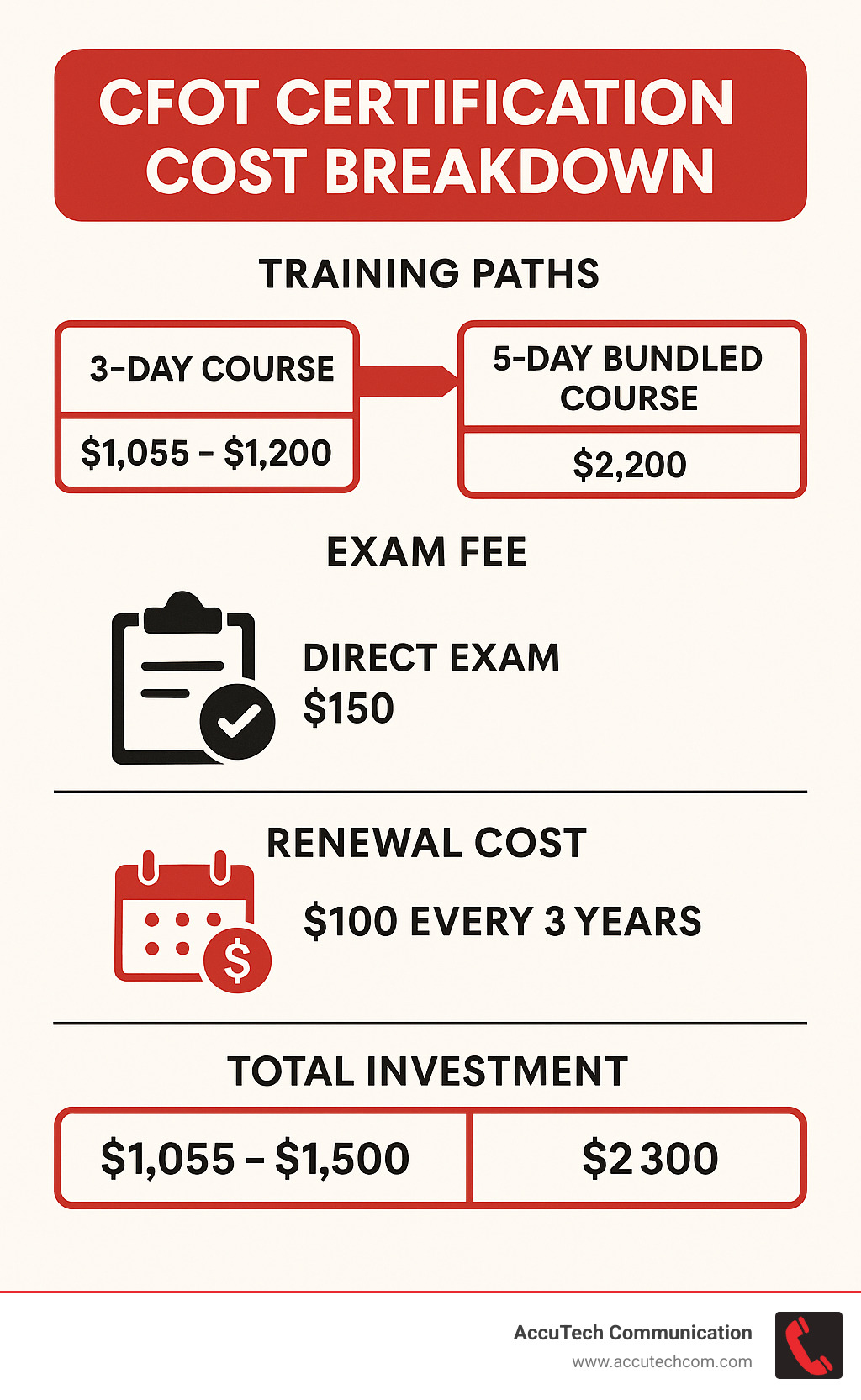
The cfot certification cost typically ranges from $1,055 to $1,500 for a complete 3-day training program, though pricing varies significantly based on your chosen path to certification. Here’s what you need to know:
Quick CFOT Cost Overview:
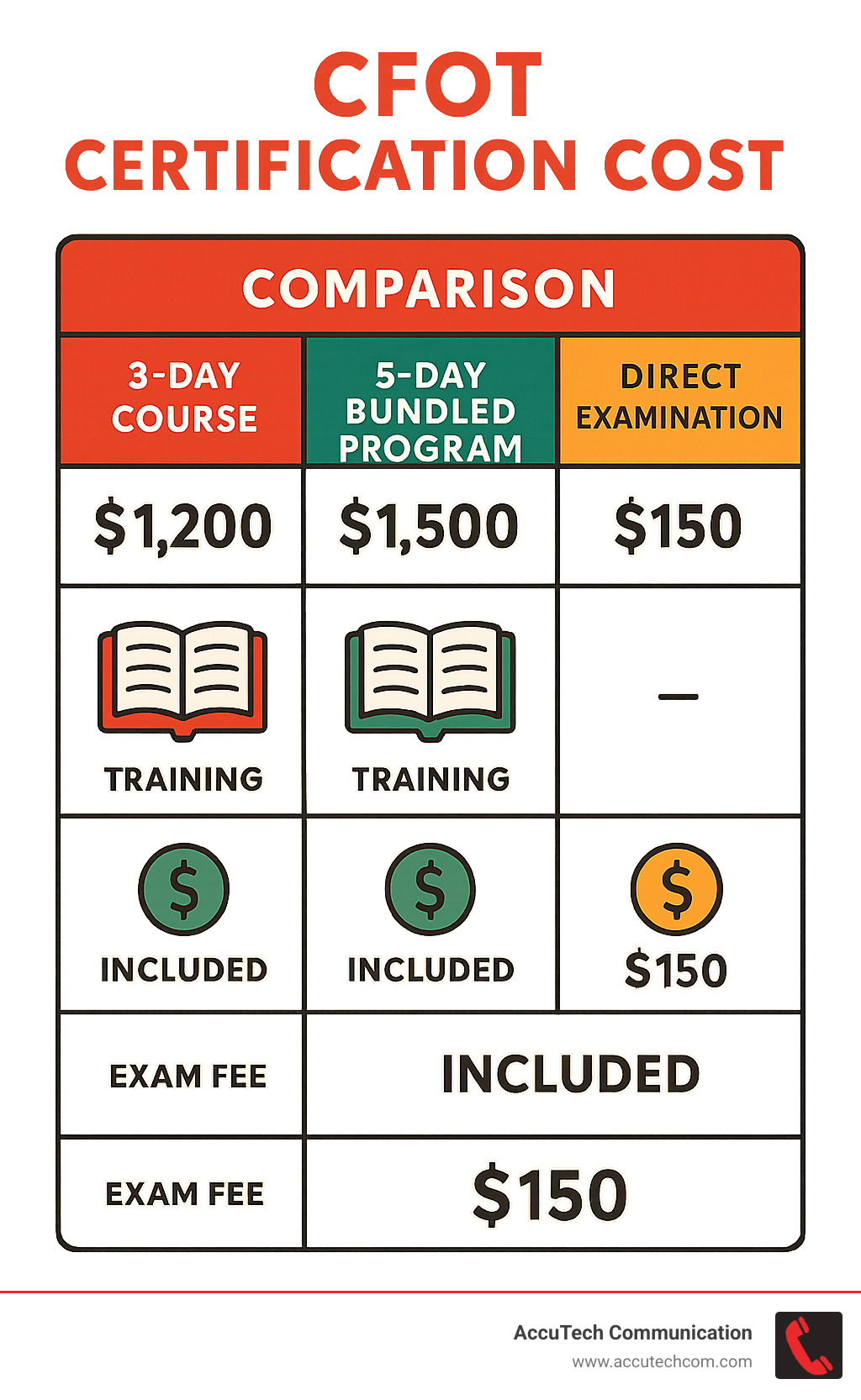
– 3-day course: $1,055-$1,200 (includes exam, materials, FOA membership)
– 5-day bundled course: $2,200 (CFOT + CPCT combined)
– Direct exam only: $150 (plus $20 for Fiber U prep)
– Renewal fee: $100 every 3 years
– Deposits: $395 non-refundable (some providers)
When you’re planning network infrastructure upgrades or hiring certified technicians, understanding CFOT (Certified Fiber Optic Technician) certification costs helps you budget effectively. This FOA-sanctioned credential proves technicians can handle everything from fiber installation to testing and troubleshooting.
The certification opens doors across industries – from healthcare facilities requiring reliable data transmission to manufacturing plants needing robust communication systems. Having properly certified technicians becomes crucial for maintaining your network’s performance and compliance standards.
As Corin Dolan, owner of AccuTech Communications, I’ve guided businesses through fiber optic installations across Massachusetts, New Hampshire, and Rhode Island since 1993, helping them understand both cfot certification cost and the value certified technicians bring to complex communication projects.
Glossary for cfot certification cost:
– cfot
– fiber optic patch panel
What Is CFOT & Who Recognizes It?
When you’re looking into cfot certification cost, it helps to understand exactly what you’re paying for. The Certified Fiber Optic Technician (CFOT) credential is the gold standard for fiber optic professionals worldwide.
The Fiber Optic Association (FOA) created this certification and it’s recognized by the U.S. Department of Labor following strict international standards (ANSI/ISO/IEC 17024) that ensure every certified technician meets the same high bar globally.
What makes CFOT special is its broad scope. Unlike narrow certifications that focus on one manufacturer’s equipment, CFOT covers the knowledge, skills, and abilities (KSAs) you need across the entire fiber optic spectrum. This comprehensive approach is exactly why the cfot certification cost delivers such strong value.
The certification validates that technicians can handle building and testing multimode fiber optic LAN networks, installing outside plant fiber cable, performing fusion splicing, and using professional test equipment like OTDRs and power meters.
For business owners and network managers, CFOT certification provides confidence that your technicians can tackle everything from Fiber To The Home (FTTH) installations to complex data center deployments. The FOA has certified technicians through over 200 approved training organizations worldwide, creating a consistent standard you can trust.
The certification’s external validity comes from widespread industry recognition. Major telecommunications companies, government agencies, and network infrastructure firms now require CFOT certification for fiber optic work, making the initial cfot certification cost a smart long-term investment.
Paths to Certification
The FOA designed three different pathways to earn CFOT certification, each with distinct cfot certification cost implications.
FOA-approved training schools offer the most popular route, combining classroom theory with intensive hands-on practice. These programs typically run three to five days with 85% hands-on activities – you’ll spend most of your time actually working with fiber cables, connectors, and test equipment.
Direct certification appeals to experienced technicians who already have at least two years of documented field experience. This path requires completing the Fiber U self-study program and passing the certification exam without attending formal training.
OJT self-study programs combine on-the-job training with FOA’s online courses. This flexible approach allows working technicians to prepare for certification while maintaining their regular duties.
All three pathways lead to the same 100-question CFOT exam featuring multiple choice, matching, and true/false questions. Candidates need a minimum 70% score to pass.
Process & Prerequisites
One of the best aspects of CFOT certification is its accessibility – no college degree required. However, candidates do need ability to see and manipulate small items, English language proficiency, and basic computer knowledge.
The most common training format runs three days with approximately 24 contact hours of intensive instruction. Some providers offer extended five-day programs that bundle CFOT with additional certifications.
Course curricula cover essential topics including fiber optic theory, communications systems design, network components and installation techniques, splicing methods, testing procedures, and safety protocols.
The hands-on portion emphasizes real-world skills. Students practice terminating connectors, performing splices, using test equipment properly, and following safety procedures with professional-grade tools and materials.
CFOT Certification Cost Breakdown
When you’re planning to get CFOT certified, it helps to understand where your money actually goes. The cfot certification cost isn’t just one big number – it’s made up of several different pieces.
Tuition forms the biggest chunk of what you’ll pay. Most three-day CFOT courses fall into a consistent range, while extended five-day programs that bundle multiple certifications cost more upfront but often provide better overall value.
The exam fee might be rolled into your tuition or charged separately. If you’re going the direct certification route, you’ll pay this fee plus a small amount for prep materials.
Study materials are usually included in your course fee. You’ll get quality textbooks and reference guides that’ll serve you throughout your career.
Access to professional equipment represents huge value. During hands-on labs, you’ll work with fusion splicers, OTDRs, and power meters that individually cost more than most people’s cars.
FOA membership comes bundled with most programs, giving you a year of professional association benefits including ongoing education resources.
Travel and lodging costs can add up if you’re not training locally. A course that looks affordable might become expensive once you factor in hotels, gas, and meals.
Typical cfot certification cost Numbers
After researching training providers across New England and beyond, here’s what you can expect to pay for different certification paths.
Standard three-day programs represent the most popular choice. The pricing is consistent across reputable providers, and you get everything you need: materials, exam, and membership all rolled into one package.
Extended five-day bundled courses cost significantly more upfront but cover both fiber optics and general premises cabling. If you’re planning to get both certifications anyway, this route saves money and time.
The direct certification path offers the most economical option for experienced technicians. You’ll pay a small fee for prep materials and the exam fee.
Renewal fees are refreshingly reasonable – a modest amount every three years keeps your credential current.
Deposit requirements vary by provider. Some require non-refundable deposits to hold your seat, which increases your upfront commitment but usually applies toward your total tuition.
What’s Included for Your Dollar
When you’re evaluating cfot certification cost, don’t just look at the price tag – consider what you’re actually getting.
Your study materials become permanent resources that you’ll reference throughout your career. These professional-grade textbooks and lab manuals would cost hundreds of dollars if purchased separately.
Hands-on lab experience gives you access to equipment worth tens of thousands of dollars. You’ll work with the same fusion splicers, OTDRs, and testing equipment used by major telecommunications companies.
Expert instruction from FOA-certified trainers brings real-world wisdom to the classroom. These instructors share practical insights you won’t find in any textbook.
Both written and practical examinations ensure you can walk the walk, not just talk the talk. The dual testing approach means employers can trust that CFOT-certified technicians actually know how to perform fiber optic work safely and effectively.
One-year FOA membership provides ongoing value through continuing education resources and industry updates.
Digital credentials make verification simple for employers and eliminate the worry of lost certificates.
For businesses throughout Massachusetts, New Hampshire, and Rhode Island looking for Certified Fiber Optic Technician services, understanding what goes into this certification helps explain why properly trained technicians command higher rates – and deliver better results.
Factors That Influence Your cfot certification cost
Several key factors can dramatically change your final cfot certification cost, sometimes making the difference between a modest investment and a significant expense.
Course length creates the most obvious price difference. Three-day programs offer the essential training at a lower cost, while five-day bundled courses cost more upfront but often provide better value when you consider the additional certifications included.
Where you take your training matters more than you might expect. Training centers in busy metropolitan areas typically charge premium rates, while providers in smaller markets often offer more competitive pricing. However, travel costs can quickly eat up any savings from distant options.
Class size affects pricing through simple economics. Some providers offer group discounts when multiple employees from the same company enroll together. Private, on-site training for groups of four or more can actually provide cost advantages while eliminating travel expenses entirely.
The delivery format you choose significantly impacts both cost and convenience. Traditional in-person training provides the full hands-on experience but includes travel and lodging costs. Some providers now offer hybrid formats that combine online theory with condensed hands-on sessions.

Deposit policies vary widely among training providers. Some require substantial non-refundable deposits to secure your enrollment, while others allow payment upon arrival. These policies affect your cash flow and create financial risk if your plans change unexpectedly.
Hidden fees represent the most frustrating cost factor because they appear after you’ve already committed to a program. Some providers charge separately for materials, exam retakes, or certification processing.
Regional & Provider Variations in cfot certification cost
Your location can create surprising opportunities to reduce your cfot certification cost through various regional programs and funding options.
Workforce development grants offer substantial savings in certain areas. These programs recognize that skilled fiber optic technicians drive economic growth, so they provide public funding to develop this workforce.
State-sponsored programs through community colleges and technical schools often provide CFOT training at subsidized rates. These institutions may offer the same quality training at reduced costs.
Non-refundable deposit requirements represent a significant policy difference among providers. Understanding these policies helps with financial planning and reduces your risk if circumstances change.
Retake fees can significantly impact your total costs if you don’t pass on the first attempt. Some providers include one exam retake in the original tuition, while others charge the full exam fee for additional attempts.
Renewal & Continuing Education Expenses
CFOT certification requires renewal every three years, creating ongoing costs you should factor into your long-term professional development budget.
The standard renewal fee represents one of the more affordable aspects of maintaining professional certification. This three-year renewal cycle provides continued access to FOA resources without breaking the bank.
Grace period provisions offer flexibility if you miss renewal deadlines. You can typically renew up to three years after expiration without retesting, though late fees may apply.
Specialty certification add-ons increase ongoing education costs but can significantly boost your earning potential. Advanced certifications in testing, splicing, or design require additional training and separate renewal fees.
Cutting Costs and Finding Funding
Professional certification costs can feel overwhelming, but there are plenty of ways to reduce your cfot certification cost without cutting corners on quality training.
Early-bird discounts reward the planners among us. Most training providers knock off 10-15% for students who register 30-60 days ahead of time.
Bundle packages offer some of the best value in fiber optic training. That five-day CFOT+CPCT program might look expensive upfront, but it costs much less than pursuing each certification separately.
Group enrollments from the same company often qualify for volume discounts. Some providers reduce per-student rates when three or more colleagues attend together.
Employer sponsorship remains the most common way people fund their CFOT certification. Many companies recognize that certified technicians deliver better results and fewer headaches.
Workforce development grants represent hidden gems in professional training funding. Programs like Virginia’s Workforce Credential Grant can substantially offset training costs for eligible residents.
For veterans and active-duty personnel, military benefits including GI Bill funding can cover CFOT training completely. The certification’s Department of Labor recognition ensures eligibility for most military education benefits.
Here are some practical money-saving approaches: Compare total costs including travel and lodging, not just tuition rates. Look for providers offering payment plans to spread costs over several months. Consider the direct certification route if you already have solid field experience. Time your training to align with your employer’s budget cycles. Don’t overlook local community college programs that might offer subsidized rates.
Free & Low-Cost Prep Resources
Smart preparation can make the difference between passing on your first attempt and facing expensive retake fees.
Fiber U courses provide free online self-study programs covering fiber optics fundamentals. These courses offer excellent preparation whether you’re heading to formal training or taking the direct certification route.
FOA textbooks and reference guides give you comprehensive study materials at reasonable cost. While most training programs include these materials, purchasing them in advance allows extended preparation time.
YouTube tutorials from reputable sources offer visual demonstrations of fiber optic techniques. They’re not substitutes for hands-on training, but they help students understand procedures before attempting them in laboratory settings.
Self-study exam preparation through Fiber U provides structured learning paths for minimal investment. The comprehensive preparation materials represent excellent value compared to potential retake costs.
The key is starting your preparation early and using multiple resources. The more familiar you become with fiber optic concepts before formal training begins, the more you’ll absorb during those intensive hands-on sessions.
CFOT vs Other Fiber & Cabling Certifications
Understanding how cfot certification cost compares to alternative credentials helps make informed career and hiring decisions:
CPCT (Certified Premises Cabling Technician) focuses on copper and general cabling systems rather than fiber optics specifically. While less expensive individually, many professionals benefit from both certifications to handle diverse installation requirements.
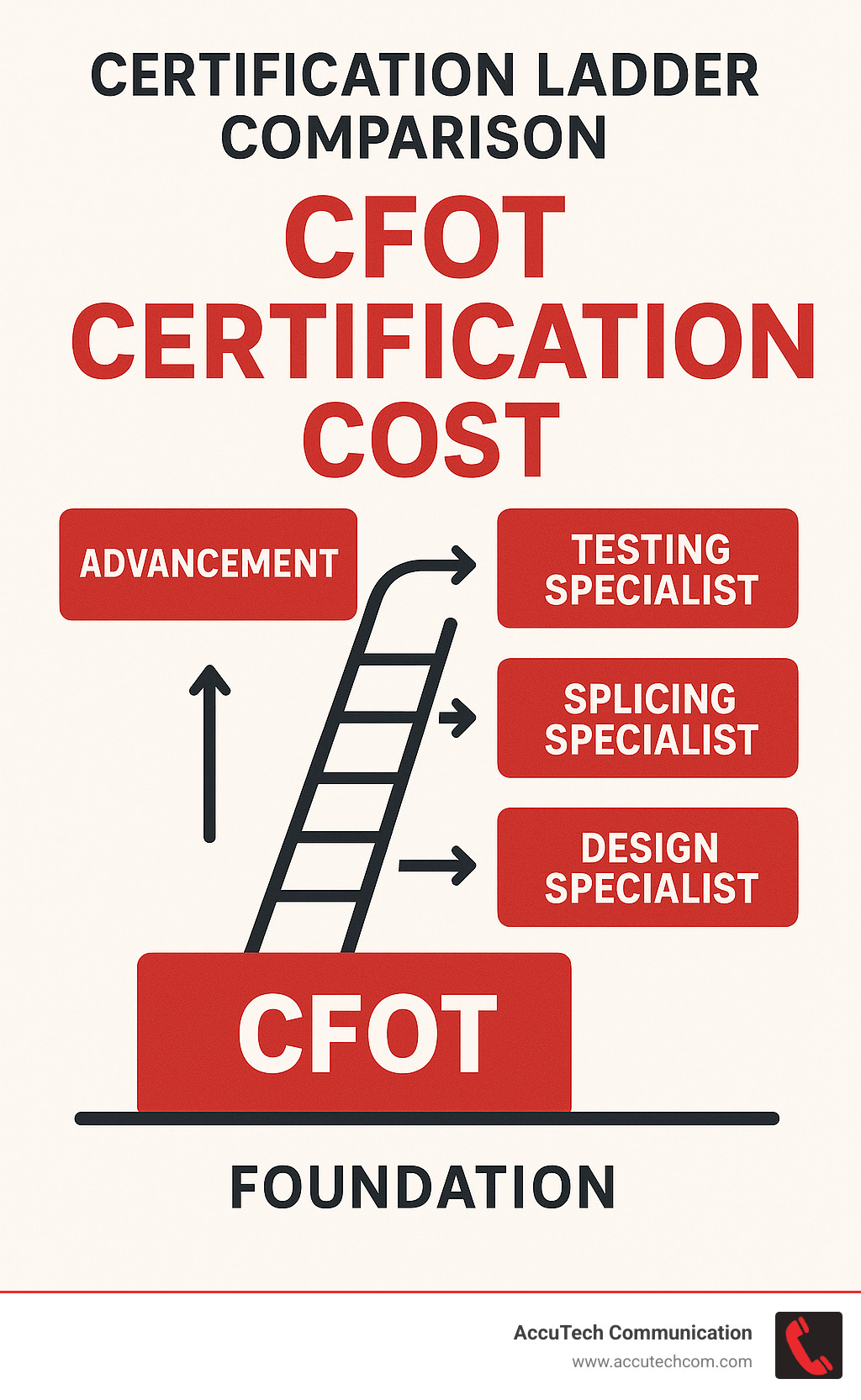
CFOS Specialist Tracks build upon CFOT certification with advanced training in testing, splicing, or design. These certifications command higher compensation but require additional investment in time and money beyond basic CFOT credentials.
BICSI Installer Certifications provide broader telecommunications infrastructure knowledge but at significantly higher cost and time investment. These certifications appeal to professionals seeking comprehensive industry credentials rather than fiber-specific expertise.
Vendor-Specific Certifications from equipment manufacturers provide deep product knowledge but limited portability between employers. While often less expensive or free, they lack the broad industry recognition of FOA credentials.
Scope Differences significantly impact career applications. CFOT provides broad fiber optic competency applicable across industries, while specialized certifications focus on specific applications or equipment types.
Return on Investment varies based on local market conditions and career goals. CFOT certification typically provides faster payback through increased hiring opportunities and higher starting salaries compared to more specialized or expensive alternatives.
Career Salary Impact from CFOT certification varies by region and industry, but certified technicians consistently command higher compensation than uncertified counterparts. The certification demonstrates competency that employers value and are willing to pay for.
Why CFOT Often Delivers the Best Value
Several factors make CFOT certification particularly attractive from a cost-benefit perspective:
Broad Applicability across industries and applications maximizes career opportunities. Unlike narrow certifications tied to specific equipment or applications, CFOT credentials apply to everything from data centers to telecommunications infrastructure.
Shorter Time-to-Certify compared to comprehensive programs like BICSI credentials means faster return on investment. Three-day CFOT programs get professionals certified and working in specialized roles quickly.
Recognized Standards ensure credential portability between employers and geographic regions. FOA’s international recognition means CFOT certification maintains value regardless of career changes or relocations.
Stackable Learning Paths allow progression from basic CFOT to specialized CFOS certifications without redundant training. This modular approach lets professionals advance their credentials incrementally as career needs evolve.
Industry Demand for certified fiber optic technicians continues growing as organizations expand their network infrastructure. This sustained demand supports higher compensation and job security for certified professionals.
Frequently Asked Questions About CFOT Certification Cost
How much should I budget for the complete CFOT journey?
Planning your cfot certification cost budget requires considering both the obvious expenses and those sneaky extras. Most professionals find they need to set aside between $1,200 and $1,800 for the complete certification journey.
The bulk of this investment goes toward training tuition, which typically runs from $1,055 to $1,200 for a comprehensive three-day program. This covers your instruction, hands-on lab time, study materials, exam fees, and that valuable one-year FOA membership.
Travel and lodging can add another $200 to $500 to your total, depending on how far you need to travel for training. If you’re lucky enough to find quality training close to home here in New England, you’ll obviously save on these costs.
Don’t forget about incidental expenses – those $50 to $100 in miscellaneous costs that always seem to pop up. This might include parking fees, meals during training, or even a backup calculator for the exam.
The good news? This investment typically pays for itself within six to twelve months through increased earning potential and expanded job opportunities.
Are there hidden fees I need to watch out for?
Unfortunately, not all training providers are completely upfront about their pricing structure. While most reputable organizations include the major components in their quoted tuition, there are several potential surprise costs to watch for.
Non-refundable deposits represent the biggest potential shock, with many providers requiring $395 upfront just to secure your seat. This money typically applies toward your total tuition, but you’ll lose it entirely if your plans change.
Exam retake fees can sting if you don’t pass on your first attempt. Some providers include one retake in their original tuition, while others charge the full $60 exam fee for additional attempts.
Watch out for separate material charges that some providers tack on after quoting their base tuition. Legitimate training programs should include textbooks, lab manuals, and reference materials in their advertised price.
Travel and lodging expenses aren’t exactly hidden, but they’re easy to underestimate when comparing training options. That “cheaper” program three states away might not look so economical once you factor in hotel costs and time away from work.
The best protection against surprise fees? Always request a complete, itemized cost breakdown before enrollment.
How does renewal pricing work after three years?
Here’s some refreshing news: CFOT renewal is remarkably affordable and straightforward. You’ll pay just $100 every three years to keep your certification current, making it one of the most budget-friendly credentials to maintain in the technology field.
The renewal process itself couldn’t be simpler. You’ll need to pay the renewal fee, confirm you’re still working in fiber optics, and agree to maintain FOA standards and ethics. That’s it – no continuing education requirements, no additional testing, no complicated paperwork.
FOA makes the process convenient by offering online or mail-based renewals. They’ll even send you renewal notices before your expiration date, so you won’t accidentally let your certification lapse.
If life gets busy and you miss your renewal deadline, don’t panic. FOA provides a generous three-year grace period for late renewals without requiring you to retake the entire certification exam.
Conclusion
Making smart decisions about cfot certification cost can transform both individual careers and business operations. The investment – whether you’re pursuing certification yourself or hiring certified technicians – consistently delivers returns through improved performance, reduced downtime, and improved credibility.
After three decades in the network infrastructure business, I’ve witnessed countless installations where proper certification made the difference between a smooth deployment and a costly nightmare. The knowledge gap between certified and uncertified technicians becomes painfully obvious when troubleshooting complex fiber optic issues or ensuring compliance with industry standards.
The cfot certification cost represents a small fraction of what businesses typically spend on network infrastructure, yet it’s often the factor that determines whether that infrastructure performs reliably for years or requires constant attention and repairs.
For businesses throughout Metro-west Boston, Marlborough, Sudbury, Woburn, Waltham, and Worcester, working with certified professionals eliminates the guesswork from fiber optic installations. Our team at AccuTech Communications brings FOA-certified expertise to every project, ensuring your network infrastructure meets the demanding requirements of modern business operations.
Whether you’re upgrading an existing network or building new infrastructure, the peace of mind that comes from certified installation work far outweighs the modest investment in proper training and credentials. Your network is too important to trust to anything less than certified expertise.
Ready to experience the AccuTech difference? Learn more about our Fiber Optic Cable Installation Services and find how certified technicians can ensure your next project’s success from day one.
