
Data Center Cooling Technologies: Top 3 Vital Insights
Data center cooling technologies are pivotal in maintaining the efficiency and sustainability of these critical infrastructures. In today’s data-driven world, keeping data centers cool is vital to ensure optimal performance, cost savings, and environmental sustainability. Here’s a quick overview of essential methods currently shaping the landscape:
- Air Cooling: Traditional but still effective, suitable for many environments.
- Liquid Cooling: More advanced, offering improved energy efficiency.
- Immersion Cooling: Emerging technology with potential for high-density computing.
- Free Cooling: Uses external cool air or water to reduce costs.
These technologies not only improve energy efficiency but also contribute to reducing the data centers’ carbon footprint—an increasingly crucial consideration for companies aiming for sustainability.
As Corin Dolan, I’ve spent years in the field of data center cooling technologies, ensuring that our clients at AccuTech Communications receive top-notch solutions custom to their needs. In the following section, we’ll dig deeper into the various cooling methods and their applications in modern data centers.
Must-know data center cooling technologies terms:
– data center infrastructure design
– data center infrastructure management
Understanding Data Center Cooling Technologies
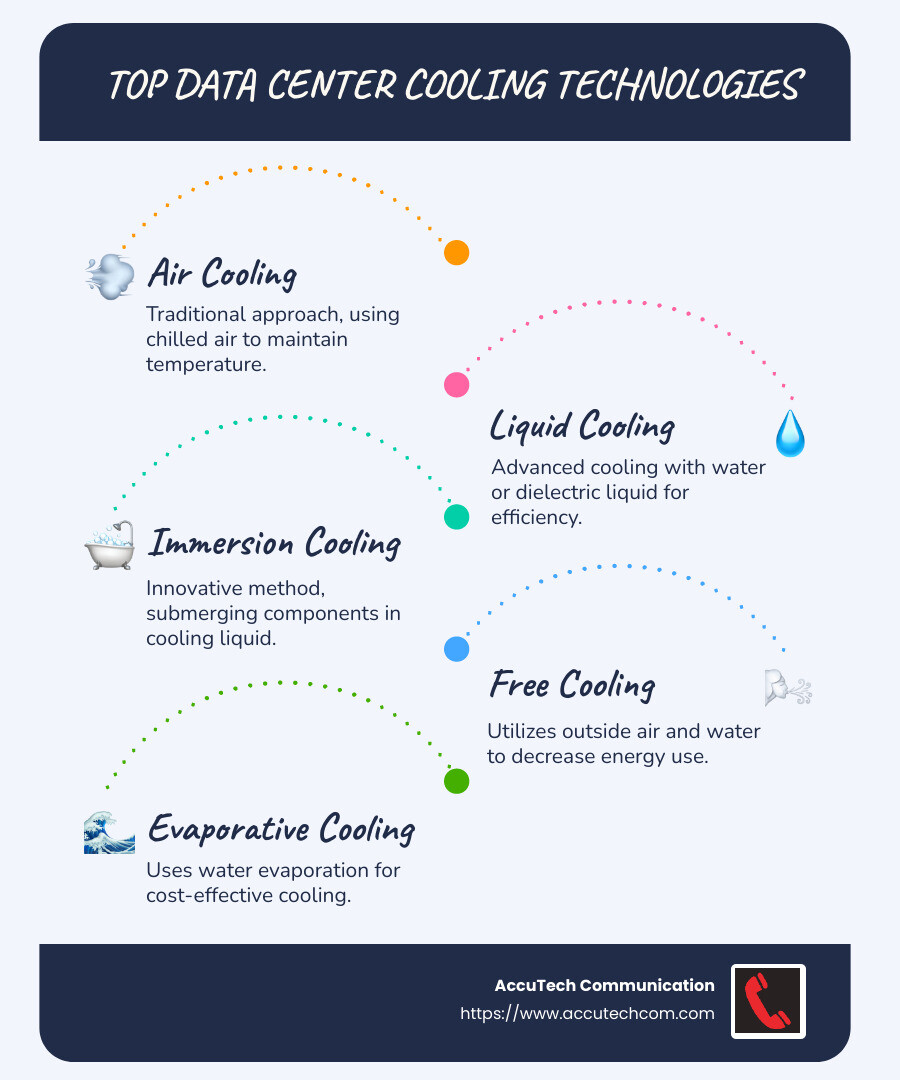
When it comes to data center cooling technologies, three main methods stand out: air cooling, liquid cooling, and immersion cooling. Each has its unique strengths and applications.
Air Cooling
Air cooling is the traditional choice for many data centers. It involves circulating cool air to absorb and remove heat from server racks. While it’s a tried-and-true method, air cooling can struggle with the high-density demands of modern computing. The need for more fans and pumps can lead to increased noise levels, sometimes requiring personnel to use hearing protection.
Despite these challenges, air cooling remains prevalent due to its simplicity and cost-effectiveness, especially in environments with lower computing densities. However, as computing demands grow, the limitations of air cooling become more apparent.
Liquid Cooling
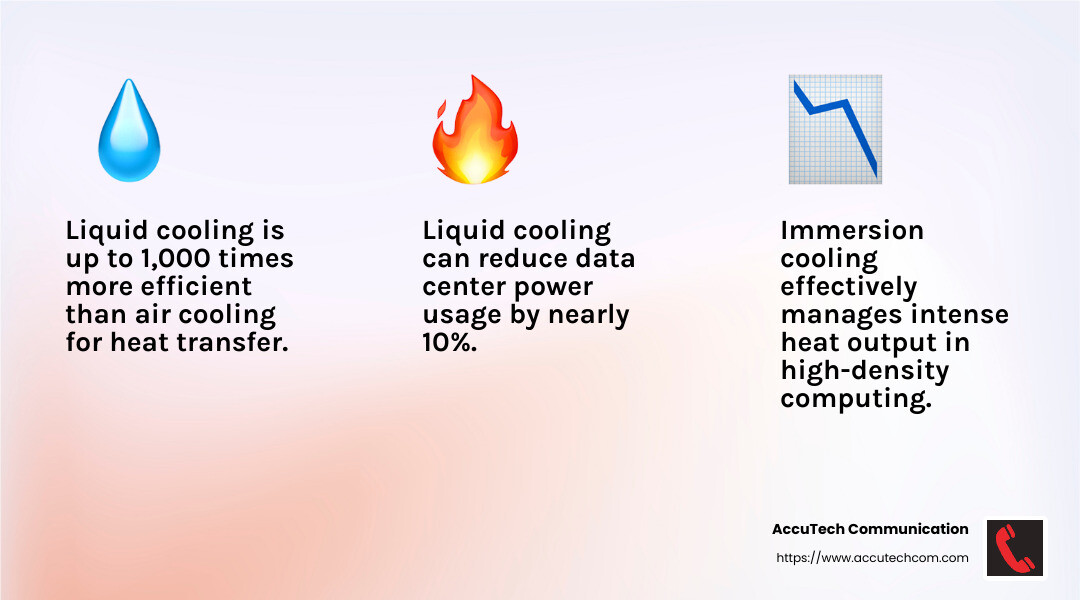
Liquid cooling is gaining traction as a more efficient alternative. It uses liquids like water or special coolants to absorb heat, which is then transferred away from the servers. Liquid cooling is significantly more effective than air at transferring heat, being between 50 to 1,000 times more efficient. This method can reduce facility power usage by almost 20% and overall data center power by 10%.
There are different types of liquid cooling, including direct-to-chip cooling, where cool liquid circulates through plates that sit next to key components like CPUs and GPUs. This method is becoming increasingly popular due to its ability to handle higher power densities.
Immersion Cooling
Immersion cooling is an emerging technology that involves submerging all server components in a non-conductive liquid. This approach efficiently transfers heat away from the components with minimal energy use. Immersion cooling can be either single-phase, where the liquid is continuously circulated and cooled, or two-phase, where the liquid boils and then condenses back to liquid.
This method is particularly promising for high-density computing environments, as it can manage the intense heat output of advanced servers more effectively than traditional air cooling.
In summary, while air cooling has been the standard for years, the rise of liquid cooling and immersion cooling offers exciting possibilities for data centers aiming for greater efficiency and sustainability. As computing demands continue to rise, these innovative cooling methods are set to play an increasingly important role in data center operations.
Next, we’ll explore the rise of liquid cooling and its benefits in more detail.
The Rise of Liquid Cooling
As the digital world expands, liquid cooling is becoming the go-to solution for data centers striving for efficiency and sustainability. This technology offers significant advantages over traditional air cooling, particularly in high-density environments.
Liquid Immersion
One method is liquid immersion cooling. Here, servers are submerged in a dielectric fluid, which efficiently absorbs and dissipates heat. This approach minimizes the need for complex air conditioning systems and reduces energy consumption. Immersion cooling not only supports higher computing densities but also cuts down on noise pollution—a common issue in air-cooled data centers.
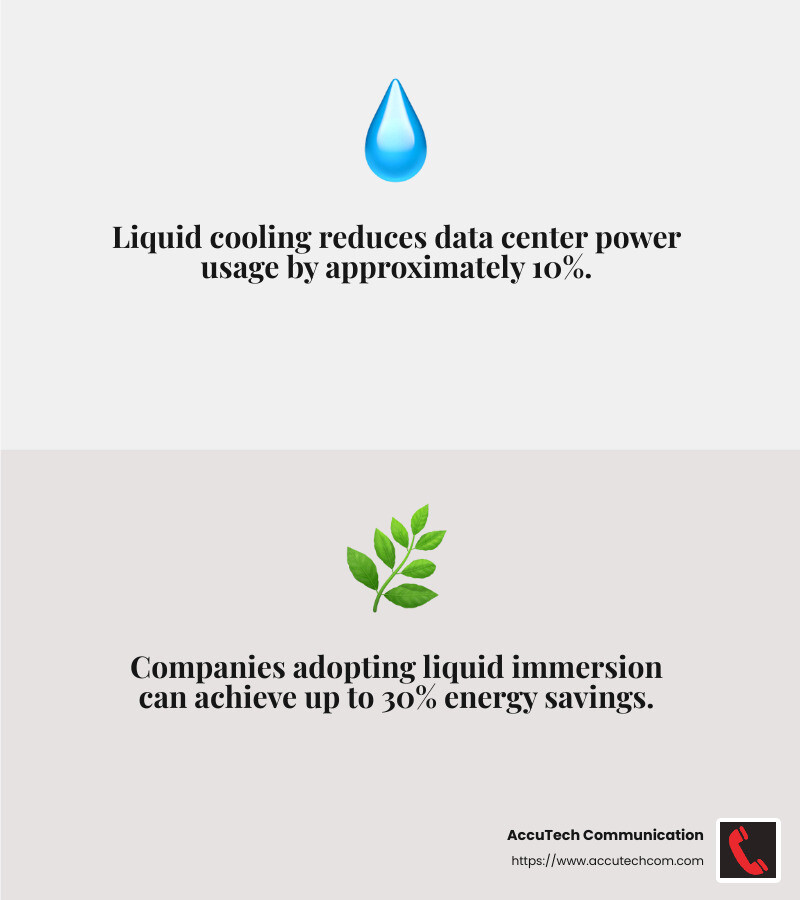
Case in point: Companies leveraging liquid immersion can achieve up to 30% energy savings compared to traditional methods. This efficiency is crucial as data centers aim to reduce their carbon footprint and operational costs.
Direct-to-Chip Cooling
Another innovative technique is direct-to-chip cooling. This method involves circulating a coolant directly to the hottest components, such as CPUs and GPUs. By targeting these critical areas, direct-to-chip cooling efficiently removes heat, ensuring optimal performance and reliability.
This precision cooling is essential for handling the high computational loads of AI and machine learning applications. By preventing overheating, direct-to-chip cooling extends the lifespan of hardware and maintains consistent performance.
Energy Savings
The energy savings from liquid cooling are impressive. Studies have shown that switching to liquid cooling can reduce data center power usage by approximately 10%. This reduction not only lowers electricity bills but also supports environmental sustainability goals.
For data centers, investing in liquid cooling technologies translates to higher margins and a competitive edge. As the demand for data processing continues to grow, liquid cooling offers a sustainable path forward.
In the next section, we’ll dig into innovative cooling methods for modern data centers, exploring how they contribute to improved efficiency and performance.
Innovative Cooling Methods for Modern Data Centers
As data centers continue to evolve, they are adopting innovative cooling methods to improve efficiency and sustainability. Let’s explore three cutting-edge techniques: evaporative cooling, free cooling, and hot aisle/cold aisle containment.
Evaporative Cooling
Evaporative cooling, also known as swamp cooling, is a natural and cost-effective way to cool data centers. It works by drawing warm air through a water-moistened pad. As the water evaporates, it absorbs heat, cooling the air before it is recirculated into the data center.
- Benefits: This method is much cheaper than traditional air conditioning and is particularly effective in low-humidity climates. It reduces energy consumption significantly, making it an environmentally friendly option.
- Case Study: Some data centers have reduced cooling costs by up to 75% using evaporative cooling, proving its effectiveness in suitable climates.
Free Cooling
Free cooling leverages the external environment to cool data centers without relying heavily on mechanical refrigeration. By bringing in cold outside air, data centers can maintain optimal temperatures with minimal energy use.
- Advantages: This method is highly energy-efficient and reduces reliance on traditional cooling systems. It is especially beneficial in cooler climates where outside air can be used for extended periods.
- Example: Data centers in regions with cold winters can use free cooling for several months each year, drastically cutting down on energy expenses.
Hot Aisle/Cold Aisle Containment
Hot aisle/cold aisle containment is a strategic layout design that separates hot and cold airflows within the data center. By organizing server racks into alternating rows, with cold air intakes facing one way and hot air exhausts facing the other, data centers can optimize cooling efficiency.
- Efficiency Gains: This design reduces the mixing of hot and cold air, allowing cooling systems to operate more efficiently. It can lead to energy savings of 10% to 35% compared to non-contained environments.
- Implementation: Adding physical barriers like walls or doors improves containment, allowing for higher rack densities and reduced energy consumption.
These innovative cooling methods not only improve energy efficiency but also support the growing demand for sustainable data center operations. By integrating these technologies, data centers can achieve significant cost savings while minimizing their environmental impact.
In the next section, we’ll tackle frequently asked questions about data center cooling technologies, providing clarity on the various systems and their applications.
Frequently Asked Questions about Data Center Cooling Technologies
What are the different technologies for cooling data centers?
Data centers use various cooling technologies to manage the heat produced by IT equipment. The primary types include:
- Air Cooling: This traditional method uses computer room air conditioners (CRAC) and computer room air handlers (CRAH) to circulate cool air throughout the facility. Raised floors and hot aisle/cold aisle configurations improve its efficiency by directing airflow precisely.
- Liquid Cooling: This involves using liquids to absorb and remove heat. It’s more efficient than air cooling, especially for high-performance computing environments. Direct-to-chip cooling is a popular method where liquid is circulated directly to the processors, maximizing heat removal.
- Immersion Cooling: In this method, servers are submerged in a non-conductive liquid. The liquid absorbs the heat and is then cooled externally. This approach is highly effective for dense computing environments.
What is the best cooling system for a data center?
The “best” cooling system depends on various factors like climate, data center size, and specific cooling needs. However, evaporative cooling and free cooling are often highlighted for their energy efficiency. Evaporative cooling works well in dry climates, while free cooling is ideal for regions with cold weather. Both methods significantly reduce energy consumption, offering a sustainable choice for many facilities.
How are data centers cooled down?
Data centers employ a mix of strategies to maintain optimal temperatures:
- CRAC and CRAH Units: These are the backbone of traditional air cooling systems, using fans and compressors to circulate chilled air.
- Air Circulation: Effective air circulation is crucial. Hot and cold aisle configurations ensure that cool air reaches equipment intakes and hot air is efficiently expelled.
- Liquid and Immersion Cooling: These methods involve the direct application of cooling fluids to critical components, offering superior heat management for high-density setups.
By leveraging these technologies, data centers can maintain performance while minimizing energy use and environmental impact.
Conclusion
At AccuTech Communications, we understand the critical role that data center cooling technologies play in maintaining the efficiency and reliability of modern data centers. Our commitment to delivering high-quality, customized solutions ensures that your business can thrive in today’s demanding digital environment.
With over 30 years of experience serving Massachusetts, New Hampshire, and Rhode Island, we pride ourselves on our certified, reliable service and competitive pricing. Our expertise spans a range of data center solutions, from network cabling to advanced cooling systems, always with a focus on energy efficiency and sustainability.
Our team is dedicated to helping you choose the most effective cooling strategies, whether it’s traditional air cooling or cutting-edge liquid and immersion cooling. We prioritize understanding your unique needs to provide solutions that not only manage heat efficiently but also contribute to reducing energy consumption and operational costs.
By partnering with us, you can be confident in our commitment to quality and service excellence. We aim to build long-lasting relationships with our clients, ensuring your data center infrastructure supports your business objectives now and into the future.
Explore how our data center build-out services can improve your facility’s performance and sustainability. Let’s work together to keep your data center cool and efficient.
