
Data Center Infrastructure Design: 7 Proven Success Tips
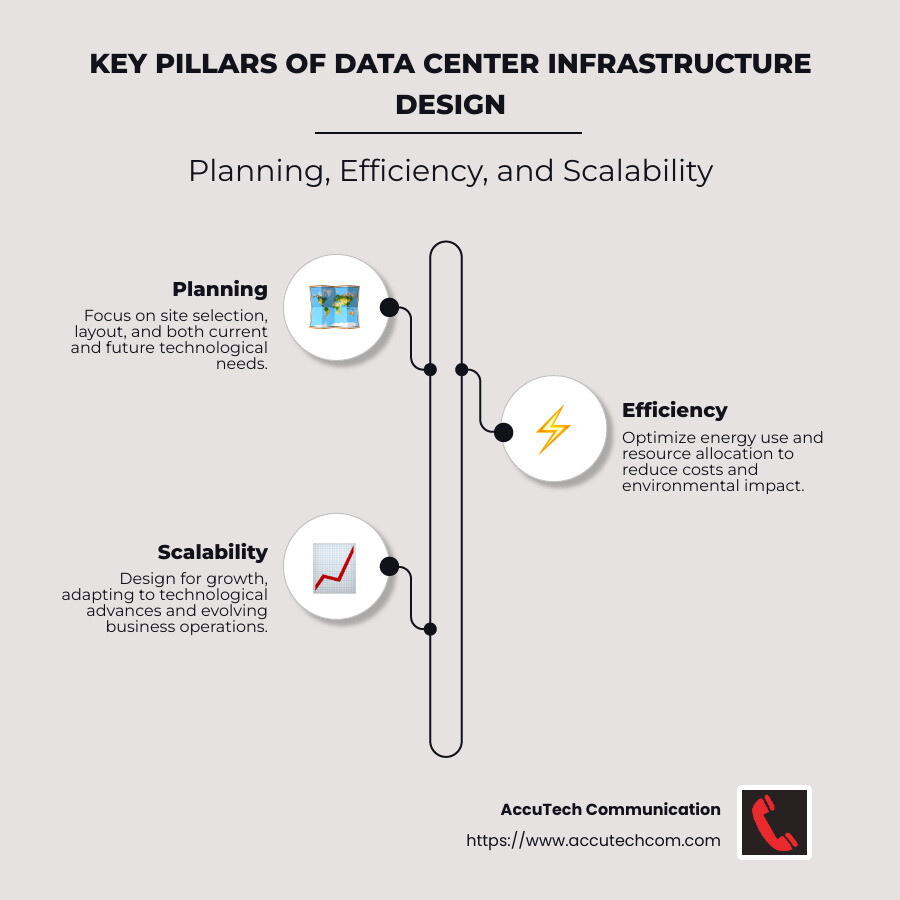
Data center infrastructure design is the backbone of modern business operations, particularly for industries requiring high-performance communication systems. Successful design hinges on three fundamental pillars: planning, efficiency, and scalability.
- Planning: A meticulous strategy is crucial, focusing on site selection, layout, and the technological needs of today and tomorrow.
- Efficiency: This involves optimizing energy use and resource allocation to reduce costs and environmental impact.
- Scalability: Future-proof designs must easily accommodate growth, keeping pace with technological advancements and evolving business operations.
With proper planning, efficient systems, and scalable solutions, businesses can ensure uninterrupted, high-speed communication, essential for running smooth and compliant operations.
As Corin Dolan, I’m dedicated to helping businesses master data center infrastructure design. With experience in designing robust, flexible systems for industries in need of strong communication networks, I guide businesses in achieving efficient, scalable solutions that meet their specific requirements.
Key Components of Data Center Infrastructure Design
Designing a data center is like building a city for your data. Each component plays a critical role in ensuring everything runs smoothly and efficiently. Let’s break down the key components of data center infrastructure design.
Site Selection
Choosing the right location for a data center is foundational. It’s not just about finding a big space; it’s about finding the right space. Factors like geographical stability, climate, and proximity to power sources are crucial. A cooler climate can even save on cooling costs. Plus, being close to reliable power and network resources is a must.
Architecture and Layout
The architecture of a data center involves more than just walls and ceilings. It’s about creating a layout that maximizes space and efficiency. This includes planning the arrangement of racks, optimizing airflow patterns, and designing pathways for power and data cables. Efficient space planning improves cooling efficiency and reduces energy costs.
Power Infrastructure
Power is the lifeblood of a data center. A robust power infrastructure ensures reliability and continuous operation. This includes primary power sources, backup generators, and uninterruptible power supplies (UPS). Redundant power systems (like N+1 or 2N configurations) are essential to keep systems running during outages or failures.
Cooling Systems
Servers generate heat, and lots of it. Effective cooling systems are essential to maintain optimal operating temperatures. This might include air conditioning units, hot and cold aisle containment, and advanced cooling technologies like free cooling. Managing heat dissipation efficiently can significantly reduce energy consumption.
Networking Infrastructure
A well-designed data center includes high-speed, redundant network connections. This ensures reliable and fast data transfer. Components like switches, routers, and fiber optics form the backbone of networking infrastructure. Proper cabling is also crucial to prevent unexpected downtime and ensure smooth data transmission.
Security Measures
Security is a top priority in data center design. Physical security measures like biometric access controls, surveillance cameras, and secure entry points protect the facility from unauthorized access. These measures safeguard sensitive data and critical infrastructure from potential threats.
Scalability and Redundancy
Data centers must be designed with the future in mind. Scalability allows for easy upgrades and expansions. Modular designs and flexible infrastructure accommodate growth and technological advancements without major disruptions. Redundancy ensures continuous operation, even during component failures, by incorporating backup systems for power, cooling, and networking.
By focusing on these components, businesses can build data centers that are not only efficient and reliable but also scalable and secure. This sets the stage for optimal performance and efficiency, which we’ll explore next.
Designing for Optimal Performance and Efficiency
Creating a data center that performs at its best while being energy efficient is a balancing act. Let’s explore the key elements that contribute to this delicate balance.
Space Planning
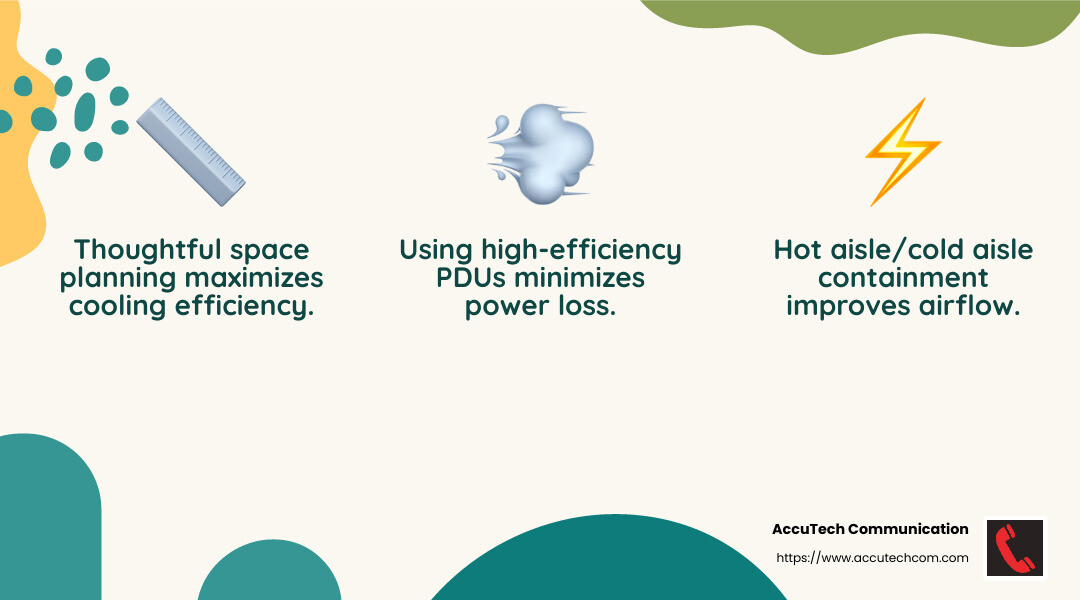
Space planning is the backbone of efficient data center infrastructure design. It’s not just about cramming in as much equipment as possible. It’s about thoughtful organization to maximize airflow and cooling efficiency. By compartmentalizing the space, operators can manage different areas based on their specific power and cooling needs. This flexibility helps reduce unnecessary energy consumption and costs.
Airflow Patterns
Efficient airflow is crucial to keeping servers cool and preventing overheating. Implementing hot aisle/cold aisle containment can significantly improve cooling efficiency. These systems work by directing cool air to the front of server racks and hot air out the back, minimizing mixing. Using blanking plates to cover unused rack spaces also prevents cool air from being wasted.
Power Distribution
Power distribution can make or break a data center’s efficiency. High-efficiency power distribution units (PDUs) and uninterruptible power supplies (UPS) minimize power loss. By reducing the number of steps in voltage conversion, facilities can cut down on energy waste. This streamlined power flow ensures that energy is used where it’s needed most.
Cooling Technologies
Cooling is one of the biggest energy consumers in a data center. Exploring alternative cooling technologies can lead to significant savings. For instance, free cooling uses outside air to cool the facility, which is particularly effective in cooler climates. Water-cooled chillers and economizers are other options that use less energy than traditional HVAC systems.
Energy Efficiency
To keep energy use in check, continuous monitoring is key. Power Usage Effectiveness (PUE) is a popular metric for measuring energy efficiency. By tracking PUE year-round, operators can identify inefficiencies and make necessary adjustments. Additionally, raising the temperature of cold aisles to 78-80°F can reduce energy consumption without compromising equipment safety.
By integrating these strategies, data centers can achieve optimal performance while keeping energy use and costs in check. This not only benefits the bottom line but also contributes to a more sustainable operation. Up next, we’ll dig into the crucial aspects of ensuring security and compliance in data center design.
Ensuring Security and Compliance
Security and compliance are critical pillars of data center infrastructure design. Let’s explore the essential components that ensure a secure environment.
Physical Security
Physical security is the first line of defense in safeguarding data centers. It involves managing human access and protecting the facility’s physical infrastructure. Implementing strong physical security measures ensures that only authorized personnel can access sensitive areas. These measures include badge access systems, key access to specific racks, and logging of employee and visitor entries.
Biometric Access
Biometric access takes security a step further by using unique physical characteristics for identification. This can include fingerprint scanners, facial recognition, or iris scans. Biometric systems provide an additional layer of security, ensuring that only verified individuals can enter critical areas. This technology is especially useful in preventing unauthorized access and reducing the risk of human error.
Surveillance Cameras
Surveillance cameras are vital for monitoring and recording activities within and around the data center. Modern systems often incorporate AI-assisted features, such as facial recognition, to improve monitoring capabilities. These cameras help in real-time observation and provide valuable footage for reviewing incidents. Continuous surveillance acts as a deterrent to potential intruders and aids in quickly addressing any security breaches.
Secure Entry Points
Secure entry points are crucial in controlling access to the data center. These include reinforced doors, turnstiles, and mantraps that prevent tailgating. By securing entry points, data centers can better manage who enters and exits, ensuring that only authorized personnel have access. This not only protects the equipment but also the sensitive data stored within.
Incorporating these security measures into data center infrastructure design helps ensure the facility remains protected against unauthorized access and potential threats. Up next, we’ll discuss how scalability and flexibility can be built into data center design to accommodate future growth and technological advancements.
Scalability and Flexibility in Data Center Design
Designing a data center that can grow and adapt is crucial for long-term success. Let’s explore the key aspects of achieving scalability and flexibility.
Modular Designs
Modular designs are like building blocks for data centers. They allow you to add or remove components as needed. This approach is perfect for handling changes in demand without overhauling the entire system. Modular designs make it easier to expand capacity, whether it’s adding more servers or increasing storage.
Future Growth
Planning for future growth means thinking ahead. Data centers should be designed with extra space, power, and cooling capacity. This ensures they can handle increased workloads without running into issues. It’s wise to anticipate technological advancements and how they might affect your data center’s needs.
Technological Advancements
Technology changes fast. Data centers must be ready to incorporate new technologies, like AI and quantum computing. This means having a flexible infrastructure that can support future innovations without significant disruptions. Staying ahead of tech trends helps maintain a competitive edge.
Redundancy Configurations
Redundancy configurations are essential for reliability. They ensure that if one system fails, another can take over seamlessly. This is especially important for power and cooling systems. Redundancy keeps the data center running smoothly, preventing downtime and protecting valuable data.
Incorporating these elements into data center infrastructure design ensures the facility can adapt to new demands and technologies. Up next, we’ll explore common data center design standards that guide these practices.
Common Data Center Design Standards
When it comes to data center infrastructure design, adhering to established standards is key. These standards ensure reliability, efficiency, and sustainability. Let’s explore some of the most recognized standards in the industry.
Uptime Institute’s Tier Standards
The Uptime Institute’s Tier Classification System is a global benchmark for data center performance. It categorizes data centers into four tiers:
- Tier I: Basic capacity with a single path for power and cooling. It offers 99.671% availability.
- Tier II: Adds redundant capacity components, slightly boosting availability to 99.741%.
- Tier III: Enables concurrent maintenance with multiple power paths, ensuring 99.982% availability.
- Tier IV: Fault-tolerant, with multiple active paths and 99.995% availability. It can handle unplanned events without downtime.
These tiers help organizations choose the right level of reliability based on their needs.
ANSI/TIA-942
The ANSI/TIA-942 standard sets requirements for data center infrastructure, focusing on layout, cabling, and reliability. It also uses a tiered classification similar to the Uptime Institute’s, but with distinct criteria:
- Rating 1: Basic infrastructure with limited protection.
- Rating 2: Redundant components for better disruption resistance.
- Rating 3: Concurrently maintainable infrastructure.
- Rating 4: Fault-tolerant and protected against most physical events.
BICSI-002
BICSI-002 offers comprehensive guidelines for data center design, covering site selection, space planning, electrical design, HVAC, security, and fire protection. It ensures a holistic approach to data center infrastructure.
ISO/IEC 24764
This standard by ISO and IEC outlines specifications for cabling infrastructure in data centers. It ensures compatibility and performance, focusing on robust cabling systems that support data center operations.
LEED Certification
Managed by the U.S. Green Building Council, LEED certification evaluates the environmental performance of data centers. It emphasizes sustainability through energy efficiency, water usage, air quality, and sustainable materials.
NFPA Standards
The National Fire Protection Association provides standards for IT equipment protection (NFPA 75) and telecommunications facilities (NFPA 76). These standards focus on fire detection, suppression, and safety protocols.
ASHRAE 90.4
ASHRAE 90.4 addresses energy efficiency in data centers. It provides guidelines for designing energy-efficient mechanical and electrical systems, reducing operational costs and environmental impact.
Understanding and implementing these standards in data center infrastructure design ensures that facilities are reliable, efficient, and prepared for future demands. Next, we’ll tackle some frequently asked questions about data center infrastructure design.
Frequently Asked Questions about Data Center Infrastructure Design
What are the primary components involved in data center infrastructure?
In data center infrastructure design, several core components work together to ensure smooth operations:
- Servers: These are the backbone of any data center, handling data processing and application hosting.
- Storage Systems: Essential for data retention, these systems manage the storage and retrieval of data efficiently.
- Networking Devices: Routers, switches, and cables facilitate data flow between servers and external networks.
- Power Supplies: Reliable power is crucial, often supported by uninterruptible power supplies (UPS) and backup generators.
- Cooling Systems: These systems regulate temperature, preventing overheating and ensuring optimal performance.
- Physical Racks: Racks house servers and equipment, organized for accessibility and airflow.
Each component plays a vital role in maintaining the data center’s functionality and reliability.
How is modern data center architecture typically designed?
Modern data centers emphasize virtualization and modularity to improve flexibility and efficiency:
- Virtualization: By creating virtual versions of servers and storage, data centers can maximize resource utilization and reduce physical hardware needs.
- Modularity: Modular designs allow for scalable growth, enabling data centers to expand by adding standardized units as needed.
- Energy Efficiency: Modern designs focus on reducing energy use through efficient power distribution and cooling technologies.
These approaches not only improve performance but also prepare data centers for future technology integrations.
What are the key types of data center architectures currently in use?
Various data center architectures cater to different needs and scales:
- On-Premises: Traditional setups where all infrastructure is housed within a company’s own facility, offering control but requiring significant investment.
- Colocation: Businesses rent space in a third-party data center, sharing infrastructure while maintaining their own servers and storage.
- Cloud: Infrastructure is hosted by cloud providers, offering scalability and reducing the need for physical hardware on-site.
- Edge Computing: Places computing resources closer to data sources, reducing latency and improving real-time data processing.
Each architecture type offers unique benefits, allowing businesses to choose based on their specific needs and growth plans.
These insights into data center infrastructure design components and architectures provide a foundation for making informed decisions in creating efficient and scalable data centers.
Conclusion
At AccuTech Communications, we understand the importance of a well-designed data center infrastructure. Based in Massachusetts, we have been serving businesses across Massachusetts, New Hampshire, and Rhode Island since 1993. Our expertise in network cabling, business phone systems, and data center technologies has made us a trusted partner for companies looking to improve their IT infrastructure.
Certified Service: Our team is committed to delivering certified, reliable services. We ensure that every project meets industry standards and is executed with precision. Our skilled technicians are trained to optimize your network infrastructure for peak performance.
Competitive Pricing: We offer competitive pricing without compromising on quality. Our goal is to provide value to our clients by delivering high-quality solutions that fit their budget. This commitment to affordability has helped us build long-lasting relationships with our clients.
Commitment to Quality: Quality is at the heart of everything we do. From the initial consultation to the final implementation, we focus on delivering solutions that exceed expectations. Our dedication to quality ensures that your data center infrastructure is robust, efficient, and scalable.
If you’re looking to build or upgrade your data center, trust AccuTech Communications to guide you through the process. Our expertise and commitment to excellence make us the ideal partner for your infrastructure needs.
Explore our data center build-out services to see how we can help your organization succeed. Let us be a part of your journey to mastering data center infrastructure design.
