
Data Center Migration Project: Top 5 Proven Strategies 2025
Data center migration projects are pivotal for businesses aiming to scale and improve their infrastructure. In today’s fast-evolving digital environment, ensuring your IT infrastructure aligns with your growing needs is crucial. Whether you are expanding your operations, adopting new technologies, or seeking to improve data security, a well-executed data center migration can significantly streamline these efforts.
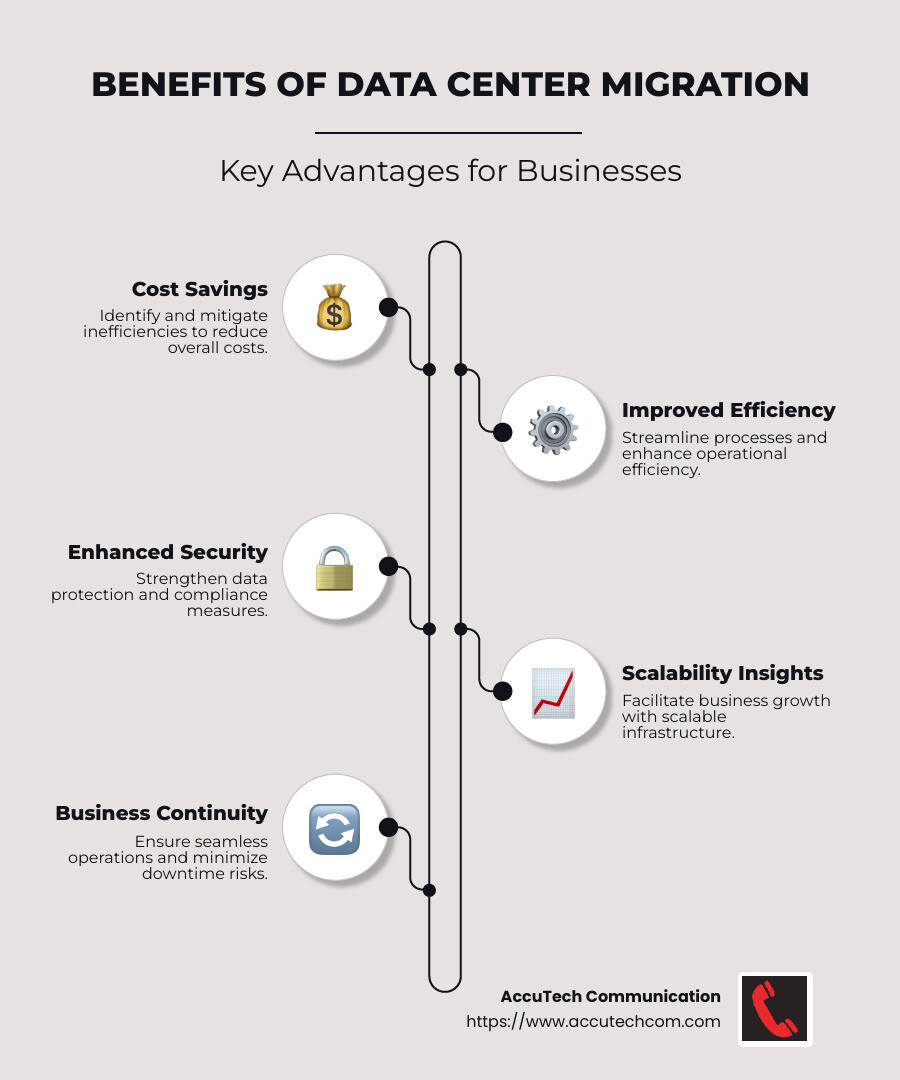
- Why migrate your data center?
- Business growth: Supports scalability and future expansion.
- Infrastructure needs: Improves performance and efficiency.
- Cost optimization: Identifies potential cost-saving opportunities.
At AccuTech Communications, we’ve been at the forefront of empowering businesses across Massachusetts, New Hampshire, and Rhode Island with robust communication solutions since 1993. With experience in executing data center migration projects, I’m Corin Dolan, dedicated to helping businesses leverage top-notch infrastructure.
Basic data center migration project vocab:
– data center move checklist
– it relocation services
– network relocation
Understanding Data Center Migration
When your business is ready to grow or needs a tech upgrade, data center migration becomes essential. This process involves moving your IT setup to a new location or infrastructure. It’s like moving to a new house but for your data and applications. Here’s why it’s crucial:
Data Center Relocation
Relocating a data center means physically or virtually moving your tech environment. This could be due to outgrowing the current space or needing better facilities. Think of it like moving from a crowded apartment to a spacious house. The goal is to ensure your IT systems have room to breathe and grow.
IT Infrastructure
Your IT infrastructure is the backbone of your business operations. It includes servers, storage, networking hardware, and software. As businesses evolve, so do their infrastructure needs. A migration can help update these components, ensuring they are efficient, secure, and capable of handling increased workloads.
Cloud Adoption
Many businesses are turning to the cloud during their migration projects. Cloud adoption offers flexibility, scalability, and cost savings. By moving to cloud-based solutions, you can reduce the need for physical hardware and tap into advanced technologies like artificial intelligence and machine learning.
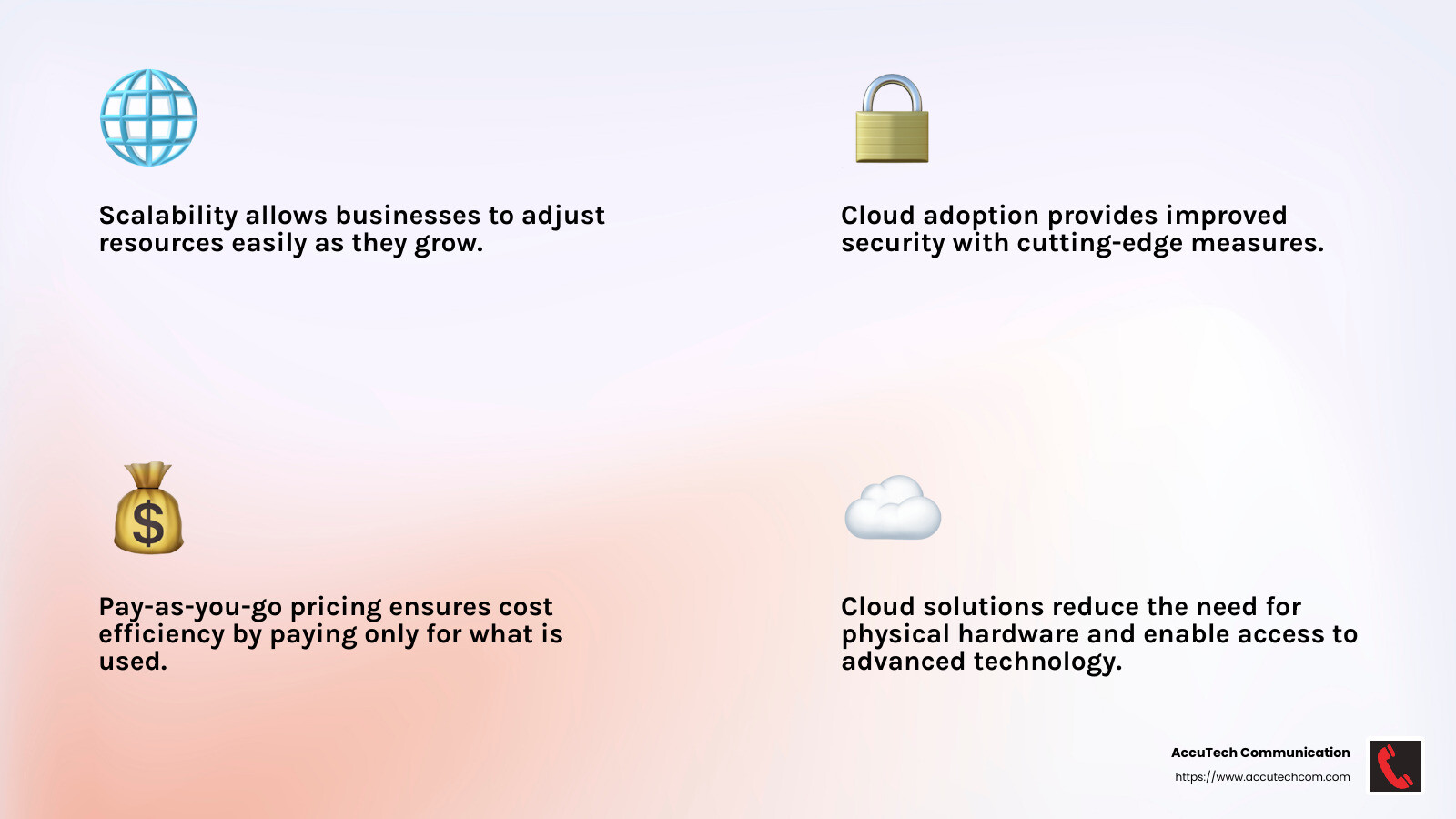
Key Benefits of Cloud Adoption:
- Scalability: Easily adjust resources as your business grows.
- Improved Security: Access to cutting-edge security measures.
- Cost Efficiency: Pay only for what you use, reducing unnecessary expenses.
AccuTech Communications has been assisting businesses in Massachusetts, New Hampshire, and Rhode Island with their data center migration projects since 1993. We ensure that your IT infrastructure is not just a support system but a driving force for growth and innovation.
Planning Your Data Center Migration Project
Planning a data center migration project is like preparing for a big move. You need a clear roadmap to ensure everything goes smoothly. Here’s how to get started:
Detailed Inventory
Before you begin, make a detailed inventory of all your IT assets. This includes servers, applications, network equipment, and any other hardware or software components. Knowing what you have helps prevent surprises during the migration.
- Create a list: Document every piece of equipment and its specifications.
- Identify dependencies: Understand how different systems interact. This will help in planning the order of migration.
- Assess current state: Check the condition and performance of your assets. Decide what to keep, upgrade, or replace.
Migration Plan
A solid migration plan is essential for success. This plan should outline every step of the process, from preparation to execution.
- Set clear objectives: Define what you want to achieve with the migration. Is it better performance, more space, or cost savings?
- Develop a timeline: Break down the project into phases. Assign deadlines to keep everything on track.
- Choose the right tools: Select migration tools and technologies that fit your needs. This may include cloud solutions or specific software for data transfer.
Stakeholder Briefing
Communication is key. Stakeholder briefing ensures everyone involved understands the project and their role.
- Identify stakeholders: This includes IT staff, management, and end-users.
- Hold regular meetings: Keep stakeholders informed with updates and progress reports.
- Address concerns: Listen to feedback and address any worries about the migration.
AccuTech Communications has been guiding businesses through these steps for decades. We help you create a seamless migration plan that aligns with your business goals.
Next, we’ll dive into the steps for a successful data center migration, where we’ll discuss the planning phase, test migration, and validation phase in detail.
Steps for a Successful Data Center Migration
When it comes to executing a data center migration project, following a well-structured process is crucial. Here are the key steps to ensure success:
Planning Phase
The planning phase sets the foundation for your migration. Without a solid plan, the project can quickly go off track. Here’s what you need to focus on:
- Risk Assessment: Identify potential risks and create strategies to mitigate them. This includes understanding the impact of downtime and data loss.
- Define Objectives: Clearly outline what you aim to achieve. Whether it’s improving performance or reducing costs, having clear goals will guide your decisions.
- Resource Allocation: Assign roles and responsibilities. Make sure you have the right team in place, including technical experts and project managers.
- Timeline Development: Create a detailed timeline. Break down tasks into manageable phases and set realistic deadlines.
Test Migration
Before moving everything, conduct a test migration. This step is crucial to ensure all systems work correctly in the new environment.
- Pilot Testing: Select a small subset of data and applications to migrate first. This will help identify any issues without risking the entire system.
- Performance Evaluation: Monitor the performance of the migrated components. Check for any bottlenecks or failures.
- Feedback Loop: Gather feedback from stakeholders involved in the test migration. Use this information to refine your approach.
Validation Phase
The validation phase is your final checkpoint. It ensures everything is ready for the full migration.
- Audit Trails and Logs: Review logs to ensure all data has been correctly migrated. This helps catch any discrepancies before they become bigger problems.
- System Testing: Conduct comprehensive tests on the new setup. Make sure all applications and systems are functioning as expected.
- Stakeholder Confirmation: Get sign-off from all stakeholders. Ensure everyone is satisfied with the results and that the migration meets business needs.
AccuTech Communications prides itself on guiding businesses through these critical steps. Our expertise ensures that your migration is smooth, with minimal disruption to your operations.
Next, we’ll explore the best practices for data center migration, focusing on asset inventory, migration checklist, and risk management.
Best Practices for Data Center Migration
Starting on a data center migration project requires careful planning and execution. Following best practices can make the process smoother and more efficient. Let’s explore three key areas: asset inventory, migration checklist, and risk management.
Asset Inventory
A detailed asset inventory is the backbone of a successful migration. Knowing what you have and what needs to be moved is crucial.
- Comprehensive Listing: Document all hardware, software, and network components. This includes servers, storage devices, applications, and any dependencies.
- Application Dependencies: Identify how applications interact with each other. Understanding these relationships prevents disruptions during migration.
- Current State Assessment: Evaluate the condition and performance of your assets. This will help decide if upgrades or replacements are needed.
Creating a thorough inventory helps avoid surprises and ensures nothing is overlooked during the move.
Migration Checklist
A migration checklist keeps your project organized and on track. It acts as a roadmap, guiding you through each phase.
- Pre-Migration Tasks: Include tasks like backing up data, notifying stakeholders, and testing connectivity in the new location.
- Migration Steps: Break down the actual migration into smaller, manageable tasks. Assign responsibilities and set deadlines for each step.
- Post-Migration Review: Ensure all systems are up and running in the new environment. Conduct a final review to verify everything is in place and functioning.
A well-prepared checklist ensures that no critical steps are missed and helps maintain momentum throughout the project.
Risk Management
Managing risks is a vital component of any data center migration project. Identify potential threats and develop strategies to mitigate them.
- Risk Identification: List all possible risks, such as data loss, downtime, or hardware failure.
- Mitigation Strategies: Develop plans to address each risk. This could involve creating backups, scheduling migrations during low-traffic periods, or having spare equipment on hand.
- Continuous Monitoring: Keep an eye on the migration process to catch issues early. Regular updates and communication with the team will help address problems swiftly.
Effective risk management minimizes disruptions and helps ensure a successful migration.
By focusing on asset inventory, using a detailed migration checklist, and implementing strong risk management practices, you can steer your data center migration with confidence.
Next, we’ll address some frequently asked questions about data center migration projects, providing insights into common concerns and solutions.
Frequently Asked Questions about Data Center Migration Projects
When starting on a data center migration project, it’s natural to have questions. Below, we address some of the most common inquiries to help you steer the process smoothly.
What is a data center migration project?
A data center migration project involves relocating your organization’s IT infrastructure from one location to another. This could mean moving to a new physical site, transitioning to a cloud environment, or a combination of both. The goal is to improve infrastructure compatibility and support business growth. Successful migration can improve performance, reduce costs, and increase flexibility.
What are the steps for data center migration?
Successfully migrating a data center requires a clear plan, thoughtful design, and thorough testing.
- Plan: Start by creating a comprehensive plan. This includes defining the scope, setting objectives, and identifying all resources and stakeholders involved. An effective plan outlines timelines, budgets, and risk management strategies.
- Design: Develop a design that details how the migration will occur. This includes mapping out the current infrastructure and planning the new setup. Consider all dependencies and ensure the design aligns with business goals.
- Test: Before the actual migration, conduct test migrations. This helps identify potential issues and ensures that everything will work as expected in the new environment. Testing is crucial for minimizing downtime and ensuring data integrity.
How to ensure a smooth data migration?
Ensuring a smooth migration involves several key practices:
- Test Migration: Conduct dry runs to simulate the migration process. This helps uncover any hidden issues and allows for adjustments before the actual move.
- Stakeholder Engagement: Keep all stakeholders informed and involved. Regular communication ensures everyone is on the same page and helps address concerns promptly.
- Infrastructure Compatibility: Verify that all systems and applications are compatible with the new environment. This includes checking hardware, software, and network configurations.
By focusing on these areas, you can minimize disruptions and achieve a successful data center migration project.
Next, we’ll wrap up with a look at how AccuTech Communications can support your migration needs with certified services and competitive pricing.
Conclusion
As you start on your data center migration project, choosing the right partner can make all the difference. At AccuTech Communications, we’re committed to delivering certified services and competitive pricing to ensure your business transitions smoothly and efficiently.
Certified Service: Our team of skilled technicians and engineers are fully certified and equipped to handle your migration needs. We pride ourselves on our expertise in network cabling, business phone systems, and data center technologies. This ensures that your infrastructure is optimized for peak performance, allowing your business to thrive in its new environment.
Competitive Pricing: Since 1993, we’ve been serving businesses across Massachusetts, New Hampshire, and Rhode Island with a commitment to quality and affordability. Our competitive pricing means you can achieve your migration goals without breaking the bank. We understand that each business has unique needs, and we tailor our solutions to fit your budget while maintaining the highest standards of service.
Reliable Partner: With decades of experience and a track record of success, AccuTech Communications is your trusted partner for data center migration. We offer comprehensive support throughout the entire process, from planning to execution, ensuring that your transition is seamless and stress-free.
Whether you’re relocating to a new physical site or transitioning to a cloud environment, we have the expertise and resources to guide you every step of the way. Let us help you transform your IT infrastructure and support your business growth.
For more information on how we can assist with your business relocation network services, visit our Network Cable Installers page. Let’s work together to make your data center migration a success.
