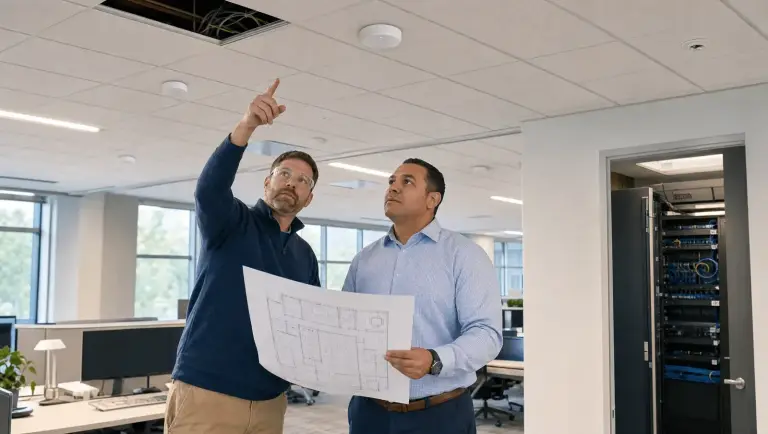
The Art of Data Network Cabling: A Step-by-Step Guide
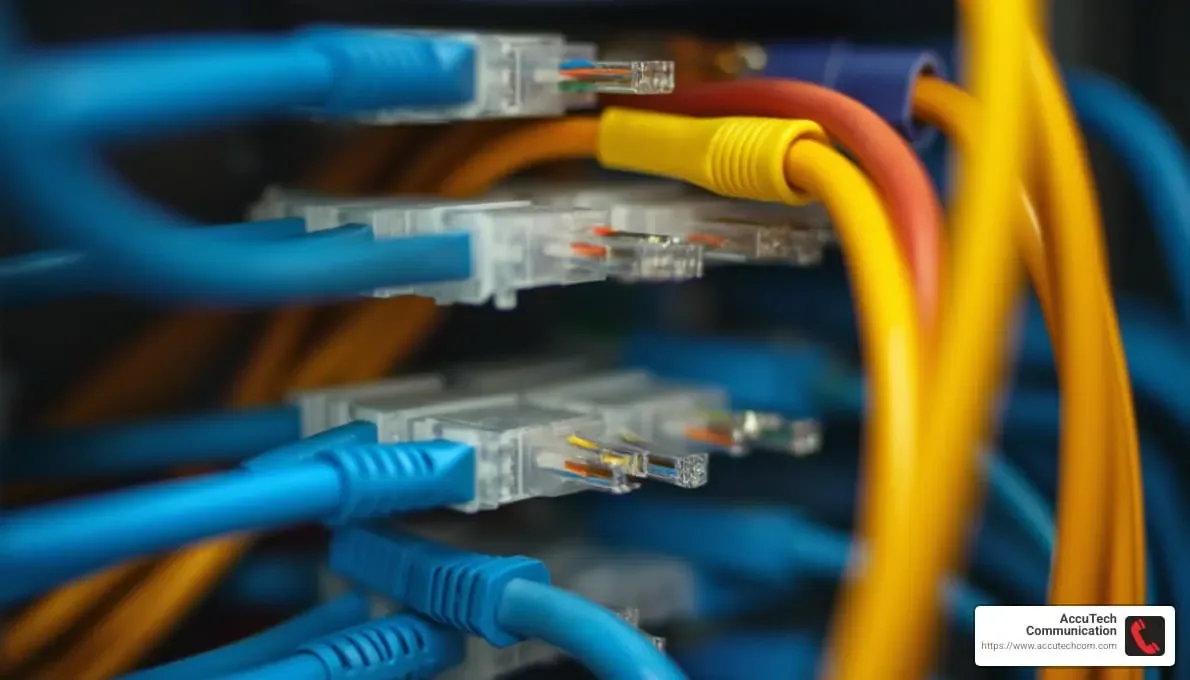
Data network cabling is the essential backbone of any modern IT infrastructure, enabling seamless data transfer across networks. It’s the unseen hero that connects devices like computers, routers, and switches, allowing them to communicate efficiently. Whether you’re setting up a new office or upgrading an existing system, understanding its significance is crucial:
- Types of Cables: Twisted pair, coaxial, and fiber optic cables are key components.
- Importance: Ensures efficient data transfer, reducing downtime and enhancing scalability.
- Installation: Proper planning and skilled installation are vital for optimal performance.
I’m Corin Dolan, your guide in data network cabling. With years of experience at AccuTech Communications, I’ve helped businesses across the Northeast build robust network infrastructures. Join me as we dig deeper into the nuts and bolts of data network cabling.
Data network cabling terms simplified:
, network data wiring
, structured cable contractors
, structured cabling installation
Understanding Data Network Cabling
Data network cabling is the backbone of modern IT infrastructure. Imagine it as the highway system for your digital data, guiding information from one device to another at lightning speed. Without it, your computers, routers, and switches would be like isolated islands, unable to communicate.
Network Cabling Definition
At its core, network cabling consists of the physical wires and connectors that link your devices. It’s not just about plugging in cables; it’s about creating a structured system that supports data flow smoothly and efficiently. This setup is essential for everything from internet browsing to complex data transactions.
Physical Infrastructure
The physical infrastructure of network cabling is akin to the skeleton of your IT system. It includes:
- Cables: These are the pathways for data. Common types include twisted pair, coaxial, and fiber optic cables.
- Connectors and Jacks: These connect cables to devices.
- Patch Panels: Central hubs that organize and manage connections.
- Racks and Enclosures: Secure spaces that house and protect the cabling and equipment.
A well-planned infrastructure simplifies maintenance, upgrades, and troubleshooting. It also ensures that your network can grow with your business.
Data Transmission
Data transmission refers to the movement of data across a network. Think of it as the flow of traffic on a busy highway. Efficient data transmission reduces delays and keeps your systems running smoothly.
Fiber optic cables are often the go-to choice for businesses needing high-speed data transfer over long distances. They use light to transmit data, which is faster and more reliable than traditional copper cables.
When downtime can cost businesses thousands of dollars, investing in a robust data network cabling system is not just wise, it’s essential. With a solid infrastructure, your business can scale, adapt to new technologies, and maintain security with ease.
Join us as we explore the various types of data network cabling in the next section.
Types of Data Network Cabling
When it comes to data network cabling, understanding the different types available is crucial. Each type has its own strengths and is suited for specific applications. Let’s explore the three primary types: twisted pair, coaxial cable, and fiber optic cable.
Twisted Pair
Twisted pair cables are the most common type used in local area networks (LANs). They consist of pairs of wires twisted together, which helps to reduce electromagnetic interference. This makes them ideal for environments with lots of electronic devices.
There are two main subtypes:
- Unshielded Twisted Pair (UTP): Widely used for Ethernet connections, UTP is flexible and cost-effective. It’s perfect for home and office networks where interference is minimal.
- Shielded Twisted Pair (STP): For environments with higher interference, like industrial settings, STP provides extra shielding to protect data integrity.
Coaxial Cable
Coaxial cables have a single copper conductor at their core, surrounded by a layer of insulation, a metallic shield, and an outer cover. This design allows them to support high bandwidths and provide excellent insulation against signal interference.
They are commonly used for:
- Television signals: Coaxial cables deliver clear and consistent signals for cable TV.
- Internet connections: They are often used by cable internet providers due to their ability to handle large amounts of data.
Fiber Optic Cable
Fiber optic cables are the champions of high-speed data transmission. They use light to carry data over long distances, making them immune to electrical interference. This makes them ideal for:
- Connecting networks between buildings: Fiber optic cables are perfect for campuses or business parks.
- High-speed internet: They provide faster speeds and higher reliability than copper cables.
Fiber optic cables are more expensive upfront, but they offer significant advantages in speed and distance, making them a smart investment for growing businesses.
Choosing the right type of cabling is essential for creating an efficient and reliable network. The next section will cover the components of structured cabling, which ties these types together into a cohesive system.
Components of Structured Cabling
To create a seamless and reliable data network cabling system, it’s essential to understand the components of structured cabling. Each component plays a unique role in ensuring the network operates efficiently and can handle future growth.
Entrance Facilities
The entrance facilities are where the outside world connects to your building’s network. It’s the point where the telephone company’s network ends and your internal wiring begins. This area typically houses the demarcation point, which is the boundary between external and internal cabling. Properly setting up entrance facilities is crucial for managing external connectivity and ensuring a smooth transition to your internal network.
Equipment Rooms
Equipment rooms are the nerve centers of your network. They house critical equipment like servers, switches, and routers. These rooms serve as central hubs for distributing network services to different areas of a building or campus. It’s vital to keep equipment rooms organized and well-ventilated to maintain optimal performance and prevent overheating.
Backbone Cabling
Backbone cabling is the main artery of your network, connecting different equipment rooms and telecommunications closets. It can span multiple floors or even buildings, providing the primary path for data transmission. Typically, backbone cabling uses high-capacity cables like fiber optics to handle large amounts of data over long distances, ensuring robust and fast communication throughout the network.
Horizontal Cabling
Horizontal cabling is what connects telecommunications rooms to individual outlets or workstations on each floor. This cabling runs through conduits or ceiling spaces, linking the backbone cabling to end-user devices. It’s often made using twisted pair cables due to their flexibility and cost-effectiveness. A well-planned horizontal cabling system is key to providing reliable connections to every corner of your office.
Telecommunications Rooms
Telecommunications rooms, also known as telecommunications enclosures, act as intermediary points between backbone and horizontal cabling. They house connection points like patch panels and cross-connects, which help manage and distribute network services. These rooms are critical for organizing network infrastructure and ensuring efficient data flow.
Work Area
The work area is where end-users interact with the network. It includes everything from the outlets on the wall to the cables connecting computers, phones, and other devices. Ensuring that work areas are well-connected and easily accessible is crucial for user productivity and satisfaction.
Each component of structured cabling plays a vital role in creating a cohesive and efficient network. By understanding and implementing these components, you can build a network infrastructure that’s not only reliable today but also ready for future advancements.
Next, we will explore the best practices for installing and maintaining your network cabling system.
Installation and Best Practices
When it comes to data network cabling, proper installation and maintenance are key to ensuring reliability and efficiency. Let’s explore some essential steps and best practices that can help you achieve a robust network setup.
Planning
Before you even think about laying cables, planning is crucial. A detailed plan considers current and future network needs. This involves selecting the right types of cables and mapping out their routes. Good planning helps prevent costly mistakes and ensures your network can grow with your business.
Installation
Once the plan is set, it’s time for installation. Cables should be run through walls, ceilings, and floors with care to avoid electrical interference and physical damage. Horizontal cabling connects workstations, while backbone cabling links different parts of the building or campus.
Pro Tip: Use cable trays and conduits to keep cables organized and protected.
Testing
After installation, every cable and connection must be tested. This step ensures that everything meets performance standards and functions correctly. A cable tester can check for issues like signal loss or interference, helping you catch problems early.
Labeling
Labeling is a simple yet vital part of maintaining your network. Every cable, patch panel, and outlet should be clearly labeled. This makes troubleshooting much easier and speeds up any future modifications or expansions.
Example: Use a label marker to tag cables with their destination and purpose.
Documentation
Finally, create detailed documentation of your network setup. This includes diagrams of cable routes, connection points, and equipment locations. Good documentation is an invaluable resource for anyone who needs to understand or work on your network in the future.
By following these best practices, you’ll set up a network that’s efficient, scalable, and easy to manage. Next, we’ll tackle some frequently asked questions about data network cabling to clear up any lingering doubts.
Frequently Asked Questions about Data Network Cabling
What is a data network cable?
A data network cable is a physical medium used to connect devices within an IT network, allowing them to communicate and transfer data. These cables are essential for establishing a reliable connection between computers, servers, and other network devices. Data network cables can be made from copper or fiber, each serving different purposes depending on network needs.
Copper cables are commonly used for shorter distances and are cost-effective for many businesses. They include twisted pair cables like Cat5e and Cat6, which are popular in local area networks (LANs).
Fiber optic cables, on the other hand, use light to transmit data over longer distances and at higher speeds. They are ideal for environments that require high bandwidth and are less susceptible to electrical interference.
What are the 3 types of network cable?
In data network cabling, three main types of cables are widely used:
- Twisted Pair Cables: These are the most common type of cables used in LANs. They consist of pairs of wires twisted together, which helps reduce electromagnetic interference. Twisted pair cables come in two varieties:
- Unshielded Twisted Pair (UTP): Commonly used for Ethernet connections.
- Shielded Twisted Pair (STP): Offers additional protection against interference.
- Coaxial Cables: Known for their ability to support high bandwidth, coaxial cables have a single copper conductor at their core. They are typically used for television signals and internet connections due to their excellent insulation against signal interference.
- Fiber Optic Cables: These cables use light to transmit data, making them incredibly fast and efficient over long distances. They are immune to electrical interference, making them perfect for high-speed data transfer in electronically noisy environments.
Why is network cabling important?
Network cabling is the backbone of any IT infrastructure, and its importance cannot be overstated. Here’s why:
- Scalability: Quality cabling systems are designed to grow with your business. They can support additional devices without degrading performance, ensuring that your network can expand as your company does.
- Low Downtime: Reliable cabling reduces the risk of connectivity issues and failures, keeping your network up and running smoothly. This minimizes disruptions and maintains productivity.
- Security: Proper cabling improves both physical and digital security. By reducing vulnerabilities, you can protect sensitive information from unauthorized access.
Investing in robust network cabling is vital for ensuring efficient data transmission and maintaining the overall health of your IT network. Up next, we’ll dig into the conclusion, discussing how AccuTech Communications can help future-proof your business with expert network cabling solutions.
Conclusion
As we wrap up our exploration of data network cabling, it’s clear that having a reliable and robust cabling system is crucial for any business. Located in Massachusetts, AccuTech Communications has been providing top-notch network cabling solutions since 1993. Our commitment to quality and competitive pricing sets us apart, ensuring that your business infrastructure is both efficient and future-ready.
AccuTech Communications: Your Trusted Partner
At AccuTech Communications, we understand that your network is the backbone of your business. Our expertise in network cabling allows us to deliver customized solutions that meet the unique needs of businesses across Massachusetts, New Hampshire, and Rhode Island. From small enterprises to large corporate campuses, our technicians ensure your network infrastructure is optimized for peak performance.
Our comprehensive services cover everything from consultation and design to installation and maintenance. We specialize in various types of cabling, including twisted pair, coaxial, and fiber optic cables, to ensure that your network is fast, stable, and secure.
Looking Ahead: Future Trends in Network Cabling
The future of network cabling is geared towards supporting higher speeds and more sophisticated infrastructure. With the rise of technologies like 5G and the Internet of Things (IoT), businesses will require even more advanced cabling solutions. Fiber optic technology is expected to become more prevalent due to its high-speed capabilities and ability to handle increased data loads.
Additionally, as more devices and applications become interconnected, the demand for structured cabling systems that offer scalability and flexibility will continue to grow. Investing in quality cabling today will prepare your business for the technological advancements of tomorrow.
By choosing AccuTech Communications, you’re not just investing in network cabling; you’re investing in the future success of your business. Let us help you build a strong and reliable network infrastructure that can adapt to the ever-changing technological landscape.
For more information on how we can assist you with your structured cabling needs, visit our Structured Cabling Services page and see how we can help future-proof your business.