
Do you need a license to install low voltage cable 2025: Essential
Why Low Voltage Licensing Requirements Matter for Your Business
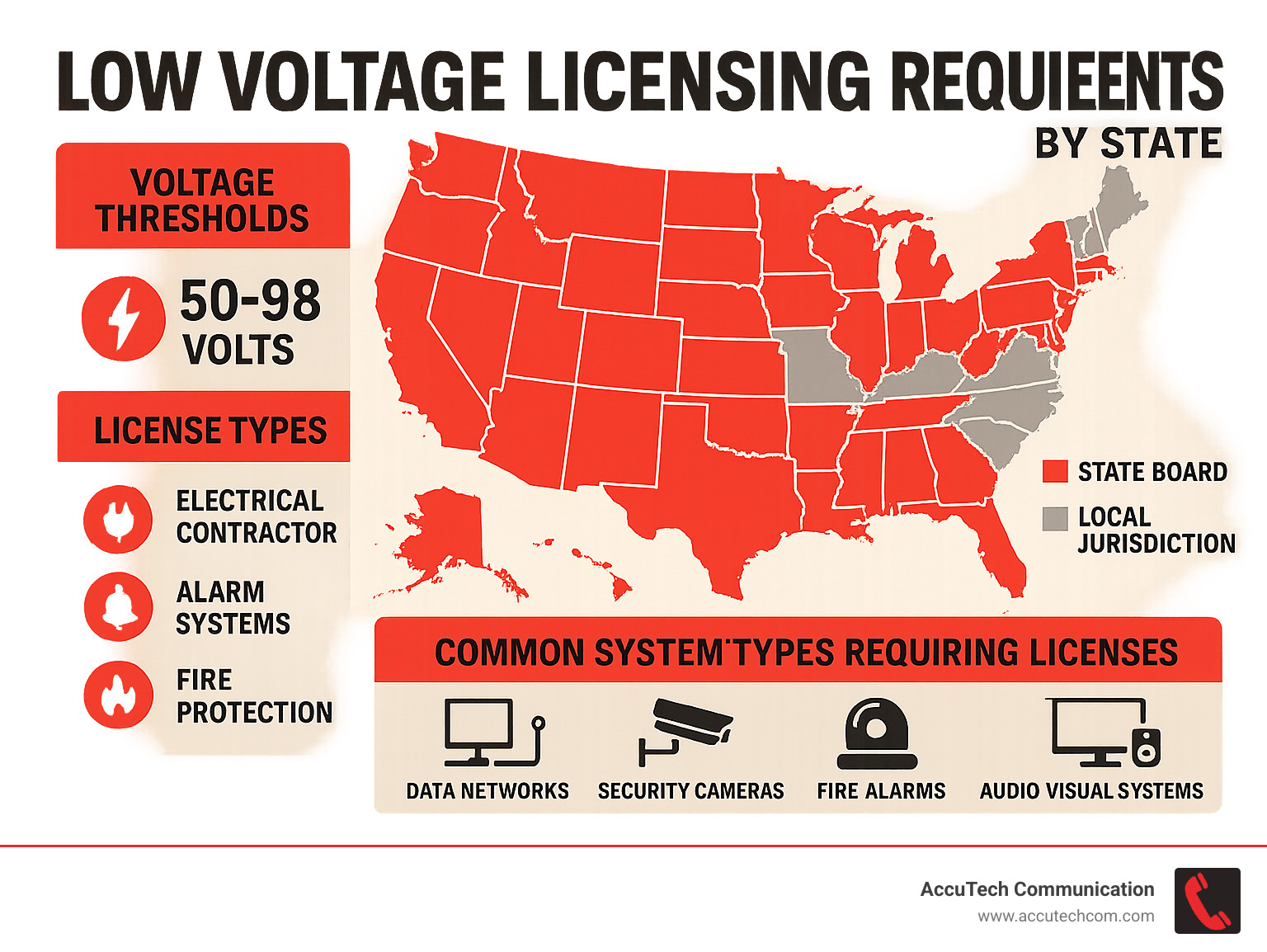
Do you need a license to install low voltage cable? The answer depends on your location, the system type, and voltage thresholds, which vary significantly by state.
Quick Answer:
- Yes, in most cases – Low voltage work typically requires a license.
- Requirements vary by state – Some require specific low voltage licenses, others a general electrical contractor license.
- Voltage thresholds differ – Usually for systems under 50-98 volts, depending on state rules.
- Multiple license types exist – Data cabling, security, and fire alarm systems may need different licenses.
- Local permits are often required – Even without mandatory licensing, permits and inspections are common.
Low voltage systems are the backbone of modern business, powering everything from data networks and security cameras to fire alarms and access control. These installations demand expertise to ensure safety and code compliance.
The regulatory landscape is a “complex patchwork” with major variations across the 50 states. Some states have comprehensive licensing programs, while others leave regulation to local jurisdictions. For businesses in any sector, understanding these rules is crucial. Non-compliance can lead to fines, project delays, failed inspections, and safety hazards.
As the owner of AccuTech Communications, I have over 30 years of experience navigating the complexities of do you need a license to install low voltage cable requirements in Massachusetts, New Hampshire, and Rhode Island. We help businesses ensure their installations meet all regulatory standards, which is essential for any infrastructure upgrade or new project.
Do you need a license to install low voltage cable helpful reading:
- how to install low voltage deck lighting
- how to install low voltage deck post lighting
- how to install low voltage lighting
What is Considered Low Voltage Work?
Understanding what qualifies as low voltage work is crucial when asking do you need a license to install low voltage cable. The term encompasses a wide range of systems that power modern business operations.
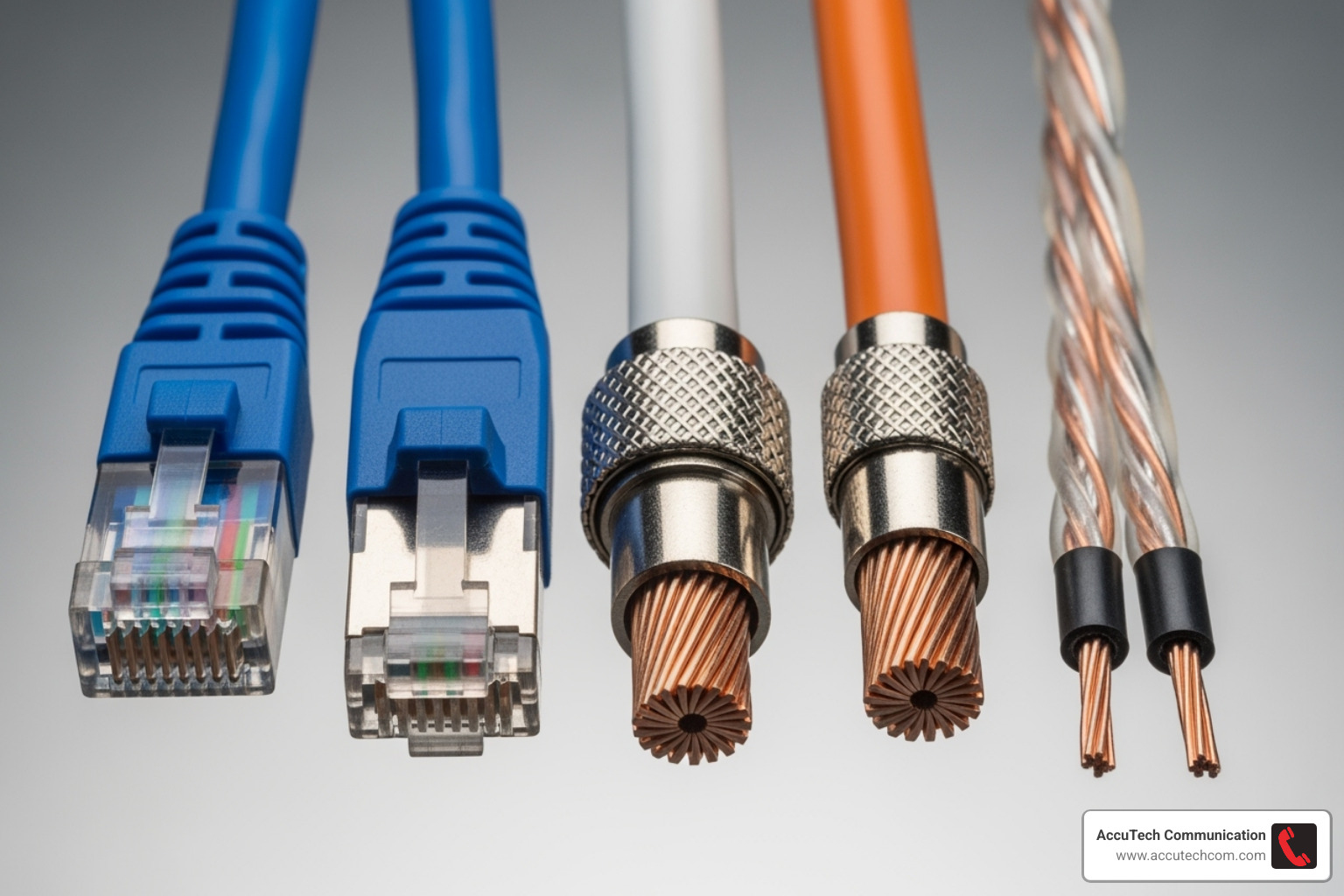
Voltage thresholds define the boundary between low and standard voltage. Most states consider systems operating below 50 to 98 volts as low voltage, far less than the 120 volts of standard building power.
The National Electrical Code (NEC) classifies most low voltage systems as Class 2 circuits. This classification reduces fire and shock risks and often dictates installation methods and licensing requirements.
Common low voltage systems include:
- Data networks: These are the most common type of low voltage work. Installing Cat6 cables for internet, computer networks, or VoIP phone systems are all low voltage tasks. For businesses, Low Voltage Cabling installations are the backbone of communication.
- Security systems: Video surveillance cameras, access control with key card readers, and intrusion alarms all operate on low voltage. They require precise installation to function reliably.
- Fire alarm systems: These are life-safety systems with strict regulations. Their signaling and control circuits operate on low voltage, where proper installation is critical.
- Audio-visual systems: Modern AV work includes conference room video systems, distributed audio, and smart home integration, blending tech expertise with installation skills.
- Access control systems: From basic card readers to biometric scanners, these systems manage building entry and provide detailed security logs.
Low voltage work is not just pulling cables; it’s installing complex electronic systems that require specialized knowledge for safety and effectiveness. This complexity is why the answer to do you need a license to install low voltage cable varies, as different systems can have different requirements from state to state.
Do You Need a License to Install Low Voltage Cable? The State-by-State Patchwork
The short answer to “do you need a license to install low voltage cable” is: it depends entirely on where you work. The regulatory landscape is a complex patchwork quilt of rules that vary dramatically.
There is no federal standard for low voltage licensing. Each state has its own approach, and rules can even change between counties or cities within the same state.

Some states have comprehensive statewide licensing programs with detailed exams, experience requirements, and continuing education. Connecticut, for example, has required statewide electrical licensing, including for low voltage, since 1965.
Other states have minimal regulation, leaving oversight to local jurisdictions like counties or municipalities. In these areas, you may not need a state license but will likely need city permits and local contractor licenses.
Many states use hybrid models, combining state-level oversight for certain systems with local control for others. New York and Texas are examples where state requirements exist alongside significant local authority.
Reciprocity agreements between states are extremely rare for low voltage licenses. Your credentials in one state typically won’t transfer to another, meaning contractors often need separate licenses for each state where they operate.
Even in states with minimal licensing, municipal permits and inspections are almost always required. We always recommend checking with both the state licensing board and the local building department to ensure full compliance and avoid costly violations.
A Closer Look: Licensing Requirements in Different States
Digging into the specifics of do you need a license to install low voltage cable reveals that each state has its own unique regulations. While the framework is often similar—requiring experience, an exam, and continuing education—the details vary dramatically.
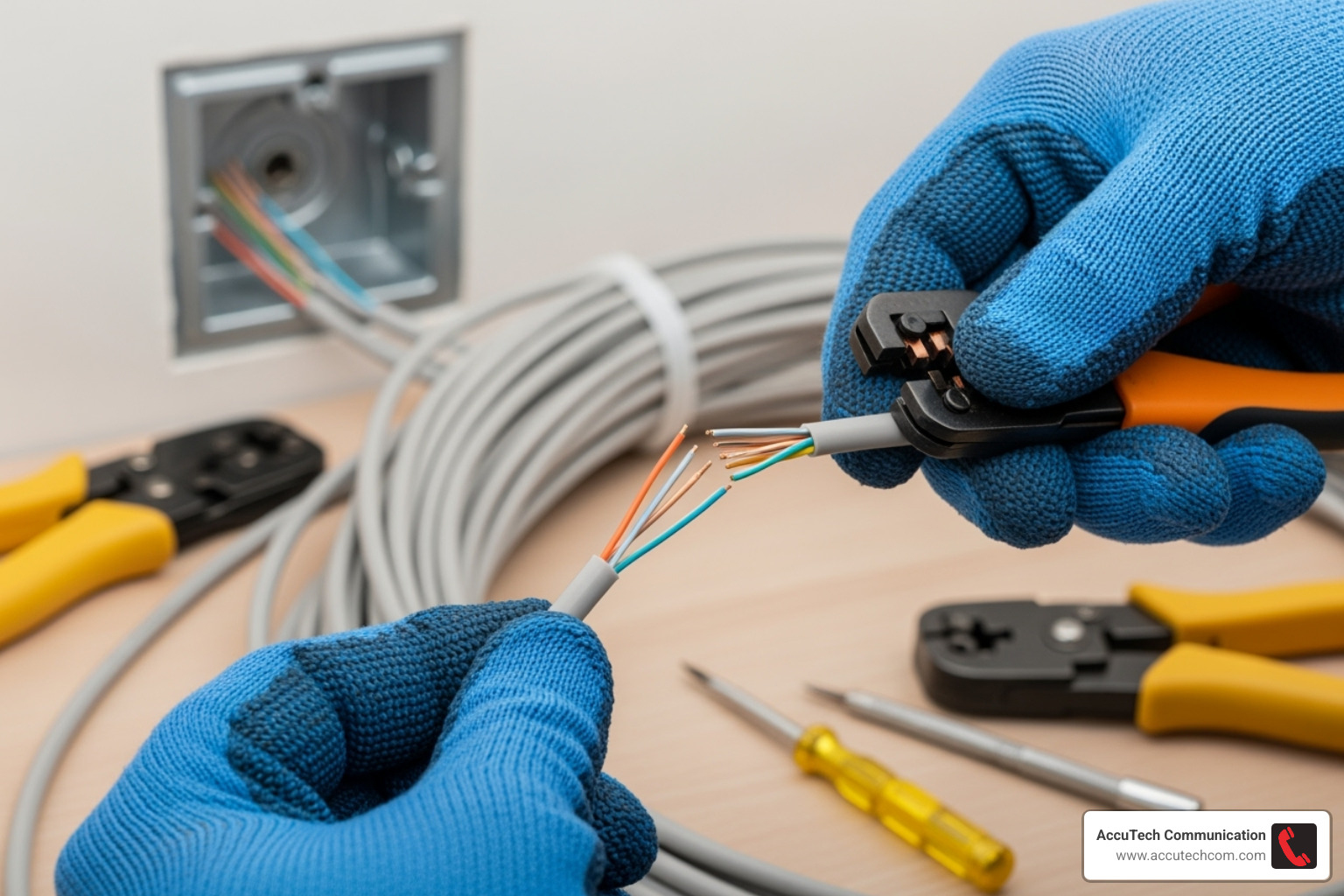
Most states distinguish between contractor licenses (for running a business) and journeyman licenses (for hands-on work). Renewal periods and continuing education hours also differ widely. A key point is that reciprocity agreements are practically non-existent, meaning a license from one state rarely transfers to another.
Let’s look at some examples.
Why You Might Need a License to Install Low Voltage Cable in New York
In New York, the answer to do you need a license to install low voltage cable is usually “yes,” especially for security, fire alarms, and structured cabling. The New York State Alarm License is administered by the Department of State’s Division of Licensing Services.
Key requirements include:
- Be at least 18 years old.
- Have four years of verifiable, professional experience in low voltage work.
- Pass a written examination covering fire alarms, access control, video surveillance, security systems, and structured cabling.
Licenses must be renewed every two years. While the state handles this licensing, many municipalities have their own additional permitting and inspection requirements. For current information, check the Official NYS licensing information website. Understanding these multi-level rules is crucial for projects like Innerduct Installation Service Company work.
Why You Don’t Need a Specific License to Install Low Voltage Cable in New Jersey
New Jersey simplifies things by issuing only one type of license: the general Electrical Contractor License. However, it includes practical exemptions for low voltage work.
The 10-volt exemption means work involving less than 10 volts is typically exempt from licensing. More importantly, the telecommunications wiring exemption covers voice and data wiring within buildings. This recognizes that running network cables differs from high-voltage electrical work.
For those holding the main Electrical Contractor License, renewal is every three years and requires 34 hours of continuing education. New Jersey has no reciprocity agreements with other states.
Licensing in Massachusetts, New Hampshire, and Rhode Island
In our home region, these three states each have a unique approach.
Massachusetts has comprehensive electrical licensing but doesn’t mandate a separate statewide low voltage license for all data and communication cabling. However, many cities and towns have their own strict permitting and inspection processes. Specialized systems like fire alarms require specific licenses and certifications.
We find that maintaining industry certifications like those from BICSI (Building Industry Consulting Service International) demonstrates expertise and a commitment to quality beyond minimum legal requirements.
New Hampshire and Rhode Island follow similar patterns. They lack a single, overarching state license for all low voltage work but have specific requirements for categories like fire alarms or security systems. Regulation primarily occurs at the municipal level, where local codes and permits are key.
This local focus means requirements can differ from one town to the next, making it essential to work with a Low Voltage Installer who understands the local landscape. This contrasts sharply with neighboring Connecticut, which has specific, detailed licenses for low voltage systems, highlighting the dramatic variation even between adjacent states.
The General Process for Obtaining a Low Voltage License
While specifics vary by state, the path to obtaining a low voltage license generally follows a pattern of proving education, experience, and knowledge. This process ensures only qualified professionals perform installations.
Here are the main stages most jurisdictions follow:
Eligibility and Experience Requirements
Before applying, you must prove you have the right foundation. Documented work hours are the cornerstone of most applications. Most states require applicants to be at least 18 and may conduct background checks.
Proving experience is often the biggest hurdle. New York, for instance, requires four years of verifiable low voltage experience. Apprentice programs offer a structured path to meet these requirements, combining hands-on training with classroom instruction. After completing an apprenticeship (often four years), you can achieve journeyman status, which is typically a prerequisite for a full contractor’s license. You will need letters from employers detailing your verifiable experience, so keeping detailed career records is wise.
Application, Fees, and Examination
Once eligible, the formal application process begins. This involves completing detailed forms from the state licensing board and paying a non-refundable application fee (e.g., $300 in New York).
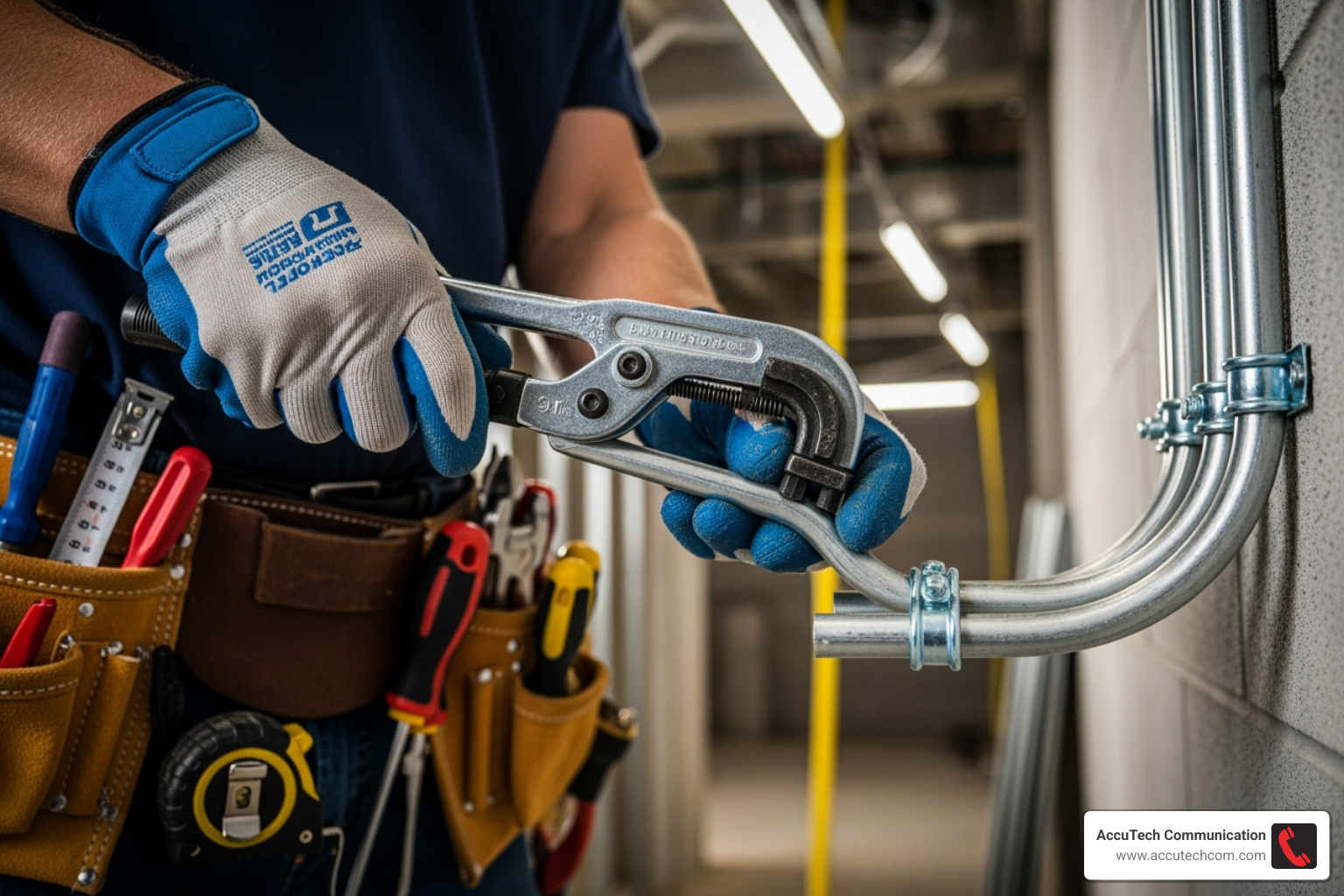
The licensing exam tests your knowledge of safety and best practices. Examination topics typically cover the National Electrical Code (NEC), especially sections on low voltage, communications, and fire alarms. You’ll also be tested on specific systems like security, access control, and data networks. Contractor license exams often include a business and law section. Some states may also require practical tests to demonstrate hands-on skills, such as installing conduit correctly. Understanding techniques like How to Install Electrical Conduit is valuable.
License Renewal and Continuing Education
Getting a license is just the beginning; keeping it requires ongoing professional development. Renewal cycles vary by state, from every two years in New York to three in New Jersey. Letting a license lapse can mean starting the process over.
Continuing Education Units (CEUs) are required in most states to keep professionals current with changing technology and safety codes. The National Electrical Code is updated regularly, and continuing education ensures that when someone asks “do you need a license to install low voltage cable,” you are not just licensed but also knowledgeable about the latest standards.
Risks of Unlicensed Work and Finding a Qualified Installer
When businesses ask, “do you need a license to install low voltage cable,” they are asking how to protect their investment, people, and operations. While an unlicensed contractor might offer a lower price, the deal often costs far more in the long run due to the serious risks involved.
Consequences of Performing Unlicensed Work
- Legal penalties and fines: Jurisdictions impose heavy fines, often accumulating daily, for unlicensed work.
- Stop-work orders: Inspectors can halt your entire project, causing significant delays and financial losses.
- Failed inspections: Unlicensed work often fails to meet code, forcing you to tear out and reinstall entire systems at your own expense.
- Safety hazards: Improper installation creates serious fire hazards and electrical shock risks, even with low voltage systems.
- System failures: Poor workmanship leads to unreliable systems. Your security cameras might fail during a break-in, or your network could crash on a critical business day.
- Voided warranties and insurance issues: Manufacturers often require professional installation to honor warranties. Your insurance company may deny claims related to unlicensed work.
For critical infrastructure like Underground Electrical Conduit, these risks are even greater.
How to Verify a Contractor’s Credentials
Protect yourself by doing your homework before hiring anyone:
- Ask for specific license numbers for the type of work being performed.
- Check state licensing board websites to verify the license is current and check for disciplinary actions.
- Request certificates of insurance (general liability and workers’ compensation) directly from the contractor’s insurance provider to ensure they are valid.
- Verify business permits with your local municipality.
- Check references and reviews from recent, similar projects.
The peace of mind from working with qualified, licensed professionals is invaluable. At AccuTech Communications, we have built our reputation over 30 years by maintaining all required licenses and certifications across Massachusetts, New Hampshire, and Rhode Island. When you’re ready to move forward with confidence, we’re here to help.
Frequently Asked Questions about Low Voltage Licensing
With regulations varying so dramatically, it’s understandable to have questions. Here are answers to the ones we hear most often.
Does installing simple network cable (Cat6) in an office require a license?
This question highlights the complexity of “do you need a license to install low voltage cable.” While Cat6 cable carries low voltage, its installation often falls under broader regulations for key reasons:
- Life-safety concerns: Even low voltage wiring can create fire hazards if installed incorrectly (e.g., using the wrong cable type in plenum spaces or penetrating fire-rated walls improperly). The National Electrical Code exists to prevent these dangers.
- Jurisdictional requirements: Some states and cities require a license for any wiring inside a structure, regardless of voltage. In New York, data cabling may fall under the state’s alarm license due to broad regulatory language.
- Commercial vs. residential: Commercial projects usually face stricter oversight than residential work.
Even if a specific license isn’t required, local permits and inspections likely are. Always check with your local building department first.
Are there any common exemptions to low voltage licensing requirements?
Yes, but they are highly specific and vary by location. Never assume an exemption applies without verification.
- Very low voltage thresholds: New Jersey exempts work under 10 volts, but this is too low for most modern data or security systems.
- Specific system types: Texas exempts certain communication circuits, optical fiber cables, and low-voltage landscape lighting.
- Owner-occupied residential work: Some jurisdictions allow homeowners to perform minor low voltage work on their own residence, though permits may still be needed. This rarely applies to commercial properties.
- Work not required by building code: North Carolina has exemptions for systems under 50 volts that are not mandated by code and pose no safety risk, but permits are still typically required.
Always verify exemptions with the relevant local authorities.
Where is the best place to find official and current licensing information for my area?
Relying on outdated or unofficial sources can cause major problems. Use these primary resources:
- State licensing boards or departments: These are your most reliable source. Websites for your state’s licensing board (e.g., New York’s Division of Licensing Services) provide official requirements, forms, and searchable databases to verify licenses.
- Local building departments: This is the “Authority Having Jurisdiction” (AHJ). For any project, contact the building department in the city or county where the work will be done. They provide precise information on local licensing, permitting, and inspection rules, which can supersede or add to state mandates.
We make it standard practice to verify requirements with both state and local authorities for every project to prevent surprises and ensure a smooth, safe installation.
Conclusion
After exploring low voltage licensing, it’s clear the answer to do you need a license to install low voltage cable? is almost always yes, but the specifics depend on a “complex patchwork” of state and local regulations. States like Connecticut have comprehensive licensing, New Jersey offers specific exemptions, and New York regulates certain systems at the state level while leaving others to municipalities.
These regulations exist because low voltage systems are critical infrastructure for modern businesses, from data networks to security cameras. Improper installation poses serious risks.
The dangers of unlicensed work are significant, including legal fines, project-stopping orders, failed inspections, fire hazards, and voided warranties. These risks are simply not worth taking for any business.
The key is to partner with professionals who understand both the technical work and the regulatory landscape. This means hiring contractors who are properly licensed and stay current with evolving codes and standards.
Since 1993, AccuTech Communications has helped businesses in Massachusetts, New Hampshire, and Rhode Island steer these complexities. We ensure your critical systems are installed safely, reliably, and in full compliance with all requirements.
Don’t leave your project to chance. The peace of mind that comes from working with licensed professionals is invaluable. Ready to ensure your next low voltage project is handled correctly? Contact a professional low voltage installer today to discuss your project.
