
Fiber Optic Contractors: Top 5 Essential Insights 2024
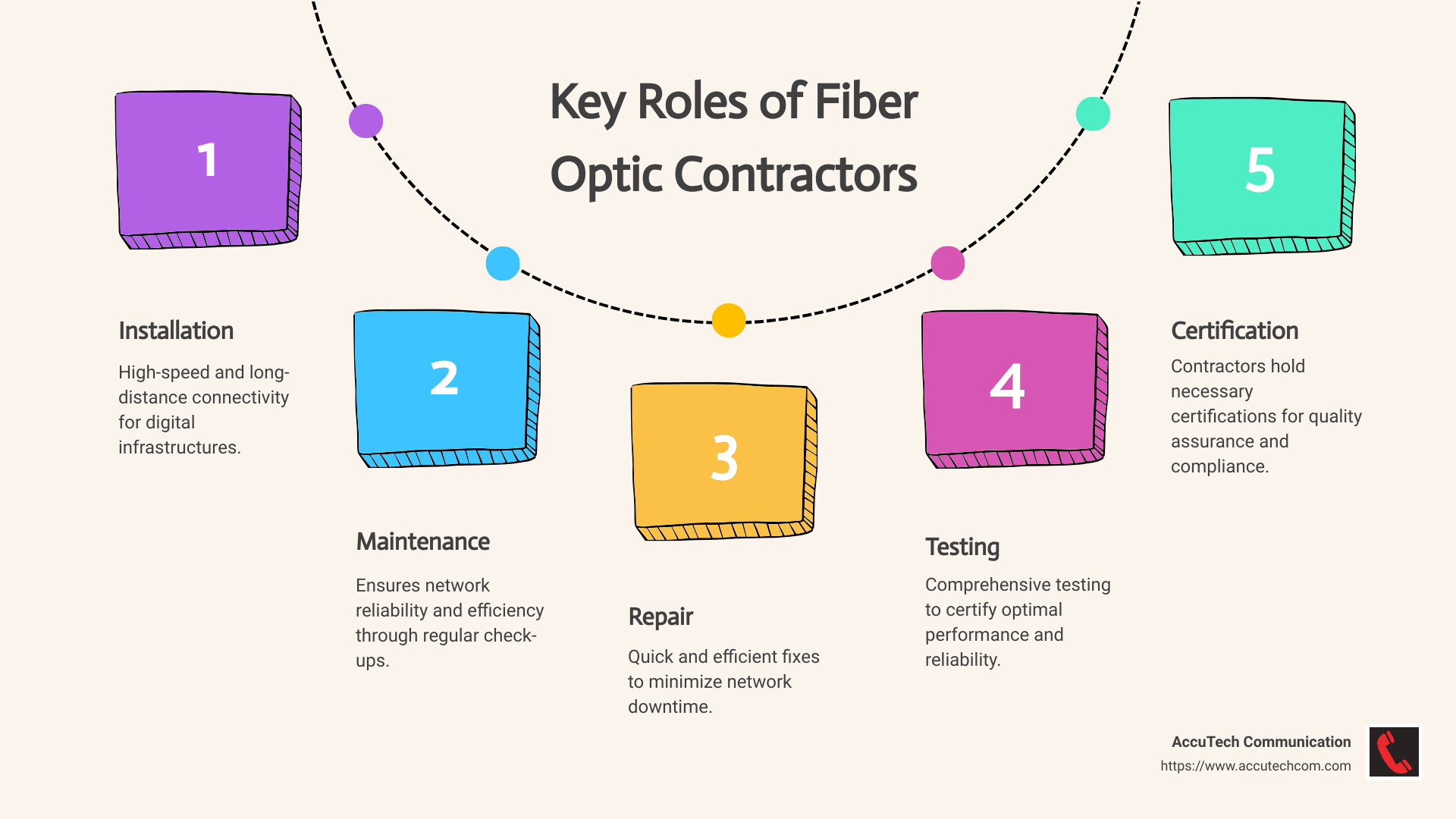
Fiber Optic Contractors play a crucial role in today’s digital infrastructure, offering services integral to modern communication systems. Here’s what you need to know about them at a glance:
- Installation: High-speed and long-distance connectivity.
- Maintenance: Ensures network reliability and efficiency.
- Repair: Quick fixes to minimize downtime.
- Expertise: Involves certified professionals for optimal results.
Fiber optic installation and network cabling form the backbone of advanced digital communications, essential for businesses like healthcare facilities that demand uninterrupted connectivity. With the rise of fiber optic technology, ensuring a robust network has never been more critical. This is where Fiber Optic Contractors excel, turning complex installations into seamless solutions.
My name is Corin Dolan, owner of AccuTech Communications. With over 500 connections and many years of expertise in Fiber Optic Contractors services, I’ve dedicated my career to supporting businesses in Massachusetts, New Hampshire, and Rhode Island. Now, let’s explore fiber optics together.
Important Fiber Optic Contractors terms:
– fiber optic cable installation services
– fiber optic termination contractors near me
– fiber splicer contractors
Understanding Fiber Optic Contractors
When you think about Fiber Optic Contractors, envision the experts who bring high-speed internet to your doorstep. These professionals are the unsung heroes behind the seamless connectivity we often take for granted. Let’s dig into their key roles:
Installation
The installation process is like laying down the tracks for a high-speed train. Fiber optic cables are the tracks, and your data is the train. These cables are made of glass or plastic, allowing data to travel at the speed of light! Fiber Optic Contractors use precision tools and techniques to install these cables, ensuring minimal disruption to your property.
Example: In a recent project in Marlborough, MA, contractors used advanced drilling technology to install fiber optics underground, a process that involved careful planning to avoid existing utilities.
Maintenance
Once installed, fiber optic networks require regular check-ups to keep them running smoothly. This is where maintenance comes in. Contractors perform routine inspections and testing to ensure the network’s reliability. They check for signal strength, cable integrity, and any potential interference.
Fun Fact: Fiber optic cables are less susceptible to interference than traditional copper cables, but regular maintenance is still crucial to ensure top performance.
Repair
Even the best networks can face issues. Whether it’s a cut cable or a faulty connection, Fiber Optic Contractors are ready to spring into action. They diagnose problems quickly and implement solutions to minimize downtime. Quick repairs mean businesses can continue operating without major disruptions.
Case Study: In a business district in Boston, a construction mishap severed a main fiber optic line. Contractors were able to repair the damage within hours, restoring service faster than anticipated.
By understanding the roles of Fiber Optic Contractors, you gain insight into how vital they are to our connected world. From installation to repair, these experts ensure that your data travels swiftly and securely. Next, we’ll explore the key services they offer to keep your network in peak condition.
Key Services Offered by Fiber Optic Contractors
Fiber optic contractors provide a range of services that ensure your network functions seamlessly. These services are crucial for maintaining the integrity and efficiency of your network infrastructure. Let’s break down the key services they offer:
Design
Designing a fiber optic network is like crafting a blueprint for a complex city. It involves planning the routes, determining node placements, and ensuring redundancy. A well-designed network can handle peak loads and unexpected failures with ease.
Example: In a challenging urban environment like Boston, contractors use automated tools to generate optimal routes and node locations, taking into account existing infrastructure and topographical data.
Termination
Termination is the process of connecting fiber optic cables to devices or other cables. It’s a delicate task that requires precision to ensure a stable and reliable connection. Proper termination minimizes signal loss and supports high-speed data transmission.
Tip: Contractors often use fusion splicing, a technique that joins two fibers by melting them together, ensuring a low-loss connection.
Testing
Testing is essential to confirm that the network is performing as expected. Contractors use specialized equipment to measure signal strength, check for attenuation, and identify any potential issues.
Stat: A well-tested network can operate at speeds up to gigabits per second, offering large bandwidth and long-distance signal transmission with minimal loss.
Certifications
Certifications ensure that the installation and maintenance of fiber optic networks meet industry standards. Contractors often hold certifications from organizations like BICSI, which set the benchmarks for quality and safety.
Fun Fact: Certified contractors not only bring technical expertise but also peace of mind, knowing your network complies with the highest standards.
Understanding these key services helps you appreciate the complexity and precision involved in building and maintaining a fiber optic network. Next, we’ll dig into the benefits of hiring professional fiber optic contractors to improve your connectivity.
Benefits of Hiring Fiber Optic Contractors
Hiring professional Fiber Optic Contractors brings numerous advantages to your network infrastructure. Let’s explore these benefits in detail:
Speed
Fiber optic networks are renowned for their high-speed capabilities. They can reach speeds up into the gigabits per second, providing faster data transmission compared to traditional copper cables. This speed is crucial for businesses that rely on quick data transfer and real-time communication.
Example: In a busy tech hub like Boston, businesses need lightning-fast internet to stay competitive. Fiber optic contractors ensure that the network is optimized for maximum speed, enhancing productivity and efficiency.
Bandwidth
Fiber optics offer a large carrying capacity, meaning they can handle a significant amount of data at once. This is essential for companies with high data demands, such as those in media and entertainment, where streaming and large file transfers are common.
Fact: Fiber optic networks can support multiple devices and applications simultaneously without a drop in performance, making them ideal for modern business environments.
Distance
Signals transmitted over fiber optic cables can travel much further without needing to be refreshed or strengthened. This is a game-changer for businesses with multiple locations or large campuses.
Stat: Unlike copper cables, which lose signal quality over long distances, fiber optic cables maintain their strength and clarity, reducing the need for additional equipment.
Resistance
Fiber optics are less susceptible to electromagnetic interference. This makes them more reliable in environments with heavy machinery or other electronic equipment that can cause noise.
Tip: By hiring fiber optic contractors, businesses can ensure their network is shielded from external interferences, leading to fewer disruptions and more stable connectivity.
Maintenance
Once installed, fiber optic cables require less maintenance than their copper counterparts. They are more durable and less prone to wear and tear, which translates into cost savings over time.
Quote: “Fiber optic cables cost much less to maintain,” highlights the long-term financial benefits of investing in fiber optics for your network infrastructure.
By leveraging the expertise of Fiber Optic Contractors, businesses can open up these benefits, ensuring a robust and reliable network that supports their growth and operational needs. Next, we’ll explore the safety considerations essential for fiber optic installations.
Safety Considerations in Fiber Optic Installations
When it comes to fiber optic installations, safety is not just a priority—it’s a necessity. Here are some key areas to focus on to ensure a safe working environment:
Eye Safety
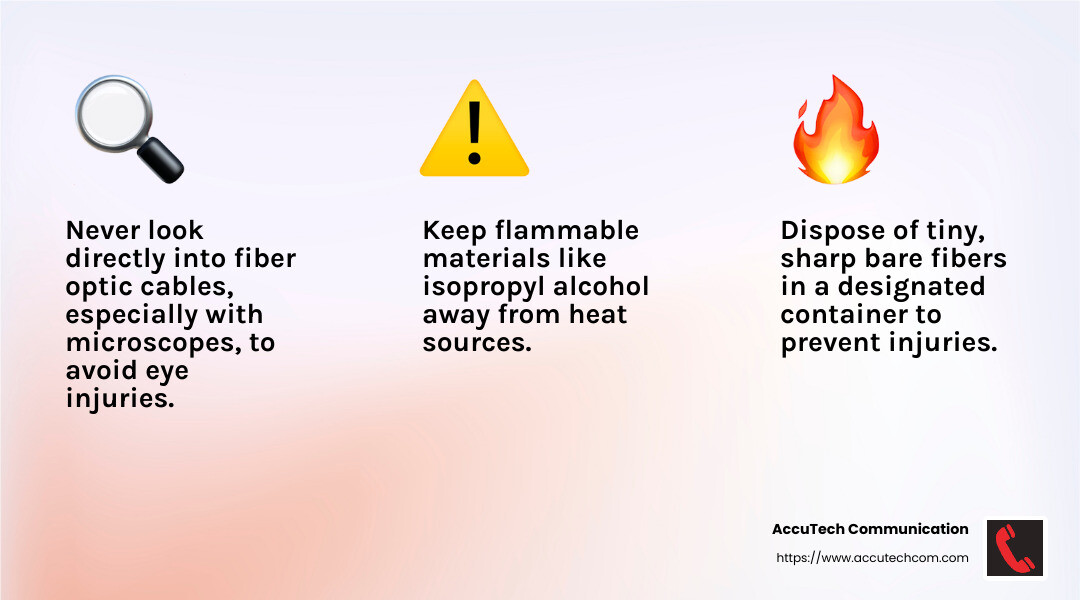
Working with fiber optics involves handling light that is invisible to the naked eye. While the light from the fiber optic cables is not powerful enough to cause burns, it’s crucial to avoid looking directly into the cables. This is especially important when using microscopes, as they can focus the light into your eye. Always check with a power meter before examining fibers.
Tip: Always wear safety glasses to protect against fiber scraps, which can cause severe eye injuries.
Bare Fiber Safety
One of the most overlooked hazards in fiber optic work is the risk of injury from bare fibers. These tiny glass fragments are incredibly sharp and can easily penetrate the skin. They are difficult to see and remove, often requiring medical intervention.
Best Practice: Use a dedicated container to dispose of fiber scraps safely. Avoid letting them fall on the floor, where they can stick to shoes and be carried to other areas.
Materials Safety
Fiber optic installations often involve the use of chemical cleaners and adhesives. It’s essential to handle these substances with care and follow the manufacturer’s safety data sheets (MSDS) guidelines.
Advice: Work in well-ventilated areas and minimize skin contact with chemicals. If any substance causes an allergic reaction, stop using it immediately.
Fire Safety
While fiber optic cables themselves are not a fire hazard, the installation process can involve flammable materials. Isopropyl alcohol, commonly used as a cleaner, is one example.
Reminder: Keep flammable materials away from heat sources and ensure that fire extinguishers are accessible in the work area.
Electrical Safety
Although fiber optic cables do not carry electricity, the installation process often occurs near electrical systems. Accidental contact with these systems can pose a risk.
Precaution: Ensure all electrical systems are properly insulated and that technicians are aware of their surroundings during installation.
By adhering to these safety protocols, Fiber Optic Contractors can maintain a secure environment while delivering top-notch installations. Understanding these safety considerations is crucial for any business looking to implement or upgrade their fiber optic network.
Next, we’ll address some frequently asked questions about fiber optic contractors to further clarify their role and expertise in your network solutions.
Frequently Asked Questions about Fiber Optic Contractors
What does a fiber optic contractor do?
Fiber Optic Contractors are essential players in modern telecommunications. Their main tasks include installation, maintenance, and repair of fiber optic networks.
- Installation: This involves laying down the fiber optic cables, connecting them to the network, and ensuring everything works smoothly. Contractors use advanced tools like vac trucks and special drills to install conduits and cables efficiently, as noted in the research from AccuTech Communications.
- Maintenance: Regular checks and updates keep the network running at top performance. Contractors inspect the cables, test the connections, and replace any faulty components.
- Repair: When issues arise, contractors diagnose and fix problems promptly to minimize downtime. This might involve splicing broken fibers or replacing damaged cables.
How much does fiber optic installation cost?
The cost of fiber optic installation can vary widely based on several factors, including location, the length of the cable run, and the complexity of the project. While specific pricing details aren’t provided, it’s important to know that costs can be influenced by:
- Cost per mile: This is a common way to estimate fiber optic installation costs. It includes expenses for materials, labor, and equipment.
- Overlashing: This technique involves adding new cables to existing ones, which can reduce costs by utilizing existing infrastructure.
What qualifications should a fiber optic contractor have?
To ensure top-quality service and reliable installations, Fiber Optic Contractors need to have specific qualifications and certifications:
- Certifications: Contractors should be certified in fiber optics technologies. This ensures they have the necessary skills and knowledge to handle complex installations and repairs.
- BICSI Standards: A reputable contractor will adhere to standards set by the Building Industry Consulting Service International (BICSI). This includes following guidelines in the Telecommunications Distribution Methods Manual and other relevant standards like EIA/TIA-568A and NFPA-70.
These qualifications not only ensure the contractor’s expertise but also guarantee that the installation meets industry standards, providing peace of mind for businesses and homeowners alike.
In the next section, we’ll explore the benefits of hiring professional fiber optic contractors and how they can improve your network’s performance.
Conclusion
Choosing the right partner for your fiber optic needs is crucial, and AccuTech Communications stands out as a leader in the industry. With over three decades of experience, we have built a reputation for delivering certified service and maintaining high standards in all our projects. Our team is committed to ensuring your network infrastructure is not only efficient but also reliable.
Certified Service
At AccuTech, our technicians are highly trained and certified, ensuring that every installation meets the stringent standards of the industry. We adhere to the best practices and guidelines, such as those outlined by BICSI and other industry leaders. This commitment to quality means you can trust us to deliver a network that is both robust and future-proof.
Competitive Pricing
We understand that cost is a significant factor for any business. That’s why we offer competitive pricing without compromising on quality. Our pricing structure is designed to provide excellent value while ensuring that your network is built to last. Whether it’s a small business setup or a large corporate campus, we tailor our services to fit your budget and needs.
For businesses in Massachusetts, New Hampshire, and Rhode Island looking to improve their telecommunications infrastructure, AccuTech Communications is your go-to solution. Our comprehensive services, from installation to maintenance, are designed to keep your network running smoothly.
Explore more about our fiber optic cabling installation and see how we can help strengthen your business communications.
Your network is the backbone of your business—let us help you make it stronger.
