
How to install low voltage interior lighting: Safe 2025
Why Low Voltage Interior Lighting is Perfect for Your Business
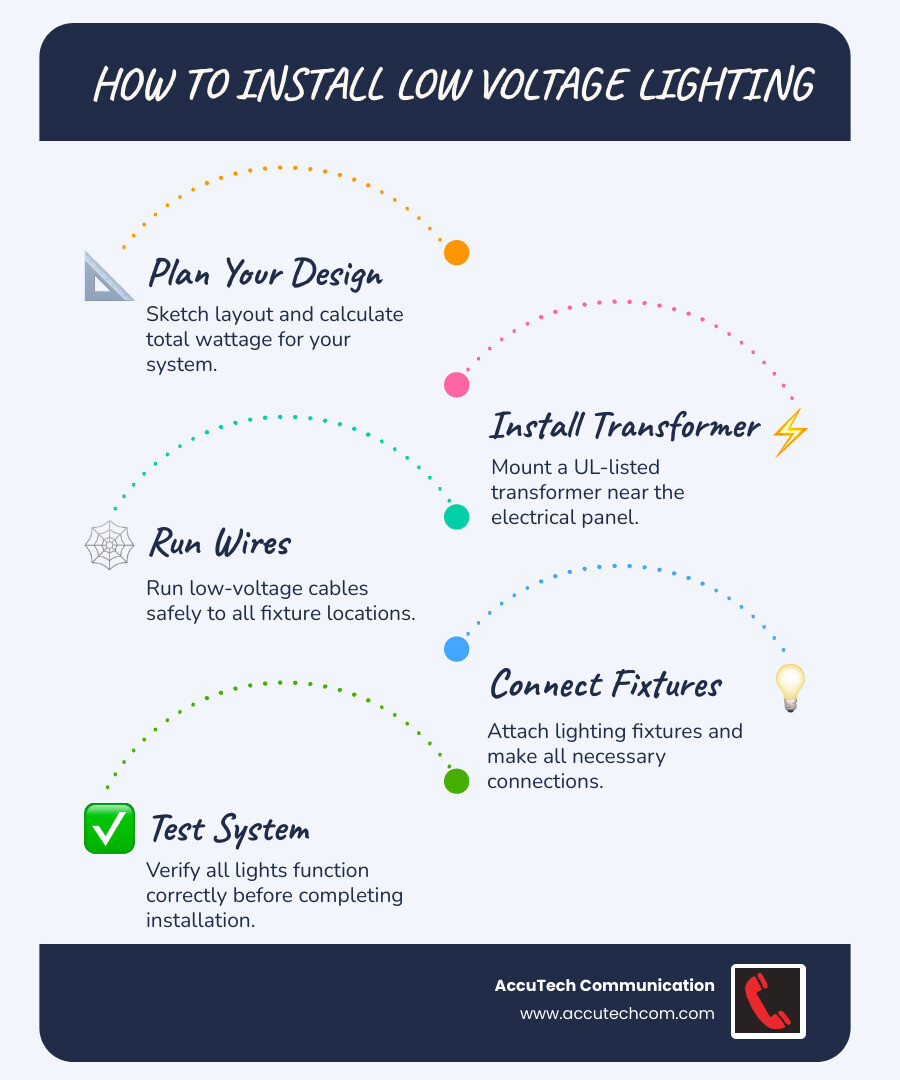
How to install low voltage interior lighting is a popular project for businesses, thanks to the safety and efficiency of modern LED systems. Operating at 12V or 24V instead of the standard 120V, these systems reduce shock risk and consume less energy. The installation process involves five key steps: planning, powering, wiring, connecting, and testing.
Quick Installation Overview:
- Plan – Design your layout and calculate total wattage.
- Power – Install a UL-listed transformer to step down the voltage.
- Wire – Run low-voltage cables to fixture locations.
- Connect – Install fixtures and make secure connections.
- Test – Verify all lights work properly.
The applications are endless, from under-cabinet task lighting in break rooms to accent lighting that highlights architectural features. The reduced heat output and flexible design options make low voltage lighting a superior choice for offices, retail spaces, and healthcare facilities.
I’m Corin Dolan, owner of AccuTech Communications. Since 1993, my team has helped businesses across Massachusetts, New Hampshire, and Rhode Island with their communication and low voltage infrastructure. We regularly handle projects that include how to install low voltage interior lighting as part of comprehensive building technology upgrades, ensuring proper integration with existing electrical systems. This guide will help you understand the fundamentals to make informed decisions for your project.
How to install low voltage interior lighting terms explained:
- how to install low voltage lighting
- how to install low voltage deck lighting
- how to install low voltage deck post lighting
Understanding Low Voltage vs. High Voltage Lighting
When learning how to install low voltage interior lighting, it’s important to know the difference from standard high voltage systems. Most lighting in your building runs on high voltage (120V), while low voltage lighting operates at a much safer 12V or 24V.
The key component is a transformer, which “steps down” the 120V current to the lower voltage your LED fixtures require. High voltage fixtures connect directly to your building’s wiring, but low voltage systems use this transformer as a safe intermediary. Modern LED technology is a perfect match for low voltage systems, offering superior efficiency and longevity compared to older halogen bulbs.
Here’s a quick comparison:
| Feature | Low Voltage (12V/24V) | High Voltage (120V) |
|---|---|---|
| Safety | Very low risk of shock or electrocution | High risk of shock or electrocution |
| Energy Use | Highly energy-efficient, especially with LEDs | Efficient with LEDs, but higher draw for traditional |
| Fixture Size | Often smaller, more discreet, and flexible | Typically larger, more traditional fixture sizes |
| Installation | Simpler wiring after transformer; can be DIY-friendly | Requires licensed electrician for most tasks |
| Cost | Higher initial cost for transformer/driver | Lower initial fixture cost, but higher installation for complex setups |
Why Choose a Low Voltage System?
The advantages make low voltage lighting an excellent choice for businesses:
- Safety: Working with 12V or 24V dramatically reduces the shock risk compared to 120V systems.
- Energy Savings: LED fixtures use significantly less power, leading to lower energy bills and less heat generation.
- Design Flexibility: The smaller fixtures allow for creative designs. You can install LED strips under cabinets, use puck lights in displays, or create dramatic accent lighting that’s impossible with bulky high voltage fixtures. This is ideal for both task lighting and highlighting architectural features.
For more information on how these systems can benefit your business, check out our low voltage solutions.
Key Components of a Low Voltage System
Understanding these parts is key to a successful installation:
- Transformer (or Driver): The heart of the system, it converts 120V power to 12V or 24V. Electronic drivers are common for LEDs and often offer dimmable capabilities, while magnetic transformers are robust alternatives. Always use UL-Listed components.
- Low Voltage Wire: Carries power from the transformer to the lights. The correct wire gauge is crucial to prevent dimming.
- Fixtures: Options are diverse, including versatile LED strips, focused puck lights, and adjustable track lights.
- Connectors, Dimmers, and Switches: Quality connectors prevent flickering, while dimmers and switches provide convenient control over brightness and lighting zones.
Planning Your Low Voltage Lighting Project
Solid planning is the foundation for any successful project, and learning how to install low voltage interior lighting is no exception. A good plan saves time and prevents issues like dim or flickering lights. This phase involves designing your layout, selecting components, and calculating power needs to avoid problems like voltage drop.
Step 1: Design Your Lighting Layout
First, determine what you want to achieve with your lighting.
- Assess your needs: Are you adding focused task lighting, subtle accent lighting, or general ambient light?
- Identify locations: Pinpoint key areas like under-cabinet spaces, soffits, bookshelves, or accent walls.
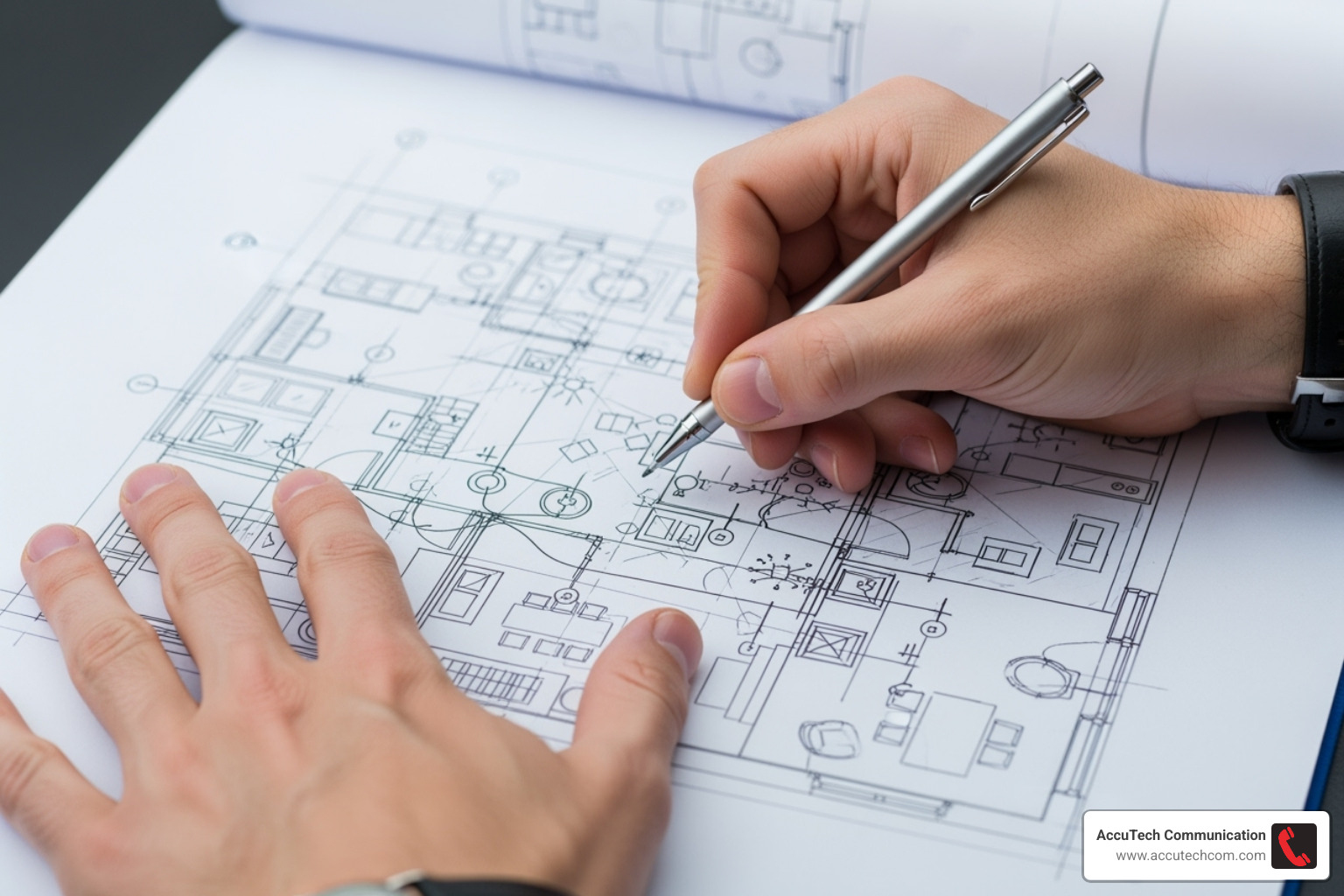
- Create a sketch: Draw a simple layout of the room, marking where each fixture will go. This visual guide is invaluable during installation.
- Measure wire run lengths: Measure the path the wire will take from the transformer to each fixture. Add a few extra feet to each measurement to be safe.
Step 2: Select the Right Transformer
The transformer is the heart of the system, converting 120V power to a safe 12V or 24V.
- Choose a type: Electronic transformers (or drivers) are compact, efficient, and ideal for most LED projects. Magnetic transformers are more robust and better for longer wire runs.
- Consider dimming: If you want adjustable brightness, select dimmable drivers compatible with your chosen dimmer switch.
- Calculate total wattage: Add up the wattage of all fixtures you plan to connect. For example, ten 5-watt lights equal 50 watts.
- Follow the 80% load rule: Never load a transformer to its maximum capacity. Choose a transformer rated for at least 20% higher than your total wattage. For a 50-watt system, you need a transformer of at least 60 watts (50W + 20% = 60W). This prevents overheating.
- Match voltage: Ensure the transformer’s output voltage (12V or 24V) matches the voltage required by your fixtures.
- Use UL-Listed components: This is a non-negotiable safety requirement for any component connecting to your building’s electrical system.
Step 3: Determine the Correct Wire Gauge to Prevent Voltage Drop
Voltage drop is a loss of electrical pressure over distance, causing lights at the end of a long wire run to appear dim or flicker. The solution is to use the correct wire gauge (thickness).
- Understand wire gauge: Lower gauge numbers mean thicker wire (e.g., 12-gauge is thicker than 16-gauge). Thicker wire carries power more effectively over longer distances.
- Calculate your load: Use the formula Amps = Watts ÷ Volts. A 60-watt system on a 12V circuit draws 5 amps (60 ÷ 12 = 5).
- Consult an AWG chart: Use an AWG (American Wire Gauge) chart (easily found online) to match your load (amps), wire run length, and system voltage to the recommended wire gauge. This takes the guesswork out of selection.
Using the right wire gauge ensures consistent brightness and system efficiency. For more guidance on professional cabling, see our information on cable installations.
Step-by-Step Guide: How to Install Low Voltage Interior Lighting
With a solid plan, you’re ready for installation. While how to install low voltage interior lighting is safer than high-voltage work, always follow proper electrical safety techniques. Your plan and measurements will be your roadmap. For complex runs, A guide to conduit can offer professional insights.
Safety First: Essential Precautions
Safety is paramount, especially when connecting the transformer to the 120V supply.
- Turn Off Power: Before touching any wires, turn off the corresponding circuit at the main electrical panel.
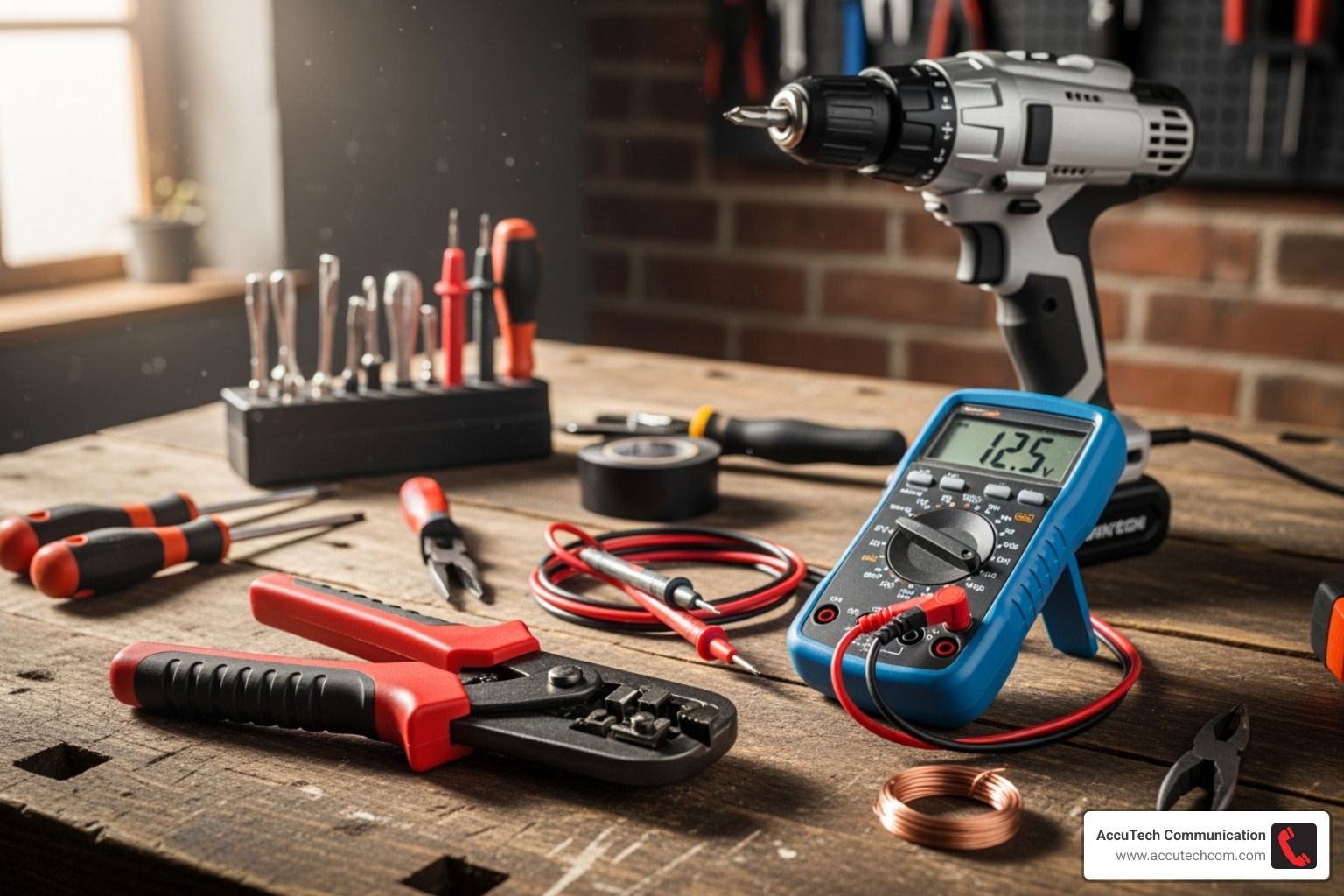
- Verify with a Voltage Tester: Use a non-contact voltage tester to confirm the power is off at the junction box or outlet.
- Use PPE and Insulated Tools: Wear safety glasses and use tools with insulated handles for an extra layer of protection.
- Follow Electrical Codes: Adhere to the National Electrical Code (NEC) and local regulations to ensure a safe, compliant installation.
- Choose UL-Listed Parts: Use only UL-Listed components for direct connection to your electrical system. UL-Recognized parts are only certified for use inside a larger UL-Listed product. More on UL-Recognized vs. UL-Listed parts.
How to Install the Transformer Safely
This is the most critical step, as it involves the 120V connection.
- Location: Mount the transformer in an accessible location like a basement, utility closet, or attic, never behind drywall. This allows for future maintenance.
- Ventilation: Ensure the location has adequate airflow for heat dissipation to prevent overheating.
- Mounting: Secure the transformer to a joist or stud so it is stable and vibration-free.
- Use a Junction Box: All 120V connections must be made inside an approved electrical junction box for safety.
- Separate Wiring: Keep the 120V input wiring and the low-voltage output wiring physically separate to prevent dangerous cross-contact.
How to Install Low Voltage Interior Lighting Wires
With the transformer installed (and power still off), you can run the low-voltage wiring.
- Route the Wires: Follow your layout sketch to run cables from the transformer to each fixture location.
- Use Rated Cable: If running wires inside walls or ceilings, you must use in-wall rated cable to comply with fire codes.
- Secure the Cable: Use low-voltage staples to secure the cable to prevent damage.
- Wiring Method: Use a parallel wiring configuration, where each fixture connects directly to the main wire run. This ensures all lights receive the same voltage and have consistent brightness.
- Make Connections: Use proper connectors (like wire nuts or push-in connectors) for reliable, secure connections. Strip about half an inch of insulation and twist stranded wires before connecting. For multiple runs, Using wire splitters for multiple circuits can simplify connections at the transformer.
Special Considerations for LED Strip Lights
LED strips are popular but require careful handling.
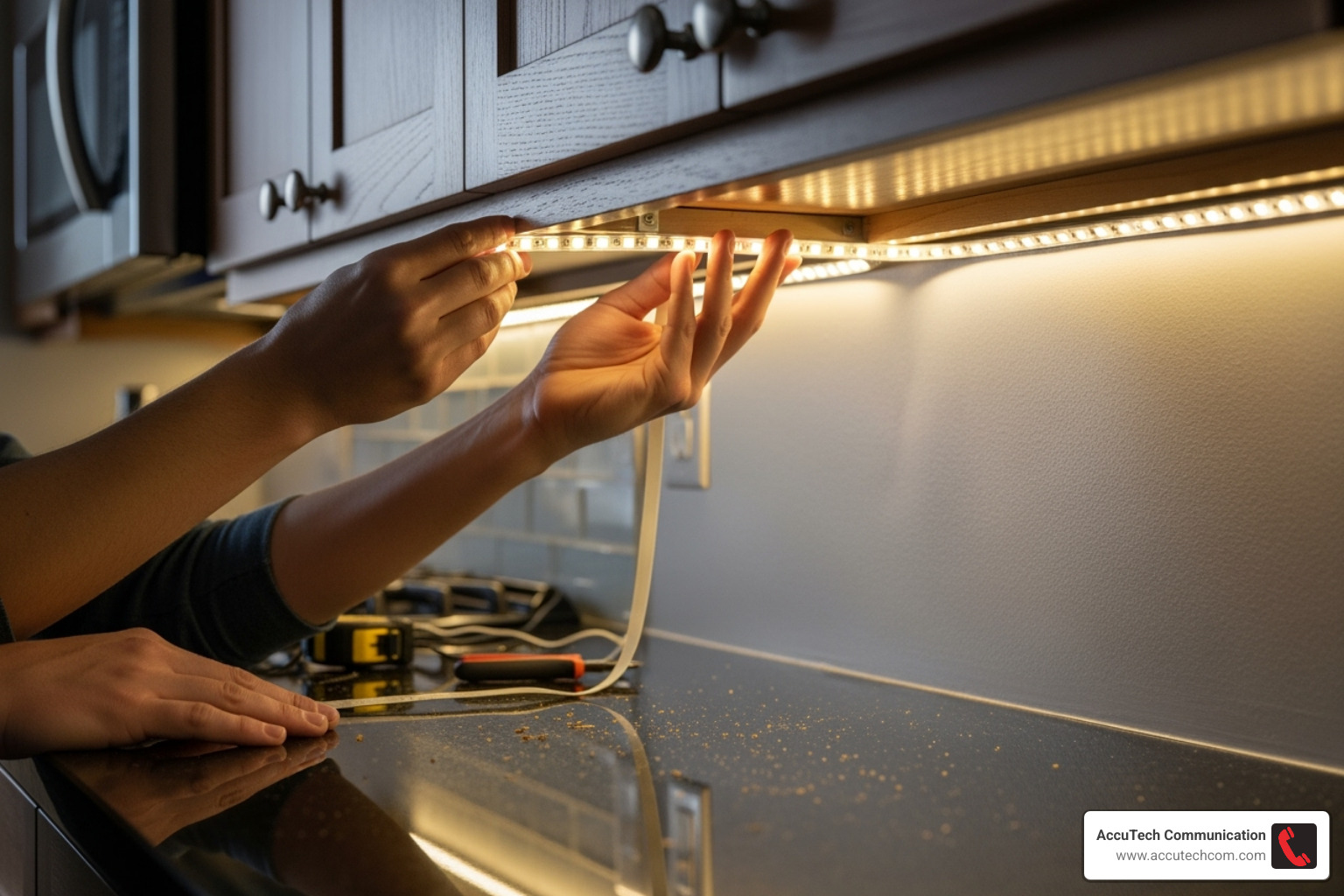
- Cutting: Only cut strips at the designated cut marks (often marked with a scissor icon or copper pads). Cutting elsewhere will damage the strip.
- Surface Prep: Clean the mounting surface with isopropyl alcohol to ensure the adhesive backing sticks properly.
- Testing: Test the strip before you peel the backing and stick it down. Connect it to the power supply to ensure it works and the light is positioned correctly.
- Handling: Avoid sharp bends that can damage the strip. Use corner connectors for 90-degree turns. Be mindful of voltage drop on very long runs.
Post-Installation: Troubleshooting, Maintenance, and Smart Home Integration
After you install low voltage interior lighting, a final phase of fine-tuning and maintenance ensures your system performs flawlessly for years. You can also explore integrating smart technology for improved control.
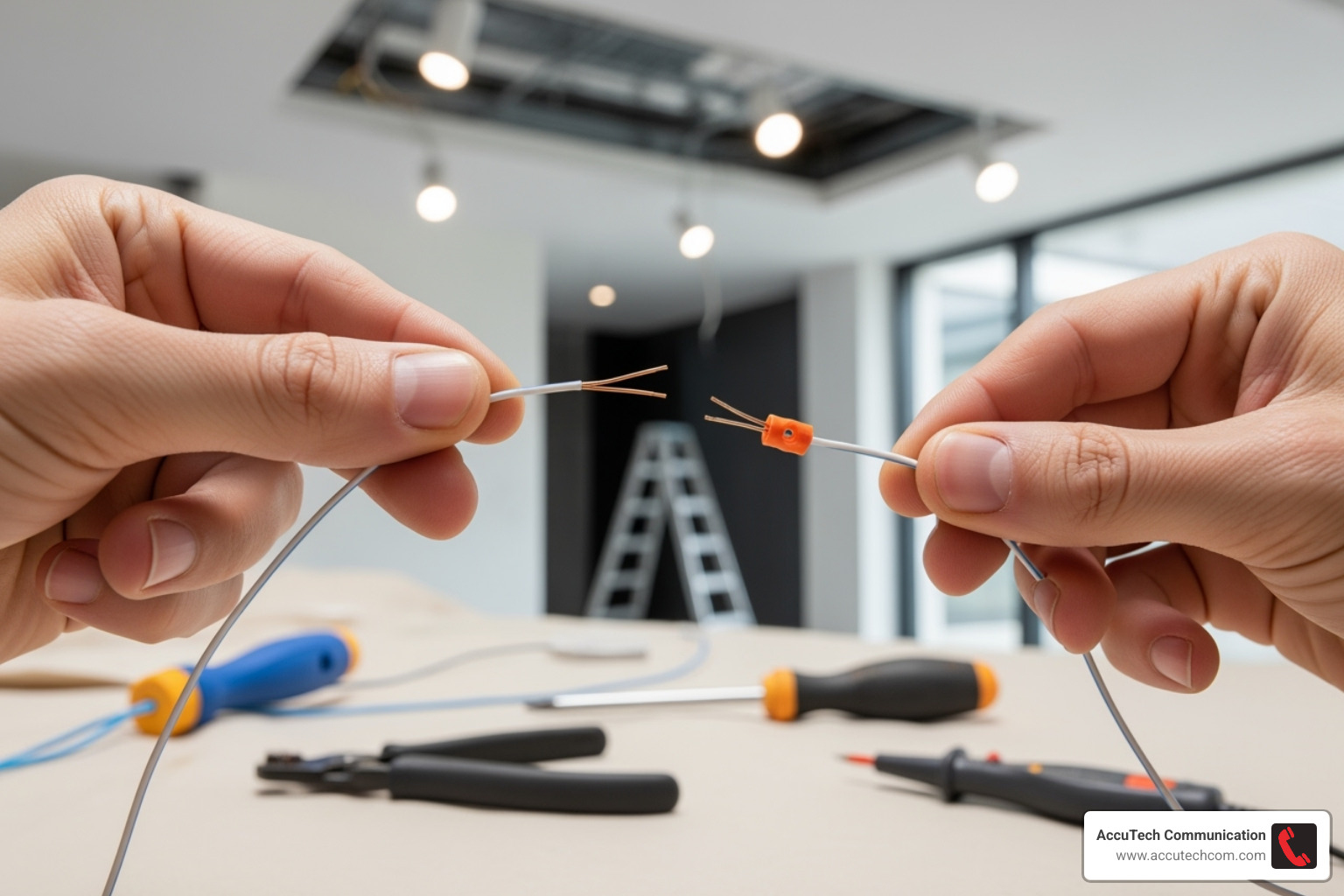
Troubleshooting Common Issues
Most common lighting problems have simple fixes. Use a multimeter to test voltage at the transformer and fixtures to help diagnose issues.
- Flickering Lights: Usually caused by loose wire connections. Check every connection point. Other causes include an overloaded transformer, an incompatible dimmer switch, or significant voltage drop.
- Dim Lights at End of Run: This is a classic sign of voltage drop. The wire gauge is likely too thin for the length of the run. Solutions include using thicker wire or reducing the wire length.
- One Light Is Out: The problem is localized. Check the fixture’s connections or the fixture itself, which may be faulty.
- Buzzing Transformer: This can indicate an overloaded transformer, an incompatible dimmer, or that the transformer is not securely mounted.
System Maintenance and Longevity
LED low voltage systems are known for their long lifespan (often over 50,000 hours), but simple maintenance helps maximize it.
- Regular Cleaning: Dust on fixtures can reduce light output and trap heat. Wipe them with a soft cloth periodically.
- Periodic Inspections: Check visible wiring and connections for wear or corrosion. Ensure all connections remain tight, as loose connections are a primary cause of failure.
- Prompt Replacement: Replace any damaged components quickly to prevent stress on the rest of the system.
Integrating with Smart Home Systems
Modern low voltage systems integrate easily with smart building technology.
- Smart Controls: Use smart drivers and Wi-Fi controllers to manage brightness, color, and lighting scenes from a smartphone app.
- Voice Control: Integrate with systems like Alexa or Google Home for convenient voice commands.
- Automation: Set schedules for lights to turn on/off or adjust automatically based on time of day or motion sensors, saving energy and improving convenience.
- Human-Centric Lighting: Advanced systems can mimic natural daylight cycles, adjusting color temperature to support employee well-being and productivity.
Frequently Asked Questions about Low Voltage Lighting Installation
Here are answers to common questions about how to install low voltage interior lighting.
What’s the difference between a UL-Listed and an RU-Recognized transformer?
This is a critical distinction for safety and code compliance.
- A UL-Listed component is a complete product certified as safe for direct installation into your building’s 120V electrical system.
- An RU-Recognized (or UL-Recognized) component is certified only for use inside a larger, UL-Listed product. It cannot be legally or safely wired directly to a 120V circuit on its own.
Always use UL-Listed transformers to avoid safety hazards and code violations.
Can I run low voltage wires in the same wall cavity as 120V wires?
Yes, but with strict rules. The National Electrical Code (NEC) allows Class 2 or 3 low-voltage wires in the same wall cavity as 120V wires, but they cannot be in the same conduit or junction box unless separated by a permanent barrier. This prevents accidental contact between high and low voltage circuits. Always check your local codes, as requirements can vary.
Do I need an electrician to install low voltage lighting?
It’s a two-part answer. The transformer must be connected to your building’s 120V power, a task that carries a risk of electric shock and should be performed by a qualified electrician if you are not experienced with high-voltage wiring.
However, once the transformer is safely installed, running the 12V or 24V wiring to the fixtures is much safer and is often a DIY-friendly task. For safety, we recommend a partnership approach: hire a professional for the high-voltage connection and handle the low-voltage side yourself.
Conclusion
Learning how to install low voltage interior lighting is an achievable project that can significantly improve your business space. The improved safety, energy efficiency, and design flexibility of 12V and 24V systems make them a superior choice for modern commercial environments.
Success hinges on proper planning: designing a layout, calculating wattage (including the 80% load rule for transformers), and choosing the correct components. While the low-voltage side of the installation is DIY-friendly, the 120V transformer connection is a job for a professional if you lack high-voltage electrical experience.
By following the steps outlined in this guide, you can create a beautiful, functional, and efficient lighting system. Integrating smart controls can further lift the experience, offering automation and convenience.
For complex projects or for businesses in Massachusetts, New Hampshire, and Rhode Island seeking professional expertise, AccuTech Communications is here to help. Since 1993, our certified team has specialized in low voltage installations and communication infrastructure. We ensure your lighting project is completed to the highest standards of safety and quality.
Contact a professional Low Voltage Installer for your business’s lighting and cabling needs.
