
How to Install Underground Electrical Conduit: Top Tips
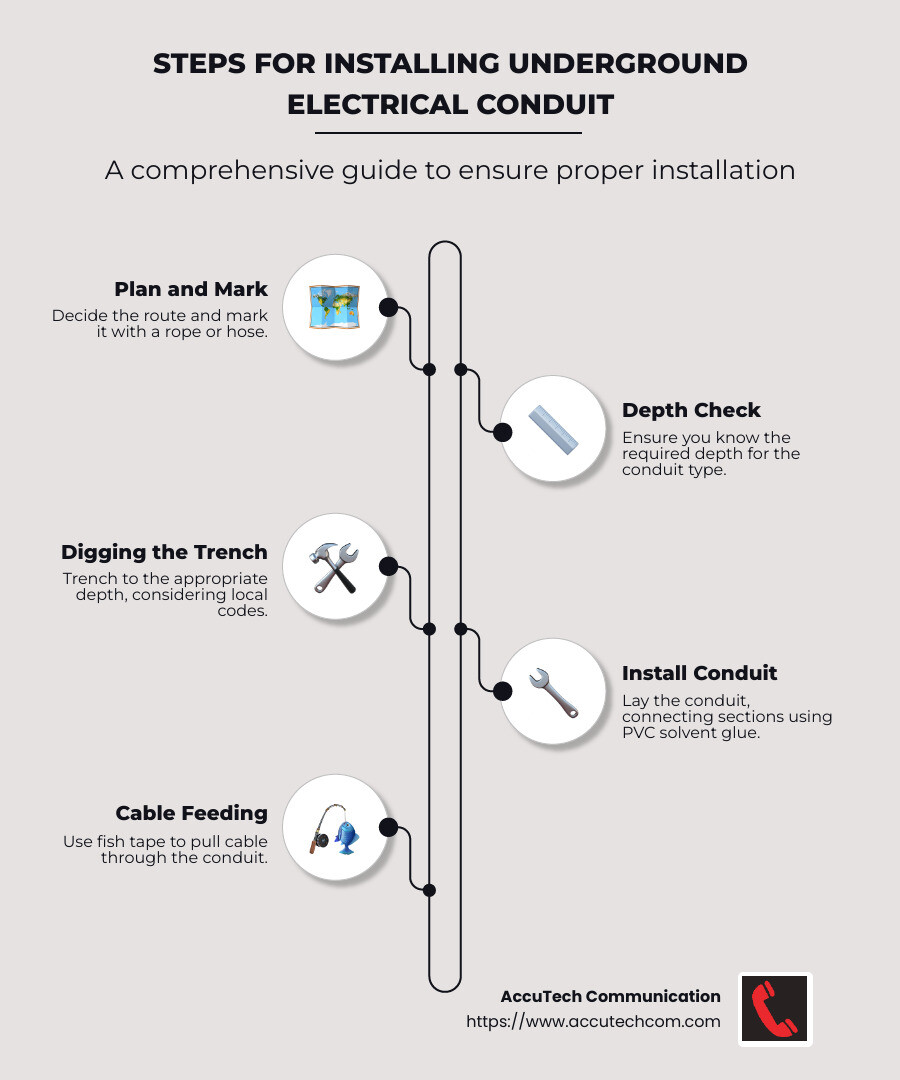
If you’re looking for how to install underground electrical conduit, here’s a quick guide:
1. Plan and Mark: Decide the route and mark it with a rope or hose.
2. Depth Check: Ensure you know the required depth for the conduit type.
3. Digging the Trench: Trench to the appropriate depth, considering local codes.
4. Install Conduit: Lay the conduit, connecting sections using PVC solvent glue.
5. Cable Feeding: Use fish tape to pull cable through the conduit.
6. Inspection: Have the trench inspected by local authorities, if required.
7. Complete Installation: Connect the wiring inside buildings and finalize the setup.
In modern communication, installing underground electrical conduit is crucial for businesses that rely on continual performance and safety. This process ensures that electrical wiring is safely buried below ground, away from environmental hazards that can cause outages. Whether for powering landscape features or facilitating robust communication systems, installing conduit is a foundational task.
I’m Corin Dolan, with experience in network cabling and business communications, including how to install underground electrical conduit effectively. My focus has always been on ensuring seamless, long-lasting installation that aligns with industry standards. Let’s explore how understanding underground conduit installation can transform your business infrastructure.
Explore more about how to install underground electrical conduit:
– Innerduct Installation Service Company
– conduit installation cost
– conduit installation guide
Understanding Underground Conduit Installation
When it comes to installing underground electrical conduit, understanding the basics is vital. This ensures safety, compliance, and efficiency. Here, we’ll break down the essentials: depth requirements, conduit types, and local codes.
Depth Requirements
The depth at which you bury your conduit can vary significantly based on the type of conduit and local regulations. Here’s a quick guide:
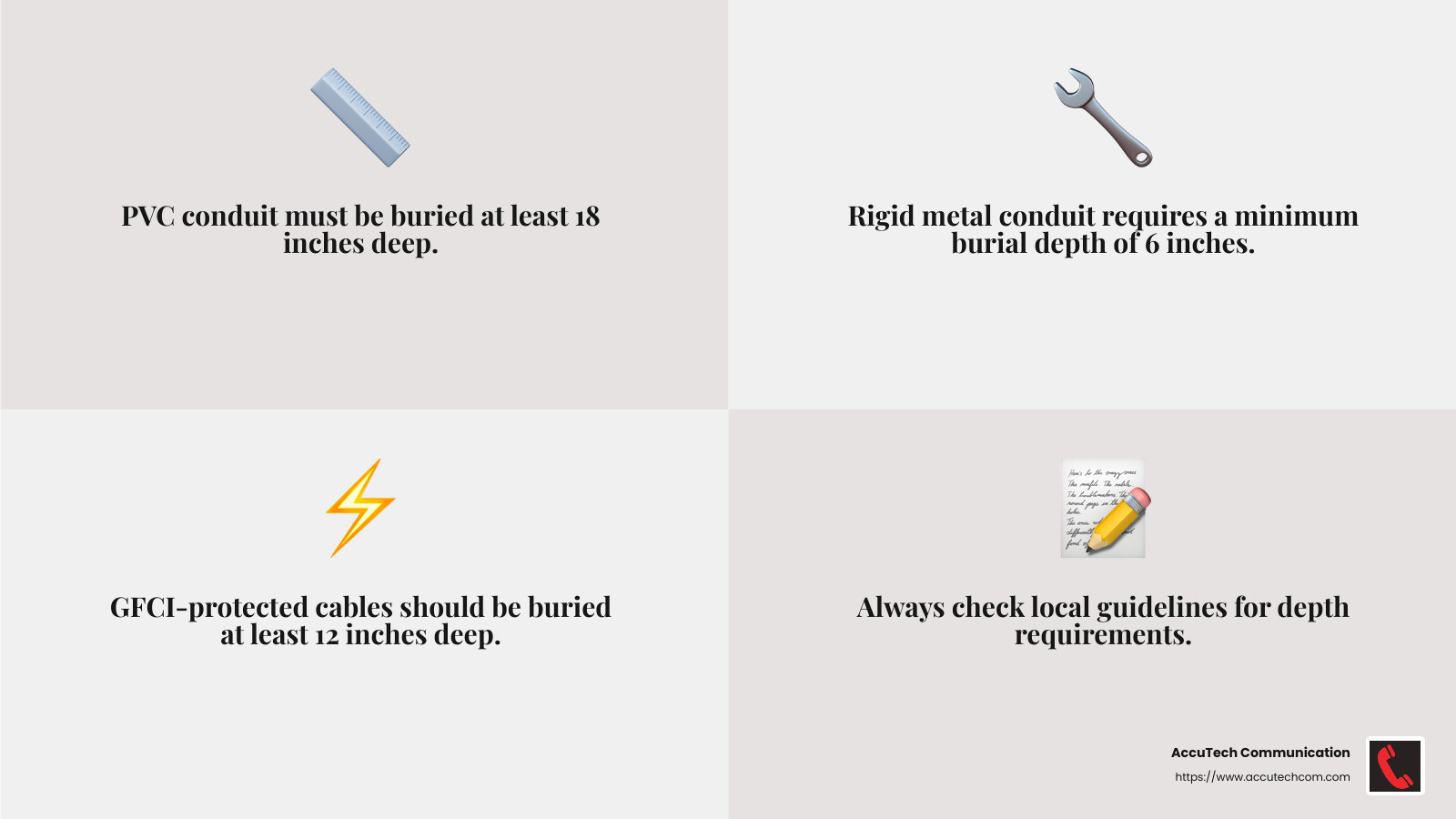
- PVC Conduit: Needs to be buried at least 18 inches deep.
- Rigid Metal Conduit: A minimum of 6 inches is required.
- Flexible Metal Conduit: Also requires a depth of 18 inches.
If you’re using GFCI-protected underground feeder cables, they need to be buried at least 12 inches deep. Always check local guidelines, as they can influence these requirements.
Conduit Types
Choosing the right conduit is crucial for protecting electrical wiring. Here are common types:
- PVC Conduit: Lightweight, easy to install, and resistant to corrosion. Ideal for most residential and commercial projects.
- Metal Conduit: Offers superior protection against physical damage. Suitable for areas with potential heavy impacts.
- Schedule 40 PVC: Commonly used for its durability and ease of use in standard applications.
Each type has its strengths, and the choice often depends on the specific needs of your project and environmental conditions.
Local Codes
Adhering to local building codes is non-negotiable. These codes ensure safety and reliability in electrical installations. They dictate:
- Depths: Minimum burial depths for different types of conduits.
- Materials: Approved materials for specific environments.
- Installation Practices: Methods for secure and compliant installations.
Before you start, consult with local authorities or a professional to ensure your project meets all necessary regulations.
By understanding these key aspects, you can ensure a successful underground conduit installation, paving the way for a safe and efficient electrical system.
How to Install Underground Electrical Conduit
When you’re ready to tackle the task of installing underground electrical conduit, following a clear, step-by-step guide is essential. This section will walk you through the process, from choosing the right conduit to the final installation steps.
Choosing the Right Conduit
Selecting the appropriate conduit is crucial for the longevity and safety of your underground wiring project. Here are the primary options:
- PVC Conduit: Lightweight and resistant to corrosion. It’s ideal for residential projects and is easy to work with. Schedule 40 PVC is commonly used due to its durability and ease of use.
- Metal Conduit: Offers maximum protection against physical damage, making it suitable for areas prone to heavy impacts. It’s more robust but can be harder to install.
Step-by-Step Installation Process
1. Trenching
The first step is to dig a trench along the planned route for your conduit. Here’s how you do it:
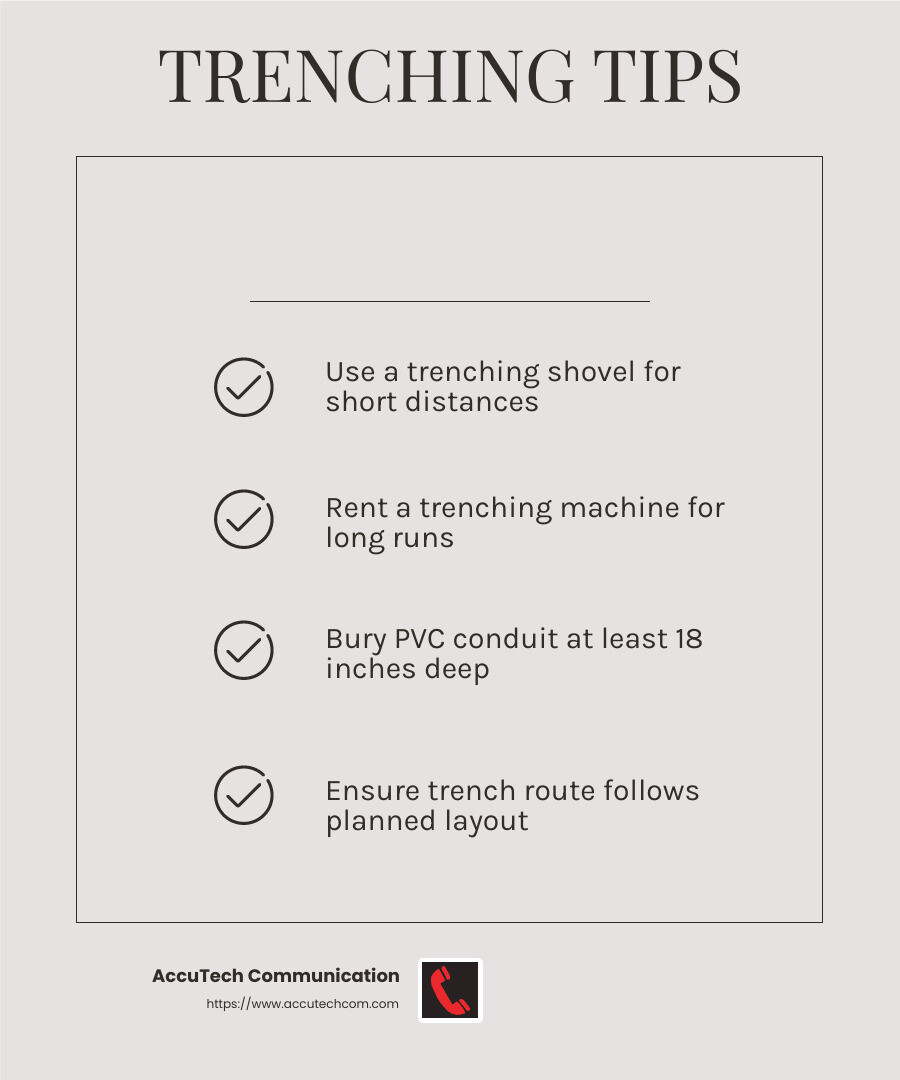
- Tools: Use a trenching shovel for short distances. For longer runs, renting a trenching machine can save time and effort.
- Depth: Follow the depth requirements based on the conduit type. For example, PVC conduit should be buried at least 18 inches deep.
2. Conduit Assembly
Once the trench is ready, it’s time to assemble the conduit:
- Cut and Fit: Cut the conduit to the required lengths. Use a heat gun to bend PVC conduit if you need to steer around obstacles.
- Solvent-Welding: For PVC pipes, solvent-welding the joints ensures a watertight seal. Apply PVC solvent glue to the ends before fitting them together.
3. Using Fish Tape
Fish tape is an invaluable tool for pulling wires through the conduit:
- Feed Fish Tape: Extend the fish tape through the entire length of the conduit.
- Attach Wires: Secure the electrical wires to the fish tape. A helper can assist by feeding the wire while you pull it through.
- Pull Through: Carefully pull the fish tape back through the conduit, bringing the wires along with it.
4. Finalize and Inspect
Before sealing the trench, ensure everything is in place:
- Excess Wire: Leave extra wire at both ends for final connections.
- Inspection: If required, have a local inspector verify the installation to ensure compliance with local codes.
Following these steps will help you successfully complete your underground conduit installation, ensuring a safe and reliable electrical connection for your project.
Safety and Compliance
When installing underground electrical conduit, safety and compliance are top priorities. Adhering to local building codes and ensuring proper inspections can prevent costly mistakes and hazards.
Local Building Codes
Before you even start digging, check your local building codes. These codes determine:
- Depth Requirements: Depending on the type of conduit, burial depths can vary. For instance, PVC conduit typically requires a depth of at least 18 inches.
- Conduit Type: Some areas may have specific requirements for the type of conduit used, whether it’s PVC or metal. Always ensure the materials you choose meet local standards.
- Permits: Some projects might require a permit. Make sure to secure any necessary paperwork before beginning your work.
Inspection
Inspection is a critical step to ensure everything is up to code:
- Call Before You Dig: Always contact your local utility locator service before digging. This prevents accidental damage to existing underground utilities.
- Pre-Fill Inspection: Before you fill in the trench, have an inspector check the installation. They will verify that the conduit is buried at the correct depth and that all materials used meet code requirements.
- Documentation: Keep records of all inspections and permits. This documentation can be crucial if you run into issues later or if you plan to sell your property.
Safety Tips
Safety should always be front and center:
- Protective Gear: Wear gloves, safety glasses, and sturdy footwear while digging and handling conduit.
- Trenching Safety: Be cautious when digging trenches. Make sure the walls of the trench are stable to prevent collapses.
- Electrical Safety: If you’re not comfortable working with electrical systems, consider hiring a professional for the final hookups at the main service panel. This part of the job carries a risk of serious shock.
By following these safety and compliance guidelines, you can ensure a smooth and secure installation process. This attention to detail not only protects you but also ensures the longevity and reliability of your electrical system.
Frequently Asked Questions about Underground Electrical Conduit
How deep does electrical conduit need to be buried?
When installing underground electrical conduit, depth requirements are crucial. The depth can vary based on the type of conduit and local building codes. For example:
- PVC conduit: Generally, this requires a burial depth of at least 18 inches. This depth helps protect the conduit from damage, like digging or pressure from above.
- Metal conduit: This can sometimes be buried as shallow as 6 inches, thanks to its durability. However, always verify with local codes.
Local codes can differ, so check with your local authorities or building department to confirm the specific requirements for your area.
Does underground electrical conduit need to be glued?
When using PVC conduit, gluing is often necessary. The joints of PVC conduit need to be joined with a solvent weld, which acts as a glue to ensure a watertight seal. This prevents moisture from entering the conduit and affecting the electrical wiring inside.
The National Electrical Code (NEC) provides guidelines on how to properly join conduit sections. It’s important to follow these guidelines to ensure safety and compliance.
What is the code for burying electrical conduit?
The NEC guidelines are the primary source for standards on burying electrical conduit. These guidelines provide detailed instructions on:
- Conduit types: Different types of conduit, such as PVC or metal, have distinct requirements. The NEC outlines these specifications to ensure safety and durability.
- Depth and installation: The NEC specifies minimum burial depths and installation procedures to protect the conduit from damage and ensure electrical safety.
- Safety measures: The code includes safety measures to prevent electrical hazards. This includes using the correct materials and installation techniques.
For any underground conduit installation, it’s crucial to adhere to both NEC guidelines and local codes. This ensures that the installation is safe, legal, and reliable. Always consult with a professional or local authority if you’re unsure about the requirements for your project.
Conclusion
At AccuTech Communications, we pride ourselves on being a trusted partner in network cabling and electrical conduit installation. Our team is committed to delivering certified and reliable services across Massachusetts, New Hampshire, and Rhode Island. Since 1993, we’ve been dedicated to providing top-notch quality at competitive prices.
When it comes to installing underground electrical conduit, our expertise ensures that the job is done right the first time. We adhere strictly to the National Electrical Code (NEC) and local regulations, ensuring every installation is safe, compliant, and durable. Our technicians are well-versed in handling various types of conduits, including PVC and metal, and they use the best practices in trenching, solvent-welding, and using fish tape to pull cables efficiently.
Our commitment to quality is best. We understand the importance of a reliable electrical system, whether it’s for powering a workshop, lighting up a garden, or connecting a business network. That’s why we go the extra mile to ensure every project meets the highest standards of safety and performance.
If you’re considering an underground conduit installation, trust AccuTech Communications to deliver exceptional service and peace of mind. Our certified team is ready to help you with all your network cabling needs.
Explore our Innerduct Installation Services to learn more about how we can assist with your project.
Thank you for considering us as your partner in creating a robust and reliable electrical infrastructure.
