
Industrial Data Solutions: Your 2025 Blueprint for Progress
Why Industrial Data Solutions Are Changing Modern Operations
Industrial data solutions are platforms that collect, manage, and analyze data from industrial operations—machines, sensors, and control systems—to drive operational excellence. Here’s what you need to know:
- Purpose: Transform raw operational data into actionable insights for optimizing processes, reducing costs, and improving efficiency.
- Core Functions: Data collection, contextualization, storage, analysis, and visualization across IT and OT systems.
- Key Benefits: Up to 330% ROI, 25% reduction in maintenance costs, 37% efficiency gains for knowledge workers, and 10% reduction in downtime.
- Primary Applications: Predictive maintenance, process optimization, energy management, quality control, and regulatory compliance.
- Technology Foundation: Industrial IoT sensors, cloud/edge computing, data historians, AI/machine learning, and digital twins.
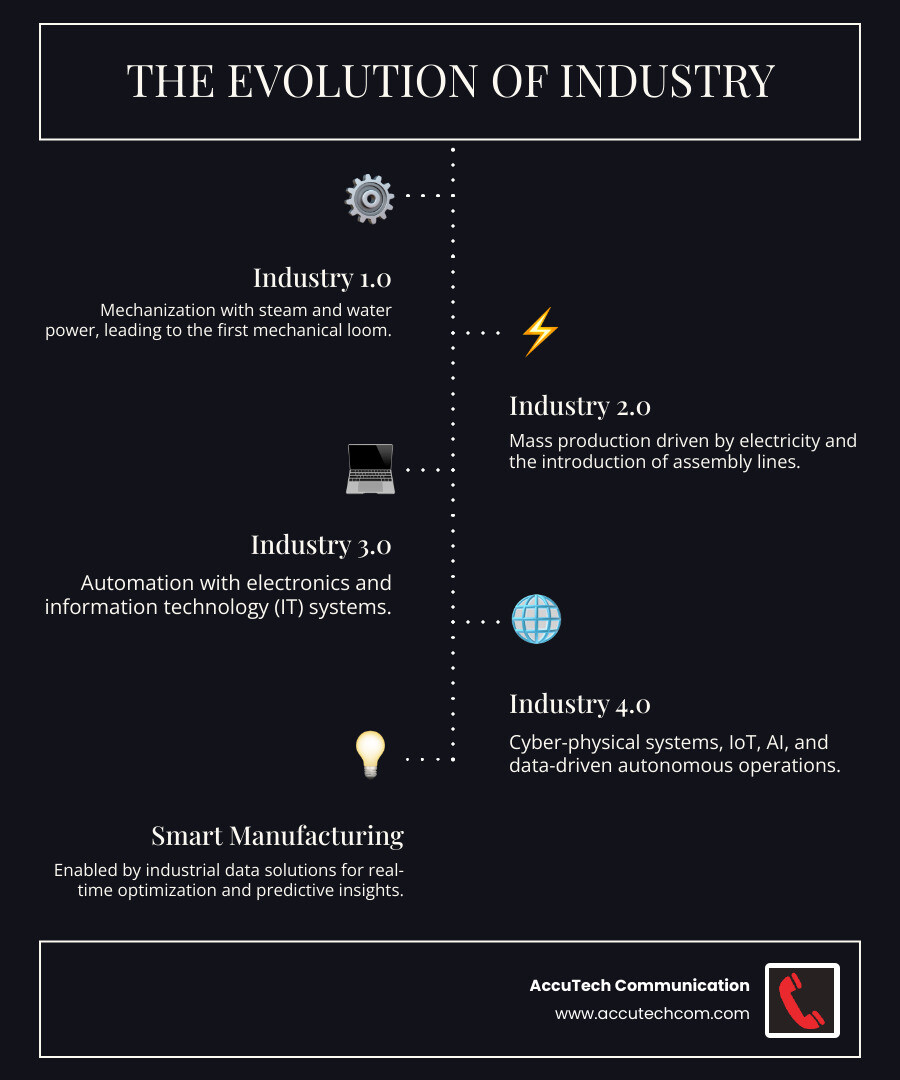
In the Industry 4.0 era, data is a key strategic asset. However, many organizations are overwhelmed by massive data volumes from disconnected systems, struggling to integrate operational technology (OT) with information technology (IT). The solution isn’t just collecting data; it’s data contextualization—turning raw numbers into actionable insights.
Traditional IT methods fail with the high-velocity time-series data from industrial operations, leading to decisions based on outdated information. The challenge is strategic and cultural, not just technical. Companies that accept this shift see remarkable results: Bruce Power saved 1,000 employee hours, Albemarle achieved $150 million in annual efficiency improvements, and Vale made compliance data collection 99% faster.
At AccuTech Communications, we’ve served clients in Massachusetts, New Hampshire, and Rhode Island since 1993. We know that the right infrastructure foundation is what enables successful industrial data solutions. Understanding this landscape is essential for staying competitive.
Related content about industrial data solutions:
The Foundation of Industry 4.0: What Are Industrial Data Solutions?
Industry 4.0 describes smart factories where machines, systems, and people share information instantly. This change is powered by industrial internet of things (IIoT) technologies that connect every part of an operation.
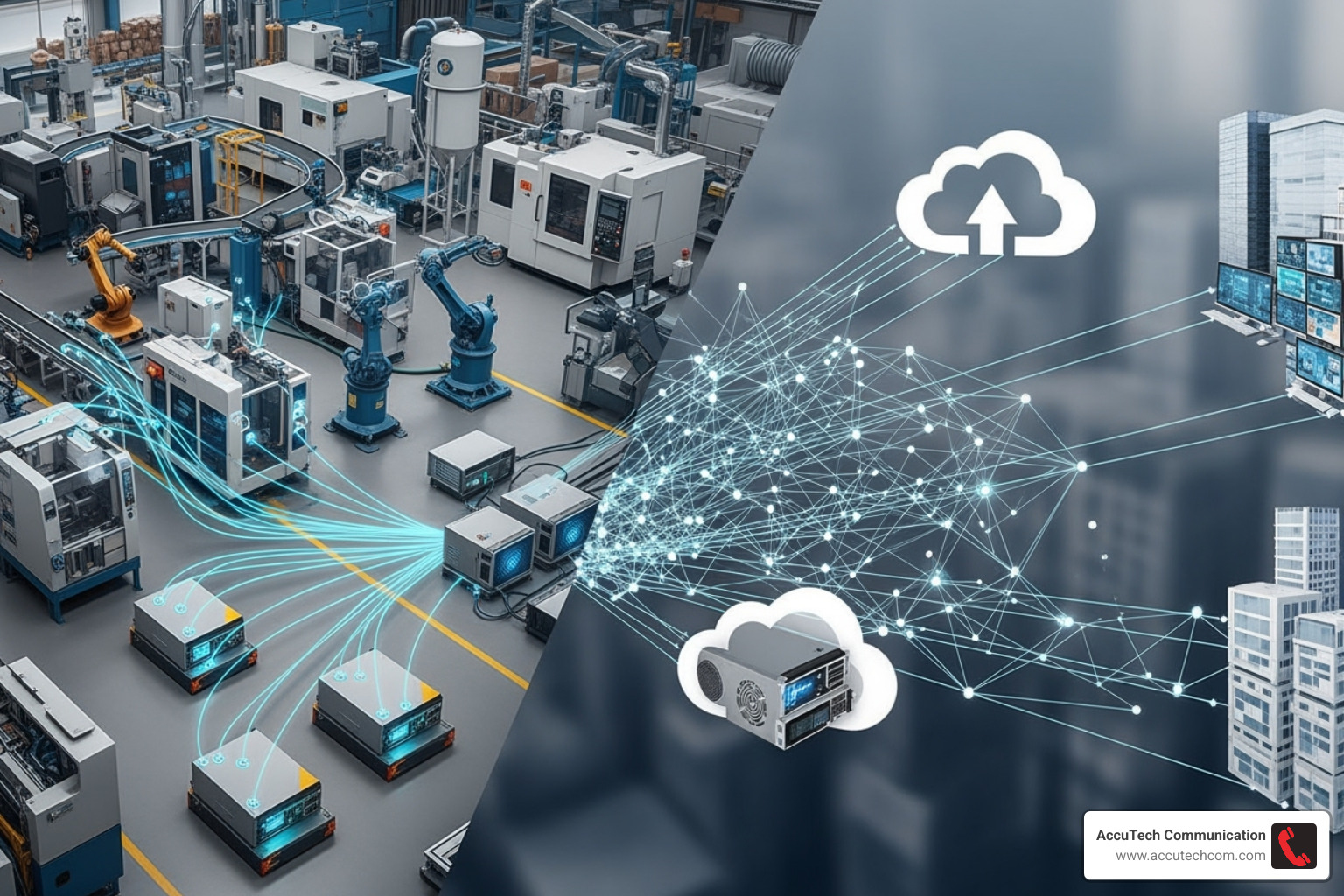
Industrial data solutions are the infrastructure that captures, organizes, and analyzes the vast amount of data generated daily. It’s not just about storage; it’s about creating a “digital thread” that connects an asset’s entire lifecycle. This approach turns raw data into actionable insights, enabling real-time monitoring of quality, performance, and efficiency. It’s the key to moving from reactive problem-solving to proactive prevention.
A core function of these solutions is bridging the gap between Information Technology (IT) and Operational Technology (OT). For years, these worlds were siloed. OT controls physical processes (machines, production lines) where uptime and safety are critical. IT manages business data (ERP, enterprise applications) where integrity and security are paramount.
Industrial data solutions act as the translator. They collect data from OT systems (PLCs, sensors), then contextualize it for IT systems to use. This convergence creates a holistic view of operations, connecting physical processes with business impact for better, faster decisions.
Data in the Industrial World
Understanding the diverse data types in an industrial setting is the first step to open uping their value.
- Time-series data: The foundation of industrial data, consisting of data points indexed in time order, like temperature or pressure readings. It’s stored in specialized databases called data historians.
- Sensor and Machine data: Information coming directly from IIoT sensors and equipment, including operational states, performance metrics, and error codes. This is crucial for predictive maintenance and performance optimization.
- Production and Asset data: Includes batch records, quality control measurements, maintenance logs, and run-time hours. This data is vital for process optimization and moving from reactive to predictive maintenance.
- ERP and MES data: Business-level data (inventory, orders) and plant-floor management data (work-in-progress, resource allocation). Integrating this with OT data provides a complete view of how operations impact business outcomes.
Effectively managing these data types provides the holistic view needed for informed decision-making. At AccuTech Communications, we build the reliable network infrastructure that businesses in Massachusetts, New Hampshire, and Rhode Island need for these solutions to succeed.
Opening up Operational Excellence: The Core Benefits of Industrial Data Solutions
Implementing industrial data solutions is a strategic investment that delivers measurable results, including improved business value and a significant competitive edge. The numbers are compelling: companies report up to 330% ROI, a 25% reduction in maintenance costs, and a 10% cut in downtime events. This is achieved by turning “big data” into “smart data”—actionable intelligence that drives progress.
Improved Efficiency and Productivity
One of the first benefits companies notice is a sharp increase in efficiency.
- Higher Throughput: Optimizing operations with industrial data can increase process throughput by 4% or more and slash production time by up to 30%.
- Waste Reduction: Analyzing machine and process data pinpoints sources of material and effort waste, saving money and improving sustainability.
- Smarter Automation: Digital manifests and IIoT sensors can help address the $37 billion lost annually to shipping delays by automating tracking and eliminating paperwork.
- Worker Productivity: Centralized data access can lead to efficiency gains of 37% for knowledge workers. For example, Bruce Power saved 1,000 employee hours through better data management.
Improved Decision-Making and Predictive Insights
Industrial data solutions transform raw data into clear insights that empower better decisions.
- Predictive Maintenance: Instead of reacting to failures, you can anticipate them. Advanced analytics identifies patterns that signal when maintenance is truly needed, helping one manufacturer avoid outages that would have cost $1.5 million per event.
- Anomaly Detection: Systems continuously monitor operations to spot deviations from normal behavior, catching small problems before they become critical.
- Data-Driven Strategy: With a trusted data foundation, you can develop strategies based on hard evidence. One company gained access to 10x more data points by removing errors, leading to vastly improved business outcomes.
Driving Sustainability and Environmental Goals
As the population is projected to reach just under 10 billion by 2050, sustainability is essential. Industrial data solutions help companies meet environmental goals while remaining profitable.
- Energy Efficiency: Monitoring consumption can identify waste and lead to a 5% increase in energy efficiency, reducing costs and carbon footprint.
- Resource Management: In drought-prone regions, IoT sensors can detect leaks and optimize water usage, a critical concern as droughts become more frequent, more intense, and longer-lasting over the next two decades.
- Regulatory Compliance: Automated, auditable records simplify compliance. One company made its compliance data collection 99%+ faster, reducing both risk and administrative burden.
From Data to Decisions: Key Components and Implementation Strategy
Turning raw industrial data into actionable information requires a structured approach and the right technology. This journey, often called Industrial DataOps, manages data across OT, engineering, and IT domains to create knowledge that optimizes the entire enterprise.
Core Capabilities of an Industrial Data Management Platform
An effective industrial data management platform must handle the unique demands of operational environments. Key capabilities include:
- Data Collection and Ingestion: Gathers data from diverse sources (sensors, equipment) using industrial protocols like MQTT and OPC-UA.
- Data Contextualization: Enriches raw data with context (asset ID, location, batch) to transform it into valuable information.
- Scalability: Handles massive, growing data volumes from thousands of IoT devices across multiple sites.
- Data Storage and Historians: Uses specialized time-series databases to store high-fidelity historical data for analysis and compliance.
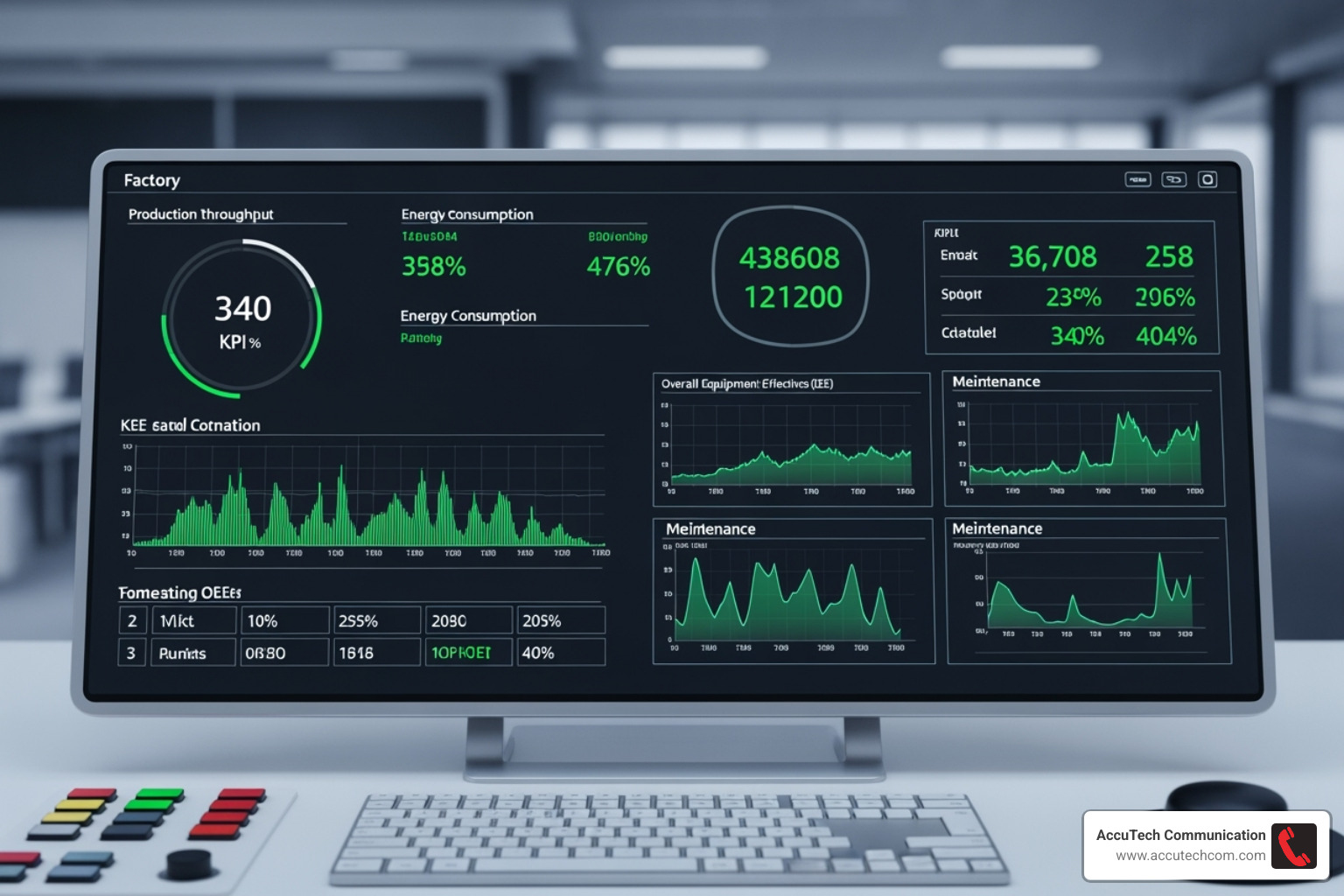
- Visualization and Dashboards: Provides intuitive tools for users to monitor KPIs, spot trends, and identify anomalies in real-time.
- Integration and APIs: Ensures seamless data exchange with enterprise systems (ERP, MES) to create a unified operational view.
- Security Features: Protects sensitive operational data with robust access control, encryption, and cybersecurity best practices.
Overcoming Common Implementation Challenges
Implementing industrial data solutions involves several common problems:
- Legacy Systems: Aging equipment often uses proprietary protocols. Edge devices and protocol converters can bridge this gap without requiring a full replacement.
- Data Silos: Data is often trapped in separate systems. A unified data platform and an organizational commitment to sharing information are needed to break them down.
- Connectivity Issues: Harsh industrial environments can disrupt network reliability. Robust infrastructure, including professional structured cabling services and fiber optic cabling installation, is non-negotiable.
- Skills Gap: A shortage of professionals with both IT and OT expertise is common. Modern, user-friendly platforms with AI-driven tools can help democratize data analysis.
- Change Management: Digital change is a cultural shift. Success requires employee training, process adaptation, and clear communication of benefits from leadership.
Choosing the Right Partner for Your Industrial Data Solutions
A good partner provides technology and expertise. Look for:
- Technical Expertise: Deep knowledge of industrial protocols, data architectures, and OT environments.
- Industry Experience: A proven track record in your specific sector.
- Support and Maintenance: Comprehensive, ongoing support to keep your solution current and robust.
- Scalability: Solutions that can grow with your business needs.
- Total Cost of Ownership: Transparency about long-term costs for maintenance, integration, and training.
At AccuTech Communications, we provide the certified, reliable network infrastructure that underpins successful digital change. Since 1993, we’ve helped businesses in Massachusetts, New Hampshire, and Rhode Island build the foundation for their advanced industrial data solutions solutions.
The Future is Intelligent: AI, Machine Learning, and the Evolution of Industrial Data
Industrial data solutions are rapidly evolving, driven by artificial intelligence (AI) and machine learning (ML). We’ve moved from collecting data to understanding it, and now systems are beginning to predict, recommend, and even act on that understanding.
Key trends shaping this intelligent future include:
- Prescriptive Analytics: Going beyond predicting what will happen (predictive), prescriptive analytics recommends the best course of action, such as suggesting process adjustments to maximize throughput.
- Digital Twins: These are living virtual replicas of physical assets or systems, fed by real-time data. They allow you to simulate scenarios and optimize performance in a virtual environment before implementing changes in the real world, serving as a single source of truth for your operations.
- Edge Computing: Processing data locally on the factory floor, rather than sending it all to the cloud. This enables instant, real-time machine control and keeps sensitive data secure on-site, reducing reliance on internet connectivity for critical tasks.
- Autonomous Operations: The ultimate goal is a factory where machines anticipate needs, production lines self-adjust, and systems make intelligent decisions with minimal human intervention. AI copilots are already emerging to assist workers with troubleshooting and forecasting.
By 2025, over 75 billion IoT devices will be connected globally, fueling these intelligent systems. The era of intelligent, autonomous operations is here. At AccuTech Communications, we build the rock-solid network infrastructure that businesses in Massachusetts, New Hampshire, and Rhode Island need to make this future a reality.
Frequently Asked Questions about Industrial Data Solutions
As organizations explore industrial data solutions, several key questions often arise. Here are answers to the most common ones.
What is the difference between IT and OT data?
Understanding the distinction between Information Technology (IT) and Operational Technology (OT) data is crucial.
- IT Data: This is typical business data from systems like ERP or CRM (customer records, financial transactions). It’s structured, and the priority is on security, accuracy, and long-term storage. Real-time processing is not the main concern.
- OT Data: This is data generated by physical equipment on the factory floor (sensor readings, machine status). It’s high-volume, high-speed time-series data. The priority is on real-time performance, availability, and safety, as it directly controls physical processes.
Industrial data solutions bridge this gap, changing raw OT data into a format that IT systems can analyze, creating a complete picture of the business.
How do industrial data solutions improve worker safety?
These solutions improve worker safety in several critical ways:
- Remote Monitoring: Sensors and cameras allow supervisors to monitor hazardous environments (areas with extreme temperatures, toxic chemicals) from a safe location, reducing human exposure.
- Predictive Hazard Detection: By analyzing equipment data, AI can predict failures before they become safety incidents. For example, detecting abnormal vibration in a motor can prevent a catastrophic breakdown.
- Automated Alerts: The system can instantly notify personnel when critical thresholds are breached or dangerous conditions arise, enabling a rapid response.
- Location Tracking and Geofencing: In large facilities, knowing the real-time location of workers is crucial during emergencies. Geofencing can also prevent unauthorized entry into restricted zones.
What is a data historian and why is it important?
A data historian is a specialized database designed for industrial environments. It’s not like a standard business database; it’s a time-series database built to handle the massive volume and high speed of OT data.
Its importance comes from several key functions:
- High-Fidelity Storage: It captures and stores operational data at full resolution, preserving details needed for accurate analysis.
- Historical Analysis: It provides a complete historical record, allowing you to troubleshoot issues, compare performance over time, and identify patterns for process optimization.
- Compliance and Auditing: It creates an indispensable, auditable trail of operational parameters required by regulatory agencies, dramatically speeding up compliance reporting.
In short, the data historian is the memory of your operation, providing the trusted data foundation for troubleshooting, optimization, and intelligent decision-making.
Conclusion
Industrial data solutions are fundamentally changing modern business by turning operational data into valuable insights. This change delivers tangible results, including significant ROI, reduced maintenance costs, and major efficiency gains. By embracing data as a strategic asset, companies can predict failures, optimize processes, and make decisions based on evidence, not guesswork.
The path to intelligent, autonomous operations requires bridging the IT/OT gap and overcoming challenges like legacy systems and data silos. However, none of these advanced solutions can succeed without a critical, often overlooked element: a solid infrastructure foundation.
A sophisticated data platform is useless if the underlying network is unreliable. High-speed, dependable connectivity is essential for data to flow from machines to analytics platforms in real-time.
This is where AccuTech Communications comes in. Since 1993, we have provided businesses in Massachusetts, New Hampshire, and Rhode Island with the foundational systems that power digital change. We deliver certified, reliable data center build-outs and network cabling installation designed for today’s demands and tomorrow’s growth.
The industrial digital revolution is here. Don’t miss the opportunity to build a smarter, more efficient operation. Let us help you build the foundation for your success.
