
Network Cabling Installation Services: Top 3 Best 2024
Network cabling installation services are the backbone of modern businesses, enabling seamless communication, data transfer, and network reliability. If your company is experiencing issues with outdated or inefficient network infrastructure, upgrading your cabling to structured systems is essential. Here’s why:
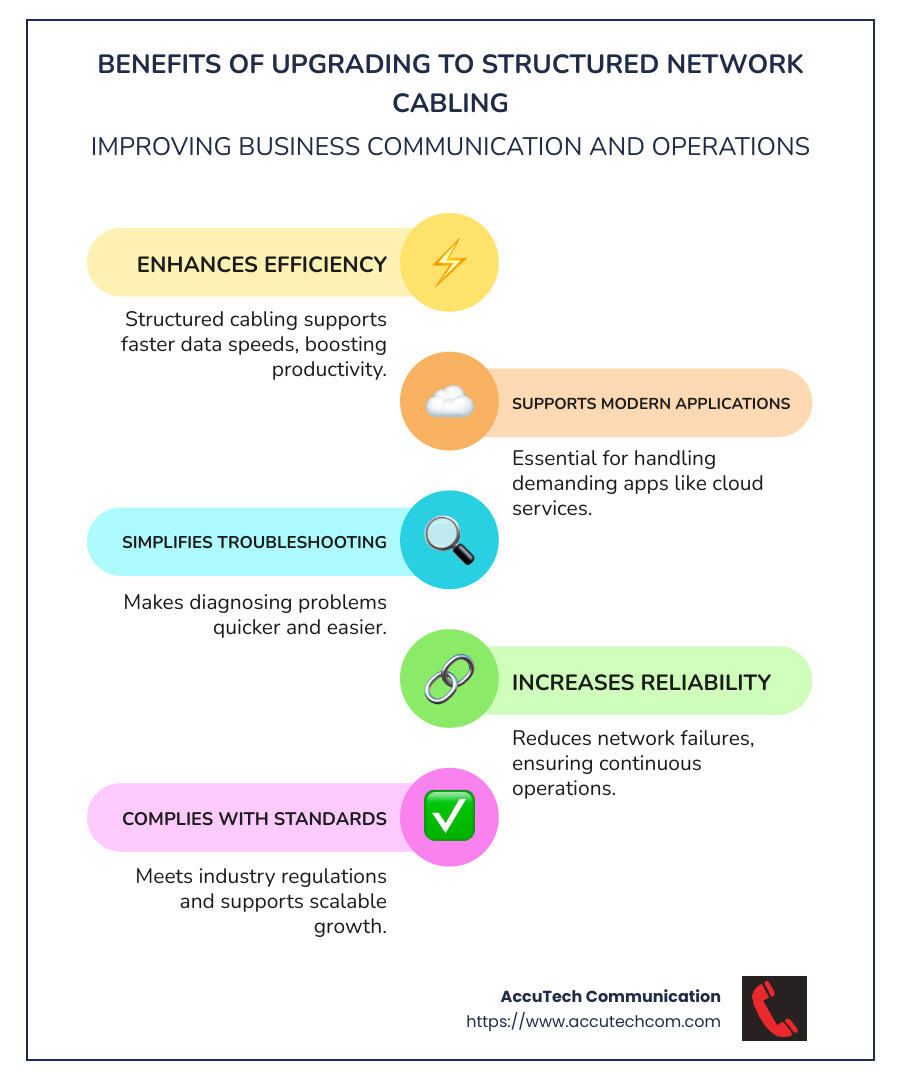
- Improves Efficiency: Up-to-date cabling supports faster data speeds, enhancing productivity.
- Supports Modern Applications: Crucial for handling demanding data applications like cloud services.
- Simplifies Troubleshooting: Structured cabling makes diagnosing problems easier and quicker.
- Increases Reliability: Reduces chances of network failures, ensuring continuous business operations.
- Complies with Standards: Meets industry regulations and facilitates scalable growth.
I’m Corin Dolan, owner of AccuTech Communications. With decades of experience in network cabling installation services, my team and I have helped countless businesses across Massachusetts, New Hampshire, and Rhode Island improve their communication networks. Let’s dig deeper into understanding this critical infrastructure.
Network cabling installation services terms you need:
– internet wiring
– network cable installer near me
– network cable services
Understanding Network Cabling Installation Services
Network cabling installation services are crucial for creating a robust and efficient communication infrastructure. These services involve setting up the physical cables and connections that support data transfer within an organization. This foundational work ensures that your network can handle the demands of modern applications and technologies.
What Are Network Cabling Services?
Network cabling services encompass a range of tasks aimed at establishing and maintaining a solid network infrastructure. These tasks include:
- Installation: Setting up cables and connections to create a network.
- Maintenance: Regular checks and repairs to ensure optimal performance.
- Management: Organizing cables and connections for efficiency and ease of access.

The Role of Structured Cabling
Structured cabling is a standardized approach to network cabling installation. It provides a framework for organizing and managing cables, making it easier to add or change network components without disrupting the entire system. Key benefits include:
- Consistency: Structured cabling provides a uniform layout, which simplifies troubleshooting and maintenance.
- Flexibility: Easily accommodates changes and expansions in network infrastructure.
- Scalability: Supports future growth and technological advancements, ensuring long-term reliability.
Installation Process
The installation process for network cabling involves several steps:
- Planning: Assessing the specific needs of the business and designing a custom cabling solution.
- Site Survey: Evaluating the physical environment to determine the best cabling routes and materials.
- Installation: Laying down cables and setting up connections according to the plan.
- Testing: Ensuring all connections are functional and meet performance standards.
- Documentation: Recording the network layout for future reference and maintenance.
By investing in professional network cabling installation services, businesses can achieve a high-performance network that supports their operational needs. Whether it’s for a small office or a large corporate campus, a well-installed network is key to efficient and reliable communication.
Next, we’ll explore the key components of structured cabling to understand how they contribute to a successful network infrastructure.
Key Components of Structured Cabling
Structured cabling is the backbone of any efficient network infrastructure. Its systematic approach ensures that your network not only meets today’s demands but is also ready for future advancements. Let’s explore the essential components that make up a structured cabling system.
Entrance Facilities
Entrance facilities are where the external service provider’s cables meet the internal network. This is the entry point for internet, phone, and other communication lines into a building. Properly managing this area is crucial as it affects the entire network’s performance and reliability.
Equipment Room
The equipment room houses critical hardware like servers, switches, and routers. It’s the hub where all network connections converge. An organized and well-maintained equipment room is vital for ensuring smooth network operations and easy access for maintenance and upgrades.
Backbone Cabling
Backbone cabling connects different equipment rooms and telecommunications rooms within a building or across a campus. It typically involves high-capacity cables like fiber optics to handle large volumes of data. Backbone cabling is essential for facilitating data flow between various network components and ensuring robust connectivity.
Telecommunications Room
The telecommunications room is where horizontal cabling from individual work areas connects to the backbone cabling. It acts as a distribution point, linking the central network to individual devices. Keeping this room organized with clear labeling and efficient cable management is key to maintaining network efficiency.
Horizontal Cabling
Horizontal cabling runs from the telecommunications room to individual work areas, connecting users to the network. This component usually involves twisted pair cables, like Cat 5e or Cat 6, and is crucial for delivering data to end-user devices. Proper installation and management of horizontal cabling ensure consistent and reliable connectivity.
Work Area
The work area is where end-user devices, such as computers and phones, connect to the network. This area includes network outlets and patch cables that link devices to the horizontal cabling. Ensuring easy access and organized cabling in work areas helps maintain a tidy workspace and facilitates quick troubleshooting.
By understanding these key components of structured cabling, you can appreciate how they work together to create a seamless and efficient network. Each element plays a critical role in ensuring that your network is reliable, scalable, and ready to meet your organization’s needs.
In the next section, we’ll cover best practices for network cable management to keep your network running smoothly.
Best Practices for Network Cable Management
Effective network cable management is essential for maintaining a tidy and efficient infrastructure. It prevents cable clutter, reduces downtime, and makes troubleshooting easier. Let’s explore some best practices to keep your network organized and running smoothly.
Cable Labels
Labeling cables is a simple yet powerful practice. Each cable should have a label at both ends with a unique identifier. This helps technicians quickly identify and trace connections during maintenance or troubleshooting. Use clear, durable labels to ensure they remain legible over time.
Tip: Use a consistent labeling system throughout your network to avoid confusion.
Cable Ties
Cable ties are your best friend when it comes to organizing cables. They help bundle cables neatly, preventing them from becoming tangled. While plastic zip ties are common, consider using Velcro straps for easy adjustments. This approach allows you to add or remove cables without cutting and replacing ties.
Remember: Avoid overtightening cable ties as this can damage the cables.
Documentation
Comprehensive documentation is crucial for effective cable management. Keep records of cable types, lengths, routes, and connections. This information is invaluable for future upgrades, repairs, or audits. A well-documented system saves time and reduces errors when making changes to the network.
Pro tip: Regularly update your documentation to reflect any changes in the network setup.
Cable Management Software
Cable management software takes documentation to the next level. These tools provide a digital map of your network, showing cable routes, connections, and even environmental factors like temperature and humidity. They offer a visual representation and can generate work orders for network changes, ensuring accuracy and efficiency.
Consider: Choose software that fits your network size and complexity, and integrates well with your existing systems.

By following these best practices, you can maintain a clean and efficient network environment. Proper cable management not only improves performance but also extends the lifespan of your network infrastructure.
In the next section, we’ll dig into the different types of network cables and their applications.
Types of Network Cables
When setting up a network, choosing the right type of cable is crucial. Each cable type has its own strengths and is suited to different applications. Let’s explore the main types of network cables: coaxial, fiber optic, shielded twisted pair, and unshielded twisted pair.
Coaxial Cable
Coaxial cable, or coax, is one of the oldest types of network cables. It has a central conductor core, surrounded by an insulating layer, a metallic shield, and a protective outer layer. Coaxial cables are known for their resistance to electromagnetic interference, making them ideal for transmitting television signals, internet connections, and even connecting radio systems.
Fun fact: Coaxial cables were originally used for undersea telegraph cables in the mid-19th century!
Fiber Optic Cable
Fiber optic cables are the go-to for high-speed data transfer over long distances. They use light to transmit data, which allows for incredibly fast speeds and a high level of data integrity. Fiber optics are perfect for data centers and high-performance networks. They come in two main types: single-mode and multi-mode, each serving different distance and bandwidth needs.
Did you know? Fiber optic cables can transmit data at speeds up to 100 Gbps!
Shielded Twisted Pair (STP)
Shielded twisted pair (STP) cables have pairs of wires twisted together and covered with a shielding layer. This design minimizes electromagnetic interference and crosstalk, making STP cables suitable for environments with high interference, such as industrial settings. They are commonly used in Ethernet networks.
Tip: STP cables are slightly more expensive than unshielded options, but the added protection can be worth it in noisy environments.
Unshielded Twisted Pair (UTP)
Unshielded twisted pair (UTP) cables are the most common type of network cables used today. They consist of pairs of wires twisted together without any additional shielding. UTP cables are flexible, cost-effective, and easy to install, making them ideal for both residential and commercial Ethernet networks. They are available in various categories, such as Cat5e and Cat6, each offering different performance levels.
Pro tip: For most office environments, Cat6 UTP cables provide a good balance of speed and cost.
Understanding these cable types will help you make informed decisions when planning your network infrastructure. The right choice can significantly impact your network’s performance and reliability.
In the next section, we’ll address some frequently asked questions about network cabling installation services.
Frequently Asked Questions about Network Cabling Installation Services
What is the typical cost of network cable installation?
The cost of network cabling installation services can vary widely based on several factors. On average, you might expect to pay between $100 and $200 per drop. However, this can change depending on the type of cables used, the complexity of the installation, and the location of the project.
- Materials: The type of cable (e.g., Cat6, fiber optic) plays a big role in the overall cost. Fiber optic cables, for instance, are generally more expensive than coaxial or twisted pair cables.
- Labor: Labor costs will depend on the complexity of the installation and the expertise required. Complex installations, such as those in older buildings or large facilities, may require more time and skilled technicians, increasing labor costs.
Do I need an electrician to install network cable?
In most cases, you do not need a licensed electrician to install network cabling. However, the installation of network cables can sometimes overlap with electrical work, especially if you’re dealing with power over Ethernet (PoE) systems or need to run cables through walls.
- Installation Complexity: Simple installations, like running cables across a room or within an office, can often be handled by network technicians. However, if the installation requires electrical work, such as moving electrical wiring or working near electrical systems, an electrician may be necessary to ensure safety and compliance with local codes.
What are network cabling services?
Network cabling services encompass a range of activities related to the setup and maintenance of network infrastructure. These services ensure that your network is reliable, efficient, and capable of supporting your business needs.
- Installation: This involves setting up the physical cabling infrastructure, including running cables, installing connectors, and setting up patch panels. Proper installation is crucial for minimizing interference and ensuring high-speed data transfer.
- Maintenance: Regular maintenance helps keep your network running smoothly. This includes checking for damaged cables, ensuring connections are secure, and updating any outdated components.
- Management: Effective cable management involves organizing and labeling cables to make future maintenance and troubleshooting easier. This can also include the use of cable management software to document the network layout.
Understanding these aspects of network cabling services can help you plan and execute a successful network installation project.
In the next section, we’ll conclude with insights about AccuTech Communications and their offerings in the regions they serve.
Conclusion
AccuTech Communications stands out as a leader in network cabling installation services across Massachusetts, New Hampshire, and Rhode Island. Our commitment to quality and certified service ensures that your business communication needs are met with precision and reliability.
With over two decades of experience, we offer competitive pricing without compromising on the quality of our services. Our team of skilled technicians and engineers is dedicated to providing top-notch network solutions custom to your specific needs. Whether you’re upgrading to a gigabit network or setting up a new office, we have the expertise to deliver efficient and effective results.
We understand the importance of a stable and fast network for your business operations. That’s why we use only the best materials and adhere to industry standards to ensure your network infrastructure supports your current and future needs.
If you’re looking for reliable network cabling services, contact AccuTech Communications today to discuss how we can help you achieve a robust network foundation. Your network is the backbone of your business, and we’re here to make it stronger.
