
Network Data Wiring: Top 3 Brilliant Tips 2024
Network data wiring is the backbone of any modern business’s communication system. It ensures smooth and fast data transfer, connecting various devices like computers, routers, and other network tools. This structured cabling forms the infrastructure that supports everything from seamless video calls to quick file sharing and reliable internet access.
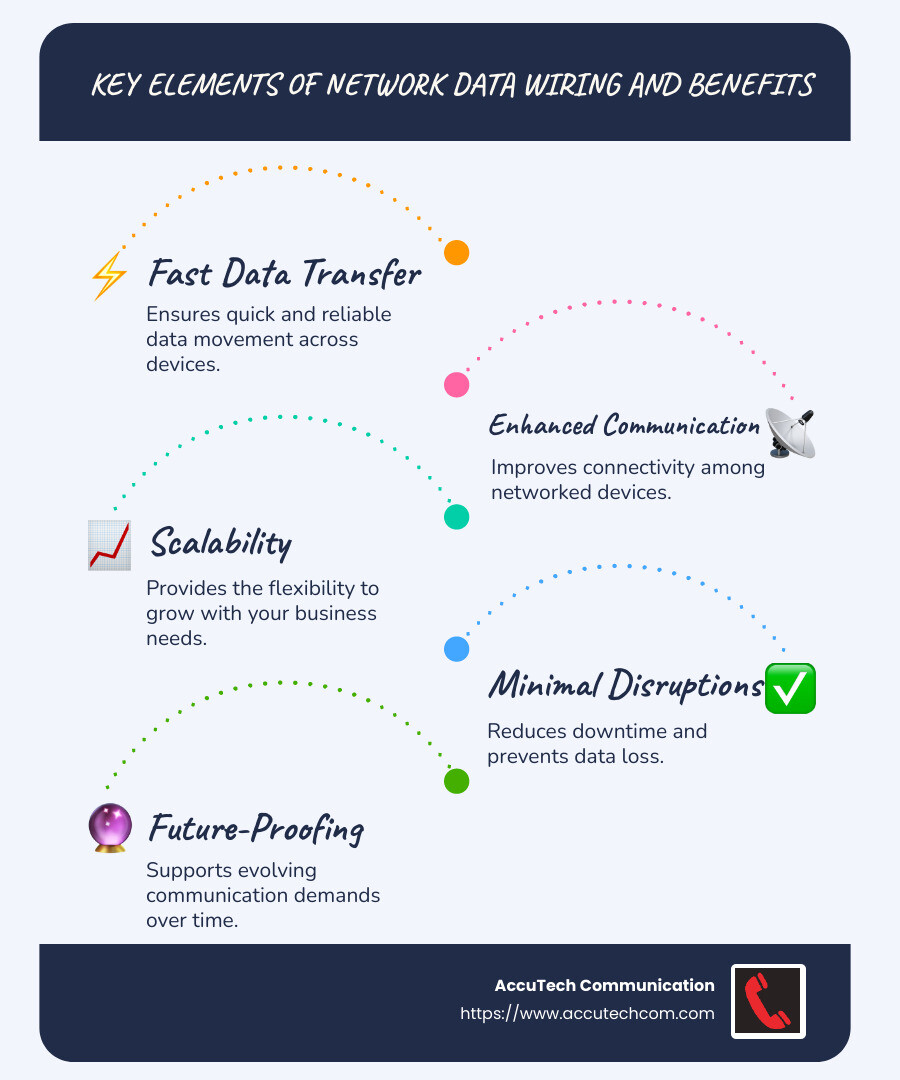
Key points about network data wiring:
– Provides fast and reliable data transfer.
– Improves communication across network devices.
– Is crucial for both current and future network needs.
Proper installation and management of network data wiring can prevent disruptions, data loss, or even complete system failures. It also offers the flexibility needed to grow with your business’s communication demands, thanks to its scalability and robust performance.
As Corin Dolan, and with a demonstrated history in the field of network data wiring, I have continuously worked to craft seamless communication solutions for businesses across Massachusetts, New Hampshire, and Rhode Island. My experience with AccuTech Communications has taught me the absolute importance of efficient data infrastructures in operational success.
Network data wiring vocab explained:
– structured cabling contractor in my area
– structured cabling installation
– structured cabling installation contractors
Understanding Network Data Wiring
Network data wiring is essential for building a strong and efficient network infrastructure. It connects communication systems, ensuring data moves smoothly between devices. Let’s explore the different types of network cables and the components that make up a structured cabling system.
Types of Network Cables
Choosing the right cable is crucial for your network’s performance. Here are the main types:
- Twisted Pair Cables: These are the most common and cost-effective. They come in two varieties: Unshielded Twisted Pair (UTP) and Shielded Twisted Pair (STP). UTP is great for most general applications, while STP is used where there’s more electromagnetic interference.
- Fiber Optic Cables: Known for high-speed data transfer and resistance to interference. They’re ideal for long distances and high-bandwidth applications. As demand for HD video and faster internet grows, fiber optics are becoming more popular even in homes.
- Coaxial Cables: These offer excellent shielding from interference and are often used for cable TV and internet connections. However, they are less common in modern data networks.
Components of Structured Cabling
A structured cabling system is like a well-organized highway for data. It includes several key components:
- Entrance Facilities: This is where the outside network connects to your building. It’s the first point where data enters your network infrastructure.
- Equipment Room: Think of this as the brain of your network. It houses critical hardware like servers and network switches. Proper setup here ensures efficient data handling and distribution.
- Backbone Cabling: Also known as vertical cabling, it links different floors or sections of a building. It connects entrance facilities to equipment rooms and is crucial for large networks.
- Horizontal Cabling: This connects individual outlets to the telecommunications room on the same floor. It’s what connects your workstations and devices to the main network.
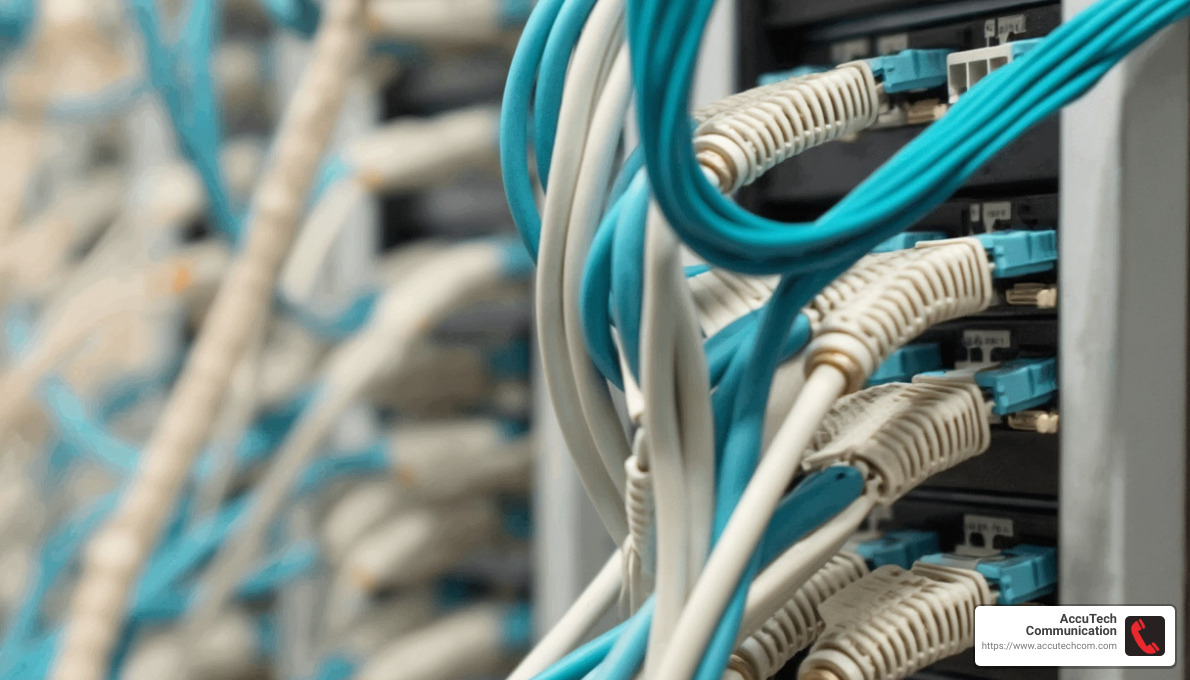
By understanding these components and choosing the right cables, you can create a network that’s not only efficient but also scalable and reliable. This foundation supports all your communication needs, from basic internet browsing to complex data applications.
Next, we’ll explore why proper network data wiring is so important and how it impacts your business’s performance and growth.
Importance of Proper Network Data Wiring
Proper network data wiring is the backbone of any efficient and reliable communication system. It ensures smooth data flow, minimizes disruptions, and supports business growth. Let’s explore why quality installation matters and the common challenges you might face.
Benefits of Quality Installation
1. Improved Network Performance
A well-installed network ensures high-speed data transfer and consistent performance. This means fewer slowdowns and more seamless operations. For instance, a large corporate campus using a mix of Cat 6 and fiber optic cables achieved a robust network that handled peak loads without hiccups, boosting productivity and employee satisfaction.
2. Scalability and Future-Proofing
Quality installation allows your network to grow with your business. By planning for future needs, you can easily upgrade and expand your system without costly overhauls. This means you invest once and reap the benefits for years.
3. Increased Reliability
Reliability is key in maintaining consistent network performance. With the right setup, you can reduce downtime and avoid frequent repairs. This ensures your business stays connected and operational, even during peak times.
4. Improved Productivity
A reliable network means employees can work without interruption. This boosts productivity and keeps your business running smoothly. Proper planning and installation mean fewer technical issues and more focus on core tasks.
Common Challenges and Solutions
1. Electromagnetic Interference (EMI)
EMI can disrupt data transmission, causing delays and errors. To combat this, use shielded cables like STP or fiber optics, which are resistant to interference. Avoid running data cables parallel to electrical lines to minimize risk.
2. Poor Installation Practices
Improper installation can lead to tangled cables, signal loss, and network failures. Follow industry best practices, such as maintaining proper cable bend radius and using cable management solutions like trays and raceways. Labeling cables also simplifies maintenance.
3. Compatibility Issues
Using incompatible components can degrade network performance. Ensure all parts of your network, from cables to hardware, adhere to standardized wiring schemes like T568A or T568B. Consistency is key to avoiding connectivity issues.
By addressing these challenges and focusing on quality installation, you can build a network that not only meets your current needs but also adapts to future demands. This sets the stage for a resilient and efficient communication system that supports your business growth.
Next, we’ll dig into the best practices for planning and managing your network data wiring to ensure optimal performance and longevity.
Best Practices for Network Data Wiring
Planning Your Network Setup
Proper planning is crucial for a successful network data wiring setup. It ensures your network runs smoothly and can adapt to future needs. Let’s break down the key elements of planning your network.
1. Selecting the Ideal Server Location
Your server is the heart of your network. Choose a private and central location to house the server, modem, switch, and firewall. This central position makes it easier to run cables to different parts of your facility. Ensure the area is easily accessible for maintenance, but secure enough to protect sensitive equipment.
2. Mapping Out Cable Runs
Careful mapping of cable runs is essential. Start by measuring the distances from your server to each network node to determine the cable lengths needed. Plan the best routes for your cables, considering pathways through walls, ceilings, or along baseboards.
- Avoid Electrical Lines: Keep data cables away from electrical wiring to prevent interference.
- Use Conduits: For new constructions, consider running conduits to protect cables and simplify future upgrades.
- Label Pathways: Clearly mark pathways to make future maintenance easier.
3. Strategic Node Placement
Place nodes in accessible areas, avoiding spots near power outlets or light switches. Install wall plates where cables terminate for a clean and professional look.
Cable Management Techniques
Effective cable management is vital for maintaining an organized and efficient network. Here are some techniques to consider:
1. Color-Coded Cables
Use different colored cables to easily identify different types of connections or departments. This simplifies troubleshooting and maintenance.
2. Labeling and Documentation
Label all cables at both ends and document your cabling system. This makes future maintenance and troubleshooting much easier. Consistent documentation ensures everyone knows which cable serves what purpose.
3. Use Cable Management Solutions
Implement solutions like cable trays, raceways, or Velcro straps to organize and protect your cables from physical damage. Avoid nylon ties, which can damage cables over time.
4. Test and Certify Your Installation
Thoroughly test your network cabling during and after installation. Use cable testers to check for proper wiring, continuity, and performance standards. Certification tools can provide detailed reports, ensuring your network is ready for optimal performance.
By following these best practices in planning and cable management, you can maximize the performance and lifespan of your network infrastructure. This ensures reliable and efficient data transmission, supporting your business operations effectively.
Next, we’ll address some frequently asked questions about network data wiring to help you make informed decisions.
Frequently Asked Questions about Network Data Wiring
What is data wiring?
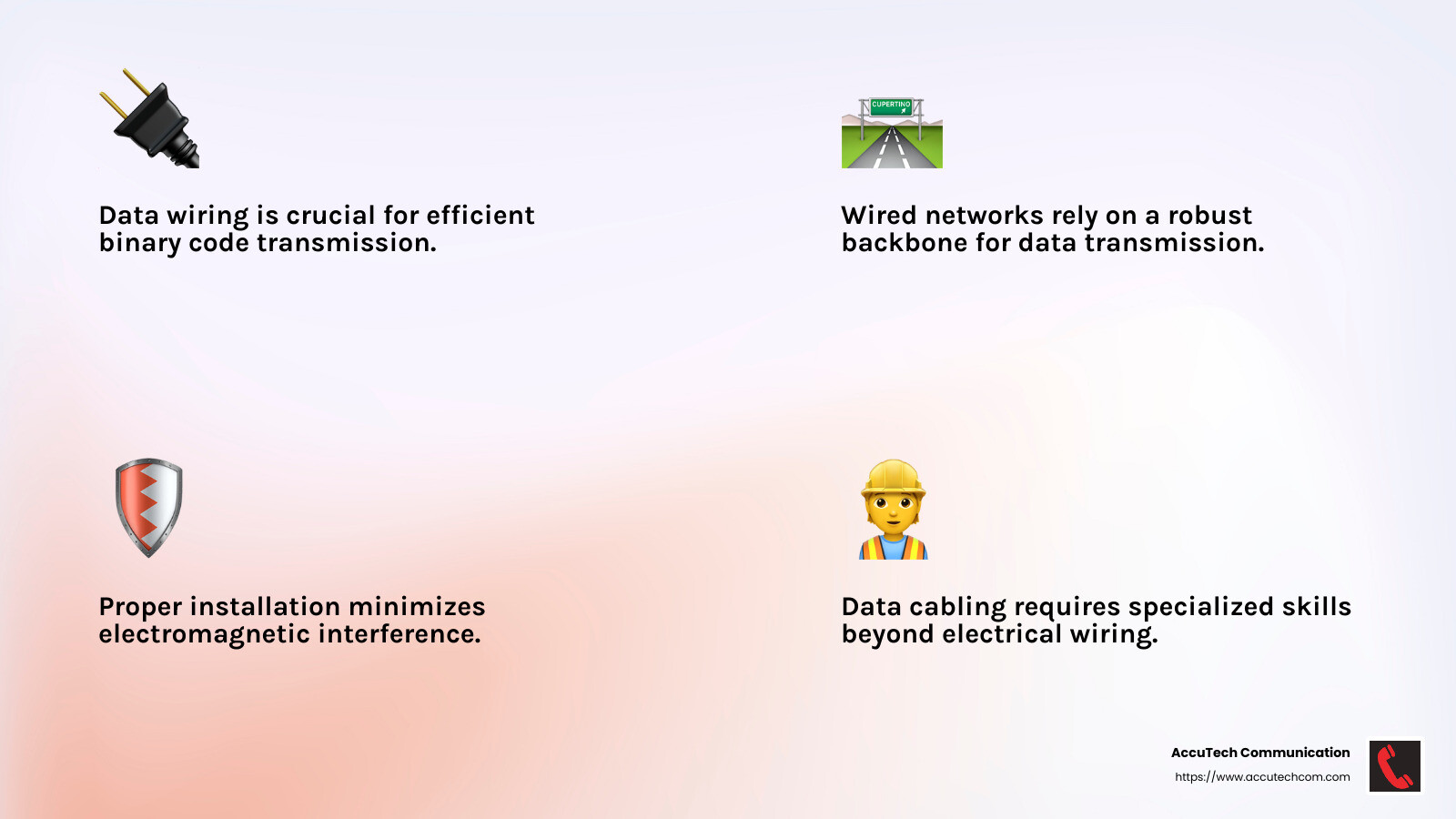
Data wiring is the backbone of any network infrastructure. It involves setting up cables to transmit data between computers, servers, and other network devices. At its core, data wiring allows communication through binary code, which is the language of computers. This code consists of 0s and 1s that represent different voltage levels. These voltage changes travel through the cables, allowing devices to communicate.
How do wired networks send data?
In a wired network, data travels over cables that connect various devices. This process is known as data transmission. The data moves through the network’s backbone, which is a central conduit that links all parts of the network. Think of it like a highway system where data is the vehicles traveling from one point to another.
The backbone is critical for efficient data flow. It ensures that information reaches its destination quickly and reliably. Proper installation and maintenance of this backbone are essential for optimal network performance.
Can electricians do data cabling?
While electricians are skilled in handling electrical systems, data cabling requires a specialized set of skills. Electricians are experts in electrical wiring, which involves different standards and practices compared to data cabling.
Data cabling expertise involves understanding network requirements, cable types, and installation techniques specific to data transmission. Hiring a professional with experience in network data wiring ensures that your system is set up correctly and efficiently. This expertise minimizes the risk of issues like electromagnetic interference and ensures compatibility with existing network components.
For a reliable and efficient network, it’s best to work with specialists like AccuTech Communication, who have the necessary knowledge and experience in data cabling.
Next, we’ll explore the conclusion and how AccuTech Communication’s services can meet your business’s network needs.
Conclusion
Choosing the right partner for your network data wiring can significantly impact your business’s efficiency and reliability. At AccuTech Communications, we pride ourselves on being that trusted partner. Here’s why:
Certified Service
We don’t just talk about quality; we certify it. Our team is trained to meet and exceed industry standards, ensuring every installation is top-notch. We adhere to strict guidelines like ANSI/TIA, which means your network will be reliable and future-proof. This certification guarantees that your network infrastructure is built to last.
Competitive Pricing
Quality doesn’t have to come with a hefty price tag. We offer competitive pricing custom to meet your specific needs. Whether you’re a small business or a large corporate campus, our solutions are designed to be cost-effective without compromising on quality. We believe that every business deserves access to the best technology, regardless of budget.
Quality Commitment
Our commitment to quality is unwavering. From planning and design to installation and maintenance, we ensure every step is executed with precision. Our skilled technicians use high-quality materials and advanced tools to deliver installations that are both efficient and durable. This dedication to excellence is why many of our clients have trusted us for over two decades.
At AccuTech Communications, we understand that your network is the backbone of your business. That’s why we provide comprehensive solutions that improve performance and scalability. Whether you’re in Massachusetts, New Hampshire, or Rhode Island, we are here to support your business communication needs.
Ready to experience the difference with AccuTech Communications? Explore our structured cabling services and let us help you build a robust, reliable network. Your business deserves no less.
