Preparing an Occupied Office for Network Cabling Work: Access and Staff Coordination
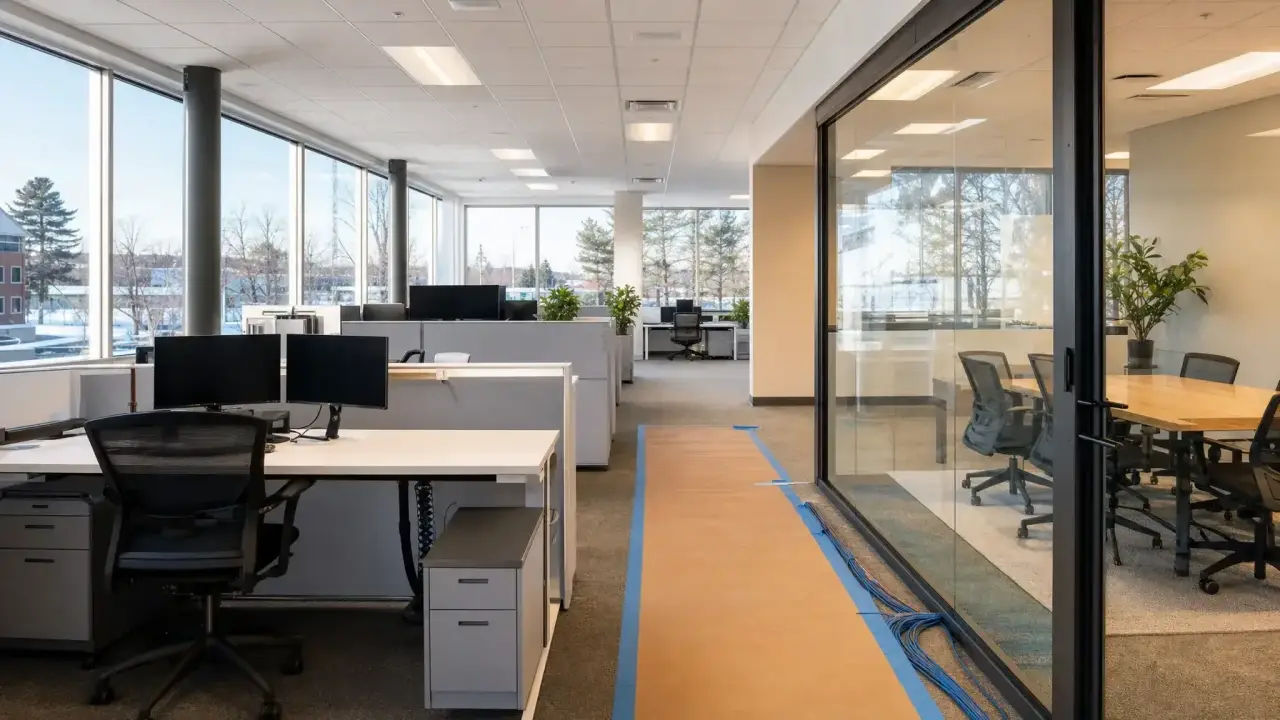
To prepare an occupied office for network cabling work, identify the affected areas, name the people authorized to arrange access, record when those areas are available, and separate proposed timing from confirmed plans. Then ask the installer and IT team to assess the work before telling staff what to expect.
The office manager’s role is to make workplace constraints visible—not to choose cable routes, design the network or perform installation work. This guide focuses on access and communication while a Massachusetts office remains occupied, rather than an office move or a technical installation checklist.
Identify affected areas and the people who can authorize access
Start with the rooms and work areas identified in the proposed project. Use names staff and the installer can both recognize, including the building, floor and room label where applicable. Ask the installer whether access may also be needed outside the destination work area; do not infer the route yourself.
- Office contact: coordinates room bookings, staff notices and access arrangements, with authority to approve changes or refer them to the appropriate decision-maker.
- IT contact: reviews questions about connected equipment, service impact and any technical changes.
- Building-management contact, where applicable: confirms building-controlled access, entry procedures and restrictions affecting shared or secured spaces.
- Area contact: confirms availability for a particular room or department and communicates changes to the office coordinator.
Distinguish someone who can open a door from someone who can authorize work in that space. If an escort or access credential is required, record who will arrange it and who should be contacted if that person is unavailable. Do not share keys or credentials outside your organization’s approved procedures.
Record constraints before agreeing to a work window
A room that appears empty on a calendar may still be unavailable for installation. Record meetings, confidential activities, visitor use, restricted entry and work that cannot be interrupted. Include building access restrictions separately from departmental preferences so the installer knows which constraints need authorization to change.
Offer availability windows for assessment rather than treating them as a schedule. Ask the installer whether the proposed access is suitable and ask IT whether any work could affect services or connected devices. If a conflict remains, identify who can resolve it before communicating a firm plan.
Note Physical access and network availability are separate questions. Do not assume that cabling work requires an outage, or that staff can keep working without disruption. Confirm expected effects with the installer and IT team.
Agree on work-area availability and handling responsibilities
Ask the installer to identify the space that needs to be available for the proposed work. Then coordinate with the area contact so room reservations, occupied desks or stored items do not conflict with that requirement. An available room is not necessarily a prepared work area.
Before asking staff to clear anything, confirm what needs attention and who is responsible. Personal belongings and loose office materials are different from furniture, connected equipment and building fixtures. Record the agreed handling responsibilities, including who confirms that the area can return to normal use.
- Ask whether desks or shared rooms need to be unoccupied during the work, and obtain confirmation before arranging temporary alternatives.
- Refer furniture handling and connected-equipment questions to the responsible personnel. Do not ask staff to disconnect or move connected devices on their own.
- Leave cable routing, ceiling access, cable pulling and electrical work to qualified personnel. Office preparation does not require staff to inspect concealed spaces.
- Ask how staff should recognize and avoid active work areas, while keeping required access routes clear under the agreed site arrangements.
Tell staff what is confirmed—and what is still open
An early notice can help departments flag conflicts, but it should be clearly labeled as provisional. Once the installer, IT team and access contacts have confirmed the arrangements relevant to their roles, send an updated notice that separates staff actions from technical responsibilities.
Build the notice around these points:
Name the affected rooms or work areas and label the timing as proposed or confirmed. Identify details awaiting a decision and the contacts responsible for resolving them. Include only approved staff actions and room-use restrictions. State whether the installer and IT team have confirmed expected service effects or whether their assessment is pending. Give staff the office coordination contact for questions or booking conflicts.
Keep notices consistent with the coordination record. If a meeting, room restriction or work window changes, update the installer and affected contacts before issuing revised staff instructions. Staff should not have to reconcile conflicting messages from different departments.
Reusable access-coordination worksheet
Copy this worksheet for each affected area. It is a proposed reader aid, not a description of Accutech’s established project process. Keep technical drawings and scope documents separate; this record tracks workplace access, communication and decisions that remain open.
| Field | What to record | Confirmation owner |
|---|---|---|
| Affected area | Building, floor, room or work-area name; whether installer assessment of other access needs is pending. | Name the office contact and installer contact. |
| Authorized access contact | Who authorizes entry, who provides access or an escort, and the approved fallback contact. | Name the access authority or building-management contact. |
| Constraints | Room bookings, restricted activities, entry conditions and operational needs that affect availability. | Name the area contact and any authority needed to resolve conflicts. |
| Proposed availability | Suggested access window; distinguish a proposal from an accepted arrangement. | Name the office coordinator and installer contact. |
| Work-area preparation | Agreed availability requirements and responsibility for belongings, furniture or equipment. | Name the responsible personnel; include IT for connected equipment. |
| Staff notice | Affected recipients, confirmed instructions, provisional details and whether the current notice has been sent. | Name the person issuing and updating the notice. |
| Confirmation status | Mark each arrangement as proposed, awaiting confirmation, confirmed or changed; record who confirmed it. | Name the party authorized to confirm that item. |
| Open questions | Unresolved access, timing, service-impact or handling questions, and which arrangement depends on the answer. | Assign a named decision owner and an agreed point for follow-up. |
Before treating an area as available, check that access authorization, room availability and required preparation are confirmed. A blank entry is not approval. If an unresolved question affects whether work can proceed in that area, bring it to the responsible party rather than leaving the installer or staff to make an assumption.
Keep technical preparation in its own plan
For separate room and infrastructure preparation, use the network closet readiness checklist. For installation requirements and responsibility boundaries, refer to the structured cabling scope-of-work checklist. The access worksheet supports those documents without replacing technical planning.
Accutech Communications is based in Hopkinton, MA, and has handled network cabling installation for Massachusetts businesses since 1993, including new drops, full re-cables and repairs. See the network cabling installation service page for service scope. When discussing an occupied-office project, bring your access constraints and unresolved questions so the proposed arrangements can be assessed.