
Office Cabling Solutions: 6 Key Benefits Revealed 2025
Office cabling solutions are essential for businesses seeking efficient and reliable communication networks. These solutions ensure seamless connectivity for various devices, supporting everything from high-speed internet to VoIP phone calls and secure data transfers. Implementing office cabling solutions offers:
- Increased efficiency and reliability
- Scalable infrastructure for future growth
- Reduced clutter and simplified maintenance
Modern businesses depend on structured cabling systems to keep operations smooth, reliable, and prepared for technological advances. From healthcare to corporate offices, robust cabling supports daily activities and ensures business continuity.
I’m Corin Dolan, the owner of AccuTech Communications. With expertise in office cabling solutions since 1993, I’ve helped numerous businesses across Massachusetts and beyond implement reliable communication networks.
Simple office cabling solutions glossary:
Understanding Office Cabling Solutions
In today’s tech-driven world, office cabling solutions are the backbone of any business’s communication network. Whether it’s for data, voice, or video, having a well-structured cabling system is crucial. Let’s explore what makes these systems essential.
Structured Cabling Systems
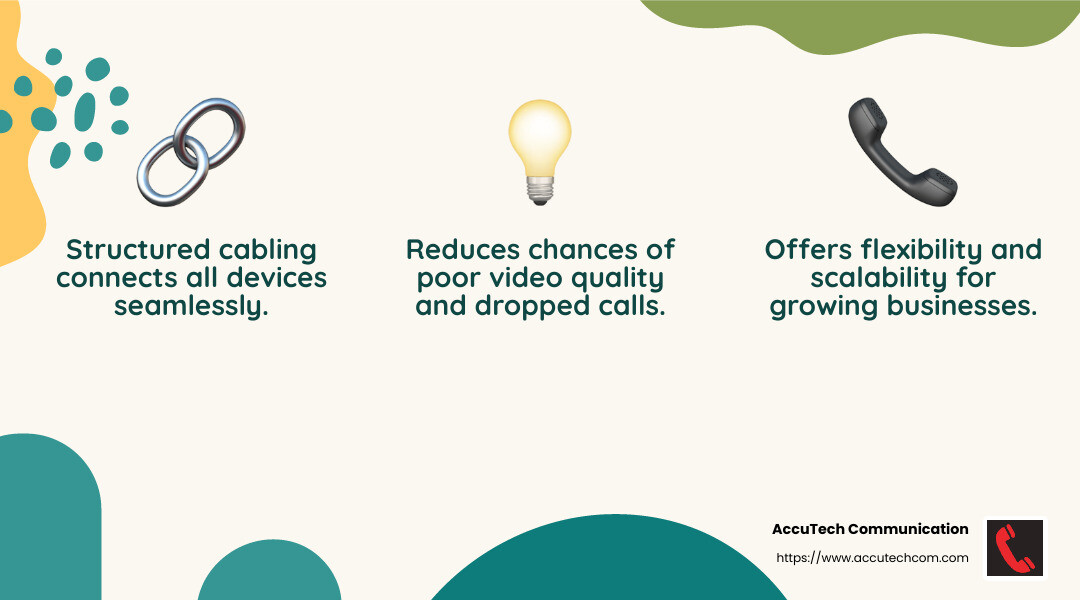
Structured cabling is like the nervous system of your office. It connects everything, from computers to printers, ensuring smooth and reliable communication. These systems are designed to be flexible and scalable, adapting to your business’s needs as you grow.
- Data Cabling: This involves the installation of cables that transmit data throughout your office. It’s not just about internet speed; it’s about ensuring data flows smoothly between devices. With options like Ethernet and fiber optic cables, businesses can choose the best fit for their needs.
- Voice/Video Network Wiring: This ensures that your phone and video conferencing systems work seamlessly. Proper wiring reduces the chances of dropped calls or poor video quality, which can disrupt important meetings.
Importance of Structured Cabling
A well-designed structured cabling system offers several benefits:
- Efficiency: With organized cabling, troubleshooting becomes easier. This means less downtime and more productivity.
- Scalability: As your business grows, your network can easily expand without a complete overhaul.
- Flexibility: Structured cabling supports a wide range of applications and hardware, making it easier to integrate new technologies.
In a nutshell, office cabling solutions are not just about laying cables. They are about creating a reliable, efficient, and future-proof network that supports your business’s communication needs. Whether you’re setting up a new office or upgrading an existing one, investing in a robust cabling infrastructure is key to staying connected and competitive.
Components of Structured Cabling
When it comes to setting up a reliable network, understanding the components of structured cabling is crucial. Each part plays a specific role in ensuring your office cabling solutions are effective and efficient. Let’s break down these components.
Entrance Facilities
The entrance facility is where the outside world connects to your internal network. This is the point where your telephone company or internet service provider (ISP) connects to your office, bringing in the essential data and voice services. It includes all the necessary wiring, hardware, and protective devices to ensure a secure connection.
Equipment Room
Think of the equipment room as the brain of your network. It’s where all the critical network equipment is housed, including routers, switches, and servers. This room serves as a central hub, consolidating all the cabling from different parts of the building. Having a well-organized equipment room is vital for maintaining network efficiency and simplifying maintenance.
Backbone Cabling
Backbone cabling connects various facilities within your office, such as the entrance facility to the equipment room. It acts like the main highway, transporting data across different sections of the building. Backbone cabling can be inter-building or intra-building, depending on your office layout. Typically, fiber optic cables are used here for their high-speed capabilities and long-distance transmission.
Telecommunications Room
The telecommunications room is a key transition point. It links backbone cabling to horizontal cabling, which connects directly to individual workstations. This room houses patch panels and other hardware that help manage and distribute network connections efficiently.
Horizontal Cabling
Horizontal cabling is what connects your telecommunications room to each workstation or device in the office. This cabling runs through ceilings, walls, and conduits, ensuring that every desk has access to the network. It’s designed to be flexible, allowing for easy reconfiguration as your office layout changes.
Work Area
Finally, the work area is where all the action happens. This is where end-user devices, like computers, phones, and printers, connect to the network. The work area components include cables, outlets, and connectors that link devices to the horizontal cabling system.
By understanding these components, businesses can implement structured cabling systems that are efficient, scalable, and adaptable to future needs. Each part, from the entrance facilities to the work area, plays a critical role in creating a seamless communication network that supports your office’s daily operations.
Benefits of Office Cabling Solutions
Implementing office cabling solutions offers numerous advantages that can transform how your business operates. Let’s explore the key benefits, including reducing clutter, improving communication, scalability, and flexibility.
Reduces Clutter
Imagine an office with cables running everywhere—under desks, across floors, and tangled behind equipment. This chaos not only looks messy but also poses safety risks. Structured cabling solutions eliminate this clutter by organizing cables into a centralized system. Most of the wiring is housed in a dedicated space, like a server room, keeping them out of sight and out of mind.
Improves Communication
Effective communication is the backbone of any successful business. With a well-implemented cabling system, data flows smoothly between devices and departments. This streamlined connectivity improves collaboration and ensures that information is readily accessible. As a result, employees can communicate more effectively, leading to increased productivity and efficiency.
Scalability
One of the standout features of structured cabling is its scalability. As your business grows, so does your network. With a modular design, you can easily add new devices or expand your infrastructure without overhauling the entire system. This adaptability is crucial for businesses looking to scale operations smoothly and cost-effectively.
Flexibility
Office environments change and evolve. Whether it’s reconfiguring workspaces or relocating an entire office, structured cabling offers the flexibility needed to adapt to these changes. The system is designed to accommodate reconfigurations, making it easier to move or add workstations without disrupting the network.
By leveraging these benefits, businesses can create a robust and efficient network infrastructure that supports their long-term goals. Next, we’ll dive into how to implement these solutions effectively.
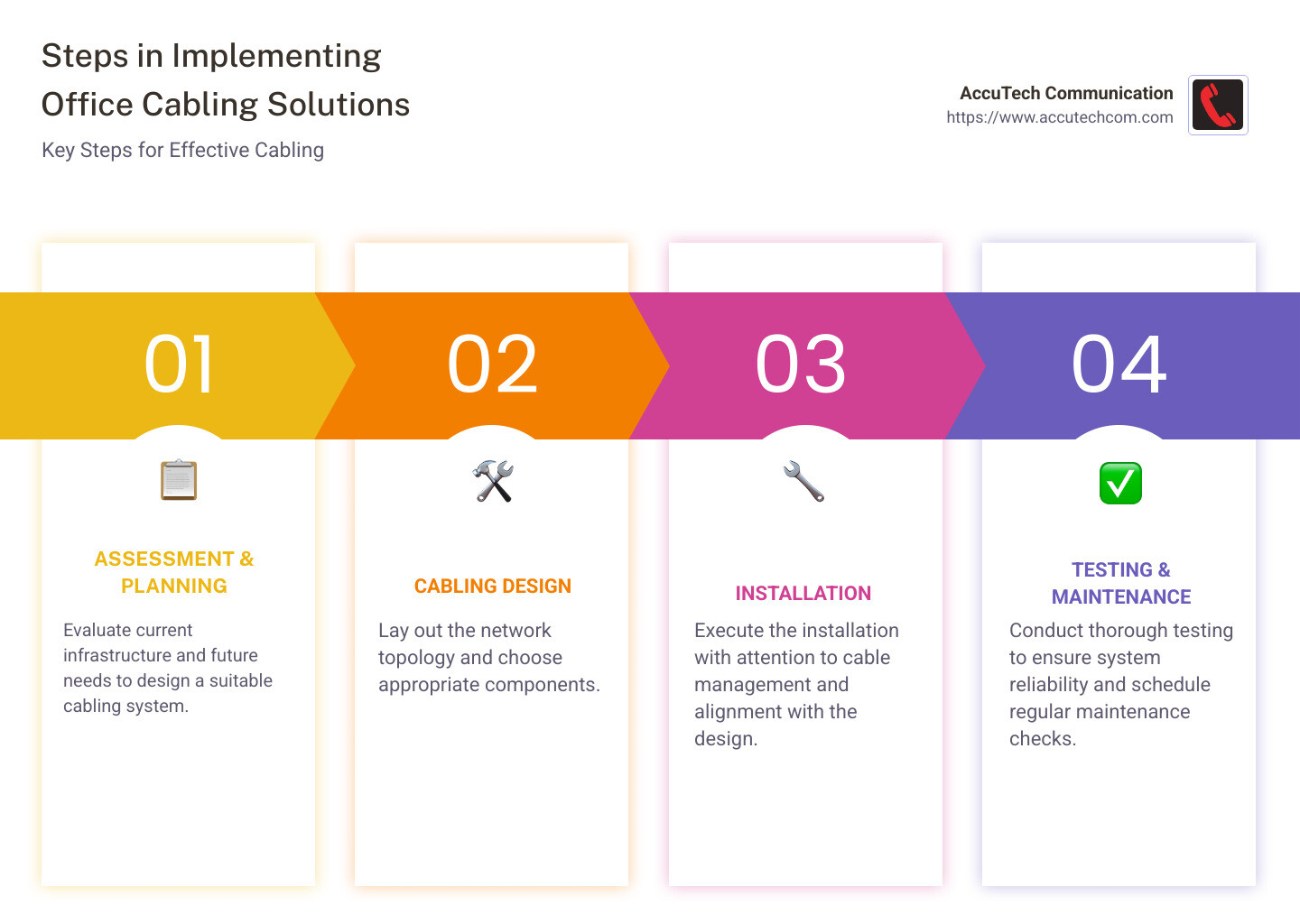
Implementing Office Cabling Solutions
When setting up office cabling solutions, focus on key components like cable management, patch panels, network topology, and installation services. Let’s break down these elements to understand how they contribute to a seamless network setup.
Cable Management
Good cable management is crucial for maintaining an organized and efficient network. It involves labeling cables, using cable ties, and arranging them neatly within racks or cabinets. This not only helps in identifying and troubleshooting connections but also extends the lifespan of the cables.
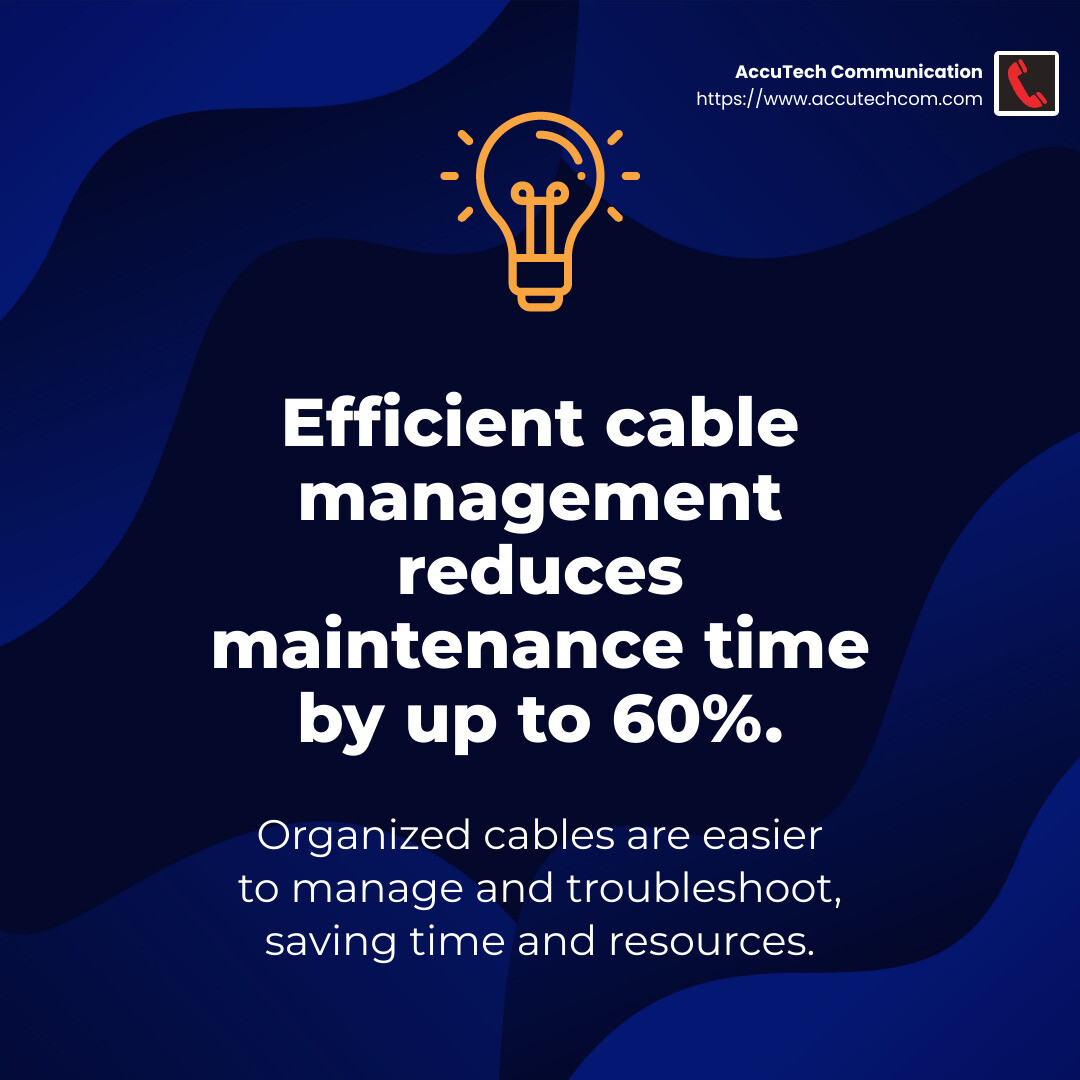
By keeping cables organized, you ensure that your network runs smoothly and is easy to maintain.
Patch Panels
Patch panels act as the central hub for all network connections. They provide a convenient point for making changes and managing connections. By consolidating all the wiring in one place, patch panels simplify network management and improve reliability. This setup allows for quick adjustments and reduces the risk of errors during maintenance or upgrades.
Network Topology
Choosing the right network topology is vital for optimizing performance and scalability. Common topologies include star, bus, and ring. The star topology is particularly popular in office environments due to its simplicity and reliability. In this setup, each device is connected to a central hub, making it easy to add or remove devices without affecting the rest of the network.
Installation Services
Professional installation services are a wise investment for any business. Experienced technicians ensure that the cabling system is installed according to industry standards, such as TIA/EIA-568A. This guarantees optimal performance and future-proofing of the network.
AccuTech Communication offers comprehensive installation services, ensuring that every component, from cables to patch panels, is set up correctly. This attention to detail minimizes downtime and ensures that your network is ready to meet current and future demands.
Implementing these key components effectively sets the foundation for a reliable and scalable network. With a well-organized cabling system, businesses can focus on growth and innovation without worrying about network issues. In the next section, we’ll address common questions about office cabling solutions to further clarify their importance and functionality.
Frequently Asked Questions about Office Cabling Solutions
What are the 6 components of structured cabling?
Structured cabling is a standardized approach to cabling infrastructure, and it consists of six key components:
- Entrance Facilities: This is where the external network connects to your building. It includes all the necessary wiring and hardware to link your office to the outside world.
- Equipment Room: Think of this as the brain of your network. It’s where all the main equipment, like servers and switches, are housed. This room is crucial for managing and distributing network resources throughout the building.
- Backbone Cabling: These cables connect different areas of the building, like the entrance facilities and equipment room. They handle the heavy lifting of data transmission and are often fiber optic for high-speed connections.
- Telecommunications Room: This is the hub for connecting backbone cabling to horizontal cabling. It’s a vital link in the network chain, ensuring that data flows smoothly between different parts of the building.
- Horizontal Cabling: These cables run from the telecommunications room to individual workstations. They are the final step in delivering network connectivity to users.
- Work Area: This is where employees interact with the network. It includes all the components that connect devices like computers and phones to the horizontal cabling.
Why use structured cabling?
Structured cabling offers several benefits that make it an ideal choice for any office environment:
- Efficiency: A well-organized cabling system reduces clutter and makes it easier to manage and troubleshoot network issues.
- Reliability: Structured cabling is designed to be robust and durable, minimizing downtime and ensuring consistent network performance.
- Cost-effectiveness: While the initial setup might require investment, structured cabling saves money in the long run by reducing maintenance costs and supporting easier upgrades.
What are the different types of cable structures?
Different cable structures are used to connect devices in various network configurations. Here are the most common types:
- Point-to-Point: This simple setup connects two devices directly. It’s often used for short distances or specific applications.
- Bus: In a bus structure, all devices share a single communication line. This can be cost-effective but may lead to congestion if too many devices are connected.
- Star: A popular choice for office networks, the star structure connects all devices to a central hub. This setup is easy to manage and allows for simple addition or removal of devices.
- Ring: Devices are connected in a circular fashion, with each one linked to the next. This structure can be efficient but may be vulnerable if one connection fails.
- Mesh: In a mesh network, devices are interconnected, providing multiple pathways for data. This setup offers high reliability but can be complex and costly to implement.
Understanding these components and structures helps in designing an effective and scalable office cabling solution. With these insights, you can ensure that your network is ready to meet current demands and adapt to future growth.
Conclusion
In business, having a robust and reliable network is crucial. At AccuTech Communications, we specialize in providing top-notch network cabling solutions custom to meet the unique needs of businesses in Massachusetts, New Hampshire, and Rhode Island. Our expertise extends beyond just cabling; we offer comprehensive solutions that include business phone systems and data center technologies.
Our commitment to quality and certified, reliable service has been the cornerstone of our operations since 1993. We understand that a well-structured cabling system is the backbone of any efficient office environment. By reducing clutter and improving communication, structured cabling not only improves productivity but also allows for seamless scalability and flexibility as your business grows.
Whether you’re setting up a new office or upgrading your existing infrastructure, our team is ready to help you connect the dots with our office cabling solutions. From consultation and design to installation and maintenance, we ensure that every aspect of your network is optimized for peak performance.
If you’re looking to future-proof your business with a reliable network, contact us today to explore how our solutions can benefit your organization. Your network is the backbone of your business; let us help you make it stronger.
