
Office Data Cabling: 5 Proven Tips for Success
Office data cabling is essential for any business looking to run efficiently and effectively. At its core, this system serves as the backbone of your digital communication infrastructure, enabling seamless data transfer and reliable connectivity across all devices and users.
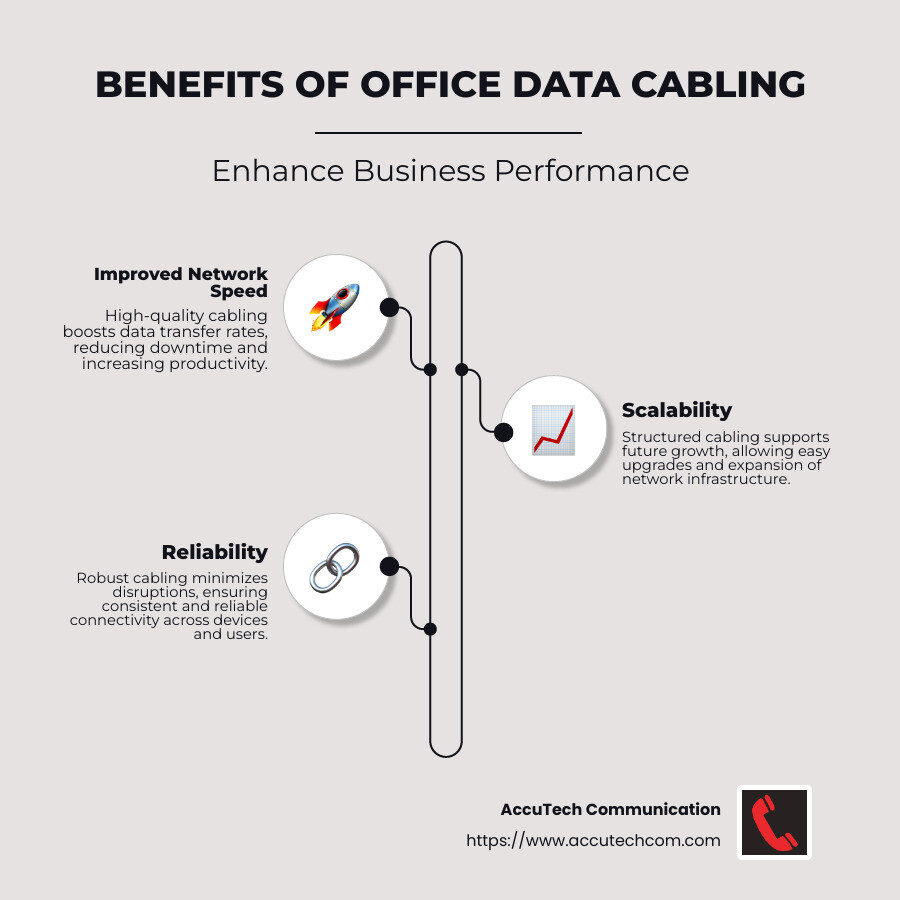
- Overview: Office data cabling involves structured cabling systems that connect various communication systems, ensuring robust network performance.
- Importance: It supports daily business operations, ensuring that email, internet, and phone systems function without interruption.
- Efficiency: High-quality office data cabling reduces downtime, improves data transfer speeds, and supports scalable network growth.
Understanding the nuances of office data cabling is crucial for maintaining a high-performance business environment, especially in sectors like healthcare that demand impeccable reliability. I’m Corin Dolan, owner of AccuTech Communications, and with my experience in office data cabling, I can help your business thrive by improving your network infrastructure’s dependability.
Office data cabling basics:
– cable infrastructure
– data network cabling
– structured cabling installation
Understanding Office Data Cabling
Office data cabling might seem complex, but it boils down to a few essential components. Let’s break it down.
Structured Cabling
Think of structured cabling as the organized framework that supports your office’s connectivity needs. It ensures that all your devices—computers, phones, and servers—can communicate effectively.
- Design and Layout: A well-planned structured cabling system is like a roadmap for your office’s data flow. It should be neat and organized, allowing easy maintenance and upgrades.
- Components: The system includes various components like patch panels, cables, and connectors. Each plays a crucial role in ensuring efficient data transfer.
Network Infrastructure
The network infrastructure is the backbone of your office’s technological ecosystem. It connects all your devices and ensures they work together seamlessly.
- Patch Panels: These serve as central hubs, connecting different parts of your network. Proper installation is vital for easy management and troubleshooting.
- Cables: Different types of cables, such as Cat 5e, Cat 6, and fiber optics, cater to various network needs. Choosing the right one is crucial for optimal performance.
Key Components
Understanding the components of office data cabling can help you make informed decisions.
- Patch Panels: Facilitate connections and make network management easier.
- Racks and Cabinets: Provide secure housing for your network equipment, ensuring everything is organized and accessible.
- Cable Types: Selecting the right cable type, like Cat 6 for high-performance networks, can significantly impact your network’s speed and reliability.
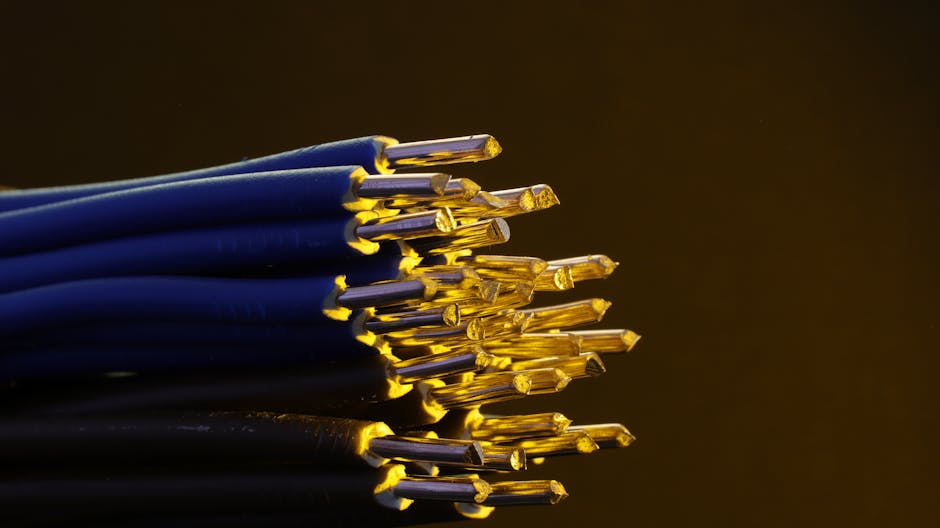
In summary, office data cabling is more than just wires and connectors. It’s a strategic investment in your business’s future, ensuring that your network infrastructure is robust, efficient, and scalable.
Next, we’ll explore common pitfalls in office data cabling and how to avoid them.
Common Pitfalls in Office Data Cabling
Setting up office data cabling isn’t just about plugging in wires. It’s a strategic process that requires careful planning and execution. Here are some common pitfalls that can derail your efforts.
Poor Planning
Planning is the foundation of a successful cabling system. Without a clear plan, you risk creating a tangled mess that leads to inefficiencies and errors.
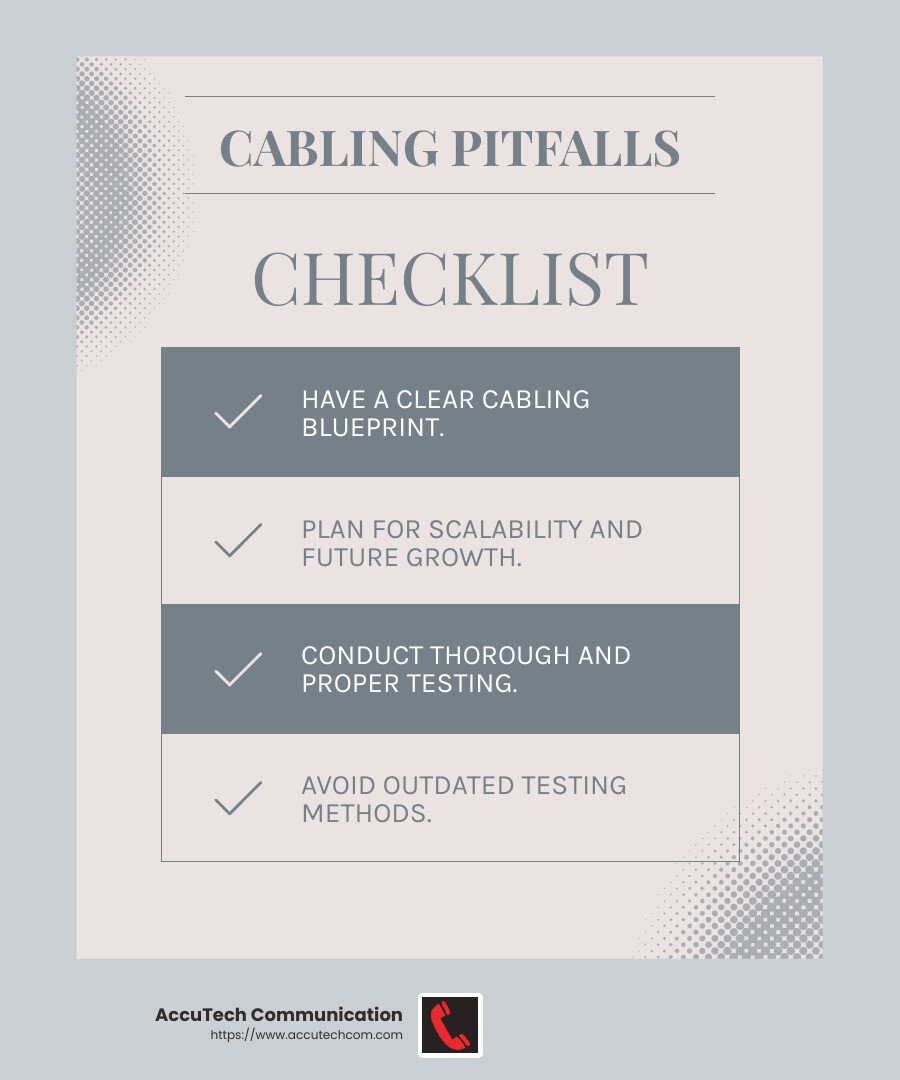
- Lack of a Blueprint: Imagine building a house without a blueprint. The same goes for cabling. A detailed layout ensures every cable has a purpose and place.
- Ignoring Future Needs: Your office will grow, and so will your data needs. Planning for scalability from the start saves time and money down the road.
Inadequate Testing
Testing isn’t just a checkbox on a to-do list; it’s critical for ensuring your network works as intended.
- Skipping the Testing Phase: Some might skip testing to save time. But without it, you might end up with a network that frequently fails or underperforms.
- Improper Testing Methods: Relying on outdated or incorrect testing methods can lead to false positives, giving a false sense of security.
Scalability Issues
As your business grows, your network should be able to grow with it. Scalability is key.
- Underestimating Growth: Many businesses underestimate their growth, leading to networks that can’t handle increased demand.
- Rigid Systems: A rigid system that doesn’t allow for easy upgrades can become a bottleneck. Investing in scalable solutions from the start is crucial.
In conclusion, avoiding these pitfalls requires a strategic approach to office data cabling. Proper planning, thorough testing, and a focus on scalability will ensure your network is robust and ready for the future.
Next, we’ll discuss how to ensure efficiency in your office data cabling setup.
Ensuring Efficiency in Office Data Cabling
Creating an efficient office data cabling system isn’t just about connecting devices. It’s about crafting a network that’s reliable, scalable, and easy to manage. Here’s how you can achieve that.
Proper Design
A well-designed cabling system is the backbone of any efficient network. Proper design involves thoughtful planning and foresight.
- Comprehensive Layout: Start with a detailed blueprint. This should map out every cable’s path and connection point. A clear layout minimizes confusion and reduces installation errors.
- Future-Proofing: Design with the future in mind. Allow room for growth and changes. This might mean installing extra cabling or designing flexible pathways that can accommodate new technology.
Quality Materials
The materials you choose are just as important as the design itself. Using quality materials ensures longevity and performance.
- High-Grade Cables: Opt for cables like Cat 6 or fiber optic. These offer higher data transfer rates and future-proof your network for technological advancements.
- Reliable Components: Invest in reliable components such as patch panels and connectors. This reduces the risk of network failures and costly downtime.
Professional Installation
Even with the best design and materials, professional installation is crucial. Skilled technicians bring expertise that ensures everything is set up correctly.
- Certified Technicians: Choose installers with the right credentials. They understand the nuances of cabling systems and can troubleshoot potential issues swiftly.
- Attention to Detail: Professional installers pay attention to details like cable tension and bend radius. This prevents damage and maintains signal integrity.
By focusing on these key areas—design, materials, and installation—you can create an office data cabling system that is efficient, reliable, and ready for whatever the future holds.
Next, we’ll explore best practices for maintaining your cabling system to ensure it continues to perform at its best.
Best Practices for Office Data Cabling
Once your office data cabling system is in place, maintaining its efficiency and reliability requires ongoing attention. Here are some best practices to follow:
Cable Management
Effective cable management is essential for keeping your network organized and efficient. It prevents tangling and makes future maintenance easier.
- Use Cable Trays and Ties: Organize cables using trays and ties. This keeps them neat and prevents them from becoming a tangled mess.
- Separate by Function: Group cables by their function (e.g., data, power, etc.). This helps with troubleshooting and reduces the risk of interference.
- Avoid Overcrowding: Don’t cram too many cables into one space. Leave room for air circulation to prevent overheating.
Labeling
Labeling is a simple yet powerful tool for managing your network. It helps quickly identify cables, saving time and reducing errors during maintenance.
- Clear Labels: Use clear, durable labels for each cable. Include information like the destination, source, and purpose.
- Consistent System: Develop a consistent labeling system. This ensures everyone understands the labels and can find what they need quickly.
- Update Regularly: Keep labels up to date. Whenever you add or remove cables, update the labels to reflect these changes.
Regular Maintenance
Regular maintenance keeps your cabling system running smoothly and extends its lifespan.
- Scheduled Inspections: Perform regular inspections to check for wear and tear. Look for signs of damage, such as fraying or exposed wires.
- Testing and Certification: Conduct periodic testing to ensure all cables meet performance specifications. This can help catch issues before they become major problems.
- Prompt Repairs: Address any issues immediately. Quick repairs prevent small problems from escalating into bigger ones.
By implementing these best practices—effective cable management, clear labeling, and regular maintenance—you’ll ensure your office data cabling system remains efficient and reliable.
Next, we’ll address some frequently asked questions about office data cabling to further improve your understanding.
Frequently Asked Questions about Office Data Cabling
What is office data cabling?
Office data cabling is the backbone of any organization’s network infrastructure. It involves the installation of structured cabling systems that connect various devices within an office, such as computers, servers, and telephones. This cabling facilitates data transfer and communication across the network, ensuring that all parts of the office can communicate efficiently.
How to choose the right cabling for an office?
Choosing the right cabling is crucial for a reliable and efficient network. Here are some factors to consider:
- Network Requirements: Assess the data transfer needs of your office. For small-to-medium-sized networks, Cat 5e wiring might suffice. However, for high-performance networks, consider Cat 6 or Cat 6a wiring.
- Distance and Speed: If your office requires high-speed data transfer over long distances, fiber optic cabling is ideal. It offers superior speed and minimal signal loss.
- Future-Proofing: Consider the scalability of your cabling system. Opt for cabling that can accommodate future upgrades and expansions without requiring a complete overhaul.
Why is professional installation important?
Professional installation is key to the success of any office data cabling project. Here’s why:
- Expertise and Experience: Professionals have the knowledge and experience to design and install a cabling system that meets your specific needs. They ensure that all components are compatible and optimized for performance.
- Quality Assurance: With professional installation, you receive a system that is tested and certified to comply with industry standards. This ensures reliability and reduces the risk of network failures.
- Time and Cost Efficiency: Professionals can complete the installation efficiently, minimizing disruption to your operations. They also help avoid costly mistakes that can arise from improper installation.
By understanding these aspects of office data cabling, you can make informed decisions that improve your network’s efficiency and reliability.
Next, we’ll conclude with a look at how AccuTech Communications provides reliable and quality service for your cabling needs.
Conclusion
When it comes to office data cabling, choosing a partner that delivers reliability and quality service is crucial. At AccuTech Communications, we’ve been committed to these values since 1993, serving businesses across Massachusetts, New Hampshire, and Rhode Island.
Our certified and experienced technicians ensure that your network infrastructure is not only efficient but also future-proof. We understand that your network is the backbone of your business, and we aim to strengthen it with our comprehensive structured cabling services.
Why AccuTech?
- Proven Expertise: With decades of experience, our team is equipped to handle projects of any size, from small businesses to large corporate campuses.
- Quality Assurance: We use high-quality materials and follow industry best practices to ensure your office data cabling system is reliable and efficient.
- Customer Satisfaction: Our commitment to competitive pricing and exceptional service has helped us build long-lasting relationships with our clients. Many have trusted us for over two decades.
For businesses looking to optimize their network infrastructure, AccuTech Communications offers a trusted solution. Whether you’re installing new cabling or upgrading an existing system, we’re here to help you every step of the way.
Reach out to us today to learn how we can support your business’s communication needs. Your network is vital to your operations—let us help make it robust and efficient.
